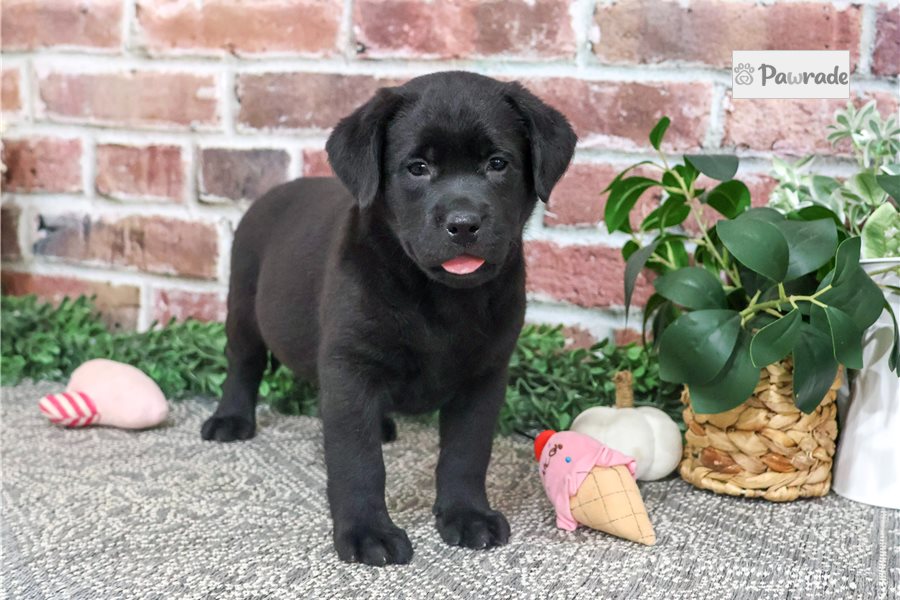
Lifespan and outlook
Labrador Retrievers typically live 11–13 years.
Most Labs whose hearts are checked get normal results. Many of the breed's health problems can be found early with a DNA test or a screening exam.
Puppy First, Health First
The big picture
Labrador Retrievers typically live 11–13 years.
Most Labs whose hearts are checked get normal results. Many of the breed's health problems can be found early with a DNA test or a screening exam.
A few everyday habits do a lot of the work.
This page brings together what the research shows about Labrador Retriever health.
It covers the conditions the breed is known to be prone to, screening and DNA results, what to watch for and a care plan for each life stage.
Worth knowing
Each entry below is a condition Labs are known to be prone to, with what you might notice and what helps.
This list is not exhaustive or official. Keep asking your veterinarian as your puppy grows.
In hip and elbow dysplasia, the joints form poorly as a puppy grows. Of Lab elbow X-rays sent to the OFA, about 1 in 10 were rated abnormal, most of them the mildest grade.
Watch for limping or a bunny-hop run in a growing puppy.
Feed a large-breed puppy food, keep your Lab lean, and hold off jogging until its first birthday. Any limping is worth a vet visit, and X-rays confirm the cause.
Labs are prone to tearing a ligament inside the knee, called cranial cruciate ligament rupture.
The usual sign is sudden limping on a back leg.
Keep your Lab lean, and see your vet promptly about any sudden limping. Plan spay or neuter timing with your vet, because early neutering has been linked to a higher risk in Labs.
Labs love food, and some carry a change in an appetite gene that makes them hungrier and quicker to gain weight.
Raids on counters and trash and a steady gain in weight are signs of that appetite at work.
Measure every meal, count treats, and keep food and trash out of reach. In a lifelong study, Labs fed less lived longer and got hip arthritis years later.
Exercise-induced collapse (EIC) is an inherited condition that can make a Lab wobble and collapse after intense, excited exercise.
Watch for a wobbly walk during intense, excited exercise such as retrieving drills or field work, especially in the heat.
A DNA test shows whether your Lab is at risk. If it is at risk or untested, skip intense, excited exercise in the heat and stop at the first wobble.
Labs can inherit a slow loss of sight from the back of the eye, called progressive retinal atrophy (PRA), and an eye defect called retinal dysplasia.
With PRA, night blindness in an adult is usually the first sign.
A DNA test shows the risk at any age, before any signs appear. A yearly exam by a veterinary eye specialist follows the eyes over time.
Some Labs are born with a heart valve defect, called tricuspid valve dysplasia.
It is usually first noticed when a vet hears a murmur at a checkup.
Your vet listens for a murmur at puppy visits. Any murmur is followed up with a heart scan (echocardiogram).
Less common
Centronuclear myopathy (CNM) runs in families and makes young puppies weak and slow to put on weight.
Hereditary nasal parakeratosis makes the nose dry and crusted, often from 6–12 months of age.
In some Labs, retinal dysplasia comes with short front legs that a vet can spot in a young pup.
Copper-associated hepatitis is a liver disease in which copper builds up, and both genes and diet play a part.
Epilepsy means seizures with no other cause, and the first one most often comes at 1–5 years of age.
DNA tests
A cheek swab can test at any age for the Lab's known inherited conditions, such as exercise-induced collapse, PRA and centronuclear myopathy.
Each result comes back as clear, carrier or at risk. Most of these conditions affect a dog only if it inherits the gene change from both parents. Clear means the dog tested clear of the gene change, and a carrier has one copy and is healthy. At risk means a higher chance of the condition, not a diagnosis, and some at-risk dogs never develop it, or develop it late.
Checkups your dog will get
Care plan by life stage
Planning for Labrador Retriever vet costs
These are typical published costs for treating what a Labrador Retriever vet exam looks at and the conditions the breed is known to be prone to. Each range shows where it comes from and when, and your own vet's estimate will differ.
| Item | Typical cost | Per | Source | Year |
|---|---|---|---|---|
| Specialist's first exam (consultation fee only) | $198–$350 | per visit | at US veterinary teaching hospitals (Michigan, Missouri, Tennessee) | 2023–2026 |
Planning for pet insurance
When you are ready to compare plans, here is one option for Pawrade buyers.
Only with Pawrade, you receive a pet insurance policy with no waiting period included for immediate accident or illness coverage, 1 month, with every puppy.† You activate it by calling MetLife; instructions arrive with your travel details. Continuing MetLife coverage after the first month is strongly recommended.
View the MetLife 30-day offer →†NH, NY, RI, SC and TN residents excluded. Activated by calling MetLife; coverage begins immediately following policy activation. See the offer for full terms.
Whichever plan you look at, read the policy before you buy. Check the waiting periods, how it defines a pre-existing condition, and its deductible, reimbursement percentage and annual limit.
A waiting period is how long after you buy a pet insurance policy before a claim counts.
| Policy | Accidents | Illness | Joints |
|---|---|---|---|
| MetLife policy included with your Pawrade puppy† | None | None | None |
| MetLife, bought directly | None | 14 days | Not listed |
| Industry standard | 0–14 days | 14–30 days | 6–12 months |
| Nationwide | 14 days | 14 days | Not listed |
| Trupanion | 5 days | 30 days | 30 days |
| Embrace | 2 days | 14 days | 6 months |
| Figo | 1 day | 14 days | Not listed |
What the Veterinary Health Report checks
The breeder's licensed vet checks your puppy before it goes home. The vet follows PetPay's exam standards, and the results go in your puppy's Veterinary Health Report.
The vet listens to the heart for a murmur.
A heart valve defect present from birth, called tricuspid valve dysplasia, is the one to know about in Labs. A murmur is often followed up with a heart scan (echocardiogram).
With a penlight, the vet checks both eyes for signs of vision problems.
A cloudy lens (cataract) and eyelids that roll in or out are things to watch for as your puppy grows.
The vet checks that the teeth meet in a scissors bite.
The breed standard also calls for dark pigment on the nose and eye rims.
The vet weighs the puppy to see how well it is gaining weight.
Weakness or slow weight gain in a young Lab can point to an inherited muscle disease, centronuclear myopathy, which a DNA test identifies.
In a male puppy, the vet checks that both testicles are in place.
Puppies grow and change quickly, and their immune systems are still developing, so no exam can find everything. The Veterinary Health Report is a strong early look at your puppy and a written starting point that your own vet builds on.
Health guarantee
Every Pawrade puppy comes with a health guarantee administered by PetPay, independent of the seller. The terms are on the health guarantee page.
Customers Love Us!
Jeremy · Labrador Retriever“Very satisfied with the purchase of my puppy, it arrived in very good condition.”
Labrador Retriever Puppies for Sale
Frequently asked questions
The conditions the breed is known to be prone to are hip and elbow dysplasia, a torn knee ligament (cranial cruciate ligament rupture), obesity and exercise-induced collapse. The list also includes two inherited eye conditions, progressive retinal atrophy and retinal dysplasia, and a muscle disease, centronuclear myopathy. It ends with hereditary nasal parakeratosis (a crusted nose), copper-associated hepatitis (a liver disease), epilepsy (seizures with no other cause found) and tricuspid valve dysplasia (a heart valve defect). A lean weight, DNA testing and regular vet checks help you stay ahead of them.
EIC is an inherited condition in which intense, excited exercise can make an affected Lab wobble and collapse. A DNA test shows whether a dog is at risk. Dogs that are at risk or untested should avoid intense exercise in the heat and stop at the first sign of wobbling.
Hip dysplasia, where the hip joint forms poorly during growth, is one of the conditions the breed is known to be prone to. Hip X-rays check for it, using the PennHIP method or a final hip rating once the dog is fully grown. Keeping a growing puppy lean helps.
Ear infections are more common in Labs, so make ear checks part of your routine.
A cheek-swab DNA panel can check for exercise-induced collapse, progressive retinal atrophy, centronuclear myopathy, nasal parakeratosis, retinal dysplasia, copper toxicosis and degenerative myelopathy. Panels also cover several other inherited conditions.
A carrier is healthy, and carrier status matters only for breeding. An at-risk result means a higher chance, not a diagnosis, and some at-risk dogs never develop the condition, or develop it late.
Labs typically live 11–13 years. Keeping your Lab lean helps, because in a lifelong feeding study, Labs fed less lived longer.
Older Labs do best with joint support and weight control to manage arthritis. Have any new lump checked, listen for noisy breathing or a change in voice, and book regular bloodwork, including thyroid and liver checks.
In Labs, early neutering has been linked to a higher risk of a torn knee ligament (cruciate rupture). When to spay or neuter is a decision to make with your own vet.
Labs are food-motivated, and some carry a change in an appetite gene (POMC) linked to a bigger appetite and weight gain. Measure meals and keep food and trash out of reach.