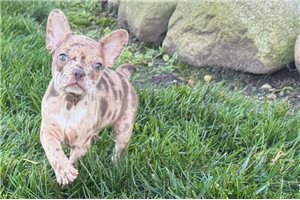
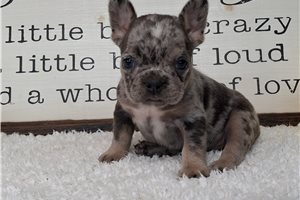
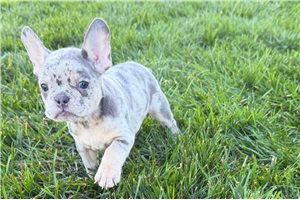
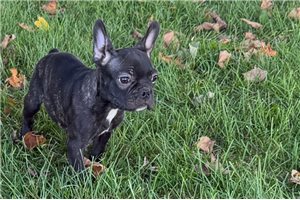
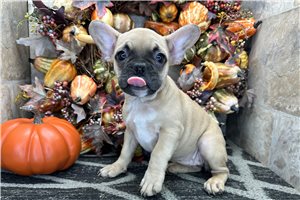
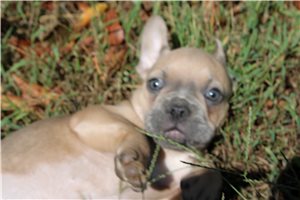
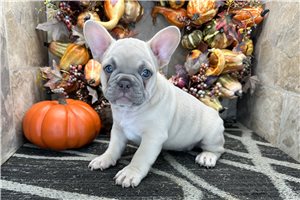
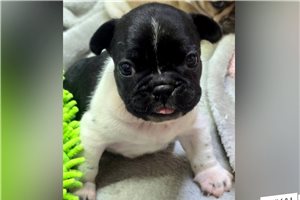
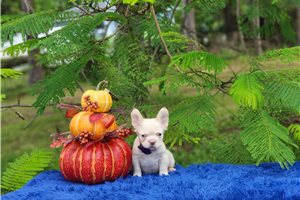
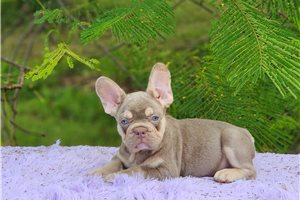
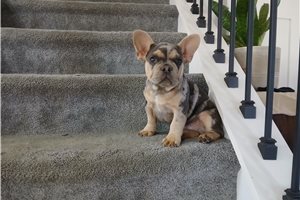
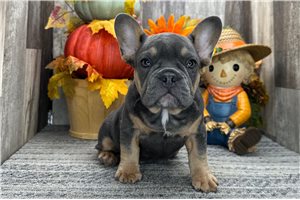
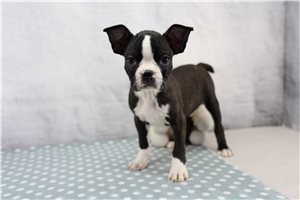
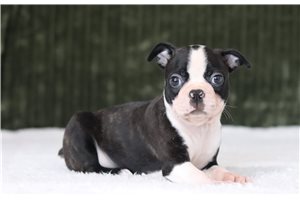
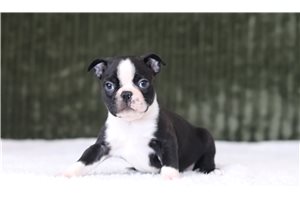
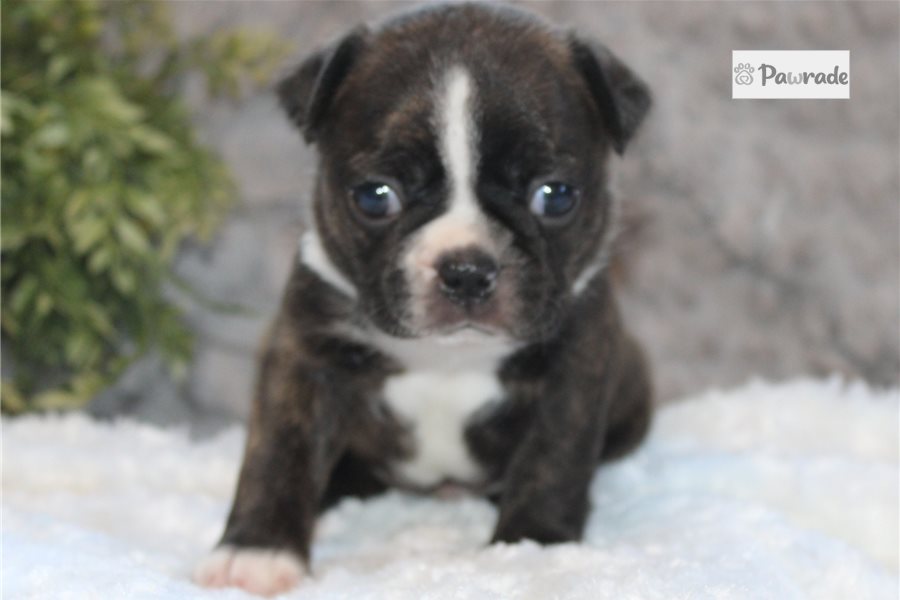
People notice the tuxedo first: a neat black, seal or brindle coat with a white blaze, chest and muzzle. Then they meet the dog wearing it, a friendly, bright little companion its fans call the American Gentleman.
People notice the tuxedo first: a neat black, seal or brindle coat with a white blaze, chest and muzzle. Then they meet the dog wearing it, a friendly, bright...People notice the tuxedo first: a neat black, seal or brindle coat with a white blaze, chest and muzzle. Then they meet the dog wearing it, a friendly, bright little companion its fans call the American Gentleman.
Only with Pawrade, you receive a pet insurance policy with no waiting period included for immediate accident or illness coverage. *NH, NY, RI, SC and TN residents excluded
Everything went smoothly. Thank you to all who participated in getting our new puppy to us. Her name is now Frankie; short for Francesca my Italian Mom. We adore her already. Thank you all so much. ❤️
“Everything went smoothly. Thank you to all who participated in getting our new puppy to us. Her name is now Frankie; short for Francesca my Italian Mom. We adore her already. Thank you all so much. ❤️”
Jetta · Boston Terrier
Mar 12, 2026
“I am pleased with the process in getting Jetta (Emmy) home. She arrived at 3:30am this morning. She was a little nervous at first but settled down shortly after. We snuggled for a few hours. Did not take her long to feel at home. Thanks for all you did.”
Jules · Boston Terrier
Mar 27, 2024
“Great customer service and communication. Delivery service was great.”
Delilah · Boston Terrier
Jul 7, 2025
“We had a great experience. Everything from finding, purchasing and delivery went very smooth. We love our Delilah very much.”
Puppy scams cost U.S. families millions every year. Here's how you know Pawrade isn't one: we're a named, audited business with a public track record you can check anywhere.
Pawrade data: parents of puppies placed through Pawrade (breeder-reported)
Height
15–17 in
Lifespan
10–14 years
Energy
High
Shedding
Low
Group
Non-Sporting
AKC
Boston Terrier Characteristics
Full-Grown Size
2 of 7SmallLarge
Grooming Needs
1 of 7SeldomRegularly
Good with Dogs
3 of 7Not ReallyYes!
Watchdog Ability
5 of 7LowHigh
Exercise Needs
1 of 7Couch PotatoHigh Needs
Your new best friend.
Boston Terrier temperament
Personality and daily life
A Boston is friendly and lively, with an excellent disposition and a quick mind. It is a true companion that wants its people close. It does poorly when left alone for long periods, and it is not suited to life outdoors. Most Bostons are open and friendly with strangers, though some are more reserved at first.
Training and play
Bostons are very good with children and usually get along with other dogs, although some challenge an unfamiliar dog at first. Teach polite manners early, because an untrained Boston may jump up and nip in play.
Training and play
Bostons are bright and quick to learn but can be stubborn. Many are sensitive, so train with treats and praise, follow any correction with warmth, and avoid harsh methods, which backfire. Obedience work and training games give the mental exercise the breed needs, and Bostons compete in AKC agility, obedience, rally and flyball.
Pawrade data: parents of puppies placed through Pawrade (breeder-reported). Placements and reviews come from Pawrade's records.
A healthier start for a happier tomorrow.
Boston Terrier care & grooming
Caring for a Boston Terrier
The routine
Exercise needs
High
The Boston is a high-energy dog that stays playful well into adulthood. Once it has had its exercise, it is calm and alert in the house. Plan a daily walk plus active play such as ball-chasing, because a backyard on its own is not exercise. Several short play sessions work better than one long walk. A Boston that gets too little exercise may turn to barking and chewing.
Coat and shedding
Low
The coat is short, smooth and fine, with no undercoat, and it sheds lightly.
Daily
Around the eyes
Look over the eyes every day.
Weekly
Coat and grooming care
Brush weekly with a soft brush or rubber mitt.
Monthly / as needed
Bath time
Bathe occasionally.
Nail trims
Trim the nails regularly.
Keeping them safe
Heat safety
The short face makes Bostons prone to breathing trouble and overheating in hot, humid weather. Walk in the cooler hours, and give shade, cool water and air conditioning.
Cold weather
The short single coat gives little warmth, so a sweater and short outings help in cold weather.
Leash and fencing
Use a harness rather than a collar, to keep pressure off the neck and airway.
Squinting, redness, discharge or a cloudy eye needs a prompt vet visit, because the large eyes are easily hurt.
Breathing and airwayKeep them lean and cool
Keep your Boston lean and cool, and have noisy breathing checked: a short face can narrow the airway, a problem called brachycephalic obstructive airway syndrome (BOAS).
Joints and movementRoutine vet checks
A skip or hop in the step can mean a slipping kneecap (patellar luxation), so your vet checks the knees at routine visits.
Body weightKeep them lean
Bostons gain weight easily, so measure meals and count treats.
Every milestone, together.
Boston Terrier puppy milestones
Your Boston Terrier's first two years
Before 8 weeks
Before your puppy comes home
Your puppy is still with its breeder, so use the time to get ready for a short-faced dog that feels both heat and cold.
Put the crate in a room where the family spends time, or in your bedroom at night, so your puppy is never far from you.
Plan a shady, cool spot with fresh water for warm days, and buy a small sweater for cold ones.
Choose a harness rather than a collar, so walks put no pressure on the neck and airway.
Book a first vet visit for the week your puppy arrives.
Why it matters
A Boston needs people around, and its flat face makes it easy to overheat, so a home that is ready keeps the first days calm.
Boston Terrier note
Most Boston Terrier puppies on Pawrade go home at about 11 weeks, so start this stage whenever yours arrives.
8–10 weeks
The first week home
Everything is new, and your puppy will want to stay close to you. Those big, round eyes are easily hurt, so they get a quick look every day from now on.
Take your puppy out first thing in the morning, last thing at night and after every nap, and praise it when it goes.
Start a daily eye check: look for redness, discharge or cloudiness, and flush out any debris with saline.
Keep your puppy indoors with the family, and avoid leaving it alone for long stretches in these first weeks.
At the first vet visit, ask the vet to check the nostrils and breathing, the eyes and eyelids, the knees and the heart.
Why it matters
A steady potty routine builds good habits fast, and a daily eye check means any injury gets to the vet promptly.
Boston Terrier note
Many Bostons are sensitive, so follow any correction with warmth and praise.
10–12 weeks
Weeks 2 to 4
The first 3 months are the most important time for a puppy to learn that new people, places, animals and things are safe. Puppies that are socialized early grow into confident adults.
Introduce a few new people, sounds and places each day, and keep every meeting short and happy.
Look for a puppy class now, since classes can start as early as 7–8 weeks as long as your puppy stays away from sick dogs.
Teach sit and come with treats and praise, and make each lesson a game.
Start manners training now, so jumping up and nipping in play never become habits.
Why it matters
Good early experiences help a puppy grow into a well-adjusted adult, and a class gives it practice around other dogs and people.
Boston Terrier note
Keep play sessions short and out of the heat, because a short face makes overheating easy.
3–4 months
3 to 4 months
Your puppy is finishing its puppy shots, and the series usually ends at about 16 weeks, as your vet advises. Bladder control is growing too: a puppy can usually wait about an hour for each month of age, so a 3-month-old can hold on for about 3 hours.
Keep every vaccine visit on your vet's schedule, because your own vet finishes the puppy series.
Stretch the time between potty trips slowly, and keep the trips first thing in the morning, last thing at night and after naps.
Ask your vet to feel the knees at these vaccine visits, since a slipping kneecap can show up in young puppies.
Why it matters
Finishing the vaccines protects your puppy as it meets more of the world, and a patient potty routine turns into a lasting habit.
Boston Terrier note
Weigh out meals and count training treats, since some Bostons put on weight easily.
4–6 months
4 to 6 months
Baby teeth begin falling out at about 12 weeks as the adult teeth push through, and most puppies have a full adult set by about 6 months. Chewing peaks during these weeks, so expect your puppy to test everything with its mouth.
Keep just a few safe chew toys out and rotate them, swapping one in whenever your puppy reaches for a shoe or chair leg.
Keep valued things out of reach and supervise chewing until the adult teeth are in.
Keep walks and play short in warm weather, and save longer outings for mornings and evenings.
Why it matters
Chewing is strongest while the teeth change, so this is when safe toys and supervision matter most.
Boston Terrier note
Ball-chasing is a favorite Boston game, and a few short bursts of play a day burn off energy better than one long walk.
6–12 months
6 to 12 months
Adolescence often starts somewhere between 6 and 8 months. Your Boston may test boundaries and seem to forget its training, much like a teenager.
Keep the house rules the same, and use patience, rewards and plenty of play to get through this stage.
Talk with your vet about whether and when to spay or neuter, since the right timing depends on your dog.
Skip long, hard runs and big jumps until your vet agrees growth is done, because strenuous play can hurt growing bones.
Start brushing the teeth at home, a few strokes at a time, and ask your vet to recheck the knees.
Why it matters
Growth plates, the soft areas where leg bones grow, stay delicate until growth is done, and small dogs like a Boston finish growing sooner than large breeds.
Boston Terrier note
A lean body matters here too, because extra weight raises the risk of breathing trouble in short-faced dogs.
1–2 years
1 to 2 years
Most dogs are fully grown and settled into adulthood by about 2 years. Expect a bright, playful Boston that is calm and alert at home once it has had its exercise.
Plan a vet exam at least once a year from now on, the routine that suits most adult dogs.
Once growth is done, try a dog sport such as agility, obedience, rally or flyball.
Keep up the weekly brushing, nail trims and dental care that suit the breed for life.
Why it matters
Yearly checks catch changes in the eyes, breathing and weight early, when they are easier to manage.
Boston Terrier note
Heat and cold care last a lifetime for this breed, so keep summer walks to the cool hours and use a sweater when it is cold.
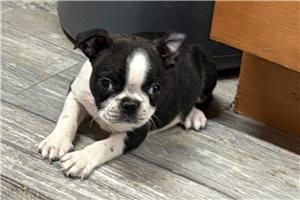
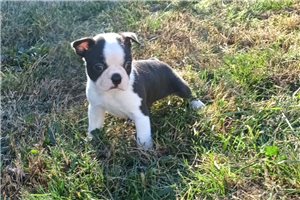
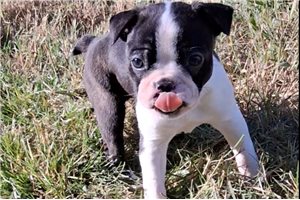
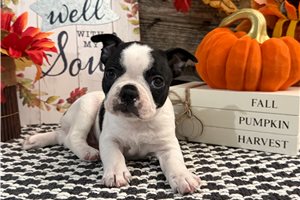
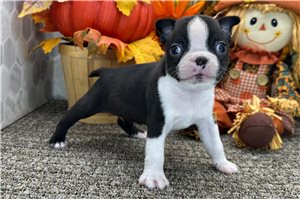
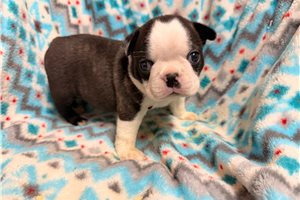
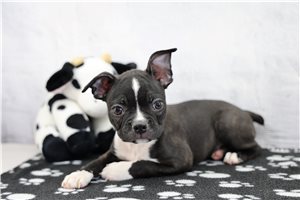
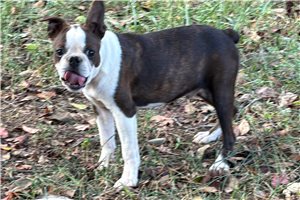
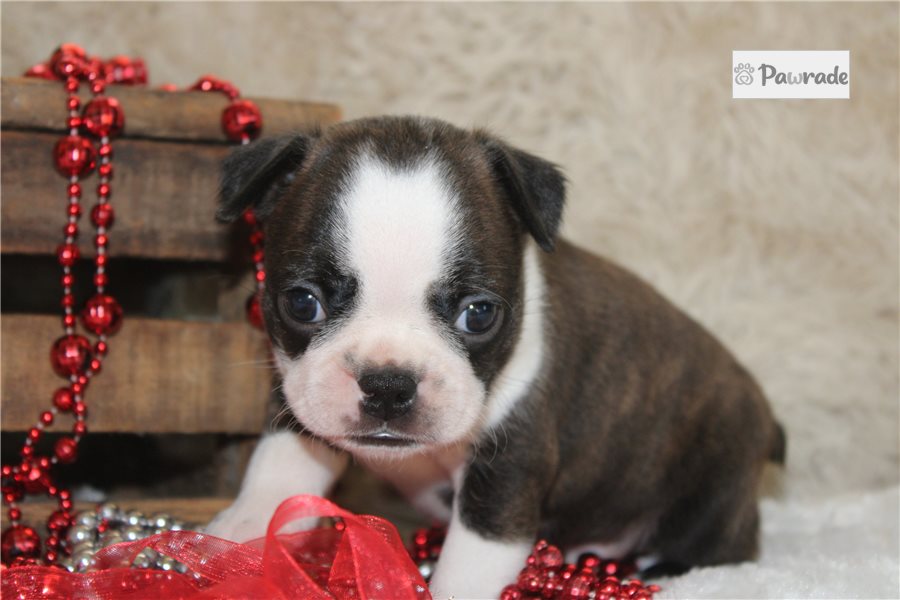
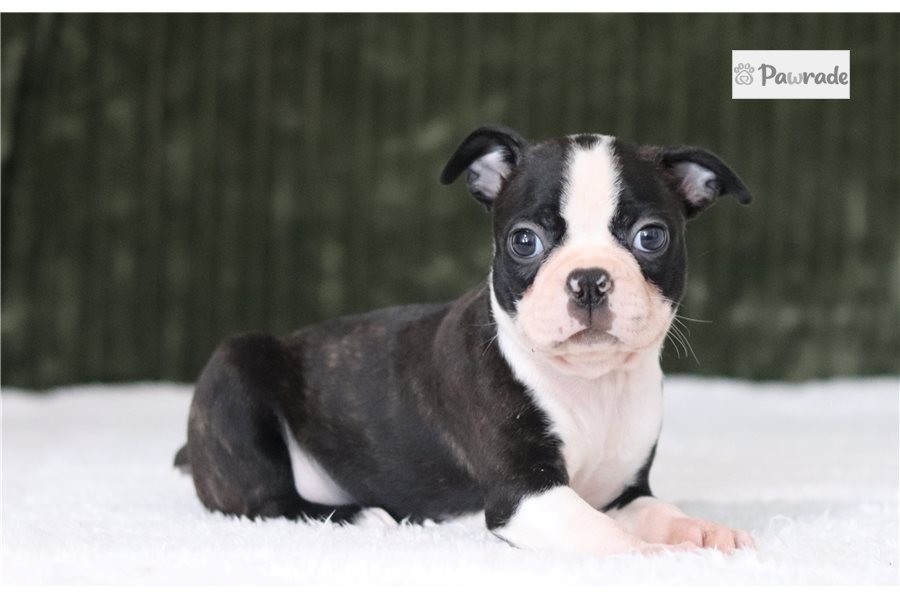
The Boston is compact and short-backed with a square outline, sturdy without looking coarse, and it is the smallest of the bull breeds. It has a flat, square skull, a short square muzzle, large round dark eyes set wide apart, small erect ears and a short, low-set tail that is straight or screwed. There is one size of Boston, with no miniature or teacup variety.
Colors and coat
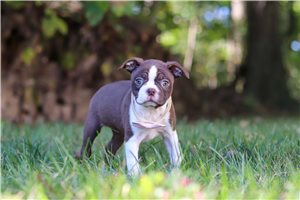
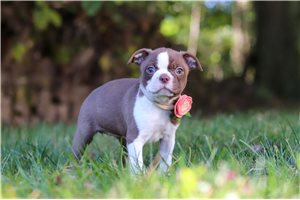
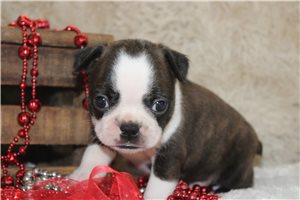
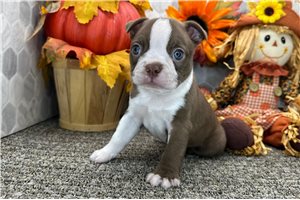
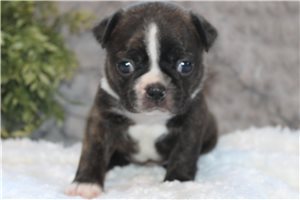
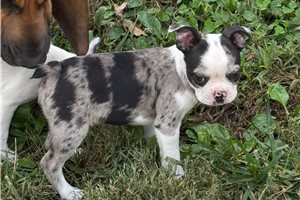
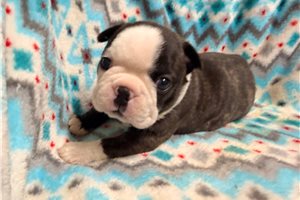
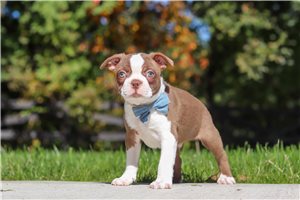
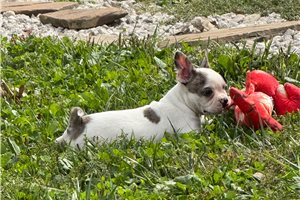
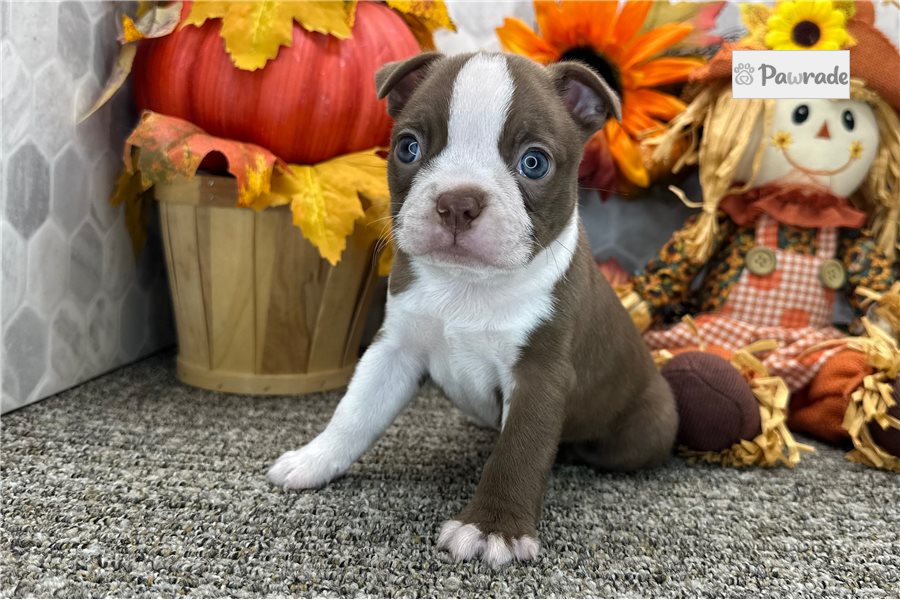
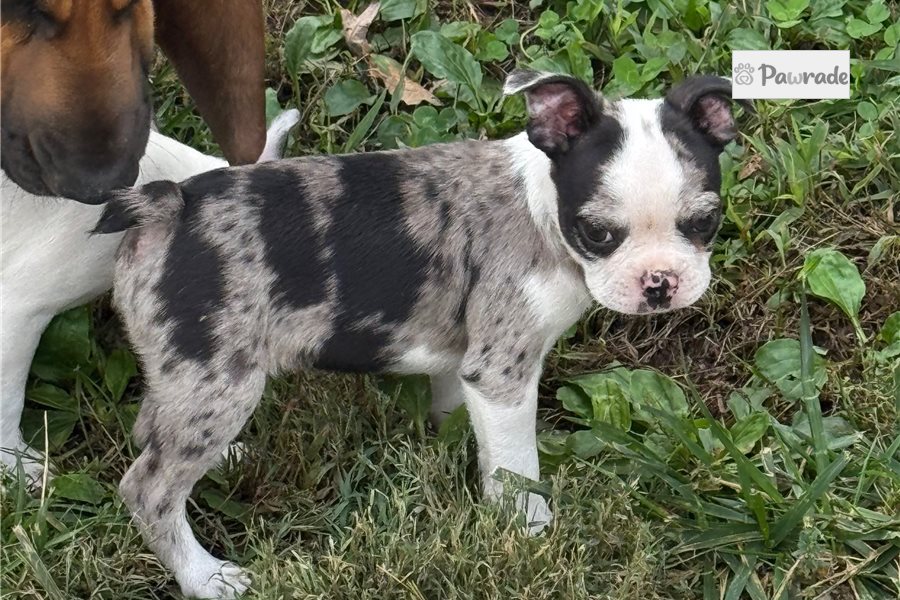
The AKC standard colors are brindle, seal and black, each with white markings, and brindle is preferred when all else is equal. Seal looks black but shows a red cast in sunlight or bright light. A white muzzle band, a white blaze between the eyes and a white forechest are required, and a white collar and white on the legs complete the ideal tuxedo pattern. Red, brown or liver, blue or gray, and any other color the standard does not describe are outside the AKC breed standard. A solid coat without the white markings, and blue eyes, are also outside the AKC breed standard. Some Bostons carry a Haggerty spot, a dark dot inside the white blaze on top of the head; it is a traditional marking, not a requirement.
Colors listed by Pawrade breeders
Black
Black & White
Blue
Blue Brindle
Brindle
Brown
Chocolate
Cream
Fawn
Gold
Gray
Lilac
Red
Red & White
Seal
Silver
White
Yellow
Keeping your Boston healthy
The Boston Terrier is known to be prone to a few conditions, and most are easier to manage when they are caught early.
A little history, a lot of heart.
Boston Terrier history
History and fun facts
late 1860s
The breed traces to a dog named Hooper's Judge, a cross between a Bulldog and the now-extinct white English Terrier.
1870
Judge was bred in Liverpool in the late 1860s and brought to Boston, where Robert C. Hooper owned him from 1870.
Its bull-and-terrier ancestors were fighting and ratting dogs, but Boston fanciers bred the type down into a smaller companion.
Early fanciers called the dogs Round Heads or American Bull Terriers, and the name changed to Boston Terrier after Bull Terrier fanciers objected.
1889–1891
The first club formed in 1889 as the American Bull Terrier Club, and the Boston Terrier Club of America followed in 1891.
1893–1914
The AKC recognized the breed in 1893, only a few years later, and the UKC followed in 1914.
20th century
The Boston was a household favorite across America in the first half of the 20th century.
1922
Boston University students chose the Boston Terrier as their mascot in 1922, and the costumed mascot is named Rhett.
1979
Massachusetts made it the official state dog in 1979.
1999
The Boston Terrier Club of America is the breed's AKC parent club, and its health committee, formed in 1999, runs member health surveys and health testing at the national specialty.
Checked with care before travel.
Boston Terrier Veterinary Health Report
Your puppy's Veterinary Health Report
Before your Boston Terrier puppy comes home, the breeder's licensed vet gives it a full hands-on exam to PetPay's exam standards, and the results go into its Veterinary Health Report.
The exam, a health certificate and a stool test for parasites all happen 3 to 5 days before your puppy leaves.
1It is a check of your own puppy, not paperwork about its family, so you start with a clear record of how your puppy is doing.
2If the vet finds something that could put your puppy at risk during travel, your puppy stays with the breeder until it's resolved.
3Problems that can be treated before travel are treated by the breeder's licensed vet first.
4Anything else the vet notes is shared with you.
5A hard copy of the report travels with your puppy for your records, and a digital copy is in your PetPay account.
PetPay Veterinary Health Report form
16 areas checked on the exam
Closer look for Boston TerriersOn every puppy's report
Puppies must be at least 8 weeks old and weigh at least 2 lb before they travel. Every Pawrade puppy also comes with a health guarantee administered by PetPay, independent of the seller. The terms are on the health guarantee page.
A Boston Terrier puppy's price reflects what goes into it: its pedigree and registration, its coat and color, and the breeder's program. Every Pawrade puppy's price also includes the pre-travel exam by the breeder's licensed vet, the Veterinary Health Report and a health guarantee administered by PetPay. See today's price range for Boston Terrier puppies on Pawrade's Boston Terrier listings.
Typical asking price
$2,670
Based on 441 Boston Terrier listings in the last 12 months
Both are small, flat-faced companions, but the Pug is smaller-framed, sheds more and comes in fawn, apricot, black or silver rather than the tuxedo pattern.
Frequently asked questions about Boston Terrier puppies
Frequently asked questions
Adult Boston Terriers weigh 10–25 lb and stand 15–17 in tall. Parents of Pawrade Boston Terriers typically weigh 13–22 lb (mothers) and 14–27 lb (fathers), a useful hint for a puppy's adult size.
The AKC standard colors are brindle, seal and black, each with white markings on the muzzle, between the eyes and on the chest. Red, brown or liver (including chocolate), blue or gray, and any other color the standard does not describe are outside the AKC breed standard. A solid coat without the white markings is outside it too.
A black, seal or brindle puppy stays in that color family as an adult. Seal can look black indoors and show a red cast in sunlight, which is why a puppy's color can look different from photo to photo.
Boston Terriers have a naturally short tail, set low and either straight or screwed. A docked tail is outside the AKC breed standard.
The Boston Terrier is one breed with no miniature or teacup size. The AKC standard only divides show entries into weight classes of under 15 lb, 15 to under 20 lb, and 20 lb up to the top weight.
There is very little difference, since both sexes share the same weight classes and females are only slightly more refined in build.
A Boston has small, erect ears, natural or cropped, set near the corners of a flat, square skull.
The standard calls for large, round, dark eyes, so blue eyes or any trace of blue are outside the AKC breed standard.
The Boston is leggier and lighter, with small upright ears and a tuxedo coat, while the French Bulldog is stockier and lower to the ground, with large bat ears. Next to a Pug, the Boston has a bigger frame, and the Pug sheds more.
A Boston is friendly, lively and bright, with high energy. It stays playful into adulthood and is calm and alert in the house once it has had its exercise.
Most Bostons bark only a moderate amount, although some bark a lot. Boredom and long hours alone make barking more likely.
Most Bostons are open and friendly with strangers, although some are more reserved at first.
Most behavior problems come from boredom or loneliness, since a Boston that is under-exercised or left alone for long periods may bark, chew or pick up other unwanted habits. Daily exercise, training games and company help prevent them.
Bostons are known for being very good with children. Early manners training curbs jumping up and play nipping. About a third of Pawrade Boston Terrier buyers have children at home.
Most Bostons get along with other dogs, although some challenge an unfamiliar dog at first. More than two in five Pawrade Boston Terrier buyers already have another dog at home.
Bostons are usually good with other pets. Some breeders on Pawrade introduce their litters to cats before the puppies go home.
Bostons make good apartment and city dogs as long as they get daily exercise.
A Boston needs a daily walk plus active play, such as a short jog or ball-chasing, up to about an hour a day in all. Several short play sessions work better than one long walk.
A Boston enjoys a brisk walk and active play, but it is not built for long outings in the heat. On warm days, keep outings to the mornings and evenings and bring water.
Bostons handle neither well, because the short face makes them prone to overheating and the short single coat gives little warmth. In heat, walk in the mornings and evenings and provide shade and cool water; in cold weather, use a sweater and keep outings short.
A Boston can travel in summer with care, because it is prone to breathing trouble and overheating in heat and humidity. Plan trips for the cooler hours and keep the dog shaded, with water and air conditioning.
Bostons do poorly when left alone for long periods, and the frustration can lead to unwanted behavior. Short play breaks through the day help, along with plenty of company when you are home.
Hard running and big jumps should wait until your vet agrees growth is done, because a puppy's growth plates stay soft while it grows. Small dogs like a Boston finish growing sooner than large breeds.
Boston Terriers shed lightly, and no dog is truly hypoallergenic. The short coat has no undercoat, but the short hairs still shed, so weekly brushing helps.
The coat needs only a weekly brush, an occasional bath and regular nail trims. The daily job is an eye check for redness, discharge or cloudiness.
Most Bostons are bright and quick to learn, though some are stubborn. Treats, praise and gentle corrections work, and harsh methods backfire with this sensitive breed.
It varies from puppy to puppy, so start crate and house training on the first day and keep the routine the same. Keep the crate in a room where the family spends time, or in your bedroom at night. Breeders on Pawrade report whether they have started crate training, so ask how far your puppy has got.
A Boston Terrier puppy can usually hold its bladder for about an hour for each month of age, so a 3-month-old can wait about 3 hours. Take a young puppy out first thing in the morning, last thing at night and after naps.
Adolescence often starts between 6 and 8 months, and many dogs test boundaries and seem to forget their training for a while. Consistent house rules, patience and plenty of exercise and play see you through it. Many Bostons are sensitive, so stay gentle and follow any correction with warmth and praise.
Fetch, disc games and puzzle-type play suit the breed at home. Bostons also compete in AKC agility, obedience, rally and flyball.
Bostons earn AKC Canine Good Citizen and therapy dog titles, and many do very well in therapy work.
Puppies travel only once they are at least 8 weeks old and weigh at least 2 lb. Most Boston Terrier puppies go home at about 11 weeks, usually between 9 and 18 weeks.
Boston Terrier breeders on Pawrade report a typical litter of 5 puppies, usually between 2 and 7.
Set up a crate in a room where the family spends time, or in your bedroom at night. Plan a cool, shady spot for summer and a sweater for cold days, and pick a harness rather than a collar. Book a first vet visit that checks the breathing, eyes, knees and heart.
Start the day your puppy comes home, because the first 3 months are the most important time for socialization. Puppy classes can start as early as 7–8 weeks, as long as your puppy stays away from sick dogs.
Most puppies finish teething by about 6 months, once the adult teeth are in. Baby teeth start falling out at about 12 weeks, and chewing is strongest while the teeth change. Keep a few safe chew toys out and rotate them to keep them interesting.
The puppy vaccine series usually finishes at about 16 weeks, as your vet advises. Puppy classes and gentle socializing can start before then, as long as your puppy stays away from sick dogs. Your puppy's vaccination and deworming records are separate documents that travel with your puppy. Bring them, with the Veterinary Health Report, to your first visit so your vet starts from the same record.
Spaying or neutering is a decision to talk through with your vet, because the right timing depends on things like your dog's sex and expected adult size.
Most Boston Terrier litters on Pawrade meet other dogs, children and everyday household sounds before the puppies go home. Breeders report socializing 91% of litters with small dogs and 82% with children. They also report getting litters used to music or TV (69%), the vacuum cleaner (67%) and pots and pans (63%). These figures come from what breeders reported for 317 litters. Keep introducing new people, places and sounds once your puppy is home, because the first 3 months are the most important time for socialization.
The Veterinary Health Report is the record of your Boston Terrier puppy's exam before it goes home. The breeder's licensed vet gives the puppy itself a full hands-on exam to PetPay's standards and writes down what they find. It gives you and your own vet a clear starting point for your puppy's care.
The breeder's licensed veterinarian examines every puppy before it goes home, to PetPay's exam standards. The results are recorded in the puppy's Veterinary Health Report, and a copy travels with your puppy for your records.
The breeder's vet examines the whole puppy and pays close attention to a few things that matter in Boston Terriers. The vet checks the eyes, feels the kneecaps, checks the hearing, looks at the nostrils and listens to the breathing.
Before travel, every puppy follows PetPay's vaccination and deworming schedule as far as its age allows: deworming at 2, 4, 6, 8, 10 and 12 weeks, and the distemper, parvo, adenovirus and parainfluenza combination shot at 6–8, 9–11 and 12–14 weeks. Bordetella and corona are given at the vet's discretion, and no vaccine is given within 3 days of travel. Rabies is given by a licensed vet on the schedule your state requires. Your own vet completes the series. Your puppy's vaccination and deworming records are separate documents that travel with your puppy. Bring them, with the Veterinary Health Report, to your first visit so your vet starts from the same record.
If the vet finds something that could put your puppy at risk during travel, your puppy stays with the breeder until it's resolved. Problems that can be treated before travel are treated by the breeder's licensed vet first. Anything else the vet notes is shared with you.
Puppies grow and change quickly, and their immune systems are still developing, so no single exam can find everything. In Boston Terriers, a breathing grade has to wait until the dog is 12 months old, and the later form of cataract appears only in adults. The report is a strong early look at your puppy, and your own vet builds on it at every checkup.
Boston Terrier buyers rate their Pawrade experience 4.7 out of 5 on average, from 301 reviews, and about 84% of those reviews give 5 stars.
Right now, most Boston Terrier puppies on Pawrade are listed within the typical range shown on Pawrade's Boston Terrier listings. Each breeder on Pawrade sets their own price, and each puppy's listing shows it. A Boston Terrier puppy's price reflects what goes into it: its pedigree and registration, its coat and color, and the breeder's program. Every Pawrade puppy's price also includes the pre-travel exam by the breeder's licensed vet, the Veterinary Health Report and a health guarantee administered by PetPay.










 Boston Terrier note