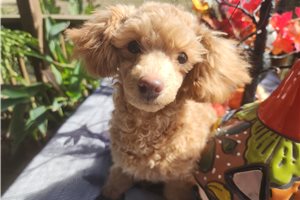
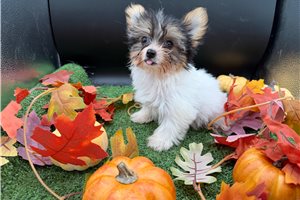
The Chihuahua is the smallest dog breed, and nobody seems to have told it. It meets the world alert and bold, then saves its whole heart for one person or one family.
The Chihuahua is the smallest dog breed, and nobody seems to have told it. It meets the world alert and bold, then saves its whole heart for one person or one...The Chihuahua is the smallest dog breed, and nobody seems to have told it. It meets the world alert and bold, then saves its whole heart for one person or one family.
Only with Pawrade, you receive a pet insurance policy with no waiting period included for immediate accident or illness coverage. *NH, NY, RI, SC and TN residents excluded
“3rd time getting a new puppy with your excellent help. Transitioning was so easy I highly recommend to anyone looking to bring a new puppy to your family. Ty”
Jojo · Chihuahua
Oct 31, 2024
“The drivers were very nice, informative & delivered our precious puppy with care. We were happy that the times had been changed to a more reasonable hour of 6am!”
Leila · Chihuahua
Dec 14, 2025
“Smooth transaction with great communication throughout.”
Puppy scams cost U.S. families millions every year. Here's how you know Pawrade isn't one: we're a named, audited business with a public track record you can check anywhere.
Pawrade data: parents of puppies placed through Pawrade (breeder-reported)
Height
5–8 in
Lifespan
14–18 years
Energy
High
Shedding
Moderate
Group
Toy
AKC
Chihuahua Characteristics
Full-Grown Size
1 of 7SmallLarge
Grooming Needs
3 of 7SeldomRegularly
Good with Dogs
1 of 7Not ReallyYes!
Watchdog Ability
5 of 7LowHigh
Exercise Needs
1 of 7Couch PotatoHigh Needs
Your new best friend.
Chihuahua temperament
Personality and daily life
Temperament
Named after the Mexican state where the first modern dogs were found, the Chihuahua has always been a companion, never a hunting or working dog. It has a terrier's courage packed into a very small body. Personalities still vary, from bold to timid.
Meeting new people
Many Chihuahuas are wary of strangers. Early, wide socialization makes a real difference, because a dog this small can quickly learn to be nervous of the world. Most get along with pets they grow up with, although some will stand up to a much bigger dog.
Energy and play
Energy is high, and much of it gets spent indoors. Games, tricks and puzzle toys meet a lot of that need, and short outings to sniff and explore do the rest.
Barking and noise
Expect a vocal dog. Chihuahuas bark at visitors and at noises, so start working on it early, before barking turns into a habit. That alert bark also makes the Chihuahua a keen little watchdog.
Training
Chihuahuas learn fast, but many have a stubborn streak. Food rewards work best, and force backfires. Be gentle, firm and consistent, or the dog will happily start running the house. House-training often takes longer than with many breeds, so keep the routine steady; indoor potty systems help many owners. Chihuahuas can earn AKC titles in agility, obedience, rally and trick dog.
Pawrade data: parents of puppies placed through Pawrade (breeder-reported). Placements and reviews come from Pawrade's records.
A healthier start for a happier tomorrow.
Chihuahua care & grooming
Caring for a Chihuahua
The routine
Exercise needs
High
About 30 minutes of exercise a day, ideally split into two short walks, suits most Chihuahuas.
Coat and shedding
Moderate
Both coats shed moderately, a little more in spring and autumn.
Daily
Teeth and gums
Dental disease is common in the breed, so brush the teeth daily if you can.
Weekly
Coat and grooming care
Brush a Smooth Coat about once a week and a Long Coat two or three times a week.
Monthly / as needed
Bath time
A bath about once a month with a mild shampoo is plenty, and neither coat is trimmed into a style.
Ear checks
Check the ears regularly, too.
Keeping them safe
Cold weather
Chihuahuas chill quickly, so many need a sweater or coat in cold weather.
Leash and fencing
Use a harness rather than a collar, to protect the windpipe. Outdoors, keep your Chihuahua on a leash and in sight, because hawks, bigger dogs and a frightened dash for freedom are real risks.
A new cough needs a vet visit, since it can be a sign of airway trouble such as a weak windpipe (tracheal collapse).
Joints and movementRoutine vet checks
Your vet feels the knees at routine visits for a kneecap that slips out of place (patellar luxation).
Teeth and gumsRoutine vet checks
Book a dental check every year.
Teeth and gumsRoutine vet checks
Once the adult teeth are in, ask your vet to look for puppy teeth that haven't fallen out.
Body weightKeep them lean and cool
Keep your Chihuahua lean, because small snacks add up fast on a dog this size.
Heart checksRoutine vet checks
Have the heart listened to at every yearly checkup, because a leaky heart valve (mitral valve disease) usually shows up from middle age.
Every milestone, together.
Chihuahua puppy milestones
Growing up: your Chihuahua's first years
Before 8 weeks
Before your puppy comes home
Your puppy is still with its breeder, so this is the time to get your home ready for a very small dog. Most Chihuahua breeders on Pawrade get litters used to small dogs, children and household noise before they go home.
Set up the crate in a room where the family spends time, or in your bedroom at night.
Make it a warm, draft-free spot with a few toys, so short spells alone feel less stressful.
Buy a small harness for the first walks rather than a collar, to protect the windpipe.
Ask what food your puppy eats now, and plan to keep it the same at first.
Why it matters
Chihuahua puppies are tiny and lose heat quickly, so a warm, safe base matters from the first day.
Chihuahua note
With children at home, plan how play will be supervised, because a dog this small is easily hurt.
8–10 weeks
The first week home
Everything is new, and your puppy is learning where it sleeps, eats and goes potty. Most Chihuahua puppies on Pawrade go home at about 13 weeks, so start this stage whenever yours arrives.
Feed small meals often, four or more a day for a young toy puppy, and keep the puppy warm.
Take your puppy out first thing in the morning, last thing at night and after every nap.
Book the first vet visit this week, and bring the breeder's shot record with you.
Why it matters
Small, frequent meals and warmth keep a tiny puppy's blood sugar steady.
Chihuahua note
A puppy that suddenly seems weak or listless may have low blood sugar, so call your vet straight away.
10–12 weeks
Weeks 2 to 4
Your puppy is in the first 3 months of life, the most important time for learning that new people, places and animals are safe. A dog this small can quickly learn to be wary, so good experiences now matter even more.
Introduce calm visitors, gentle older children, friendly small dogs and everyday sounds, a little each day with a treat.
Join a puppy class, which can start as early as 7–8 weeks as long as sick dogs are kept away.
Until your vet says the puppy shots are done, keep your puppy close to home.
Why it matters
Class gives your puppy safe practice with people and dogs, and gives you a head start on reward-based training.
Chihuahua note
Choose small-dog play over mixed-size groups, since some Chihuahuas will stand up to a much bigger dog.
3–4 months
3 to 4 months
The puppy vaccine series usually finishes at about 16 weeks, as your vet advises. By the hour-per-month rule, a 3-month-old can usually wait about 3 hours between potty trips.
Keep each vaccine appointment, because your own vet completes the series your puppy started before it came home.
Stretch the time between potty trips a little at a time, and praise every success right away.
Start short, fun training sessions now, before barking at visitors and noises becomes a habit.
Why it matters
House-training a Chihuahua often takes longer than with many breeds, so a steady routine pays off.
Chihuahua note
An indoor potty spot works well for many Chihuahuas, and the same steady routine applies.
4–6 months
4 to 6 months
Teething is in full swing, and by about 6 months the adult teeth are in. Chewing is strongest while the teeth change.
Offer a few small, safe chew toys at a time, and swap them around so they stay interesting.
Supervise chewing, and keep cords, shoes and small objects out of reach for now.
Start daily tooth brushing now, a few gentle strokes at a time, so it becomes routine.
Why it matters
Dental disease is common in Chihuahuas, so a brushing habit built now protects the teeth for years.
Chihuahua note
Peek in your puppy's mouth each week, because baby teeth that stay in are common in the breed.
6–12 months
6 to 12 months
Small breeds like the Chihuahua finish growing early, usually by about 6–8 months. Adolescence starts around now, and your puppy may test the rules or seem to forget its training for a while.
Keep the house rules the same and the lessons short, gentle and full of rewards.
Talk with your vet about spaying or neutering, and decide together what suits your own dog.
Agree an exercise plan with your vet, and avoid hard, strenuous play until growth is done.
Ask your vet about any baby teeth still in place now that the adult teeth have come through.
Why it matters
Growth plates in a puppy's legs stay soft while it grows, so gentle exercise protects them.
Chihuahua note
Mention any limp to your vet, because slipping kneecaps run in the breed.
1–2 years
1 to 2 years
Adolescence winds down, and most dogs are fully grown and settled by about 2 years. Your Chihuahua is now the devoted, alert little dog it will be for years to come.
Book a wellness exam at least once a year, and have the heart and knees checked each time.
Try a dog sport such as agility, rally or obedience once your vet agrees the joints are ready.
Keep up daily tooth brushing, a yearly dental check and harness walks for life.
Why it matters
Yearly checks catch heart and knee changes early, when they are easiest to manage.
Chihuahua note
Keep treats tiny and meals measured, because extra weight builds quickly on a dog this size.
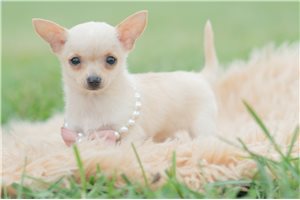
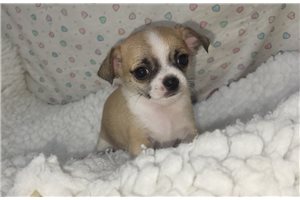
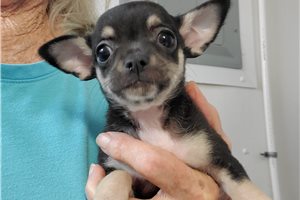
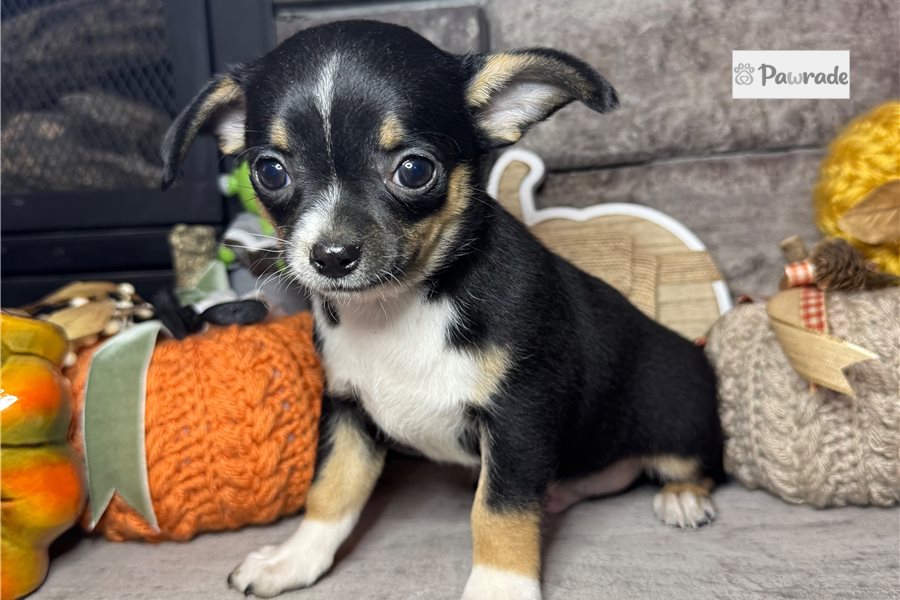
The Chihuahua is compact and slightly longer than tall. It has a rounded, apple-dome skull and large, upright ears that flare to the sides at rest. The moderately long tail curves over the back and is never docked.
Coat
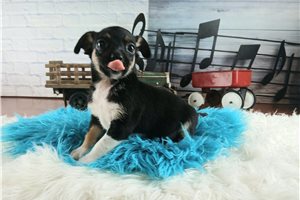
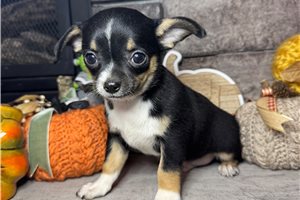
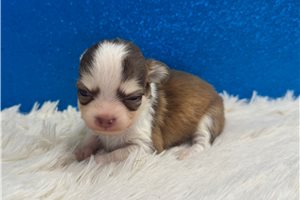
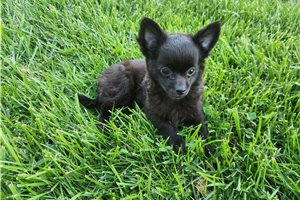
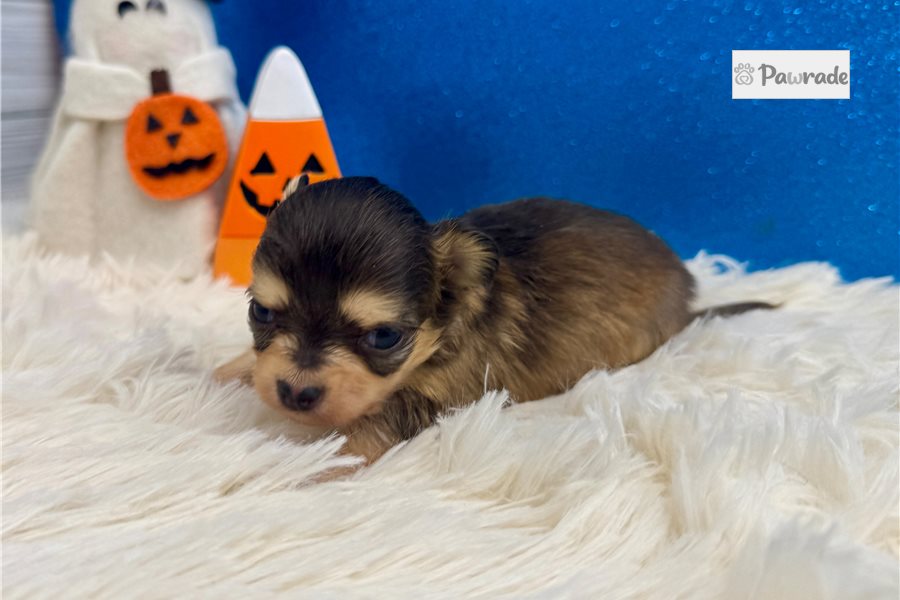
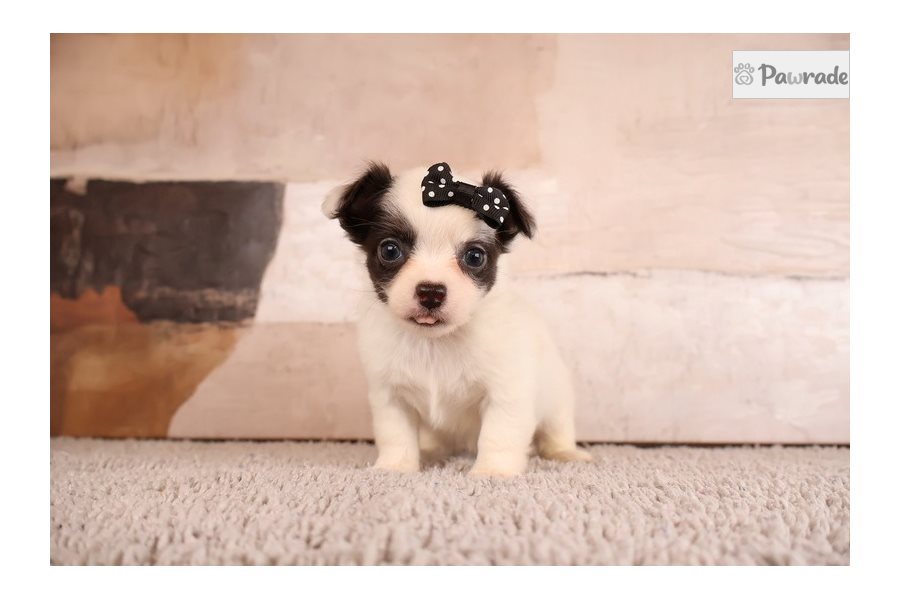
There is one breed with two coats, identical apart from the coat. The Smooth Coat is soft, close and glossy. The Long Coat is soft and flat or slightly wavy, with feathering on the ears and legs and a plumed tail. Long hair is recessive, so two Smooth parents that both carry it can have Long Coat puppies.
Colors and markings
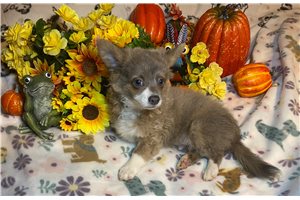
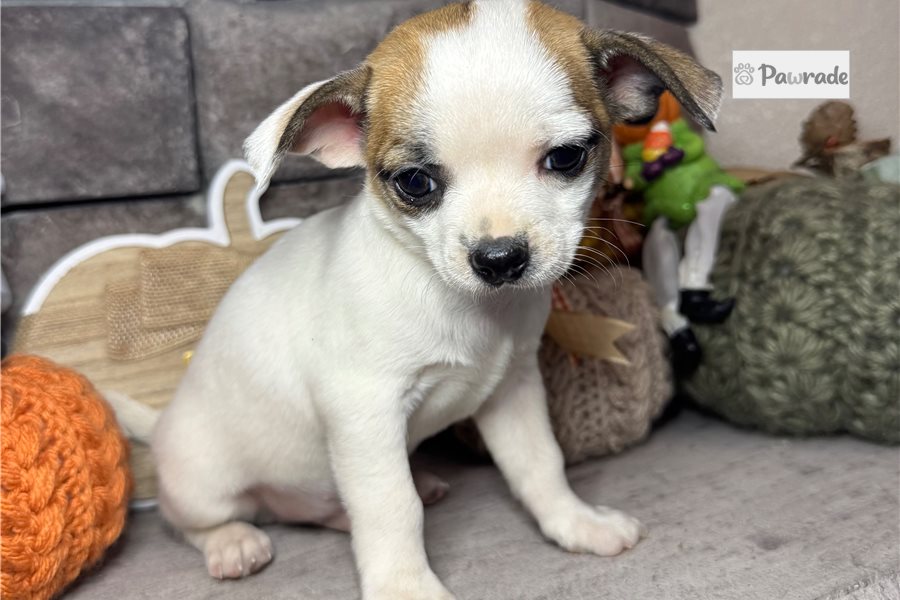
The AKC standard accepts any color, solid, marked or splashed. Merle is accepted under the AKC standard but not under the UKC standard or that of the FCI (the international kennel federation).
"Deer head" describes dogs with a finer head and a longer neck and legs; it is outside the breed standard, not a separate variety.
Colors listed by Pawrade breeders
Albino
Black
Black & Tan
Blue
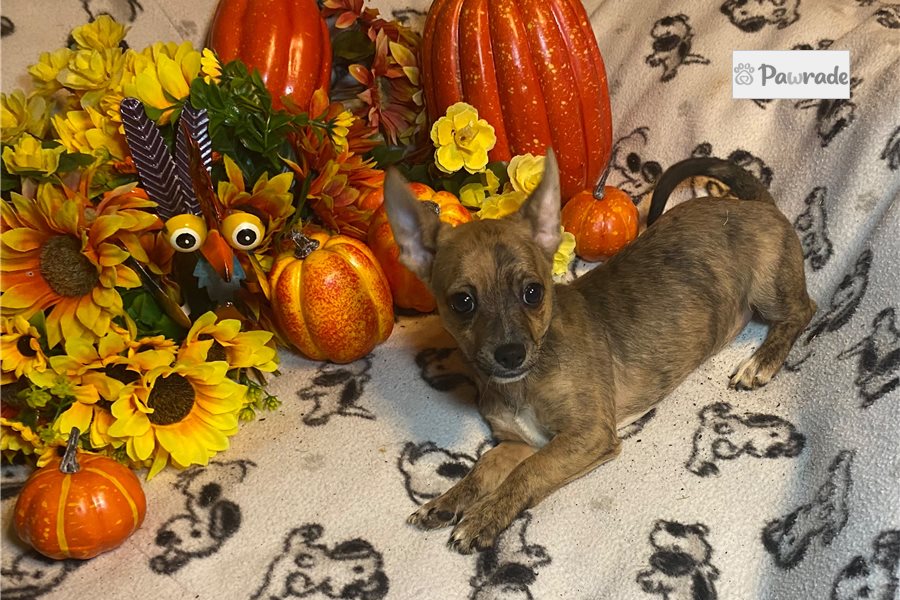
Brindle
Chocolate
Cream
Fawn
Merle
Red
Sable
Silver
Spotted
White
Keeping your Chihuahua healthy
Chihuahuas are known to be prone to three conditions: slipping kneecaps, a leaky heart valve and a weak windpipe. Regular checkups help catch problems early, and most Chihuahuas live long, healthy lives.
A little history, a lot of heart.
Chihuahua history
History and fun facts
9th century
The breed is thought to descend from the Techichi, a small dog kept by the Toltec people of Mexico from about the 9th century.
Much of its early history is legend.
mid-1800s
Americans brought tiny dogs home from the State of Chihuahua in the mid-1800s.
1904
The first AKC-registered Chihuahua, Midget, was registered in 1904, the year the AKC recognized the breed.
1923
The Chihuahua Club of America, the breed's AKC parent club, followed in 1923, and in 1952 the AKC split the Smooth and Long Coats into separate varieties.
1940s
Bandleader Xavier Cugat made Chihuahuas his public companions in the 1940s and '50s, and Marilyn Monroe and Jamie Lee Curtis have owned the breed too.
2022
Guinness World Records certified a Chihuahua named Pearl as the shortest dog living in 2022, at 9.14 cm (3.59 in).
Checked with care before travel.
Chihuahua Veterinary Health Report
Your puppy's Veterinary Health Report
Before your Chihuahua puppy comes home, the breeder's licensed vet gives it a full hands-on exam to PetPay's exam standards, and the results go into its Veterinary Health Report.
The exam, a health certificate and a stool test for parasites all happen 3 to 5 days before your puppy leaves.
1It is a check of your own puppy, not paperwork about its family, so you start with a clear record of how your puppy is doing.
2If the vet finds something that could put your puppy at risk during travel, your puppy stays with the breeder until it's resolved.
3Problems that can be treated before travel are treated by the breeder's licensed vet first.
4Anything else the vet notes is shared with you.
5A hard copy of the report travels with your puppy for your records, and a digital copy is in your PetPay account.
Puppies travel only once they are at least 8 weeks old and weigh at least 2 lb. Every puppy also comes with a health guarantee administered by PetPay, independent of the seller. The terms are on the health guarantee page.
Frequently asked questions about Chihuahua puppies
Frequently asked questions
An adult Chihuahua weighs 2–7 lb and stands 5–8 inches tall. Very small breeds like the Chihuahua finish growing at about 6–8 months. Parents of Pawrade Chihuahuas typically weigh 3–8 lb (fathers) and 4–8 lb (mothers), going by the weights their breeders report.
Only the coat differs, because Smooth and Long Coat Chihuahuas are one breed. The long coat is recessive, so a Long Coat puppy can be born to two Smooth parents that both carry it. A Smooth Coat needs brushing about once a week, and a Long Coat two or three times a week.
The breed standards call for the apple head, a rounded, apple-dome skull with a well-defined stop. "Deer head" is not a recognized variety; it describes dogs with a finer head and a longer neck and legs, outside the breed standard.
Either can make a great pet, and both sexes are held to the same breed standard, which notes only that males may be a little shorter in the body. Personality varies from dog to dog, from bold to timid. Pawrade places females and males in almost equal numbers.
Teacup is a sales label, not a size or variety of Chihuahua. There is no teacup, pocket, miniature or standard type, and the only official split in the breed is by coat, Smooth or Long. Very small puppies may need extra care.
Almost any color is possible, because the AKC standard accepts any color, solid, marked or splashed. Registration colors include black, black and tan, chocolate, cream, fawn and red. Merle markings are accepted under the AKC standard but not under the UKC or FCI standards.
A Chihuahua's tail should be moderately long, carried in a sickle, curve or loop over the back, and never docked. A docked tail or a bobtail is outside the AKC breed standard.
The breed standards call for a scissors or level bite. Deformed jaws are outside the breed standard, so ask your vet about any bite that looks uneven. The breeder's licensed vet checks the bite before your puppy travels, and it goes into the Veterinary Health Report.
A Chihuahua is alert, confident and lively, with a terrier's courage in a very small body. Personalities vary from bold to timid, and many are wary of strangers until they get to know them. Most bond very closely with one person or one family.
Many are, because Chihuahuas bond very closely with one person or one family. They are also alert and lively, so expect a busy little dog as well as a cuddly one.
They make alert, courageous little watchdogs that bark an alarm at visitors and strange noises. Early training keeps that alarm bark from turning into a habit.
Often that works well, because Chihuahuas generally get along with dogs and pets they are raised with. Some will challenge larger dogs, so supervise the first meetings. Among Chihuahua buyers who answered Pawrade's questionnaire, 51% already had another dog at home.
Chihuahuas suit adults and older children best. They are not recommended for homes with young children, because a dog this small is easily injured, and play should always be supervised.
Many are reserved or wary with strangers, so early socialization is needed. With other dogs, they do best with those they are raised with, and small-dog areas are safer than mixed-size dog parks.
Usually they do when they grow up together, because Chihuahuas are generally fine with pets they are raised with. Breeders reported socializing 51% of Pawrade Chihuahua litters with cats before the puppies went home.
About 30 minutes a day suits most Chihuahuas, ideally as two short walks plus indoor play. Energy is high, so games, tricks and puzzle toys help too, along with time to sniff and explore outdoors.
Not for long stretches, because Chihuahuas cope poorly with being left alone and can develop separation anxiety. A small crate or safe space with toys makes short absences less stressful.
Not well, since Chihuahuas lose body heat quickly and many need a sweater or coat in the cold. Dry a puppy fully after a bath and keep it out of drafts.
Keep it on a leash in public and watch it outdoors, where hawks, larger dogs and a frightened escape are real risks. Walk it on a harness rather than a collar, to protect the windpipe. At home, supervise its time with children and larger pets.
Very little, because both coats are kept natural, with no trimming style, and need only regular brushing and an occasional bath. The daily job is brushing the teeth, and the ears need a regular check.
Brush daily if you can and book a yearly dental check, because dental disease is common in the breed. Baby teeth that do not fall out are common too, and your vet can check for them once the adult teeth are in.
It takes patience, because house-training a Chihuahua is often slower than with many breeds. Start a steady potty routine on the first day, with trips out first thing in the morning, last thing at night and after naps. Breeders on Pawrade report whether they have started crate training, so ask how far your puppy has got.
Many Chihuahuas do well with an indoor potty system. House-training often takes longer than with other breeds, so pick one spot or system and keep the routine the same every day.
A common rule of thumb is that a puppy can hold its bladder for about as many hours as it is months old. By that rule, a 3-month-old can usually wait about 3 hours. The rule works up to about 9 months to 1 year, and every puppy is different. Take your puppy out first thing in the morning, last thing at night and after naps.
Your Chihuahua is most likely in adolescence, a normal phase that runs from about 6 months to 2 years. Young dogs this age test boundaries and may seem to ignore commands they knew last month. Consistent training, lots of patience and plenty of play and mental exercise carry your dog through it.
Games, tricks, puzzle toys and short sniffing walks suit most Chihuahuas. They can also earn AKC titles in agility, obedience, rally, tracking and trick dog, and the Canine Good Citizen award.
Pawrade puppies travel only once they are at least 8 weeks old and 2 lb, and the breeder's licensed vet examines each one first. Most Chihuahua puppies go home at about 13 weeks, usually between 10 and 18 weeks.
The breeder's licensed veterinarian examines every Pawrade puppy before it travels. If the vet finds something that could put your puppy at risk during travel, your puppy stays with the breeder until it's resolved. Problems that can be treated before travel are treated by the breeder's licensed vet first. Anything else the vet notes is shared with you. Very small puppies can get low blood sugar when meals are missed or they get chilled, so plan frequent small meals and warmth for the first days at home.
Keep the breeder's food at first and feed small, frequent meals, four or more a day for a young toy puppy. Adults usually eat twice a day, and small snacks add up quickly. You can ask what your puppy is eating now before it comes home.
Set up warmth, a small crate or safe space with toys, and a plan for supervising children and other pets. Put the crate in a room where the family spends time, or in your bedroom at night. Find a vet, and bring the breeder's shot record to the first visit.
Start right away, because the first 3 months are the most important time for socialization and small dogs can quickly become wary. Puppy classes can start as early as 7–8 weeks, as long as sick dogs are kept away, and your own vet can advise.
Most puppies finish teething by about 6 months, when the adult teeth are in. Baby teeth start to fall out from about 12 weeks, and chewing is strongest in between. Offer a few safe chew toys at a time and rotate them, and ask your vet about any baby tooth that stays in.
Most puppies finish their core vaccine series at about 16 weeks, as your vet advises. Until then, keep your puppy close to home. A puppy class is fine before the series ends, as long as sick dogs are kept away.
Breeders report that 98% of Chihuahua litters placed through Pawrade were socialized with small-breed dogs, 78% with older children and 65% with younger children. Most litters also get used to everyday sounds and car travel before going home. Breeders report that 82% of litters heard loud music or TV, 65% rode in a car or truck and 63% heard a vacuum cleaner. These figures come from the breeders' own litter forms. Keep introducing new people and other dogs once your puppy is home, because small dogs can quickly become wary.
The Veterinary Health Report is the record of your Chihuahua puppy's exam before it goes home. The breeder's licensed vet gives the puppy itself a full hands-on exam to PetPay's standards and writes down what they find. It gives you and your own vet a clear starting point for your puppy's care.
The breeder's licensed veterinarian examines every puppy before it goes home, to PetPay's exam standards. The results are recorded in the puppy's Veterinary Health Report, and a copy travels with your puppy for your records.
The breeder's vet examines the whole puppy and pays close attention to a few things that matter in Chihuahuas. The vet feels and grades the knees, listens to the heart for a murmur, feels the soft spot on the skull and checks the bite, teeth and eyes. The vet also checks body condition and weight and, in a male, checks that both testicles have come down. A molera on its own is common in Chihuahuas and is not a diagnosis.
Before travel, every puppy follows PetPay's vaccination and deworming schedule as far as its age allows: deworming at 2, 4, 6, 8, 10 and 12 weeks, and the distemper, parvo, adenovirus and parainfluenza combination shot at 6–8, 9–11 and 12–14 weeks. Bordetella and corona are given at the vet's discretion, and no vaccine is given within 3 days of travel. Rabies is given by a licensed vet on the schedule your state requires. Your own vet completes the series. Your puppy's vaccination and deworming records are separate documents that travel with your puppy. Bring them, with the Veterinary Health Report, to your first visit so your vet starts from the same record.
If the vet finds something that could put your puppy at risk during travel, your puppy stays with the breeder until it's resolved. Problems that can be treated before travel are treated by the breeder's licensed vet first. Anything else the vet notes is shared with you.
Puppies grow and change quickly, and their immune systems are still developing, so no single exam can find everything. Some Chihuahua conditions, such as a leaky heart valve, usually show up from middle age. The report is a strong early look at your puppy, and your own vet builds on it at every checkup.
Right now, most Chihuahua puppies on Pawrade are listed within the typical range shown on Pawrade's Chihuahua listings. Each breeder on Pawrade sets their own price, and each puppy's listing shows it. A Chihuahua puppy's price reflects what goes into it: its pedigree and registration, its coat and color, and the breeder's program. Every Pawrade puppy's price also includes the pre-travel exam by the breeder's licensed vet, the Veterinary Health Report and a health guarantee administered by PetPay.
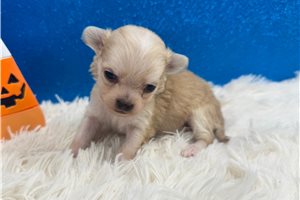
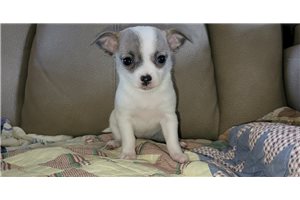









 Chihuahua note