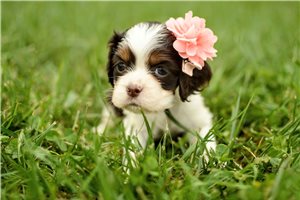
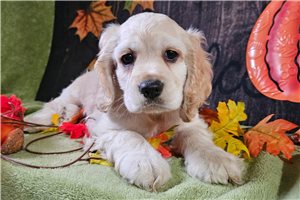
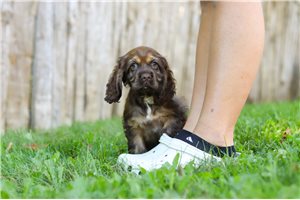
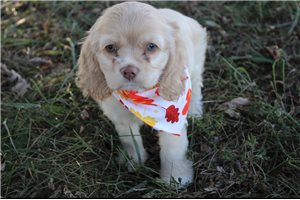
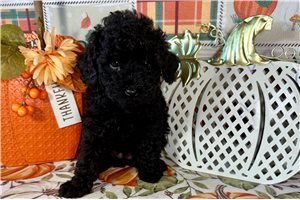
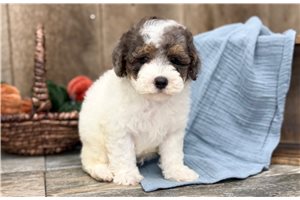
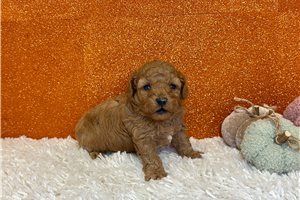
People fall for the Cockapoo's soft coat of curls or waves and its happy, outgoing way with everyone it meets. It is a people dog through and through, happiest close to its family and calm at home once it has had its exercise.
People fall for the Cockapoo's soft coat of curls or waves and its happy, outgoing way with everyone it meets. It is a people dog through and through, happiest...People fall for the Cockapoo's soft coat of curls or waves and its happy, outgoing way with everyone it meets. It is a people dog through and through, happiest close to its family and calm at home once it has had its exercise.
Only with Pawrade, you receive a pet insurance policy with no waiting period included for immediate accident or illness coverage. *NH, NY, RI, SC and TN residents excluded
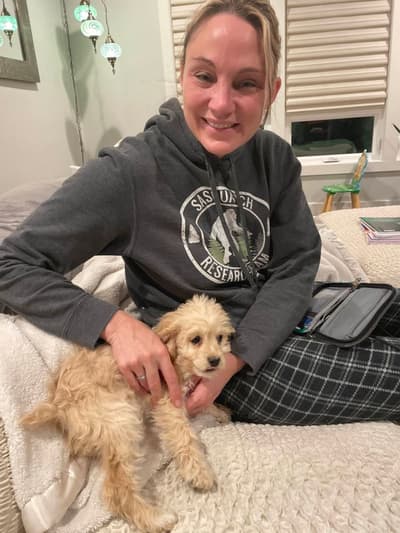
Wonderfully streamlined process with frequent updates and good instructions. Thank you, my little girl arrived this morning and is doing great:) thank you
“Wonderfully streamlined process with frequent updates and good instructions. Thank you, my little girl arrived this morning and is doing great:) thank you”
Eddie · Cockapoo
Jun 29, 2021
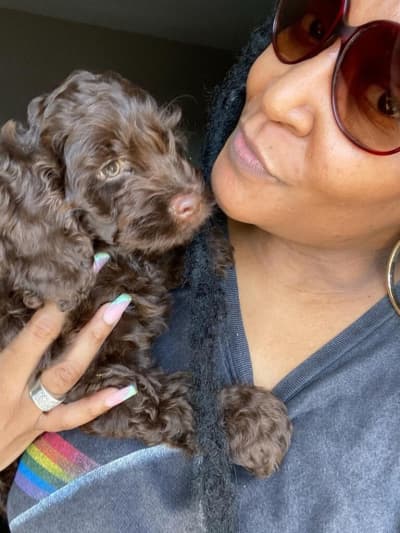
“Winston formerly known as Eddie is everything and more . He listens and loves to play . And goes every where with me . He especially loves playing with my 16yr.old son . ”
Giselle · Cockapoo
Dec 17, 2023
“Amazing experience, team was always supportive and extremly nice. Place made by great people.”
Kenzie · Cockapoo
Jul 27, 2026
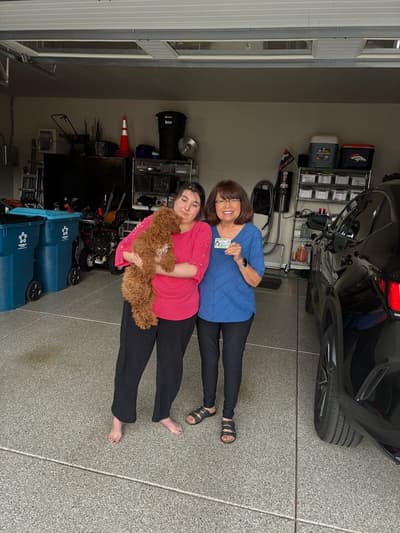
“Pawrade was a wonderful resource to get our new puppy. From the beginning of the process, we felt like we knew our puppy when she arrived at our door. I loved knowing about her, her parents and siblings. Everything was transparent. Thank you!!!”
Puppy scams cost U.S. families millions every year. Here's how you know Pawrade isn't one: we're a named, audited business with a public track record you can check anywhere.
Pawrade data: parents of puppies placed through Pawrade (breeder-reported)
Height
10–18 in
Lifespan
14–18 years
Energy
Moderate
Shedding
Low
Cockapoo Characteristics
Full-Grown Size
2 of 7SmallLarge
Grooming Needs
4 of 7SeldomRegularly
Good with Dogs
4 of 7Not ReallyYes!
Watchdog Ability
2 of 7LowHigh
Exercise Needs
3 of 7Couch PotatoHigh Needs
Your new best friend.
Cockapoo temperament
Personality and daily life
Temperament
A Cockapoo is affectionate, outgoing and eager to please, and it wants to be wherever its people are. Most greet strangers happily. Many are also excitable and easily distracted, which steady training helps settle.
Kids and other pets
Cockapoos are usually good with children, and an adult should supervise every meeting between a dog and a young child. Most get along with other dogs and pets. Early, wide socialization and puppy classes help a Cockapoo grow up confident rather than fearful.
Energy and play
The gundog side shows in a love of retrieving, swimming and games that use the nose. Most are not heavy barkers, though some bark a lot, especially when left alone.
Training
Cockapoos are smart and learn quickly with food, play and praise. They are sensitive, so harsh handling backfires. Keep sessions short and treats tiny, and patient, steady practice will pay off as your puppy grows up.
Company and time alone
Plan for company. Cockapoos are prone to anxiety when left alone, so they suit homes where someone is around for much of the day. They adapt to apartments and houses alike if they get their exercise, but they are not outdoor dogs.
Pawrade data: parents of puppies placed through Pawrade (breeder-reported). Placements and reviews come from Pawrade's records.
A healthier start for a happier tomorrow.
Cockapoo care & grooming
Care and grooming
The routine
Exercise needs
Moderate
A Cockapoo has moderate energy and needs a long walk, a jog or an energetic game every day, plus some brain work such as obedience practice. Most settle calmly indoors once they have had their exercise.
Coat and shedding
Low
The soft coat comes in three main types: tight Poodle curls, loose waves and a flatter, Cocker-like coat, and one litter can include more than one. Cockapoos are low-shedding, with curly coats shedding least and straighter coats a little more.
Daily
Teeth and gums
Brush your Cockapoo's teeth every day.
Weekly
Coat and grooming care
Every coat type tangles into mats without care, so brush 2–3 times a week and book a professional clip every 4–6 weeks.
Ear checks
Check the long, floppy ears every week and after swims, because they trap moisture.
Monthly / as needed
Around the eyes
Keep the hair around the eyes trimmed and the eyes clean.
Have a cloudy eye or any change in vision checked promptly.
Ear troubleRoutine vet checks
Ask for an ear check at every checkup, since Cockapoos get ear infections more often than many dogs.
Joints and movementGo easy while growing
While your puppy is growing, go easy on jumping to protect its hips and knees.
Body weightKeep them lean and cool
Keep your Cockapoo lean with measured meals and small treats, because it gains weight easily.
Every milestone, together.
Cockapoo puppy milestones
Your Cockapoo's first 2 years
Before 8 weeks
Before your puppy comes home
Your puppy is still with its litter, and the stretch when it is most open to new people, places and sounds is already under way. Its adult size is hard to predict, because a Cockapoo's size depends on its parents and varies by generation.
Choose a crate just big enough for your puppy to stand up and turn around in.
Set the crate up in a room where the family spends time, or in your bedroom at night.
Stock up on puppy food and a few safe chew toys before the big day.
Book a first visit with your own vet, and bring the Veterinary Health Report.
Why it matters
A crate near people helps a new puppy settle, and you will hear it if it needs a trip outside at night.
Cockapoo note
Cockapoos are people dogs, so a crate within sight and sound of the family suits them from the first night.
8–10 weeks
The first week home
Everything is new, and your puppy needs the bathroom often, especially first thing in the morning, last thing at night and after naps. A quiet start helps, so keep the first 72 hours at home calm and simple.
Take your puppy outside at those times and after play and meals, and praise it every time it goes.
Handle the ears, feet and mouth gently every day, so checks and grooming feel normal later.
Never use the crate as a punishment, so it stays a safe place to rest.
Look inside the long ears this week, and keep up the habit every week from now on.
Why it matters
Frequent, predictable trips outside are how a young puppy learns where to go.
Cockapoo note
Cockapoos are sensitive, so gentle handling and plenty of praise work far better than scolding.
10–12 weeks
Weeks 2 to 4
Your puppy is in the middle of its main socialization window, which runs through about the first 3 months. What it meets now shapes how it feels about people, dogs and new places for years to come.
Plan a few short, happy introductions each day to new people, new sounds and friendly, healthy dogs.
Sign up for a reward-based puppy class, which can start at 7–8 weeks once your vet is happy.
Until the vaccines are done, keep your puppy away from sick and unfamiliar dogs, as your vet advises.
Why it matters
Puppies that get gentle, positive experiences during this window build the life skills to cope with new things later.
Cockapoo note
Early, wide socialization matters especially for Cockapoos, because it helps them grow up confident rather than fearful.
3–4 months
3 to 4 months
Around 12 weeks, the baby teeth start to fall out as the adult teeth come in, and chewing picks up. The puppy vaccine series usually finishes at about 16 weeks, as your vet advises.
Keep only a few safe chew toys out at a time, and swap them around to keep them interesting.
Put shoes, cords and other things you value out of reach while your puppy is teething.
Stretch the time between bathroom trips slowly, since a puppy can usually hold its bladder about as many hours as it is months old.
Why it matters
Chewing is strongest while the teeth change, so safe things to chew protect both your home and your puppy.
Cockapoo note
Start short, gentle brushing sessions now, so your Cockapoo learns to enjoy the grooming it will need for life.
4–6 months
4 to 6 months
By about 6 months, the adult teeth are in and teething winds down. Your puppy is still growing, and the soft growth plates in its legs are still forming.
Keep exercise to play at your puppy's own pace, and skip long runs and hard exercise for now.
Ask your vet what kind and amount of exercise suits your puppy while it is still growing.
Feed measured puppy meals and keep treats small, so your puppy grows lean rather than round.
Why it matters
Too much hard exercise can injure soft growth plates before growth is done. The hips are most sensitive while a puppy grows quickly, so steady, lean growth helps protect them.
Cockapoo note
Cockapoos put on weight easily, so cut back a little on food if your puppy starts to look round.
6–12 months
6 to 12 months
From about 8 months, many young dogs start testing limits and seem to forget cues they already knew. This teenage stage is normal, and it passes with patience. Around the same time, the puppy coat starts changing to the adult coat, which mats more easily.
Keep training sessions short and consistent, and use rewards your dog really wants.
Brush more often as the adult coat comes in, and book your puppy's first professional clips.
Talk with your vet about spaying or neutering, since the right time depends on things like sex and expected adult size.
Why it matters
Patience, steady training and plenty of exercise for body and mind carry a young dog through these months.
Cockapoo note
Cockapoos can be excitable and anxious when left alone, so keep up calm, steady training for both through adolescence.
1–2 years
1 to 2 years
Your Cockapoo looks grown up, and most dogs are fully grown and settled into adulthood at around 2 years. Smaller dogs tend to finish growing sooner than large ones.
Ask your vet whether growth is finished before you add jogging, long hikes or agility.
Settle into an adult routine of daily walks, regular brushing and a professional clip every few weeks.
Book a wellness exam with your vet at least once a year, including a look at the eyes and ears.
Keep brushing your Cockapoo's teeth every day as part of that adult routine.
Why it matters
An adult Cockapoo that gets its walks, games and training is usually calm and easy to live with at home.
Cockapoo note
Fetch, swimming and scent games suit most adult Cockapoos, and some go on to agility or flyball.
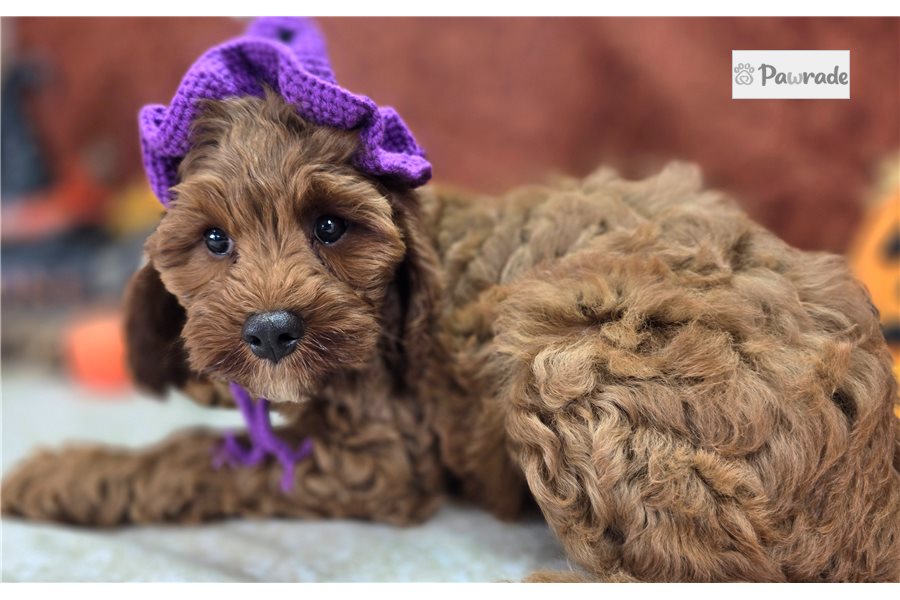
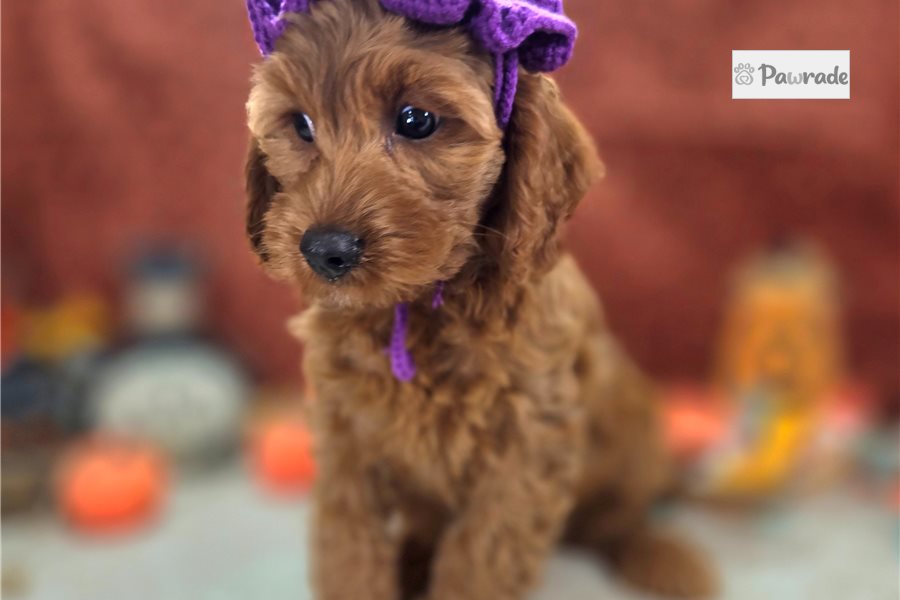
The Cockapoo has no breed standard, so looks vary from dog to dog. Most have long, floppy ears, and tails may be docked or left natural.
Size
Most adult Cockapoos weigh 15–22 lb and stand 10–18 in at the shoulder. Size follows the Poodle parent, and the Miniature Poodle is the most common choice. Cockapoo sizes are sorted by height at the shoulder. A toy stands 10 in or less and has a Toy Poodle parent, and a miniature stands 11–14 in and has a Miniature Poodle parent. A standard, or maxi, stands 15 in or more and has a Standard Poodle parent, which is rarely used. Adult size also depends on the parents themselves and varies from generation to generation, so check the parents' weights shown on each Pawrade listing.
Colors and markings
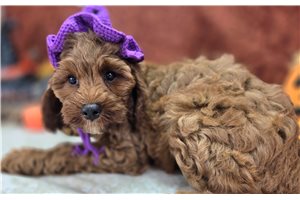
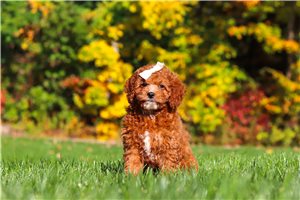
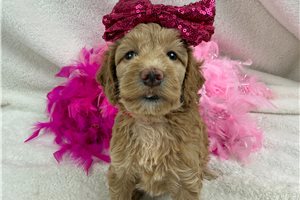
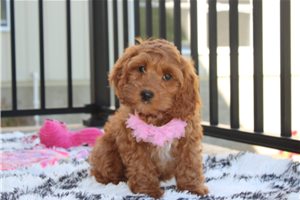
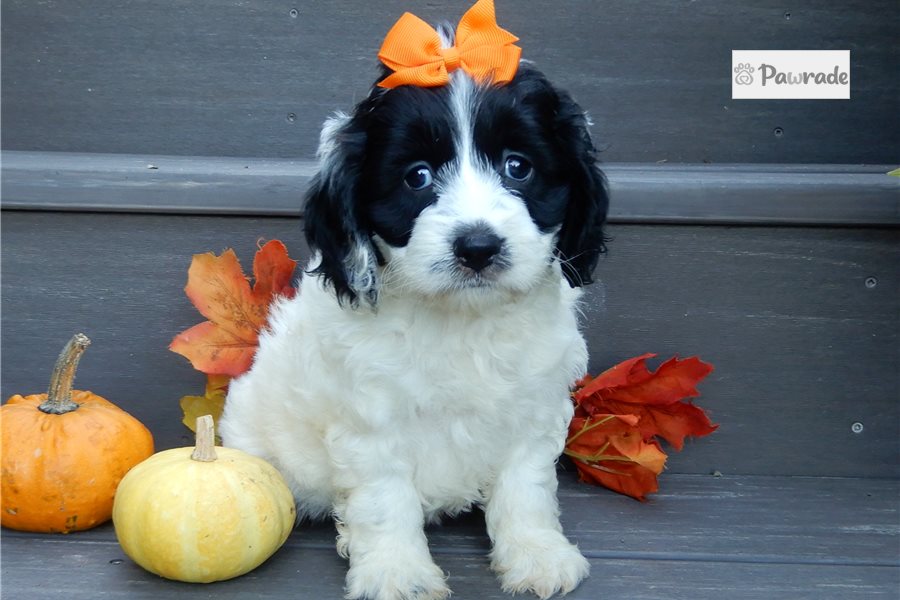
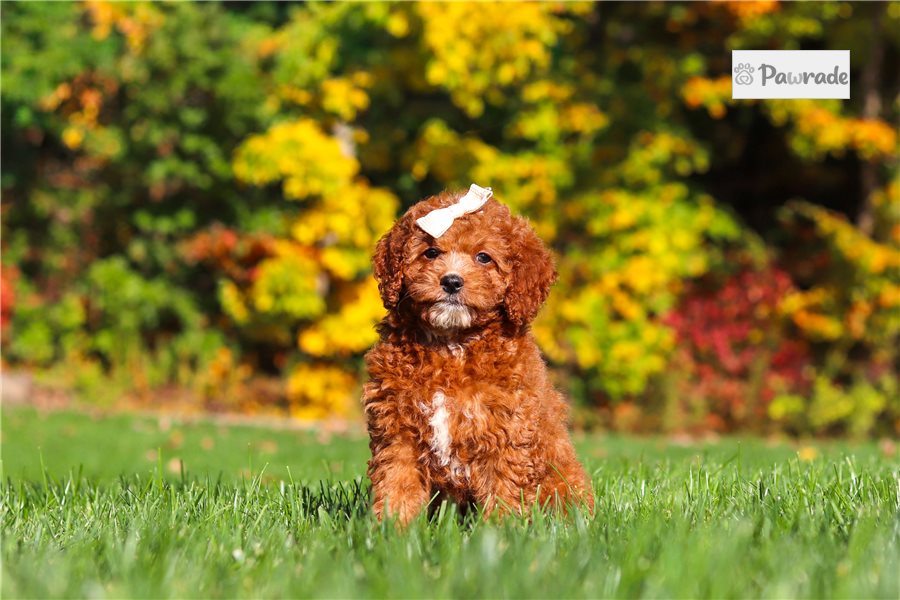
With no breed standard, the clubs list every color rather than a standard set. Colors include black, white, cream, buff, apricot, red, chocolate and silver or beige, any with white markings. Patterns include parti, phantom, sable, tricolor, merle, roan, brindle and ticking. Sable puppies are born black or dark brown and lighten to gold, silver, red, brown or tan, keeping darker points. Merle occurs in Cockapoos, although neither parent breed's standard includes it.
Colors listed by Pawrade breeders
Apricot
Black
Blue Merle
Buff
Chocolate
Cream
Merle
Phantom
Red
Sable
Silver
Tan
Tri-color
White
A little history, a lot of heart.
Cockapoo history
History
1950s
The first Cockapoos appeared decades before the Labradoodle boom.
Cocker Spaniels and Poodles were both widely kept in the US at the time, and the first litters were unplanned.
Owners liked the puppies so much that people began breeding the cross on purpose.
1998
The Cockapoo Club of America, founded in 1998, is described as the first organization for a crossbreed, and the American Cockapoo Club also registers Cockapoos.
The AKC and UKC do not recognize the Cockapoo.
Crosses with an English Cocker Spaniel are called English Cockapoos, while most US Cockapoos have an American Cocker parent.
The cross is also known as the Cockerpoo, and as the Spoodle in Australia and New Zealand.
A Cockapoo named Teddy won the Gold Medal of PDSA (a UK veterinary charity).
Her barking brought her family running when their young son was trapped inside a tumble dryer that was switched on.
Checked with care before travel.
Cockapoo Veterinary Health Report
Your puppy's Veterinary Health Report
Before your Cockapoo puppy goes home, the breeder's licensed veterinarian gives it a full hands-on exam to PetPay's exam standards, and the results go into its own Veterinary Health Report.
The exam, a health certificate and a stool test for parasites all happen 3 to 5 days before your puppy leaves.
1The exam looks at your puppy itself, not its parents, so the record you get is about your own dog.
2If the vet finds something that could put your puppy at risk during travel, your puppy stays with the breeder until it's resolved.
3Problems that can be treated before travel are treated by the breeder's licensed vet first.
4Anything else the vet notes is shared with you.
5A hard copy of the report travels with your puppy for your records, and a digital copy is in your PetPay account.
Puppies must be at least 8 weeks old and 2 lb before they travel. Every puppy also comes with a health guarantee administered by PetPay, independent of the seller. The terms are on the health guarantee page.
A Cockapoo puppy's price reflects what goes into it: its pedigree and registration, its coat and color, and the breeder's program. Every Pawrade puppy's price also includes the pre-travel exam by the breeder's licensed vet, the Veterinary Health Report and a health guarantee administered by PetPay. See today's price range for Cockapoo puppies on Pawrade's Cockapoo listings.
Typical asking price
$2,575
Based on 512 Cockapoo listings in the last 12 months
Most adult Cockapoos weigh 15–22 lb and stand 10–18 in at the shoulder. Size follows the Poodle parent, so a Cockapoo with a Toy Poodle parent is smaller than one with a Miniature or Standard Poodle parent. Adult size also depends on the parents themselves and varies by generation, so check the parents' weights on each puppy's listing.
The difference is the Poodle parent: a toy Cockapoo has a Toy Poodle parent, and a miniature has a Miniature Poodle parent, the most common choice. By height at the shoulder, a toy Cockapoo stands 10 in or less and a miniature 11–14 in.
Only roughly, because the size classes are guidelines rather than a breed standard. Adult size depends on the parents and varies by generation, and it can differ even within one litter.
They are generation labels, and every generation of the Cocker Spaniel and Poodle cross counts as a Cockapoo. The label does not fix the coat, because coat type can vary even within one litter. Straighter coats and later generations may shed more.
Cockapoos come in many colors, including black, white, cream, apricot, red, chocolate and silver, with or without white markings. Sable puppies do change, starting black or dark brown and lightening to gold, silver, red, brown or tan.
A Cockapoo is a cross between a Cocker Spaniel and a Poodle, usually a Miniature or Toy Poodle. Most US Cockapoos have an American Cocker Spaniel parent, and crosses with an English Cocker are called English Cockapoos.
Both are similar-sized Poodle crosses with low-shedding curly or wavy coats. The difference is the other parent: a Cavapoo has a Cavalier King Charles Spaniel parent instead of a Cocker Spaniel.
Cockapoos are affectionate, outgoing and eager to please, with a strong focus on their people. Many are excitable and easily distracted, and steady, reward-based training helps them settle.
Many are, because Cockapoos are affectionate, people-oriented dogs that like to stay close. They still need a daily walk or active play, not just time on your lap.
It can be, because Cockapoos are eager to please and quick to learn with rewards. First-time owners should plan for daily exercise, company and a regular grooming routine.
Cockapoos are usually good with children, and an adult should supervise every meeting between a dog and a young child. Cockapoo breeders on Pawrade report socializing 79% of their litters with young children. Early, wide socialization and puppy classes help a Cockapoo grow up confident.
Most Cockapoos get along well with other dogs and pets. Cockapoo breeders on Pawrade report socializing 90% of their litters with small dogs before the puppies go home.
Cockapoos usually get along with other pets, and early, gentle introductions help. Some breeders on Pawrade socialize their litters with cats before the puppies go home.
A Cockapoo enjoys a long daily walk or a jog, and most love to retrieve and swim. Check the long ears after a swim, because they trap moisture. Wait until your Cockapoo has finished growing before long runs, and ask your vet when that is.
Cockapoos adapt to apartments and houses alike if they get daily exercise, but they are not outdoor dogs. Most Cockapoo buyers on Pawrade live in a single-family home, and some live in apartments.
Not for long, because Cockapoos are prone to anxiety and separation-related problems. A crate kept near the family, and never used as punishment, gives a puppy a safe place to rest.
Feed a puppy food in 3–4 meals a day until about the first birthday, then switch to adult food. Cockapoos gain weight easily, so measure meals and keep treats small.
Cockapoos are low-shedding, but no dog is truly hypoallergenic. Curly coats shed very little, while straighter coats and later generations can shed more. People with allergies can still react, so spend time with an adult Cockapoo first.
A Cockapoo needs brushing 2–3 times a week and a professional clip every 4–6 weeks. Every coat type mats without it, and the ears need a check every week.
Start gentle brushing at home right away, so your puppy gets used to being groomed. Plan the first professional clips as the adult coat comes in, from about 8 months, when matting starts.
Cockapoos are smart and quick to learn with food, play and praise. They are sensitive and can be excitable, so keep sessions short, calm and consistent.
Start on the first day with a crate just big enough for your puppy to stand up and turn around in. Keep the crate in a room where the family spends time, or in your bedroom at night. Take your puppy out first thing in the morning, last thing at night, after naps and after play and meals. Breeders on Pawrade report whether they have started crate training, so ask how far your puppy has got.
A puppy can usually hold its bladder for about as many hours as it is months old, so a 3-month-old can wait about 3 hours. Very young puppies need to go out first thing in the morning, last thing at night and after naps.
Your Cockapoo has probably reached adolescence, which may begin around 8 months and last until about 2 years. Testing the rules is a normal stage for young dogs. Keep training short, calm and consistent, and use rewards your dog really wants.
Puppies travel only once they are at least 8 weeks old and weigh at least 2 lb. Most Cockapoo puppies go home at about 12 weeks, usually between 9 and 18 weeks.
Most puppies have all their adult teeth by about 6 months, and teething winds down then. The baby teeth start falling out at around 12 weeks, so expect extra chewing from then on. Offer safe chew toys, rotate a few at a time, and keep shoes and cords out of reach.
Start right away, because the main socialization window is roughly the first 3 months. Puppy classes can start at 7–8 weeks, after a first set of vaccines, as long as your puppy stays away from sick dogs.
Most Cockapoo litters on Pawrade meet small dogs and young children before the puppies go home. Breeders report socializing 90% of litters with small dogs and 79% with young children. Some breeders also get their litters used to household sounds such as music, TV and the vacuum cleaner. These figures come from what breeders reported for 252 litters. Keep it going once your puppy is home, because the first 3 months are the main socialization window.
The Veterinary Health Report is the record of your Cockapoo puppy's exam before it goes home. The breeder's licensed vet gives the puppy itself a full hands-on exam, to PetPay's exam standards, and records the results there. It gives you and your own vet a clear starting point for your puppy's care.
The breeder's licensed veterinarian examines every puppy before it goes home, to PetPay's exam standards. The results are recorded in the puppy's Veterinary Health Report, and a copy travels with your puppy for your records.
The breeder's vet examines the whole puppy and pays close attention to a few things that matter in Cockapoos. The vet checks the eyes for extra eyelashes, discharge and cloudiness, and looks inside the ears for debris and signs of infection. The vet also feels each knee to check that the kneecap stays in place, and checks the hips for any sign of pain.
Before travel, every puppy follows PetPay's vaccination and deworming schedule as far as its age allows: deworming at 2, 4, 6, 8, 10 and 12 weeks, and the distemper, parvo, adenovirus and parainfluenza combination shot at 6–8, 9–11 and 12–14 weeks. Bordetella and corona are given at the vet's discretion, and no vaccine is given within 3 days of travel. Rabies is given by a licensed vet on the schedule your state requires. Your own vet completes the series. Your puppy's vaccination and deworming records are separate documents that travel with your puppy. Bring them, with the Veterinary Health Report, to your first visit so your vet starts from the same record.
If the vet finds something that could put your puppy at risk during travel, your puppy stays with the breeder until it's resolved. Problems that can be treated before travel are treated by the breeder's licensed vet first. Anything else the vet notes is shared with you.
Puppies grow and change quickly, and their immune systems are still developing, so no single exam can find everything. Hips, for example, cannot be judged in a young puppy, so checks carry on as your dog grows. The report is a strong early look at your puppy, and your own vet builds on it at every checkup.
Parents of Pawrade Cockapoos typically weigh 12–28 lb (fathers) and 12–22 lb (mothers). Each puppy's listing shows its own parents' weights, because a Cockapoo's adult size depends on its parents and varies by generation.
Right now, most Cockapoo puppies on Pawrade are listed within the typical range shown on Pawrade's Cockapoo listings. Each breeder on Pawrade sets their own price, and each puppy's listing shows it. A Cockapoo puppy's price reflects what goes into it: its pedigree and registration, its coat and color, and the breeder's program. Every Pawrade puppy's price also includes the pre-travel exam by the breeder's licensed vet, the Veterinary Health Report and a health guarantee administered by PetPay.
























 Cockapoo note