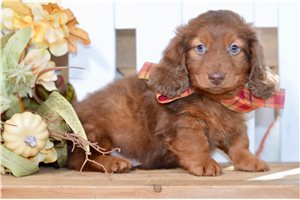
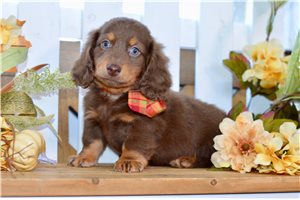
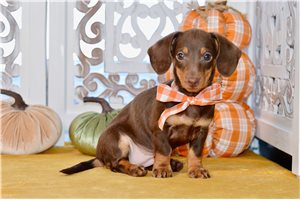
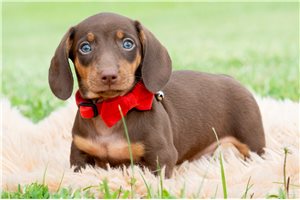
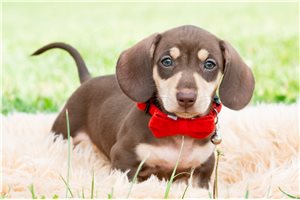
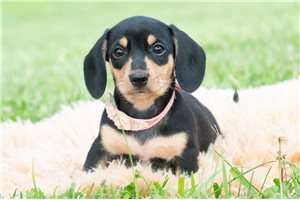
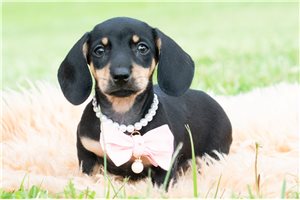
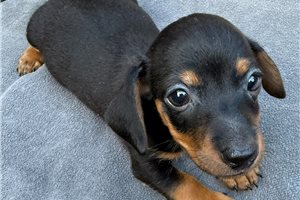
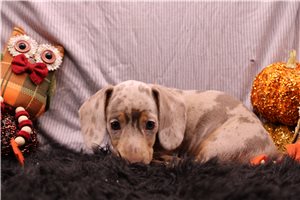
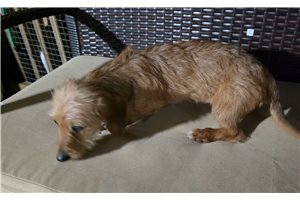
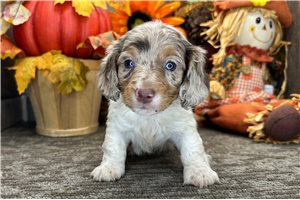
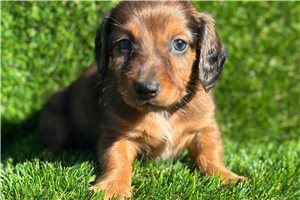
A Mini Dachshund is a whole badger hound packed into a small, long body, with a bark that sounds like it belongs to a much bigger dog. People fall for the bold little personality, the close bond a Mini forms with its favorite person, and the choice of smooth, wire or long coats.
A Mini Dachshund is a whole badger hound packed into a small, long body, with a bark that sounds like it belongs to a much bigger dog. People fall for the bold...A Mini Dachshund is a whole badger hound packed into a small, long body, with a bark that sounds like it belongs to a much bigger dog. People fall for the bold little personality, the close bond a Mini forms with its favorite person, and the choice of smooth, wire or long coats.
Only with Pawrade, you receive a pet insurance policy with no waiting period included for immediate accident or illness coverage. *NH, NY, RI, SC and TN residents excluded
“Very easy to navigate and the staff are absolutely incredible and very knowledgeable. Would definitely recommend and buy again in the future.”
Clara · Shih Apso
Nov 12, 2023
“Everything was made easy along the way. I could call with questions, and they kept me up to date with all the information I needed. My baby arrived right on time, and she is everything they promised. Very happy. ”
Nadia · Australian Shepherd
Mar 29, 2026
“Both Nadia and nhal are just perfect and great health living life to its fullest at their new home! Thank you for all your time and effort put into helping me complete my homework thank you!”
Iceman · Dachshund, Mini
May 24, 2026
“Everyone was very helpful and easy to talk to and ask questions of. I had a very good experience.”
Puppy scams cost U.S. families millions every year. Here's how you know Pawrade isn't one: we're a named, audited business with a public track record you can check anywhere.
Pawrade data: parents of puppies placed through Pawrade (breeder-reported)
Height
5–9 in
Lifespan
12–16 years
Energy
Moderate
Shedding
Low to moderate
Group
Hound
AKC
Mini Dachshund Characteristics
Full-Grown Size
1 of 7SmallLarge
Grooming Needs
4 of 7SeldomRegularly
Good with Dogs
1 of 7Not ReallyYes!
Watchdog Ability
7 of 7LowHigh
Exercise Needs
4 of 7Couch PotatoHigh Needs
Your new best friend.
Mini Dachshund temperament
Personality and daily life
Dachshunds were bred to go underground after badgers, and that job still shows. A Mini is clever and brave, sometimes braver than a dog its size should be. Once it picks up a scent it likes to make its own decisions, so expect a stubborn streak along with the charm.
Kids and other pets
Many Minis bond most closely with one person and take their time with strangers. Raised around children, a Mini can be a good family dog. Small Minis are easily hurt, though, so an adult should watch play with young children. Most get along with other dogs when they are socialized early, although some stay wary of dogs much bigger than they are.
The hunting past explains the digging too. A Mini has a strong prey drive and loves to dig and tunnel, so a dig box, tunnels and sniffing games give those instincts a safe outlet. Even the big bark had a job: it let hunters find a dog working underground. It is loud for the dog's size, so start teaching quiet behavior while your Mini is a puppy.
At home
Energy is moderate. An adult needs one or two walks a day, up to about an hour in all, plus play and time to sniff. With those walks a Mini settles well in an apartment or a small home, and it belongs indoors with its family, never in a yard or kennel. Minis are very people-oriented, so practice short absences early and time alone becomes normal.
Keep up eye exams as your Mini ages, since inherited sight loss can begin early or late in life.
Skin changesMention skin changes
Blue and isabella coats are linked to color dilution alopecia, so mention any thin or bald patches of skin at each vet visit.
Back and spineKeep them lean
Extra weight strains that long back and raises the chance of disc problems, which makes a lean Mini the goal from the first day.
Back and spineSupport the back
Lift the puppy with one hand under the chest and one under the hindquarters so the back stays level.
Back and spineKnow when to call
See a vet promptly about any back or neck pain, wobbliness or weakness, because early treatment of disc disease helps recovery.
Every milestone, together.
Mini Dachshund puppy milestones
Growing up: your Mini Dachshund's first years
Before 8 weeks
Before your puppy comes home
Your puppy is still with its mother and littermates, and Mini Dachshund litters on Pawrade typically have 4 puppies. Most Mini breeders on Pawrade also get their litters used to small dogs, children and everyday sounds such as the TV and the vacuum cleaner.
Check your fencing before your puppy arrives, because a Dachshund that catches a scent is prone to wander off.
Get a ramp for the sofa and the bed, so your puppy learns to use it from the very first day.
Put the crate in a room where your family spends the day, and move it into your bedroom at night.
Why it matters
Puppies under a year old are at more risk from jumping down, so the ramp habit matters most at the start.
Mini Dachshund note
A Dachshund's nose and appetite are strong, so move food and treats well out of reach before your puppy comes home.
8–10 weeks
The first week home
House-training starts on day one, and a young puppy needs to go outside often. As a rule of thumb, a puppy can wait about as many hours between potty trips as it is months old.
Take your puppy outside first thing in the morning, after each nap and last thing at night.
Praise every success, and clean up accidents quietly instead of scolding your puppy.
Lift your puppy with one hand under its chest and the other under its hindquarters, keeping the back level.
Show children how to lift the puppy the same way.
Why it matters
Dachshunds can take longer than average to house-train, so a steady routine from day one pays off.
Mini Dachshund note
A Mini's bark is loud for its size, so reward quiet moments from the very start.
10–12 weeks
Weeks 2 to 4
Your puppy is in the most important stretch for socialization, which runs through the first 3 months of life. Good experiences now help a Mini grow up confident rather than fearful.
Introduce calm, friendly people of all ages and well-mannered dogs, a few at a time, with treats and praise.
Ask your vet about a puppy class, which can start as early as 7–8 weeks if the class keeps sick dogs out.
Keep leash walks short, about 5 minutes for each month of age, with free play on top.
Why it matters
Some Dachshunds are wary of bigger dogs, so gentle, positive meetings now help the adult dog stay relaxed around them.
Mini Dachshund note
A Mini is often reserved with strangers, which makes meeting many friendly people now especially worthwhile.
3–4 months
3 to 4 months
With consistency, many Dachshund puppies are well on the way with house-training by about 4 months, though Minis are said to take a little longer. A 3-month-old can usually wait about 3 hours to go out. The puppy vaccine series usually ends at about 16 weeks, as your vet advises.
Once your vet says the vaccines are done, take your puppy to new places and let it walk on new surfaces.
Start teaching quiet behavior now, using treats and praise when your puppy stops barking.
Practice short spells alone, so being on its own becomes a normal part of the day.
Why it matters
Dachshunds are people-oriented dogs, and teaching short absences early helps prevent separation anxiety later.
Mini Dachshund note
Some Dachshunds become persistent barkers, so puppyhood is the time to work on quiet manners.
4–6 months
4 to 6 months
Your puppy is teething, and the urge to chew is at its strongest. From about 12 weeks the baby teeth fall out as the adult teeth come in, and by about 6 months the adult set is usually complete.
Rotate a small set of safe chew toys so each one feels new again.
Start brushing your puppy's teeth once a week as soon as the adult teeth are in.
If your Mini is blue or isabella, look over its coat and skin regularly for thin or bald patches.
Why it matters
Chewing is strongest during teething, so safe chews and close supervision protect your belongings and your puppy.
Mini Dachshund note
Blue and isabella puppies are born with normal-looking coats, and thinning hair from color dilution alopecia can first appear around this age.
6–12 months
6 to 12 months
Adolescence can start around 8 months. Many young dogs test the rules or seem to forget what they have learned. Walks can build up to 45–50 minutes a day by the first birthday.
Keep training sessions short, upbeat and consistent, and add sniffing games to tire the mind as well as the body.
Ask your vet how much exercise suits your growing puppy, since growth plates stay soft until growth is done.
Make the spay or neuter decision together with your own vet, who knows your dog.
Why it matters
Neutering has been linked with more disc disease in Dachshunds, so weigh the choice carefully with your vet.
Mini Dachshund note
As growth slows, trim meals as needed so your Mini stays lean and its back carries no extra weight.
1–2 years
1 to 2 years
Your Mini is settling into its adult self: clever, lively and brave, with a big bark. Dogs usually reach adulthood at around 2 years, and a Mini may keep filling out until then.
Keep up daily walks and play to hold on to the muscle tone that supports the back.
Plan a wellness visit with your vet every year, and keep tooth brushing in the weekly routine.
Try a Dachshund sport such as earthdog or tracking if your Mini loves to dig and sniff.
Why it matters
Extra weight strains a long back, so a lean, fit adult is the goal for life.
Mini Dachshund note
If your Mini ever yelps when lifted or seems reluctant to move, call your vet promptly.
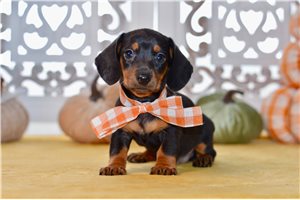
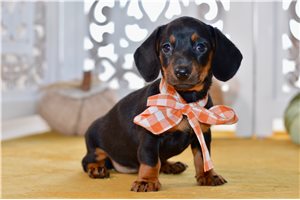
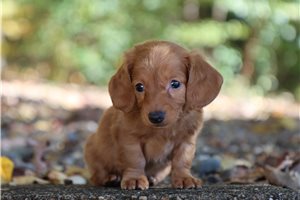
The Dachshund is long in the body and short in the leg, built low to the ground with strong muscles. The Miniature is not a separate breed. It shares one breed standard with the Standard Dachshund and differs only in size. Minis come in all three coats: smooth and shiny; wirehaired, with a hard outer coat, a beard and eyebrows; and longhaired, sleek and often slightly wavy.
Colors and coat
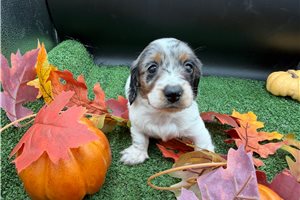
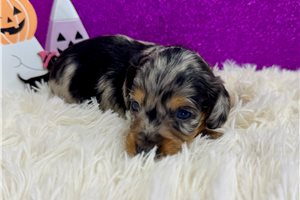
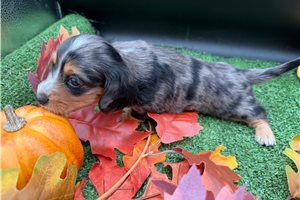
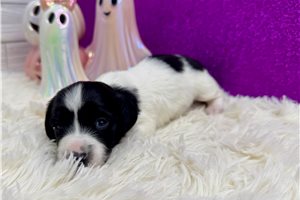
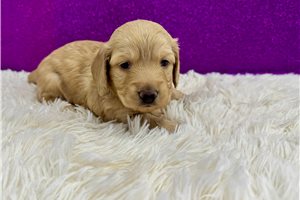
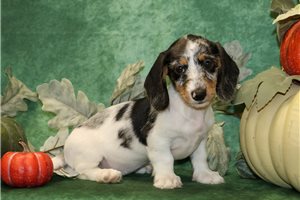
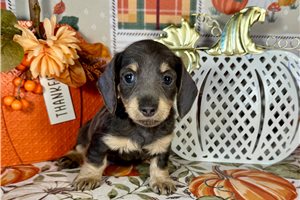
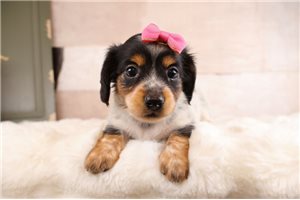
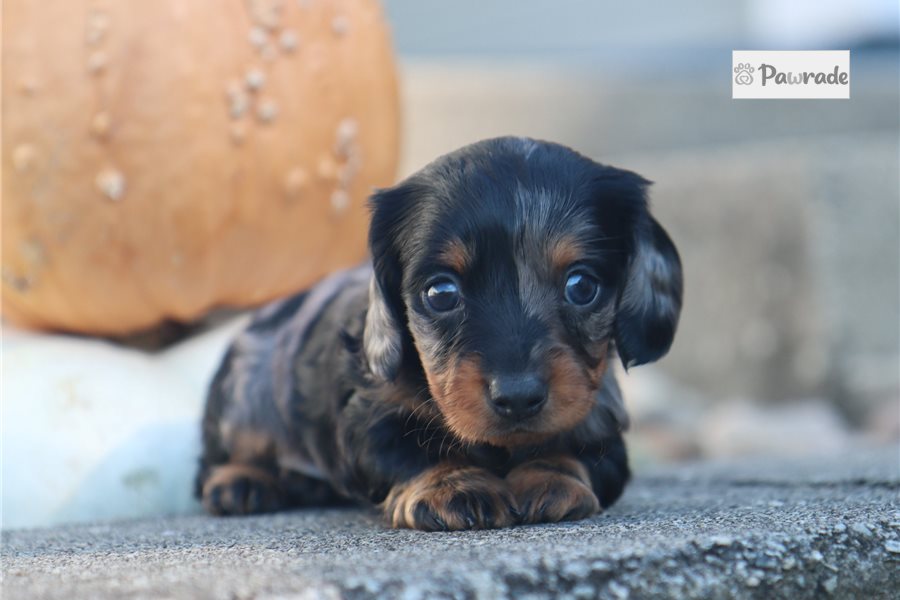
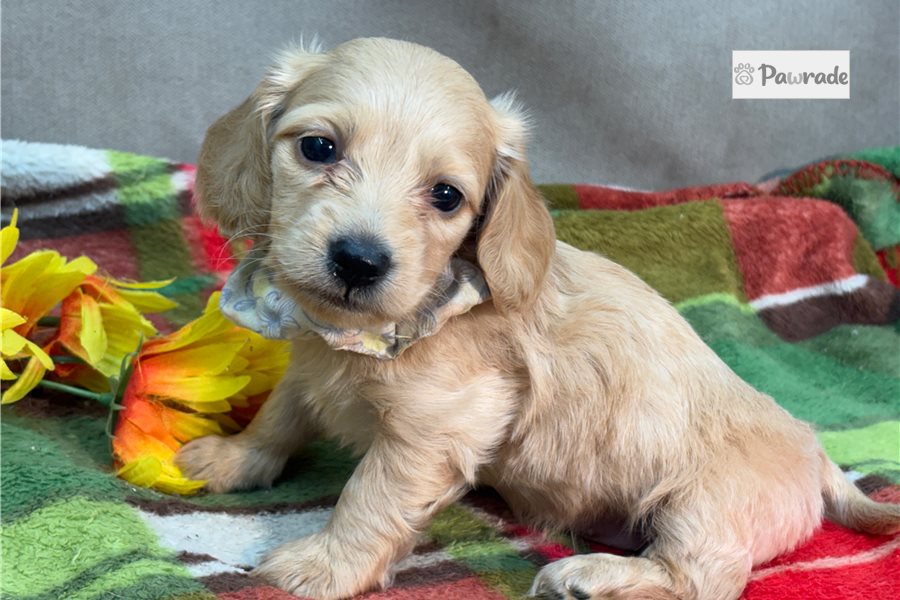
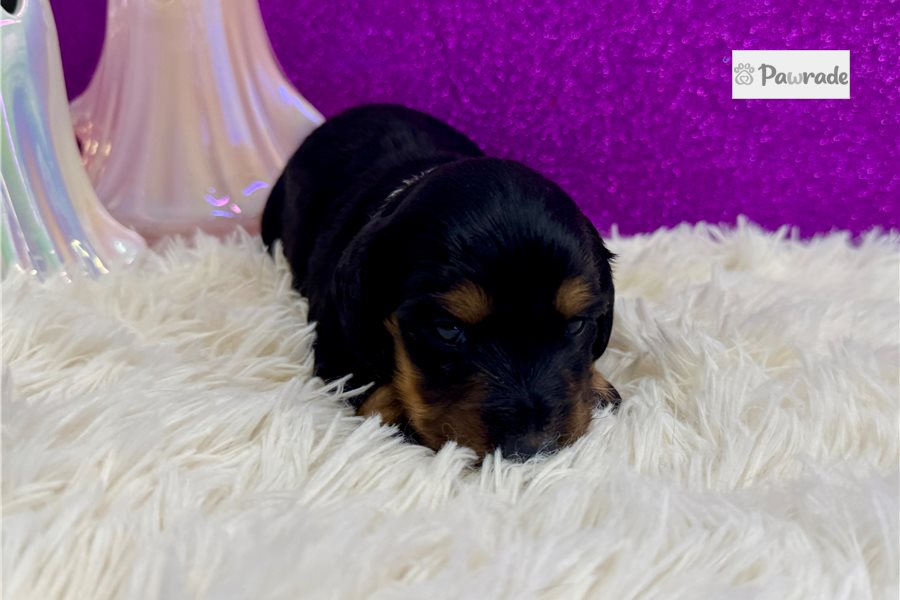
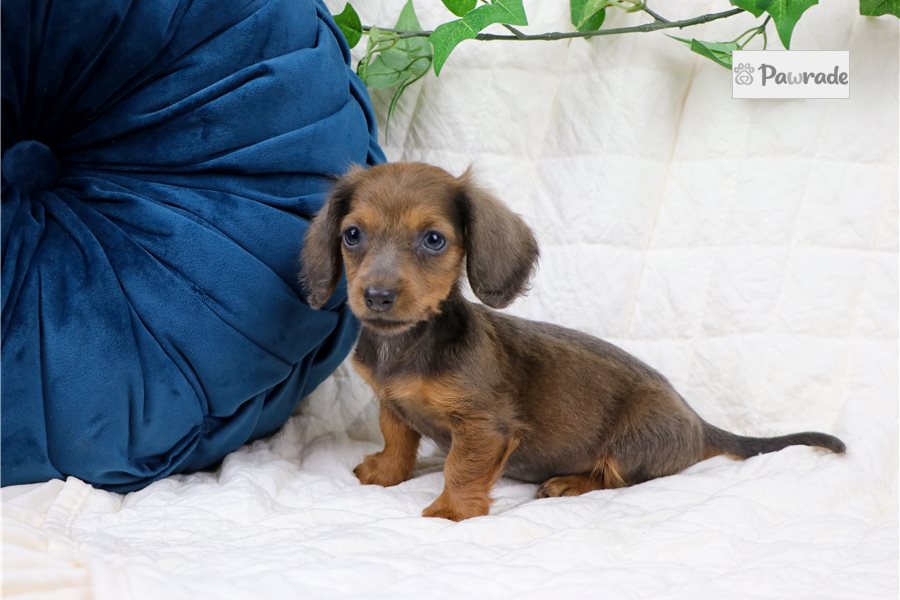
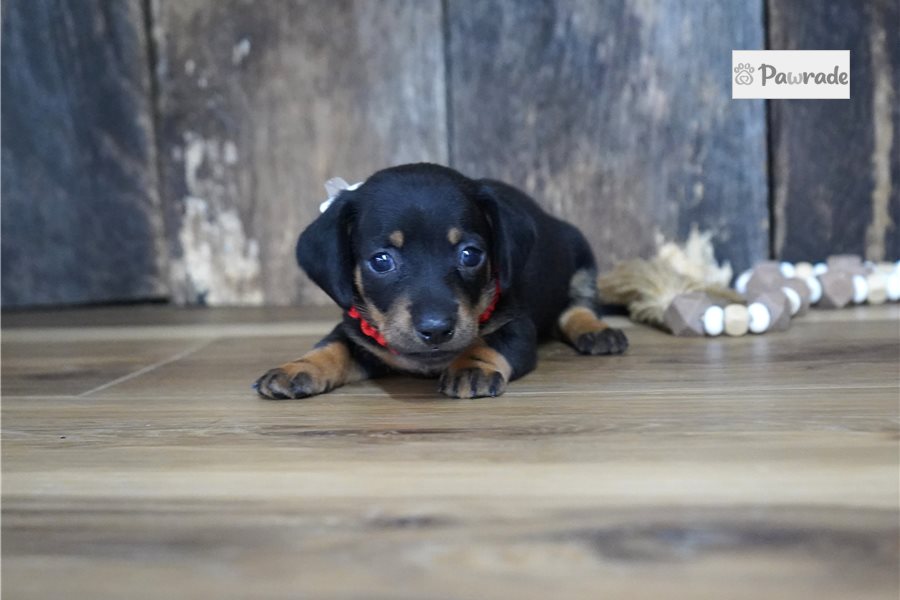
The AKC standard includes red, cream, black and tan, chocolate and tan, wild boar, and the dilute colors blue and isabella. Dapple (the Dachshund name for merle), brindle and piebald patterns are within the standard too. Solid black, solid chocolate and solid fawn without tan markings are outside the AKC breed standard. Blue eyes are fine in a dapple; in other colors they are outside the AKC breed standard.
Colors listed by Pawrade breeders
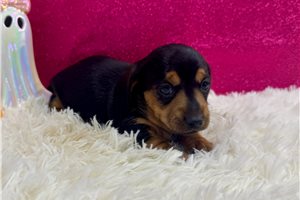
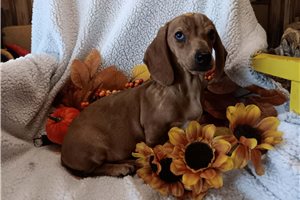
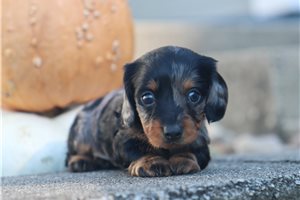
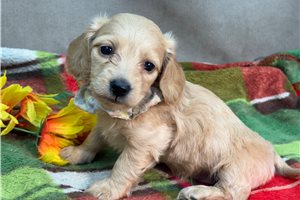
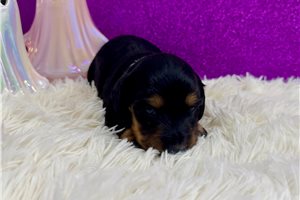
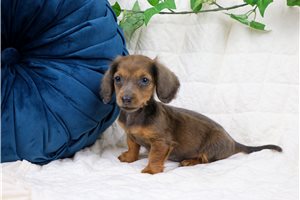
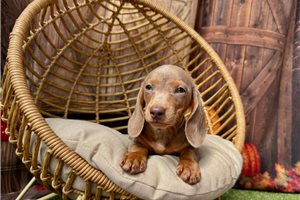
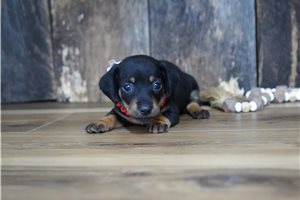
Brindle, sable, dappled; bi-color of black, chocolate, blue, fawn; solid of red and cream
Keeping your Mini Dachshund healthy
Mini Dachshunds are known to be prone to a handful of conditions. The back needs the most everyday care. Keep your Mini lean and muscled, and lift it with the back level. Back or neck pain needs a vet promptly, because early treatment of disc disease in the spine, called intervertebral disc disease (IVDD), improves recovery.
Talk with your vet about spaying or neutering, since neutering is linked to more disc disease in Dachshunds. Blue and isabella coats need regular skin checks.
A little history, a lot of heart.
Mini Dachshund history
History and fun facts
1700
Dachshund-like dogs were described in Germany by about 1700.
The name means badger dog: the breed hunted badgers and other den animals below ground and tracked game above it.
Smaller Dachshunds were selected to follow smaller quarry, such as rabbits, into narrow burrows.
The big bark is part of the design: it let hunters locate a dog working underground.
1800s
Smooth, long and wire coats were all recorded by the early 1800s, and terrier crosses played a part in the wire coat.
1888
Queen Victoria and Prince Albert kept Dachshunds, and the German breed club, the Deutscher Teckelklub, was founded in 1888.
1885
The AKC admitted the Dachshund to its Stud Book in 1885, and the Dachshund Club of America, still the breed's AKC parent club, was founded in 1895.
1923
During World War I, anti-German feeling led American owners to call the breed the Badger Dog, and the Dachshund name returned in 1923.
1972
Waldi, a striped, multicolored Dachshund, was the mascot of the 1972 Munich Summer Olympics.
Checked with care before travel.
Mini Dachshund Veterinary Health Report
Your puppy's Veterinary Health Report
Before your Mini Dachshund puppy comes home, the breeder's licensed vet gives it a full hands-on exam to PetPay's exam standards, and the results go into its Veterinary Health Report.
The exam, a health certificate and a stool test for parasites all happen 3 to 5 days before your puppy leaves.
1It is a check of your own puppy, not paperwork about its family, so you start with a clear record of how your puppy is doing.
2If the vet finds something that could put your puppy at risk during travel, your puppy stays with the breeder until it's resolved.
3Problems that can be treated before travel are treated by the breeder's licensed vet first.
4Anything else the vet notes is shared with you.
5A hard copy of the report travels with your puppy for your records, and a digital copy is in your PetPay account.
PetPay Veterinary Health Report form
16 areas checked on the exam
Closer look for Mini DachshundsOn every puppy's report
Puppies travel only once they are at least 8 weeks old and weigh at least 2 lb. Every puppy also comes with a health guarantee administered by PetPay, independent of the seller. The terms are on the health guarantee page.
A Mini Dachshund puppy's price reflects what goes into it: its pedigree and registration, its coat and color, and the breeder's program. Every Pawrade puppy's price also includes the pre-travel exam by the breeder's licensed vet, the Veterinary Health Report and a health guarantee administered by PetPay. Coat is one of those factors, because a Mini Dachshund can be smooth, wirehaired or longhaired. See today's price range for Mini Dachshund puppies on Pawrade's Mini Dachshund listings.
Typical asking price
$3,125
Based on 2,420 Mini Dachshund listings in the last 12 months
Frequently asked questions about Mini Dachshund puppies
Frequently asked questions
Adult Mini Dachshunds weigh about 9–10 lb and stand 5–9 in tall. Puppies grow fastest in their first 6 months.
Parents of Pawrade Mini Dachshunds typically weigh 8–12 lb (fathers) and 7–11 lb (mothers). A puppy keeps filling out until 18 months to 2 years, so its final size shows only then.
Each of the three coats looks and feels different once it grows in. A smooth coat is short and shiny, and a wire coat is a hard outer coat over a softer undercoat, with a beard and eyebrows. A long coat is sleek and grows longer on the ears, chest, underside and backs of the legs.
Miniature and standard are the two sizes of one breed, and no registry has a tweenie size. "Tweenie" is an informal name for a dog that falls between the two sizes.
Mini Dachshunds come in many colors, including red, cream, black and tan, chocolate and tan, wild boar, blue and isabella, plus the dapple, brindle and piebald patterns. Solid black, solid chocolate and solid fawn without tan are outside the AKC breed standard.
Dapple is the Dachshund name for the merle pattern, and every major registry accepts it. A double dapple is a puppy of two dapple parents, and that pairing is linked to eye and hearing defects, including deafness from birth. A hearing test (BAER) can check a dapple puppy's hearing for certain.
Blue eyes are allowed in dapple Dachshunds. In other colors, blue eyes are outside the AKC breed standard.
No registry recognizes a teacup or toy Dachshund. In Europe, the international kennel federation (FCI) adds a smaller Rabbit (Kaninchen) size, but US and UK registries do not.
A Mini Dachshund is clever, lively and brave, often braver than its size. It can be independent and stubborn once it is on a scent, and many bond most closely with one person. Its energy is moderate, so a walk or two a day and some play keep it happy.
Most do, because the Dachshund is a vocal breed with a loud bark for its size. That makes a Mini an alert watchdog, and teaching quiet behavior from puppyhood keeps it from turning into a habit.
Many are reserved with strangers at first. Meeting people of all ages as a puppy helps prevent fearfulness later.
The Dachshund is a hound, and every major registry groups it with the hounds. It was bred to hunt by scent, tracking game across open ground and following badgers into their dens.
They can be, especially when they are socialized with children as puppies. Small Minis are easily hurt, so supervise play and teach children to lift the dog with its back level. Most Pawrade breeders get their Mini Dachshund litters used to children before the puppies go home.
Most do when they are socialized early, although some are wary of larger dogs. Nearly half of Pawrade Mini Dachshund buyers already have another dog at home.
It depends on the dog, because Dachshunds have a strong prey drive. Some Pawrade breeders also introduce their litters to cats, which gives those puppies a head start.
Minis suit apartments and small homes as long as they get daily walks. Work on the bark early, because it is loud for the dog's size and carries through walls.
An adult needs one or two moderate walks a day, up to about an hour in all, plus play and sniffing. Puppies need less, about 5 minutes of on-leash walking per month of age, building to 45–50 minutes by the first birthday.
A Mini can learn to spend time alone, but it takes practice, because the breed is so people-oriented. Separation anxiety shows up in a minority of Dachshunds, and teaching short absences early helps prevent it.
They love it, because they were bred to hunt underground and still like to dig and tunnel. A dig box, tunnels and scent games give the instinct a safe outlet.
Mini Dachshunds shed lightly to moderately, and no dog is truly hypoallergenic. All three coats shed, so a small size does not make a Mini an allergy-friendly choice.
Grooming depends on the coat. Brush a smooth coat about once a week and a long or wire coat more often, and trim the nails at least monthly.
They learn well but have minds of their own, so training takes patience. Short, varied sessions with food rewards work best, and harsh methods backfire.
It often takes longer than average, but Minis can be house-trained. With frequent trips outside, praise and no scolding, many puppies are well on the way by about 4 months.
A common rule of thumb is about as many hours as its age in months, so a 3-month-old can usually wait about 3 hours. It holds until about 9 months to 1 year of age. Take a young puppy out first thing in the morning, after naps and last thing at night.
Your Mini is most likely in adolescence, a normal stage that can begin around 8 months and last until about 2 years. Young dogs this age often test the rules or seem to forget their training. Short, consistent sessions with food rewards, plenty of patience and exercise for body and mind help you through it.
Not reliably, because recall tends to fail once a Dachshund is on a scent. Keep yours on a leash or in a securely fenced area.
Scent games, sniff walks, tunneling and trick training all suit a Mini's instincts. Dachshunds can also earn titles in earthdog tests and tracking tests.
Pawrade puppies travel only once they are at least 8 weeks old and weigh at least 2 lb. Most Mini Dachshund puppies go home at about 11 weeks, usually between 9 and 17 weeks.
You will want a ramp for the sofa or bed, a secure fence or a leash, measured meals and a house-training routine. Practice lifting the puppy with one hand under the chest and one under the hindquarters.
Socialization starts the day your puppy comes home, since the first 3 months are the most important period for it. Puppy classes can begin as early as 7–8 weeks, as long as the class keeps sick dogs out and stays clean. Ask your vet when your puppy can join one. Meeting people of all ages and other dogs early helps prevent fearfulness later.
The core puppy vaccines usually finish at about 16 weeks, with your vet setting the exact schedule. Your own vet completes the series. Your puppy's vaccination and deworming records are separate documents that travel with your puppy. Bring them, with the Veterinary Health Report, to your first visit so your vet starts from the same record.
Teething is usually over by about 6 months, when the adult teeth are in. Baby teeth begin to fall out from about 12 weeks, and chewing is strongest in between. Offer a few safe chew toys at a time, swap them around, and start weekly tooth brushing once the adult teeth are in.
Most Pawrade Mini Dachshund litters meet children, other dogs and everyday household sounds before the puppies go home, as reported by their breeders. Breeders report that 93% of 1,541 litters met small dogs and 85% met older children. Most litters also got used to loud music or TV (74%), the vacuum cleaner (69%), car rides (68%) and pots and pans (62%). Keep going once your puppy is home, with people of all ages and other dogs, to reduce fearfulness later.
Most of the work comes down to three habits: protecting the long back, patient house-training and keeping your Mini on a leash. Lift it with the back level, teach a ramp early, take it outside often and praise every success.
Across 1,541 Mini Dachshund litters on Pawrade, the typical litter has 4 puppies, and most have between 2 and 6.
The Veterinary Health Report is the record of your Mini Dachshund puppy's exam before it goes home. The breeder's licensed vet gives the puppy itself a full hands-on exam to PetPay's exam standards and writes down what they find. It gives you and your own vet a clear starting point for your puppy's care.
The breeder's licensed veterinarian examines every puppy before it goes home, to PetPay's exam standards. The results are recorded in the puppy's Veterinary Health Report, and a copy travels with your puppy for your records.
The breeder's vet examines the whole puppy and pays close attention to a few things that matter in Mini Dachshunds. The vet checks the eyelids and eyes, listens to the heart, and feels the knees to check that the kneecaps stay in place. The vet also checks the bite, feels for the testicles in males, and checks the puppy's hearing.
Before travel, every puppy follows PetPay's vaccination and deworming schedule as far as its age allows: deworming at 2, 4, 6, 8, 10 and 12 weeks, and the distemper, parvo, adenovirus and parainfluenza combination shot at 6–8, 9–11 and 12–14 weeks. Bordetella and corona are given at the vet's discretion, and no vaccine is given within 3 days of travel. Rabies is given by a licensed vet on the schedule your state requires. Your own vet completes the series. Your puppy's vaccination and deworming records are separate documents that travel with your puppy. Bring them, with the Veterinary Health Report, to your first visit so your vet starts from the same record.
If the vet finds something that could put your puppy at risk during travel, your puppy stays with the breeder until it's resolved. Problems that can be treated before travel are treated by the breeder's licensed vet first. Anything else the vet notes is shared with you.
Puppies grow and change quickly, and their immune systems are still developing, so no single exam can find everything. In Mini Dachshunds, disc disease in the back cannot be screened for at the puppy exam, and a slipping kneecap can first appear in an older dog. The report is a strong early look at your puppy, and your own vet builds on it at every checkup.
Mini Dachshund buyers rate their Pawrade experience 4.7 out of 5 on average, across 1,152 reviews. About 85% of their reviews give the full 5 stars.
Right now, most Mini Dachshund puppies on Pawrade are listed within the typical range shown on Pawrade's Mini Dachshund listings. Each breeder on Pawrade sets their own price, and each puppy's listing shows it. A Mini Dachshund puppy's price reflects what goes into it: its pedigree and registration, its coat and color, and the breeder's program. Every Pawrade puppy's price also includes the pre-travel exam by the breeder's licensed vet, the Veterinary Health Report and a health guarantee administered by PetPay.





 Mini Dachshund note