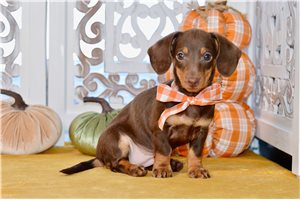
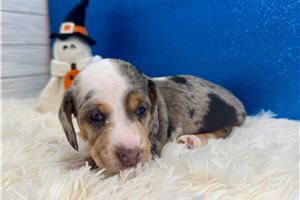
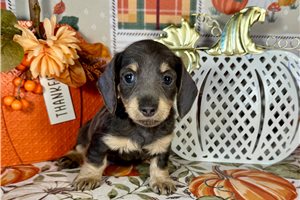
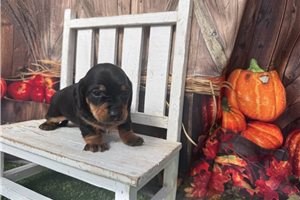
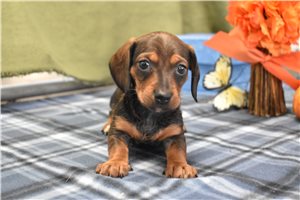
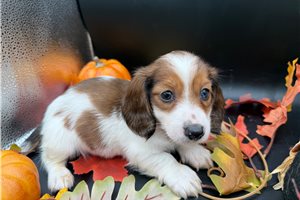
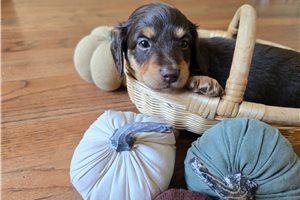
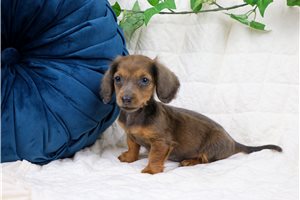
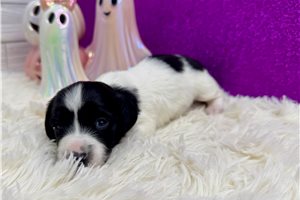
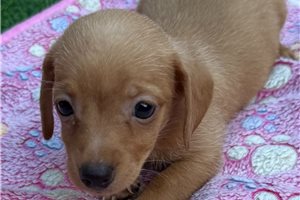
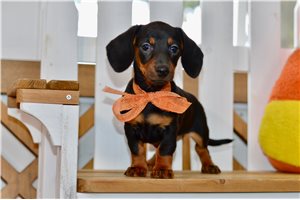
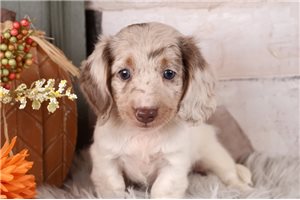
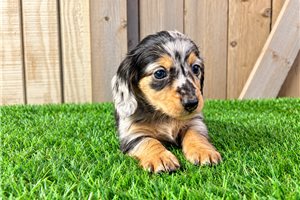
A Tweenie is a Dachshund in the in-between size: bigger than a miniature, smaller than most standards, and every bit as bold. People fall for the long body on short legs, the clever, lively mind and a scent hound's excellent nose.
A Tweenie is a Dachshund in the in-between size: bigger than a miniature, smaller than most standards, and every bit as bold. People fall for the long body...A Tweenie is a Dachshund in the in-between size: bigger than a miniature, smaller than most standards, and every bit as bold. People fall for the long body on short legs, the clever, lively mind and a scent hound's excellent nose.
Only with Pawrade, you receive a pet insurance policy with no waiting period included for immediate accident or illness coverage. *NH, NY, RI, SC and TN residents excluded
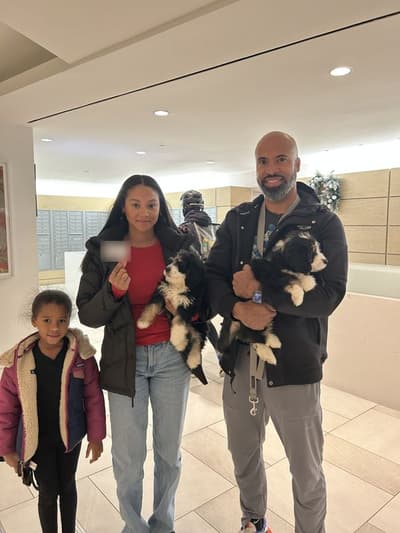
Staff was extremely helpful, always available, replied timely. Great communication, very pleasant, answered every question. I highly recommend Pawrade!
“Staff was extremely helpful, always available, replied timely. Great communication, very pleasant, answered every question. I highly recommend Pawrade!”
Niles · Bernedoodle, Mini
Dec 20, 2024
“Love our new puppy. The process was flawless and the folks at Pawrade were great!”
Lucy · Malti Poo - Maltipoo
Aug 16, 2024
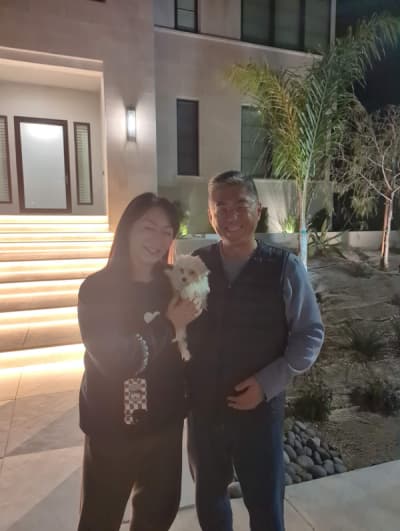
“Everything was perfect! Lucy is Beautiful! Having the app on my phone & being able to track them was a huge help. Thank you”
Ursa · Malti Poo - Maltipoo
Feb 25, 2025
“Ursa’s (we have changed her name to Winnie) arrival was sweet and exciting. Thank you for her safe delivery. We fell in love with her at first sight!”
Puppy scams cost U.S. families millions every year. Here's how you know Pawrade isn't one: we're a named, audited business with a public track record you can check anywhere.
Pawrade data: parents of puppies placed through Pawrade (breeder-reported)
Lifespan
12–16 years
Shedding
Low to moderate
Your new best friend.
Tweenie Dachshund temperament
Personality and daily life
Temperament
A Tweenie is a purebred Dachshund, not a separate breed, so it has the same character as a Miniature or a Standard. Expect a clever, lively dog that is brave to the point of rashness.
Instincts and drive
The nose leads the way. The Dachshund is a scent hound, and its name means badger dog in German. Tracking tests, earthdog tests and field trials still put that nose to work today.
Barking and noise
Dachshunds are vocal dogs, and a Tweenie is no exception. They are clever and can be a bit stubborn, so training goes best with patience.
Energy and play
Daily life centers on two moderate walks and a lean, fit body, which together help protect the long back. Breeders on Pawrade reported socializing most Tweenie litters with small dogs and children before the puppies went home.
Book eye exams through life, because inherited sight loss can start at very different ages.
Skin changesMention skin changes
If your Tweenie is blue or isabella, mention any thinning hair or bald patches on the skin at check-ups, because those colors are linked to color dilution alopecia.
Back and spineKnow when to call
See a vet promptly for back pain, wobbliness or weakness, and keep your Tweenie lean to help protect its back from disc disease (IVDD).
Body weightKeep them lean and cool
Keep your Tweenie lean: measure meals and watch for weight gain as growth slows.
Every milestone, together.
Tweenie Dachshund puppy milestones
Growing up: your Tweenie's first years
Before 8 weeks
Before your puppy comes home
Your puppy is still with its mother and littermates, and Tweenie litters on Pawrade typically have 4 puppies. Most Tweenie breeders on Pawrade also get litters used to small dogs, young children and household sounds such as the vacuum cleaner.
Set up the crate in a room where the family spends time, or in your bedroom at night.
Plan how you will keep your puppy from jumping off the sofa and the bed.
Ask what your puppy is eating now, and which vaccines and deworming it has had.
Book a first visit with your own vet, and plan to bring the Veterinary Health Report.
Why it matters
Limiting jumps from the start protects a young back while the bones and muscles are still developing.
Tweenie Dachshund note
Most Tweenie puppies on Pawrade go home a little later than the minimum age, so you may have extra time to get ready.
8–10 weeks
The first week home
Everything is new, and your puppy is learning where it sleeps, eats and goes potty. A young puppy can hold its bladder for about as many hours as its age in months, so trips outside come often. A copy of the Veterinary Health Report travels with your puppy for your records.
Take your puppy out first thing in the morning, after every nap and last thing at night.
At the first vet visit, ask for the eyes and eyelids to be checked again, with a close look at a dapple's eyes.
Keep walks on the lead short, about 5 minutes per month of age, with free play on top.
Why it matters
Frequent trips outside give your puppy plenty of chances to get it right.
Tweenie Dachshund note
Extra eyelashes (distichiasis) run in the breed and show up at an eyelid exam, which is why the eyes come first.
10–12 weeks
Weeks 2 to 4
These weeks matter, because the first 3 months are the most important time for socialization. Most Tweenie litters on Pawrade have already met small dogs and children, so you are building on a good start.
Keep up the socialization the breeder began, with calm, positive meetings with new people, places, animals and sounds.
Puppy classes can start as early as 7–8 weeks, so ask your vet when your puppy can join one.
Choose a class that keeps sick dogs out and keeps things clean.
Keep training sessions short and patient, since Dachshunds are clever but can be a bit stubborn.
Why it matters
Positive, structured experiences now give your puppy skills it will use for life.
Tweenie Dachshund note
Dachshunds dislike the cold, so keep outings short and your puppy warm on chilly days.
3–4 months
3 to 4 months
Your puppy is busy and curious, and its walks can slowly grow longer. By the bladder rule of thumb, a 3-month-old can usually wait about 3 hours between trips outside. Most puppies finish their core vaccine series at about 16 weeks, as your vet advises.
Add short sniffing games to give your puppy's nose something to do.
Once your vet says the vaccine series is complete, widen your puppy's world with new places and surfaces.
Keep measuring meals so your puppy grows up lean, which helps protect its back.
Why it matters
Keeping a Dachshund lean and muscled is one of the everyday steps that helps its back.
Tweenie Dachshund note
The Dachshund is a scent hound, and field trials still test how well it follows the scent of a rabbit or hare.
4–6 months
4 to 6 months
Teething is in full swing. Baby teeth start falling out from about 12 weeks, and by about 6 months the adult teeth are in. If your puppy is blue or isabella, this is also when coat changes can begin, with thinning hair or bald patches from color dilution alopecia.
Keep only a few safe chew toys out at a time, rotate them, and supervise chewing.
Begin weekly tooth brushing as soon as the adult teeth are in.
Check a dilute puppy's skin and coat as part of your routine, and mention any thinning hair to your vet.
Why it matters
Chewing is strongest while teething, so safe chews protect your things and your puppy.
Tweenie Dachshund note
Color dilution alopecia is managed rather than cured, and regular skin checks help.
6–12 months
6 to 12 months
Meet your teenager. Adolescence can begin around 8 months, and many young dogs test boundaries or seem to forget their training. Walks can build up to 45–50 minutes by the first birthday, while growth slows.
Keep training consistent and patient, with plenty of physical and mental exercise.
Skip strenuous exercise while the growth plates are still soft, and agree an exercise plan with your vet.
Talk with your vet about spaying or neutering, and decide together what makes sense for your dog.
Measure meals and adjust them as growth slows, so your Tweenie stays lean.
Why it matters
In Dachshunds, neutering is linked to a higher risk of disc disease, which is why the decision is worth a careful talk with your vet.
Tweenie Dachshund note
Steady daily walks and a lean body help support the long back for life.
1–2 years
1 to 2 years
Your Tweenie is growing into the dog it will be: clever, lively and as brave as ever. Most dogs are fully grown and settled into adulthood at around 2 years.
Keep up two moderate walks every day, because toned muscles help support the long back.
Book a wellness exam at least once a year, and keep brushing the teeth every week.
Try a nose sport such as tracking or an earthdog test if your Tweenie loves to sniff.
Why it matters
These small, steady habits look after the back and the teeth for years to come.
Tweenie Dachshund note
Back pain, wobbliness or weakness at any age needs a prompt vet visit.
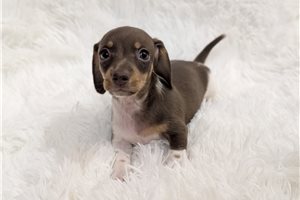
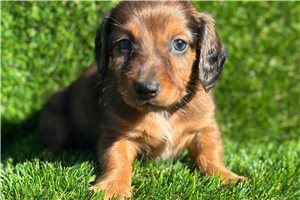
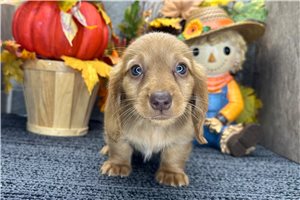
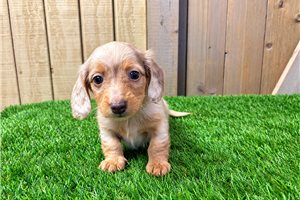
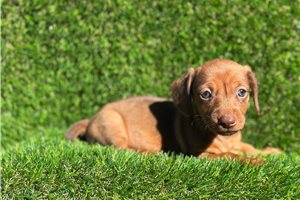
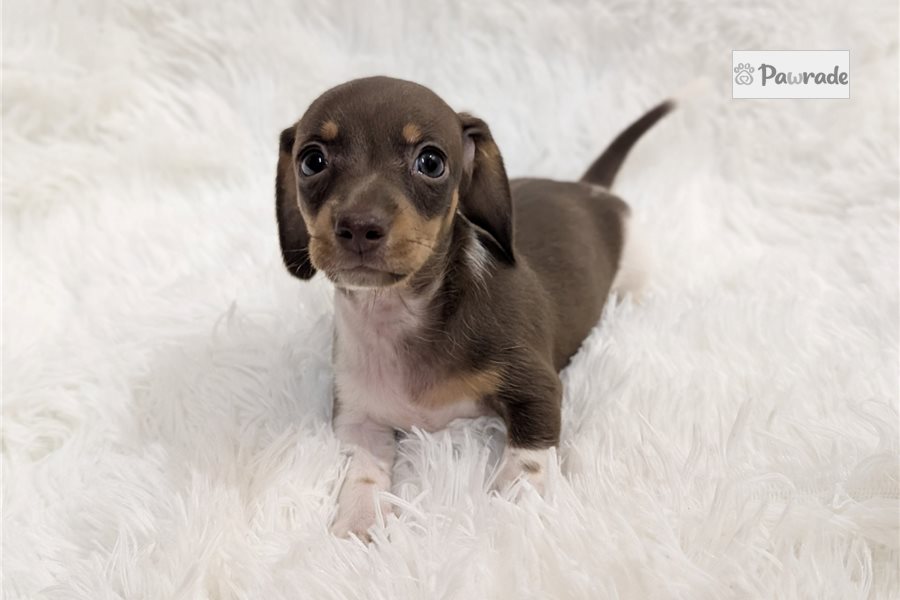
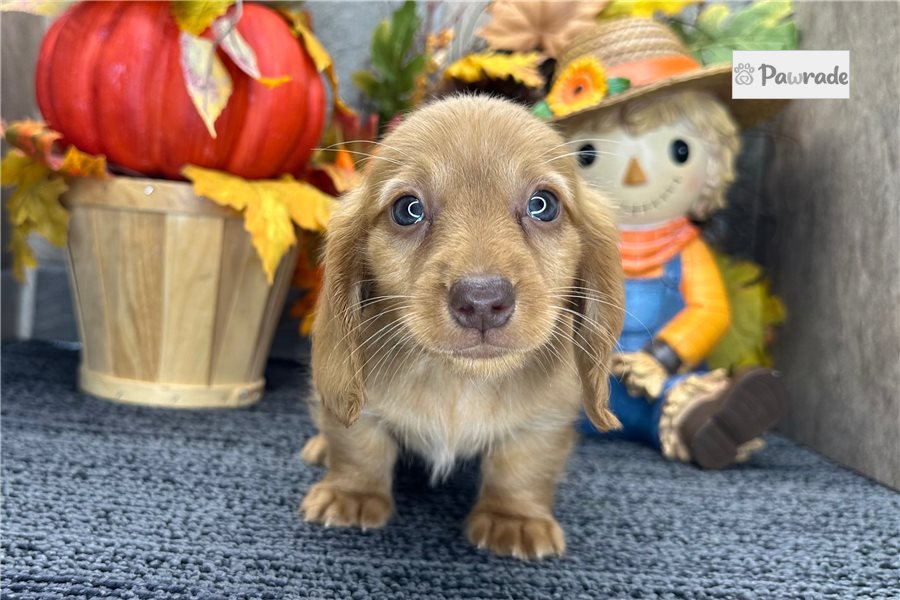
A Tweenie looks like any other Dachshund, because it is one: long-backed and short-legged, with the same coats and colors as the Miniature and the Standard. All sizes share one breed standard and differ only in size.
Size
The AKC recognizes two sizes: the miniature, shown in a class with a weight limit for dogs 12 months or older, and the larger standard. A Tweenie falls between the two, so under AKC rules it is a light standard. The UKC uses the same miniature limit and also caps its Standard variety by weight, and a Tweenie fits inside the UKC Standard. The international kennel federation (FCI) in Europe sizes Dachshunds by chest measurement rather than weight, and no registry uses the Tweenie name.
Colors and markings
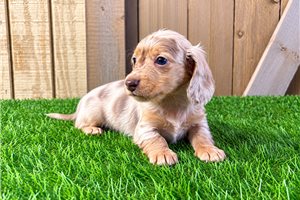
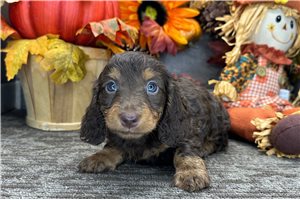
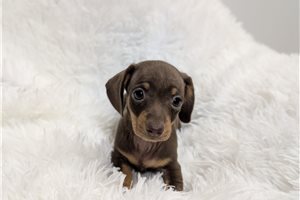
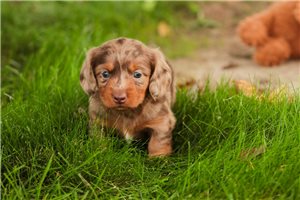
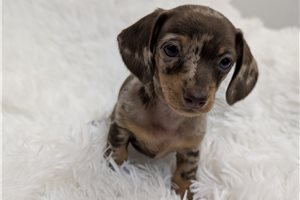
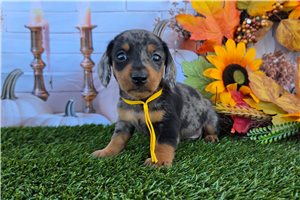
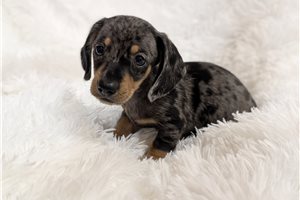
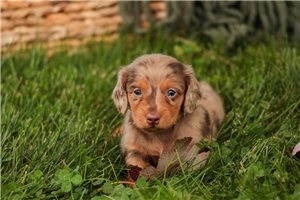
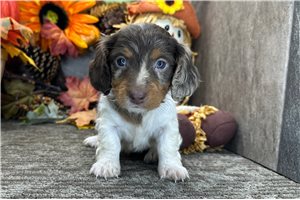
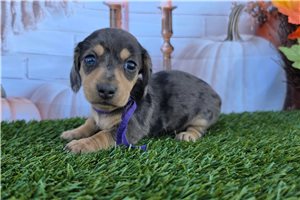
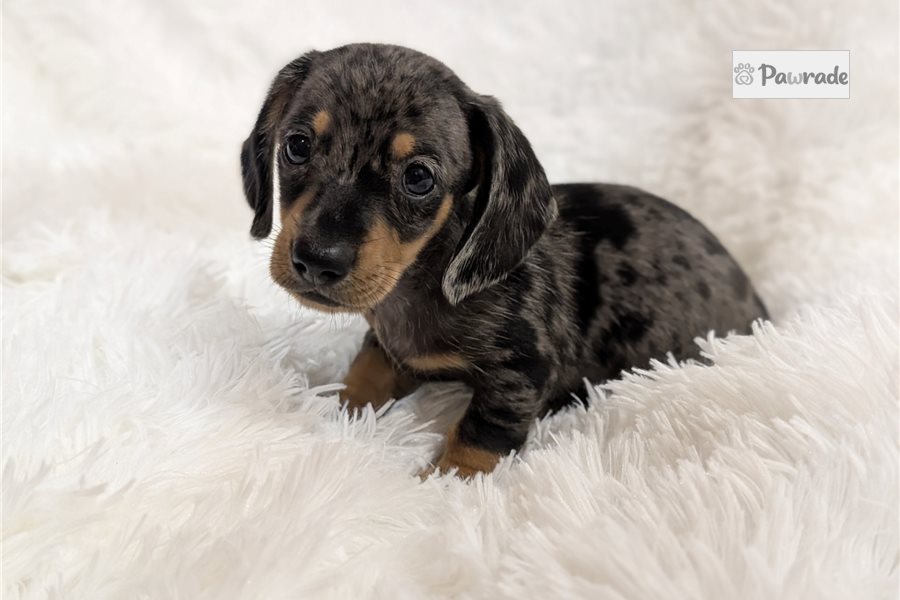
Dapple, the Dachshund's merle pattern, is accepted by all the major registries. Breeding two dapples together produces double dapples, which are linked to eye and hearing defects. The AKC standard also accepts the dilute colors blue and isabella.
Colors listed by Pawrade breeders
Black & Cream
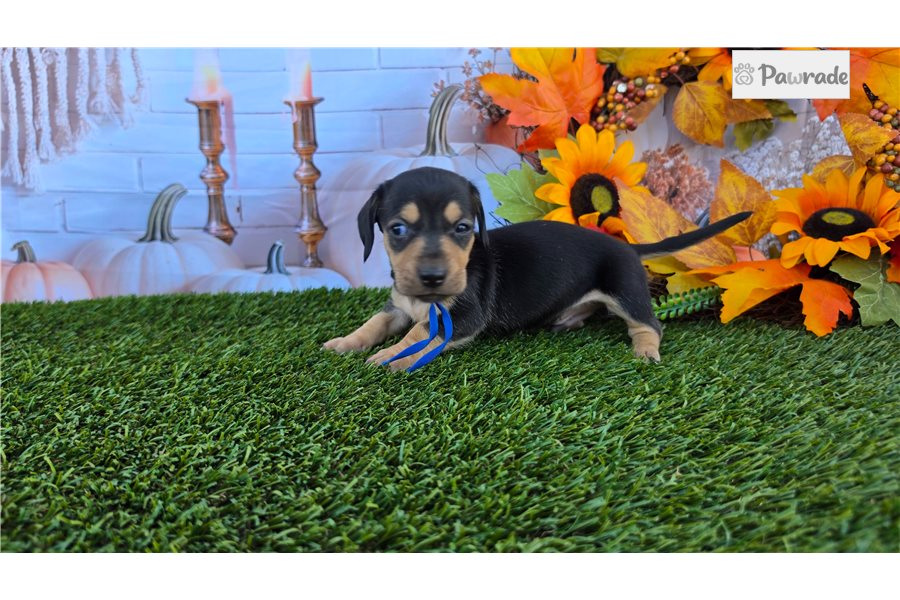
Black & Tan
Blue & Cream
Blue & Tan
Chocolate & Cream
Chocolate & Tan
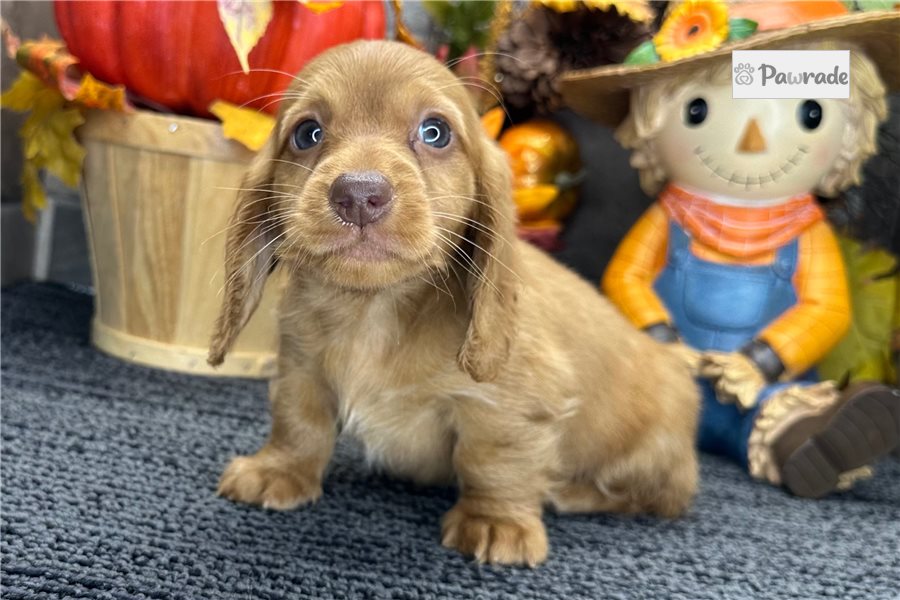
Cream
Dapple
Fawn
Isabella & Cream
Isabella & Tan
Red
Wild Boar
Keeping your Tweenie healthy
The Tweenie Dachshund is known to be prone to a few conditions, all shared with other Dachshunds, and most are easier to manage when they are caught early. Keep your Tweenie lean and fit, and limit jumping, to protect the back from disc disease (intervertebral disc disease, or IVDD). Regular eye exams catch inherited eye problems early.
A little history, a lot of heart.
Tweenie Dachshund history
History and fun facts
1700
Dachshund-like dogs were described in Germany by about 1700.
The name joins the German words for badger and dog, and German speakers also call the breed Teckel or Dackel.
Its hunting skills are still tested at AKC Dachshund field trials, run through the parent club and its member clubs.
The dogs follow the scent line of a rabbit or hare, and no game is harmed.
A field championship takes 35 points.
1895
The Dachshund Club of America was founded in 1895 and is still the breed's AKC parent club.
It runs a health and welfare trust fund and a rescue program for the breed.
Registries in the US and UK recognize a standard and a miniature, while the FCI adds a third, smaller Rabbit (Kaninchen) size.
Checked with care before travel.
Tweenie Dachshund Veterinary Health Report
Your puppy's Veterinary Health Report
Before your Tweenie Dachshund puppy comes home, the breeder's licensed vet gives it a full hands-on exam to PetPay's exam standards, and the results go into its Veterinary Health Report.
The exam, a health certificate and a stool test for parasites all happen 3 to 5 days before your puppy leaves.
1It is a check of your own puppy, not paperwork about its family, so you start with a clear record of how your puppy is doing.
2If the vet finds something that could put your puppy at risk during travel, your puppy stays with the breeder until it's resolved.
3Problems that can be treated before travel are treated by the breeder's licensed vet first.
4Anything else the vet notes is shared with you.
5A hard copy of the report travels with your puppy for your records, and a digital copy is in your PetPay account.
PetPay Veterinary Health Report form
16 areas checked on the exam
Closer look for Tweenie DachshundsOn every puppy's report
Puppies travel only once they are at least 8 weeks old and weigh at least 2 lb. Every puppy also comes with a health guarantee administered by PetPay, independent of the seller. The terms are on the health guarantee page.
Frequently asked questions about Tweenie Dachshund puppies
Frequently asked questions
An adult Tweenie typically weighs 12–15 lb, based on the weights breeders report for the parents of Tweenies placed through Pawrade. It is too heavy for the AKC miniature class and lighter than most standard Dachshunds, and no registry sets a Tweenie size.
A Tweenie is a purebred Dachshund that is heavier than a miniature but lighter than most standards. All three share one breed standard, with the same coats, colors and temperament, and they differ only in size. The AKC recognizes only the miniature and the standard, and under its rules a Tweenie counts as a standard.
The parents' weights are a useful guide, though no registry defines a Tweenie size to aim for. Parents of Pawrade Tweenies typically weigh 12–15 lb, with a median of 12 lb for both fathers and mothers.
A Tweenie has the same coats as other Dachshunds, because size makes no difference to coat. Coat matters for health in one case: Lafora disease, an inherited form of epilepsy, affects wirehaired dogs from Miniature Wirehaired lines.
Tweenies come in the same colors as other Dachshunds, including the dapple pattern and the dilute colors blue and isabella, which the AKC standard accepts.
Dapple is the Dachshund's name for the merle pattern, and every major registry accepts it. A double dapple comes from breeding two dapples together and is linked to eye and hearing defects.
Blue eyes are accepted in dapples, while in other colors they are outside the breed standard. A vet can check a dapple puppy's eyes with a light and magnification.
No registry recognizes a teacup or toy Dachshund. US and UK registries recognize only the standard and the miniature, and a puppy advertised as a teacup may simply be a runt.
A Tweenie is clever, lively and brave to the point of rashness, like every Dachshund. Size makes no difference to temperament, so it has the same character as a Miniature or a Standard.
Most Tweenie litters on Pawrade meet children before going home, and breeders report socializing 79% with younger children and 72% with older children. About a third of Tweenie buyers on Pawrade have children at home.
Breeders on Pawrade report socializing 98% of Tweenie litters with small-breed dogs before the puppies go home. About half of Tweenie buyers on Pawrade already have another dog.
A Tweenie puppy needs about 5 minutes of formal on-lead walking per month of age, plus free play. Walks build up gradually until about a year old, when the bones and muscles are developed.
Grooming needs are modest, and weekly tooth brushing belongs in the routine once the adult teeth are in. Blue and isabella dogs also need regular skin checks, because those colors are linked to color dilution alopecia.
An earthdog test is a non-competitive AKC test in which a Dachshund or small terrier works through a tunnel to find caged quarry. Titles run from Introduction to Quarry to Master Earthdog.
Puppies travel only once they are at least 8 weeks old and weigh at least 2 lb. Most Tweenie Dachshund puppies go home at about 12 weeks, usually between 9 and 20 weeks.
Most Tweenie litters on Pawrade meet small dogs and children before the puppies go home. Breeders report socializing 98% of litters with small-breed dogs, 79% with younger children and 72% with older children. They also report getting litters used to the vacuum cleaner (58%) and loud music or TV (51%). These figures come from what breeders reported for 89 litters.
Plan how to stop your puppy jumping on and off furniture, and keep walks short at first. Book a first vet visit, and ask for the eyes and eyelids to be checked. You can ask what your puppy is eating now before it comes home.
Most Tweenie puppies finish teething by about 6 months, when the adult teeth are in. Baby teeth start to fall out from about 12 weeks, and chewing is strongest in between. Offer a few safe chew toys at a time, rotate them, and start weekly tooth brushing once the adult teeth are in.
Start right away, because the first 3 months are the most important time for socialization. Puppy classes can begin as early as 7–8 weeks, as long as the class keeps sick dogs out and keeps things clean, and your vet can advise.
Most puppies finish their core vaccine series at about 16 weeks, as your vet advises. Your own vet completes the series. Your puppy's vaccination and deworming records are separate documents that travel with your puppy. Bring them, with the Veterinary Health Report, to your first visit so your vet starts from the same record.
Potty training takes a steady routine, because a young puppy can hold its bladder for only about as many hours as its age in months. Take your puppy out first thing in the morning, after naps and last thing at night. Keep the crate in a room where the family spends time, or in your bedroom at night, so you can hear when your puppy needs to go out.
A common rule of thumb is as many hours as its age in months, so a 3-month-old Tweenie can usually wait about 3 hours. The rule works up to about 9 months to 1 year, and every puppy is different.
Your Tweenie is most likely in adolescence, a normal phase that may begin around 8 months and last until about 2 years. Dogs this age often test boundaries or seem to forget their training. Consistent training, lots of patience and plenty of exercise for body and mind carry you through it.
The Veterinary Health Report is the record of your Tweenie Dachshund puppy's exam before it goes home. The breeder's licensed vet gives the puppy itself a full hands-on exam to PetPay's exam standards and writes down what they find. It gives you and your own vet a clear starting point for your puppy's care.
The breeder's licensed veterinarian examines every puppy before it goes home, to PetPay's exam standards. The results are recorded in the puppy's Veterinary Health Report, and a copy travels with your puppy for your records.
The vet examines your Tweenie Dachshund puppy hands-on and records the results in its Veterinary Health Report. For this breed, the vet looks closely at the eyes, checking for extra eyelashes and any sign of a vision problem, with extra care for dapple puppies.
Before travel, every puppy follows PetPay's vaccination and deworming schedule as far as its age allows: deworming at 2, 4, 6, 8, 10 and 12 weeks, and the distemper, parvo, adenovirus and parainfluenza combination shot at 6–8, 9–11 and 12–14 weeks. Bordetella and corona are given at the vet's discretion, and no vaccine is given within 3 days of travel. Rabies is given by a licensed vet on the schedule your state requires. Your own vet completes the series. Your puppy's vaccination and deworming records are separate documents that travel with your puppy. Bring them, with the Veterinary Health Report, to your first visit so your vet starts from the same record.
If the vet finds something that could put your puppy at risk during travel, your puppy stays with the breeder until it's resolved. Problems that can be treated before travel are treated by the breeder's licensed vet first. Anything else the vet notes is shared with you.
Puppies grow and change quickly, and their immune systems are still developing, so no exam can find everything. The Veterinary Health Report is a strong early indicator and a documented starting point that your own vet builds on. Some inherited sight loss, for example, starts years later, which is why eye exams continue through life.
Right now, most Tweenie Dachshund puppies on Pawrade are listed within the typical range shown on Pawrade's Tweenie Dachshund listings. Each breeder on Pawrade sets their own price, and each puppy's listing shows it. A Tweenie Dachshund puppy's price reflects what goes into it: its pedigree and registration, its coat and color, and the breeder's program. Every Pawrade puppy's price also includes the pre-travel exam by the breeder's licensed vet, the Veterinary Health Report and a health guarantee administered by PetPay.





 Tweenie Dachshund note