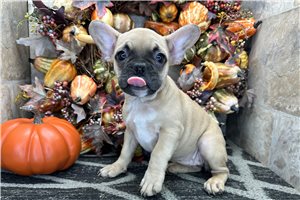
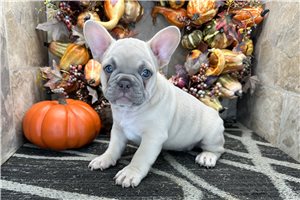
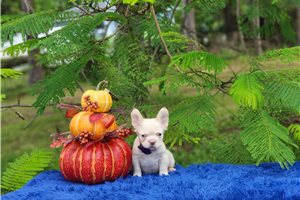
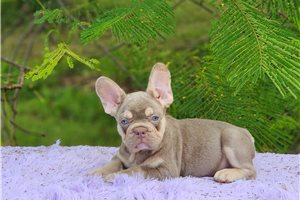
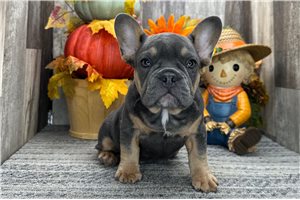
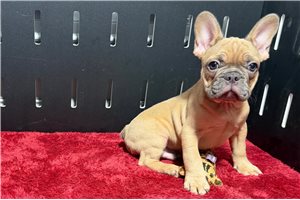
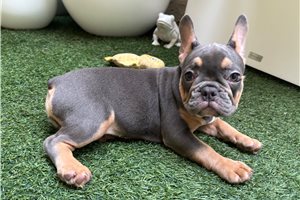
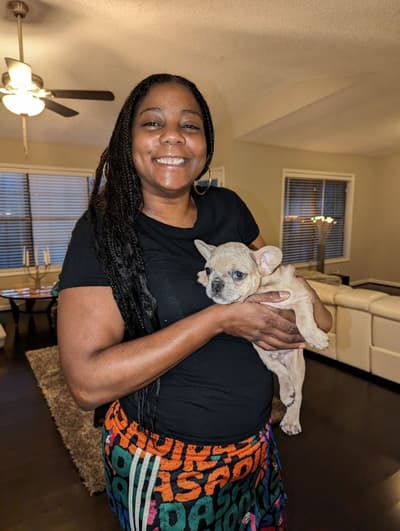
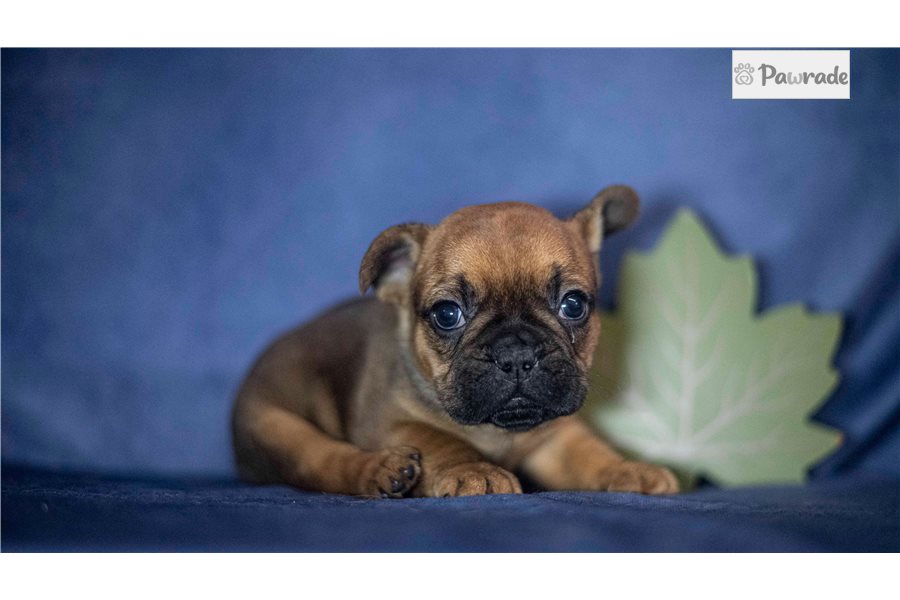
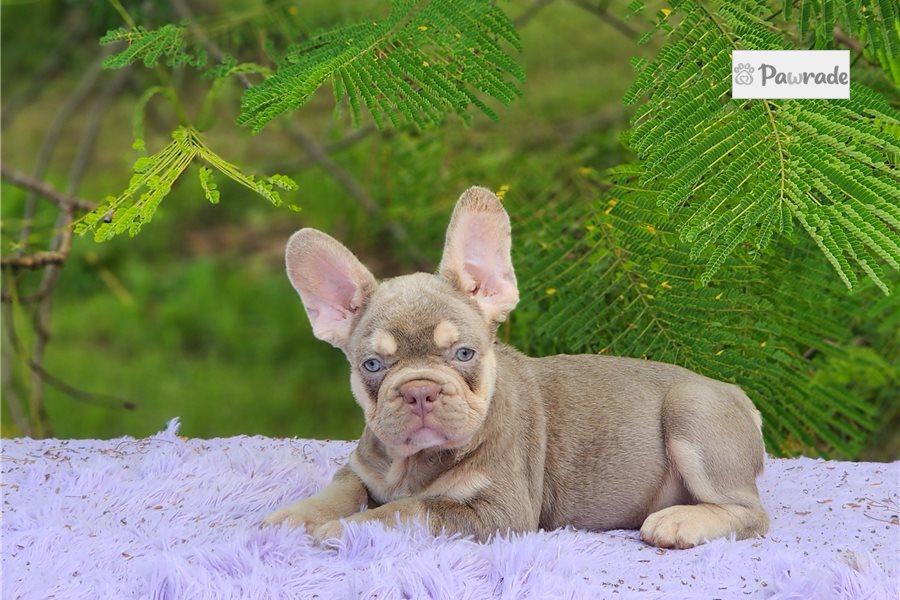
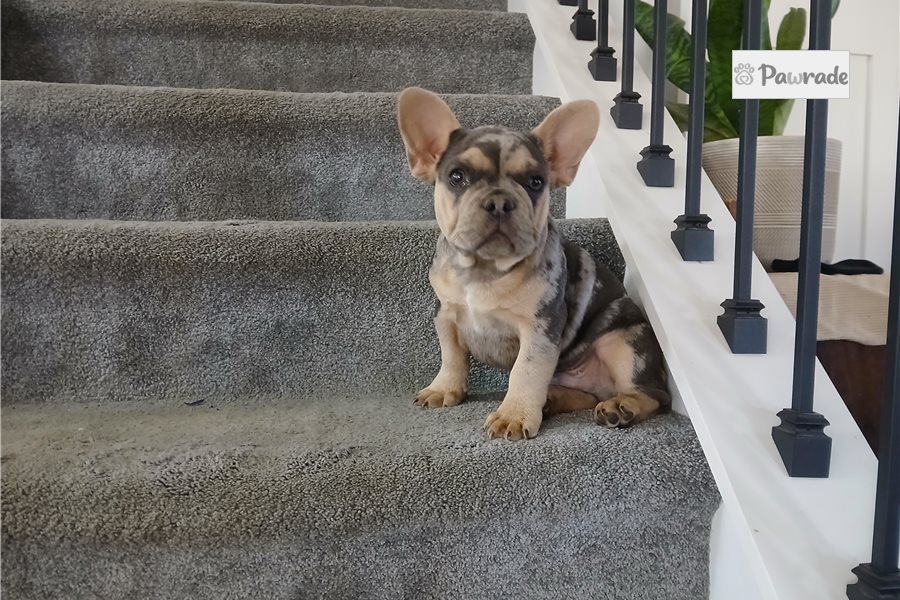
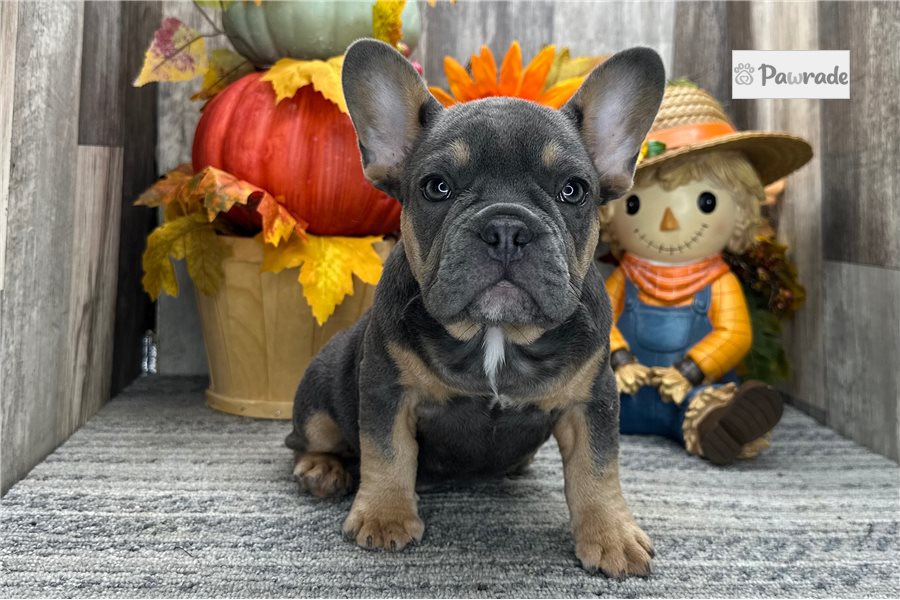
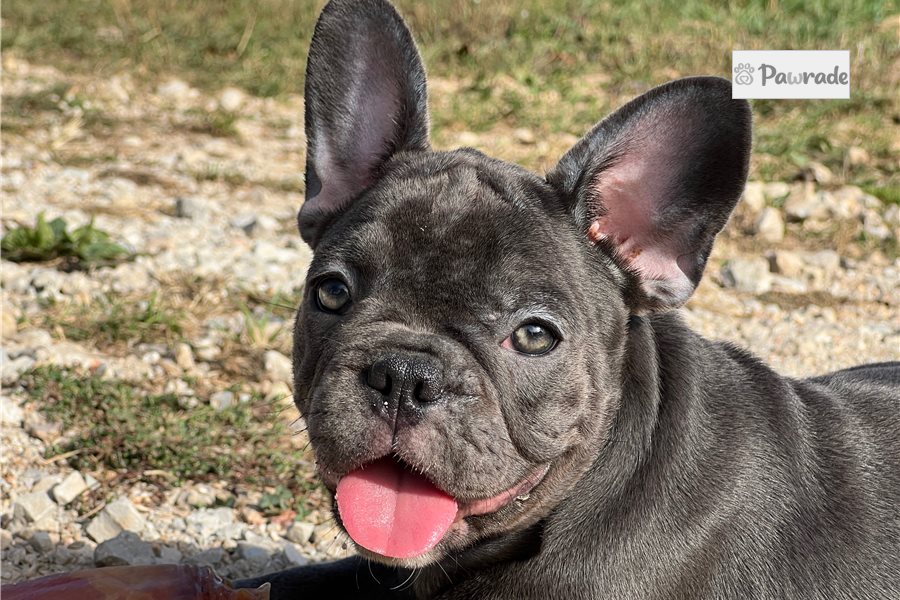
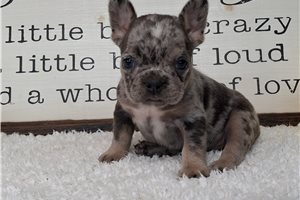
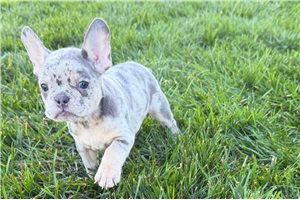
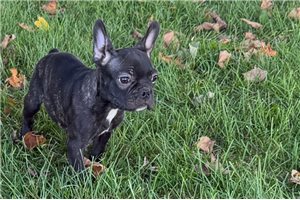
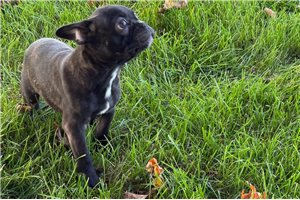
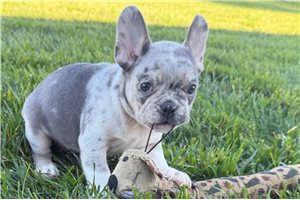
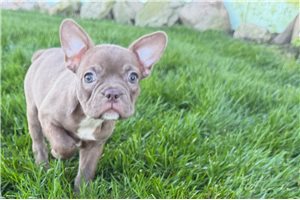
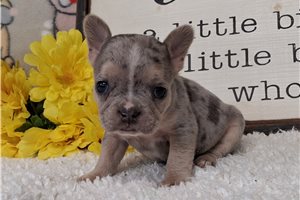
People fall for the bat ears and the flat face first. Then they fall for the dog behind them, a playful, affectionate companion that wants to be wherever you are.
People fall for the bat ears and the flat face first. Then they fall for the dog behind them, a playful, affectionate companion that wants to be wherever you...People fall for the bat ears and the flat face first. Then they fall for the dog behind them, a playful, affectionate companion that wants to be wherever you are.
Only with Pawrade, you receive a pet insurance policy with no waiting period included for immediate accident or illness coverage. *NH, NY, RI, SC and TN residents excluded
“Was a little bit concerned after reading your reviews, just received my dog and very happy with the process so far,hopefully she will transition in a day or two and gets used to her new home . Thank you to everyone that has been involved so far”
Rosie · French Bulldog
May 13, 2025
“We are so happy with Rosie!!! Pawrade did a fantastic job with their assistance and will recommend them to all my friends plus co-workers.”
Henry · French Bulldog
Jan 25, 2024
“All of the pawparade, pet pay and transport staff are great. Their consistent and professional communication via text, email, and phone calls when needed took a lot of anxiety out of the pet procurement process. They really do care about the puppies and superceding your expectations.”
Puppy scams cost U.S. families millions every year. Here's how you know Pawrade isn't one: we're a named, audited business with a public track record you can check anywhere.
Pawrade data: parents of puppies placed through Pawrade (breeder-reported)
Height
9–14 in
Lifespan
10–12 years
Energy
Moderate
Shedding
Moderate
Group
Non-Sporting
AKC
French Bulldog Characteristics
Full-Grown Size
2 of 7SmallLarge
Grooming Needs
1 of 7SeldomRegularly
Good with Dogs
3 of 7Not ReallyYes!
Watchdog Ability
5 of 7LowHigh
Exercise Needs
2 of 7Couch PotatoHigh Needs
Your new best friend.
French Bulldog temperament
Personality and daily life
At home
Life with a Frenchie happens at close range. It belongs indoors with its people, not in a kennel or out in the yard. Play is lively without getting rowdy, and most Frenchies have an even temper. Visitors usually get a warm welcome.
Kids and other pets
Children tend to find a willing playmate in a Frenchie. Its back can be hurt by rough handling, though, so an adult should keep an eye on play with young kids. Most live happily with other pets, but every dog is an individual. Expect a bark when someone comes to the door; the rest of the time, this is a quiet dog that rarely yaps.
Training and play
Frenchies have a reputation for stubbornness, but most are eager to please once food and games are involved. Keep lessons short and the house rules the same every day. Harsh corrections backfire. They pick up routines quickly, and trick training gives their brains a good workout. Tug-of-war and chasing a ball suit them well, and some Frenchies go on to compete in obedience, rally and agility.
Squinting or a cloudy eye needs a vet soon, because prominent eyes scratch easily.
Skin changesMention skin changes
Allergic skin disease (atopic dermatitis) usually starts in young adults, so mention any skin trouble at check-ups.
Breathing and airwayKeep them lean and cool
Keep your Frenchie lean and cool, and have the airway checked at routine visits: the short face can narrow it, a problem called brachycephalic obstructive airway syndrome (BOAS).
Back and spineRamps, not stairs
Use ramps instead of stairs to protect the back from early wear of the spinal discs (intervertebral disc disease).
Back and spineKnow when to call
Sudden back pain or weak hind legs means a vet visit the same day.
Joints and movementRoutine vet checks
A skip in the step can mean a slipping kneecap (patellar luxation), so your vet checks the knees at routine visits.
Joints and movementGo easy while growing
Keep a growing puppy lean and skip hard exercise while its joints form; hip and elbow dysplasia are joint problems that develop as a puppy grows.
Every milestone, together.
French Bulldog puppy milestones
Your French Bulldog's first two years
Before 8 weeks
Before your puppy comes home
Your puppy is still with its breeder, so use the time to set up a home for a flat-faced dog that overheats easily.
Put the crate in a cool room where the family spends time, or in your bedroom at night, with a cooling pad and water inside.
Check the air conditioning at home and in the car, since warm or humid weather above about 70°F calls for it.
Puppy-proof the way you would for a toddler, with cords out of reach, sturdy chew toys ready and no rawhide chews.
Gate off the stairs and plan how you will stop jumps on and off the sofa and bed.
Find a vet who already sees short-faced dogs, and book a first visit for the week your puppy arrives.
Why it matters
A short face makes breathing less efficient, so heat, hard play and stress tire a Frenchie faster than a long-nosed dog.
8–10 weeks
The first week home
Everything is new, including a crate that will soon feel like a safe den. Frenchies learn routines fast, so set the house rules you want to keep from day one.
Take your puppy outside after every nap, meal, drink and play session, and praise it the moment it goes.
Start a morning ritual: potty trip first, then a wipe of the face folds, tail area and ears.
Take your puppy out last thing before bed, and expect a potty trip during the night for a while.
Bring the shot record to the first vet visit, and ask the vet to look at the nostrils, heart and knees.
Why it matters
A young puppy's bladder is small, and these well-timed trips teach it where to go from day one.
French Bulldog note
Most French Bulldog puppies on Pawrade go home at about 12 weeks, so start this stage whenever yours arrives.
10–12 weeks
Weeks 2 to 4
The first 3 months are a puppy's prime time for learning that new people, places and sounds are safe. That learning does not stop there, so keep introducing new things after this stage too.
Introduce a few new things each day, like a slippery floor, the doorbell or a neighbor kneeling to say hello, each short and happy.
Sign up for a puppy class, which can start about a week after the first set of vaccines once your vet agrees.
Begin sit and loose-leash walking with tiny treats, and keep lessons to a few minutes so they stay a game.
Why it matters
Good early experiences help prevent fear later, and a class gives safe practice around other dogs and people.
French Bulldog note
Excitement makes a short-faced puppy breathe harder, so end play before it is worn out and let it rest somewhere cool.
3–4 months
3 to 4 months
Your puppy is getting the last of its puppy shots, and the series usually ends at about 16 weeks, as your vet advises. Bladder control is growing too: a puppy can usually hold it about 1 hour for each month of age, so a 3-month-old can wait about 3 hours.
Keep every vaccine appointment your vet sets, and skip dog parks, pet-store floors and unknown dogs until the series is done.
Stretch the time between potty trips slowly, and still go straight out after meals, naps and play.
Keep the stair gate up and keep stopping jumps off furniture, because both strain a Frenchie's back.
Why it matters
Finishing the vaccines protects your puppy as it meets more of the world, and a steady potty schedule builds habits.
French Bulldog note
If you hear noisy breathing, gagging or foamy spit-up after play, mention it to your vet, who can check the airway.
4–6 months
4 to 6 months
Teething arrives: between about 4 and 6 months, 28 baby teeth fall out and 42 adult teeth come in. Sore gums make your puppy want to chew everything, and a mildly upset stomach is common for a while.
Keep a few sturdy chew toys out at a time and rotate them, handing one over whenever your puppy starts on a hand or chair leg.
Start gentle tooth brushing now, a few strokes at a time, so it becomes a normal part of the day.
Ask your vet at the next check to look for any baby tooth that stays put after its adult tooth comes in.
Why it matters
A Frenchie's short jaw leaves the teeth crowded, so home brushing and vet dental checks matter for life.
French Bulldog note
Short-nosed breeds are more likely to hang on to a baby tooth, and your vet can remove any that linger.
6–12 months
6 to 12 months
Hormones kick in at around 6–8 months. Your good listener may start testing the rules, and males may begin marking and mounting while females turn clingy or have the odd accident. It is a normal phase, and for most dogs it passes.
Keep the same house rules, add more advanced obedience and make rewards a little better, because the world is suddenly more interesting than you are.
Have a conversation with your vet about spaying or neutering and what makes sense for your dog.
Keep games low to the ground and save hard running and jumping until at least 8 months, and up to a year.
Why it matters
Growing bones lengthen from soft areas called growth plates, which hard exercise can injure before they harden and close.
French Bulldog note
For any surgery, choose a vet experienced with short-faced breeds, because their airway needs extra care under anesthesia.
1–2 years
1 to 2 years
Your Frenchie looks grown up now, though it keeps maturing socially until about 3 years. Expect a playful, affectionate companion with an even temper, happiest close to its people.
Build a daily routine of easy walks and play in the cool parts of the day, up to about an hour in mild weather.
With the joints grown, try gentle activities such as rally, obedience or trick training, kept short and cool.
Keep up the daily fold wipe, tooth brushing and measured meals, since Frenchies put on weight easily.
Book a yearly vet exam that checks the airway, eyes and teeth.
Why it matters
Yearly checks pick up changes in breathing, eyes and teeth early, when they are simplest to manage.
French Bulldog note
Heat care never retires for this breed, so keep the air conditioning on in warm weather and save walks for cool hours at every age.
The Frenchie is compact and muscular with heavy bone, and its hallmarks are a square head, bat ears and a roach back. The jaw is undershot, the loose skin forms wrinkles at the head and shoulders, and the short tail is straight or screwed.
Colors and coat
The AKC standard colors are white, cream and fawn, from light fawn to red fawn, and combinations of these, with brindle, piebald, black mask, black shadings and white markings. Blue, blue fawn, liver or chocolate (including cocoa), black and tan, solid black, merle and dilute colors such as lilac or isabella are outside the AKC breed standard. The standard calls for dark eyes, so blue or green eyes are outside the AKC breed standard too. The standard coat is short and smooth; a long coat is outside the AKC breed standard. Early Frenchies were mostly brindle, and creams and fawns became common after the 1950s.
Colors listed by Pawrade breeders
Black
Blue
Brindle
Cream
Fawn
Isabella
Lilac
Merle
Pied
Sable
White
A little history, a lot of heart.
French Bulldog history
History and fun facts
19th century
The breed began in the 1800s, when Nottingham lace workers took small toy bulldogs to northern France, where they were crossed with local dogs.
Whether terriers were added along the way is not recorded.
In Paris the dogs belonged to market porters, butchers, coachmen and café owners before they became fashionable in high society and art circles.
1880–1898
The first French breed club formed in Paris in 1880, the first dogs were registered in 1885, and the French standard followed in 1898.
American fanciers championed the upright bat ear.
1897
In 1897, an English judge at the Westminster show placed only rose-eared dogs.
The Americans then founded the French Bull Dog Club of America, the first club anywhere devoted to the breed, and wrote a standard that allowed only bat ears.
1898
The AKC recognized the breed in 1898.
20th century
Numbers fell for about half a century after World War I, and the breed's revival began in the 1980s.
Henri de Toulouse-Lautrec painted Bouboule, the French Bulldog of Madame Palmyre, who owned the Paris café La Souris, and Degas also portrayed the breed.
The French Bull Dog Club of America is still the breed's AKC parent club.
Checked with care before travel.
French Bulldog Veterinary Health Report
Your puppy's Veterinary Health Report
Before your French Bulldog puppy comes home, the breeder's licensed vet gives it a full hands-on exam to PetPay's exam standards, and the results go into its Veterinary Health Report.
The exam, a health certificate and a stool test for parasites all happen 3 to 5 days before your puppy leaves.
1It is a check of your own puppy, not paperwork about its family, so you start with a clear record of how your puppy is doing.
2If the vet finds something that could put your puppy at risk during travel, your puppy stays with the breeder until it's resolved.
3Problems that can be treated before travel are treated by the breeder's licensed vet first.
4Anything else the vet notes is shared with you.
5A hard copy of the report travels with your puppy for your records, and a digital copy is in your PetPay account.
PetPay Veterinary Health Report form
16 areas checked on the exam
Closer look for French BulldogsOn every puppy's report
Puppies must be at least 8 weeks old and weigh at least 2 lb before they travel. Every Pawrade puppy also comes with a health guarantee administered by PetPay, independent of the seller. The terms are on the health guarantee page.
A French Bulldog puppy's price reflects what goes into it: its pedigree and registration, its coat and color, and the breeder's program. Every Pawrade puppy's price also includes the pre-travel exam by the breeder's licensed vet, the Veterinary Health Report and a health guarantee administered by PetPay. See today's price range for French Bulldog puppies on Pawrade's French Bulldog listings.
Typical asking price
$4,145
Based on 1,761 French Bulldog listings in the last 12 months
Frequently asked questions about French Bulldog puppies
Frequently asked questions
Males are usually a little bigger, at about 20–31 lb against 18–29 lb for females. In the teenage months, males may start marking and mounting, and females may turn clingy or have accidents.
The AKC standard colors are white, cream and fawn and combinations of these, with brindle, piebald, black mask, black shadings and white markings. Blue, blue fawn, chocolate (including cocoa), black and tan, solid black, merle, lilac and isabella are outside the AKC breed standard.
Adults weigh 18–31 lb and stand 9–14 in tall, small but heavy-boned.
A fluffy French Bulldog has a long coat, which is outside the AKC breed standard. The standard coat is short, smooth and single.
The French Bulldog comes in one size, and there is no recognized miniature or teacup version.
French Bulldogs do have tails, short ones that are straight or screwed and carried low.
The Frenchie is a lap dog at heart and loves attention. It is happiest indoors with its people.
French Bulldogs are quiet dogs and not yappy. Most will still bark to let you know someone is at the door.
Most Frenchies are friendly toward strangers and very fond of people.
Often it works well, because most Frenchies get along with other pets, though every dog is an individual. About half of French Bulldog buyers on Pawrade already have another dog at home.
Frenchies are playful and good with children. Rough handling can hurt the back, so an adult should watch play with young kids.
Most Frenchies are generally good with other pets, but individuals vary. Some breeders on Pawrade introduce their litters to cats before the puppies go home.
By car, yes, with two precautions: a crate is the safest way for a Frenchie to ride, and the car must stay cool.
They handle neither well, because the flat face makes them overheat easily and the short single coat gives little protection from cold. Walk in the cool part of the day, and run the air conditioning at home and in the car when it is warm.
Frenchies do best with plenty of company, because they are people-oriented dogs that thrive on attention. Crate training from day one gives a puppy a safe place to rest.
Frenchies are well suited to apartments and small homes. They are quiet and need only moderate exercise.
A French Bulldog needs a moderate amount, such as daily walks and play, with nothing strenuous and nothing in the heat. Regular exercise also keeps the healthy weight that protects the airway and spine.
Most cannot swim well: their front-heavy build makes them poor swimmers that can drown easily. Never leave a Frenchie alone near water.
Hard running and jumping should wait until a French Bulldog is at least 8 months old, and up to a year, while its joints are still growing. Growing bones lengthen from soft areas called growth plates, and easy walks and free play are safer until they close. Limits on stairs and jumping off furniture stay in place for life, to protect the spine.
French Bulldogs shed at a moderate rate, and no dog is truly hypoallergenic. A short coat does not make a dog allergy-friendly.
The coat needs very little, just a brush about once a week and regular nail trims. The daily job is cleaning and drying the face folds, the area around the tail and the ears.
Most Frenchies are eager to please and learn quickly with food rewards and games. Harsh or forceful methods backfire.
Start with a crate, because crate training makes housebreaking easier. Take the puppy out as soon as it wakes up, and keep the routine the same every day. Breeders on Pawrade report whether they have started crate training, so ask how far your puppy has got.
Frenchies enjoy tug-of-war, ball chasing and trick training. They can also compete in AKC obedience, rally, agility and tracking events.
A French Bulldog puppy can usually hold its bladder for about 1 hour for each month of age, so a 3-month-old can wait about 3 hours. Young puppies also need to go out after sleeping, eating, drinking and play. Most young puppies still need a potty trip during the night, so take yours out last thing before bed. Crate training makes housebreaking easier, because most dogs avoid soiling their bed.
Hormones kick in at around 6–8 months, and many French Bulldogs test the rules for a while. It is a normal phase, and for most dogs it passes with the same house rules and short, reward-based lessons. Better rewards help, because the world is suddenly more interesting than you are. It is also a good time to start more advanced obedience.
Puppies travel only once they are at least 8 weeks old and weigh at least 2 lb. Most French Bulldog puppies go home at about 12 weeks, usually between 9 and 21 weeks.
French Bulldog breeders on Pawrade report a typical litter of 5 puppies, usually between 2 and 7.
Set up a crate with a cooling pad and fresh water, and check the air conditioning at home and in the car for weather warmer than about 70°F. Put the crate where the family spends time, or in your bedroom at night. Puppy-proof the house, gate off the stairs and plan how to stop jumps off the sofa and bed. Find a vet experienced with short-faced breeds, and bring the vaccination record to the first visit.
Start the day your puppy comes home, because the first 3 months are a puppy's prime time for learning that new people, places and sounds are safe. Puppy classes can start about a week after the first set of vaccines, once your vet agrees. Keep socializing after 3 months too, since the learning continues well past that point.
A French Bulldog puppy usually finishes teething by about 6 months, once its 42 adult teeth are in. Sturdy chew toys help with sore gums, and keeping only a few out at a time, rotated, keeps them interesting. A mildly upset stomach during teething is common. Short-faced breeds sometimes keep a baby tooth, so ask your vet to check the mouth.
The puppy vaccine series usually finishes at about 16 weeks, as your vet advises. Until then, skip dog parks, pet-store floors and dogs whose vaccines you don't know. Socializing and a puppy class can start before then, once your vet says the puppy is protected enough. Your puppy's vaccination and deworming records are separate documents that travel with your puppy. Bring them, with the Veterinary Health Report, to your first visit so your vet starts from the same record.
Spaying or neutering is a decision to talk through with your vet, because the advice differs by breed and by dog. Anesthesia carries extra risk for short-faced dogs, so choose a vet experienced with the breed for the surgery.
Most French Bulldog litters on Pawrade meet other dogs, children and everyday household sounds before the puppies go home. Breeders report socializing 86% of litters with small dogs and 74% with young children. They also report getting litters used to the vacuum cleaner (71%), music or TV (66%), car rides (57%) and pots and pans (53%). These figures come from what breeders reported for 1,105 litters. Keep introducing new people, places and sounds once your puppy is home, because the first 3 months are a puppy's prime time for learning they are safe.
The Veterinary Health Report is the record of your French Bulldog puppy's exam before it goes home. The breeder's licensed vet gives the puppy itself a full hands-on exam to PetPay's standards and writes down what they find. It gives you and your own vet a clear starting point for your puppy's care.
The breeder's licensed veterinarian examines every puppy before it goes home, to PetPay's exam standards. The results are recorded in the puppy's Veterinary Health Report, and a copy travels with your puppy for your records.
The breeder's vet examines the whole puppy and pays close attention to a few things that matter in French Bulldogs. The vet looks at how open the nostrils are, listens to the breathing and the heart, and feels both knees. The vet also checks the eyes, the skin, the ears and the bite.
Before travel, every puppy follows PetPay's vaccination and deworming schedule as far as its age allows: deworming at 2, 4, 6, 8, 10 and 12 weeks, and the distemper, parvo, adenovirus and parainfluenza combination shot at 6–8, 9–11 and 12–14 weeks. Bordetella and corona are given at the vet's discretion, and no vaccine is given within 3 days of travel. Rabies is given by a licensed vet on the schedule your state requires. Your own vet completes the series. Your puppy's vaccination and deworming records are separate documents that travel with your puppy. Bring them, with the Veterinary Health Report, to your first visit so your vet starts from the same record.
If the vet finds something that could put your puppy at risk during travel, your puppy stays with the breeder until it's resolved. Problems that can be treated before travel are treated by the breeder's licensed vet first. Anything else the vet notes is shared with you.
Puppies grow and change quickly, and their immune systems are still developing, so no single exam can find everything. In French Bulldogs, a full breathing grade has to wait until the dog is grown, and spine bones that formed oddly show up only on X-rays. The report is a strong early look at your puppy, and your own vet builds on it at every checkup.
French Bulldog buyers rate their Pawrade experience 4.6 out of 5 on average, from 702 reviews, and about 81% of those reviews give 5 stars.
Right now, most French Bulldog puppies on Pawrade are listed within the typical range shown on Pawrade's French Bulldog listings. Each breeder on Pawrade sets their own price, and each puppy's listing shows it. A French Bulldog puppy's price reflects what goes into it: its pedigree and registration, its coat and color, and the breeder's program. Every Pawrade puppy's price also includes the pre-travel exam by the breeder's licensed vet, the Veterinary Health Report and a health guarantee administered by PetPay.