Also called American Morkshire Terrier and Morkshire Terrier
People fall for the Morkie's long, silky coat and round eyes, then for the confident, playful personality packed into a toy dog. Most Morkies want to be wherever their people are, and they are at their best with company close by.
People fall for the Morkie's long, silky coat and round eyes, then for the confident, playful personality packed into a toy dog. Most Morkies want to be wherever...People fall for the Morkie's long, silky coat and round eyes, then for the confident, playful personality packed into a toy dog. Most Morkies want to be wherever their people are, and they are at their best with company close by.
Only with Pawrade, you receive a pet insurance policy with no waiting period included for immediate accident or illness coverage. *NH, NY, RI, SC and TN residents excluded
Puppy scams cost U.S. families millions every year. Here's how you know Pawrade isn't one: we're a named, audited business with a public track record you can check anywhere.
Morkies are affectionate, playful, confident and spirited, and they want close companionship. Morkies are alert and quick to bark, but barking responds to training, which matters most in an apartment.
Company and time alone
Left alone for long stretches, a Morkie can become bored and anxious, which can show as barking or accidents indoors. A toy dog is easily hurt by falls and rough handling, so Morkies suit homes with older children, and play with young children needs supervision. Take the same care around larger dogs.
Training
Morkies are intelligent but can be strong-willed. Consistent, reward-based training with treats, play or a clicker works best; harsh methods backfire, and short sessions keep a toy dog engaged. Count training treats as part of the day's food.
Morkies can try agility, obedience and trick training, and some work as therapy dogs.
Placements and reviews come from Pawrade's records.
A healthier start for a happier tomorrow.
Morkie care & grooming
Care and grooming
The routine
Exercise needs
Short daily walks plus play and games that work the brain cover a Morkie's exercise needs. Fetch, chase, tug, toy hunts and nose work suit the terrier side, in short sessions.
Coat and shedding
Low
The single-layer coat is long, silky and straight, and it is hair rather than fur, so it tangles easily. Shedding is low, so you will find little loose hair around the house.
Daily
Coat and grooming care
Brush or comb daily, or keep a short pet clip.
Weekly
Teeth and gums
Toy mouths are prone to gum disease, so brush the teeth several times a week, daily if you can.
Monthly / as needed
Bath time
Give a bath regularly, but not too often.
Nail trims
Trim the nails every few weeks.
Around the eyes
Trim the hair around the eyes.
Keeping them safe
Heat safety
Like other toy dogs, Morkies need protection from heat.
Cold weather
Morkies also need protection from cold.
Stairs and jumping
Lift your Morkie down rather than letting it jump off the sofa or bed, because a fall can hurt a toy dog.
Leash and fencing
Use a harness rather than a collar, and keep the collar for ID tags only.
Have the eyes checked at routine visits, and see your vet promptly about a cloudy eye.
Breathing and airwayKnow when to call
Tell your vet promptly about a honking cough, which can be a sign of a weakening windpipe, the main airway.
Joints and movementKeep them lean and cool
Keep your Morkie lean for life, because extra weight strains the knees and windpipe.
Teeth and gumsRoutine vet checks
Plan professional dental cleanings with your vet.
Stomach and digestionKnow when to call
Tell your vet promptly about diarrhea that keeps coming back, or about weight loss.
Heart checksRoutine vet checks
Ask your vet to listen to the heart at every checkup.
Every milestone, together.
Morkie puppy milestones
Your Morkie's first 2 years
Before 8 weeks
Before your puppy comes home
Your puppy is still with its litter, and its most important weeks for meeting new people, places and sounds have already begun. Its adult size depends on its parents and varies by generation, so nobody can promise exactly how small it will stay.
Set up a crate in a room where the family spends time, or in your bedroom at night.
Buy small bowls, small kibble, a harness and a grooming kit with a brush, a comb, nail clippers and a dog toothbrush.
Keep a glucose gel in the cupboard in case your tiny puppy's blood sugar drops.
Why it matters
A puppy that sleeps near its people settles in faster, and you will hear it when it needs a trip outside at night.
Morkie note
A Morkie puppy is small enough to be hurt by a fall from a sofa, so plan floor-level play from day one.
8–10 weeks
Week 1 at home
Everything is new, and a tiny puppy tires quickly, so keep the first days calm and warm, with short handling and plenty of rest. A young puppy needs to go out often, especially first thing in the morning, last thing at night and after naps.
Feed 3–4 small meals a day, because frequent meals keep a tiny puppy's blood sugar steady.
Take your puppy out at those times every day, and reward it with praise or a treat when it goes in the right spot.
Take your puppy and its records to a first visit with your own vet.
Why it matters
Weakness or wobbliness in a tiny puppy can be a sign of low blood sugar, so call your vet right away if you see it.
Morkie note
Morkie puppies often need a few quiet days to settle before you start adding new people and places.
10–12 weeks
Weeks 2 to 4
Your puppy is in the middle of its most important time for socialization, which runs through about the first 3 months. What it meets now shapes how comfortable it feels with people, other dogs and new places later on.
Plan a few short, calm introductions each day to new people, gentle older children and friendly small dogs.
Sign up for puppy classes, which can start at 7–8 weeks, once your vet is happy with the first vaccines.
Until the vaccines are finished, keep your puppy away from sick dogs, as your vet advises.
Handle the coat, paws and mouth gently every day, so brushing and tooth care feel normal later.
Why it matters
Morkies that meet plenty of people, animals and places as puppies grow into steadier, more confident adults.
Morkie note
With a toy puppy, keep greetings with big dogs and young children supervised, because a fall or rough play can hurt it.
3–4 months
3 to 4 months
Around 12 weeks, the baby teeth start falling out as the adult teeth push through, and chewing picks up. The puppy vaccine series usually ends at about 16 weeks, as your vet advises.
Rotate a few safe chew toys at a time, and keep shoes and cords out of reach.
Stretch the time between bathroom trips slowly, since a puppy can usually hold its bladder about as many hours as it is months old.
Keep up small, frequent meals through this stage, since tiny puppies usually outgrow their low blood sugar risk around now.
Why it matters
Chewing peaks while the teeth change, so safe toys within reach keep your puppy away from things it shouldn't chew.
Morkie note
Toy breeds often keep some baby teeth after the adult teeth come in, so ask your vet to check the mouth at each visit.
4–6 months
4 to 6 months
By about 6 months, your puppy's adult teeth are in and teething winds down, though very small dogs can be a little later. Its leg bones still grow from soft growth plates, which hard exercise can injure.
Let your puppy run and play at its own pace, and skip long, strenuous walks until growth is done.
Ask your vet to check the knees at each visit, since slipping kneecaps run in both parent breeds.
Keep your puppy lean, because extra weight puts strain on the knees and windpipe.
Why it matters
Small dogs finish growing sooner than large ones, so this careful stretch is short and well worth it.
Morkie note
If your Morkie is black and tan, don't be surprised as the coat slowly lightens over the coming months.
6–12 months
6 to 12 months
Around 8 months, many young dogs start testing boundaries and seem to forget cues they already knew. This teenage stage is normal, and a strong-willed Morkie may push the rules harder for a while.
Keep training sessions short and upbeat, and use the treats or games your dog loves most.
Ask your vet when to spay or neuter, because the timing depends on things such as your dog's sex and expected adult size.
Ask, too, about any baby teeth that are still in place, since these are often removed during that surgery.
Switch to an adult food toward the end of the first year, as your vet suggests.
Why it matters
Consistent training, patience and plenty of exercise for body and mind carry a young dog through these months.
Morkie note
Most Morkies reach their adult weight in this stage, so it is a good time to check that yours is lean.
1–2 years
1 to 2 years
Your Morkie looks grown up, but most dogs are fully settled into adulthood at around 2 years. If its coat is black and tan, the color may still be changing until then.
Settle into an adult routine of 2–3 small meals a day, with treats counted as part of the day's food.
Keep up daily brushing and trims around the eyes, or book regular clips if you prefer a short coat.
Book a yearly wellness exam with your vet, with a heart check and a look at the teeth.
Why it matters
Regular checkups help catch changes in the heart, teeth and knees early.
Morkie note
Short games of fetch, tug and nose work keep the terrier side of a grown Morkie happy.
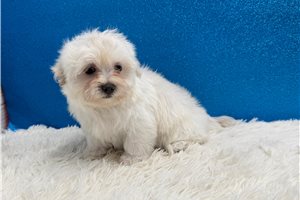
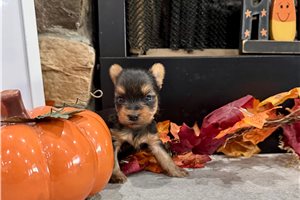
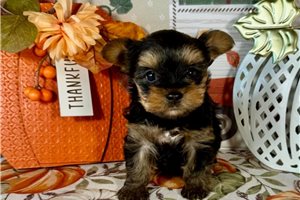
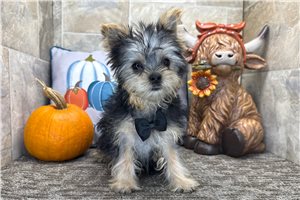
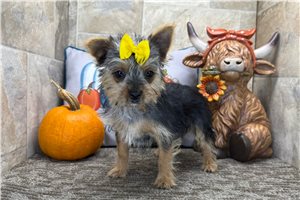
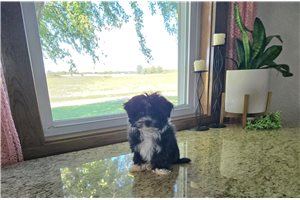
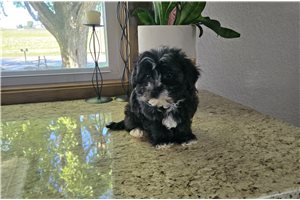
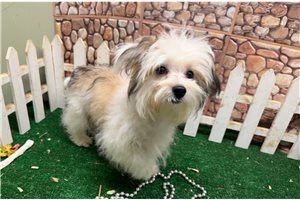
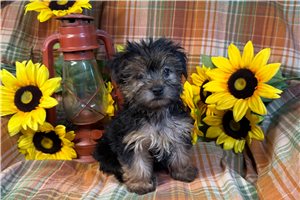
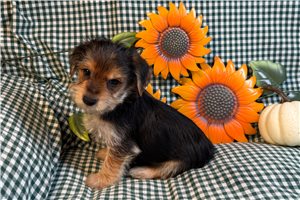
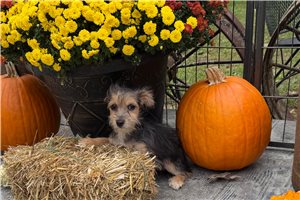
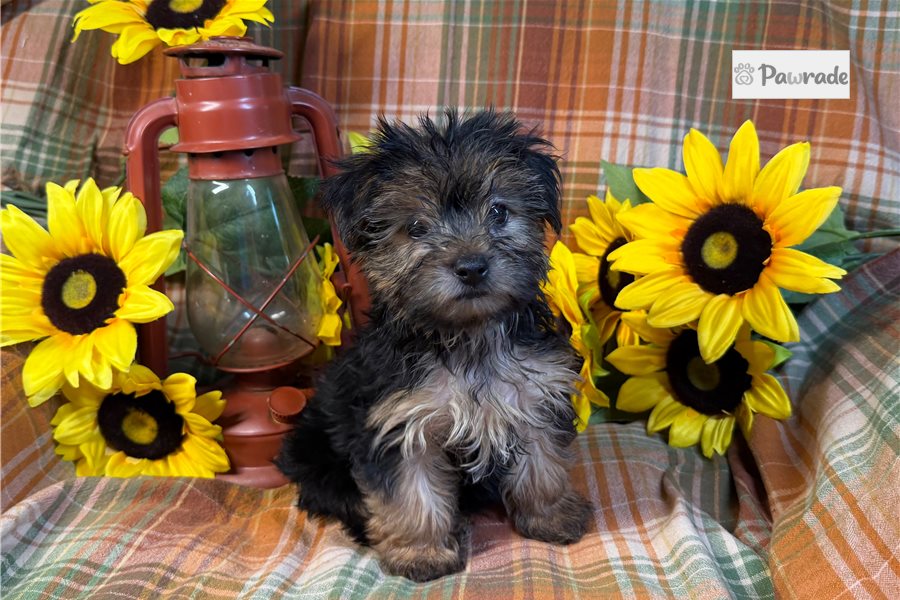
A Morkie is a toy companion with a moderately long, silky, straight coat, round eyes and a plumed tail carried over the back. The ears may drop like a Maltese's or stand erect in a V like a Yorkie's, and either is accepted. Its breed club's standard has two weight classes: a traditional toy class of 3.5–8 lb and a standard class of over 8 lb up to 15 lb.
Size
A first-generation Morkie (F1) has one Maltese parent and one Yorkshire Terrier parent. F1 puppies may take after either parent, so adult size and looks are harder to predict than in a purebred. Breeders also produce later generations, and the club registers multigeneration dogs as the American Morkshire Terrier. A Morkie's adult size depends on its parents and varies from one generation to the next, so each Pawrade listing shows the parents' weights.
Colors and markings
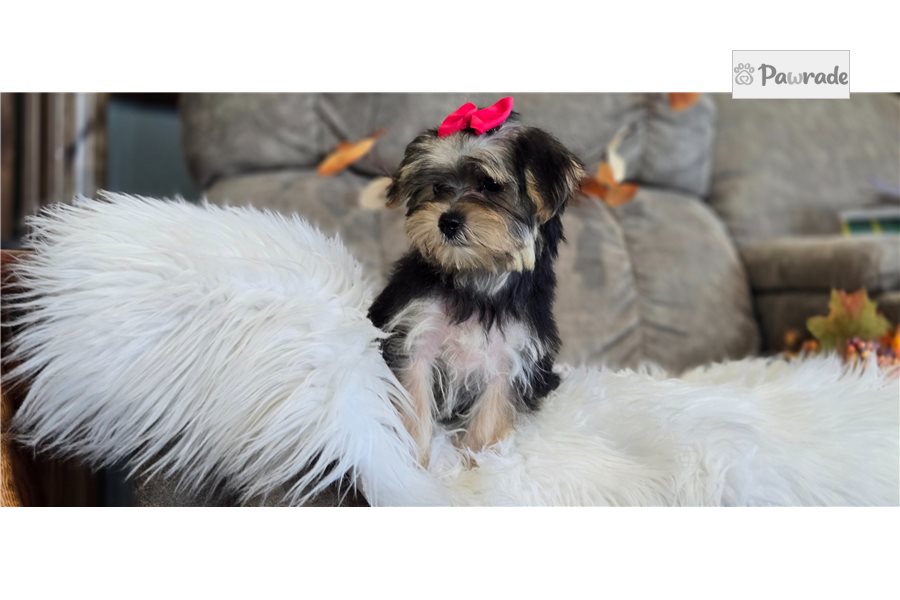
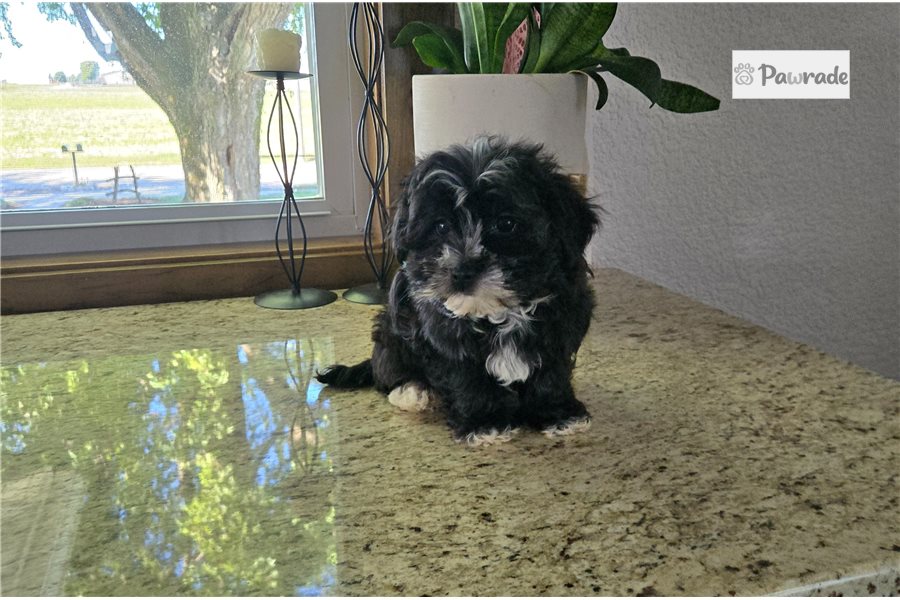
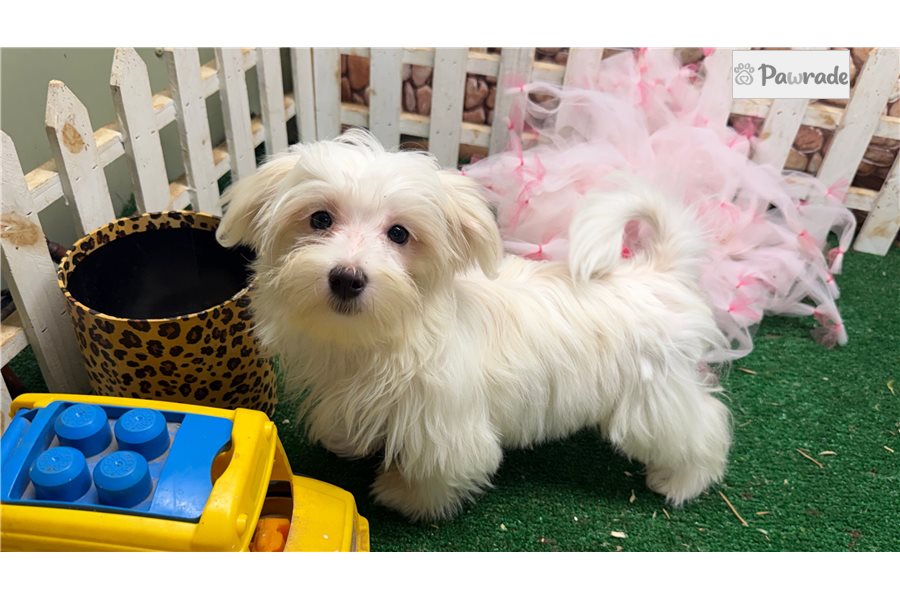
The Maltese is white in every registry standard, and the Yorkshire Terrier is blue and tan as an adult. Morkies come in mixes of these colors and others the parents carry, such as chocolate, gold and parti. Black-and-tan puppies often lighten as they grow, while white Maltese-type coats stay light.
The Morkshire Terrier Club of America traces them to the 1970s, by its own account.
The two parents had very different jobs.
The Yorkshire Terrier began as a ratter in the mills and mines of northern England.
ancient times
The Maltese has been a pampered companion since ancient times.
The cross is also known as the Morkshire Terrier.
The AKC and UKC do not recognize the Morkie.
Designer-breed registries such as the American Canine Hybrid Club, the International Designer Canine Registry and the Designer Kennel Club list it.
2015
The Morkshire Terrier Club of America, founded in 2015, publishes a breed standard and runs a rescue referral network, Morkshire Rescue of America.
Checked with care before travel.
Morkie Veterinary Health Report
Your puppy's Veterinary Health Report
Every Morkie puppy gets a careful, hands-on exam from the breeder's licensed veterinarian before it goes home, done to PetPay's exam standards.
The exam, a health certificate and a stool test for parasites all happen 3 to 5 days before your puppy leaves.
1What the vet finds is recorded in your puppy's own Veterinary Health Report, so it tells you about this puppy rather than about paperwork on its parents.
2If the vet finds something that could put your puppy at risk during travel, your puppy stays with the breeder until it's resolved.
3Problems that can be treated before travel are treated by the breeder's licensed vet first.
4Anything else the vet notes is shared with you.
5A hard copy of the report travels with your puppy for your records, and a digital copy is in your PetPay account.
Puppies must be at least 8 weeks old and 2 lb before they travel. Every puppy also comes with a health guarantee administered by PetPay, independent of the seller. The terms are on the health guarantee page.
A Morkie puppy's price reflects what goes into it: its pedigree and registration, its coat and color, and the breeder's program. Every Pawrade puppy's price also includes the pre-travel exam by the breeder's licensed vet, the Veterinary Health Report and a health guarantee administered by PetPay. See today's price range for Morkie puppies on Pawrade's Morkie listings.
Typical asking price
$2,638
Based on 242 Morkie listings in the last 12 months
The Maltese is always white, while the Morkie comes in many colors and adds some terrier alertness and barking; both have long, silky coats that need daily grooming.
Most adult Morkies weigh 3.5–15 lb and stand 6–10 in at the shoulder. Each puppy's adult size depends on its parents and varies by generation, so its listing shows the parents' weights. Most toy dogs reach their adult weight by about 9–12 months.
Teacup and micro Morkies are not a separate variety, and neither parent breed has a teacup size. Very small toy dogs carry more risk of low blood sugar and injury. The smallest weight class in the Morkie breed standard, the traditional toy class, starts at 3.5 lb.
Only roughly, because a Morkie's size and looks vary with its parents and its generation. A first-generation puppy may take after either parent, so the parents' weights on each listing are a guide rather than a promise.
A Morkie is a cross between the Maltese and the Yorkshire Terrier. An F1 is a first-generation cross with one parent of each breed, and breeders also produce later generations.
Morkies come in mixes of their parents' colors, since the Maltese is white and the Yorkshire Terrier is blue and tan. Some also show colors the parents carry, such as chocolate, gold or parti.
It often does, because black-and-tan Morkie puppies tend to lighten as they mature. Adult color can take up to about 2 years to settle, while white Maltese-type coats stay light.
A Morkie varies more in color and size than either parent, and it is usually less intensely terrier than a Yorkie. All three have long, silky coats that need daily grooming.
Morkies are affectionate, playful, confident and spirited, and they like to stay close to their people. They are also alert and quick to notice visitors.
Morkies are watchful little dogs and can be quick to bark. Barking responds to training, and consistent, reward-based training started early works best.
Most Morkie puppies have already met other small dogs, because Pawrade breeders report socializing 88% of their Morkie litters with small-breed dogs. Supervise play with larger dogs, which can easily injure a toy dog. More than a third of Pawrade Morkie buyers already have a dog at home.
Morkies do best with gentle, older children, because a toy dog is easily hurt by rough handling or a fall. Breeders on Pawrade report socializing 72% of Morkie litters with older children and 68% with younger children.
Long days alone are hard on a Morkie, because it wants close companionship and can become bored and anxious. That can show up as barking or accidents indoors. A crate gives your puppy a safe place to rest.
Feed small meals of small kibble, 3–4 a day for a puppy and 2–3 a day for an adult. Switch to adult food at about 9–12 months, and count treats as part of the day's food.
Morkies shed little, but no dog is truly hypoallergenic. If anyone at home has allergies, spend time with a Morkie before you commit, because low shedding is not the same as allergen-free.
Plan on brushing or combing every day to prevent mats, or keep a short pet clip. Trim the hair around the eyes, keep the nails short and brush the teeth several times a week.
Brush them several times a week, daily if you can, and plan professional cleanings with your vet. Toy breeds often keep baby teeth that should have fallen out, and these are commonly removed at spay or neuter.
Potty training a Morkie takes patience, and a steady routine with rewards works better than scolding. Take a young puppy out first thing in the morning, last thing at night and after naps. Keep the crate in a room where the family spends time, or in your bedroom at night, so you hear when your puppy needs to go out.
A puppy can usually hold its bladder for about as many hours as it is months old, so a 3-month-old can wait about 3 hours. Very young puppies need more frequent trips, so build up the gaps slowly.
Morkies are intelligent and learn well with treats, play or clicker training, though some can be strong-willed. Keep sessions short and positive, because harsh methods backfire.
Your Morkie has probably reached adolescence, which may begin around 8 months and last until about 2 years. Testing the rules is a normal stage, and a strong-willed streak can show more for a while. Keep training short, consistent and rewarding.
Puppies travel only once they are at least 8 weeks old and weigh at least 2 lb. Most Morkie puppies go home at about 12 weeks, usually between 9 and 18 weeks.
Most puppies have all their adult teeth by about 6 months, though very small dogs can be a little later. The baby teeth start falling out at around 12 weeks, so offer safe chew toys and rotate a few at a time. Toy breeds often keep some baby teeth, so your vet checks the mouth as the adult teeth come in.
Start right away, because the first 3 months are the most important time for socialization. Puppy classes can start at 7–8 weeks, as long as your puppy stays away from sick dogs and your vet agrees. Give a new puppy a few calm days to settle in first, then widen its world gently.
Most puppies finish their core vaccine series at about 16 weeks, as your vet advises. Your puppy's own vet sets the exact schedule. Puppy classes can start before the series ends, from 7–8 weeks, as long as your puppy avoids sick dogs.
Get a crate, small bowls, small kibble, a harness and a grooming kit with a brush, comb, nail clippers and a dog toothbrush. Put cords, trash, houseplants and medicines out of reach, and book a first visit with your own vet.
Most Morkie litters on Pawrade meet small dogs, children and everyday household sounds before the puppies go home. Breeders report socializing 88% of litters with small-breed dogs, 72% with older children and 68% with younger children. They also report getting litters used to the vacuum cleaner (62%) and music or TV (50%). These figures come from what breeders reported for 174 litters. Keep it going once your puppy is home, because the first 3 months are the most important time for socialization.
The Veterinary Health Report is the record of your Morkie puppy's exam before it goes home. The breeder's licensed vet gives the puppy itself a full hands-on exam, to PetPay's exam standards, and records the results there. It gives you and your own vet a clear starting point for your puppy's care.
The breeder's licensed veterinarian examines every puppy before it goes home, to PetPay's exam standards. The results are recorded in the puppy's Veterinary Health Report, and a copy travels with your puppy for your records.
The breeder's vet examines the whole puppy and pays close attention to a few things that matter in Morkies. In a Morkie, the vet listens to the heart, feels the knees, looks at the eyes, mouth and teeth, and checks growth and the soft spot on the skull.
Before travel, every puppy follows PetPay's vaccination and deworming schedule as far as its age allows: deworming at 2, 4, 6, 8, 10 and 12 weeks, and the distemper, parvo, adenovirus and parainfluenza combination shot at 6–8, 9–11 and 12–14 weeks. Bordetella and corona are given at the vet's discretion, and no vaccine is given within 3 days of travel. Rabies is given by a licensed vet on the schedule your state requires. Your own vet completes the series. Your puppy's vaccination and deworming records are separate documents that travel with your puppy. Bring them, with the Veterinary Health Report, to your first visit so your vet starts from the same record.
If the vet finds something that could put your puppy at risk during travel, your puppy stays with the breeder until it's resolved. Problems that can be treated before travel are treated by the breeder's licensed vet first. Anything else the vet notes is shared with you.
Puppies grow and change quickly, and their immune systems are still developing, so no single exam can find everything. The report is a strong early look at your puppy, and your own vet builds on it at every checkup.
Not from the AKC or UKC, which do not recognize the Morkie. Designer-breed registries and the Morkshire Terrier Club of America's studbook register Morkies under their own names.
Right now, most Morkie puppies on Pawrade are listed within the typical range shown on Pawrade's Morkie listings. Each breeder on Pawrade sets their own price, and each puppy's listing shows it. A Morkie puppy's price reflects what goes into it: its pedigree and registration, its coat and color, and the breeder's program. Every Pawrade puppy's price also includes the pre-travel exam by the breeder's licensed vet, the Veterinary Health Report and a health guarantee administered by PetPay.






















 Morkie note