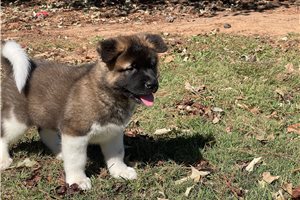
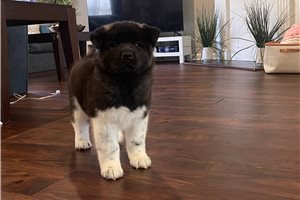
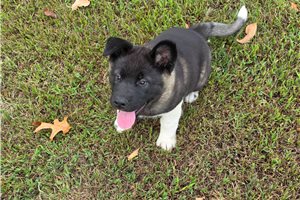
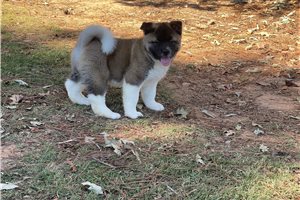
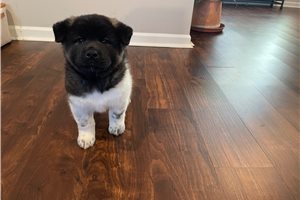
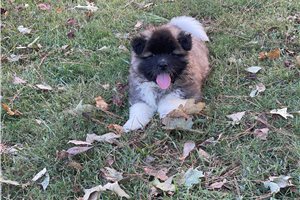
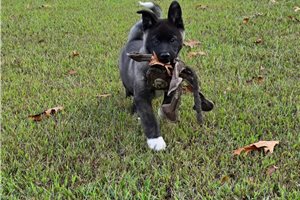
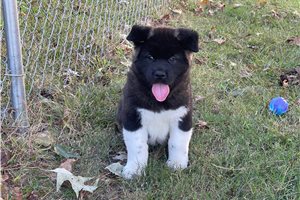
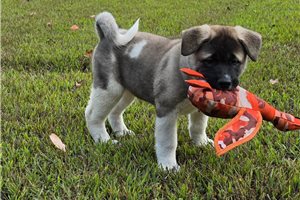
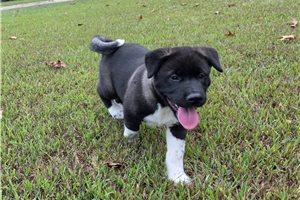
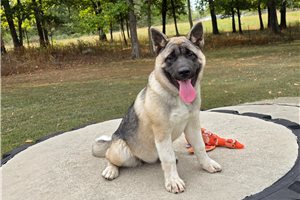
A Shiba Inu carries itself with spirited boldness, alert to everything around it and faithful to the people it chooses. People fall for the curled tail and pricked ears, and for a clean, catlike dog that grooms itself and house-trains with ease.
A Shiba Inu carries itself with spirited boldness, alert to everything around it and faithful to the people it chooses. People fall for the curled tail and...A Shiba Inu carries itself with spirited boldness, alert to everything around it and faithful to the people it chooses. People fall for the curled tail and pricked ears, and for a clean, catlike dog that grooms itself and house-trains with ease.
Only with Pawrade, you receive a pet insurance policy with no waiting period included for immediate accident or illness coverage. *NH, NY, RI, SC and TN residents excluded
“It was a great experience! Everything went as promised and everything was on time. Our puppy arrived at 5:15am and was in perfect shape. The delivery drivers were professional and arrived when promised.”
Gunner · Shiba Inu
Jan 28, 2026
“I love my Shiba Inu”
Yuna · Shiba Inu
Dec 14, 2025
“Pawrade deserves a 5 star. I couldn't have asked for a smoother process. Everyone was so attentive and communicative and I received my forever baby and best friend because of them. Thank you!!!”
Puppy scams cost U.S. families millions every year. Here's how you know Pawrade isn't one: we're a named, audited business with a public track record you can check anywhere.
Pawrade data: parents of puppies placed through Pawrade (breeder-reported)
Height
13.5–16.5 in
Lifespan
13–16 years
Energy
Moderate
Shedding
High
Group
Non-Sporting
AKC
Shiba Inu Characteristics
Full-Grown Size
2 of 7SmallLarge
Grooming Needs
3 of 7SeldomRegularly
Good with Dogs
2 of 7Not ReallyYes!
Watchdog Ability
5 of 7LowHigh
Exercise Needs
3 of 7Couch PotatoHigh Needs
Your new best friend.
Shiba Inu temperament
Personality and daily life
Temperament
Shibas were bred to hunt birds and small game in dense mountain brush, and that work still shows in a bold, alert dog with keen senses. It is faithful to its family but independent, and often reserved with strangers until they earn its trust. Shibas are devoted and tuned in to their owners' moods, but they may guard food, toys and resting spots.
Kids and other pets
Shibas do best with older children, and they get on well with younger ones they are raised with. Supervise play, and teach the puppy early to swap a toy for a treat. Some Shibas don't get along with other dogs, intact males especially, so plan introductions with care and keep up socialization from puppyhood.
Barking and noise
Shibas are not heavy barkers, but a frustrated, restrained or stressed Shiba can let out a loud, high-pitched scream. Calm, consistent handling from puppyhood keeps the drama down.
Pawrade data: parents of puppies placed through Pawrade (breeder-reported). Placements and reviews come from Pawrade's records.
A healthier start for a happier tomorrow.
Shiba Inu care & grooming
Care and training
The routine
Exercise needs
Moderate
A Shiba needs moderate exercise, up to about an hour a day, plus sniffing walks and food puzzles that use its hunting instinct.
Coat and shedding
High
The double coat pairs a stiff, straight outer coat with a soft, thick undercoat, and it is kept natural and untrimmed. Shedding is high, and it peaks once or twice a year, when the undercoat blows.
Daily
Teeth and gums
Brush the teeth every day, starting while your Shiba is young.
Weekly
Coat and grooming care
Brush weekly, and daily during a coat blow.
Ear checks
Clean the ears once a week.
Monthly / as needed
Bath time
Bathe now and then.
Nail trims
Trim the nails, and start handling the paws early, because many adult Shibas resist nail trims.
Keeping them safe
Leash and fencing
Wanderlust and prey drive mean it must stay on a leash or behind a secure fence, because reliable recall is uncommon even in well-trained Shibas.
From middle age, book eye-pressure checks with your vet, and treat a red, cloudy or painful eye as an emergency.
Skin changesMention skin changes
Mention itching, paw licking or red skin to your vet early, because allergies are probably the most common health problem in Shibas.
Joints and movementRoutine vet checks
Ask your vet to check the knees and hips at routine checkups, and keep your Shiba lean to take strain off them.
Body weightRoutine vet checks
If your adult Shiba gains weight, seems tired or its coat changes, ask about a thyroid check at its next checkup.
Every milestone, together.
Shiba Inu puppy milestones
Growing up: your Shiba Inu's first years
Before 8 weeks
Before your puppy comes home
Your puppy is still with its mother and littermates, getting used to gentle handling and to new people, sounds and places. Most Shiba Inu breeders on Pawrade also get litters used to older children, small dogs, car rides and household noise.
Check every fence line for gaps, and look for spots where a Shiba could dig under or climb over.
Get the whole household into the habit of closing doors and gates behind them.
Move cords, shoes and other chewables out of reach, and have chew and puzzle toys ready.
Set up the crate or a pen in a room where the family spends time, or in your bedroom at night.
Why it matters
Shibas have a strong urge to roam and chase, so a secure home from day one keeps your puppy safe.
Shiba Inu note
Even well-trained Shibas seldom come back when called, so the door habit matters as much as the fence.
8–10 weeks
The first week home
Everything is new, and your puppy is learning where it sleeps, eats and goes potty. Shibas are naturally clean and try hard not to soil their own space, so house-training often clicks early.
Take your puppy out first thing in the morning, after every nap and meal, and last thing at night.
Keep the crate close enough at night to hear a whimper, since a young puppy can't hold its bladder all night.
Book a vet check within the first few days, and ask the vet to watch your puppy for 15–20 minutes after each vaccine.
Handle the paws and ears gently every day, and trim the nails from the start.
Why it matters
Some Shiba puppies react to vaccines, and a short wait at the clinic means the vet is right there if yours does.
Shiba Inu note
Many adult Shibas fight nail trims, so gentle handling now saves a struggle later.
10–12 weeks
Weeks 2 to 4
These are some of the most important weeks you'll spend with your Shiba. Puppies are most open to new experiences in their first 3 months, and good experiences now help shape a confident adult.
Aim for a few calm new experiences every day, such as friendly visitors, new places, car rides and everyday sounds.
Join a puppy class now, since classes can start as early as 7–8 weeks, with healthy classmates and good hygiene, as your vet advises.
Until your vet says the vaccine series is complete, skip dog parks and other places unknown dogs visit.
Why it matters
Early socializing helps a naturally reserved breed feel at ease with strangers and other dogs as it grows up.
Shiba Inu note
Shibas often guard food and toys, so practice swapping a toy for a treat now, while it's still an easy game.
3–4 months
3 to 4 months
Your puppy is getting bolder by the day. A puppy can usually hold its bladder for about as many hours as its age in months, so a 3-month-old can wait about 3 hours. Most puppies finish their vaccine series at about 16 weeks, as your vet advises.
Once your vet says the vaccines are complete, widen your puppy's world with new places, surfaces and sounds.
Start leash walks now, and keep early sessions short and upbeat, since some Shibas protest loudly at their first leash.
Keep training sessions short and reward-based, with high-value treats, because a bored Shiba simply tunes out.
Why it matters
A Shiba is an on-leash breed for life, so a calm, happy start on the leash pays off every day.
Shiba Inu note
The Shiba scream is a normal way for a frustrated puppy to protest, and calm, consistent handling helps.
4–6 months
4 to 6 months
Teething is in full swing. Baby teeth start falling out from about 12 weeks, and by about 6 months the adult teeth are in. Cords, shoes and furniture are all fair game for a teething Shiba.
Keep only a few safe chew toys out at a time and rotate them, and supervise chewing so you can step in early.
Around 4 months, most Shiba puppies can move from three meals a day to two.
Keep handling the paws, ears and mouth every day, so nail trims and vet checks stay easy.
Why it matters
Chewing is how puppies ease sore gums, so a safe outlet protects your things and your puppy.
Shiba Inu note
Shibas bore easily, so food puzzles and stuffed toys keep a teething puppy busy in a good way.
6–12 months
6 to 12 months
Meet your teenager. Adolescence runs from about 6–8 months to about 2 years, and many young dogs test the rules and seem to forget their training.
Keep training short, fun and generous with rewards, because patience works far better than force with a Shiba.
Keep the leash on outside a fence, even if your Shiba seemed reliable a few weeks ago.
Let your Shiba run and play, but agree an exercise plan with your vet while its growth plates are still soft.
Talk with your vet about spaying or neutering, and decide together what makes sense for your dog.
Why it matters
This dip in listening is a normal, passing phase, and calm, consistent training carries your dog through it.
Shiba Inu note
In males, the testicles can take up to 8 months or more to come down, so an early note about them is not final.
1–2 years
1 to 2 years
Your Shiba is settling into the dog it will be: bold, alert and faithful, with a mind of its own. Most puppies stop growing in height by 12 months, and by the end of this stage your Shiba is a settled adult.
Plan on up to about an hour of exercise a day, plus sniffing games and food puzzles for its busy mind.
Expect a big coat blow once or twice a year, and brush every day while the undercoat comes out.
Book a wellness exam with your vet at least once a year, with the knees and eyes checked.
Why it matters
Regular exams let your vet follow the knees, hips and eyes over time, which is how problems are caught early.
Shiba Inu note
Even a well-trained adult Shiba is an on-leash dog, so the leash and the fence stay part of life.
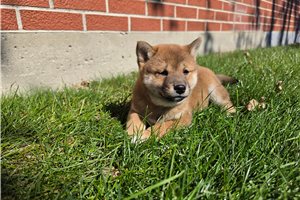
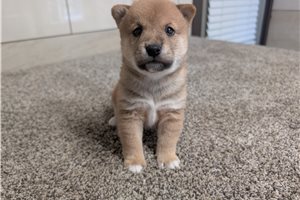
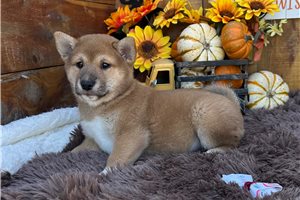
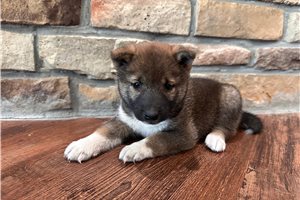
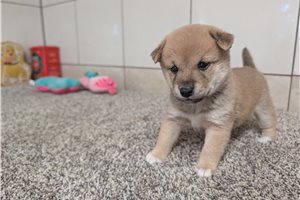
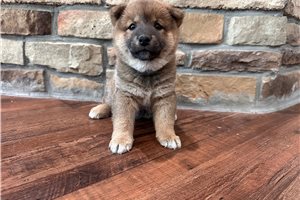
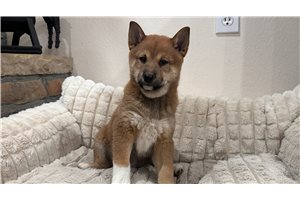
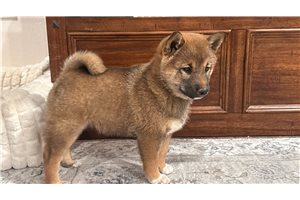
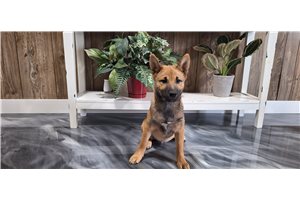
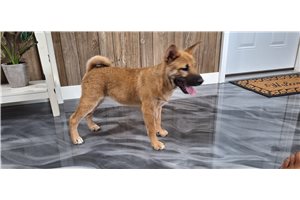
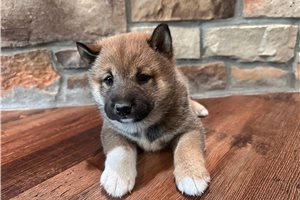
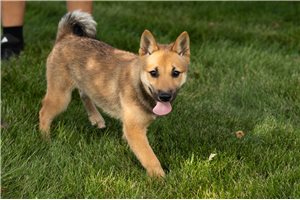
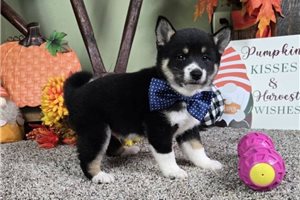
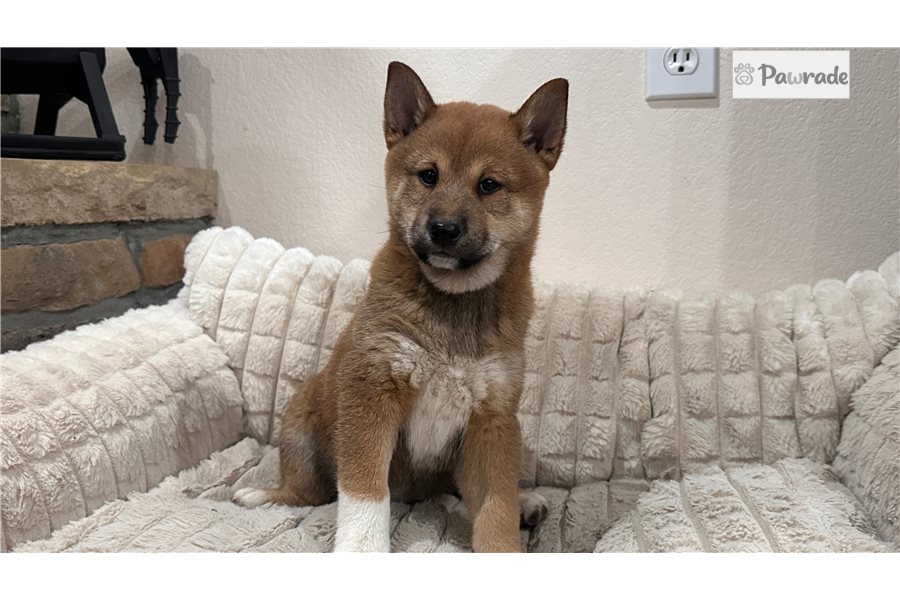
The Shiba is a small, compact spitz with moderate bone and firm muscle, a little longer than it is tall. Its small triangular ears stand firmly upright, its dark, deep-set eyes slant upward, and its thick tail is carried in a curl or sickle over the back.
Colors and markings
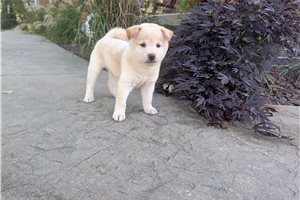
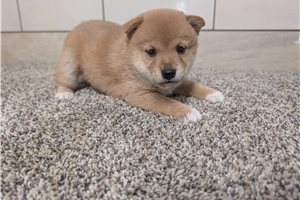
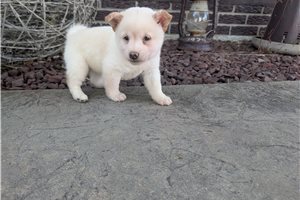
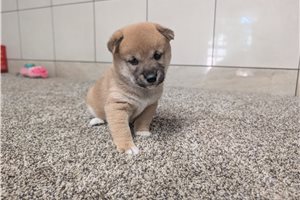
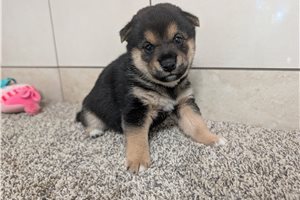
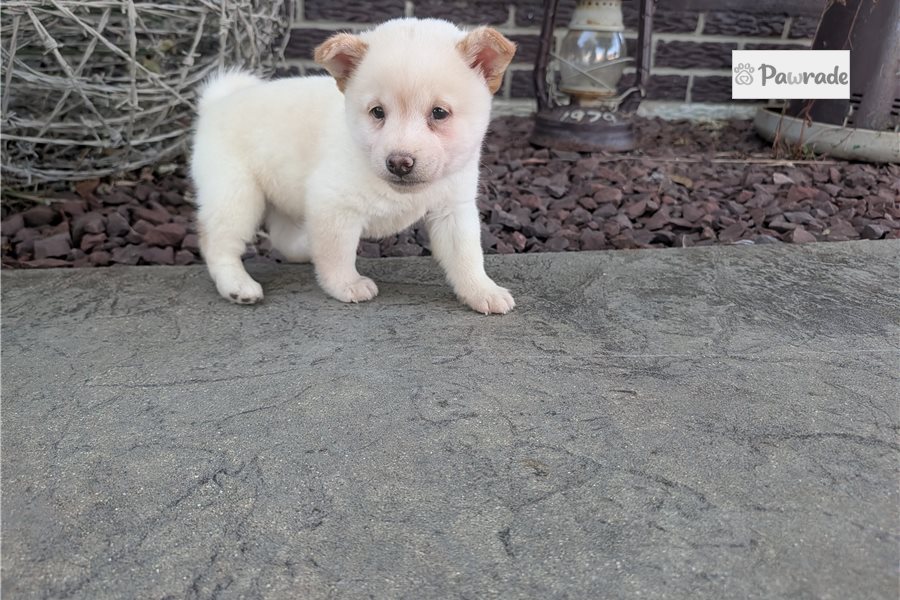
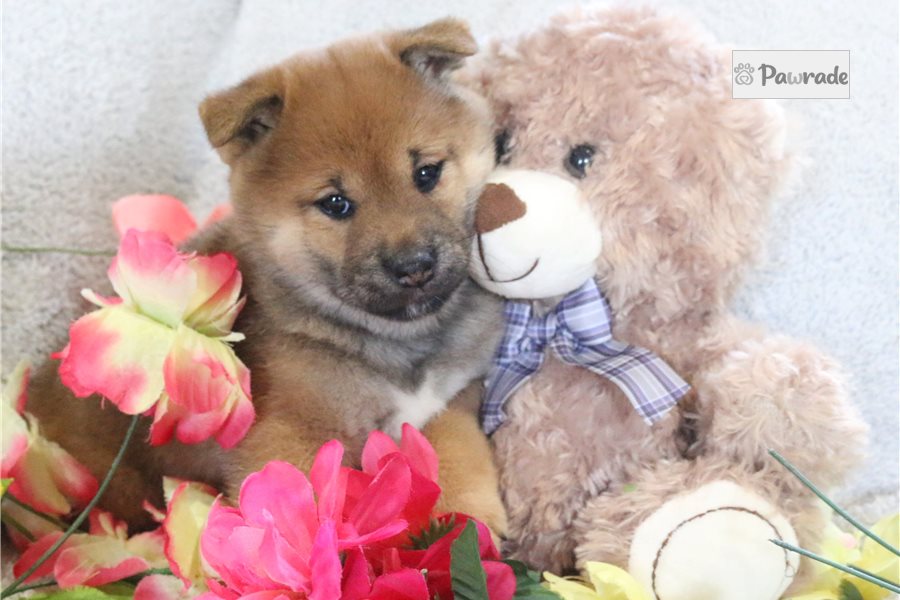
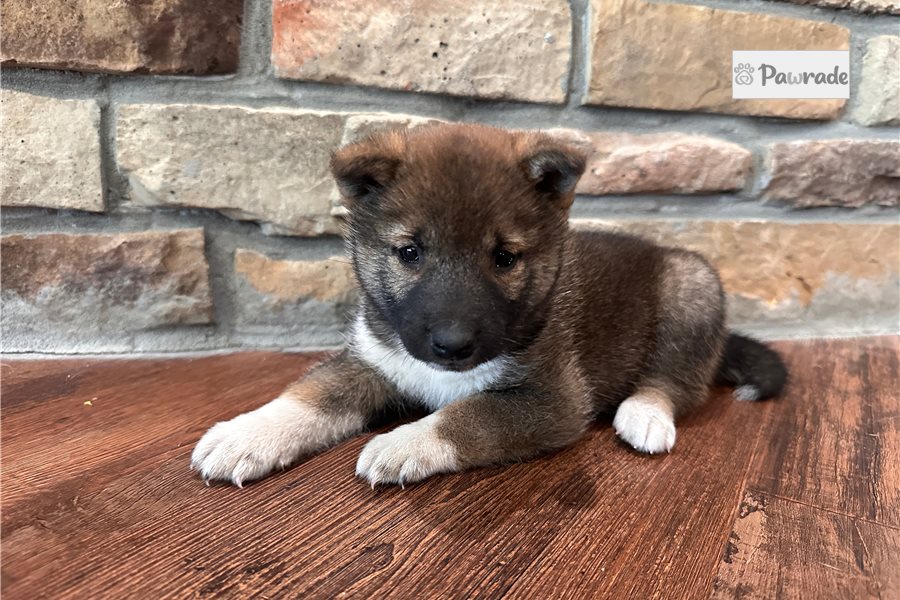
The AKC standard colors are red, sesame (black-tipped hairs on a red base) and black and tan. Every color needs urajiro, the cream to white markings on the cheeks, throat, chest, belly and inner legs. White on the tail tip, socks and a chest blaze are allowed. Cream, white and pinto are outside the AKC breed standard. The standard coat is a harsh double coat; a long coat is outside the AKC breed standard, and a DNA test can show a Shiba's coat-length genotype. Colors can shift as a puppy grows: white patches on a newborn's chest and toes often fade into the urajiro. Many dogs called sesame are really sables, red with some black-tipped hairs.
Colors listed by Pawrade breeders
Black
Black & Tan
Cream
Cream Sable
Red
Red Sesame
Sable
Sesame
White
Keeping your Shiba Inu healthy
Shibas are known to be prone to a short list of conditions: a form of glaucoma (raised pressure inside the eye), hip dysplasia and two inherited nerve diseases. A cheek-swab DNA test shows whether a puppy could develop either nerve disease, and a dog tested clear cannot. Regular checkups and a lean weight take care of most of the rest.
A little history, a lot of heart.
Shiba Inu history
History and fun facts
ancient times
Small dogs have lived in Japan since ancient times: Jomon-era shell mounds hold their remains, and dogs brought by later settlers are credited with the pricked ears and curled tail.
It hunted birds and small game in dense mountain brush; shiba is usually explained as brushwood or an old word for small, and inu means dog.
1868
Crosses with English Setters and Pointers imported from 1868 made pure Shibas scarce by 1912–1926, and preservation work began around 1928.
1934
A unified breed standard followed in 1934, and Japan declared the Shiba a natural monument in 1936 or 1937 (sources differ).
Second World War
Bombing in the Second World War and a post-war distemper outbreak nearly wiped the breed out.
Of the regional types, the Shinshu survived, and the remaining bloodlines were combined into today's Shiba.
1954
The first Shiba known in the US arrived in 1954 with an American military family.
1992
The National Shiba Club of America, founded in 1983, is the breed's AKC parent club, and the AKC recognized the Shiba Inu in 1992.
2024
The best-known Shiba is Kabosu, a rescued dog from Chiba, Japan, whose photos became the Doge meme and the Dogecoin logo; she died in 2024 at the age of 18.
Checked with care before travel.
Shiba Inu Veterinary Health Report
Your puppy's Veterinary Health Report
Before your Shiba Inu puppy comes home, the breeder's licensed vet gives it a full hands-on exam to PetPay's exam standards, and the results go into its Veterinary Health Report.
The exam, a health certificate and a stool test for parasites all happen 3 to 5 days before your puppy leaves.
1It is a check of your own puppy, not paperwork about its family, so you start with a clear record of how your puppy is doing.
2If the vet finds something that could put your puppy at risk during travel, your puppy stays with the breeder until it's resolved.
3Problems that can be treated before travel are treated by the breeder's licensed vet first.
4Anything else the vet notes is shared with you.
5A hard copy of the report travels with your puppy for your records, and a digital copy is in your PetPay account.
Puppies travel only once they are at least 8 weeks old and weigh at least 2 lb. Every puppy also comes with a health guarantee administered by PetPay, independent of the seller. The terms are on the health guarantee page.
A Shiba Inu puppy's price reflects what goes into it: its pedigree and registration, its coat and color, and the breeder's program. Every Pawrade puppy's price also includes the pre-travel exam by the breeder's licensed vet, the Veterinary Health Report and a health guarantee administered by PetPay. See today's price range for Shiba Inu puppies on Pawrade's Shiba Inu listings.
Typical asking price
$2,350
Based on 360 Shiba Inu listings in the last 12 months
Frequently asked questions about Shiba Inu puppies
Frequently asked questions
Adult Shiba Inus weigh 18–25 lb and stand 13.5–16.5 in at the shoulder. The AKC standard sets males at 14.5–16.5 in and females at 13.5–15.5 in. Most puppies stop growing in height by 12 months.
The Mame Shiba is a smaller type bred in Japan, but it is not a recognized size. The AKC, UKC and FCI (Fédération Cynologique Internationale) standards set one height range for each sex, with no separate small size.
The AKC standard colors are red, sesame (black-tipped hairs on a red base) and black and tan. Each comes with urajiro, the cream to white markings on the cheeks, chest and belly. Cream, white and pinto are outside the AKC breed standard.
Some markings do change as a Shiba grows. White patches on a newborn's chest and toes often fade into the urajiro, the pale markings underneath. Many dogs called sesame are really sables, red with some black-tipped hairs mixed in.
A purebred Shiba is small and compact, with small pricked ears, deep-set eyes that slant upward, a thick tail curled over the back and urajiro markings. The coat is a harsh double coat, shown untrimmed.
Males are a little larger, and the AKC standard sets males at 14.5–16.5 in and females at 13.5–15.5 in. Friction with other dogs is most common in intact males.
Both are Japanese spitz breeds, but the Akita is the largest of Japan's native breeds and the Shiba the smallest. Akita males stand 26–28 in at the shoulder, against 14.5–16.5 in for a Shiba male, and the Akita is the more protective of the two.
Shibas are bold, good-natured and alert, with moderate energy. They are faithful to their family but independent, and often reserved with strangers. Plan on up to about an hour of exercise a day, plus sniffing games and food puzzles.
Shibas are affectionate on their own terms. They are devoted and sensitive to their owners' moods, but most dislike being held down or restrained. Build up handling calmly from puppyhood, and let cuddles happen when your Shiba is in the mood.
Shibas are not heavy barkers. A frustrated, restrained or stressed Shiba may give a loud, high-pitched scream instead, and calm, consistent handling helps.
It depends on the individual dog. Shibas are devoted and sensitive to their owners' moods, but they are independent, often reserved with strangers and dislike restraint.
Shibas do best with older children, and they do well with younger ones they are raised with. Many Shibas guard food and toys, so supervise play and teach children to leave the dog's things alone. Most Shiba Inu breeders on Pawrade socialize their litters with older children before the puppies go home.
It depends on the dog, and early socialization helps a lot. Some Shibas don't get along with other dogs, intact males especially, so plan introductions with care. Most Shiba Inu breeders on Pawrade socialize their litters with small-breed dogs before the puppies go home.
It depends on the dog, because Shibas were bred to hunt small game and keep a strong prey drive. Early and ongoing socialization makes the biggest difference, so start while your puppy is young.
A Shiba needs a moderate amount of exercise, up to about an hour a day of walks and play. Sniffing walks, food puzzles and stuffed toys use its hunting instinct and prevent boredom.
A small home suits a Shiba, in town or country, as long as it gets its daily exercise. Shibas are not heavy barkers, though a frustrated Shiba can scream loudly.
Many Shibas will bolt given the chance, because they have wanderlust and a strong prey drive. Reliable recall is uncommon even in well-trained Shibas, so keep yours on a leash or behind a secure fence. Check the yard for gaps and digging routes, and make closing doors a household habit.
A Shiba can spend some time alone with a little preparation. Shibas bore easily and can get into mischief when left alone, so use a crate or pen for a puppy. Food puzzles and stuffed toys help keep a Shiba busy.
Shibas tend to suit experienced, patient owners, because of their independence and stubbornness. If you are new to dogs, plan on puppy classes, early socialization and short, reward-based training from the start.
Short walks and free play suit a growing puppy best. A puppy's growth plates stay soft while it grows, so agree an exercise plan with your vet and skip strenuous exercise until growth is done. Most puppies stop growing in height by 12 months.
Shibas shed a lot, and most heavily once or twice a year, when the undercoat blows. The coat is never trimmed, so regular brushing is how you manage the hair.
A Shiba needs little grooming beyond a weekly brush, and a daily one during a coat blow. Bathe now and then, trim the nails and clean the ears once a week. Shibas keep themselves clean, much like cats.
Shibas learn quickly, but their independence means training takes patience. Short sessions with high-value treats work, while repetitive drills and forceful restraint backfire.
House-training is usually easy, because Shibas are fastidious and avoid soiling their own space. Take your puppy out first thing in the morning, after naps and meals, and last thing at night. Set the crate up in a room where the family spends time, or in your bedroom at night, so your puppy settles near you.
A common rule of thumb is that a puppy can hold its bladder for about as many hours as its age in months. A 3-month-old, for example, can usually wait about 3 hours, and the rule works up to about 9 months to 1 year. A very young puppy still needs a trip outside during the night.
Your Shiba is most likely in adolescence, a normal phase when dogs test boundaries and may seem to forget their training. Adolescence runs from about 6–8 months to about 2 years. Keep training short, consistent and rewarding, keep the leash on outside a fence, and give plenty of exercise for body and mind.
Agility is a favorite, and Shibas also take part in AKC rally, obedience, scent work, tracking and Fast CAT, as well as barn hunt. At home, sniffing games and food puzzles suit their hunting instincts.
Puppies travel only once they are at least 8 weeks old and weigh at least 2 lb. Most Shiba Inu puppies go home at about 11 weeks, usually between 9 and 17 weeks.
Most Shiba Inu litters on Pawrade meet children and small dogs before the puppies go home. Breeders report socializing 79% of litters with older children, 79% with small-breed dogs and 65% with younger children. They also report getting litters used to car rides (71%) and loud music or TV (68%). These figures come from what breeders reported for 418 litters.
Check the yard and fence for gaps and digging or climbing routes, and get the household used to closing doors. Set up a crate or pen in a room where the family spends time, and move cords and shoes out of reach. Have chew and puzzle toys ready, and book a vet check for the first few days.
Start right away, because the first 3 months are the most important time for socialization. Puppy classes can begin as early as 7–8 weeks, with healthy classmates, as your vet advises. Keep socializing for life, so your Shiba stays at ease with strangers and other dogs.
Most puppies finish teething by about 6 months, when the adult teeth are in. Baby teeth start to fall out from about 12 weeks, and chewing is strongest in between. Offer a few safe chew toys at a time and rotate them, supervise chewing, and keep cords and shoes out of reach.
Most puppies finish their core vaccine series at about 16 weeks, as your vet advises. Some Shiba puppies react to vaccines, so ask the vet to watch your puppy for 15–20 minutes after each shot. Until the series is complete, keep away from dog parks and other places unknown dogs visit.
A young Shiba puppy eats three meals a day, moving to two at around 4 months, and adults eat twice a day. Keep onion and garlic foods away, because the breed's red blood cells are more easily damaged by them. Adjust the amount to keep your Shiba lean, and ask what your puppy is eating now before it comes home.
The Veterinary Health Report is the record of your Shiba Inu puppy's exam before it goes home. The breeder's licensed vet gives the puppy itself a full hands-on exam to PetPay's standards and writes down what they find. It gives you and your own vet a clear starting point for your puppy's care.
The breeder's licensed veterinarian examines every puppy before it goes home, to PetPay's exam standards. The results are recorded in the puppy's Veterinary Health Report, and a copy travels with your puppy for your records.
The breeder's vet examines the whole puppy and pays close attention to a few things that matter in Shibas. The vet feels both knees to check that the kneecaps stay in place, and checks the bite and the teeth that are present. In a male puppy, the vet also checks whether both testicles have come down, which can happen late in Shibas.
Before travel, every puppy follows PetPay's vaccination and deworming schedule as far as its age allows: deworming at 2, 4, 6, 8, 10 and 12 weeks, and the distemper, parvo, adenovirus and parainfluenza combination shot at 6–8, 9–11 and 12–14 weeks. Bordetella and corona are given at the vet's discretion, and no vaccine is given within 3 days of travel. Rabies is given by a licensed vet on the schedule your state requires. Your own vet completes the series. Your puppy's vaccination and deworming records are separate documents that travel with your puppy. Bring them, with the Veterinary Health Report, to your first visit so your vet starts from the same record.
If the vet finds something that could put your puppy at risk during travel, your puppy stays with the breeder until it's resolved. Problems that can be treated before travel are treated by the breeder's licensed vet first. Anything else the vet notes is shared with you.
Puppies grow and change quickly, and their immune systems are still developing, so no single exam can find everything. The Shiba's form of glaucoma, for example, usually starts in middle age, and final hip X-rays are taken at 24 months. The report is a strong early look at your puppy, and your own vet builds on it at every checkup.
Right now, most Shiba Inu puppies on Pawrade are listed within the typical range shown on Pawrade's Shiba Inu listings. Each breeder on Pawrade sets their own price, and each puppy's listing shows it. A Shiba Inu puppy's price reflects what goes into it: its pedigree and registration, its coat and color, and the breeder's program. Every Pawrade puppy's price also includes the pre-travel exam by the breeder's licensed vet, the Veterinary Health Report and a health guarantee administered by PetPay.






 Shiba Inu note