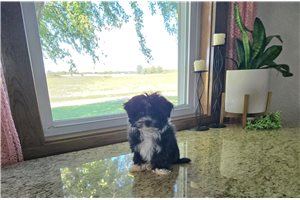
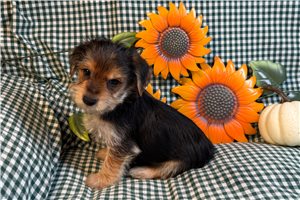
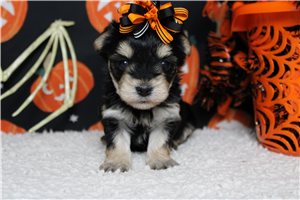
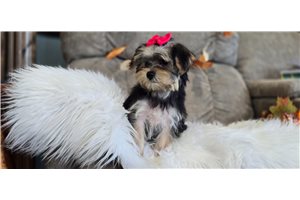
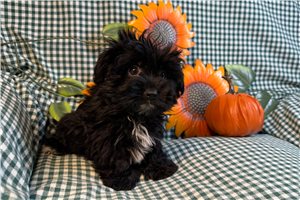
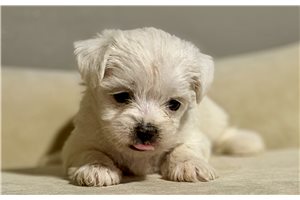
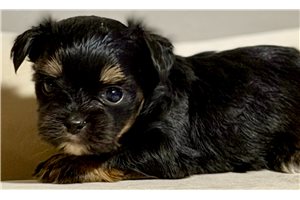
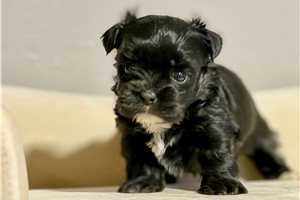
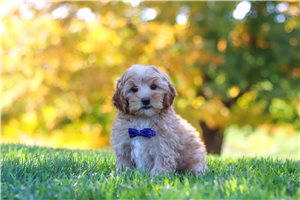
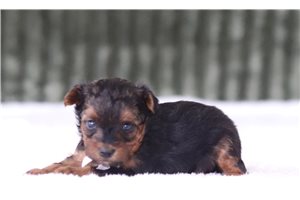
A Yorkshire Terrier fits in the crook of one arm but carries itself like a big dog, brave and a little bossy. People fall for the silky blue and tan coat, then for the little terrier inside it, still chasing toys the way its ancestors chased rats through the mills of Yorkshire.
A Yorkshire Terrier fits in the crook of one arm but carries itself like a big dog, brave and a little bossy. People fall for the silky blue and tan coat, then...A Yorkshire Terrier fits in the crook of one arm but carries itself like a big dog, brave and a little bossy. People fall for the silky blue and tan coat, then for the little terrier inside it, still chasing toys the way its ancestors chased rats through the mills of Yorkshire.
Only with Pawrade, you receive a pet insurance policy with no waiting period included for immediate accident or illness coverage. *NH, NY, RI, SC and TN residents excluded
“When I needed help with a question Emily was very helpful My puppy was delivered in great condition without stress.”
Max · Cocker Spaniel
May 23, 2020
“We are so pleased with our new puppy, everything went smooth and professional as possible. The breeders were amazingly quick answering all of my questions and very helpful with information. We are enjoying our new family member and can't wait to create new memories.”
Logan · Yorkshire Terrier - Yorkie
Jun 21, 2026
“Thank you Pawrade. It was truly easy working with you. Logan and I are really grateful.”
Puppy scams cost U.S. families millions every year. Here's how you know Pawrade isn't one: we're a named, audited business with a public track record you can check anywhere.
Pawrade data: parents of puppies placed through Pawrade (breeder-reported)
Height
7–8 in
Lifespan
11–15 years
Energy
Low
Shedding
Low
Group
Toy
AKC
Yorkshire Terrier Characteristics
Full-Grown Size
1 of 7SmallLarge
Grooming Needs
4 of 7SeldomRegularly
Good with Dogs
2 of 7Not ReallyYes!
Watchdog Ability
5 of 7LowHigh
Exercise Needs
1 of 7Couch PotatoHigh Needs
Your new best friend.
Yorkshire Terrier temperament
Personality and daily life
Yorkies were bred in the mid-1800s to keep rats down in the textile mills and coal mines of northern England. That terrier is still in there. Toss a toy across the floor and watch a Yorkie hunt it down, then come back to your lap as an affectionate little companion.
Kids and other pets
Yorkies are vocal and alert, and they make keen little watchdogs. They are friendly with children who handle them gently. Supervise play with young children, because rough handling can injure a dog this small. Around bigger dogs a Yorkie can act far braver than its size, so manage that bravado from the start.
Pawrade data: parents of puppies placed through Pawrade (breeder-reported). Placements and reviews come from Pawrade's records.
A healthier start for a happier tomorrow.
Yorkshire Terrier care & grooming
Care and training
The routine
Exercise needs
Low
Exercise is simple. Two short walks and a few bursts of play each day keep a Yorkie happy, which makes it easy to live with in an apartment or a small home.
Coat and shedding
Low
The coat is a single layer of long, fine hair with no undercoat, much like human hair, and it sheds little.
Daily
Coat and grooming care
Kept long, the coat needs brushing every day. Many pet owners keep it clipped short instead. Book a first short grooming visit at around 16–20 weeks, once vaccinated, then one every 6–8 weeks.
Teeth and gums
Brush the teeth every day too, because gum disease can start young in this breed.
Around the eyes
Tie the topknot up or trim the hair around the eyes, and wipe the eye corners each day if they tear.
Weekly
Bath time
A long coat also needs a bath about every 1–2 weeks.
Ear checks
Check the ears weekly.
Keeping them safe
Heat safety
Hot days are hard on a Yorkie, so keep outings short and easy in the heat.
Cold weather
Cold bothers it too, so keep walks brief on very cold days.
Stairs and jumping
Limit jumping on and off furniture while your puppy grows, to protect the knees.
Leash and fencing
On walks, use a harness rather than a neck collar to keep pressure off the windpipe.
Ask for an eye check at every yearly exam, because a cloudy lens (cataract) can show up in young Yorkies or later in life.
Breathing and airwayKeep them lean and cool
Keep your Yorkie lean and away from smoke, because both protect the airway of a dog with a weak windpipe (tracheal collapse).
Joints and movementRoutine vet checks
Your vet feels both knees at routine visits, because a kneecap that slips out of place (patellar luxation) runs in the breed.
Teeth and gumsRoutine vet checks
Ask your vet to check for baby teeth that stay in as the adult teeth come through, especially the canines.
Heart checksRoutine vet checks
In the senior years, ask your vet to listen for a heart murmur at each exam.
Every milestone, together.
Yorkshire Terrier puppy milestones
Growing up: your Yorkie's first years
Before 8 weeks
Before your puppy comes home
Your puppy is still with its breeder, and most Yorkie litters on Pawrade meet other small dogs, children and everyday household sounds before they leave.
Set up a grooming kit: a pin brush, a metal comb, detangler, dog shampoo, topknot bands, nail clippers and a toothbrush.
Buy a small harness for walks, so no collar presses on that tiny windpipe.
Choose a spot for the crate where your family spends its time, and plan to move it into your bedroom at night.
Plan small, frequent meals of a food made for its age, and ask what your puppy is eating now.
Why it matters
The first 3 months are the most important time for a puppy to learn that people, places, animals and things are safe.
Yorkshire Terrier note
That silky coat needs care for life, so plan short, gentle brushing sessions from the very first days.
8–10 weeks
Week 1 at home
Your puppy is getting to know a new home, new people and a new routine. A puppy can usually wait about as many hours as it is months old, so a young Yorkie needs to go out often.
Take your puppy out first thing in the morning, after every nap and last thing at night.
Offer small, frequent meals, and resist the urge to add extra food or treats.
Book the first vet visit for this week, and take the Veterinary Health Report with you.
Why it matters
Reward-based training works far better than harsh corrections with a Yorkie, so praise every success outside.
Yorkshire Terrier note
Start tooth brushing now. Daily brushing from puppyhood is the main defense against gum disease in this breed.
10–12 weeks
Weeks 2 to 4 at home
Your puppy is still young enough that each calm, happy meeting with a new person, place or sound shapes the adult it becomes.
Introduce one or two new things a day, such as a calm visitor, a car ride or a new floor, and keep each one short and happy.
Join a puppy class, which can start as early as 7–8 weeks as long as your puppy stays away from sick dogs.
Teach a quiet cue with treats now, so your alert little watchdog learns when to stop.
Why it matters
Socializing early and gradually is the key to a Yorkie that gets along with other dogs and new people.
Yorkshire Terrier note
Teach children to be gentle with your puppy, since a dog this small is easily hurt by rough handling.
3–4 months
3 to 4 months
Most puppies finish their vaccine series at about 16 weeks, as your vet advises. Silver or gold hairs usually show on the head by now, the first sign of the slow change from black and tan to blue and tan.
Keep every vaccine visit on the calendar, since your own vet completes the series your puppy began with its breeder.
Once your vet says the vaccines are done, book your puppy's first short grooming visit.
Wait a little longer between potty trips week by week, and still head outside after every nap.
Why it matters
Your own vet sets the exact schedule for the final shots, so follow their timing rather than a fixed date.
Yorkshire Terrier note
Yorkies can be independent and a little stubborn, so keep lessons short and reward the behavior you want.
4–6 months
4 to 6 months
Baby teeth are loosening and adult teeth are coming in, and chewing is at its strongest. In very small dogs, the switch to adult teeth can come a little later than in bigger ones.
Put out only a few chew toys at a time and swap them around, so the allowed ones stay interesting.
Check your puppy's mouth often, and point out any baby tooth that stays beside an adult tooth at the next vet visit.
Keep meals measured as your puppy grows, because toy puppies need less food than standard formulas suggest.
Why it matters
Yorkies keep baby teeth more often than dogs in general, and retained teeth are often removed during the spay or neuter surgery.
Yorkshire Terrier note
Keep brushing sessions short and pleasant, because a long coat needs brushing every day for life.
6–12 months
6 to 12 months
Adolescence usually begins between about 6 and 8 months, and your Yorkie may test the rules or seem to forget its training. Small dogs finish growing sooner than big ones, but the growth plates in the legs stay soft until growth is done.
Keep training short, upbeat and full of praise, and keep the house rules the same as before.
Talk with your vet about whether and when to spay or neuter, since the right choice depends on your own dog.
Agree an exercise plan with your vet, and skip big jumps until your Yorkie has finished growing.
Why it matters
This teenage phase is normal, and patience with plenty of play and brain games carries your dog through it.
Yorkshire Terrier note
A Yorkie's stubborn streak can show more now, so stay patient and skip harsh corrections.
1–2 years
1 to 2 years
Your Yorkie is growing into the bold, affectionate little terrier it will be for life. Most dogs are fully grown and settled into adulthood at around 2 years.
Book a wellness exam at least once a year, with a dental check and a look at the knees and eyes.
Keep up daily tooth brushing, and plan professional cleanings when your vet advises.
Try a dog sport such as rally, obedience or agility now that your Yorkie is grown.
Why it matters
Regular checks catch changes in the teeth, knees and eyes early, when they are easier to manage.
Yorkshire Terrier note
The coat may still be finishing its change to full blue and tan, which can carry on into the second year.
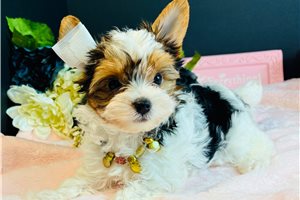
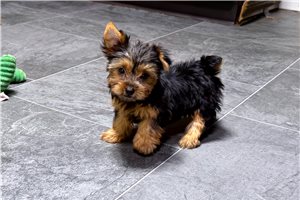
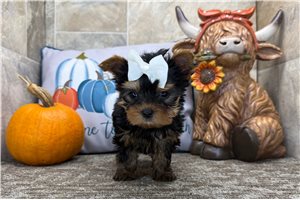
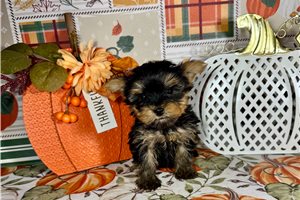
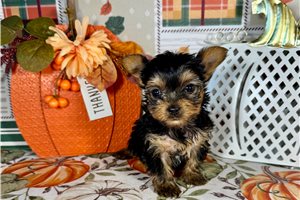
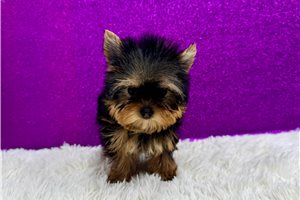
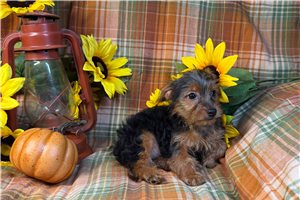
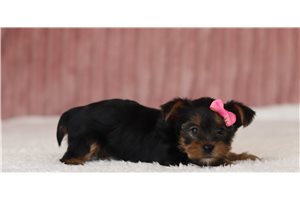
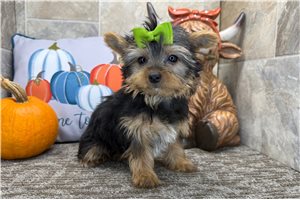
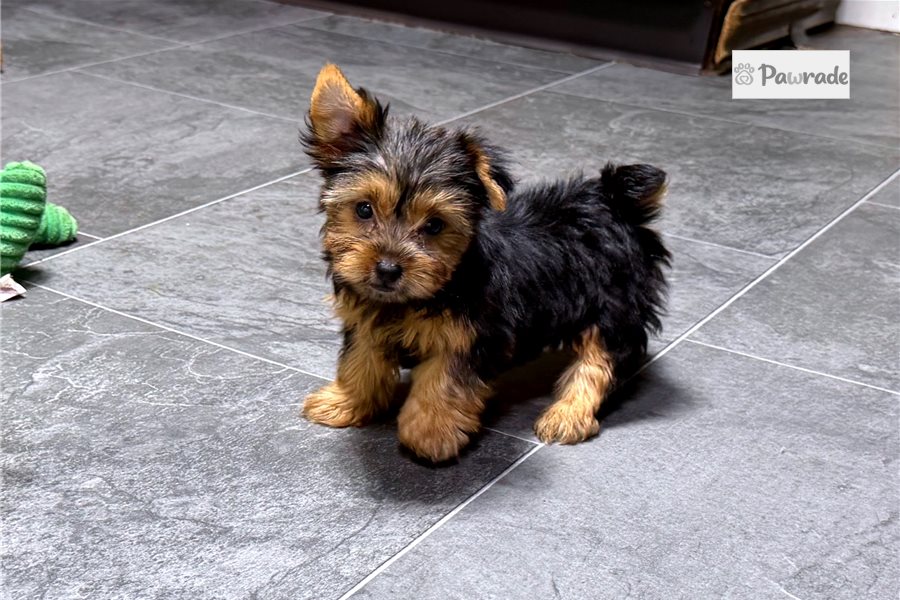
The Yorkie is a compact, square little terrier with a level back and a proud head carriage. It has small V-shaped ears that stand up and dark eyes. Some Yorkies grow a cotton or woolly coat instead of the silky one; both textures need daily brushing and are often kept clipped.
Colors and coat
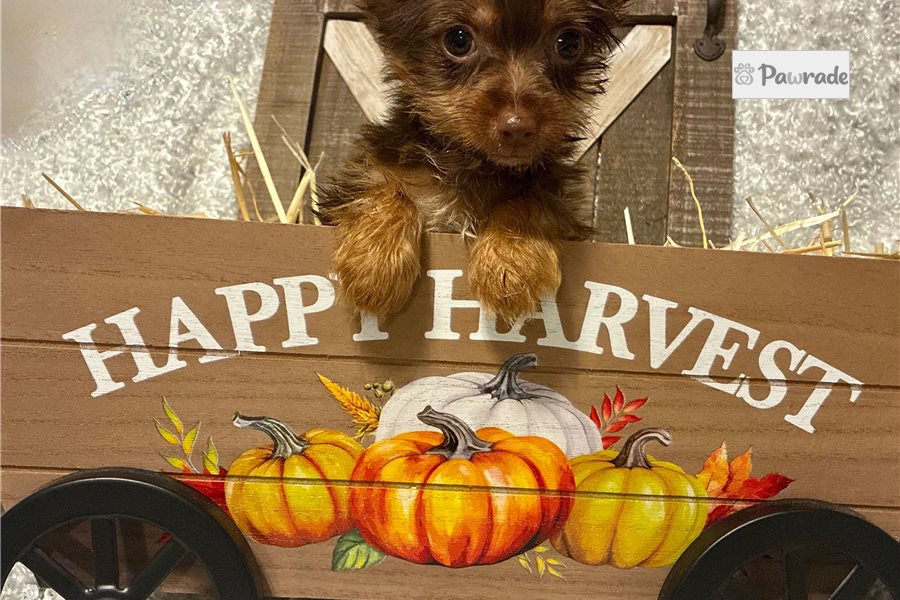
The AKC standard color for adults is blue and tan: a dark steel blue body with a rich golden tan head, chest and legs. Parti-color, solid colors, chocolate, chocolate and tan, tri-color, all gold, and white markings larger than a small chest spot are outside the AKC breed standard.
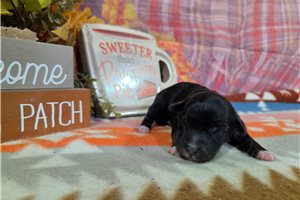
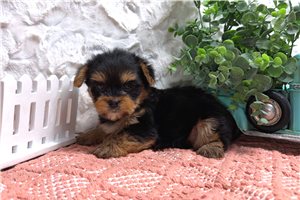
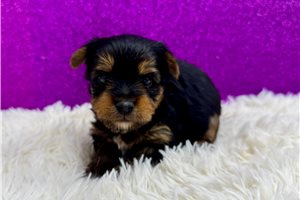
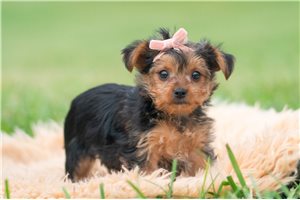
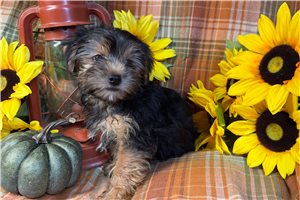
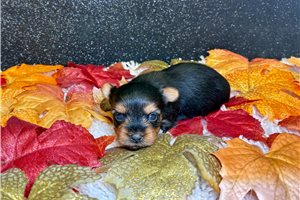
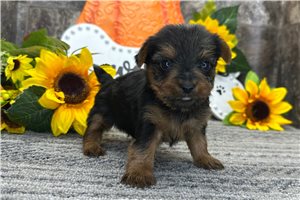
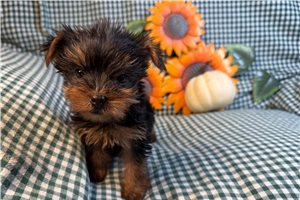
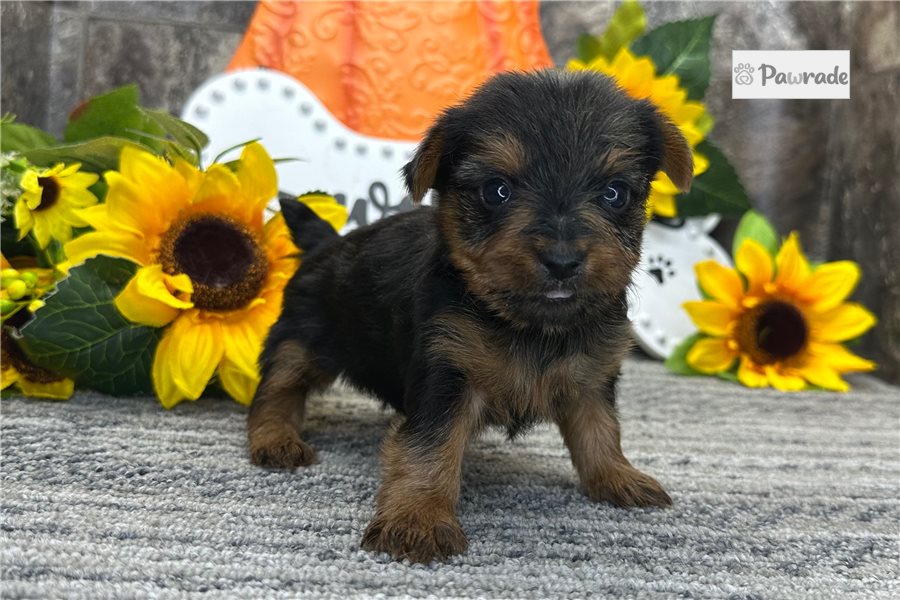
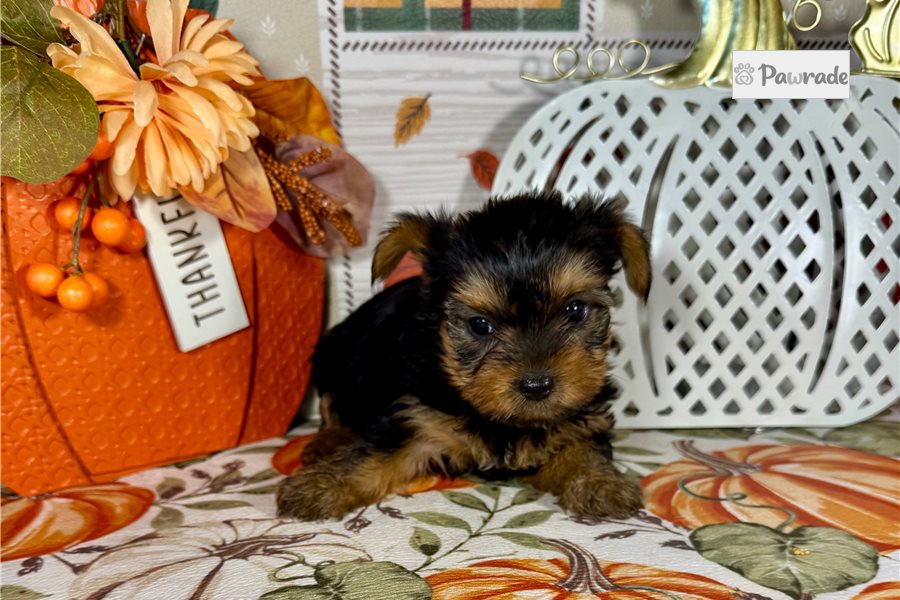
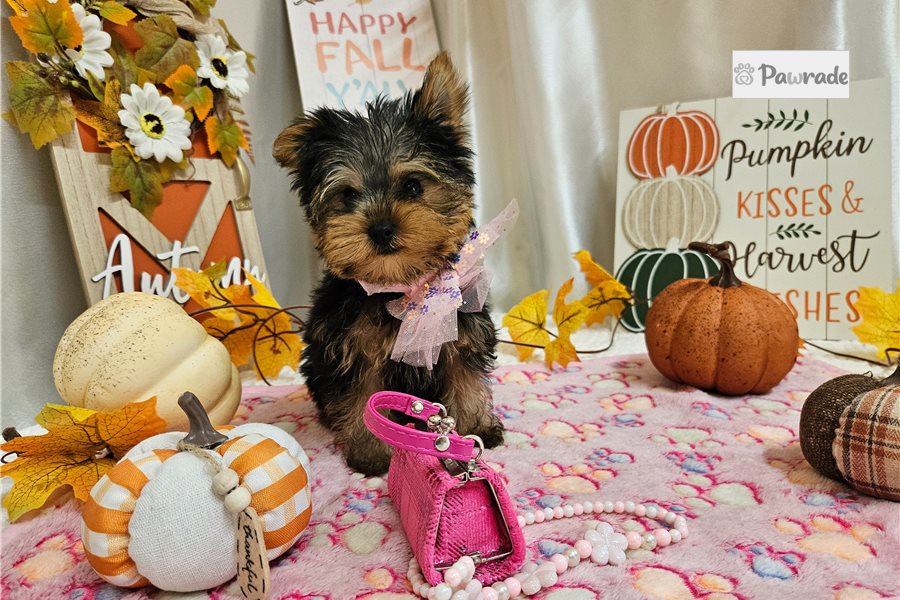
Puppies are born black and tan and turn blue and tan slowly as they mature. A small white strip on a newborn's chest normally turns tan within a few weeks.
Colors listed by Pawrade breeders
Black & Gold
Black & Tan
Blue & Gold
Blue & Tan
Chocolate & Gold
Chocolate & Tan
Parti-color
Rare Tri-color
Sable
Silver & Gold
Silver & Tan
Keeping your Yorkie healthy
Yorkies are known to be prone to a handful of conditions, and everyday care handles many of them.
A little history, a lot of heart.
Yorkshire Terrier history
History and fun facts
mid-1800s
The breed took shape in the mid-1800s in Yorkshire and Lancashire, where small terriers kept rats down in textile mills and coal mines.
Its ancestors include terriers brought south by Scottish weavers, the Waterside Terrier and the old English Black and Tan Terrier, probably with some Maltese and Skye Terrier influence.
about 1870
Shown at first as the broken-haired Scotch terrier, it took the Yorkshire Terrier name around 1870.
The mill origins inspired jokes that the silky coat came off the looms.
1870s
Early Yorkies were much bigger than today's dogs, and the breed was bred down in size as a ladies' companion during the 1870s.
1885
The AKC recognized the Yorkshire Terrier in 1885 and the Kennel Club in England in 1886, after which it became a fashionable lapdog of Victorian ladies.
1984
Two breeds descend from it: the Silky Terrier, developed in Australia from Yorkie and Australian Terrier crosses, and the Biewer Terrier, which began in 1984 in a German Yorkie kennel.
1944
Smoky, a Yorkie found in New Guinea in 1944, pulled telephone wire through a pipe about 70 feet long under an airstrip.
She later visited wounded soldiers as one of the earliest therapy dogs.
1978
Ch. Cede Higgins won Best in Show at Westminster in 1978, the breed's only win there.
The Yorkshire Terrier Club of America is the breed's AKC parent club.
Checked with care before travel.
Yorkshire Terrier Veterinary Health Report
Your puppy's Veterinary Health Report
Before your Yorkshire Terrier puppy comes home, the breeder's licensed vet gives it a full hands-on exam to PetPay's exam standards, and the results go into its Veterinary Health Report.
The exam, a health certificate and a stool test for parasites all happen 3 to 5 days before your puppy leaves.
1It is a check of your own puppy, not paperwork about its family, so you start with a clear record of how your puppy is doing.
2If the vet finds something that could put your puppy at risk during travel, your puppy stays with the breeder until it's resolved.
3Problems that can be treated before travel are treated by the breeder's licensed vet first.
4Anything else the vet notes is shared with you.
5A hard copy of the report travels with your puppy for your records, and a digital copy is in your PetPay account.
PetPay Veterinary Health Report form
16 areas checked on the exam
Closer look for Yorkshire TerriersOn every puppy's report
Puppies must be at least 8 weeks old and weigh at least 2 lb before they travel. Every Pawrade puppy also comes with a health guarantee administered by PetPay, independent of the seller. The terms are on the health guarantee page.
A Yorkshire Terrier puppy's price reflects what goes into it: its pedigree and registration, its coat and color, and the breeder's program. Every Pawrade puppy's price also includes the pre-travel exam by the breeder's licensed vet, the Veterinary Health Report and a health guarantee administered by PetPay. See today's price range for Yorkshire Terrier puppies on Pawrade's Yorkshire Terrier listings.
Typical asking price
$3,275
Based on 1,577 Yorkshire Terrier listings in the last 12 months
Frequently asked questions about Yorkshire Terrier puppies
Frequently asked questions
Adult Yorkshire Terriers weigh 3–7 lb and stand 7–8 in tall. Some adults grow past the standard's top weight.
Parents of Pawrade Yorkshire Terriers typically weigh 3–8 lb (fathers) and 4–9 lb (mothers).
Teacup, toy and micro are sales names, not separate kinds of Yorkie. The Yorkshire Terrier comes in one size, and its standard sets only a top weight of 7 lb.
Yorkie puppies are born black and tan, and the blue and tan adult color comes in slowly. Silver or gold first shows on the head at around 9–10 weeks, and the adult color is usually easy to predict by about 6 months. The change to full blue and tan can carry on until about 2 years.
Adult Yorkies are blue and tan under the AKC standard, with a steel blue body and a golden tan head, chest and legs. Puppies are registered in their puppy color, so AKC registration offers blue and tan, blue and gold, black and tan, and black and gold. Parti-color, chocolate, tri-color, all gold and other solid colors are outside the AKC breed standard.
The Biewer Terrier is a separate breed that began in a German Yorkshire Terrier kennel in 1984. The Silky Terrier also descends from the Yorkie, while mixes such as the Yorkiepoo and Morkie are crosses rather than breeds.
A Maltese is similar in size and care, with a long, silky single coat brushed daily, but it is all white and less likely to bark. A Pomeranian is similar in weight, but its double coat sheds more. The Silky Terrier is a close relative with the same blue and tan coloring, but it is larger and its medium-length coat sheds.
Docking follows the AKC standard, which calls for a tail docked to medium length. The UKC accepts an undocked tail without penalty, and the FCI (the international kennel federation) standard describes both docked and undocked tails.
A Yorkie is a confident little terrier with a bossy streak and a big soft spot for its people. It keeps the terrier urge to hunt, and it can be independent.
Yorkies are affectionate companions, but they are spirited terriers rather than calm lap dogs. Even a lap-sized Yorkie does best with two short walks a day plus some play.
Yorkies are vocal, and they make alert little watchdogs. Teach a quiet cue early, while your puppy is still learning the house rules.
Early, gradual socialization is the key to a Yorkie that gets along with other dogs. Watch for terrier bravado around bigger dogs, and manage it from the start. Pawrade breeders socialize most Yorkie litters with other small dogs before they go home, and many Yorkie buyers already have a dog at home.
A Yorkie and a cat can share a home, but introduce them slowly and supervise early meetings, because a Yorkie keeps a terrier's urge to chase small animals. Some Pawrade breeders socialize their litters with cats before the puppies go home.
Yorkies are friendly with children who handle them gently. With young children, supervise play, because rough handling can injure a toy-sized dog. Pawrade breeders socialize most Yorkie litters with children before the puppies go home.
A lot about a Yorkie suits a retired owner: it is small, fits apartment life and needs only short walks and play. The daily coat and tooth care is the real commitment. Yorkies are long-lived, so plan for many years together.
Yorkies are well suited to apartments and small homes. Short daily walks and play cover their exercise, and teaching a quiet cue early helps with close neighbors.
A Yorkie needs about two short walks a day plus short bursts of play, up to about 30 minutes in all. Long hikes and runs are more than it needs, so keep outings short, especially in very hot or cold weather.
A Yorkie's small size makes it an easy dog to bring along, and it is well suited to apartments and small homes. Most Yorkie litters on Pawrade are used to car rides before the puppies go home. On walks, use a harness rather than a collar, and keep outings short in very hot or very cold weather.
Yorkies are sensitive to both heat and cold. Keep walks short on very hot or very cold days.
Small dogs finish growing sooner than big ones, but the growth plates in a puppy's legs stay soft until growth is done. Until then, agree an exercise plan with your vet, and limit jumping on and off furniture to protect the knees.
Yorkies shed little, but no dog is truly hypoallergenic. The single coat is a lot like human hair and still drops some hairs, so it is low-shedding rather than shed-free.
A Yorkie has a single coat of long, fine, silky hair with no undercoat. Kept long, it needs daily brushing and a regular bath, and many pet owners clip it short to cut the work. The eye corners, ears and teeth need a little attention every week too.
Most Yorkie puppies have a first short grooming visit at around 16–20 weeks, once their vaccines are done. After that, a visit every 6–8 weeks keeps the coat in shape, with baths at home in between.
Yorkies are intelligent, but independent and sometimes stubborn. Praise and treats work far better than harsh corrections.
Take your puppy out first thing in the morning, after every nap and last thing at night, and reward every success with praise and a treat. Reward-based training works far better than scolding with a Yorkie. If you use a crate, put it in a room where the family spends time, or in your bedroom at night.
A puppy can usually hold its bladder for about as many hours as it is months old, so a 3-month-old Yorkie can wait about 3 hours. The rule holds up to about 9 months to 1 year of age. Young puppies still need trips out first thing in the morning, last thing at night and after naps.
Your Yorkie is most likely in adolescence, a normal phase that usually begins between about 6 and 8 months. Dogs this age test boundaries and may seem to forget their training. Consistent, reward-based training, patience and plenty of play and brain games carry you both through it.
Yorkies do therapy work, a tradition that goes back to Smoky, a Second World War Yorkie who visited wounded soldiers. Reward-based training and early socialization lay the groundwork.
Short bursts of toy hunting, tug and ball chasing suit a Yorkie's terrier instincts. Yorkies also compete in conformation shows and in obedience, rally and agility.
Pawrade puppies travel only once they are at least 8 weeks old and weigh at least 2 lb, and the breeder's licensed vet examines each one first. Most Yorkshire Terrier puppies go home at about 12 weeks, usually between 9 and 18 weeks.
Across 1,040 Yorkshire Terrier litters on Pawrade, the typical litter has 3 puppies, and most have between 2 and 5.
Get a harness rather than a collar, a grooming kit with a pin brush, a metal comb and a toothbrush, and a puppy food suited to its age. Book the first vet visit and bring the health record, so the vet can check the bite, teeth, knees, heart and weight. Put the crate in a room where the family spends time, or in your bedroom at night.
Most Pawrade Yorkie litters meet children, other dogs and everyday household sounds before the puppies go home, as reported by their breeders. Breeders report that 95% of 1,040 litters met small dogs and 87% met older children. Most litters also got used to the vacuum cleaner (74%), loud music or TV (71%), car rides (66%), pots and pans (59%) and the doorbell (52%). Keep going once your puppy is home, with new people, other dogs and new situations a little at a time.
Start the day your puppy comes home, because the first 3 months are the most important time for socialization. Puppy classes can start as early as 7–8 weeks, as long as your puppy stays away from sick dogs. Go gradually, a little at a time, with new people, other dogs and new places.
Most puppies have their adult teeth by about 6 months, and chewing is strongest while the teeth change. In very small dogs the switch can come a little later, so watch for baby teeth that stay in, especially the canines, until about 7 months. Rotate a few safe chew toys, and ask your vet about any baby tooth still in place beside an adult tooth.
Most puppies finish their core vaccine series at about 16 weeks, as your vet advises. Puppy classes can start before then, as long as your puppy stays away from sick dogs. Your puppy's vaccination and deworming records are separate documents that travel with your puppy. Bring them, with the Veterinary Health Report, to your first visit so your vet starts from the same record.
Feed an age-appropriate puppy diet and avoid overfeeding. Toy puppies need less than the standard puppy formula predicts, so feeding guidance made for small breeds helps keep a Yorkie from getting too much. Offer small, frequent meals rather than one or two big ones. You can ask what your puppy is eating now before it comes home.
The Veterinary Health Report is the written record of your Yorkshire Terrier puppy's health exam before it goes home. The breeder's licensed veterinarian examines the puppy to PetPay's exam standards and records the results in the report. It is a full hands-on exam of your puppy itself, not a record of the parents' health.
The breeder's licensed veterinarian examines every Yorkshire Terrier puppy before it goes home, to PetPay's exam standards. The results are recorded in the puppy's Veterinary Health Report, and a copy travels with your puppy for your records.
The breeder's licensed vet gives each Yorkshire Terrier puppy a full hands-on exam before it goes home, to PetPay's exam standards. The vet listens to the heart for a murmur and feels both knees for a kneecap that slips out of place. The vet also checks the bite, teeth and gums, weighs the puppy, feels the soft spot on the skull and, in a male, checks that both testicles have come down.
Before travel, every puppy follows PetPay's vaccination and deworming schedule as far as its age allows: deworming at 2, 4, 6, 8, 10 and 12 weeks, and the distemper, parvo, adenovirus and parainfluenza combination shot at 6–8, 9–11 and 12–14 weeks. Bordetella and corona are given at the vet's discretion, and no vaccine is given within 3 days of travel. Rabies is given by a licensed vet on the schedule your state requires. Your own vet completes the series. Your puppy's vaccination and deworming records are separate documents that travel with your puppy. Bring them, with the Veterinary Health Report, to your first visit so your vet starts from the same record.
If the vet finds something that could put your puppy at risk during travel, your puppy stays with the breeder until it's resolved. Problems that can be treated before travel are treated by the breeder's licensed vet first. Anything else the vet notes is shared with you.
Puppies grow and change quickly, and their immune systems are still developing, so no exam can find everything. The pre-travel exam by the breeder's licensed vet is a strong early indicator and a documented starting point. Your own vet builds on it at the first visit and at every checkup after that.
Yorkshire Terrier buyers rate their Pawrade experience 4.8 out of 5 on average, across 756 reviews. About 86% of their reviews give the full 5 stars.
Right now, most Yorkshire Terrier puppies on Pawrade are listed within the typical range shown on Pawrade's Yorkshire Terrier listings. Each breeder on Pawrade sets their own price, and each puppy's listing shows it. A Yorkshire Terrier puppy's price reflects what goes into it: its pedigree and registration, its coat and color, and the breeder's program. Every Pawrade puppy's price also includes the pre-travel exam by the breeder's licensed vet, the Veterinary Health Report and a health guarantee administered by PetPay.




 Yorkshire Terrier note