Most comparisons between English Bulldogs and French Bulldogs tell you the same things: Frenchies are smaller, English Bulldogs are calmer, both have flat faces, and they are some of the most beloved dogs in the United States. While this is all true, they don't exactly help anyone make a decision about which breed is better suited for them. The reason this question comes up so often is because people looking for French Bulldog puppies or English Bulldog puppies need help with making a comfortable decision. The real choice between these two breeds can be broken down into five factors, and your lifestyle either matches one of them or it does not.
The Shared History Behind French Bulldogs and English Bulldogs
These two breeds look related because they are. It's helpful to understand where they diverged and the meaningful difference between them today, including why two dogs with the same flat face and stocky build ended up with such different temperaments, health profiles, and daily care needs.
How English Bulldogs Originated

The English Bulldog was originally bred in 13th-century England for the blood sport of bull-baiting, in which a pack of dogs was set against a staked bull while spectators made bets on the outcome. When England banned blood sports with animals in 1835, the English Bulldog's purpose vanished overnight and the breed nearly went extinct. Dedicated lovers of the breed spent the next several decades selectively breeding for gentleness over aggression, reshaping one of the country's most ferocious working dogs into one of its most docile companions. The English Bulldog breed earned AKC recognition in 1886, and the Bulldog Club of America formed four years later.
Where French Bulldogs Came From
The French Bulldog's origin begins in the same country. In the mid-1800s, lace makers in Nottingham developed a preference for smaller, toy-sized bulldogs as companion dogs. When the Industrial Revolution displaced those workers, many crossed into northern France and brought their small bulldogs with them. French breeders crossed those toy bulldogs with local dogs, most likely pugs and terriers, producing a more compact companion with a distinct personality and the upright bat ears that set the breed apart from its English cousin. The French Bull Dog Club of America, formed in 1897, was created n direct response to a dispute: a British judge at Westminster had placed rose-eared Frenchies, and American breeders organized to permanently codify the bat ear as the only acceptable ear type. It remains as the oldest breed club in the world dedicated exclusively to the French Bulldog.
The French Bulldog has not stopped climbing in popularity since. In recent years, the breed became the AKC's most popular dog breed and has kept the title for four consecutive years as of 2025, dethroning the Labrador Retriever breed that had led the top ranking for 31 years.
Size, Appearance, and the Traits That Set Them Apart
There are physical differences between these two breeds that you can easily see, and others that run deeper than a quick glance suggests. Each one shapes how you care for the dog, how you live with it daily, and what challenges you will face as it ages.
What a French Bulldog Looks Like

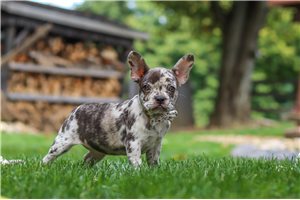
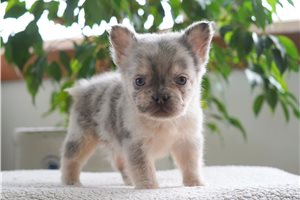
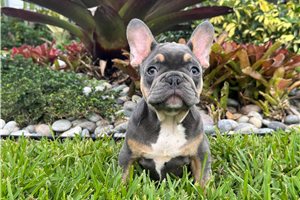
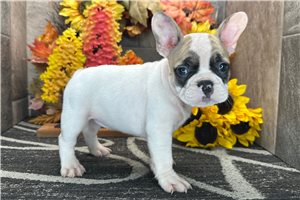
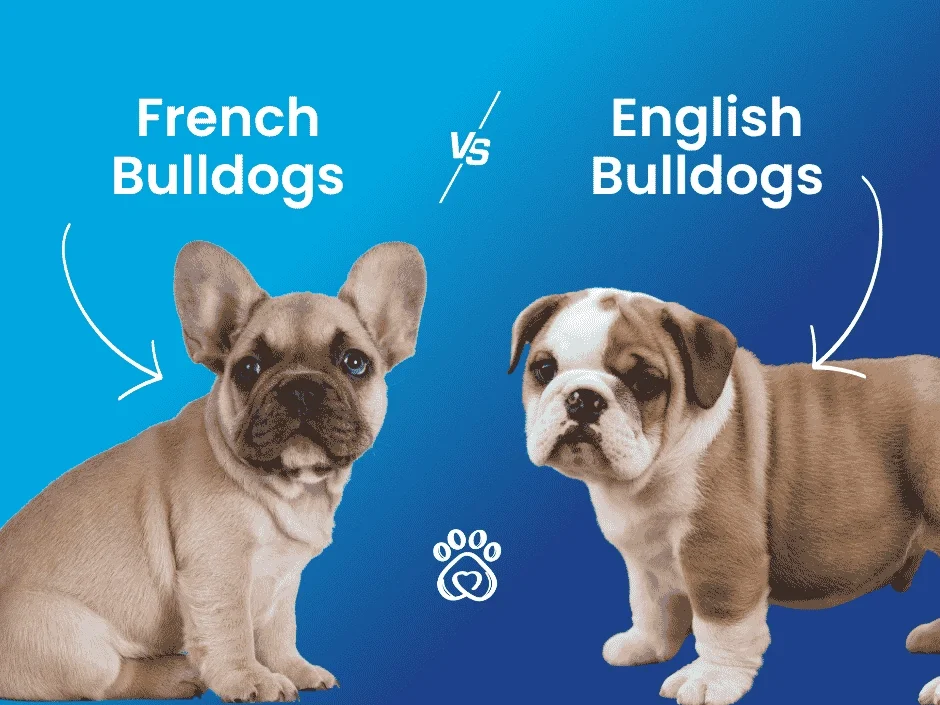
The French Bulldog breed standard caps the French Bulldog at 28 pounds, with most Frenchies standing 11 to 13 inches at the shoulder. They are dense and muscular for their size, with a broad chest, short legs, and a square head that seems disproportionately large for the body. The bat ears are the Frenchie's defining feature: upright, rounded at the tip, and angled forward, giving the breed its signature alert and curious expression. The skin is tighter than an English Bulldog's, with a few shallow folds between the eyes and above the muzzle but none of the deep wrinkling you see in English Bulldogs. Official coat colors include brindle, fawn, cream, and white with brindle patches (called “pied”), and unofficial variations like merle, isabella, and lilac colorings have made their way into breeding.
What an English Bulldog Looks Like
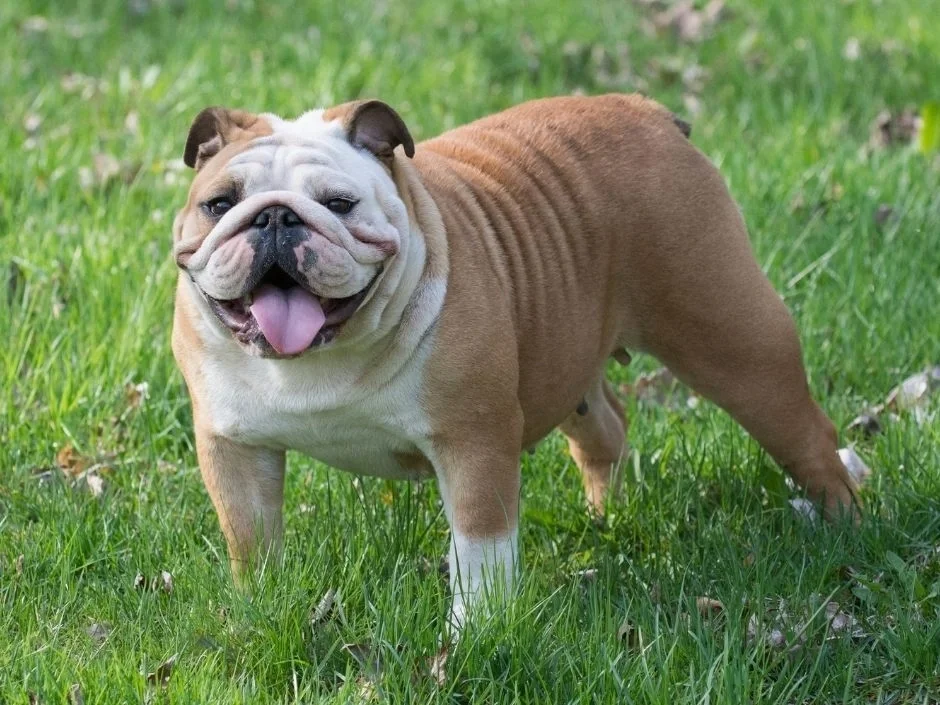
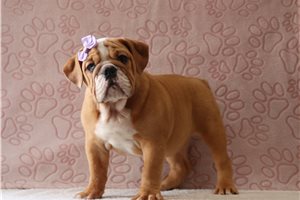
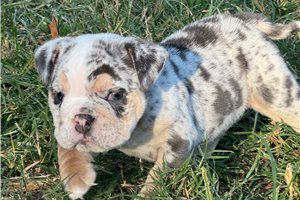
The AKC’s English Bulldog breed standard puts English Bulldogs at 14 to 15 inches tall and 40 to 50 pounds, which is considerably bigger and heavier than the Frenchie. Their body type is wider and lower, with a massive square head, pronounced facial folds, and loose skin around the neck and shoulders. The ears are small, folded at the tip, and set high on the skull. The most distinctive feature of the English Bulldog's face is the pronounced jowls that give the breed its famously grumpy expression, combined with a heavy dewlap, the loose fold of skin at the throat. A feature unique to English Bulldog’s breed is the roach back, which is expressed by a slight arch in the spine that rises toward the lower back.
Why Size Is the Main Consideration That Changes Everything
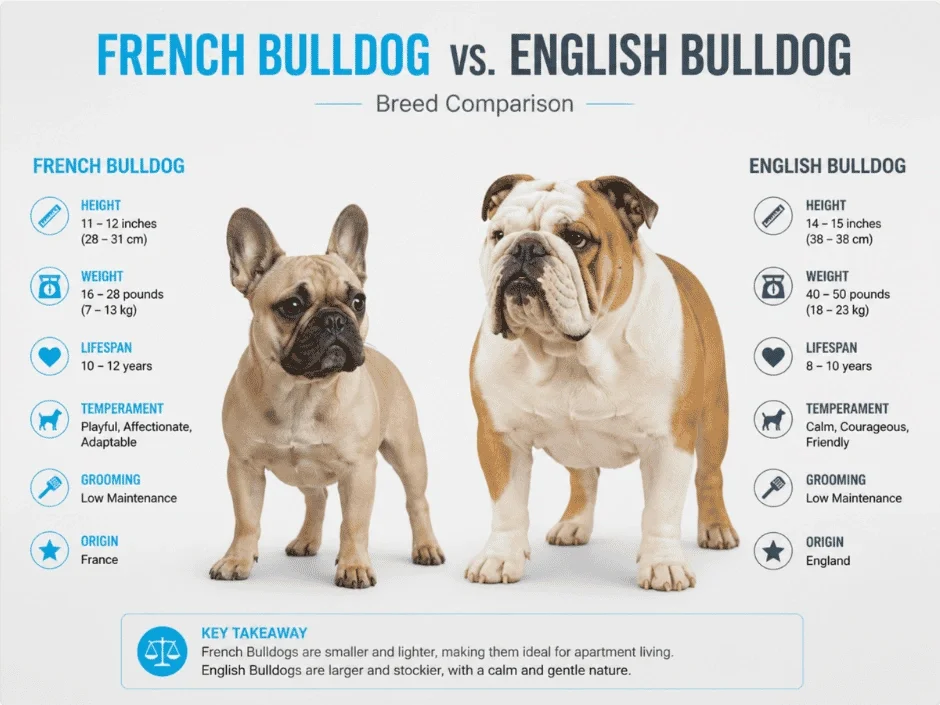
The 20+ pound weight difference between English and French Bulldogs will impact other practical decisions you will face when deciding which breed to own. A Frenchie is more versatile with exercise and social outings, and can be lifted more easily for vet visits, bathing, or travel. But getting a 50-pound English Bulldog into a car or up a long staircase becomes extra physically demanding, and it does not get easier as they age. English Bulldogs also carry most of their mass in their chest and front end, which puts disproportionate strain on their joints over time. If your home has multiple flights of stairs or you live in a walk-up building, this will become a detriment to your English Bulldog's long-term joint health.
The Bulldog Temperament: Playful Clown or Dignified Couch Companion?
There is overlap between a easygoing French Bulldog's temperament and an English Bulldog's lazy demeanor, but temperament is also where these breeds show noticeably unique traits compared to one another. The right match for you depends less on which personality you find more charming and more on which one fits the actual pace of your household.
The French Bulldog Personality
Frenchies are considered a well-behaved, adaptable breed, and comfortable in a range of settings. They have an affectionate disposition that is playful without being out of control, and tend to follow their favorite humans around. Frenchie owners will tell you they're “velcro dogs” and need to be near you almost all of the time. When they get energy spurts, they display clownish and attention-seeking behavior. If they don’t receive enough attention, they make their presence known by howling or pestering. Frenchies are prone to separation anxiety when their people are absent for extended periods, which is a real consideration for anyone who works long hours outside the home. They connect deeply with their household and generally approach new people with open-minded curiosity.
The English Bulldog Personality
The English Bulldog's ideal disposition as peaceful and kind, resolute and courageous, with a demeanor that is regal and dignified. In daily life, that means they are content to spend most of their time resting near its people, greeting visitors with mild interest rather than excitement, and rarely rattled by change. English Bulldogs are sometimes described as stubborn, but a better word for them is deliberate. They do not rush (mostly because it’s hard to get around fast with big bodies and short legs!). They also form deep, calm bonds with their families and are recognized for their patience around young children specifically because they are not easily provoked into reactive behavior. What comes across as lazy is actually just a natural chill vibe.
Which Temperament Matches Your Style?
The Frenchie suits an active, engaged household where someone is usually home and the dog's need for interaction gets met regularly. The English Bulldog suits a quieter household that values a calm, even-tempered companion who asks very little beyond proximity and a comfortable place to rest. Both breeds are good with children and other pets, but the Frenchie's more animated energy pairs better with children of all ages. If your home is frequently empty for long stretches, neither of these dogs is the right choice.
Health and Lifespan of Frenchies and English Bulldogs
These are not low-maintenance breeds in the sense of health and veterinary, and understanding what ownership involves before you commit is the responsible way to approach either of them. The anatomical structure of a bulldog comes with inherent concerns, such as respiratory issues, joint health, and skin health.
What Health Issues Do French Bulldogs and English Bulldogs Share?
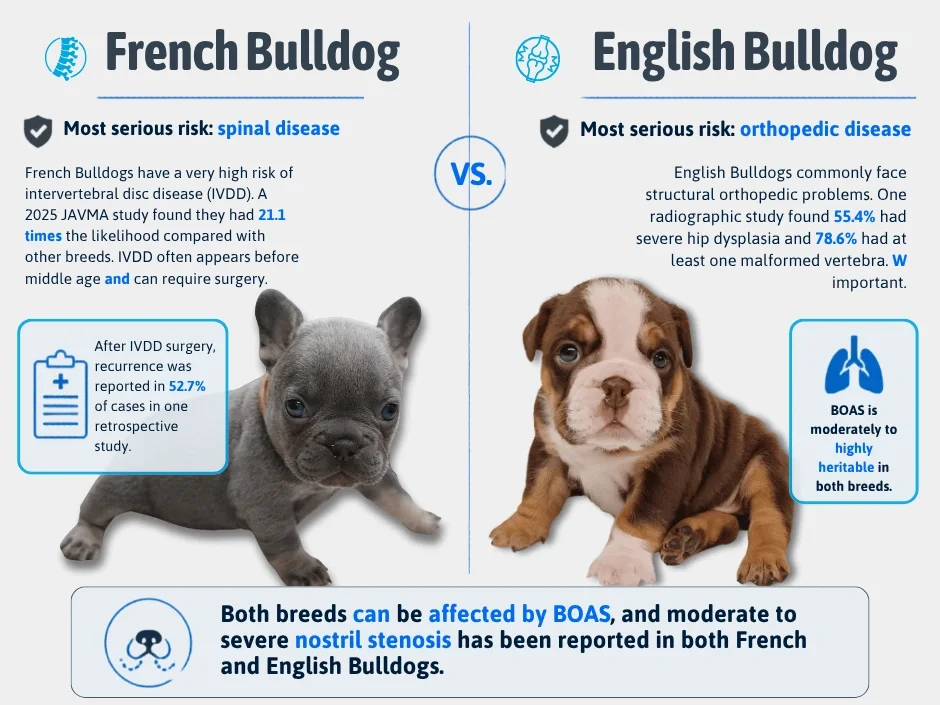
French Bulldogs and English Bulldogs are both brachycephalic breeds, meaning they have shortened skulls and flat faces that lead to predictable breathing problems such as narrowed airways, reduced ability to cool down through panting, and above-average risk of heat-related illness. Brachycephalic obstructive airway syndrome, or BOAS, involves narrower nostrils, an elongated soft palate, and a narrowed windpipe that restricts airflow. Neither breed should be exercised in hot or humid weather, and both prefer cooler air temperatures year-round.
In general, English Bulldog owners are more attentive to their dog's overall health status compared to French Bulldog owners. A 2022 VetCompass study of 905,544 dogs in the UK found that English Bulldogs had 2.04 times the odds of receiving a disorder diagnosis compared to other dogs, with elevated risk for dermatitis (skin), cherry eye, and underbites. The researchers called for urgent action on English Bulldog breeding practices as a result.
How French and English Differ in Health
The French Bulldog's most serious breed-specific risk is spinal. A 2025 study in the Journal of the American Veterinary Medical Association analyzed 43,517 US dogs and found French Bulldogs had 21.1 times the likelihood of intervertebral disc disease (IVDD) compared to other breeds. Surprisingly, this probability puts them at a higher risk than Dachshunds, which had long been considered the breed most vulnerable to spinal disc problems. IVDD frequently affects Frenchies before middle age and requires costly surgical treatment. Among French Bulldogs who underwent surgery for IVDD, a retrospective study found that 52.7% experienced a recurrence, with nearly one in four experiencing a second episode within 12 months of the first surgery.
The English Bulldog's most serious structural vulnerability is orthopedic, conformation-related diseases. In a peer-reviewed radiographic study, 55.4% of English Bulldogs showed severe hip dysplasia and 78.6% had at least one malformed vertebra. These are structural conditions that tend to worsen with age and body weight, which is why weight management is vital for this breed. BOAS is moderately to highly heritable in both breeds, with heritability estimates between 39% to 58%, and research from a Finnish breeding program found that 55% of French Bulldogs and 40% of English Bulldogs showed moderate to severe nostril stenosis.
What This Means Before You Commit
These breeds are suitable for someone who is educated and prepared for an above-average time commitment and potential veterinary investment. French Bulldogs average a lifespan of 10 to 12 years and English Bulldogs average 8 to 10 years, but the spinal risks that can appear in French Bulldogs and the orthopedic problems in English Bulldogs may change this. Both carry BOAS risk that is heritable enough to be influenced by breeder selection, which is why the next section is the most important one in this post.
Are French Bulldogs or English Bulldogs Better for Apartment Living?
French Bulldogs are the better default choice for apartment living because of their compact size, relatively quiet nature, and ability to climb stairs without added risk on their joints. Also, many apartment complexes have weight and size restrictions on pets allowed on leases, and French Bulldogs are much more likely to pass these criterion. English Bulldogs can adapt to apartment life, and will do better as long as there is reliable access to ground-floor rooms and elevators. French Bulldogs need 30 to 60 minutes of exercise daily, manageable for most apartment dwellers. English Bulldogs need only 15 to 40 minutes of daily activity, which fits naturally into slower routines, but their bigger build makes certain aspects of living in an apartment more difficult.
Both breeds are relatively quiet, which matters in buildings with close neighbors. Neither is a habitual barker, though Frenchies will vocalize when bored or anxious. If you travel frequently or keep long hours outside the home, the Frenchie's stronger separation anxiety makes the English Bulldog's more independent temperament a meaningful advantage, regardless of the size of your living space.
Grooming, Wrinkle Care, and the Maintenance Reality
Neither breed requires frequent grooming of their fur (although Fluffy Frenchies need occasional brushing and bathing), so they are are low-effort on coat care. However, they do require stricter attention to their skin, particularly in and around their wrinkles.
Coat Care is Simple for Both Breeds
Both French Bulldogs and English Bulldogs have short, smooth coats that shed moderately year-round. Weekly maintanence of a soft-bristle brush or grooming mitt removes loose fur and keeps the coat healthy. Neither breed requires professional grooming on a regular schedule. Occasional baths, routine nail trims, ear checks, and dental care round out the basics for both.
Wrinkle Care is Where the Real Work Is
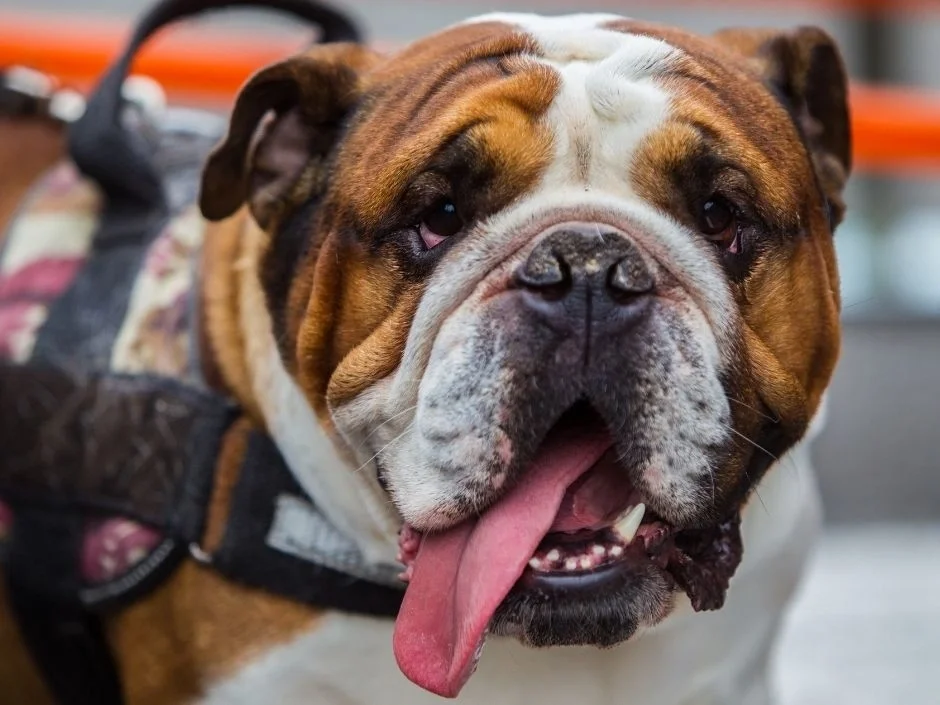
English Bulldogs carry more extensive facial folds than French Bulldogs, and those folds create warm, moist channels where bacteria can grow. Daily or near-daily cleaning is necessary for many English Bulldogs to prevent skin fold dermatitis, which is painful and recurring if unaddressed. The French Bull Dog Club of America specifically recommends regular cleaning of the facial folds and sensitive skin areas as part of routine care. Frenchie folds are shallower and fewer in number, making the task lighter but not optional. Both breeds also need ears checked regularly; the English Bulldog's folded ears trap moisture more easily, while the Frenchie's upright bat ears allow better airflow but still collect debris.
Training: What to Expect from Both Breeds
These are not working dogs, and their response to training will tell you why. Both breeds are trainable and both will test your patience when they decide a command is optional. Like training any dog, patient firmness and positive reinforcement are they keys to success.
Are English Bulldogs Harder to Train?
English Bulldogs are not unusually difficult to train, but their independent temperament means short, food-motivated sessions outperform repetition-heavy drills every time. An English Bulldog that has decided it is finished for the day will simply stop responding, and more repetition does not change that. Instead, five minutes of engaged, reward-driven tasks tend to outperform long training sessions.
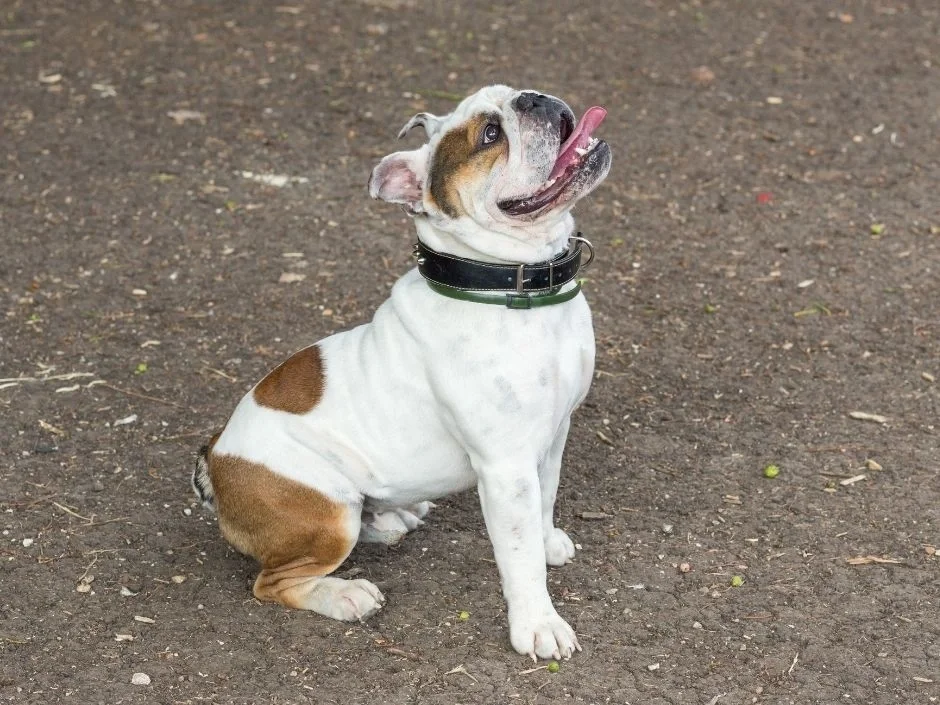
French Bulldogs are quicker to pick up commands but more susceptible to distraction, especially in outdoor settings where there is more to hold their attention. Both breeds respond well to positive reinforcement and both benefit from early puppy training classes; the AKC describes both as trainable dogs that want to please their people. Aversive or correction-based training methods are counterproductive for both.
A Lifestyle Match Guide for English Bulldogs and French Bulldogs
Every other comparison on this topic ends around the health section and leaves the decision to you. This one does not. Here is the honest assessment of which breed fits which life, matched to four scenarios most buyers are actually navigating.
The Best Match for Apartment Dwellers and City Residents

The French Bulldog is the better urban dog, hands down. Being smaller, easier to transport, and designed for compact living gives them the edge. In fact, Frenchies adapted to Paris streetlife long before they adapted to anything else. The meaningful caveat is heat: Frenchies should not be walked during peak summer temperatures in warm climates, and city dwellers in hot regions need reliable air conditioning. English Bulldogs can manage in apartments when the situation is right, but ground-floor rooms are genuinely important for their joint health over time, and their heavier body makes them harder to manage logistically in buildings that require carrying or lifting.
The Best Match for Families with Young Children
Both breeds are family dogs, but they suit different household rhythms. The English Bulldog, with its calm and steady temperament, is a natural fit for households with toddlers and younger children. The breed's lower reactivity means rougher play or unpredictable handling is less likely to cause a growl, a nip, or another undesirable response. French Bulldogs are excellent with children too, but their more animated personality pairs better with older kids who can match their energy. Pawrade's guide to the best dogs for kids specifically mentions French Bulldogs, but also covers breed-by-breed fit for families across a broader range of options.
The Best Match for Seniors and Lower-Activity Households
The English Bulldog is the stronger fit for lower-activity households. Its exercise needs are naturally minimal, and its preference for calm environments makes it an easy companion for a quieter daily routine. The Frenchie's needs are not demanding by most standards, but it wants more engagement and interaction than an English Bulldog, which is content to rest near its person for most of the day. Seniors should also factor in the English Bulldog's weight when planning for long-term care, since lifting a 50-pound dog for bathing, vet visits, or car transport may be too physical of a challenge.
The Best Match for First-Time Dog Owners

Both breeds are manageable for first-time owners who go in fully prepared. The Frenchie's smaller size and adaptability give it a slight edge on daily logistics, but its spinal risks and separation anxiety require the same level of financial and emotional readiness as the English Bulldog. Pawrade's guide to the best dog breeds for first-time owners lists the English Bulldog as #3 and offers a broader comparison for families still deciding between breeds. For either bulldog, a veterinarian quoted by PetsRadar put the financial reality plainly: both breeds are prone to multiple health issues, and many owners encounter serious difficulty if a dog develops an ongoing condition like allergic skin disease. French Bulldogs typically cost $3,000 to $8,000 or more; English Bulldogs typically range from $2,000 to $5,000. Pet insurance purchased when the puppy is young and healthy is a financial decision worth making before the first claim arrives.
The Main Question
The most consequential choice an inquiring bulldog buyer makes is not which breed to select. It is which breeder to buy from. A well-bred French Bulldog from a breeder who health-tests parent dogs and BOAS-grades litters is a fundamentally different dog from one bred without those prerequisites, regardless of what the listing says. The same principle applies to English Bulldogs. The next section addresses this directly.
Browse French Bulldog puppies from Pawrade's vetted breeders
Browse English Bulldog puppies from Pawrade's vetted breeders
How to Find a Reputable Bulldog Breeder through Pawrade

Litters are almost always conceived via artificial insemination and delivered by planned C-section. This is not a warning sign; it is standard practice driven by the breeds' anatomy, and it represents genuine financial investment by any breeder doing things correctly. What distinguishes a responsible breeder is what happens before conception: health-testing both parent dogs, BOAS-grading parent animals, and selecting breeding pairs to reduce the expression of the conditions most likely to affect the offspring.
The French Bull Dog Club of America reports that systematic health testing has improved Frenchie longevity by 30 percent over the past decade, with well-bred dogs from health-tested lines now living past 14 years. That outcome is not achievable from a breeder who skips OFA evaluation and BOAS assessment. For English Bulldogs, the stakes of breeder selection are particularly high. A foundational 2016 genetic study from the University of California, Davis found the English Bulldog carries unusually limited genetic diversity, making each individual dog's health more dependent on careful selective breeding decisions than is true for most other breeds. Choosing a breeder who participates in Bulldog Club of America health programs and maintains OFA records is not a preference for this breed; it is the baseline.
The Orthopedic Foundation for Animals maintains a publicly searchable database where you can verify any registered kennel's health testing history before you contact a single breeder.
What Are the Next Steps to Get a French Bulldog or English Bulldog?? [COVERT FAQ]
If you are leaning towards one or the other, or even if you're still on the fence after reading this comparison, go deeper with your understanding of the breeds by uncovering our detailed guides:
Pawrade's French Bulldog ownership guide
Pawrade's English Bulldog ownership guide
Frequently Asked Questions
What is the main difference between a French Bulldog and an English Bulldog?
The most immediate difference is size: French Bulldogs weigh under 28 pounds and stand 11 to 13 inches tall, while English Bulldogs weigh 40 to 50 pounds and stand 14 to 15 inches. Beyond size, the clearest visual marker is the ears: Frenchies have upright bat ears, English Bulldogs have small folded rose ears. In temperament, French Bulldogs trend toward playful and animated, while English Bulldogs tend toward calm and dignified. Both breeds share a flat-faced brachycephalic structure that creates overlapping health vulnerabilities, but each carries distinct breed-specific risks on top of those shared ones.
Which breed is better for apartments?
French Bulldogs are generally the stronger apartment match because of their compact size, quieter temperament, and ability to navigate stairs without orthopedic risk. English Bulldogs can live comfortably in apartments when ground-floor access is reliable, but their heavier body makes regular stair use a long-term joint concern. Both breeds need consistent cooling year-round regardless of where they live.

Do French Bulldogs or English Bulldogs have more health problems?
English Bulldogs generally carry more risks like higher rates of orthopedic disease and obesity concerns leading to a lessened average lifespace, while French Bulldogs have their own breed-specific risks like higher intervertebral disc disease risk; neither breed is objectively healthier than the other. English Bulldogs and French Bulldogs are both brachycephalic breeds with respiratory health concerns regarding breathing. A dog from a breeder who health-tests parent animals carries meaningfully lower lifetime risk than one from a breeder who skips those protocols, for either breed.
How much do French Bulldogs and English Bulldogs cost?
French Bulldogs typically range from $3,000 to $8,000, with rare color lines pushing higher. English Bulldogs typically range from $2,000 to $5,000. Both breeds are typically listed at premium prices because nearly all litters require artificial insemination and planned C-section delivery, which are costly veterinary expenses for breeders. Purchase price reflects only the beginning of the cost picture; both breeds carry above-average lifetime veterinary costs, and pet insurance secured before the first health event is one of the most financially protective decisions a buyer can make.
Are French Bulldogs or English Bulldogs better with kids?
Both breeds are good with children, and the distinction comes down to energy level and household pace. English Bulldogs, with their steady and unhurried temperament, tend to suit households with younger children who are still learning how to interact with dogs. French Bulldogs are excellent with kids who can match their playful energy, typically older children who enjoy active play. Early socialization matters for both breeds, and supervision around very young children is recommended regardless of which breed you choose.
The right bulldog for your household comes down to three things: your living situation, your readiness to manage the breed-specific health demands, and who bred the dog. The first two are decisions you make going in. The third determines more of the dog's lifetime experience than either of the first two. Pawrade's vetted breeder network exists to take the guesswork out of that third variable. Every puppy available on our website comes from a breeder who has been evaluated for health practices, whelping standards, and documentation quality. The dog you will have for the next decade starts with the breeder you choose today.
Find your French Bulldog puppy or English Bulldog puppy through a Pawrade-verified breeder