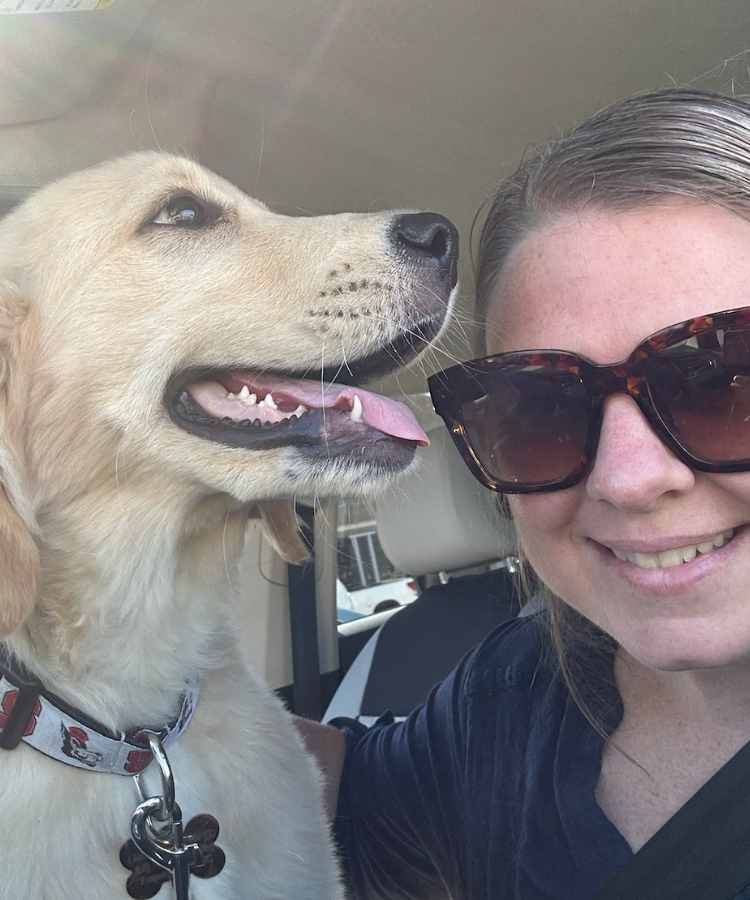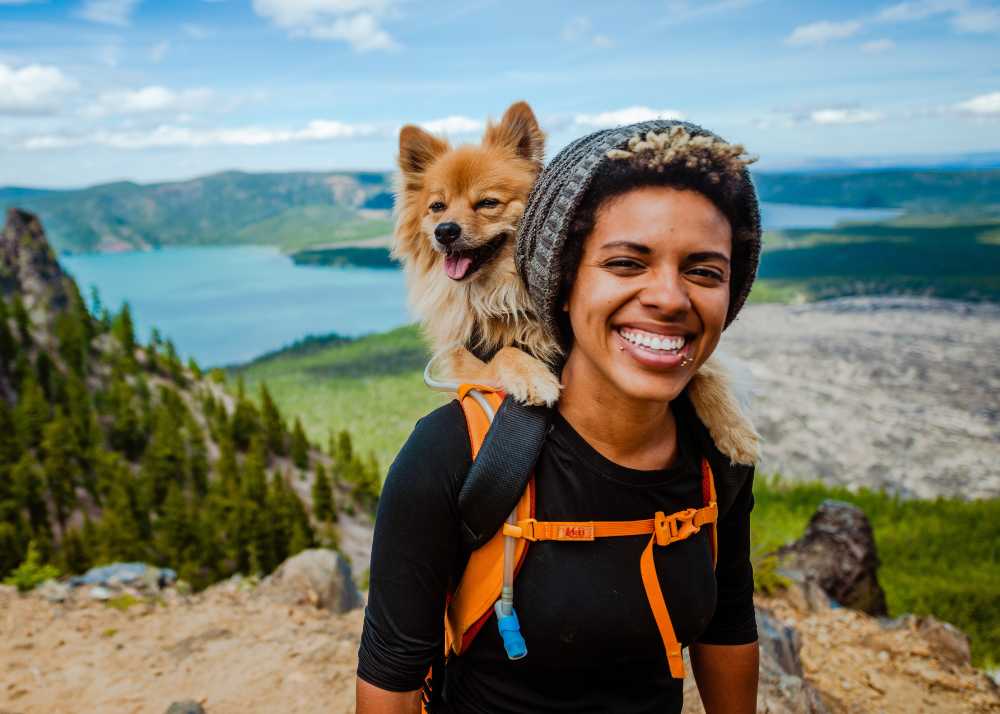
After a scorching summer with record-breaking temperatures, signs of fall have started to arrive. The aspen and silver maple leaves are turning brilliant colors, the sky is a deep, sharp blue, and the air is crisp. The beautiful weather inspires you to explore the outdoors, but this season will be extra special because it’s the first hiking season with your puppy! You can’t wait to show her all your secret spots and favorite vistas. But before you plan an outing with your puppy, you’ll need to know how to hike with your puppy.
Learn about reasons to hike with your puppy, what to know before you hit the trail, and how to prepare for a hiking trip with your puppy to have the most memorable time out in nature with your four-legged companion. And above all, remember to enjoy the journey by taking it one paw at a time.
Why Hike With Your Puppy?
We all love to have fun with our puppies, and hiking is a great way to express your love for your puppy while keeping them mentally and physically stimulated. There are several benefits of hiking with your dog you’ll both experience when you point your compass in the right direction.
-
Boosting your mood: Hiking with puppies positively affects your mental health, not to mention being surrounded by beautiful vistas or traipsing through meadows and forests.
-
Staying physically fit: Hiking helps us get in our recommended 150 minutes of exercise a week by burning fat, working our muscles, improving our cardiovascular system, and reducing our body’s stress and anxiety.
-
Meeting exercise needs: Hiking is a great way to exercise your dog, a necessary component of meeting your puppy’s activity needs.
-
Better behavior outcomes: Your puppy will be calmer and more well-behaved with enough exercise, as a tired dog is a happy dog.
-
Increasing your bond: Sharing fun experiences with your puppy that require you to work together is a great way to help forge a stronger bond with your puppy.
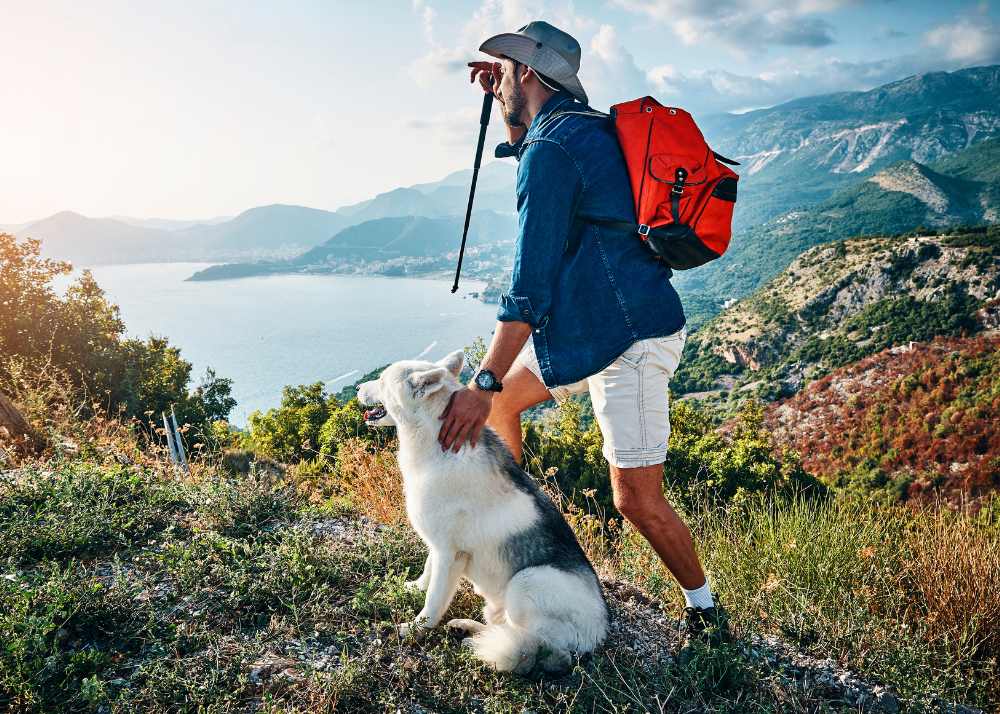
What to Know Before You Hit the Trail With Your Puppy
Before you plan out your route, there are a few things you need to accomplish before lacing up your hiking boots. Some of these can be completed in one afternoon, while others will need a few weeks of preparation.
Maintain your puppy’s health
Wild animals can carry rabies and other viruses, harmful bacteria, and nasty parasites. Your puppy should have completed his 3 core puppy vaccines, received a rabies shot, and any pertinent vaccines recommended for your area, such as Lyme. You also don’t know if you will encounter any unvaccinated dogs, so you should arm your puppy with as much immunity support before your adventure begins. In addition, clear your puppy with your vet to see if they are healthy enough to make the hike you are planning on taking. Practice proper paw care for puppies by clipping their nails short enough to prevent painful foot and mobility issues.
Give flea, tick, and heartworm preventatives
There’s no excuse to not have your puppy current on flea, tick, and heartworm preventatives, especially when you learn how destructive they can be both for your puppy and your home. Fleas on puppies cause painful bites, itching, and infestations in your home. Lyme disease in puppies is transmitted through infected ticks and can cause lethargy, organ failure, and even death. Protecting your puppies against heartworm disease transmitted via mosquitos prevents parasites that look like cooked spaghetti from burrowing into their heart, affecting lungs, kidneys, liver, and other areas and potentially living 5-7 years in your dog if not treated.
Know your breed
Not all dogs are able to go on those 3-mile hikes with you yet, so it’s best to choose a shorter trail. Very young puppies and some large breed dogs should not be exercised for extremely long periods due to their joint and bone health. Brachycephalic dogs are not the best choice for hiking partners due to their flat noses and anatomy. Dogs like English Bulldogs and Pugs should not go on strenuous hikes due to their shortened airways, potentially triggering respiratory problems. High-energy dog breeds that love to hike are generally sturdy, strong, and have the stamina to last a long time in the woods without experiencing fatigue.
Ease into the trails
Just like humans, your puppy will have a miserable time if you start with a long hike without getting your puppy in shape. We’ve all overdone it before, but you can prevent overexerting your dog by knowing your puppy’s current limitations and working up to the amount of time your hike will take. Consider the topography of your hike and find similar trails to train on walks, increasing the elevation and length with each walk.
Be aware of potential dangers
You should be aware of potential dangers to your puppy while hiking. You are entering into wild animals’ habitat, so you may encounter wildlife. Don’t let your puppy chase after fawns or check out the roly-poly bear cubs. Get away as fast as possible if you see an animal behaving erratically! Learn the symptoms of heat stroke in puppies on hot days. Keep plenty of fresh water on hand to prevent puppy dehydration, and don’t let your puppy drink stagnant or polluted water due to parasites and toxins lurking. If you encounter bodies of water like a lake or a flowing, bubbly brook, practice water safety for puppies to safely splash away during a rest break.
Train & leash your puppy
Training and socializing a puppy for hikes are ongoing efforts, and you cannot start the day before the big trip. Your puppy should be socialized with unfamiliar people, dogs, and situations. They should also have a grasp of basic commands and follow them despite distractions to take away their focus on you.
Puppies should be well on their way in their training to walk on a leash for several reasons. Unruly puppies that dart around or lunge are not always appreciated by humans or other dogs, as everyone has the right to enjoy nature without worrying about other people’s animals. Always follow leash rules, and if you don’t see any, opt to use a leash anyway. Even if your puppy knows recall at home, that doesn’t mean she will listen when surrounded by tempting scents or friends to meet. Other dogs are reactive, and your puppy could be responsible for causing an unpleasant scene because she was not leashed. Even fellow dog lovers do not appreciate a random dog jumping up on them, causing injuries or even knocking them down! Your puppy could also get into stagnant water, eat a dead animal, or worse – run away from you.
Choose the right leash, collar, and harness for hiking with dogs, as not all are useful specifically for hiking. Retractable leashes are not the best choice, as most places require a 6-foot sturdy leash. Some puppies will require a harness if they are learning not to pull or to give you more control. Once your dog is a bit older, they can wear a special harness with pockets to carry light gear, but make sure the backpack is not too heavy.
Protect your puppy’s identity
Speaking of running away, you want to make sure you have a way to locate your puppy if you are separated. You can do this easily by protecting your puppy’s identity. Your puppy should wear a collar with their name and contact information. Likewise, microchip your puppy with current information so a shelter, vet, or person can quickly identify you as the owner for a speedy reunion.
Research your location
It’s vital you know where you are going, how to get there, and what to expect when you see the trailhead. Research if your dog is allowed in the first place and what the ordinances say about leash requirements and other rules. Read reviews or talk to other people about their experiences, or go with a buddy who is familiar with the trails. Always use updated maps because fires, floods, and trail maintenance can affect routes. Understand the terrain and any elevation changes to see if you and your puppy are up for the hike.
Regardless of your location, always pick up your puppy’s waste and carry it back out with you until you can dispose of it properly. Leaving waste on the trail (or even off the trail) poses a hazard to the animals and ecosystem, so be a responsible puppy owner and pick it up.
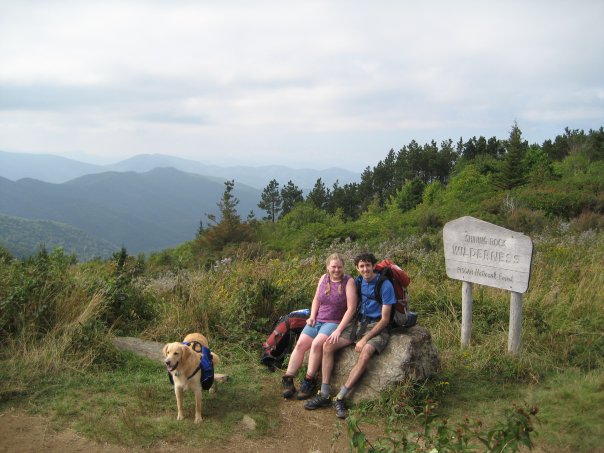
Bring the Right Gear For Hiking With Your Puppy
You may be used to getting yourself ready for a big hike, but planning for your dog’s needs on the trail might be new to you. Here are our recommendations for being able to handle anything on the path that lies ahead.
Necessary hiking gear for puppies
Anticipating the essential hiking gear for puppies you’ll need on the trail is easy if you have a checklist. Staying organized when packing will help you find what you need quickly. Choose a backpack that can carry what you need without being too heavy, so you may want to look into specialty hiking gear to help you stay comfortable and prepared.
-
First aid kit for dogs, including paw care
-
Booties for rough terrain
-
Collapsible water bowl and fresh water
-
A sturdy leash and a harness
-
Reflective strips and small flashlights
-
Waste bags
-
Bear spray or bell
-
Tick remover tool and plastic sealed baggie
-
Number and location of closest emergency vet
-
Emergency whistle and well-marked, current maps
-
Choose a day with clear weather before leaving
Hit the Trail With a Pawrade Puppy
Whether you are an experienced hiker or a newbie with brand-new hiking boots, hiking with a dog is so much better than solely with humans. Pawrade offers a variety of puppies for sale to find your newest canine hiking partner. Pick the right trail and a puppy to accompany you into the Great Outdoors!