On your bark, get set, GO!
Excitement and anticipation are in the air as the competitors take their marks, waiting for the signal to begin at the 2024 Paris Olympics. The buzzer sounds, and elite athletes dive into the pool, take off sprinting around the track, or aim for the bullseye in the competition of their lives. Celebrities fill the stands in awe of the incredible athletes. However, one fan you don’t expect to see is one of the four-legged variety! “What’s that dog doing here?” you wonder with surprise.
This is the first Olympic Games where therapy dogs have supported athletes in this high-stress environment with years of grueling training defined by a few moments of a performance. So far, the presence of comfort dogs has lifted athletes’ moods when they are nervous, injured, or stressed. With the success of this supportive canine initiative this year, therapy dogs will hopefully be a permanent addition to every sport representing Team USA in future Olympic Games. While waiting for the joy to spread, Olympic athletes lean on the unconditional love of their beloved canine companions at home during training and other non-Olympic competitions.
Learn how Olympic therapy and comfort dogs help athletes competing in the 2024 Paris Olympics perform their best at the Games and while at home.

The Role of an Olympic Emotional Support Dog
Comfort and therapy dogs are specially trained to provide assistance, support, and an empathetic ear to people in high-stress situations like medical settings and trauma response. Some additions to the Olympic roster this year are Olympic emotional support dogs. They are specially trained to calm anxious athletes and help them cope with the immense pressure and complicated feelings that come with being elite athletes competing in front of the entire world.
The presence of a dedicated therapy dog for Olympic athletes is especially important, as the pressure can cause athletes’ mental health to suffer and get in the way of their preparation for their events. While athletes are excited and honored to be in the Olympics, it is one of the most stressful competitions of their lives, many of whom will only see an Olympic event once in their lifetime. Some athletes go on to appear in multiple Olympic games, but they are rare.
One team that the nation is watching with anticipation this year is the US Women’s Gymnastics Team. This exceptionally talented group of women features excellent new and seasoned Olympic athletes who have fought hard for a place on the esteemed team. A strong focus has been on Simone Biles, a 27-year-old gymnast who stands out for several reasons. Known as the GOAT (Greatest of All-Time), Biles has won 11 Olympic medals and 41 total across the Olympics and world championships with 27 being gold medals. In the Tokyo Olympic Games held in 2021, Biles was experiencing the “twisties,” a phenomenon when gymnasts cannot orient themselves in space, potentially causing them to lose track of where they are in the flipping process. The twisties go beyond more than mental health – it can be downright dangerous if the gymnasts land on their heads or even become paralyzed as Biles notes in her Netflix documentary, “Simone Biles Rising.” She pulled out of the individual vault competition due to her mental health. A comfort dog is trained to help people who find themselves in moments like Biles.
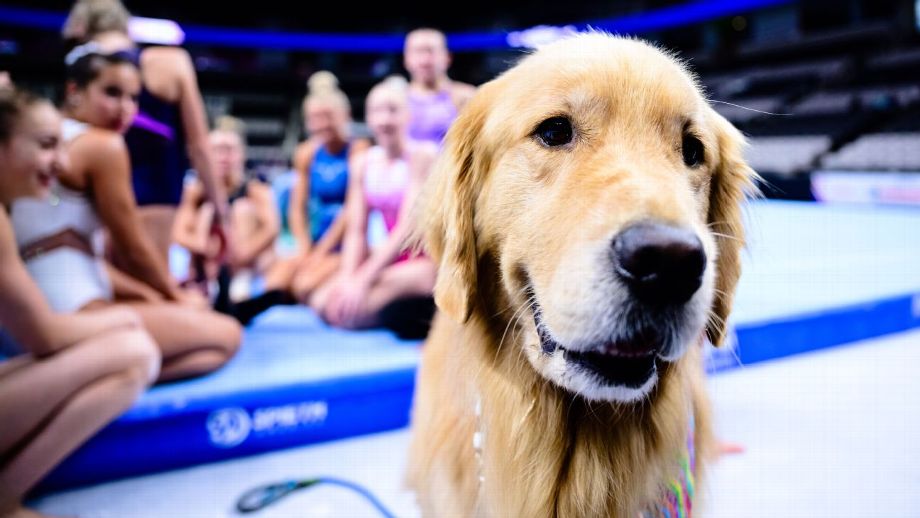
Beacon the Olympic therapy dog. Photo courtesy of USA Gymnastics
Beacon the Golden Retriever shines as an Olympic therapy dog
However, these Olympic Games are starting on a different paw. A special emotional support dog has captured hearts nationwide by cheering on gymnasts from the sidelines. Hailing from Pasadena, Olympic therapy dog Beacon the Golden Retriever was hired as the official "Goodest Boy" and unofficial Chief Happiness Officer as part of the USA Gymnastics mental health program, supporting gymnasts at competitions and Olympic trials in Indiana, Minnesota, New York, and the Paris Olympics. Beacon represents Pet Partners’ Therapy Animal Program, working to “improve human health and well-being through the human-animal bond.” Beacon has certainly achieved this goal, and artistic and rhythmic gymnasts are grateful for the belly rubs and puppy kisses to lift their spirits.
The presence of the Golden Retriever has helped lower cortisol levels, blood pressure, and anxiety and increased athlete’s dopamine and serotonin. Beacon truly lives up to his name as he searches for athletes to comfort. His handler Tracey Callahan Molnar told ESPN, "He will turn on a dime without seeing who it is. He picks up on the stress and will pull to that person immediately." The presence of Beacon has proven invaluable to the mental health and morale of the team, and other Team USA sports should take note of his success.
Canines Support Olympic Athletes at Home
While Olympic athletes cannot bring their personal 4-legged companions with them to Paris, they still receive support and love from their beloved canines when training at home. Here are some athletes who know what’s like to lean on their furry friends for reassurance.
-
Speaking of Simone Biles, she receives support at home from her two French Bulldogs, Rambo and Lilo. These pups are so popular beyond Biles’ home that they have a thriving social media presence, delighting fans with their silly antics and making it easy to see how they help alleviate stress Biles may be experiencing during her rigorous training sessions.
-
Three-time Olympian wrestler Helen Maroulis has experienced several concussions throughout her athletic career. Her mixed Havanese dog Chip accompanied her to therapy appointments and has helped with activities of daily living, even traveling with her when allowed.
-
Floyd is the 6-year-old English Bulldog of swimmer Chase Kalisz. Kalisz attended the University of Georgia, famous for its Bulldog mascot, Uga. Floyd has helped Kalisz navigate loneliness and pressure throughout his swimming career. Kalisz told the Daily Paws, “It's been a very crazy, hectic year, very stressful. I really can't wait to get home and just spend weeks of doing nothing with Floyd and just hanging with him."
-
Golden Retrievers Ellie and Emma from Mission to Spread Smiles visited a U.S. Olympic Women’s Soccer Team practice as they prepared for victory on the pitch. Ellie and Emma provide support to deployed military, hospitals, groups, and others who need a friendly paw to hold.
-
Track and Field star Gabby Thomas receives support from her Pug, Rico. He will either stay on her lap or by her side during interviews, calming her nerves. Rico has been a constant source of joy and happiness for Thomas.
-
Swimmer Caeleb Dressel loves to have fun with his black Labrador Retriever, Jane, to blow off steam and ease the pressure of maintaining his Gold medal status. Jane even joined Dressel in the pool, a bonding activity that brings them closer together by enjoying an activity they both love.
What Types of Dogs Make Effective Therapy and Comfort Dogs?
Therapy and emotional support dogs can come in all shapes, sizes, and breeds, but they all must follow a common set of characteristics that set them paws above the average companion dog.
-
Patient, calm, and gentle: Because therapy dogs interact with people experiencing different mental and physical roadblocks, they should be patient with young children and gentle with people, especially those experiencing trauma or medical events involving wires, machines, and other potential hazards to a boisterous dog. Therapy dogs should not get too excited and jump up which could knock over people or cause scratches. A patient, calm, and gentle therapy dog is an asset to the population, not a potential liability.
-
Friendly and not aggressive: Therapy dogs should not shy away from strangers or be reactive toward other dogs. Their demeanor should be pleasant and open to meeting new people.
-
Focused, dependable, and obedient: Therapy dogs should be able to complete the task at hand, even with distractions in unfamiliar environments, and listen to their handler with perfect behavior as the goal.
-
Versatile and adaptable: - A therapy dog may be in a hospital setting one day and in a crowd of children the next. Likewise, therapy dogs should be comfortable around people of all ages, from the very young to the elderly.
-
Empathetic: Some people swear dogs understand humans. While they might not fully understand our human language, they can sense a human’s emotions and body language. Therapy dogs are steadfast in providing an empathetic ear to those struggling with mental and physical ailments as well as trauma.
Love a Pawrade Champion
At Pawrade, we’re here to help you find the Gold medal winner in the Canine Cuteness Olympics, but the competition is tough! All of our puppies for sale are winners, and it can be difficult to choose the right dog breed for you. Our Puppy Concierge team will take the guesswork out of the puppy adoption process with our seamless, secure experience so you’ll never lose out because of puppy scams. Our breeder partners are held to the highest standards in the industry so you know your puppy is happy, healthy, and ready to be your #1 canine companion. We’ve even compiled a collection of dog breeds we recommend for emotional support dogs if you’re looking for a snuggle buddy to uplift your spirits. Contact us today to get your journey to the podium started where everyone is a winner with a Pawrade puppy!