You’re on the way to a vacation of a lifetime and arrive with plenty of time for pre-check to pass security. You’re used to seeing breeds such as Labrador Retrievers and German Shepherds working with law enforcement, but you spy a sweet little Beagle patiently sitting by a bag. At first, it looks like a regular pet dog taking a rest, but your curiosity is piqued when a handler offers him a treat and moves into high gear, thoroughly searching the bag for something. What could it be? And why a Beagle?
The agent pulls out an item you would have never guessed – an unfamiliar fruit you’ve never seen before. You start putting things together and realize this must be an invasive or banned fruit! Who knew Beagles could smell certain kinds of produce?
As part of the Beagle Brigade, a division of the USDA’s Animal and Plant Health Inspection Service (APHIS), Beagles detect an estimated 75,000 seizures of prohibited agricultural products a year in airports and borders. They can identify around 50 distinct smells with a 90% success rate.
“Wow!” you think. “I could never smell a fruit through a suitcase. I wonder how they do it?”
Learn about a dog’s olfactory superiority and how dogs use smell to perceive the world by examining the science behind a dog’s scent abilities.
How Dogs’ Sense of Smell is a Scent-sation
Humans and dogs utilize the five senses to navigate through life, but they do so in very different ways. Dogs’ neurological abilities and physical structures give them the advantage of being super sniffers. A dog relies more on hearing and smelling than a human instinctually for survival and gains way more information from a single scent than our capabilities allow.
Dog’s ability to smell: What happens in the brain?
All dogs experience the ability to smell astronomically more than a human can. A human has around 6 million olfactory receptor cells located at the rear of the nasal cavity, able to detect around a trillion different scents according to NIH research. On the other paw, dogs have 100-300 million olfactory receptor cells. The part of the brain that analyzes scents is 40 times bigger in a dog than in a human, creating more pathways and opportunities for scent recognition. For example, dogs can detect a single drop of liquid in 20 Olympic-sized swimming pools at just one part per trillion concentration, far more than any human-made scientific instrument.
Why does my dog prefer stinky scents?
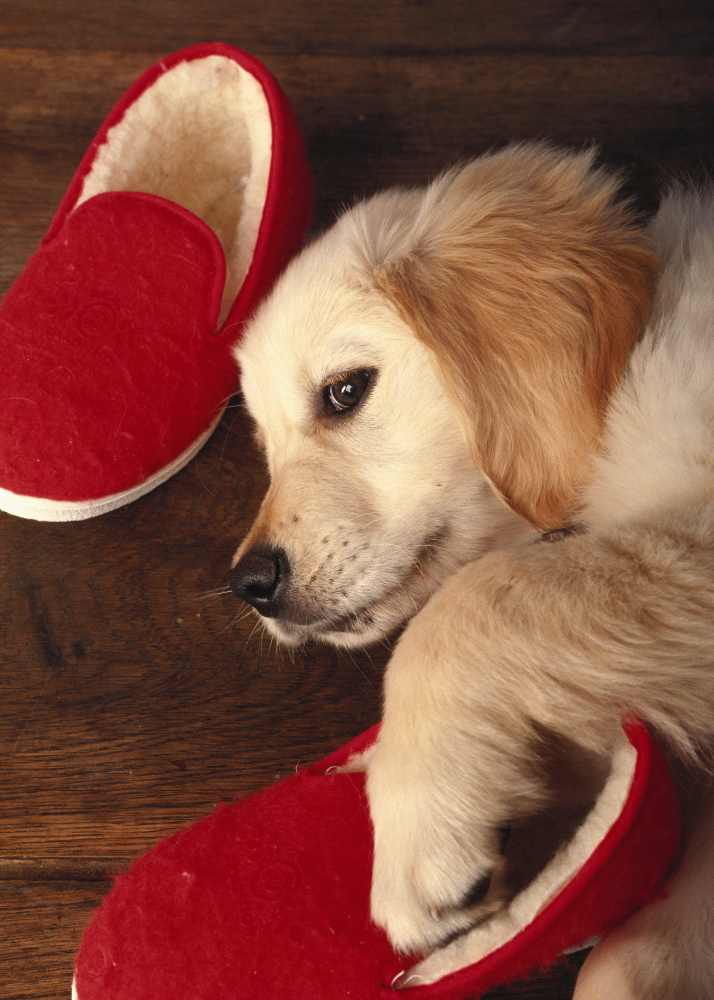
Have you ever wondered why your puppy is attracted to the most disgusting scent, such as animal waste and other body fluids, garbage, or stinky shoes and clothes? Neophilia in dogs is when they are curious and are attracted to interesting and new odors. This phenomenon is thought to have aided in trying out new foods for optimal nutrition before dogs became domesticated. As all puppy owners know, dogs will get excited by these new scents, even if humans find it foul. And of course, they’ll want to roll in it before you can stop them! Neophilia is vital when training dogs to detect certain scents from the presence of drugs to cancer in humans.
Do some dog breeds have better scent abilities than others?
Hounds have more receptors in their noses than other dog breeds, resulting in their superior sniffing skills. The Bloodhound has around 300,000 olfactory receptor cells, more than any other dog breed, followed closely by the Basset Hound. This category of dogs was used for hunting due to their superior sight or scent abilities. The American Kennel Club recognizes over 30 dog breeds in the Hound category, ranging from the elegant Afghan Hound to the fast Treeing Walker Coonhound. Combined with their prey drive, hounds are much more effective dogs for following a scent trail than a dog bred strictly to be a companion such as a Shih Tzu or Maltese, or those with flat noses such as English Bulldogs or Pugs.
How anatomy structure aids scent in dogs
The anatomy of a dog’s nose and ears also aid in its superior sense of smell. While you may assume large ears would only pertain to the sense of hearing, they also help with a hound’s olfactory abilities. Long ears and droopy skin trap scents close to their heads and noses, serving as pockets of information.
For any breed, the shape and structure of a dog’s nose and nostrils give them an odor advantage. Humans smell and breathe through our nostrils simultaneously with information reaching the brain at the same time and rate. We also exhale at the same time, pushing out all air from our lungs in a one-way occurrence – out. A fold in a dog’s nostrils creates slits that allow them to sniff continuously with the inhaled and exhaled air swirling around. They can even detect different scents through one nostril!
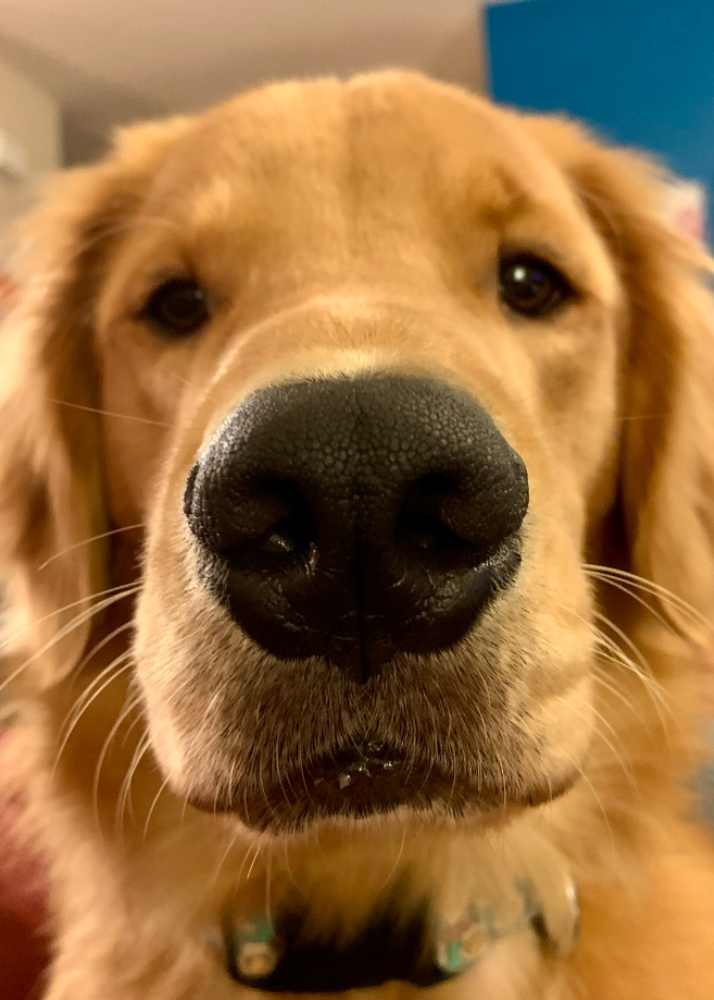
A dog’s snout has a unique pattern just like humans’ fingerprints. This texture captures scents in the air with its spongy, moist exterior covered in a thin layer of mucous. Their nostrils can wiggle independently, using their sense of smell like a compass or magnet to locate the scent better than a human can. This allows them to distinguish the right scent information they need from irrelevant information. Go ahead and try to wiggle each nostril independently for some hilarious expressions!
Dogs even have a special smelling organ that humans do not. The vomeronasal organ found on the roof of a dog’s mouth behind the upper incisors (also called Jacobson’s organ in dogs) detects pheromones containing useful information. These chemical signals detect states of being like fear and stress or help locate Mama’s “love hormones” as little puppies.
The Early Beginnings of the Sense of Smell in Puppies
Puppies are not born with a fully developed sense of hearing and sight, but their sense of smell is ready to work. This ability allows puppies to locate the mother and feed upon the crucial colostrum, a special type of milk that delivers a concentrated amount of sustenance needed for new puppies’ survival. The new puppy will turn its head and begin wiggling toward Mama right after birth.
Puppies exposed to various scents in the first few weeks of life help improve brain development through a process called Early Scent Introduction (ESI) as part of the Early Neurological Stimulation (ENS) protocol. Puppies are presented with a variety of scents for around 5 seconds each once daily on or around Days 3-16 of life. Puppies will either turn away, remain neutral, or actively turn toward a scent when introduced to smells like mulch, lemons, coconut, leather, lavender, or other pungent smells (avoiding meat and chemicals) to get their neurons firing right from the start. ESI is thought to have several advantages, such as improving scent abilities later in life, reducing stress responses and behavioral problems, and enhancing confidence as an adult.
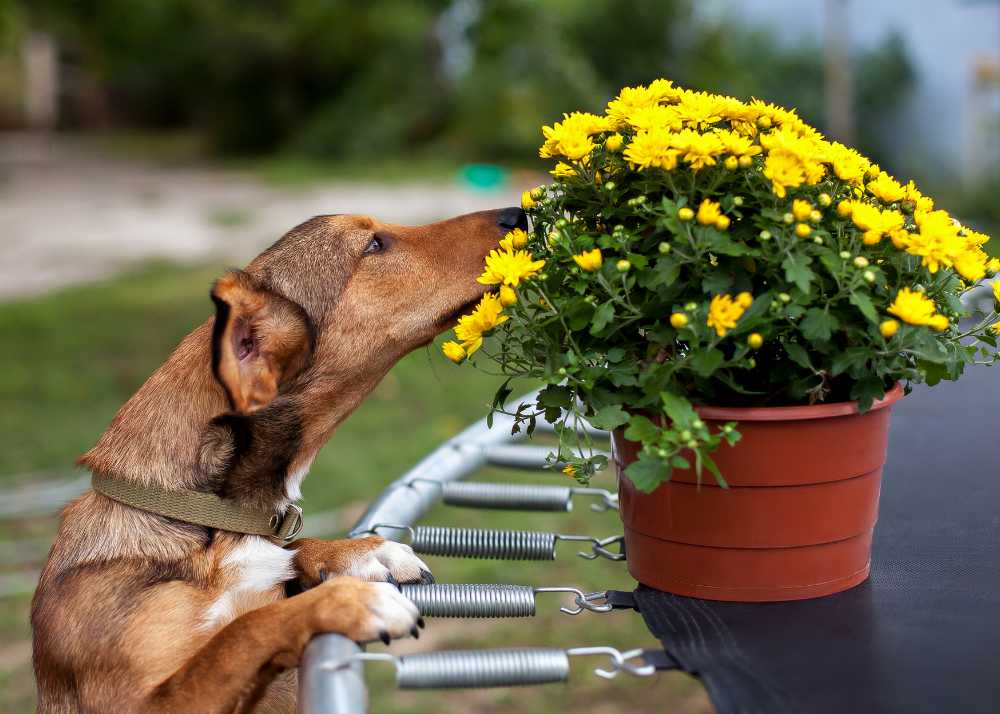
Why is Sniffing So Important For Dogs?
While humans may be reminded of a memory with a particular scent, we aren’t able to gather or recall as much information as a dog can when he encounters a smell. A dog can recognize the scent of 50-100 individuals and hold onto this information for years, whereas humans rely more on facial and voice recognition. Dogs can even recall if the scent was a pleasant experience.
Every puppy owner is familiar with your puppy taking its sweet time on walks, running here and there, and stopping to smell each mailbox or fire hydrant. Rather than trying to purposefully frustrate you, your puppy is introduced to an absolutely enticing buffet of new smells that contain all sorts of information. Consider taking your puppy on a scent walk independent of a purposeful walk (like for continuous exercise, training, or a potty break) to allow them to explore their sniffing abilities. Scent walks are great opportunities to get your puppy’s mental stimulation needs in and help their brain develop by exercising their minds – something just as important as physical activity.
What information can my puppy learn via sniffing?
We’ve all wondered why puppies and dogs go straight for each other’s behinds when greeting each other. Rather than just being gross in our opinion, sniffing allows dogs to gather a wealth of information about the other dog. The same is true for spots where a dog previously urinated. Think of it as sending a “pee-mail!”
Pheromones are produced in various parts of your dog’s body, including via sweat, urine, and anal glands. Scent pheromones in dogs serve as a communication device among each other and can relay the following information:
- Who is in heat
- What’s in its diet
- If the dog is well or sick
- The sex and age of the dog
- Social status (dominant vs. submissive)
- The dog’s state of mind (Fearful? Aggressive? Relaxed? etc.)
- Using Sniffers For Good: How a Dog’s Sense of Smell Assists Humans
Humans have utilized dogs’ natural abilities since they domesticated dogs to assist us in ways we are not able to do ourselves. We caught on quickly about dogs’ superior sniffing abilities and have put them to use to better humanity.
The 4-legged doctor is in
One promising way dogs assist humans through their sense of smell is in the medical field. Dogs can detect illnesses with their incredible scent abilities by identifying a change in volatile compounds in the body and on the skin. Dogs are currently being used to identify and diagnose certain types of cancer, diabetes, malaria, and narcolepsy, warn of impending seizures, predict migraines, and assist with other severe illnesses. In fact, dogs are so successful in identifying conditions (some with 95% detection rates) that the FDA is looking into regulating the use of dogs in medical detection with research interests spiking in the last decade.
Other fields of scent assistance from dogs show how dogs can help humans in diverse ways through their scent abilities. Most of us are familiar with military and K-9 forces using dogs to sniff out suspects, explosives, drugs, and other contraband. As we learned before, Beagles and other dogs are used to find invasive species like fruits and other vegetation at border checkpoints or even help with hunting truffles. Service dogs can detect allergens in foods and products for those who are deathly allergic. Poachers are no match for canine sniffers, helping to protect vulnerable and endangered species. Search and rescue teams rely on a dog’s keen sense of smell when searching for survivors or the deceased during natural and man-made disasters. They are even trained as arson accelerant detection dogs, helping solve crimes by identifying materials like burnt plastic and wood and fluids like gasoline, lighter fluid, diesel, and other solvents and highly flammable liquids.
Sniff Out the Perfect Pawrade Puppy
Pawrade offers a premier pet adoption experience for puppies needing loving homes. We partner with breeders who understand what it takes to raise happy, healthy puppies and prepare them for their forever homes.
We can also sniff out puppy scams and save you from a heartbreaking experience. We pre-screen all our breeder partners with our thorough vetting process and select only the best who exceed our criteria. In addition, we only accept secure forms of payment through PetPay.com, a transaction management system unlike any other in the industry. You can rest assured we have your best interests in mind, from the minute you select your puppy to when they’ve arrived in your loving arms.
Let us help you select the puppy of your dreams! Check out our puppies for sale to choose which nose you will boop!