“Do not pass GO! Do not collect $200! Go to Jail!”
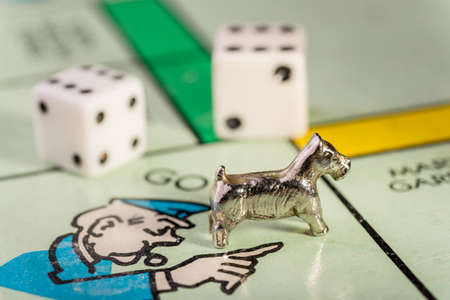
You sigh as you land on the dreaded square, moving your pewter piece to jail. It seems like you just got out of jail after drawing the doomed card early in the game. You always choose the Scottie dog as your Monopoly pawn because it usually brings you good luck, but not today! That’s okay though because you will always pick the Scottie.
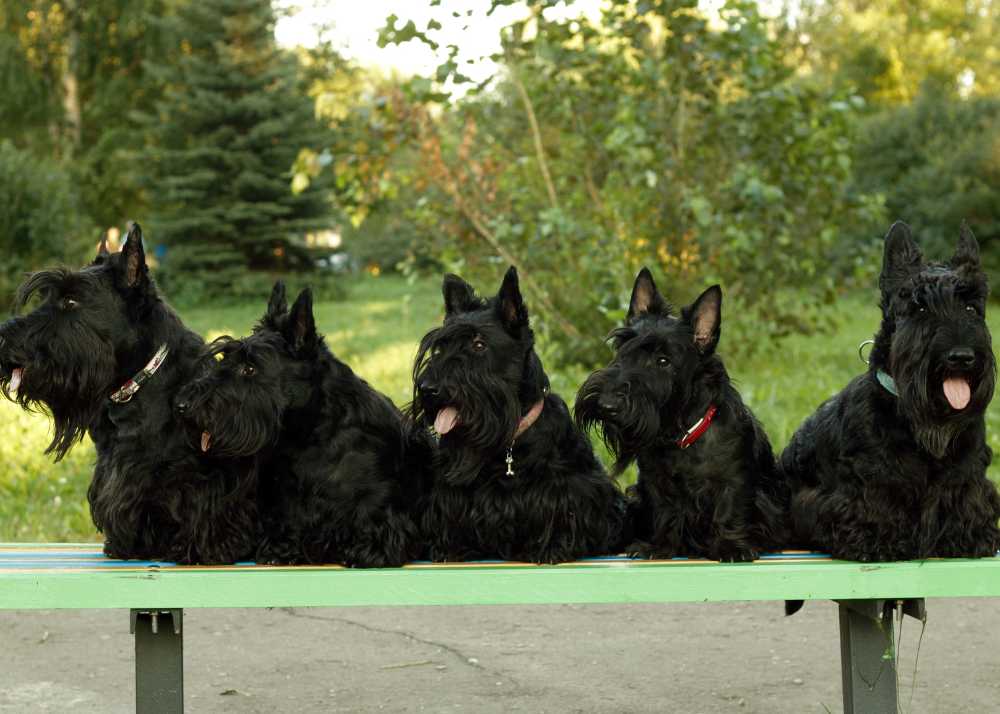
Affectionately known as Scotties, Scottish Terriers are easily recognized by their distinctive profile of shaggy beards, eyebrows, and lower body. Just because they are small doesn’t mean they are dainty and submissive! Scottish Terriers have an extra large personality for such a tiny body. These independent, bold, and comical dogs make devoted canine companions for the right family. See if Scottish Terrier puppy ownership is right for you with our ultimate Scottish Terrier dog breed guide.
Origin and History of Scottish Terrier Puppies
Scottish Terriers have gone by several names over the years, including the Scotch Terrier, Aberdeen Terrier, and the “Diehard.” While they’re credited with originating in Scotland, this breed has existed for over a thousand years brought to the area by the Celts from Europe.
Heads of Scottish clans caught on quickly that Scottish Terriers were excellent at hunting small game and vermin, such as badgers, foxes, and rodents that threatened crops and carried diseases. They were more prized for their function rather than just their appearance, proving themselves invaluable to keeping an estate operating smoothly catching game to eat, and keeping threatening vermin at bay.
Scottish Terriers’ popularity among clans can be attributed to kings and queens. The first mention of what is now a modern Scottish Terrier appears in the History of Scotland 1436-1561. King James IV of Scotland loved his Scottish Terriers, making them a popular choice across Europe in the 17th century. It’s said he gave six Scottish Terriers to French nobility as a gift, where interest spread on the continent outside of Scotland. George, the Fourth Earl of Dumbarton nicknamed the Scottie a “little diehard” in the 19th century due to its fearless nature and rustic appearance.
During the Victorian era, the popularity of Scottish Terriers depended on the nobility, who preferred either companion dogs or sporting dogs for hunting.
At first, the Scottish Terrier was deemed too independent and rough-looking to fit either of these categories, and they mainly stayed on estates. The tides turned for them when Queen Victoria kept a handful of Scotties in the royal kennels, joining her huge collection of various beloved dog breeds. Her favorite one was named Laddie. Scottish Terriers were Queen Victoria’s favorite breed at one point, causing their popularity to surge in Europe. She passed on her love of Scottish Terriers to her daughter, Princess Victoria “Toria,” who owned a Scottie named Mac she took everywhere.
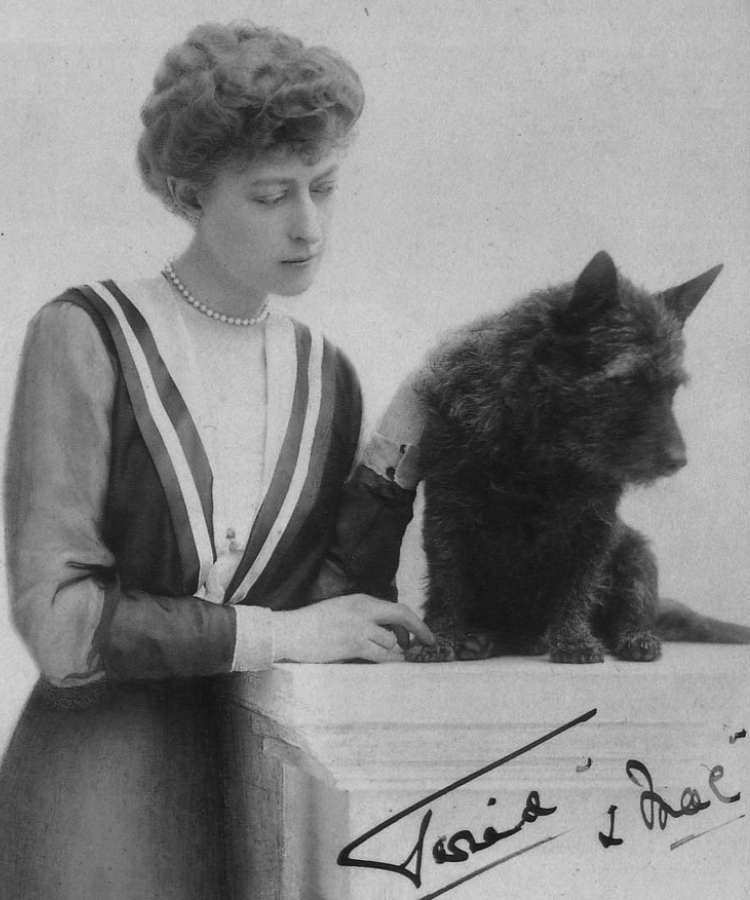
Princess Victoria “Toria” & her dog Mac
Scotland boasts a variety of Terriers from specific regions, each with its own distinct look. During the 1800s, efforts were made to develop standards to help separate and identify specific Terrier breeds among the West Highland White Terrier, Skye, Cairn, and other small Terriers from Scotland. Scottish Terriers appeared in local dog shows in the 1850s as a novelty. The first dog breed standard was developed by Thompson Gray and James Morrison in 1880, noted more for its physical abilities rather than its appearance.
Modern popularity of Scottish Terriers
While the first Scottish Terriers were brought to America in 1883, Scotties did not gain much popularity stateside until after World War I. They quickly became the third most popular breed by 1936.
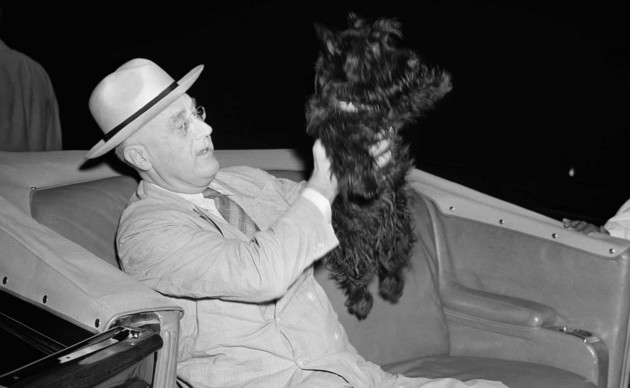
FDR holds up Fala on Aug. 3, 1941
Scottish Terriers have enjoyed status as being the only breed living in the White House three times as presidential dogs with many more presidents owning them before and after their tenure in office. One of the most famous presidential Scottish Terriers was Fala, the Scottish Terrier loved by Franklin Delano Roosevelt and his family from 1940-1952. Fala’s full name was Murray the Outlaw of Falahill, and Eleanor Roosevelt also kept a Scottie named Meggie during their time in the White House. Fala became a national symbol of pride, was mentioned in speeches, and even used as a password in World War II. Fala was so popular that the dog was featured in an MGM documentary, capturing the nation’s heart for this breed. Fala and Meggie were not the only Scottish Terriers to reside in the White House. Dwight D. Eisenhower enjoyed the company of four Scotties, and George W. Bush kept Miss Beazley and Barney.
Presidents aren’t the only ones enamored with these feisty, loyal dogs. Scottish Terriers appear in the works of authors such as Beatrix Potter, E.B. White, and Rudyard Kipling. Hollywood stars Julie Andrews, Humphrey Bogart, Bette Davis, and Joan Crawford have all been proud Scottie owners.
The Wagg’n Swagon made its official debut yesterday.
— College of Wooster (@WoosterEdu) March 31, 2023
Joining forces with the OG Swag Wagon, we ensured that our campus community was all stocked up on new Fighting Scots gear. 🐾 pic.twitter.com/C9HvCIA2BA
A Scottish Terrier as a Monopoly Piece debuted in the 1950s as Mr. Monopoly’s loyal canine sidekick, encouraged by Fala’s popularity. The Scottie piece is still one of the most popular game pieces today over half a century later. Several ad campaigns have also utilized a Scottie as a mascot or to sell products. Scotties even have the prestige of serving canine athletic mascots. Carnegie Mellon is represented by Scotty, inspired by Andrew Carnegie’s own Scottish Terrier. Carnegie Mellon also chose the Scottish Terrier due to its strength, power, and determination resonating with the school’s values. The College of Wooster’s Fighting Scots welcomed Archie the Scottish Terrier as their mascot recently, sporting a yellow and black plaid bandana.
Today, Scottish Terriers sit between Akita and Bullmastiff at #59 out of 200 breeds on the AKC’s Most Popular Dog Breed List of 2023. While not as prized for their hunting abilities, families looking for a small, bold dog will love living with Scotties.
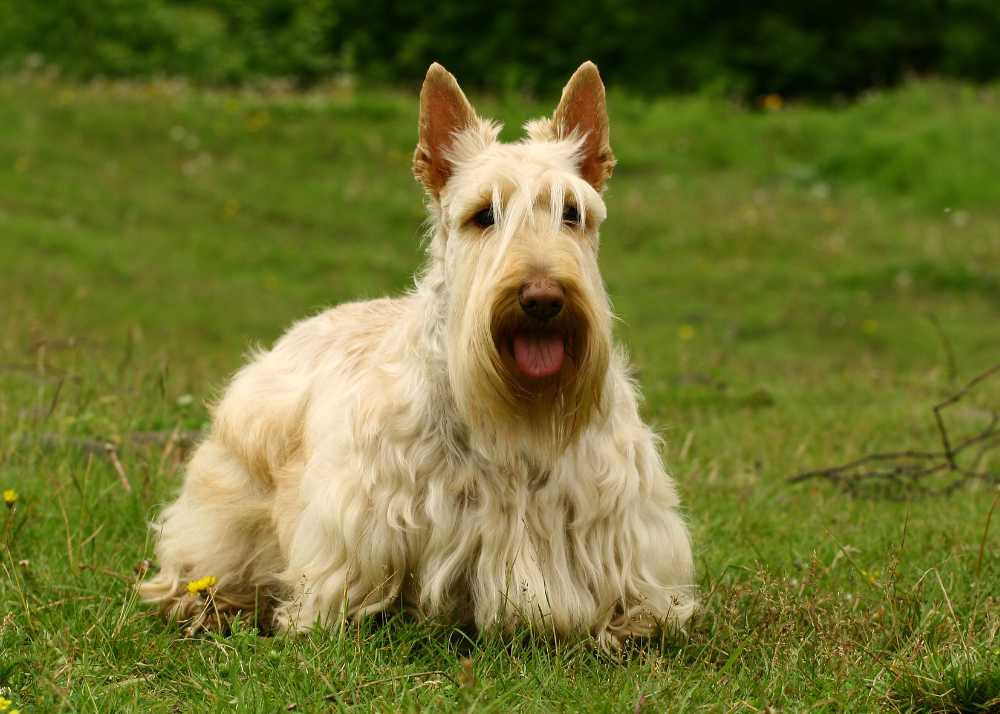
What Does a Scottish Terrier Puppy Look Like?
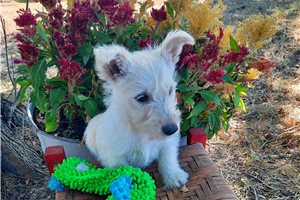
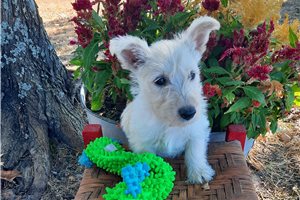
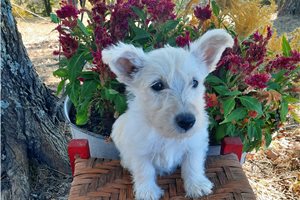
Scottish Terriers are small dogs weighing 18-22 pounds and standing 10-11 inches when fully grown. However, just because they can be tiny doesn’t mean they are delicate creatures. One can find compact, solid, stocky muscles under all that shaggy fur. Their pointed dainty ears that stand on top of their heads are always listening. Long, wiry beards and muzzles, short hair on their backs, and lower skirts of fur distinguish Scotties from other Terriers from the area. Scotties have a dignified air about them with a vigilant expression coming from those bushy, expressive eyebrows, always on the lookout for anything amiss.
You may assume all Scottish Terriers have black coats since that is usually the color portrayed when representing Scottish Terriers. However, Scottish Terriers come in several colors and combinations other than the iconic all-black: black, red, and silver brindle, brindle, and wheaten.
Grooming A Scottie Puppy
Grooming a Scottish Terrier does not take a long time, but puppy owners do need to care for them regularly. One might assume a Scottie is soft to the touch, but the opposite is true. Their double coat consists of a rough, wiry outer layer and a soft, lofty under layer working together to create a temperature-regulating system. The harsh outer coat protects them from the elements, a must in the dreary weather of Scotland while tearing through briar patches and rocky outcroppings when cornering prey.
Because their coat acts as a heating and cooling system, Scotties should never be shaved. Instead, Scottish Terrier puppy owners should hand strip their coats, a process where clumps of dead hairs are removed by hand. They can receive trims on their legs, bellies, and faces after being hand stripped and their undercoat brushed out with a soft bristle brush. Removing dead hairs encourages a strong, healthy coat. Only after their fur is taken care of should they receive trims and baths.
It’s not necessary to give a Scottie a full bath each time, but the long hairs on the bottom called furnishings do need to be kept clean and conditioned to stay in good condition. Trim their beards, eyebrows, and furnishings regularly to look dapper. Hair will need to be plucked out of their ears by hand, and you’ll probably be surprised at how much hair gets trapped in their ear canals as you keep pulling out clumps! Use a powder to help the process, along with irrigation solution and ear wipes to keep them clean. Keeping up with clean eyes, ears, and regular nail trimmings will have your Scottie looking its best.
What’s the Personality Like of a Scottish Terrier?
They may be adorable, but Scottish Terriers have a true Terrier attitude! They are bold, courageous, curious, playful, and self-assured. They’re not afraid to confront anything amiss, showing courage because they’re so small. Learn about a Scottish Terrier’s temperament to see if this dog breed is right for you.
Hopelessly devoted to you
A Scottish Terrier is a fiercely loyal dog that loves to spend all its time with you. They thrive on attention and are devoted to your every move. Due to their expressive eyebrows and keen nature, owners sometimes report they feel their Scottish Terrier understands what they are saying. While not a cuddly breed, a Scottish Terrier puppy is happy to lie by your side spending time with you.
Hilarious buddies
Because of their fearless nature, Scottish Terriers can get into some hilarious situations to humans, remaining unaware of their silly antics. They have big dog personalities in such a small package and can surprise themselves when their independent thinking doesn’t pan out. Social media accounts share plenty of funny moments for Scottie lovers to enjoy.
Sound the alarm
If there is something unusual going on, your Scottie puppy will be the first to alert you! They won’t back down from a perceived threat, even if it’s benign like a visitor or even the wind blowing leaves. However, they are not aggressive toward strangers and just need a bit of time to warm up. Socialization and desensitization are key to preventing excessive barking.
Are Scotties good with other pets and children?
While Scotties can be a cherished member of a family, make sure you evaluate your household’s dynamics if you have children before getting a Scottie puppy. Scotties do not appreciate young children’s boisterous behavior, especially those who have not yet learned how to treat puppies nicely and cannot be consistent with gentle treatment. Scotties are more suitable for child-free households or those with older children who have been taught respect for animals and can recognize signs of agitation to know when to end playtime.
Scotties do well as the only dog in the household since they thrive on so much attention and aren’t keen to share it. However, when raised from a young age with other dogs, they can learn to be buddies. Due to their high prey drive, Scotties should not live in households with small animals for safety reasons, especially furry animals.
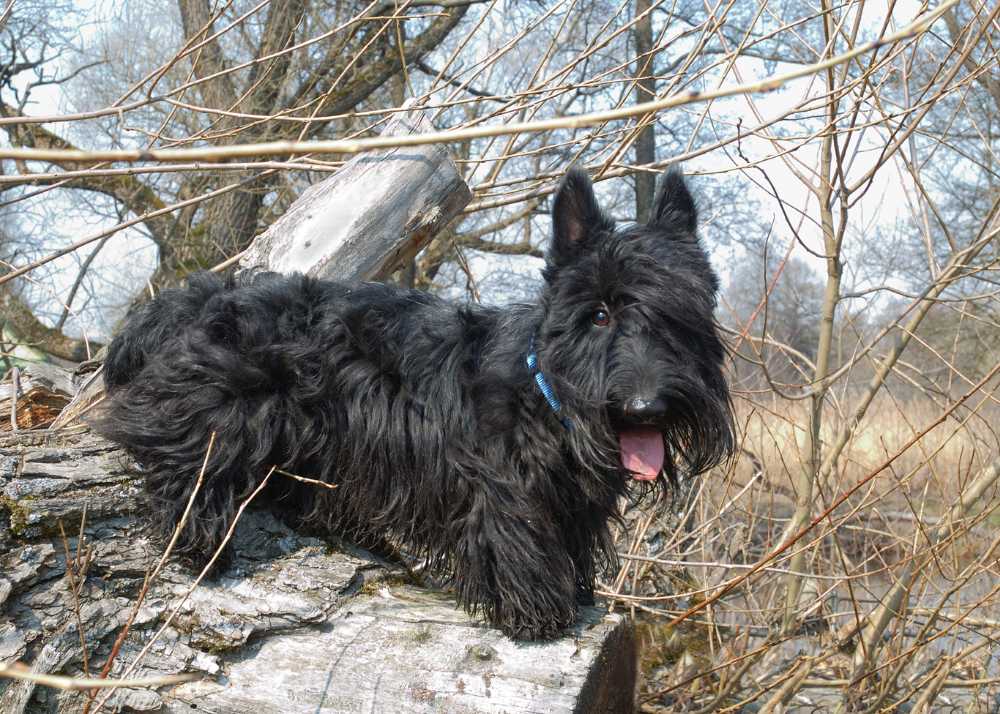
Activity Level and Exercise Needs of Scottish Terrier Puppies
If you’re looking for a lazy, cuddly puppy, a Scottish Terrier is not the best choice for you! Learn more about the activity level and exercise needs of a Scottish Terrier to see if you have the time and energy to devote to raising a Scottie puppy.
Scotties are highly active due to their readiness to hunt small game. They have a high prey drive and love to chase, so games like fetch and hide-and-seek are excellent ways to keep them active. Scotties are extremely agile and move in quick bursts, so training them in agility or earthdog trials will keep exercise fun and interesting rather than taking them on walks. The average Scottie needs around 30-45 minutes of exercise daily to stay healthy.
Mental stimulation for Scottie puppies
Scotties love to stay busy! In addition to physical exercise, they need a steady stream of mental stimulation opportunities for puppies. Because they are so intelligent, Scottish Terriers’ wheels are constantly turning, seeking out opportunities to stay mentally engaged. Owners need to acknowledge their inquisitive nature by providing lots of activities through playing with interactive toys, training, socialization opportunities, or switching up normal activities. Without enough mental stimulation, Scotties can be prone to naughty behaviors like excessive barking, digging, or chewing without proper outlets.
A great way to think of your Scottish Terrier’s activity needs is to live by the idea of “A tired Scottish Terrier puppy is a happy, well-behaved Scottish Terrier!” When you provide enough physical activity and mental stimulation, your Scottish Terrier can become a well-adjusted member of your family.
Training a Scottish Terrier Puppy
Training a Scottish Terrier puppy is not for the faint of heart or permissive person. Because they are so independent and intelligent, Scottish Terriers need an owner who can be firm, persistent, and consistent in dedicated training sessions. Being firm should not include harsh punishments, scolding, or yelling. Despite their big attitudes, Scottish Terriers are very sensitive and will shut down trust between you and them.
Owners should use lots of praise and positive reinforcement during Scottie training sessions. Patience is a must because they can be extremely stubborn and refuse to do what you’re asking of them, even when they know exactly what you want them to do. Their feisty attitude requires fresh training methods to keep things new and exciting.
Scottie owners should work on leash walking and recall. Scottish Terriers love chasing prey, and they will dart after squirrels, chipmunks, and other small animals. For this reason, recall is not always reliable, and keeping your Scottie on a leash in unsecured environments is non-negotiable!
Socializing your Scottie puppy
An unsocialized Scottish Terrier can wreak havoc on family life, so the key to a well-adjusted Scottie puppy is socialization. Expose them to sights, sounds, and experiences of normal, everyday life to desensitize their vigilant, alert nature. Because they love spending time with their owner, Scottish Terriers are prone to separation anxiety. Scotties need to be taught how to get along well with other dogs, as they can be territorial. Early, consistent socialization opportunities will help your Scottie become a pleasant canine companion both inside and outside your home.
Caring For Your Scottish Terrier Puppy
Caring for a Scottish Terrier puppy requires commitment from you as their owner. They look to you to keep them healthy and safe, something you should always strive to do as a responsible pet owner. Scottish Terriers live to be around 12 years old, so maintaining their health and raising them for their entire lives is required of you, the devoted owner. Establishing a great relationship with a licensed veterinarian will create a team to help care for your Scottie puppy into old age.
Scotties should be fed a nutritious diet according to their age, height, and weight. Work with your veterinarian to pick the best food specifically for your puppy, as he or she may need special considerations. Limit excessive treats and table scraps to prevent obesity in puppies.
Regular care will help prevent serious issues down the road. However, Scottish Terriers can experience a set of health problems, including:
- Allergies
- Cataracts
- Hypothyroidism
- Von Willebrand disease
- Brain and bladder cancers
- Progressive retinal atrophy
Find a Scottish Terrier Puppy From Pawrade
Ready to welcome an iconic, loyal Scottish Terrier to your household? Where do you begin when choosing a Scottish Terrier puppy?
Pawrade is a vetted pet adoption matching service helping connect reputable Scottish Terrier breeders with potential puppy parents like you. We’ve done all the guesswork and vetting breeders for you, as our breeder partners pass a rigorous selection process and uphold our puppy first approach. Our Scottish Terrier breeders understand the breed standard, health requirements, and desirable characteristics when selecting parents to breed healthy litters. Each Scottish Terrier puppy comes with a 3-year health guarantee, a health certificate, 30 days of MetLife insurance, and other perks.
We can’t wait to work with you to turn your favorite Monopoly piece into your favorite puppy! Check out our Scottish Terrier puppies for sale to bring home your feisty, loyal companion!