For centuries, cultures around the world have looked to the human world to explain the unexplainable or supernatural occurrences beyond understanding. It’s no wonder humans have placed dogs in a spot of reverence as culturally significant beings. Dogs have been loyal, devoted companions while also serving as hunters, guides, and fearless protectors, a combination of qualities that have both positive and foreboding symbolism.
While you may be more familiar with Anubis from Ancient Egypt and other popular dogs of ancient civilizations, we’ll focus on some lesser-known dog myths and legends from various cultures. Let’s learn about both ancient and modern dog myths and legends in folklore to see how dogs have woven themselves into the cultural fabric of groups around the world.
Dog Myths and Legends Around the World
Cultures across the world hold dogs in high regard for their friendship, protection, and devotion to humans. Discover how dogs influence humans and provide cultural significance through myths, superstitions, and legends about dogs. We’ll scratch the surface highlighting cultures from all parts of the globe.
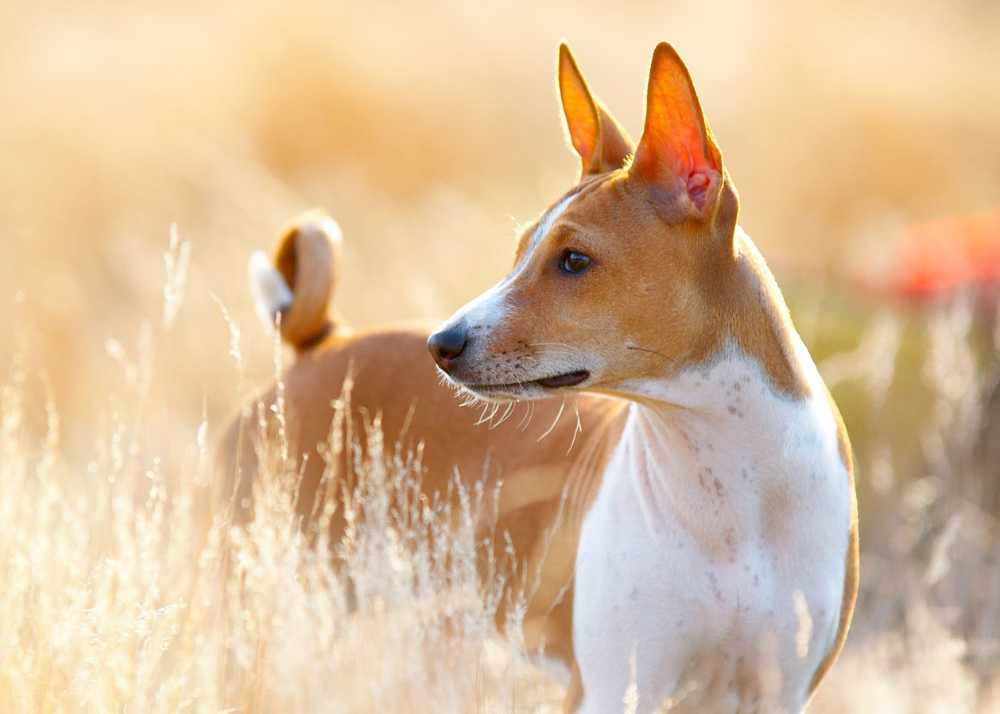
The Barkless Basenji of Africa
Basenjis are a type of African dog with unique vocal chords rendering them unable to bark; instead, they make a melodic yodel called a “barroo.” Ancient depictions of hieroglyphics and other drawings show Basenji-like dogs were prized by the Ancient Egyptians and other tribes in the Congo Basin for being silent, a useful trait when sneaking up on prey.
One African myth explains how the Basenji lost its vocal cords. A Basenji named Rukuba lived near the god Nyamuriri. A man named Mikhango from the Nyanga people stumbled upon a welcoming fire in Nyamuriri’s hut and was startled to discover Rukuba could speak. Rukuba gave the fire to Mikhango, angering Nyamuriri, who banished Rukuba to live with the Nyanga people. Rukuba became the village messenger, relaying important messages all day. He did not want this to become his only purpose in life, so he decided to never speak again, remaining barkless forever.
Supernatural dogs of Hawaii
Native Hawaiian traditional stories (“mo’olelo”) are rich with stories of supernatural dogs, both friend and foe. Dogs held supernatural abilities that were prevalent in cultural stories. Dogs were thought to see spirits, and mixing herbs with a dog’s mucus was said to give people the gift of sight beyond a human’s comprehension. Images of dogs in cloud formations were considered omens, prompting temples and hula dances dedicated to supernatural dogs. Families would keep dogs for companionship and protection as family gods (“aumakua”). Chiefs would tattoo images of dogs on their bodies as a sign of respect.
However, dogs were not always a positive force in mo’olelo. Dog-men called “‘ōlohe” could shapeshift and therefore were considered demi-gods (“kupua”). The kupua were brindled and hairless dog-men known to be skilled thieves, warriors, and tricksters. One of the most famous of the ‘ōlohe was Kaupe who once ruled Nuʻuanu. With a man’s body and a black and red-striped brindle head of a dog, Kaupe terrorized the inhabitants of Maui and Oahu, resorting to cannibalism and kidnapping. While he was partially defeated in battle, it is said his cruel spirit arrives in a white dog-shaped mist and calls out to tempt hikers in the forest to this day.
Dogs continue to be an integral part of modern Hawaiian culture. Instead of calling yourself a puppy owner, you are referred to as their “Kahu.” This means you do not own the puppy, but are instead the sacred guardian or honored attendant, a protector role over your pet. You are entrusted with keeping your puppy safe as a cherished being, guarding their soul as an honor. We are merely the caretakers of dogs and respect the unconditional love they offer us during their time with us.
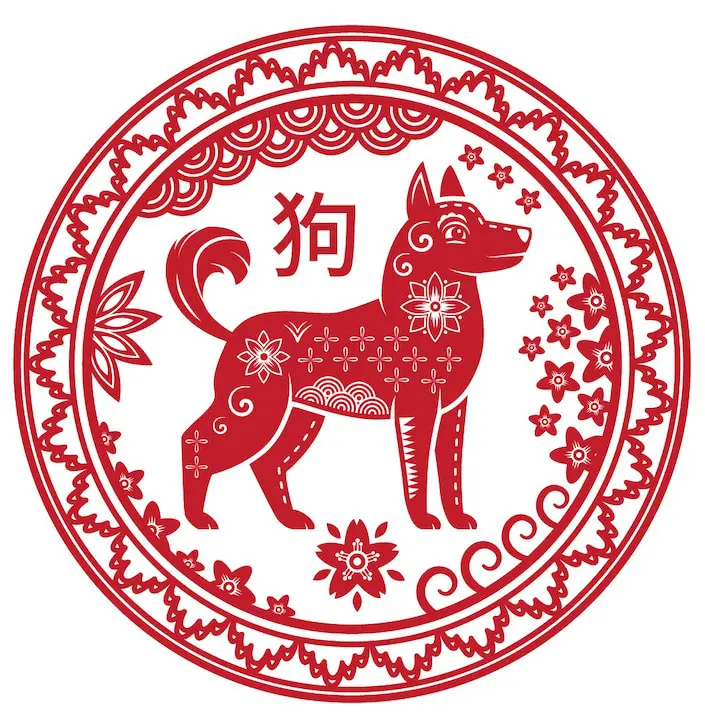
Year of the Dog, Chinese Zodiac
The Chinese Zodiac features 12 animals that are assigned to humans based on the year of their birth, and the Year of the Dog represents canine qualities. These animals are said to predict someone’s personality, self-perception, and key life events. The 11th sign is the Dog associated with Autumn and Earth. People born during 1970, 1982, 1994, or other years following these 12-year increments are said to be intensely loyal, faithful, and devoted to the people they love. They’re also hardworking with a strong sense of duty and are friendly people in general, all qualities that demonstrate why humans seek to emulate the unconditional love, bravery, and loyalty of dogs.
Dogs in Native American myths
Archaeologists tend to agree that the wolf population saw a change 12,000 years ago when dogs began to integrate into human communities. Over time, Native Americans bred domesticated dogs for various jobs, such as protection, hunting, livestock guarding, and hauling heavy loads long distances. Various legends cropped up involving dogs’ importance to tribal life. One such legend involves how dogs chose to join the human race. A Great Spirit gathered all the animals together to look for a suitable animal to be a companion for humans. While some animals said they would tear them apart, the dog offered to risk his own life to guard humans, help them acquire food, and be a steadfast companion. Another myth states that dogs originally lived for 20 years but gave up 10 of those years to be able to spend them with humans. Several Native American tribes have held beliefs that dogs help guide humans to the afterlife, making dogs revered animals that live on through legends.
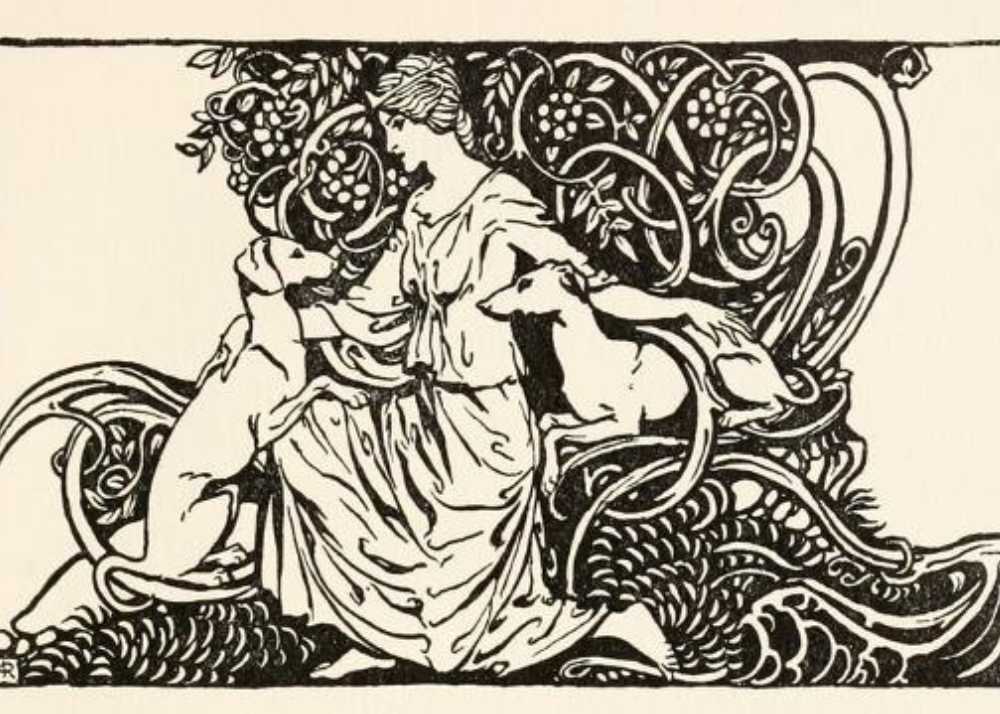
Tuiren with Bran and Sceólan from '"The Birth of Bran" in '"Irish Fairy Tales"
Celtic mythology
The deep bond between humans and dogs is a recurring theme in Celtic mythology, with many stories featuring the loyalty, bravery, and support of canines in humans’ lives. It’s no wonder that the ancient Celtic people were in awe of Irish Wolfhounds, giant dogs that fought alongside humans in battle and were brave and strong enough to take down wolves. They were so prized that an ancient Brehon law stated only nobles, chieftains, kings, and other aristocrats could own them, and entire wars were fought over ownership rights.
The legendary hero and leader of the Fianna warriors, Fionn mac Cumhaill, traveled with two loyal Irish Wolfhounds, Bran and Sceólan (translates to "raven" and "survivor"). A fairy named Uchtdealbh turned Fionn’s aunt Tuiren into a wolfhound when she was pregnant, resulting in the birth of Bran and Sceólan. With two paws into the magical, otherworldly realm, these loyal hounds fearlessly guided Fionn down the right path in perilous situations, protecting him at all costs.
The word “cú” means "hound,” and anyone with the name Cú means they are worthy of respect as a hound. Many kings, nobles, and heroes therefore chose to place it in front of their names, as hounds were revered in Celtic mythology. One of the most famous old Irish heroes is Cú Chulainn. Born Sétanta, he receives his name after being filled with remorse and guilt after killing the smith Culann’s ferocious hound in self-defense that was guarding his castle. The struggle lasted day and night as he tried to gain entrance to answer Culann’s request for a visit. Sétanta begged to be allowed to raise a replacement guard hound. Until the puppy was old enough, Sétanta vowed to serve as a human hound for a year and a day, protecting the grieving Culann’s castle. He agreed, and Sétanta was named Cú Chulainn, “Culann’s hound.”
British Isles: Black dogs
In British Folklore, black dogs appeared as mysterious entities to be feared, often said to bring death, predict shipwrecks, and serve as overall bad omens. One infamous canine specter was the Moddey dhoo from Castle Peel in Douglas on the Isle of Man, a small island in the Irish Sea between Ireland and Great Britain. Said to have a curly black coat and a massive, shaggy body like a Cocker Spaniel, this foreboding ghost hound would appear lying at the hearth in the castle’s guard room as soon as the candles were lit for the night and would leave at daybreak. The soldiers were frightened at first but got used to its presence, choosing to be quiet and respectful around the hound. However, one drunk soldier got too bold and boasted he would find out if the hound was a dog or a devil despite the protests and warnings from his fellow soldiers. They heard a terrible noise, and when the soldier returned, he could not speak. After three days, he died, and no one found out what happened during the encounter. The Moddey dhoo was never seen again after the soldier’s death.
The many dogs of Greek mythology
If you’ve ever looked up at the stars on a clear night, you’ve most likely gazed upon the constellations Canis Minor, Canis Venatici, and Canis Major, whose brightest star is called Sirius the Dog Star. Dogs play a prominent role in Greek mythology, appearing in myths with the gods and goddesses Zeus, Artemis, Ares, and more. A dog known as the “golden hound” protected a goat named Almatheia who nursed Zeus. To show gratitude for its protection, Zeus made him into the Canis Major constellation. As the goddess of the hunt, Artemis received seven hunting dogs from Pan to be her hunting pack to add to her gift of silver bows and arrows from the Cyclops.
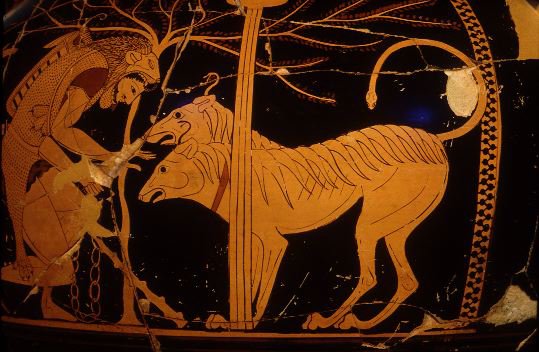
One easily recognizable dog from Greek mythology is Cerberus, the three-headed dog that guards the entrance to Hades. Cerberus goes head-to-head with Hercules, who must tame the dog with just his brute strength, and paraded him through the streets in victory after he subdued Cerberus. After being shown to Eurystheus as proof of completing his Twelfth Labor, it’s unknown whether Cerberus was returned or escaped on his own, but he was back in his place as guardian of the Underworld.
Create Your Own Legend With a Pawrade Puppy
If you’re fascinated by global myths and legends featuring dogs, you may need a puppy to snuggle up with while reading accounts of supernatural canines. At Pawrade, we offer happy puppies for sale from reputable hand-picked breeders. We're dedicated to making finding your new best friend a transparent, joyful experience. Speak with us today to get started in finding the pup of your dreams.