Your puppy is sick, and you already know something is seriously wrong. The vomiting, the lethargy, and the bloody diarrhea are alarming symptoms. Canine parvovirus is one of the most dangerous illnesses a puppy can face, and the American Veterinary Medical Association confirms that prompt, intensive treatment significantly improves a dog's chance of survival. Knowing what to do in the next few hours can genuinely change the outcome. This guide walks you through exactly what parvo looks like, what to do right now, what treatment involves, what it costs, and how to protect your puppy and any future dogs in your home.
What Are the First Signs of Parvo in Puppies?
The first signs of parvo in puppies are sudden lethargy, loss of appetite, vomiting, and bloody or foul-smelling diarrhea, often developing within 3 to 7 days of exposure. Some puppies also develop a fever in the early stage, while others run a dangerously low body temperature as the illness progresses. Recognizing these signs early is the most important thing you can do, because the window between early symptoms and critical illness is measured in hours, not days. The disease does not plateau and wait. It accelerates.
Parvovirus attacks the lining of the intestines directly, stripping away the cells responsible for absorbing nutrients and fluids. This is why symptoms appear so fast and so aggressively. The intestinal damage also allows bacteria from the gut to enter the bloodstream, which creates a secondary crisis on top of the dehydration. A puppy dealing with parvo is simultaneously losing fluids at a dangerous rate and fighting off a bacterial threat their weakened body is poorly equipped to handle.
Early Symptoms vs. Advanced Symptoms
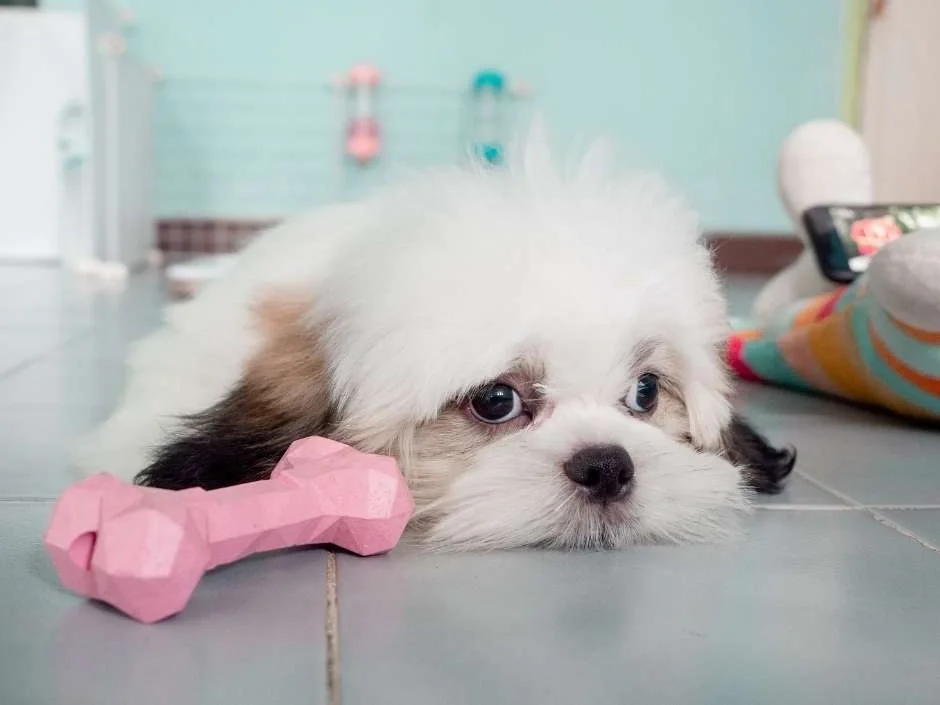
Early symptoms are easy to miss because they overlap with minor stomach upsets: reduced energy, skipping a meal, mild vomiting. A puppy who has eaten something that upsets its stomach can look similar in the first day or two. The difference with parvo is that the symptoms do not stabilize or improve with rest. They escalate quickly and consistently. If your puppy vomited once and then bounced back, that is a different approach to treatment than a puppy who vomited twice in three hours and has now stopped moving around normally.
Advanced parvo looks even worse. The diarrhea becomes profuse, watery, and visibly bloody with a distinctive foul odor that experienced dog owners and vets recognize immediately. Vomiting intensifies and the puppy loses the ability to keep even small amounts of water down. Dehydration sets in quickly, which you can observe by gently pulling up the skin on the back of the neck. In a well-hydrated dog, the skin snaps back immediately. In a dehydrated puppy, it tents upward and returns slowly. At advanced stages, the puppy may be too weak to stand and may show signs of pain when their abdomen is touched.
How Quickly Does Parvo Progress?
Parvo moves faster than most owners expect. The Ohio State University College of Veterinary Medicine confirms that dogs begin shedding the virus before they show any visible signs of illness, which means the infectious period starts before the owner knows anything is wrong. Once symptoms appear, the acute phase typically intensifies over the next 24 to 48 hours. Puppies who are very young, unvaccinated, or already stressed by other health and stress factors tend to decline faster than older or partially vaccinated dogs.
The speed of progression is one reason veterinarians treat suspected parvo as an emergency rather than a wait-and-see situation. Every hour without IV fluids is an hour in which the puppy's dehydration worsens. Every hour without antibiotics is an hour in which secondary bacterial infection can advance. Do not wait to see if your puppy improves on their own. If parvo is on your mind, act as though it is parvo until a vet rules it out.
What To Do the Moment You Suspect Parvo
If your puppy has parvo (or you suspect it does), here is exactly what to do right now:
-
Call your veterinarian immediately. Let them know you are coming with a puppy showing parvo symptoms so they can prepare an isolation area on arrival.
-
Separate your sick puppy from every other pet in the household right now. Parvo spreads through contact with infected feces, shared bowls, toys, bedding, and even your hands and shoes after touching an infected animal.
-
Do not bring your puppy to a dog park, groomer, or any public space.
-
If possible, bring a fresh stool sample in a sealed bag. Your vet will use it for a rapid antigen test to confirm the diagnosis.
-
Write down when symptoms started and which symptoms you have observed. This timeline helps your vet assess severity and begin the most appropriate treatment protocol faster.
-
After handling your sick puppy, wash your hands thoroughly and change your clothes before interacting with any other dogs.
That list is the most important information in this entire post. Every minute spent on the right response at this stage is a minute working in your puppy's favor. The Texas A&M University College of Veterinary Medicine confirms that parvovirus is not airborne and does not spread through casual proximity, but it does survive on contaminated surfaces, hands, clothing, and objects for an extended period, which is why immediate isolation and contact control matter just as much as getting to the vet.
Call Your Vet Before You Drive There
Calling ahead is not just about being courteous. Veterinary clinics isolate suspected parvo patients to protect every other animal in the building. Arriving unannounced with a potentially parvo-positive puppy creates a contamination risk that the clinic cannot manage in real time. One phone call gives the vet clinic enough time to set up a dedicated quarantined space, pull protective equipment, and prepare the rapid antigen test before you walk through the door. That preparation directly reduces the time between your arrival and the start of treatment.
When you call, tell the receptionist your puppy's approximate age, whether they have received any parvo vaccinations and how recently, what symptoms you have observed, and when those symptoms started. If you have a stool sample, mention that too. This brief history is what the veterinarian will use to triage your puppy the moment they arrive, so the more specific you can be, the faster the right decisions get made.
How To Isolate Your Puppy To Stop the Spread
Keep your sick puppy in a single room or crate that no other pets can access. Use separate food and water dishes that belong only to the sick puppy from this point forward, and wash your hands every single time you leave the isolation space. Do not allow other household dogs near the area, and be conscious of your own clothing and footwear as contamination vectors. The DeKalb County Board of Health confirms that parvovirus can survive in soil and on objects for seven months or longer, which means a contaminated surface in your home today is a risk to any unvaccinated dog who enters that space months from now.
If you have other dogs in the household, monitor them closely for symptoms over the following week. Fully vaccinated adult dogs face a much lower risk but are not immune to all strains. Any dog showing symptoms after exposure to a confirmed parvo case should be evaluated by a vet as soon as possible.
How Vets Treat Parvo in Puppies
Parvo has no cure, and that is a hard thing to hear when your puppy is suffering. What veterinary treatment does is support the body as aggressively as possible while the immune system does the work of fighting the virus itself. The Cornell University College of Veterinary Medicine describes treatment as supportive in nature, centered on maintaining hydration, controlling secondary bacterial infections, and providing nutritional support so the body has the resources it needs to mount an immune response. The goal is to keep the puppy alive and stable long enough for their own immune system to clear the virus.
The difference between inpatient hospitalization and outpatient or home care is largely a question of how fast and precisely fluids can be delivered. Oral fluids cannot keep pace with the rate of loss caused by severe vomiting and diarrhea. IV fluids bypass the damaged gastrointestinal tract entirely, delivering hydration and electrolytes directly into the bloodstream where they are needed most. This is why hospitalization produces better outcomes than home care in the majority of cases, and why getting to a vet quickly is the most important variable in survival.

What Hospitalization Looks Like
A hospitalized puppy with parvo typically receives continuous intravenous fluids to counteract dehydration and electrolyte loss, anti-nausea medication to control vomiting and allow the gut to begin stabilizing, and antibiotics to prevent secondary bacterial infections from progressing to sepsis. In severe cases where the blood's ability to carry nutrients is compromised, blood or plasma transfusions may become necessary. Your vet will monitor your puppy's bloodwork, body temperature, hydration levels, and willingness to eat throughout the stay, adjusting the treatment plan as the puppy's condition changes. Most puppies stay hospitalized for five to seven days, though some require longer stays depending on the severity of the case and how quickly they begin to respond.
During hospitalization, your puppy will be kept in an isolation ward separate from the general patient population. You may or may not be allowed to visit depending on the clinic's isolation protocols. This separation is protective, not punitive. It keeps the parvo virus contained and keeps your puppy in a calm, controlled environment that supports recovery. Many owners find the separation genuinely difficult, and that feeling is entirely understandable.
The New CPMA Treatment and What It Means for Survival
One of the most significant recent developments in parvo treatment is the Canine Parvovirus Monoclonal Antibody, known as CPMA, which was introduced by Elanco as a targeted therapy to work alongside traditional supportive care. Unlike antibiotics, which address secondary bacterial infections, CPMA works against the parvovirus itself. Elanco's 2025 real-world treatment data showed that 93% of puppies treated with CPMA survived, and those patients spent an average of 1.87 fewer days in the hospital compared to puppies receiving standard supportive care alone. Fewer days in the hospital means lower total treatment cost as well as a faster path to recovery for the puppy.
CPMA is not yet universally available at every clinic in the United States. Ask your vet directly whether it is stocked and appropriate for your puppy's case. If your regular vet does not carry it, a nearby emergency veterinary hospital may. It is worth a phone call to find out, because the data on its impact is meaningful.
Can Parvo Be Treated at Home?
For most puppies, home treatment alone is not a safe option during the acute phase of parvo. The core problem is fluid replacement. Parvo causes dehydration at a rate that oral fluids simply cannot replace, particularly when the puppy is vomiting and cannot keep water down. Secondary bacterial infections require prescription antibiotics, which are not available without veterinary involvement. A puppy attempting to fight parvo at home without IV fluids and medical monitoring faces dramatically worse odds than one receiving inpatient care.
That said, the Colorado State University Outpatient CPV Protocol provides a structured framework for puppies who have been seen, stabilized, and assessed by a veterinarian but whose owners cannot afford or access extended hospitalization. This protocol involves subcutaneous fluid administration at home, syringe feeding, and close symptom monitoring with scheduled vet check-ins. It is a medically supervised bridge, not a first-line alternative. If cost is a barrier to hospitalization, be honest with your vet about that. Many clinics can work with you on a payment plan or refer you to a lower-cost facility rather than sending you home with nothing.
How Much Does Parvo Treatment Cost?
Parvo treatment is one of the more significant unplanned veterinary expenses a puppy owner can face, and the cost range is wide because the severity of the case determines how long treatment lasts and what interventions are required. Vety's 2026 parvo cost breakdown puts the total range between $700 and $5,000 for most hospitalized cases, with costs climbing higher in severe or prolonged situations. Geography also plays a meaningful role. Veterinary costs in major metropolitan areas and high-cost-of-living areas are consistently higher than in other regions, and emergency veterinary hospitals charge more than daytime general practice clinics for after-hours care.
The financial reality of parvo catches many owners off guard because the illness strikes suddenly and progresses fast. There is no time to shop around or delay a decision while you sort out financing. Understanding the cost structure in advance, or better yet having pet insurance in place before a diagnosis, gives you more options and more control in a moment when both feel scarce.
Cost Breakdown by Treatment Type
MetLife Pet Insurance provides a useful itemized breakdown of what drives parvo treatment costs. Hospitalization runs approximately $600 per night, which accounts for the bulk of the total bill in a five to seven day stay. Intravenous fluids add around $220, antibiotics run $25 to $30, and anti-nausea medications cost $10 to $20 per administration over the course of treatment. When CPMA is administered, that adds an additional cost that varies by clinic and region, though the reduction in hospital stay days it produces can partially offset that expense. Diagnostic costs, including the initial rapid antigen test and any bloodwork, add another $100 to $300 at the front end of treatment.
The total bill for a five-day hospitalization with standard supportive care falls roughly in the $2,000 to $3,500 range for most mid-sized clinics. At an emergency veterinary hospital where overnight staffing costs are higher, that same five-day stay can reach the upper end of the $5,000 range or beyond.
Is Pet Insurance Worth It for Parvo?
Pet insurance purchased before a parvo diagnosis is one of the most practical financial safety nets available to puppy owners, and parvo is exactly the kind of sudden, high-cost event that separates insured from uninsured owners very quickly. Most pet insurance policies that cover illness will cover parvo treatment costs after the deductible, provided the policy was active before symptoms appeared. Pre-existing conditions are excluded, which means the time to buy insurance is before your puppy is sick. For more help on what to look for in pet insurance for your puppy, this article walks through what different policy types cover and how to evaluate whether a plan makes sense for your situation.
If insurance is not in place and the cost of hospitalization is a barrier, talk to your veterinarian openly and early in the conversation. Many clinics offer payment plans, CareCredit financing, or relationships with local rescue organizations that maintain emergency medical funds. You should not have to choose between your puppy's survival and your financial stability without at least knowing what options exist.
What Are the Odds? Parvo Survival Rate in Puppies
With early detection and aggressive veterinary treatment, the majority of puppies survive parvo. A decade-long PubMed survival study covering 5,127 dogs found an overall survival rate of 86.6%, and that number climbs steeply the longer a puppy stays alive and in treatment. Survival probability reached 96.7% in dogs who made it past five days of inpatient care. 80% of parvo fatalities occur within the first five days of illness. This is the window that matters most, and it is the window where the speed of your response has the most direct influence on the outcome.
Without treatment, the picture is categorically different. Parvovirus kills up to 91% of puppies who receive no medical care, according to Elanco's 2025 treatment outcome data. The gap between treated and untreated survival rates is one of the starkest in all of veterinary medicine, and it reflects how completely supportive hospitalization can tip the balance in the puppy's favor when it begins early enough.
Certain factors affect survival odds within the treated population as well. Very young puppies, particularly those under 12 weeks, tend to have less robust immune responses and tolerate dehydration and electrolyte loss less well than older puppies. Breed matters too: some toy breeds are more vulnerable to the rapid fluid losses that parvo causes. Puppies who receive no partial vaccination protection before exposure also tend to have more severe cases than those who have had even one round of the vaccine. None of these factors mean a puppy in a high-risk group cannot survive. They mean the vet needs to know about them to calibrate treatment intensity from the start.
How Long Does Parvo Last in Puppies?
With inpatient supportive care, most puppies fight through the acute phase of parvo within five to ten days. The first three to five days are the most critical, and puppies who begin showing even small signs of improvement during that window, eating a few bites of food, showing interest in their surroundings, having slightly less severe diarrhea, are generally moving in the right direction. Vets watch for these micro-improvements carefully because they signal that the immune system is beginning to gain ground against the virus.
Recovery does not mean the virus disappears from the body the moment symptoms resolve. The Animal Medical Center of New York notes that recovered dogs may continue shedding parvovirus in their feces for up to three weeks after the acute illness ends, even when they appear completely healthy and are acting normally. During this shedding window, your recovering puppy should remain isolated from unvaccinated or incompletely vaccinated dogs. This is not an indefinite restriction, and it does not mean your puppy is sick. It simply means that the virus has not fully cleared from their system, and responsible isolation during this period protects other dogs in your community.
Dogs who survive parvo and fully recover typically go on to live completely normal, healthy lives. There is some research suggesting that puppies who experience parvo may have subtle long-term effects on intestinal health, but the majority of survivors show no lasting clinical signs. Most owners report that their post-parvo puppy bounced back to their normal personality within days of coming home, and that resilience is one of the more remarkable things about watching a puppy recover from something that difficult.
How To Prevent Parvo in Puppies
Prevention is also dramatically less expensive than treatment. The full first-year vaccine series costs a fraction of what even a mild hospitalization requires: ranging between $60 to $180, compared to the previously mentioned $700 to $5,000 range, respectively. The vaccine is highly effective, has been available for decades, and produces strong, durable immunity when administered on the correct schedule. Getting the timing right and understanding the high-risk window before full immunity is established are the two things every puppy owner needs to know.
Parvo Vaccine Schedule for Puppies
Puppies need four rounds of the parvo vaccine at weeks 6-8, 12, 16, and 20 of age, according to guidance from Overland Park Veterinary Specialists. Vaccines given before six to eight weeks old are considered void because maternal antibodies, inherited from the mother, are still present in the puppy's bloodstream and block the vaccine from triggering an immune response. This is a biology issue, not a dosing error, and it is why the schedule starts at eight weeks rather than earlier. Full protection is established four weeks after the final dose, which means a puppy who receives their last vaccine at 20 weeks is not fully protected until week 24. Follow the core vaccine schedule for puppies to know what each round of the series covers and what to expect at every vet visit.

How To Keep an Unvaccinated Puppy Safe Before the Final Dose
The period between your puppy's first vaccine and the establishment of full immunity is the highest-risk window of their life, and many owners do not fully appreciate just how exposed their partially vaccinated puppy is during this time. The vaccine builds protection progressively with each dose, but it is not a complete shield until the full series is finished. During this window, avoid dog parks, pet store floors, and any outdoor area where unknown dogs have had access. Puddles, grass, and soil in public areas can all harbor the parvovirus from infected dogs who passed through weeks or even months earlier.
Puppy socialization classes that require documented proof of vaccination for every attending puppy are generally far safer than open public environments because every dog in the room has had at least some immune priming. Playdates with dogs you know are fully vaccinated are also safe. The goal is controlled exposure to new experiences while limiting contact with unknown dogs and contaminated environments until your puppy's series is complete. This article about what to expect in the first 48 hours with a new puppy covers this transition period in depth for new puppy owners navigating the early weeks at home.
Why the Breeder You Choose Matters
A breeder who does not follow proper vaccination protocols, who does not health-screen their breeding dogs, or who keeps puppies in environments where biosecurity is not a priority is introducing risk into a puppy's life before the new owner has any idea it is happening. By the time parvo symptoms appear, the exposure may have occurred days earlier in a place the new owner never saw. This is why the breeder you choose is one of the most consequential health decisions you make for your puppy. Pawrade works only with screened breeders who follow proper vaccination and health standards. Every breeder in the Pawrade network goes through a vetting process specifically designed to protect the health of the puppies they place, including vaccination status, facility conditions, and post-adoption health support.
Browse available puppies from vetted breeders
FAQs About Parvovirus: Your Most Urgent Parvo Questions Answered
If you suspect your puppy may have contracted parvovirus, immediate action may be required. For those needs, here are quick answers to the most common questions about parvo.
Can my puppy survive parvo if caught early?
Yes, and the odds are strongly in your puppy's favor with early, aggressive treatment. Survival rates in treated dogs reach 86.6% overall and climb to 96.7% for dogs who make it past the first five days of inpatient care. The most important factor determining whether your puppy falls on the right side of those statistics is how quickly you get them to a vet after symptoms first appear. Every hour matters in the early stages, and the puppies who do best are almost always the ones whose owners acted without delay.
Is parvo contagious to other dogs in my house?
Parvo is highly contagious to any unvaccinated or incompletely vaccinated dog sharing your home. The virus spreads through direct contact with an infected dog and through contact with contaminated feces, bedding, food dishes, toys, and any surface the infected dog has had access to. Fully vaccinated adult dogs face a much lower risk, but they should still be physically separated from a sick puppy as a precaution until the illness is confirmed and contained. Any dog in your household who develops symptoms after exposure to a confirmed parvo case should be seen by a vet immediately.
How is parvo diagnosed at the vet?
Vets typically diagnose parvo using a rapid in-clinic fecal antigen test that delivers results in approximately 15 minutes. The test detects parvovirus proteins directly from a stool sample and is highly accurate when symptoms are active. A positive test result combined with your puppy's clinical signs, age, and vaccination history allows the veterinarian to begin treatment immediately without waiting for outside laboratory confirmation. In ambiguous cases or when the rapid test is negative but clinical suspicion remains high, additional bloodwork or a PCR test may be ordered for greater certainty.
Can I treat parvo at home?
Home treatment is not recommended as a first-line response for most puppies with parvo. Parvo causes dehydration and electrolyte loss at a pace oral fluids cannot match, and the secondary bacterial infections that develop require prescription antibiotics to prevent life-threatening sepsis. A vet-supervised outpatient protocol developed by Colorado State University exists for post-stabilized patients whose owners cannot maintain extended hospitalization, but this protocol begins with a veterinary evaluation and stabilization visit, not at home. If cost is a concern, discuss your situation with your vet before deciding against hospitalization. Your puppy's survival should not come down to a financial decision made in a panic, and most veterinarians would rather help you find a path forward than watch you leave without treatment.
How do I clean my home after a parvo outbreak?
Start with a diluted bleach solution of one part bleach to 30 parts water, per guidance from the Humane Society of Pikes Peak Region. Apply the solution to all hard, non-porous surfaces and allow it to sit for 10 to 15 minutes before rinsing. Launder all bedding, blankets, and fabric items in hot water with bleach. For outdoor areas and porous surfaces where bleach cannot penetrate effectively, the Commonwealth of Massachusetts disinfection guidance recommends accelerated hydrogen peroxide as a more thorough option. Be methodical and work room by room. Any surface your sick puppy contacted, or that you contacted after handling them, should be treated. Do not rush the disinfection process. Parvo is a resilient virus and incomplete cleaning leaves risk behind.
Getting Through This and Looking Ahead

Surviving parvo is one of the hardest things a puppy and a puppy owner can go through together. If you acted fast and got your puppy to a vet quickly, you gave them their best possible chance, and that matters more than you may realize in this moment. Most puppies who receive proper care do recover fully, and the overwhelming majority go back to being exactly the dog they were before the illness, curious, playful, and completely themselves. For more on keeping your puppy healthy from this point forward, common puppy illnesses every owner should know about is a strong next read.
If you are on the other side of a parvo scare and thinking about bringing home another dog, or if you are reading this before your puppy arrived and want to start on the safest possible footing, the breeder you choose is the foundation everything else is built on.