
Every spring, millions of dog owners stand in the lawn and garden aisle staring at bags of fertilizer wondering the same thing: are there any pet-safe lawn fertilizers? The short answer is that it depends entirely on what is in the bag, what form it comes in, and how you apply it. Most fertilizers are not automatically safe for pets, but the right product choices and the right timing eliminate the majority of the risk. This guide on pet-safe fertilizers for dogs gives you a clear, specific framework so you can maintain a healthy lawn without putting your dog in harm's way. If you are also getting ready to bring a new puppy home this season, browse available puppies at Pawrade and use this guide to get your yard ready before your dog arrives.
Is Fertilizer Safe for Pets?
Most fertilizers are not inherently safe for pets, and the answer depends on three things: what ingredients the product contains, whether it comes in liquid or granular form, and how long you wait before letting your dog back on the treated lawn. ASPCA Animal Poison Control data identifies fertilizer ingestion as one of the most commonly reported toxin exposures in small animals, which tells you the stakes are real. The good news is that with the right product and the right approach, your dog and your lawn can coexist without conflict.
Understanding the difference between a fertilizer and a combo weed and feed product matters a great deal here. A straight fertilizer delivers nutrients to your grass. A combo product also contains herbicides or pesticides, and those added ingredients are where most serious pet health risks live. The sections below walk through each risk category, the safest product types, and the exact re-entry timelines your dog needs.
A quick note that makes every fertilizer label easier to read: the three numbers on any fertilizer bag represent its N-P-K ratio, which stands for nitrogen (N), phosphorus (P), and potassium (K). These are the core macronutrients that feed your grass. According to the LawnStarter fertilizer safety guide, a teaspoon of standard NPK fertilizer without harmful additives can pass through a large dog's body with mild or no symptoms. The danger escalates sharply when a fertilizer includes toxic additives such as pesticides, herbicides, or certain organic ingredients. A teaspoon of fertilizer containing even 1% disulfoton, an organophosphate insecticide sometimes found in rose and garden products, can be lethal to a 55-pound dog. The NPK ratio itself is not the risk. What sits alongside those three numbers is what dog owners need to scrutinize.
What Makes a Fertilizer Dangerous for Dogs?
The risk a fertilizer poses to your dog is not always obvious from the label. A product can be marketed as organic, natural, or eco-friendly and still contain ingredients that cause real harm to a dog who eats them or rolls in them before the product has been absorbed.
Toxic Ingredients to Avoid for Pets
The ingredients most likely to hurt your dog fall into two categories: those that attract dogs by smell and those that are chemically harmful regardless of whether a dog shows interest in them.
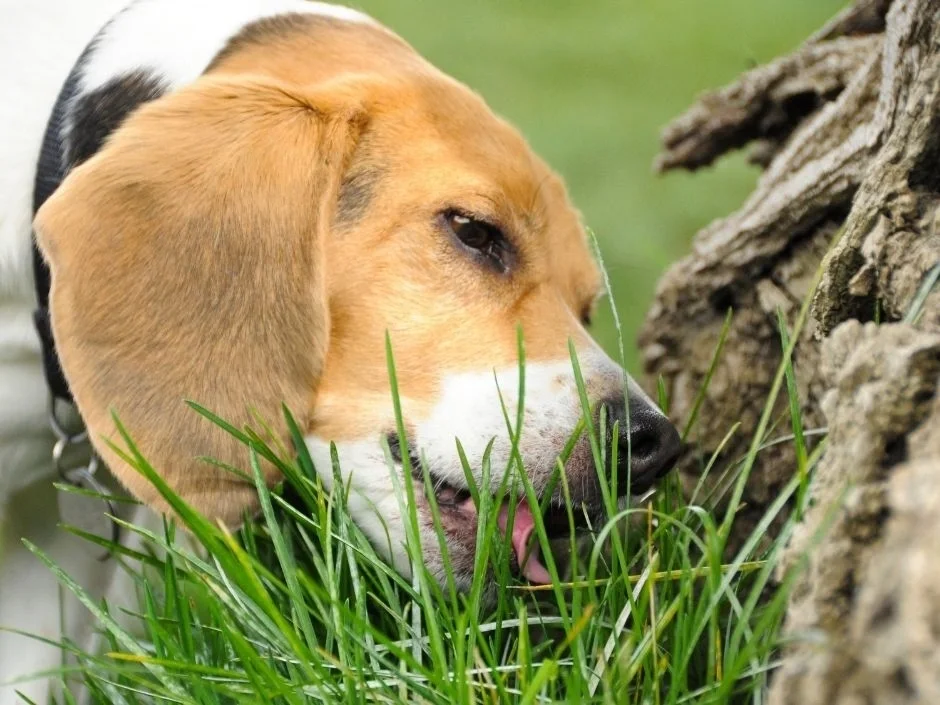
Bone meal, blood meal, and bat guano are among the most dangerous, particularly because they attract dogs by scent, encouraging dogs to ingest them. Both are organic, but these fertilizer and mulch dangers for dogs can cause intestinal blockage in large amounts. Other toxins are found in iron-based fertilizers, which carry iron toxicity risk at high doses, and fertilizers with potassium chloride causes gastrointestinal irritation. Keeping bags sealed and stored out of reach is as important as choosing the right product.
Treating fertilizer ingestions is advised when your dog ingests fertilizer (under 0.5 g/kg of body weight), otherwise they may experience vomiting, diarrhea, hypersalivation, and lethargy. Ingestions above that threshold can cause impaction, abdominal pain, hindlimb weakness, and in severe cases muscle stiffness severe enough that a dog cannot stand.
ASPCA pet-safe yard and garden tips
The Herbicide Risk: Why Weed and Feed Combo Products Are Different
Combo products that combine fertilizer with herbicides carry an extra risk that goes beyond temporary stomach upset. The AKC Canine Health Foundation's research on canine cancer links herbicide exposure, particularly 2,4-Dichlorophenoxyacetic acid (commonly listed as 2,4-D on product labels), to lymphoma and bladder cancer in dogs. Multiple studies confirm dogs exposed to lawns treated with 2,4-D are up to 200% more likely to develop lymphoma, and Scottish Terriers exposed to herbicide-treated lawns face up to seven times the normal bladder cancer risk.
The AKC's guide to reducing dog cancer risk confirms that products containing 2,4-D, dicamba, and mecoprop carry these risks. This is why a product's status as a fertilizer is not enough information on its own. You need to check whether the product also includes a herbicide or pesticide component.
If you use a professional lawn service, ask your provider what products they are applying and whether any contain 2,4-D or organophosphate compounds. TruGreen's own aftercare instructions advise keeping pets off treated areas until the application is dry, but knowing the full ingredient list of any professional application is the more important step. The waiting period matters, and so does what you are waiting for.
Other Common Herbicides and What They Mean for Your Dog
Not all herbicides carry the same risk profile, and many dog owners encounter product names on labels without knowing what they are dealing with. Here is a plain-language breakdown of the four most commonly used lawn herbicide ingredients and what the research says about each.
Glyphosate (found in Roundup and many generic weed killers)
Glyphosate is the most widely used herbicide in the US and one of the most contentious from a pet health standpoint. [EXTERNAL LINK: PetMD herbicide poisoning in dogs | https://www.petmd.com/dog/poisoning/herbicide-poisoning-dogs] documents that Roundup is primarily toxic to dogs while still wet, and recommends keeping dogs off treated grass for at least 24 hours. Oklahoma Veterinary Specialists [EXTERNAL LINK: weed killer dangers for dogs | https://www.okvets.com/post/can-weed-killer-kill-dogs] notes that glyphosate exposure has been linked to a 70% increase in lymphoma rates in dogs across research studies, and that herbicide residues can persist on treated surfaces. Dogs absorb chemicals through paw pad contact, which makes re-entry timing particularly important for products containing glyphosate.
Prodiamine (found in pre-emergent herbicides like Barricade)
Prodiamine is a common pre-emergent used to prevent crabgrass and other weeds before they germinate. [EXTERNAL LINK: prodiamine safety for dogs | https://www.dialavet.com/vet-answers/prodiamine-dogs-safety-13390] from Dial A Vet classifies prodiamine as generally low in toxicity to dogs when used as directed. The EPA classifies prodiamine as a Group C possible carcinogen, meaning it has shown carcinogenic potential in animal studies without confirmed human data. Keep dogs off treated areas until the product is fully dry and watered in. Signs of exposure include vomiting, diarrhea, and lethargy.
Triclopyr (found in broadleaf weed and brush control products)
Triclopyr is used to control broadleaf weeds and woody plants. Fertilizer and herbicide pet exposure from Pet Poison Helpline classifies triclopyr as generally low toxicity when used according to label directions in lawn applications. Standard pet safety guidance applies: keep dogs off treated areas until dry and follow the label re-entry interval, typically 24 hours for granular formulations.
Halosulfuron-methyl (found in Sedgehammer, used for nutsedge control)
Halosulfuron-methyl is a selective post-emergent herbicide used specifically to eliminate nutsedge and other hard-to-kill sedges. Its safety profile for pets is favorable. The product's own Safety Data Sheet confirms halosulfuron-methyl is practically nontoxic orally and by inhalation, and no more than slightly toxic dermally. Sedgehammer pet and child safety states it is safe for people and pets once dry, typically within one to two hours of application under normal conditions.
The consistent thread across all four compounds is this: re-entry timing and paw contact management matter regardless of a product's individual toxicity classification. A low-toxicity herbicide applied this morning still warrants keeping your dog on a leash in a clean area until the treated lawn is fully dry.
Animal-Safe Fertilizer Types That Work
The good news: there are plenty of effective fertilizer options that pose minimal risk to dogs when applied correctly. The key is knowing what to look for and what the label actually tells you.
Dog-Friendly Organic Lawn Fertilizer Options
The lowest-risk fertilizer category for pet households consists of plant-based and marine-derived organic ingredients: fish emulsion, seaweed (kelp), compost, and grass clippings. These work by feeding the soil microbiome rather than delivering synthetic nutrient spikes, and their toxicity profiles for dogs are far lower than either chemical fertilizers or animal-derived organics like bone meal.
Lawn Love's pet-friendly lawn fertilizer guide recommends looking for the OMRI (Organic Materials Review Institute) certification as a reliable selection signal, since the term "natural" carries no regulatory standard. An OMRI-certified product has been independently verified against established organic standards, which gives you a more meaningful safety baseline than marketing language alone. Earth911's list of dog-friendly fertilizers for your lawn highlights OMRI-certified slow-release granular fertilizers, like Espoma Organic All Season Lawn Food, as a leading option in this category.
Sunday Lawn Care is an example of a brand that formulates specifically around these ingredient types. Their products use soy protein, molasses, seaweed, kelp extract, and potassium as the primary inputs, and they market re-entry as safe after the application dries. A 2026 editorial review from Today's Homeowner confirms this claim holds up in practice, while also noting that Sunday's own customer service team advises some caution for dogs who eat grass directly after application.
What to Look for on the Label
Before buying any fertilizer for a yard where dogs spend time, check for four things:
-
OMRI Certified Organic seal on the packaging
-
No 2,4-D, dicamba, or mecoprop in the ingredient list (these indicate a herbicide is present)
-
Notation of whether the product is granular or liquid (this determines re-entry timing)
-
A specific pet re-entry instruction on the label, not just a generic precautionary statement
The word "natural" on a label means nothing from a regulatory standpoint. The OMRI seal is the marker that carries actual verification weight.
A Quick Look at Popular Brands
Here is how some widely available products stack up from a pet safety standpoint:
Scotts Natural Lawn Food is marketed as safe to return to after watering in, with no multi-day waiting period for the fertilizer-only product. Standard Scotts Turf Builder products require watering in and waiting for the lawn to dry. Any Scotts product that includes weed or insect control carries separate, longer re-entry requirements that vary by formulation.
Milorganite uses organic nitrogen and has been applied to residential lawns for more than 100 years without documented environmental harm. The catch: Milorganite safety for children and pets notes that many dogs are attracted to their product's smell and will attempt to eat the pellets, which can cause gastroenteritis, vomiting, diarrhea, and dehydration. Their own guidance recommends watering in the product and keeping dogs off the lawn for 24 hours after application.
Simple Lawn Solutions liquid fertilizer uses a fish and seaweed base and is listed as safe for kids and pets after the application dries, typically within two to four hours under normal conditions. Their liquid-only formulas carry no herbicide load, placing them in the lowest risk category available.
Can lawn fertilizer hurt dogs?
Vigoro granular and liquid fertilizers carry standard re-entry instructions requiring pets and children to stay off treated areas until dry. Vigoro's combo weed and feed products list "not safe for kids and pets" until dry and carry a 24 to 48-hour window. Vigoro is one of the most widely purchased fertilizer lines in the US, which makes label compliance all the more important given how many dog owners bring these products home without reading the full instructions.
Vigoro weed and feed pet safety
LESCO operates as a professional-grade fertilizer brand, primarily available through licensed lawn care distributors. If you or a lawn service uses LESCO products, consult the individual product Safety Data Sheet (SDS) for the specific re-entry interval, as no general consumer-facing pet safety guidance is published for the brand.
When Can My Dog Go on the Lawn After Fertilizing?

After applying fertilizer, the next question worth answering is how long to keep dogs off a fertilized lawn. The waiting period before your dog can safely return to a fertilized lawn depends on the product type and whether it contains herbicides, and it ranges from a couple of hours to 48 hours. Oklahoma Veterinary Specialists document a 24-hour soil absorption period as the standard guideline for granular fertilizer products, and a longer window for any combo product containing 2,4-D, mecoprop, or dicamba.
| Product Type | When Is It Safe? | Notes |
|---|---|---|
| Liquid fertilizer (no herbicide) | When fully dry, typically 2 to 4 hours | Must be fully dry to the touch before re-entry |
| Granular fertilizer (no herbicide) | After watered in and dry, typically 24 hours | Pellets can attract dogs; keep off until absorbed |
| Weed and feed combo (granular) | 24 to 48 hours minimum | 2,4-D and dicamba require full absorption |
| Organic granular (OMRI certified) | After watered in and dry, 24 hours | Still keep dogs away from pellets (bone or blood meal risk) |
| Natural liquid (seaweed, fish, kelp base) | When fully dry | Lowest risk category overall after drying |
Fertilizer safety tips for pets from Pennington Seed confirms that liquid fertilizers require waiting until the product is dry to the touch, while granular fertilizers require watering in, settling, and drying before re-entry. When in doubt, wait longer. The cost of waiting an extra few hours is zero.
What If Dogs Get on the Lawn Too Early?
If your dog walks onto recently fertilized grass before the waiting period is up, the primary concern is paw contact and incidental ingestion from paw-licking.
Preventing Exposure: Wiping Paws, Watching Behavior, and Keeping Dogs Supervised
The most reliable way to protect your dog from fertilizer exposure is to manage the re-entry window actively rather than hoping your dog avoids the treated areas on their own. When the waiting period has passed but you want an extra layer of protection, wipe your dog's paws and underbelly with a damp cloth each time they come in from the lawn for the first 48 hours after any application.
Supervision matters especially for dogs who dig, roll in the grass, or graze on lawn blades. These behaviors dramatically increase the amount of product a dog contacts or ingests, even after the waiting period has technically elapsed. Keep diggers and grazers on a leash in treated areas until the next rainfall has moved through, which accelerates product absorption and reduces residual surface contact risk. Storing all fertilizer bags, spreaders, and accessories in a sealed cabinet or locked garage eliminates the most common source of accidental ingestion entirely.
Monitor for the following symptoms over the next several hours: vomiting, diarrhea, excessive drooling, lethargy, or muscle weakness. Most minor exposures to granular fertilizer cause temporary gastrointestinal upset. More serious symptoms, or any confirmed ingestion of a larger amount, require immediate veterinary contact.
Call the ASPCA Animal Poison Control Center at (888) 426-4435 any time of day or night if you suspect your dog ingested fertilizer directly. Save that number in your phone before lawn season starts, not after.
How to Apply Pet-Safe Fertilizers Without Harming Dog
The safest application is one your dog has no contact with, which means keeping your dog indoors from the moment you open the bag to the moment re-entry conditions are met. Product choice matters, but application habits matter just as much.
The EPA yard and lawn guidance recommends applying fertilizer as close as possible to the period of maximum grass uptake for your region: spring and fall for cool season grasses in northern climates, early to late summer for warm season grasses in the south. Applying at peak uptake means the grass absorbs the product faster, which shortens the window during which residue remains on the surface.
A few practical rules that protect your dog regardless of product type:
-
Apply fertilizer when your dog is inside the house, not in another part of the yard
-
Never apply before predicted rain or high winds, which can spread product unpredictably, per EPA lawn and garden safety guidelines
-
Clean up any spilled pellets immediately; loose granules on hard surfaces or at yard edges are a direct ingestion risk
-
Fill spreaders on a hard surface, not on the grass, to contain spills
-
Seal and store all unused fertilizer in a locked cabinet or high shelf out of a dog's reach
Dog-friendly backyard landscape ideas note the smell-attraction risk with certain mulches and fertilization products. Even after proper application, a dog who gets access to the lawn before pellets are absorbed may seek them out and eat them. This is especially true of any product with an animal-derived organic nitrogen source. The 24-hour wait is not a suggestion for those products. It is the minimum.
Safe Fertilizer for Dogs on Cool Season Grass
Cool season grasses (Kentucky bluegrass, tall fescue, fine fescue, and perennial ryegrass) are common across the northern US from the Pacific Northwest to the upper Midwest and New England. These grasses grow most actively in spring and fall, which means those windows are when fertilizer is absorbed most efficiently and re-entry timelines are at their shortest.

Applying fertilizer during peak growth windows for maximum uptake, which for cool season grasses means early spring before temperatures rise and early fall as growth resumes after summer stress. An OMRI-certified slow-release granular fertilizer applied in early April or early September in a northern yard gives the grass what it needs at the time it can use it best, and gives you a more predictable 24-hour absorption window before your dog is back to normal outdoor access.
Earth911's review of dog-friendly fertilizers identifies slow-release organic granular products as particularly well-suited to households with dogs because the extended-release format delivers nutrients gradually rather than in a single flush, which reduces the surface concentration of any given application. (Source: Earth911)
Safe Fertilizer for Dogs on Warm Season Grass
Warm season grasses (Bermuda, St. Augustine, Zoysia, Centipede, and Bahia) dominate lawns across the southern US from Texas and Florida through the Carolinas and up into the mid-Atlantic transition zone. These grasses go dormant in winter and peak in growth from late spring through late summer, making that window the right time to fertilize for maximum uptake.
For warm season lawns in pet households, liquid organic fertilizers have a practical advantage: they dry quickly, often within two to four hours on a dry day, which means a Saturday morning application can clear re-entry by early afternoon. Simple Lawn Solutions' liquid fertilizer lawn guide documents how liquid fertilizers work by being absorbed directly into leaf tissue and soil, leaving less residual product on the surface than granular alternatives. A fish and seaweed based liquid applied during peak warm season growth, on a dry and calm day, represents the shortest practical re-entry window available to dog owners.
The same application rules apply regardless of grass type: keep dogs inside during application, follow the product's specific re-entry instructions, and wipe paws on re-entry for the first 48 hours as added insurance.
Preparing Your Lawn Before Bringing a Puppy Home
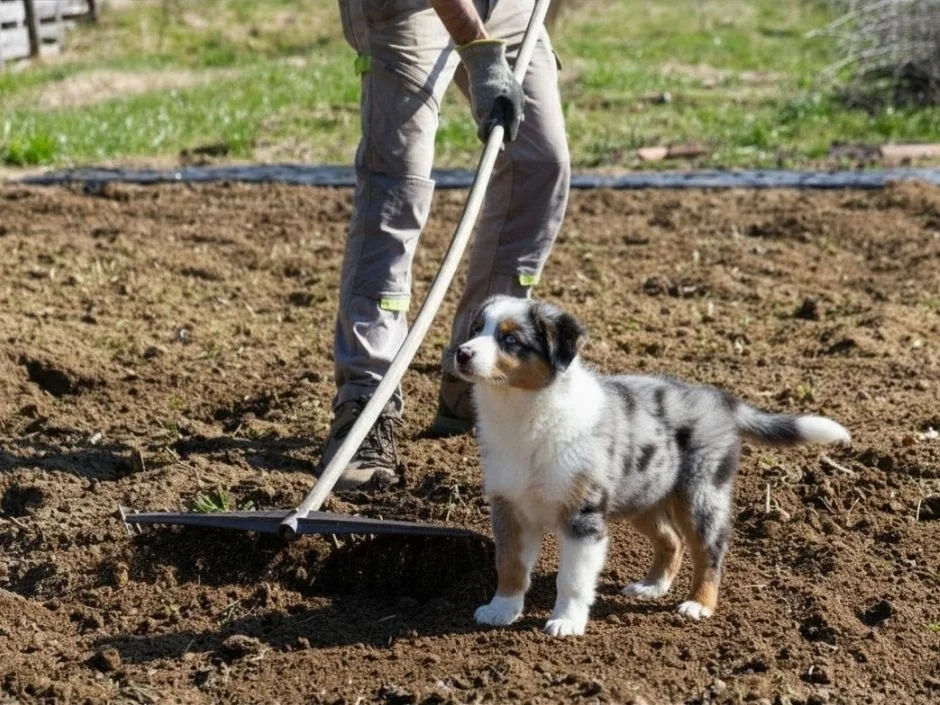
A puppy's first weeks at home are a period of intense curiosity and zero impulse control. Puppies explore with their mouths, roll on every surface, and lick their paws compulsively. A lawn that is fine for an adult dog who avoids the grass for a day after fertilizing is a different environment for a puppy who has no concept of "stay off the lawn." Getting your yard ready before your puppy arrives is one of the most practical things you can do before their first day home.
The steps are straightforward. Time your last pre-arrival fertilizer application at least 48 hours before your puppy's first outdoor access, even if the product's standard wait time is shorter. Choose an OMRI-certified organic product for the first full season while your puppy is young and unpredictable. Keep all lawn chemical storage at a height or behind a barrier your puppy cannot access. And for the first season, consider skipping combo weed and feed products entirely in favor of a straight organic fertilizer that gives you a cleaner safety profile.
Keep in mind these seasonal puppy care wellness tips for keeping a puppy safe year-round, including additional outdoor and environmental hazards beyond lawn care. This article about spring cleaning safety for puppies covers the indoor side of seasonal preparation. Both are worth a read before your puppy comes home.
Ready to find a puppy you will be preparing your yard for? Contact us today and get matched with a trusted, screened breeder.
Frequently Asked Questions About Pet-Safe Fertilizers
For most people, lawncare is a seasonal activity. But for all dog-owners, pet-care is a 365-days concern. Here are important common questions commonly asked before applying lawn fertilizer to your yard.
What fertilizer is completely safe for dogs?
No fertilizer is completely risk-free if ingested in large amounts, but OMRI-certified organic fertilizers made from plant-based or marine-derived ingredients (fish emulsion, kelp, seaweed, compost) are the lowest-risk category for pet households. The key distinction is avoiding products that contain animal-derived organic inputs like bone meal or blood meal, which attract dogs and can cause gastrointestinal harm, and any product that includes herbicides such as 2,4-D. Looking for the OMRI certification seal on the label is the most reliable shortcut to a safer product choice.
Can fertilizer make a dog sick?
Fertilizer can make a dog sick, and the severity depends on what the dog ingested and how much. According to clinical guidance published in Today's Veterinary Practice, small ingestions typically cause vomiting, diarrhea, hypersalivation, and lethargy, while larger ingestions can lead to intestinal impaction, hindlimb weakness, and in severe cases the inability to walk. Combo products containing herbicides carry longer-term risks including increased cancer susceptibility with repeated exposure. If you suspect your dog ate fertilizer, call the ASPCA Animal Poison Control Center at (888) 426-4435 immediately.
How long after fertilizing is it safe for dogs to be on the grass?
The waiting period ranges from two to four hours for liquid organic fertilizers (once fully dry) to 24 hours for granular fertilizers (once watered in and absorbed) to 24 to 48 hours for any combo product containing 2,4-D, mecoprop, or dicamba. Oklahoma Veterinary Specialists recommend the full 24-hour absorption window as the standard for granular products as a conservative baseline. The re-entry timing table in this post breaks down every product category with specific guidance.
Are organic fertilizers always safe for pets?
Organic fertilizers are not automatically safe for pets. Bone meal and blood meal are organic ingredients that attract dogs by smell and can cause serious gastrointestinal harm, including intestinal blockage, when eaten in quantity. Iron in organic fertilizers can also cause iron toxicity at higher doses. The safest organic fertilizers for pet households are those made exclusively from plant and marine sources, such as seaweed, fish emulsion, and composted plant matter, rather than animal-derived sources.
What should I do if my dog eats fertilizer?
Remove your dog from the area immediately and bring them inside. Rinse their paws and any affected skin or fur with clean water. Do not induce vomiting unless explicitly instructed to do so by a veterinarian. Call the ASPCA Animal Poison Control Center or your veterinarian immediately. Have the fertilizer bag or product label available when you call so you can give an accurate report of the ingredients. Time matters, and calling early gives the veterinarian more options.
Final Thoughts
Lawn season is one of the best parts of having a dog. A well-chosen fertilizer, applied at the right time with the right precautions, means your dog can be out there with you enjoying every bit of it. If you are still in the process of finding the dog you will be sharing your yard with, that is where Pawrade comes in.