You spy a dog across the dog park and notice there’s hair standing on top of his head. However, you note that he’s friendly and not showing any signs of aggression. Why is his hair standing up then? And what kind of dog is that? You can’t quite place it.
You’ve just seen a Rhodesian Ridgeback! Sometimes shortened to “Ridgeback,” these dignified canine members of the Hound group have an excellent sense of smell, something you notice as you see the dog sniffing the perimeter of the dog park looking for the source.
The owner calls to the dog, and his beautiful Rhodesian Ridgeback comes running to shower him with affection. As he pats the ridge of hair down its back, he turns to you and says, “Well, he decided to come when called this time, but sometimes he can be downright stubborn! Hey, did you know the Rhodesian Ridgeback is also called an African Lion Hound? They have been used for almost a century to track and flush out large wild game and predators without harming them, like lions and other wild African beasts.” You can see the pride and love in his eyes as he throws a stick for his four-legged friend.
Rhodesian Ridgebacks are muscular, loyal dogs with a gentle disposition and make devoted companions for active families who are experienced with raising dogs. See if a Rhodesian Ridgeback puppy is the right fit for your household.

Is a Rhodesian Ridgeback Puppy Right For You?
Understanding the best home environment for a Rhodesian Ridgeback to thrive is paramount. Doing thorough research on owning a Rhodesian Ridgeback puppy will help you decide if it is the right dog breed for you that already aligns with your lifestyle.
Do you want a laid-back dog that does not require a lot of exercise? How about a dog suited to live in your apartment? Is a protective watchdog important to you? Are you gone a long portion of the day with a busy schedule? How much extra time do you currently have in your schedule to properly care for a Rhodesian Ridgeback’s needs?
Conducting thorough research will help you determine if one is right for you and will help keep Rhodesian Ridgebacks from being returned or ending up in rescues and shelters due to no fault of the breed’s own.
Rhodesian Ridgeback puppies do best with experienced dog owners Rhodesian Ridgeback puppies need a family or an individual ready to take on both the joys and challenges of raising this active dog breed. Being honest with your current lifestyle will help guide your decision to see if the Rhodesian Ridgeback will thrive with you as your canine companion for a fulfilling bonding experience.
How are Rhodesian Ridgeback puppies around children and other dogs?
Rhodesian Ridgebacks form close bonds with their families and want to be a part of the pack. That being said, households with young children should be cautious to jump into Rhodesian Ridgeback puppy ownership. Rhodesian Ridgebacks do well when raised alongside children, but in general, they are best suited for homes with older children who can participate in caring for them and being responsible around them. Kids should know how to act around a Rhodesian Ridgeback, such as avoiding crawling into their crate (their safe space), enforcing limits for naughty behavior, and respecting the puppy’s needs to prevent getting overtired, frustrated, or cornered. And because they are protective, Rhodesian Ridgebacks may see other children at a playdate as strangers and act on their instincts.
Parents know their children best to see if they are ready for this dog breed to join their family. Adopting a Rhodesian Ridgeback puppy is a big commitment that needs the whole family on board, so it’s probably best for older children or child-free homes with responsible family members to take ownership of raising a Rhodesian Ridgeback.
You may wonder, “How are Rhodesian Ridgeback puppies with other pets?” When raised from a young age with other dogs and cats, they may get along harmoniously. However, they may be aggressive towards dogs of the same sex or show dominant behavior. A Rhodesian Ridgeback is not the type of dog to greet each new dog entering the gates of the dog park, unlike a naturally outgoing breed like a Golden Retriever. Rhodesian Ridgebacks can be good companions for other dogs as long as socialization, training, and enforcing boundaries regularly occur. Due to the high prey drive of a Rhodesian Ridgeback, they are best suited to homes without small animals such as kittens, rodents, and others that would activate their hunting instincts.
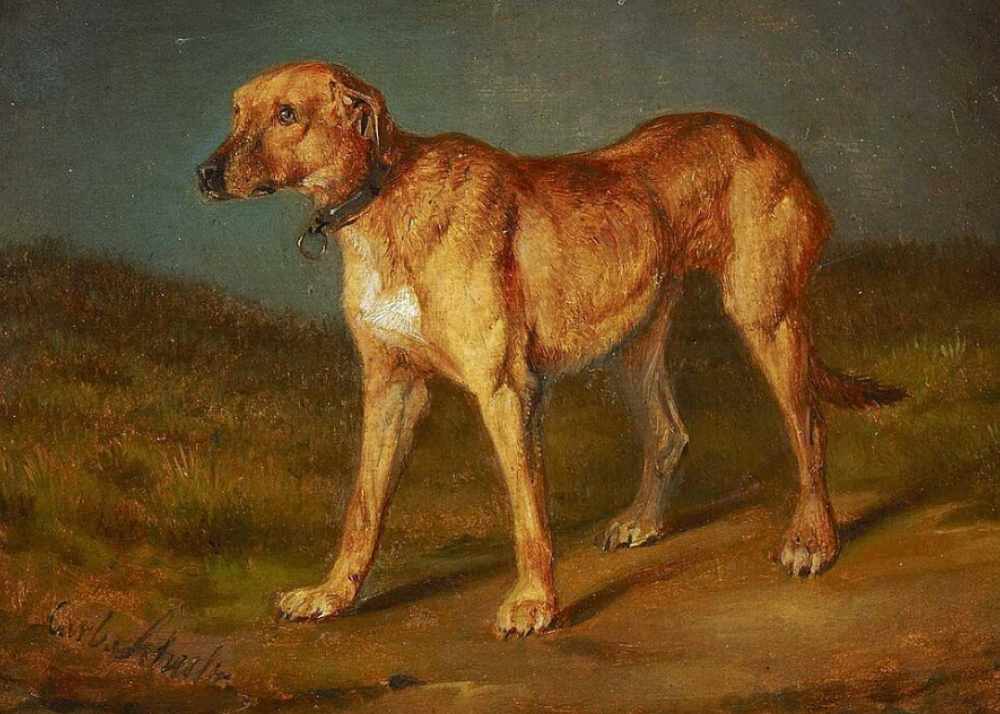
Rhodesian Ridgeback by Karl Friedrich Schulz c.1834
The History and Origin of Rhodesian Ridgeback Puppies
The origin of Rhodesian Ridgebacks dates back to the 16th century with a shipping route around the Cape of Good Hope in Africa’s southern tip. Boers and other Dutch colonists brought European dog breeds including Mastiffs, Bloodhounds, Great Danes, Greyhounds, Collies, Bulldogs, and various Terriers with them as they expanded across southern African countries, most notably Rhodesia, now known as Zimbabwe. These dogs mated with native ridged Khoikhoi dogs to create a dog that hunters found had exceptional abilities in the savannah. They had no trouble tracking, chasing after, and confronting large game such as lions, baboons, leopards, and antelopes, holding them at bay long enough for hunters to get their guns ready. Rhodesian Ridgebacks also had enough stamina to trot next to horses for long distances, protecting the hunting parties.
To refine the breed, big game hunter Cornelius van Rooyen from Rhodesia used two of the Greyhound-like dogs to breed with his African lion dog pack, creating the prototype Ridgeback we know today. Rhodesian Ridgebacks were an integral part of the hunt and continued to be for over a century.
Unfortunately, Rhodesian Ridgebacks were on the brink of extinction, and enthusiasts noticed a wide variety of body shapes and temperaments. They wanted to save the breed and establish a standard. Dog breeders in the early 20th century began breeding more for temperament since lion hunting among the wealthy was a dying sport, focusing on devoted family protectors, and perfecting a standard body type for the dog breed. The South African Kennel Union approved the standard in 1927. Soon after, they were winning Best in Show in dog competitions. While van Rooyen may not recognize the physical characteristics outside the raised ridge of today’s Rhodesian Ridgebacks, the tenacious spirit still remains.
Today, Rhodesian Ridgebacks are in the top 20% of the AKC’s most popular dog breeds of 2023, coming in at #41 between the Collie and the Newfoundland. Several social media accounts document what life is like for a Rhodesian Ridgeback puppy owner, delighting worldwide fans.
What Do Rhodesian Ridgebacks Look Like?
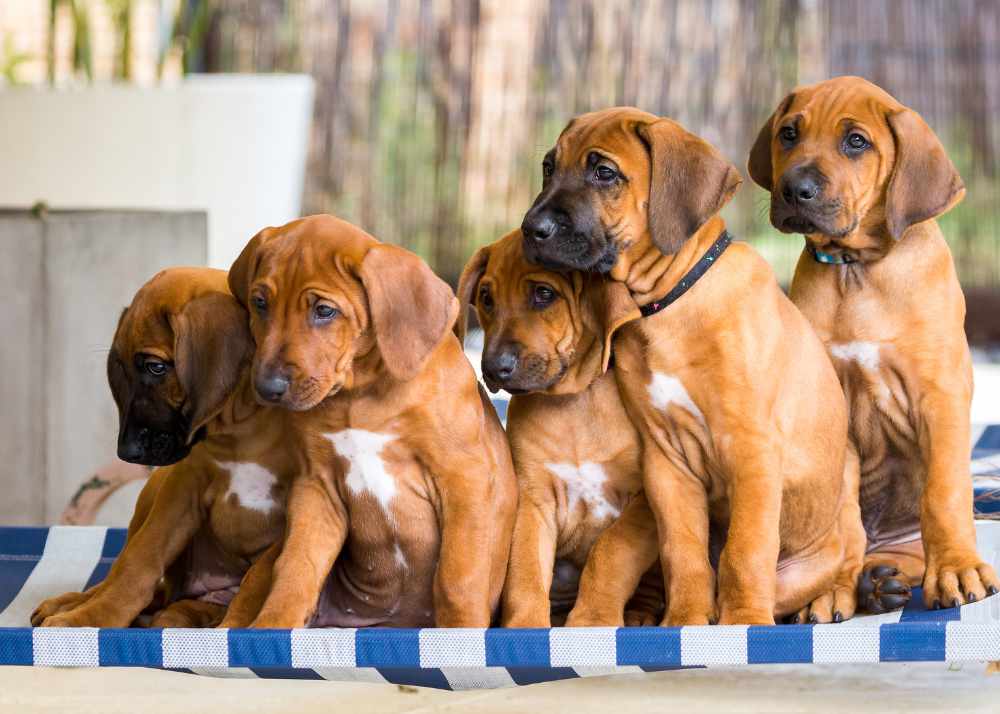
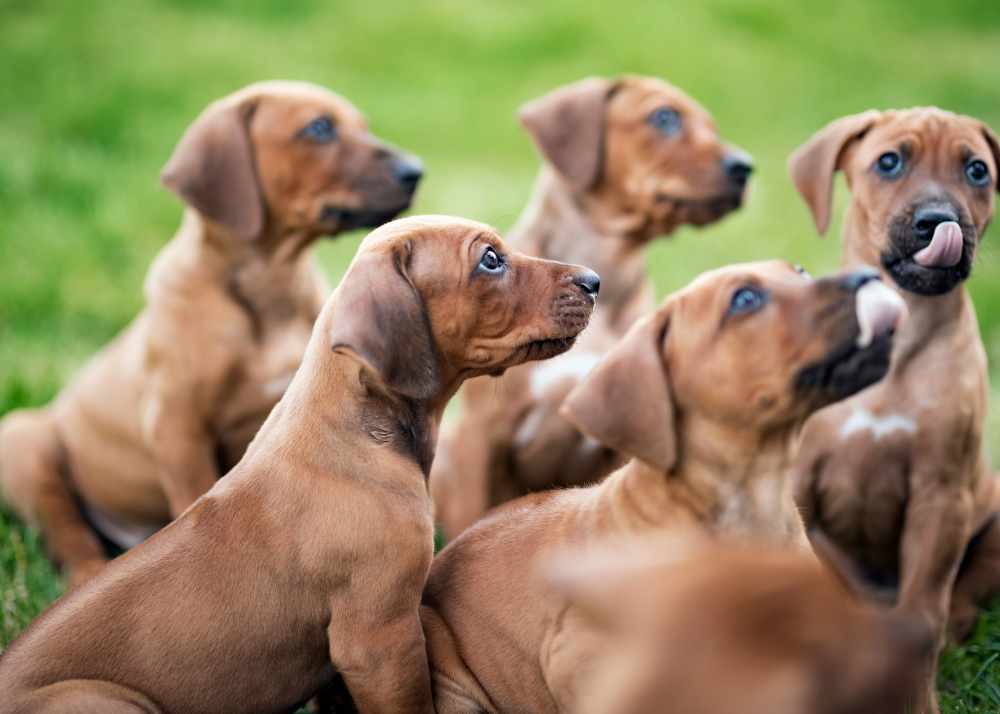
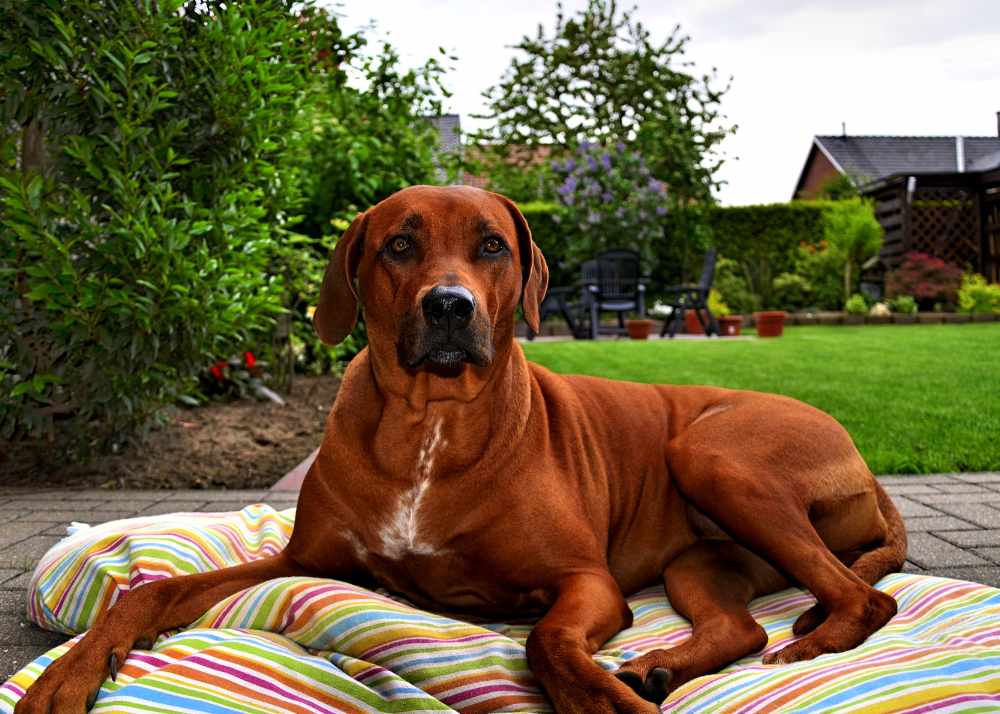
The standard for Rhodesian Ridgebacks’ physical characteristics has not changed in nearly 100 years. The Ridgebacks you see today look nearly the same as the ones that once were on the prowl for lions. Not only did Rhodesian Ridgebacks get their name from their place of origin but also due to a distinct ridge of backward-growing hair running down their backs. They have two distinct whorls (also called cowlicks) at their shoulders. Their strong, square heads with ears that fold down, black or brown noses, and kind eyes give them a regal appearance.
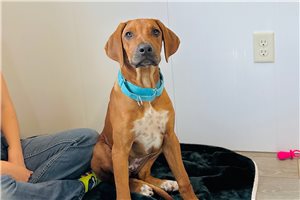
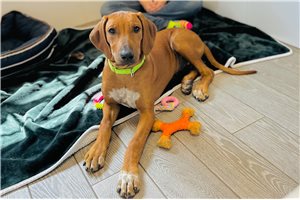
Rhodesian Ridgebacks come in a wheaten color but with various shades considered one color that helps them blend into the background when sneaking up on large prey. These shades under the wheaten umbrella include light, red, and wheaten with brown or black noses and black masks or white markings.
Rhodesian Ridgebacks’ athletic, muscular bodies are built for speed and endurance, making their hunting ability an easy feat. Rhodesian Ridgebacks can grow to be fairly large dogs, weighing 70-85 lbs. and standing 24-27 inches tall. However, many grow much bigger and can be 100+ pounds. While their faces are not intimidating, their sheer size may make some people do a double take.
Fun Facts About a Rhodesian Ridgeback’s Personality
Learn more about what particular quirks and qualities make Rhodesian Ridgeback puppies such amazing dogs.
Rhodesian Ridgebacks like to be warm and cozy
Rhodesian Ridgebacks are originally from the scorching temperatures of Zimbabwe and do not do well in the cold below a certain temperature range without assistance from fabulous sweaters and coats to keep them warm. Your Rhodesian Ridgeback puppy may take a liking to a special blanket and curl up with it at your feet.
Ridgebacks are excellent family guardians
Rhodesian Ridgebacks are gentle protectors of their families, but they are ready to spring into action without being prone to biting. They see family as their pack to defend and are fiercely loyal to their families.
"Talk" about it
Rhodesian Ridgebacks are not big barkers, and they don’t bark unless they have a reason to alert their owners. That doesn’t mean they are totally quiet though, as they like to let out little yips and other happy noises when they are playing excitedly or want your attention. However, if you hear your Rhodesian Ridgeback barking at something in particular, you should definitely investigate.
They might not jump over a puddle
One interesting leftover trait from their days of lion hunting involves little bodies of water. Some Rhodesian Ridgebacks are naturally hesitant to approach let alone jump over water. Behaviorists note that crocodiles lurk in watering holes in Africa, and Rhodesian Ridgebacks are programmed to avoid being on the dinner menu! Even if it’s a puddle on the sidewalk, don’t be surprised if they refuse to enter or jump over it due to the imaginary crocodile. That being said, they do enjoy swimming in pools - it all depends on your Rhodesian Ridgeback's preferences.
Exercising a Rhodesian Ridgeback Puppy’s Body and Mind
If you’re interested in a Rhodesian Ridgeback puppy, you are already doing the right thing by researching how much physical exercise and mental stimulation a Rhodesian Ridgeback puppy needs. These puppies need you to be honest about your current activity level and the time needed to devote to this breed. If you are relying on getting a puppy to motivate you to make lifestyle changes after your puppy arrives, a Rhodesian Ridgeback is probably not the dog breed for you.
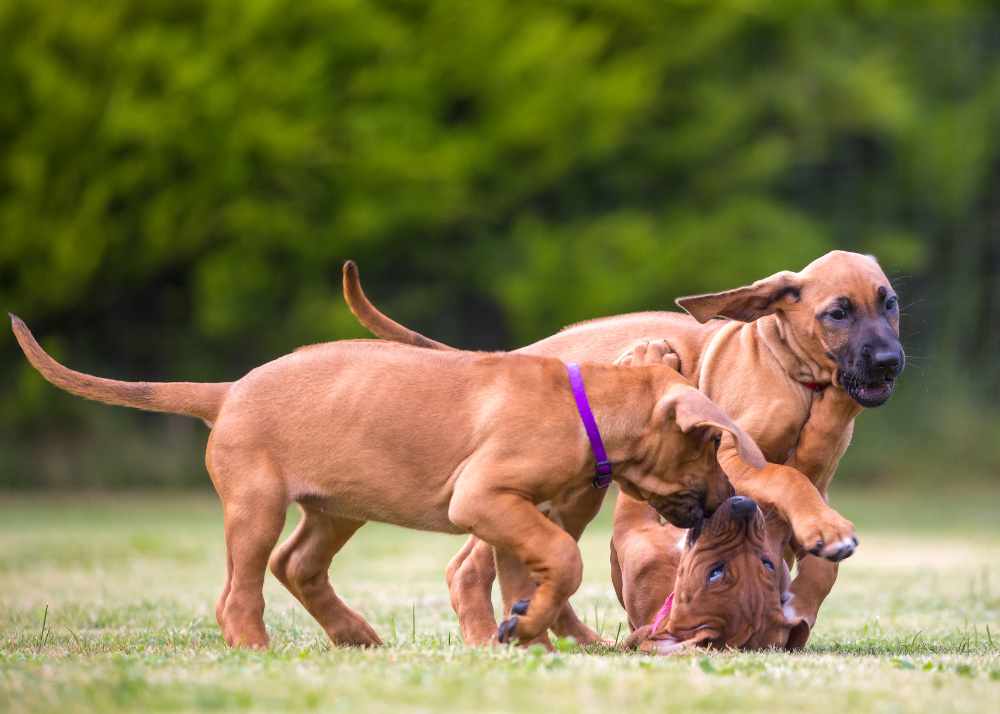
Rhodesian Ridgebacks are full of energy and need various outlets for their zoomies. They love to run and won’t be as content if they just get short walks around the block. Rhodesian Ridgebacks need 1-2 hours of daily exercise to meet their needs. Keep it exciting! Because of their athleticism, they are solid competitors for several dog sports and do well in competitions they enter.
Young Rhodesian Ridgebacks are still developing their muscles and joints until about 24 months old. For this reason, it’s important not to over-exercise your Ridgeback and to break up the 1-2 hours of daily activity into smaller sessions. It can be difficult to limit a puppy from playing too roughly, but you can control their level of play to be safe sessions for their growing bodies.
If the physical activity and mental stimulation you provide are not sufficient, Rhodesian Ridgebacks will create their own fun, much to your chagrin. They can easily become destructive, develop bad habits, or become aggressive through behavior like resource guarding. Keeping their bodies and brains properly occupied will create a happy, tired Ridgeback.
One perk of Rhodesian Ridgebacks is if they get enough exercise, they are more likely to be calm companions who enjoy lying around in the sunshine while hanging out with their families. Unlike other hunting dogs, Rhodesian Ridgebacks have an “off switch” where they turn into chill dogs that can settle down well after a fulfilling day of playing.
Training a Rhodesian Ridgeback Puppy
Rhodesian Ridgebacks require consistent, ongoing training and need owners who understand the importance of firm yet positive reinforcement. A diploma from a puppy kindergarten class is a good place to start, but their education needs to go up to a doggy Ph.D. degree!
One great quality about Rhodesian Ridgebacks is they’re very intelligent and devoted, so they can catch on quickly. Whether or not they will consistently listen is another issue! Hounds will follow their noses sometimes disregarding any training progress they’ve made, and Rhodesian Ridgebacks are no different. Their independent, stubborn nature can test your patience during training and will last through adulthood.
Rhodesian Ridgeback puppy owners must show patience and consistency, regularly working with their puppy to master training skills. This is especially important as your Rhodesian Ridgeback puppy grows to be a large dog because an untrained 80-lb. dog is not a cute (or safe) sight to experience. Because of their intelligence, you’ll want to be creative in your training approach so they do not become bored or destructive when trying to occupy themselves. Overall, positive reinforcement techniques work best for training a Rhodesian Ridgeback puppy.
As noted, Rhodesian Ridgeback dogs are devoted and loyal to their families. However, due to their intense protective nature, they’re ready to act when defending their families. If they are not socialized properly when young, they can become fearful and aggressive toward strangers or dogs of the same sex.
Because of their wandering noses, a secure fence is a must for these dogs, as you can’t count on their recall skills to come when called when there’s something more interesting to follow.
Grooming & Care of a Rhodesian Ridgeback Puppy
Caring for your Rhodesian Ridgeback puppy starts with your commitment to being a responsible puppy owner beginning with selecting a licensed veterinarian before your puppy comes home. View your vet as an integral part of your team when caring for your Rhodesian Ridgeback puppy.
Grooming a Rhodesian Ridgeback
Grooming a Rhodesian Ridgeback won’t be a major concern because they are relatively low-maintenance, as you can complete their grooming needs yourself. You won’t have to worry about expensive, regular visits to the groomer or see tumbleweeds of fur rolling across your floor just one day after brushing. While their short, sleek, single coats do shed, it’s a minimal amount compared to double-coated dogs. Brushing them once a week with a rubber mitt or soft bristle brush is enough to keep their coats looking healthy and shiny.
Another bonus to grooming is Rhodesian Ridgeback puppies are very clean and don’t have a strong doggy odor. You’ll only need to bathe them every few months, wiping off their faces and paws occasionally while checking for eye and ear infections. Brush their teeth with doggy toothpaste and clip their nails to round out their DIY puppy grooming sessions.
Caring for your Rhodesian Ridgeback
Rhodesian Ridgebacks are generally healthy dogs and can live 10-13 years with proper care. Your licensed veterinarian will recommend the right vaccination schedule and care tips at regular visits.
Feed your Rhodesian Ridgeback high-quality food that meets their weight and age requirements, as you want to provide the proper nutrition for their growing bodies. Make sure to go easy on the treats so they do not become overweight.
Because of the hot climate in Zimbabwe, a Rhodesian Ridgeback’s short, thin coat can cause them to shiver in cold temperatures. If you live somewhere where it gets below freezing, you’ll need to provide doggy clothing to keep your Rhodesian Ridgeback cozy and comfortable in frigid temperatures. Owners also give their Rhodesian Ridgebacks special blankets to keep them snuggly at home.
There are a few potential health concerns of Rhodesian Ridgebacks future owners will need to be aware of to watch for any signs or symptoms. Your vet will tell you the risks and treatment plans for each of these possible situations.
- Hip and elbow dysplasia is caused by abnormal growth of the bones and surrounding tissues of the hip and elbow joints.
- Dermoid sinuses are when tubelike openings form defects in the nervous system and skin.
- Autoimmune thyroiditis is when the thyroid gland produces low thyroid levels, causing symptoms ranging from lethargy to seizures.
- Other issues like eye abnormalities, ataxia, congenital deafness, and degenerative myelopathy may also be of concern.
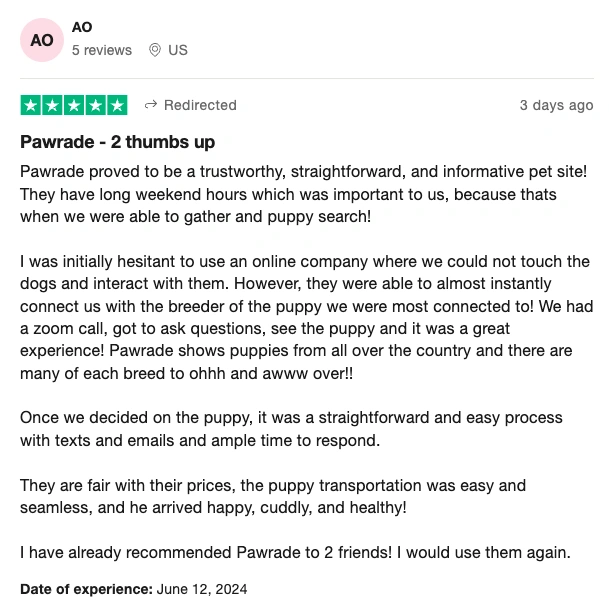
Find Rhodesian Ridgeback Puppies at Pawrade
Convinced this is the dog breed for you! Now it’s time to locate a Rhodesian Ridgeback to become your best friend! But where do you find one?
If you seek a Rhodesian Ridgeback puppy from a social media marketplace or a casual breeder with no credentials, you won’t be protected from scams, fraud, or deception. With Pawrade, all puppies come with a 3-year health guarantee, a health certificate, vaccination records, 30 days of MetLife, and other goodies from breeders which may include registration papers, a goody bag, or other items. If you go with an untrustworthy breeder, you run the risk of heartbreak and a lighter wallet with no puppy to show for it.
Choosing Pawrade has perks that make us stand out above the competition. Pawrade is proud to offer potential pawrents like you the very best selection of Rhodesian Ridgeback puppies for sale. Our breeder partners understand the Rhodesian Ridgeback breed’s unique characteristics, selecting only the best traits from both parents to produce healthy litters. All of our Rhodesian Ridgebacks come with a 3-year health guarantee, a health certificate, 30 days of MetLife insurance, and other goodies. We can’t wait to hear from you!