You and your fellow police officers have been on the hunt for a suspect for days, but you have run out of leads. It’s time to call in the special unit of Bloodhounds trained to assist with closing cases based on their uncanny, keen scent abilities. You watch in awe as the pack of Bloodhounds detects the suspect’s scent from an old tee-shirt and follows it right to a hideout deep in the woods. It’s abandoned now, but you know the Bloodhounds will find him. Sure enough, he was gathering firewood and was caught red-handed thanks to Bloodhounds. Another case closed thanks to those special noses!
Easily recognizable thanks to their long, velvety ears, drooping faces, and wrinkly skin folds, Bloodhounds are renowned for their excellent tracking abilities and sweet demeanor. Bloodhounds are not surprisingly members of the Hound group, a group defined by their traditional ability to hunt coupled with stamina to follow a scent for hours and sometimes even days. Despite their focus on the trail, Bloodhounds are sociable, affectionate, gentle dogs that make great family pets. Find out if a Bloodhound puppy is the right choice for you and your family with our ultimate Bloodhound puppy ownership guide.
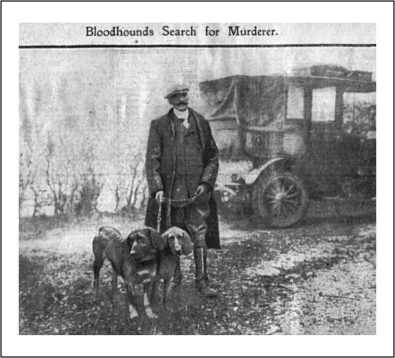
Colonel E.H. Richardson with his hounds at Gorse Hall in Lancashire. Published in the Daily Sketch in 1909. Courtesy of The Kennel Club.
History and Origin of Bloodhound Puppies
Contrary to popular belief, Bloodhounds are not named because they sniff out blood but rather from their carefully developed purebred ancestry. Bloodhounds have been called several names throughout the centuries, including sleuth dogs, Chien de Saint-Hubert (Saint Hubert hounds), and the Flemish hound. Bloodhounds date back to Medieval times as members of a group of dogs called Sagaces that hunted deer, wild boar, and other wild game. William the Conquerer brought them to Europe during his 1066 invasion, and the first mention of Bloodhounds in history was in a 1350 poem by Sir Humphrey de Bohun, Earl of Hereford describing a dog trailing people dressed as bears.
A monk named Francois Hubert dedicated his life to developing dogs that could follow cold trails in the 8th and 9th centuries. After his death, he became the patron saint of hunters in France, giving the name St. Hubert hounds to what are now called Bloodhounds.
Bloodhounds made their way to England, becoming a favorite breed of Elizabeth I, Henry VIII, and Queen Victoria. Noblemen loved Bloodhounds for their ability to track days-old scents and lead them to prey without harming them. However, a decline in hunting and two World Wars put the Bloodhound in a precarious position. Appearances at American dog shows coupled with their amazing abilities to assist law enforcement bolstered their growing reputation in the United States post-World War II.
Today, Bloodhounds rank #53 between Australian Cattle Dogs and Chesapeake Bay Retrievers on the AKC’s Most Popular Dog Breed List of 2023. Bloodhounds are prominently featured in several ad campaigns, TV shows, movies, and other areas of popular culture. Bloodhounds continue to serve as search and rescue dogs and other jobs utilizing their amazing scent abilities.
Bloodhounds on the Big Screen
Hounds have made notable appearances in beloved movie classics. In Disney’s Fox and the Hound, Copper the Hound becomes best friends with Tod the Fox even though hounds and foxes are supposed to be enemies. Trusty the old Bloodhound in The Lady and the Tramp was best friends with Jock the Scottish Terrier and Lady the Cocker Spaniel, delighting the audience with his blabbermouth and courteous advice. Disney canine Pluto is also said to be a Bloodhound. The Bumpus pack of Bloodhounds in A Christmas Story hound Mr. Parker, stealing the turkey in the kitchen in the classic humorous scene, prompting a Christmas dinner at a Chinese restaurant instead. Harlan Pepper’s Bloodhound, Hubert, took home first place in the Mayflower Dog Show in the comedy Best in Show. Harlan was convinced Hubert could whimper “macadamia nut” when listing off types of nuts.
Bloodhounds are the Super Sniffers of the Canine World
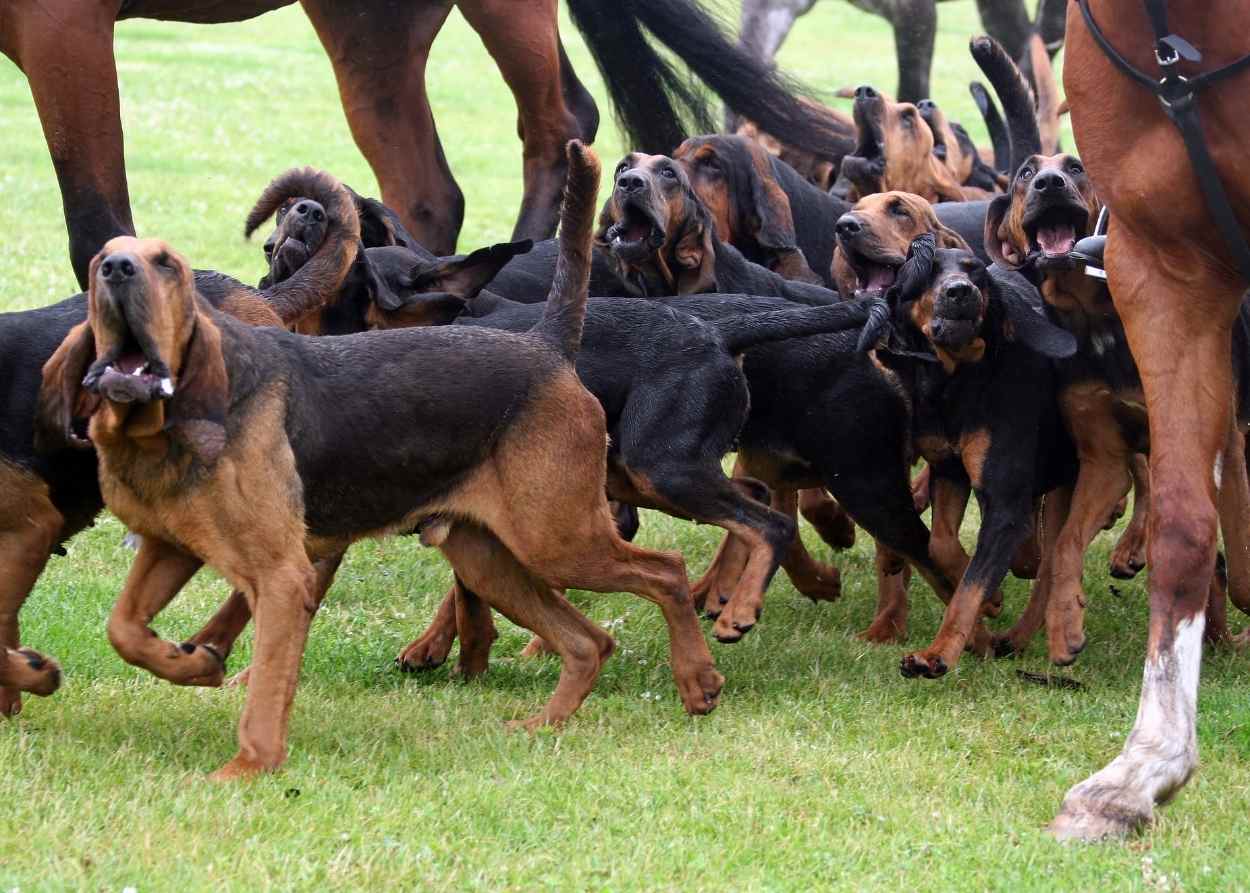
We all think our pooches are superheroes, ready to save the day with their infectious smiles and wagging tails. However, a Bloodhound puppy is a true superhero because of its sniffing superpowers. A Bloodhound’s scent abilities are at the top of the dog breed world. Dogs carry 100-300 million olfactory receptors in their noses compared to only 6 million in humans. Bloodhounds take the Number One spot for the dog with the most olfactory receptors at just over 300 million. They can track scents on the ground and in the air and hone in on a single scent among competing sensory information. Bloodhounds can also detect a single drop of blood at just one part per trillion concentration, enough to fill 20 Olympic-sized swimming pools. No human-made medical or technological device is capable of such precision.
Guilty, Your Honor!
As of 1995, a Bloodhound’s findings can be used as official evidence in court! A 2003 study found that Bloodhounds were effective 96% of the time at identifying the correct scent. K-9 units of federal and local Law Enforcement Agencies (LEAs) utilize a Bloodhound’s superior scent abilities to help track down criminals who flee the scene, prison escapees, and especially missing persons. Bloodhounds are excellent at cracking open cold cases by retracing a path and locating evidence, eyewitnesses, victims, and suspects long after a case is closed. For example, a cold case in the NYPD’s 67th Precinct saw a Bloodhound sniff out a victim’s blood left in a bathtub drain in an apartment when the surface appeared clean. In Hagerstown, MD, a Bloodhound traced a rag in a victim’s mouth to cigarette butts in the parking lot smoked by the suspect. When a trail indicating he fled into the woods was not found, the police knew the suspect must have gotten in a car to drive away from the scene of the crime. Together with eyewitnesses and video surveillance, the police were able to track down the murderer in a vehicle registered to his name thanks to Bloodhounds finding those cigarette butts. Other Bloodhounds were used to track down infamous killers Jack the Ripper and James Earl Ray, Dr. Martin Luther King Jr.’s assassin.
Nick Carter
Nick Carter, Canine Detective Extraordinaire
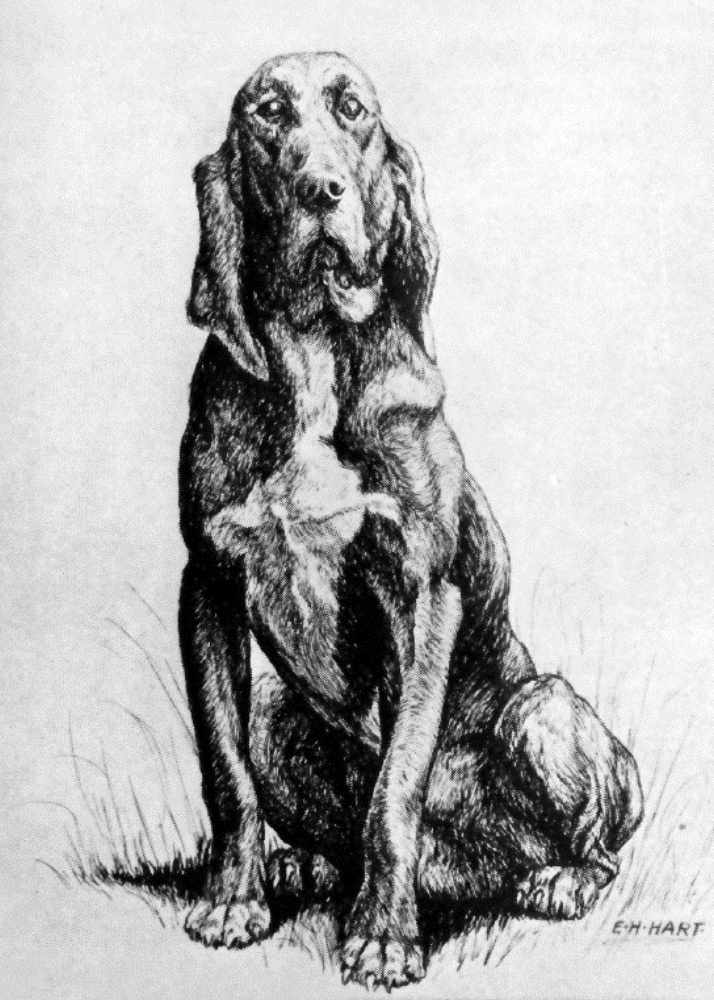
The most famous canine detective Bloodhound in history was Nick Carter, named after a popular detective of the time. Nick Carter the Bloodhound is credited with solving more than 650 finds at the turn of the 20th century and was responsible for sending 126 criminals to prison. Nick Carter was also said to have excellent cold case tracking skills, once following a cold trail for 55 miles. People from all over the nation would come to watch him work his nose magic.
Take a Bite out of Crime
A Bloodhound’s amazing sense of smell has inspired a cartoon character called McGruff the Crime Dog, a Bloodhound who served as a public service announcement from the Ad Council and later the National Crime Prevention Council to help increase personal safety and awareness in the United States since 1980. His tagline remains “Take a Bite out of Crime,” inspiring generations to help keep America safe. Today, McGruff has expanded his messages to areas of anti-drug and anti-bullying campaigns, child labor, texting while driving, elder crime, stopping online fake goods, robbery, child abduction, and more. One can find McGruff the Crime Dog in costume at several awareness events.
Bloodhounds: What Do They Look Like?
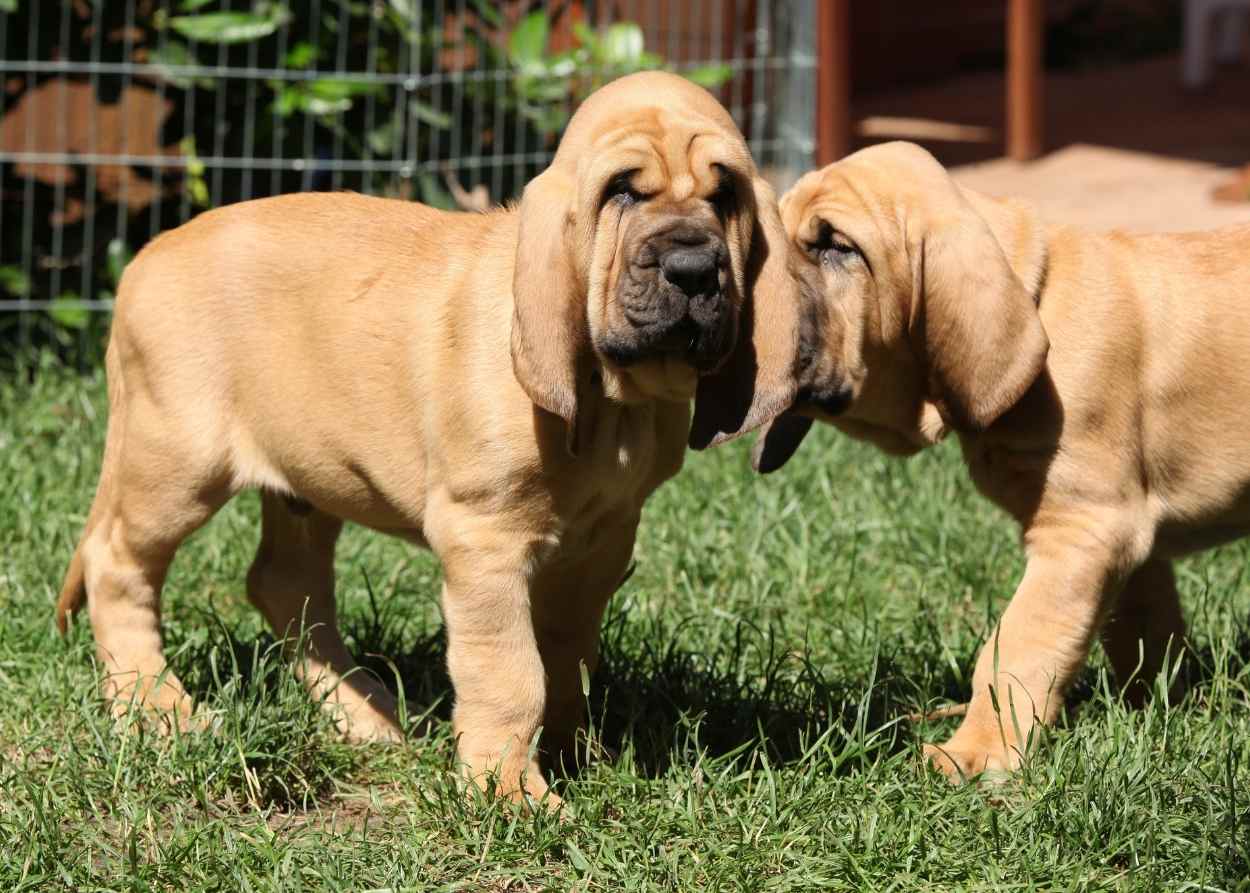
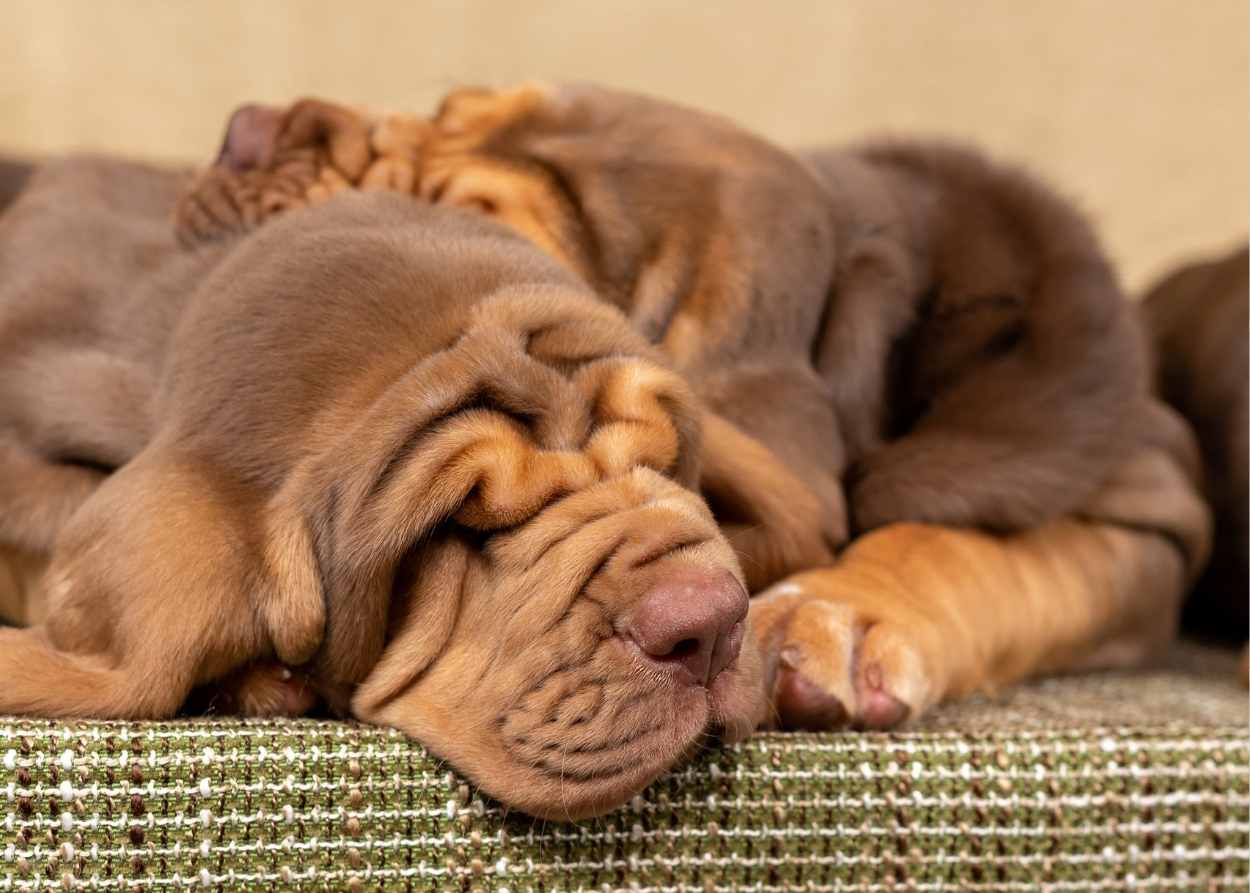
A Bloodhound puppy is one of the most recognizable dog breeds due to its distinguishing features. They have long, wrinkled faces featuring loose skin, drooping ears, and deep-set eyes that give a doleful, dignified expression. Bloodhounds An adult Bloodhound stands 23-27 inches tall and weighs 80-110+ pounds. A Bloodhound’s short, single coat comes in several colors including red, black and tan, and liver and tan.
What to Know about Living with a Bloodhound Puppy
Before you choose a puppy solely based on those velvety ears and sweet, drooping expressions, you’ll want to learn all you can about living with a Bloodhound puppy. Read on to see if this charming, laid-back, and vocal canine companion is the right choice for you.
Inquisitive
Bloodhounds use their noses to follow smells that are interesting to them, and they simply won’t let up. Their curiosity though has gotten them into several hilarious situations that will make you laugh!
Independent
Bloodhound puppies have minds of their own and pursue scents to their heart’s content. This independent spirit might be in direct contrast to what you want them to do, especially during training. For example, a Bloodhound will be perfectly content on the couch when you want them to get up and move. They’re not being rude, but they have their own agenda to follow, thank you very much!
Gentle
Bloodhounds may be huge dogs, but they are gentle giants. These puppies are loving towards their families, especially tolerant and patient with children. They are not hyper and are laid-back at home, giving them a gentle charm to their personality.
Friendly
If you have children, guests, and other dogs who visit your home, you’ll rest assured knowing that Bloodhound puppies are a friend to all. They will greet other people and dogs with a wagging tail.
Loud
A Bloodhound is one of the loudest dogs and makes various vocalizations for every occasion. They use their voices to make it known when there is something amiss, when they are bored, or when something interests them. They have a deep, loud bark, which is more like a baying sound than a traditional barking dog.
Our K9 Bloodhound Windy during hoist training earlier this year. #throwbackthursday pic.twitter.com/QECU9dxNFm
— Riverside County Sheriff (@RSO) December 29, 2017
Training a Bloodhound Puppy
A Bloodhound’s independence can often cross into being downright stubborn. Training a Bloodhound puppy can be a challenge because they might pay you no mind and decide when to respond – or not – despite repetition and consistency on your part. For example, Bloodhounds may respond well to the recall command in the quiet environment of your house on a leash, but if they catch a scent outside off-leash, following the scent trail will be way more exciting than running back to you. However, Bloodhounds can be trained for specialized jobs, such as police work and search and rescue. Dog sports such as agility, rally, and obedience would also be a good fit for a Bloodhound to show off skills.
Begin training efforts early to give your Bloodhound puppy a solid foundation, and train a little bit each day to keep things current. Bloodhounds are very food-motivated, so be sure to have lots of tasty treats on hand. They can be rather sensitive, so never use harsh punishments when training Bloodhounds.
Bloodhound puppies tend to get along well with other dogs, but they can be shy in unfamiliar situations. It’s important to socialize them to reduce anxiety and shyness in adult dogs. Your Bloodhound will be sure to attract a crowd, so encouraging his easy-going personality will produce a well-rounded Bloodhound puppy ready for any situation.
Caring for a Bloodhound Puppy
Bloodhounds require a certain level of care and attention to remain happy and healthy. Keeping them clean, getting the right amount of exercise and mental stimulation, and maintaining regular veterinary visits will allow your Bloodhound to thrive.
Do Bloodhounds have an odor?
Bloodhounds are known to be a stinky breed in general, and there are a few reasons why. Their intricate skin folds can harbor dirt, yeast, and bacteria, causing strong odors. Their long ears also trap scents and keep them close to their coats. Speaking of their coats, Bloodhounds’ skin can have a greasy feel. Ropes of drool will be a permanent fixture on a Bloodhound’s sagging jowls, and slobber will show up on your windows, doors, and furniture. Without proper dental hygiene, a Bloodhound’s mouth can also have an unpleasant odor. They aren’t the tidiest of dogs, so proper maintenance is a must!
There are a few steps you can take to keep the odor at bay. Bathe your Bloodhound puppy regularly with a deodorizing shampoo. Keep special pet wipes handy to clean between the folds of their skin and their ears when they start to smell. Being proactive helps mitigate the odor from your Bloodhound puppy, creating a well-maintained dog.
How much exercise and activity does a Bloodhound puppy need?
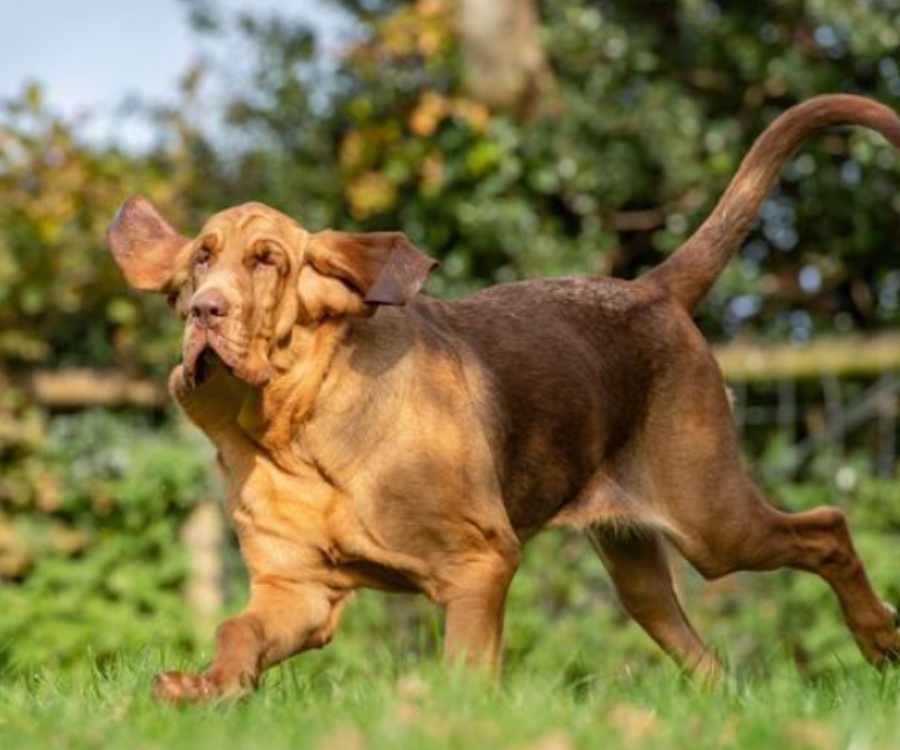
Bloodhound puppies need an active owner or family who can be devoted to their exercise needs to ensure they stay healthy. Despite the stereotype of being lazy and lying around, Bloodhounds are a surprisingly active breed. Bloodhounds have incredible stamina and can follow a scent trail for hours. They’ll also romp around as long as you’d like, as they enjoy playing games with their owners. Bloodhounds require 1-2 hours of daily exercise which can be broken down into several shorter sessions.
You can meet a Bloodhound puppy’s exercise requirements in all sorts of fun ways. Bloodhounds love to go on scent walks, a purposeful walk where you allow your leashed Bloodhound puppy the opportunity to sniff anything he wants. This type of mental stimulation is an absolute delight for a Bloodhound puppy, working his brain and occupying his attention. To further cater to their noses, Bloodhounds love playing hide-and-seek with treats around the house or hiding treats in the folds of a snuffle mat. Fully vaccinated Bloodhound puppies take off roaming around large, fenced-in dog parks to sniff to their hearts’ content. They also love to swim, so finding a dog-friendly park, creek, or pool will help them get plenty of exercise.
If their needs are not met, Bloodhound puppies will find their own fun, including chewing on everything in sight and excessive barking. They can also develop obesity due to their love of food and lack of exercise, and plenty of exercise will help prevent joint issues common in large dogs.
Common health concerns of Bloodhounds
Owners should be aware of common Bloodhound health issues and take proactive measures to prevent problems from forming or worsening. With proper care, Bloodhounds can live to be 10-12 years old. Bloodhounds may develop the following health problems:
-
Hip and elbow dysplasia: When bones of elbow or hip joints don’t line up and rub together, causing joint and bone deterioration.
-
Bloat: A twisted stomach can trap gas, causing a potentially fatal emergency.
-
Otitis/ear and skin infections: Those long ears trap all sorts of bacteria and yeast, creating the perfect environment for infections to thrive.
-
Hypothyroidism: Inadequate amounts of hormone levels in the thyroid cause a host of other problems affecting areas and systems all over the body.
-
Eye issues: Their eyelids can develop ectropion and entropion in Bloodhounds, when eyelids are turned inward or outward.
Sniff Out the Perfect Bloodhound Puppy at Pawrade
When you’re searching for Bloodhound puppies for sale, you want your efforts to lead you down the right path. However, many leads may turn out to be dead ends if you try to find a reputable Bloodhound breeder on your own.
Pawrade can lead you to your perfect puppy as easily as a Bloodhound sniffs out what he’s pursuing. Our trustworthy Bloodhound breeders understand what it takes to whelp and raise handsome and beautiful Bloodhound puppies that fit your lifestyle. Backed by a three-year health guarantee, 30 days of free MetLife insurance, and more, Pawrade’s Bloodhound puppies for sale are sure to make your heart flutter. Contact us for more information about the Bloodhound puppy that catches your eye, and we can deliver your Bloodhound right to your doorstep!