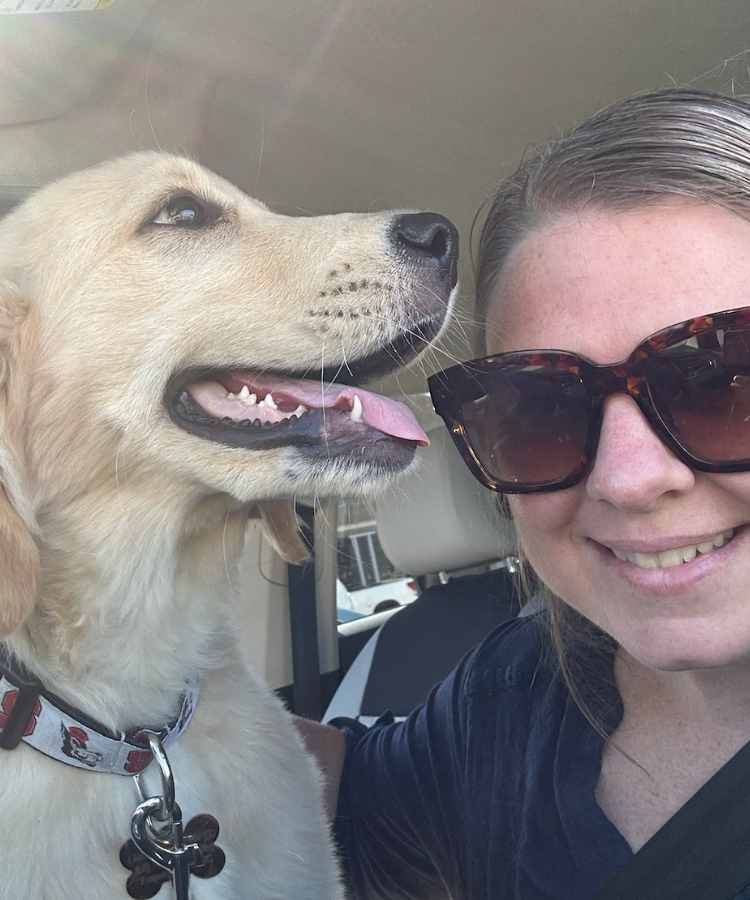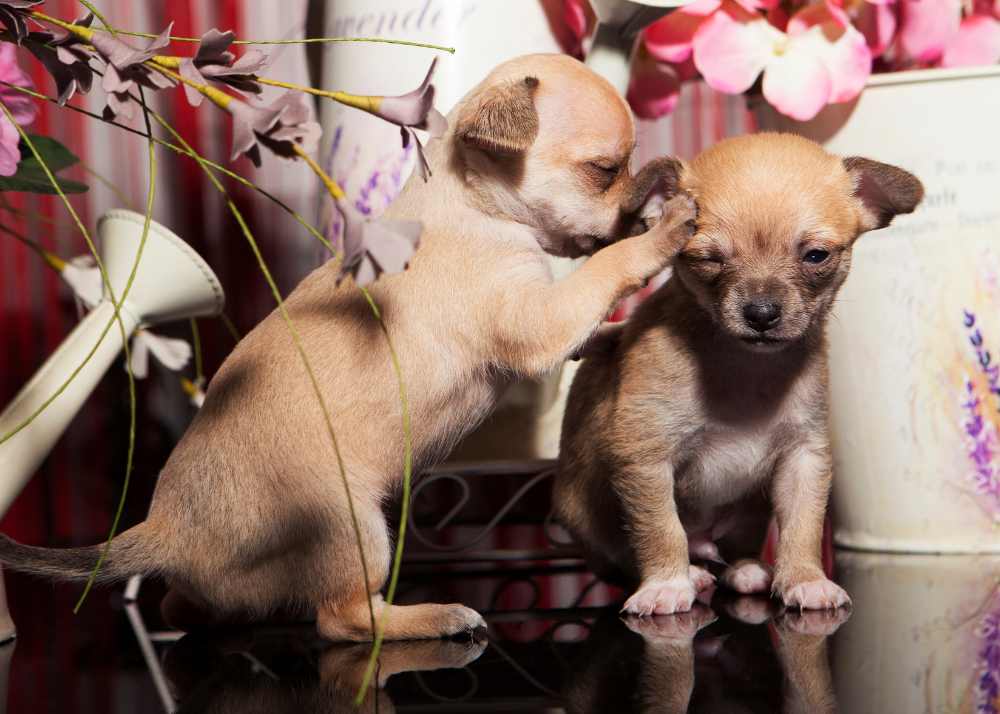
You’re on the couch, but you dare not move a muscle. After wildly zooming around, your puppy is curled up in your lap snoring. You don’t mind the opportunity to just sit down and rest, as you’ve been on your feet chasing your puppy for a solid hour. You may be exhausted with holes in your pants and scratches on your arms, but you wouldn’t have it any other way. However, that warm glow of love can be mixed with exhaustion and frustration. What’s really going on with your puppy as she approaches the 4-month mark of her life?
As your puppy continues to grow (how is it she was so tiny just a month ago?), you wonder what comes next after that introductory month in your house. While all puppies are different, knowing what is developmentally appropriate for puppies 16-20 weeks old will help you be more secure as a pet owner and cater to your puppy’s needs. Learn what to expect from your 4-month-old puppy as they acclimate to their new home.
The Importance of Having Patience and a Puppy Schedule
You may have found your desire to just “wing it” with a puppy hasn’t gone very well, but that’s okay – you still have time to adjust your methods. We recommend you develop a daily routine for your puppy if you haven’t already. A routine helps your puppy learn what it’s like to live with you and offers several other benefits as your puppy integrates into your household.
The 3-3-3 Rule
While most people know puppies are a lot of work, you should manage your expectations with developmentally appropriate milestones for puppies to avoid frustration. Your puppy will not know what to do right away, nor will they model perfect behavior with just a few training sessions this young. Think of them as babies and toddlers experiencing new things each day – it takes consistency and time to get into a groove. It’s two paws forward and one paw backward!
When you bring home a new puppy, you should be aware of the 3-3-3 rule for adopted dogs:
- 3 days for decompression and adjustment
- 3 weeks to learn a routine with a daily puppy schedule
- 3 months of feeling secure in her new home
Daily puppy schedule
Your puppy is most likely shifting from learning a new routine to establishing a sense of belonging and security. A puppy routine is a great way to transition into helping your puppy feel comfortable with her new life. Your puppy will not arrive to you knowing your expectations, so give her time and space to get used to her new family.
In month 4 of your puppy’s life, she should have a good sense of her daily puppy routine. You’re feeding her at regular intervals, paying attention to her elimination needs, offering independent play and focused attention, introducing training commands, and ensuring she has enough rest – then repeating it until they finally go down for the night. The more you stick to the schedule, the easier time your puppy will adjust to your life seamlessly.
Establishing a deep bond with your puppy
You can’t just take a casual approach to bonding with your puppy without a plan. As you know, relationships take work, just like in our own lives. Building trust during the first 3 months at home helps establish a strong bond with your puppy, laying the foundation for a beautiful animal-human relationship, something every puppy owner dreams of. Some activities you can introduce at 12-16 weeks to continue into the 4th month to foster a deep connection with your puppy are:
- Continuing to practice basic training commands for puppies
- Taking them on short outings after cleared with your veterinarian
- Playing with your puppy with plenty of durable chew toys
- Introducing your puppy to grooming routines at home
- Making them special treats safe for dogs
- Learning how to walk nicely on a leash
- Signing up for puppy kindergarten classes after all shots have been completed
- Reading your dog’s body language to give them what they need
Puppy Teething 16-20 Weeks: The Landshark Has Arrived
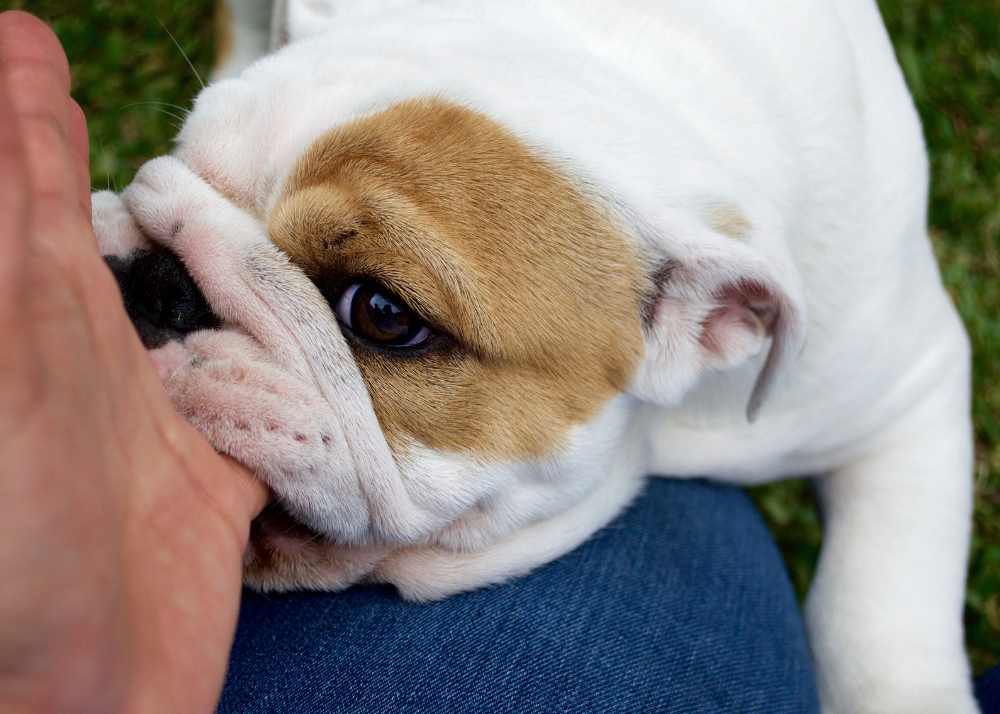
One look at your arms, hands, and clothing serves as concrete evidence you’re living with a baby velociraptor! Four-month-old puppies are having a doozy of a time with losing their baby teeth as their permanent teeth come in. Your puppy may ignore the teething toys you’ve purchased and go for your baseboards and furniture legs instead. You’ll definitely notice they are testing their bite force and can break the skin. If only they could wake up with a pain-free, fully-developed set of teeth!
Here’s what to know about puppy teething in month 4:
- Puppies will lose their incisors first anywhere from 2-4 months
- The canine teeth start to erupt at 4-5 months
- Their gums will be swollen, tender, painful, and even slightly bloody
- You’ll find lost teeth everywhere, and be careful when walking without shoes on!
- They’re looking for relief instead of acting out on purpose
- You’ll have to teach your puppy bite inhibition
- Puppy teething can last anywhere from 8-10 months, so you’ve just begun!
Puppy Growth Spurts at 4 Months Old
Your puppy was an itty bitty little fluffball when you brought them home. Whether your puppy was barely over 2 lbs. or tipping the scales at almost 30 lbs., you’ll notice a rapid growth spurt in puppies in their 4th month, a huge increase from the 8-week mark. As their bodies grow quickly, they’ll have you laughing with a lack of control over their clumsy bodies, watching them test their bravery leaping off the couch, and learning what their newfound motor skills can do.
The importance of proper nutrition
As your puppy continues to grow, they will need the best puppy formula containing the necessary nutrients for healthy physical and brain development. Make sure you are feeding the right amount of food per day at appropriate times, usually 3-4 times a day at this age, whereas an adult dog only needs 2 meals a day. Stay away from fatty and processed table scraps, as you don’t want to introduce bad habits that will lead to obesity in puppies. Likewise, don’t allow your puppy to free-feed and leave food in the bowl with access whenever she wants.
Who says feeding a puppy has to be boring? Have some fun with creative ways to feed your 4-month-old puppy. You can use their mealtime kibble as part of training, an enrichment activity, or a teething toy. Fill a stuffed kong with peanut butter and kibble, and freeze it for a teething relief. You can also hide bits of kibble in an interactive toy like a snuffle mat or turn it into a hide-and-seek game by hiding pieces around the house in places you won’t forget.
Many puppies by month 4 will notice that human food smells enticing, and they’ll want in on the flavors they smell. Choose foods that are safe for dogs to introduce as part of a healthy puppy diet. Some foods you can give your 4-month-old puppy in small quantities are:
- Oats
- Liver
- Cheese
- Greek yogurt
- Peanut butter
- Canned pumpkin
- Plain cooked chicken
- Beef and chicken broth
- Frozen fruit (no grapes)
- Carrots (great for teething)
Sleep needs of a 16 to 20-week-old puppy
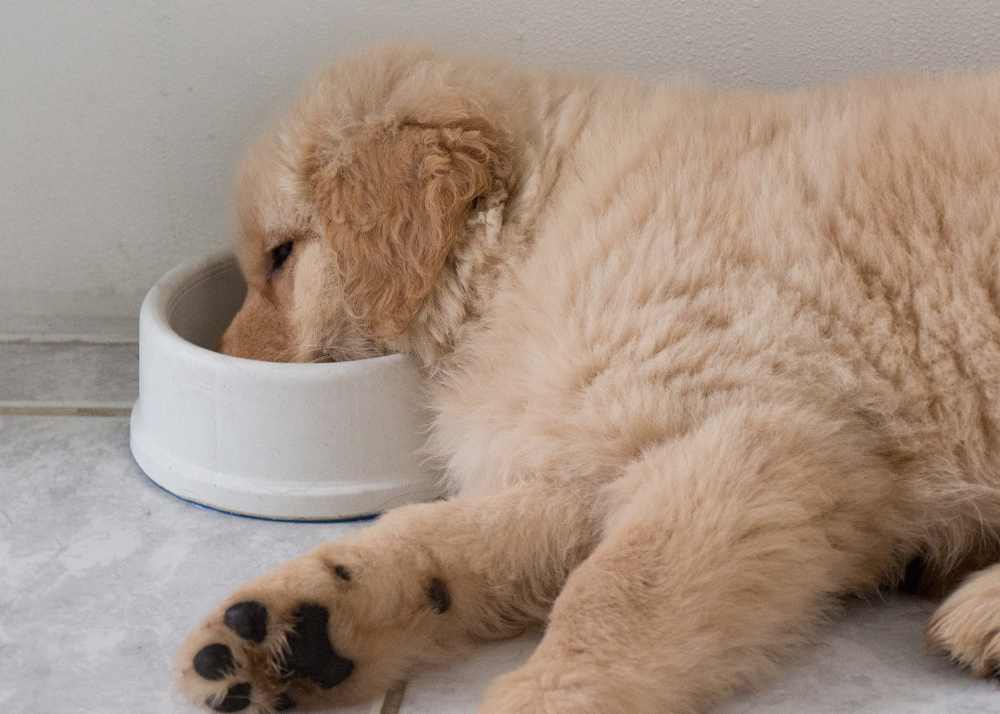
At 4 months old, your puppy should be getting up to 18 hours of sleep a day! Getting an adequate amount of sleep for a puppy is necessary for several bodily systems to develop, including the central nervous system, the brain, the immune system, and muscle and joint growth.
Having a dedicated, safe, contained spot for sleep is crucial, like a crate or secure corner or play area. Puppies also need to be put down for naps just like human babies instead of allowing them to set the schedule for when to sleep. Keep their sleeping area cozy like a den, lower the lights, and play soft music to make sure they’re able to stay asleep for a long, satisfying nap.
Appropriate Puppy Care at 4 Months Old
Caring for your puppy means keeping them healthy in every aspect of their lives. From vaccinations to grooming to socialization, ensure your puppy receives quality care to grow and flourish.
Puppy vet visits up to 4 months
Establishing a relationship with your veterinarian has already begun with your first initial visits. Your vet is your partner in raising a happy, healthy puppy. Your puppy is well on her way to completing her series of core vaccinations all puppies need. At 4 months old, you can expect your puppy to receive the last shot as well as a rabies vaccination at 16 weeks. She may also receive additional vaccinations your vet may recommend depending on your breed, geographic location, and other factors such as Lyme and Bordetella vaccinations. Once your puppy has received all her shots, she’s ready to interact fully with the world!
After your puppy’s 4-month vet visit, you can discuss when the next well visit with your vet will be. Now is the time to ask questions you might have about the upcoming months until you bring your puppy back in for booster shots. Make sure you discuss what to do in emergencies, understand procedures and payments for non-well visits, and where the closest preferred emergency vet is located.
Grooming routine preparation for your 4-month-old puppy
Depending on your breed, your dog may need to attend regular grooming appointments. Make your groomer’s job easier by exposing your puppy to sensations and experiences they will encounter at the groomer. For example, touch their paws every day to prepare for regular nail trims, touch them all over including their ears to ready them for body inspections, desensitize them to the noise of the blow dryer, and give them baths to get them used to being wet. You can learn to do grooming tasks at home like your own nail care, brushing them daily, and keeping up with proper puppy dental care between visits.
Socialization for puppies during the 4th month
Once your puppies have all their shots, they’re ready to fully explore the world! The more experiences, sensations, sights, sounds, and people you expose them to, the better adjusted they will be as they grow older. Puppies should learn how to approach other dogs and people calmly, including children and the elderly. Taking them to dog-friendly festivals and businesses will help your puppy be a companion you want to take along rather than leave at home due to a lack of socialization. Exposing puppies to household noises like the vacuum, mail carrier, doorbell, traffic, and garbage or recycling trucks will cut down on fear and excessive barking.
Socialization won’t just happen on its own. You have to really work hard at giving your puppy different experiences as early and safely as possible to set that foundation to be a well-behaved canine citizen.

Puppy Behavioral Challenges at 4 Months Old
Puppies are gaining independence in weeks 16-20. As they experience more of the world around them, they develop confidence, curiosity, and bravery as they try out new skills. Unfortunately, you will not always be impressed at these newfound abilities!
You will absolutely experience frustration, tears, and even regret as your puppy becomes a wild animal with their crazy antics. However, as exasperated as you might be, never hit your puppy out of anger. They’re not doing anything on purpose to spite you – they’re just having normal puppy behavior for their age. Booping them on the nose with a rolled-up magazine or putting their face in their potty accidents are no way to treat a puppy. Your responses shape how your puppy reacts to you. If you yell and choose physical punishment, you will lose all the hard work you’ve been doing to establish a bond. It will backfire, your puppy will not understand your anger, and she will learn to fear you and cower when you come near. Don’t ruin your bonding efforts with a misguided reaction to what we perceive as naughty behavior. Instead, change your own behavior and be proactive when addressing unwanted behaviors.
Your puppy may start to defy you, but that’s developmentally appropriate. Your puppy may have been a breeze to train the first month home with you, as they are eager to please. However, when that confidence and independence grow, they will test the boundaries of everything they’ve learned so far. Your puppy may regress and refuse to comply with your requests, like coming when called, dropping things they shouldn’t have, or regressing with potty accidents in the house. You have to stay strong and keep being consistent with your efforts, even if it seems like nothing works. Keep at it!
Get Active With Your Puppy
At 16-20 weeks, you are not sure if you adopted the Energizer Bunny rather than a cute puppy! Their energy level is off the charts, especially if you have a high-energy dog breed. As a responsible puppy owner, you need to make time to give your puppy the physical and mental exercise she needs to stay healthy and prevent unwanted behaviors, especially for those active dog breeds.
A bored, understimulated puppy will make her own fun, and quite often her idea of what is entertaining is the complete opposite of how you’d like them to spend their time. Excessive barking, chewing, whining, pacing, and other behaviors indicate your puppy’s exercise needs are not being met. Instead, use leash training to begin long walks according to your puppy’s breed, size, and attention span. Play a fun, fast-paced game of fetch or chase. However, avoid overexercising them due to their growing joints and bones. Offer mentally stimulating toys and games for puppies to work their brains, which is just as important as ensuring their bodies get enough physical exercise. You can buy them or have fun making DIY toys yourself out of household items and some treats. Mental stimulation helps the brain form necessary connections and learn how to problem solve. A tired puppy is a happy, more well-behaved puppy!
Adopt a 4-Month-Old Puppy From Pawrade
At Pawrade, we have puppies of all ages that can come home to you on or after 8 weeks old. Some tiny puppy breeds will come home at 12 weeks or 2 lbs., whichever comes first. Several of our puppies available for adoption fall within the 16-20 week age range, a wonderful, exciting time to meet your new puppy. Armed with the knowledge you’ve gained about month 4, you’re ready to search for your new best friend. Check out our puppies for sale to experience this fun, curious time in a puppy’s life for yourself.