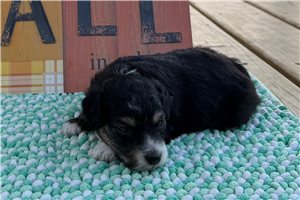
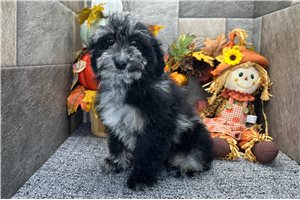
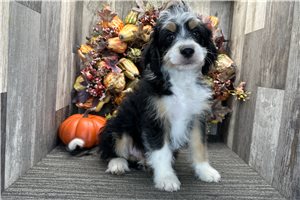
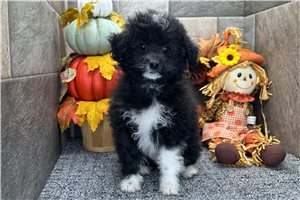
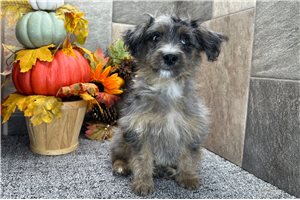
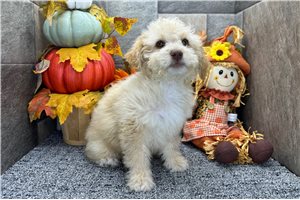
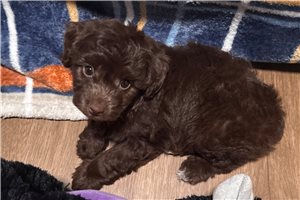
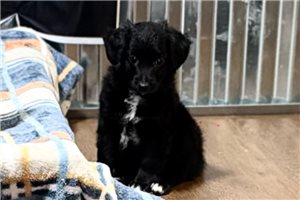
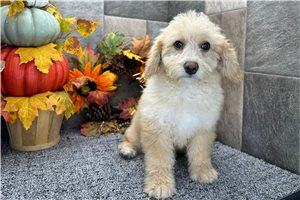
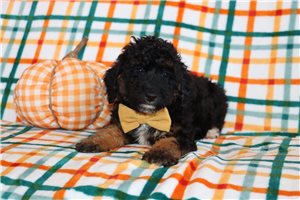
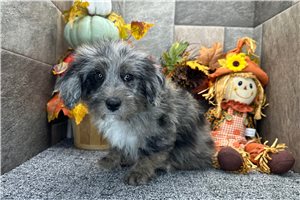
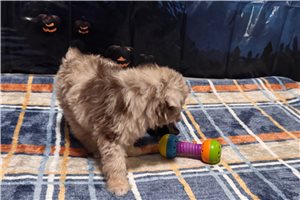
An Australian Shepherd was bred to work a ranch from dawn to dusk, and it brings that same drive and quick mind home to the family it guards. People fall for the merle coats, the eyes that can be blue, brown, amber or a mix, and a partner for walks, games and dog sports.
An Australian Shepherd was bred to work a ranch from dawn to dusk, and it brings that same drive and quick mind home to the family it guards. People fall for...An Australian Shepherd was bred to work a ranch from dawn to dusk, and it brings that same drive and quick mind home to the family it guards. People fall for the merle coats, the eyes that can be blue, brown, amber or a mix, and a partner for walks, games and dog sports.
Only with Pawrade, you receive a pet insurance policy with no waiting period included for immediate accident or illness coverage. *NH, NY, RI, SC and TN residents excluded
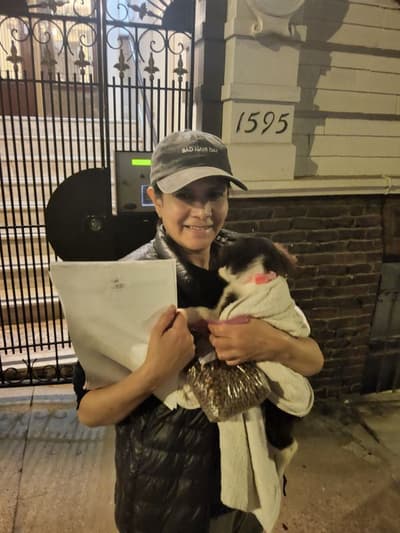
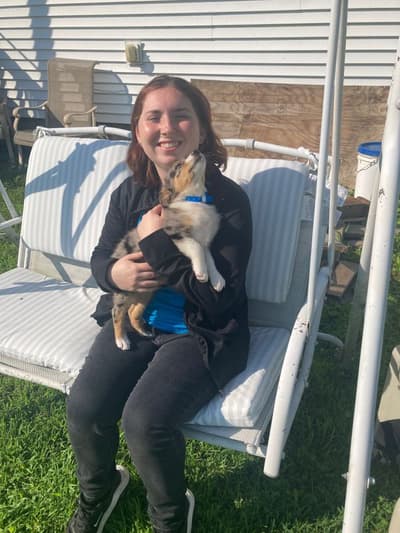
“Pawrade made the process of getting a puppy online very safe and easy. It was my first experience acquiring a puppy from a breeder. ”
Brooke · Australian Shepherd
Oct 27, 2024
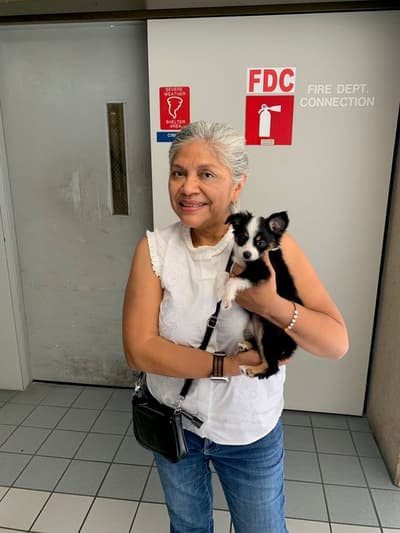
“From the start to the end was all professional. Especially at the end Soroya the seller was an amazing woman. I’m extremely happy with my new fur baby. I named her Simba. I’m sure Simba is a happy camper, just like I am. Thank you!!!”
Megan · Australian Shepherd
Jul 11, 2025
“Love our new puppy, transportation went well and communication was clear all the way through the process.”
Bella · Australian Shepherd
Jul 30, 2025
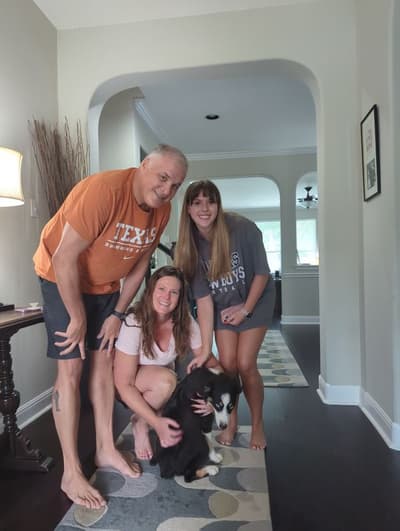
“Bella is home and safe. I cannot thank everyone who has helped make our dreams our reality. She is happy, healthy and sleepy. You guys did amazing bringing her here and she seemed so well taken care of 10/10 recommend anyone else to get a puppy through you guys!”
Puppy scams cost U.S. families millions every year. Here's how you know Pawrade isn't one: we're a named, audited business with a public track record you can check anywhere.
Pawrade data: parents of puppies placed through Pawrade (breeder-reported)
Height
18–23 in
Lifespan
12–15 years
Energy
Moderate to high
Shedding
Moderate to high
Group
Herding
AKC
Australian Shepherd Characteristics
Full-Grown Size
3 of 7SmallLarge
Grooming Needs
3 of 7SeldomRegularly
Good with Dogs
3 of 7Not ReallyYes!
Watchdog Ability
5 of 7LowHigh
Exercise Needs
5 of 7Couch PotatoHigh Needs
Your new best friend.
Australian Shepherd temperament
Personality and daily life
Temperament
An Aussie is a smart, active working dog with an even temper, and it is seldom quarrelsome. With its own people it is good natured, and it tends to watch over the family and the house. Strangers get a more reserved welcome at first. Let your puppy meet new people at its own pace, without forcing it. Early socialization, getting a puppy used to people, places, sounds and other dogs, keeps that caution from turning into aggression.
Kids and other pets
Aussies do well with children when an adult supervises, and most get along with other dogs. Cats are usually fine when the puppy meets them young. Expect the herding instinct to show: an Aussie may try to herd children, other pets and anything that moves. Give it outlets such as herding games or treibball, a game of herding big balls.
Barking and noise
Most Aussies bark a moderate amount. An Aussie wants company, and one left alone long and often, or given too little to do, can become destructive. Working-line Aussies tend to be the busiest of all and need even more to do.
Pawrade data: parents of puppies placed through Pawrade (breeder-reported). Placements and reviews come from Pawrade's records.
A healthier start for a happier tomorrow.
Australian Shepherd care & grooming
Care and training
The routine
Exercise needs
Moderate to high
Aussies have moderate to high energy and were bred to work all day. Herding, agility, obedience and other dog sports give that brain and energy a place to go.
Coat and shedding
Moderate to high
The coat is a medium-length double coat: a weather-resistant outer coat, straight to wavy, over an undercoat. Aussies are moderate to heavy shedders all year, with heavier seasonal sheds of the undercoat.
Weekly
Coat and grooming care
Brush once or twice a week, and use an undercoat rake every 2–3 days in shedding season.
Monthly / as needed
Bath time
Bathe only occasionally, and never shave the double coat.
Nail trims
Trim the nails regularly.
Teeth and gums
Brush the teeth regularly.
Ear checks
Check the ears for wax and debris.
Keeping them safe
Cold weather
Aussies enjoy cold weather, but they should live indoors with the family rather than outside.
Book a yearly exam with a veterinary eye specialist, because hereditary cataracts and progressive retinal atrophy (PRA) can appear in adult dogs.
Joints and movementKeep them lean and cool
Keep your Aussie lean, with low-impact exercise while its joints are still growing.
Every milestone, together.
Australian Shepherd puppy milestones
Growing up: your Aussie's first years
Before 8 weeks
Before your puppy comes home
Your puppy is still with its mother and littermates, and most Aussie breeders on Pawrade are getting their litters used to other dogs and to children.
Set up the crate in a room where the family spends time, or in your bedroom at night.
Check every fence and gate, because a herding puppy may chase children, dogs or traffic.
Buy a slicker brush, an undercoat rake, a nail trimmer and an ear cleaner.
Ask what food your puppy is eating now, and plan to keep an eye on calories and treats.
Why it matters
A crate close to people helps a new puppy settle in, and a secure fence keeps a herding puppy safe.
Australian Shepherd note
If your puppy already has a DNA result for the breed's drug sensitivity (MDR1), ask for a copy for your vet.
8–10 weeks
The first week home
Everything is new, and your puppy is meeting the people, places and sounds of its new home. A puppy can usually hold its bladder for about as many hours as its age in months, so trips outside come often.
Take your puppy out first thing in the morning, after every nap and last thing at night.
Book the first vet visit, say your puppy is an Aussie, and ask about MDR1 testing before any dewormer, flea or heartworm product.
Use the leash and the fenced yard from day one, even for quick trips outside.
Why it matters
Frequent trips outside give your puppy plenty of chances to get it right, and your vet needs the MDR1 result before choosing some medicines.
Australian Shepherd note
A smart Aussie puppy needs something to think about, so play short training games such as name, sit and recall each day.
10–12 weeks
Weeks 2 to 4
Puppies are most open to new experiences in their first 3 months, so these weeks shape the adult your Aussie becomes.
Introduce friendly people, calm dogs, new places and everyday sounds, a little at a time.
Join a puppy class, which can start as early as 7–8 weeks with healthy classmates, as your vet advises.
Until the vaccines are done, let your puppy meet only healthy, vaccinated dogs you know.
Keep training sessions short and varied, with games, food and praise.
Why it matters
Aussies are naturally reserved with strangers, so good early meetings with new people build a confident adult.
Australian Shepherd note
A herding puppy may try to round up children and other pets, so supervise play and offer herding games instead.
3–4 months
3 to 4 months
Most puppies finish their core vaccine series at about 16 weeks, as your vet advises. Baby teeth start to fall out from about 12 weeks, so expect a busy, mouthy puppy.
Once your vet says the vaccines are complete, widen your puppy's world with new places, surfaces and sounds.
Offer safe chew toys, supervise chewing, and keep shoes and other valued things out of reach.
Add short brushing and nail-trim sessions, so grooming becomes a normal part of the week.
Why it matters
Chewing eases sore gums, and a safe outlet protects the things you value.
Australian Shepherd note
Merle coats often darken as the dog grows, and pink patches on a young puppy's nose often fill in.
4–6 months
4 to 6 months
Teething is in full swing, and by about 6 months the adult teeth are in. Your puppy is growing fast, and the growth plates in its legs are still soft.
Keep only a few chew toys out at a time, and rotate them to keep them interesting.
Agree an exercise plan with your vet, and skip strenuous exercise while your puppy is still growing.
Keep play low-impact and save jogging for later, because an Aussie makes a good running partner only once it is fully grown.
Why it matters
A lean body and gentle exercise help protect the hips and elbows while the joints are still forming.
Australian Shepherd note
Brain work matters as much as walks at every age, so keep up the training and box games.
6–12 months
6 to 12 months
Adolescence often starts at about 6 to 8 months, and teenage dogs test boundaries and may seem to forget their training. Your Aussie is still growing, so keep its exercise low-impact for now.
Keep training consistent and patient, with plenty of exercise for body and mind.
Talk with your vet about when to spay or neuter, because the right choice depends on things like sex and adult size.
Start the foundations for a dog sport such as agility, herding or rally, with short and fun sessions.
Why it matters
This phase is normal and it passes, and consistent, patient training carries your dog through it.
Australian Shepherd note
Keep up socialization too, because a protective Aussie needs to keep meeting new people calmly.
1–2 years
1 to 2 years
Most dogs are fully grown and settled into adulthood at around 2 years. Many Aussies have a dip in training at around a year and a half, a normal part of growing up.
Book a wellness exam with your vet at least once a year, the normal routine for an adult dog.
Keep the yearly eye exam with a veterinary eye specialist as part of that routine.
Once your Aussie is fully grown, it can join you for runs as well as walks.
Why it matters
Regular checkups catch eye changes early, and a healthy weight protects the hips and elbows.
Australian Shepherd note
Aussies keep moderate to high energy as adults, so daily exercise plus a job to do keeps them content.
The Aussie is a medium-sized dog, slightly longer than tall, solidly built with moderate bone, yet lithe and agile. The ears are triangular and set high, and the tail is straight, docked or naturally bobbed, and no longer than 4 in under the standards. About one in five Aussies is born with a natural bobtail, and some are born with full tails.
Colors and markings
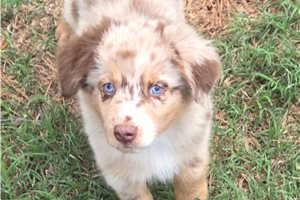
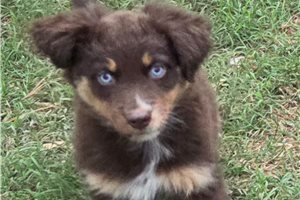
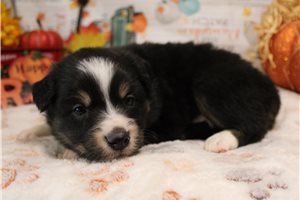
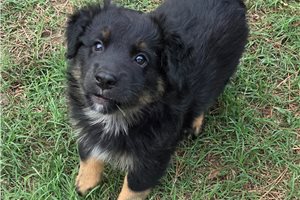
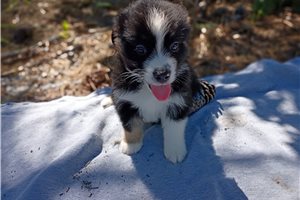
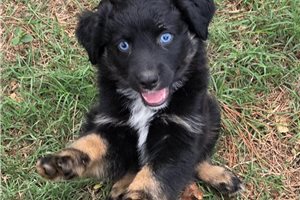
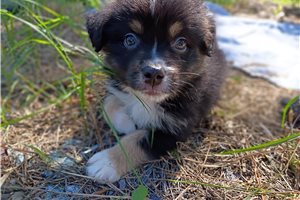
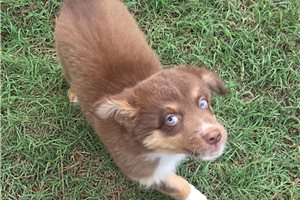
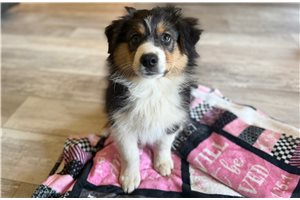
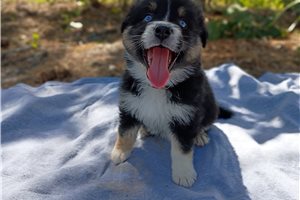
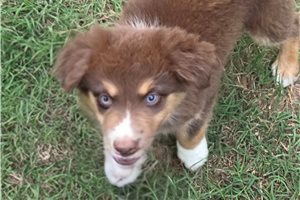
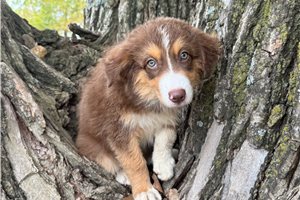
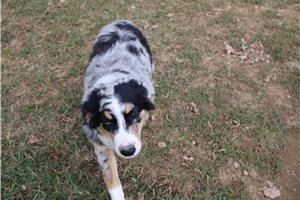
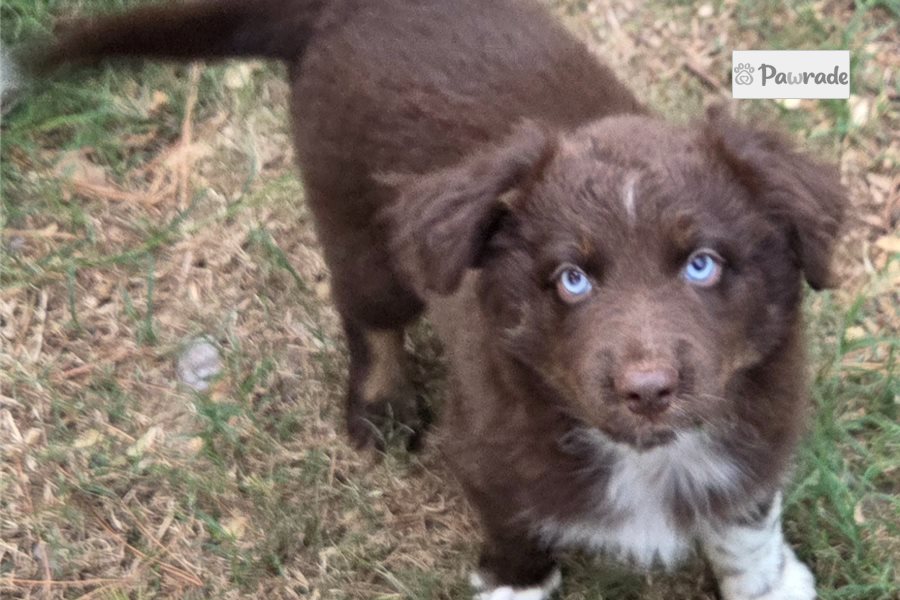
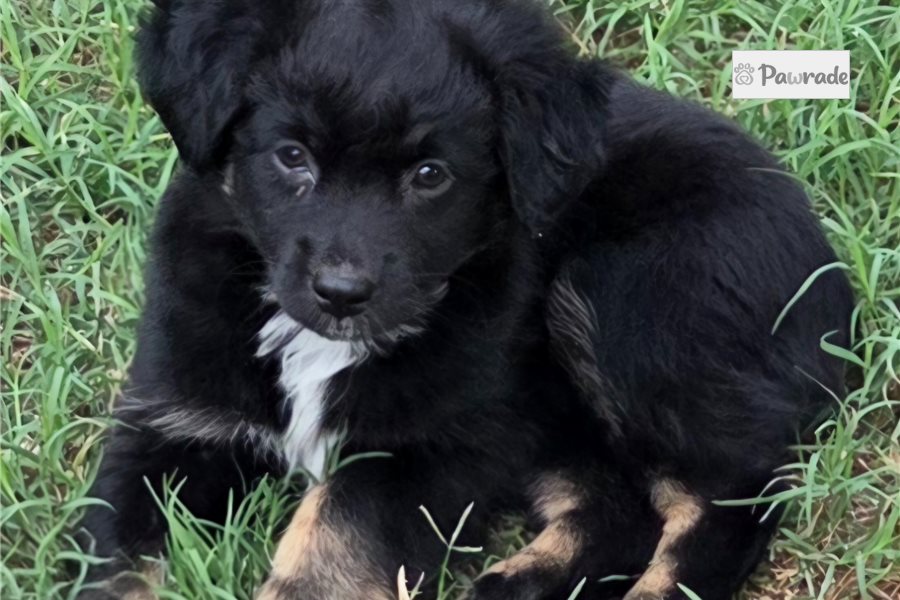
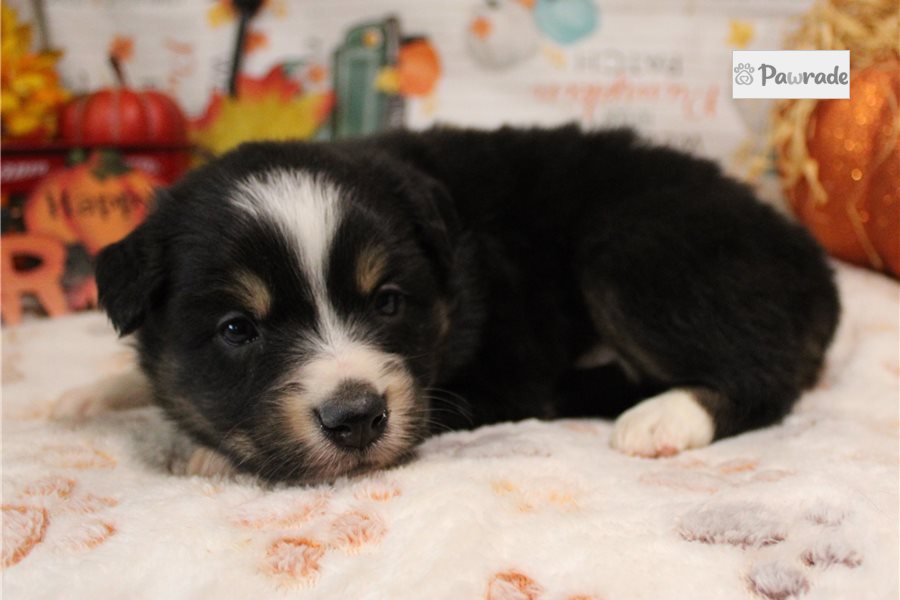
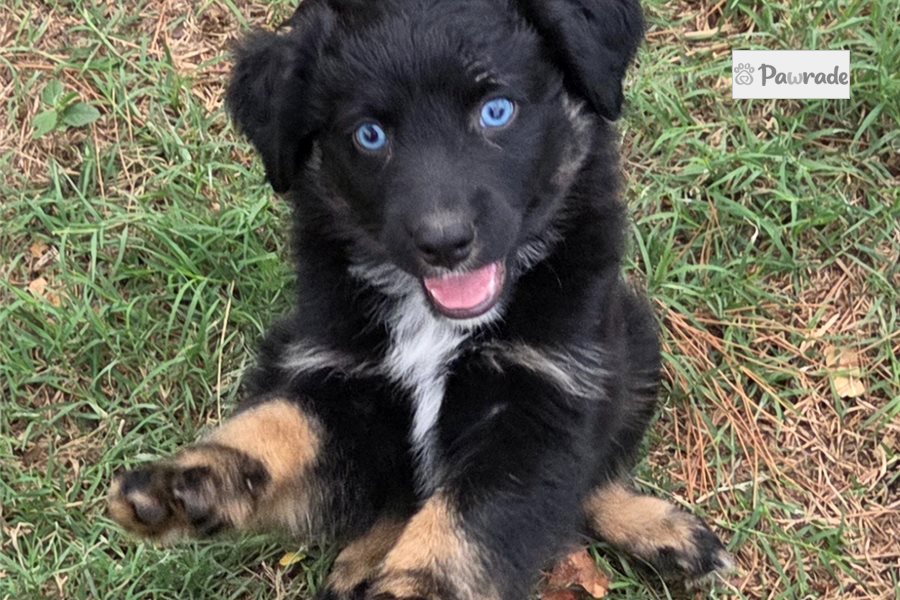
The AKC standard colors are blue merle, black, red merle and red, each with or without white markings and tan (copper) points. Other colors, including dilute colors, and white markings on the body are outside the AKC breed standard. Merle coats usually darken with age. Eyes may be brown, blue or amber, or any mix of these, including flecks and marbling, and two different colored eyes are common. Breeding two merles (double merle) raises the risk of deafness and eye defects.
Colors listed by Pawrade breeders
Blue Merle, Black, Red Merle, or Red; all with or without white markings and/or tan points
Keeping your Aussie healthy
The Australian Shepherd is known to be prone to several inherited conditions, mostly of the eyes, joints and nervous system. Several of them can be found early with a cheek-swab DNA test or a yearly eye exam.
The drug sensitivity, called MDR1, is the one to know about from day one. In dogs that carry the gene change, some sedatives, an anti-diarrhea medicine and high doses of certain parasite drugs can cause serious reactions. Share your puppy's MDR1 result with every vet, and if it has none, ask about a cheek-swab test.
A little history, a lot of heart.
Australian Shepherd history
History and fun facts
Despite the name, the breed was developed in the western United States.
1800s
Its ancestors are thought to include the dogs of Basque shepherds from the Pyrenees region, who came to America by way of Australia in the 1800s.
Collie-type dogs may also be in the mix; the exact origin is unknown.
The name comes from that link with shepherds arriving from Australia.
Ranchers used Aussies as all-purpose stock dogs, herding sheep and cattle and guarding the homestead.
Popularity grew with western riding after the Second World War, through rodeos, horse shows, films and television.
1950s
In the 1950s, a rodeo trick-dog act brought the breed national attention.
Ranchers docked tails to protect working dogs from burrs and foxtails and to mark them as working stock.
1957
The Australian Shepherd Club of America was founded in 1957, and the UKC recognized the breed in 1979.
1991
The AKC accepted it in 1991, with entry to the Herding Group in 1993.
1970s
In the 1970s an Aussie named Hyper Hank, trained by Eldon McIntire, helped pioneer competitive disc-dog events.
2008
Aussies won the Herding Group at Westminster in 2008 and 2023.
The United States Australian Shepherd Association is the breed's AKC parent club.
Checked with care before travel.
Australian Shepherd Veterinary Health Report
Your puppy's Veterinary Health Report
Before your Aussie puppy comes home, the breeder's licensed vet gives it a full hands-on exam to PetPay's exam standards, and the results go into its Veterinary Health Report.
The exam, a health certificate and a stool test for parasites all happen 3 to 5 days before your puppy leaves.
1It is a check of your own puppy, not paperwork about its family, so you start with a clear record of how your puppy is doing.
2If the vet finds something that could put your puppy at risk during travel, your puppy stays with the breeder until it's resolved.
3Problems that can be treated before travel are treated by the breeder's licensed vet first.
4Anything else the vet notes is shared with you.
5A hard copy of the report travels with your puppy for your records, and a digital copy is in your PetPay account.
PetPay Veterinary Health Report form
16 areas checked on the exam
Closer look for Australian ShepherdsOn every puppy's report
Puppies travel only once they are at least 8 weeks old and weigh at least 2 lb. Every puppy also comes with a health guarantee administered by PetPay, independent of the seller. The terms are on the health guarantee page.
An Australian Shepherd puppy's price reflects what goes into it: its pedigree and registration, its coat and color, and the breeder's program. Every Pawrade puppy's price also includes the pre-travel exam by the breeder's licensed vet, the Veterinary Health Report and a health guarantee administered by PetPay. See today's price range for Australian Shepherd puppies on Pawrade's Australian Shepherd listings.
Typical asking price
$2,450
Based on 331 Australian Shepherd listings in the last 12 months
Frequently asked questions about Australian Shepherd puppies
Frequently asked questions
Adult Australian Shepherds weigh 35–60 lb and stand 18–23 in at the shoulder. Males usually weigh 45–60 lb and stand 20–23 in, while females usually weigh 35–45 lb and stand 18–21 in.
The AKC standard colors are blue merle, black, red merle and red, each with or without white markings and tan (copper) points. Merle coats usually darken as the dog grows, and pink patches on a young puppy's nose often fill in as the color develops.
Australian Shepherds can have brown, blue or amber eyes, or any mix of these, including flecks and marbling. Two different colored eyes, or several colors in one eye, are common, and every eye color is accepted with every coat color.
Some Aussies are born with a natural bobtail, some have docked tails, and some keep a full tail. About one in five Aussies is born with a natural bobtail. Docking began as a ranch practice to protect working dogs from injury and infection, not for looks.
The AKC has no miniature variety of the Australian Shepherd, and the small dogs known as Mini Aussies were developed from small Australian Shepherds. The AKC registers them as a separate breed, the Miniature American Shepherd, with males 14–18 in and females 13–17 in tall. A standard Australian Shepherd stands 18–23 in.
Males are bigger, at 20–23 in against 18–21 in for females, and they usually carry a fuller mane and frill. Pawrade Australian Shepherd placements are split almost evenly between males and females.
Despite the name, the breed was developed in the western United States. It takes its name from its link with Basque shepherds who arrived from Australia.
Aussies are intelligent, active and good natured, with an even temper, and they are seldom quarrelsome. They can be reserved when they first meet people, but they should not be shy. Early socialization helps a puppy grow into a confident adult.
Aussies tend to be protective of their family and home, and somewhat reserved with strangers. Early socialization keeps that protectiveness from turning into aggression.
Every Aussie has moderate to high energy, so plan on daily exercise and brain work whichever puppy you choose. Working-line Aussies tend to be more energetic and need more to do, so ask the breeder whether a puppy comes from working lines.
Most Aussies get along well with other dogs. Breeders report socializing 92% of Pawrade Australian Shepherd litters with large-breed dogs before the puppies go home. More than a third of Pawrade Australian Shepherd buyers already have a dog at home.
Aussies do well with children when an adult supervises. Many will try to herd young children, so supervise play and socialize the puppy early. Breeders report socializing 88% of Pawrade Australian Shepherd litters with older children and 82% with younger children.
For an active family that wants a dog in the middle of everything, an Aussie is a loyal, good-natured companion. Among Pawrade Australian Shepherd buyers, most have a yard, about a third have children at home and more than a third already have a dog.
Plan on at least an hour or two of vigorous activity a day, plus a job or brain work such as training, herding games or dog sports. Working-line Aussies tend to need even more to do.
Aussies do best with someone home for much of the day, because they do not like being left alone long and often. A lonely, bored Aussie can become destructive, so plan company, exercise and something to think about.
Brush once or twice a week, and use an undercoat rake every 2–3 days in shedding season. Bathe only occasionally, never shave the double coat, and keep up with nails, ears and teeth.
Aussies learn very quickly, but they get bored with repetition and can out-think a first-time owner. Short, varied sessions with games, food and praise work best.
The breed was developed as an all-purpose ranch dog, herding sheep and cattle and guarding the homestead. Working-line Aussies tend to be more energetic than companion lines and need more to do.
Aussies compete in herding, agility, obedience, rally, tracking, dock jumping, scent work, flyball and disc. At home, treibball, a game of herding big balls, plus box games, disc catching and trick training use the same instincts.
A common rule of thumb is that a puppy can hold its bladder for about as many hours as its age in months. A 3-month-old, for example, can usually wait about 3 hours. The rule works up to about 9 months to 1 year, and every puppy is different. Take your puppy out first thing in the morning, after naps and last thing at night.
Your Aussie is most likely in adolescence, a normal phase when dogs test boundaries and may seem to forget their training. Adolescence runs from about 6–8 months to about 2 years. Keep training consistent and patient, with plenty of exercise for body and mind.
An Aussie can suit a first-time owner who enjoys training and has time for daily exercise. Aussies learn fast and can out-think a new owner, so short, varied sessions and plenty to do keep things on track.
Puppies travel only once they are at least 8 weeks old and weigh at least 2 lb. Most Australian Shepherd puppies go home at about 10 weeks, usually between 9 and 16 weeks.
Breeders report socializing 92% of litters with large-breed dogs, 88% with older children and 82% with younger children. They also report getting litters used to loud music or TV (86%) and car or truck rides (83%). These figures come from what breeders reported for 247 litters.
Set up a crate in a room where the family spends time, check your fence and gates, and have a leash ready. A slicker brush, an undercoat rake, a nail trimmer and an ear cleaner cover the grooming kit. At the first vet visit, say your puppy is an Aussie and ask about MDR1 testing before any dewormer, flea or heartworm product.
Start right away, because the first 3 months are the most important time for socialization. Puppy classes can begin as early as 7–8 weeks, with healthy classmates, as your vet advises. Until the vaccines are done, let your puppy meet only healthy, vaccinated dogs you know.
Most puppies finish teething by about 6 months, when the adult teeth are in. Baby teeth start to fall out from about 12 weeks. Offer a few safe chew toys at a time and rotate them, and keep valued things out of reach.
Most puppies finish their core vaccine series at about 16 weeks, as your vet advises. A puppy class with healthy classmates is fine before then, if your vet agrees.
Most dogs are fully grown and settled into adulthood at around 2 years. Keep exercise low-impact until your Aussie is fully grown, then it can join you for runs.
The Veterinary Health Report is the record of your Australian Shepherd puppy's exam before it goes home. The breeder's licensed vet gives the puppy itself a full hands-on exam to PetPay's exam standards and writes down what they find. It gives you and your own vet a clear starting point for your puppy's care.
The breeder's licensed veterinarian examines every puppy before it goes home, to PetPay's exam standards. The results are recorded in the puppy's Veterinary Health Report, and a copy travels with your puppy for your records.
The breeder's vet examines the whole puppy and pays close attention to a few things that matter in Aussies. The vet checks the eyes, how the puppy responds to sound, how the teeth meet and, in males, the testicles.
Before travel, every puppy follows PetPay's vaccination and deworming schedule as far as its age allows: deworming at 2, 4, 6, 8, 10 and 12 weeks, and the distemper, parvo, adenovirus and parainfluenza combination shot at 6–8, 9–11 and 12–14 weeks. Bordetella and corona are given at the vet's discretion, and no vaccine is given within 3 days of travel. Rabies is given by a licensed vet on the schedule your state requires. Your own vet completes the series. Your puppy's vaccination and deworming records are separate documents that travel with your puppy. Bring them, with the Veterinary Health Report, to your first visit so your vet starts from the same record.
If the vet finds something that could put your puppy at risk during travel, your puppy stays with the breeder until it's resolved. Problems that can be treated before travel are treated by the breeder's licensed vet first. Anything else the vet notes is shared with you.
Puppies grow and change quickly, and their immune systems are still developing, so no single exam can find everything. Hips and elbows, for example, are checked later with X-rays. The report is a strong early look at your puppy, and your own vet builds on it at every checkup.
Right now, most Australian Shepherd puppies on Pawrade are listed within the typical range shown on Pawrade's Australian Shepherd listings. Each breeder on Pawrade sets their own price, and each puppy's listing shows it. An Australian Shepherd puppy's price reflects what goes into it: its pedigree and registration, its coat and color, and the breeder's program. Every Pawrade puppy's price also includes the pre-travel exam by the breeder's licensed vet, the Veterinary Health Report and a health guarantee administered by PetPay.




 Australian Shepherd note