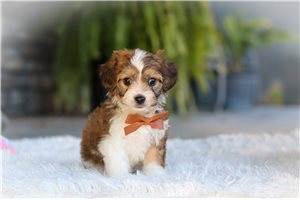
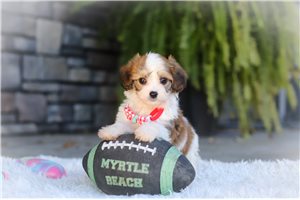
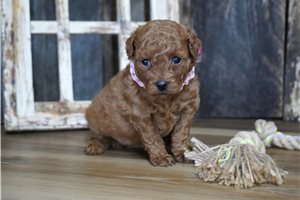
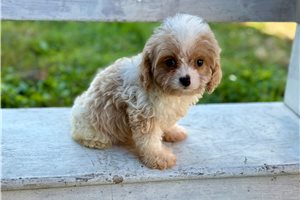
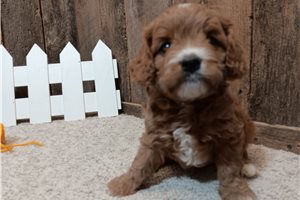
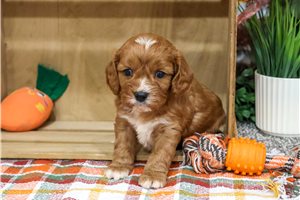
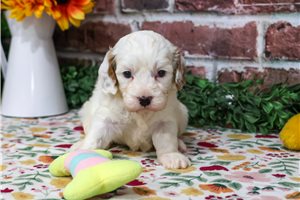
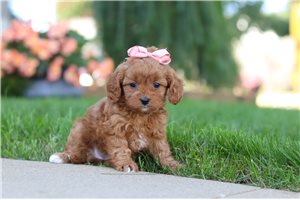
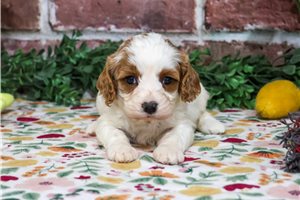
People fall for the Cavalier's face first: large, round, dark eyes and long feathered ears that give it a sweet, gentle look. Then they find out how much this little spaniel wants to be with them, on a walk or curled up in a lap.
People fall for the Cavalier's face first: large, round, dark eyes and long feathered ears that give it a sweet, gentle look. Then they find out how much this...People fall for the Cavalier's face first: large, round, dark eyes and long feathered ears that give it a sweet, gentle look. Then they find out how much this little spaniel wants to be with them, on a walk or curled up in a lap.
Only with Pawrade, you receive a pet insurance policy with no waiting period included for immediate accident or illness coverage. *NH, NY, RI, SC and TN residents excluded
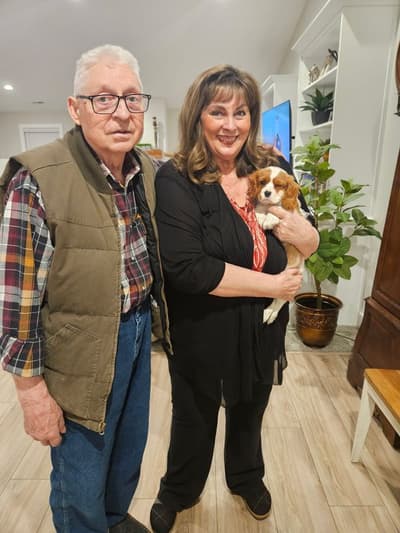
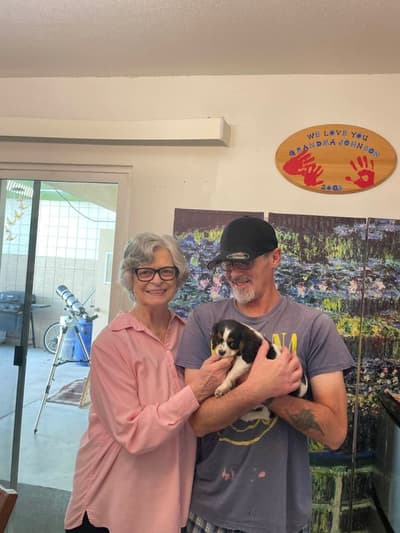
We couldn’t be happier with our experience getting our new little puppy! They were so polite and eager to help. It all went very smooth from beginning to end! Thank you so much!!
“We couldn’t be happier with our experience getting our new little puppy! They were so polite and eager to help. It all went very smooth from beginning to end! Thank you so much!!”
Loki · Cavalier King Charles Spaniel
Nov 4, 2025
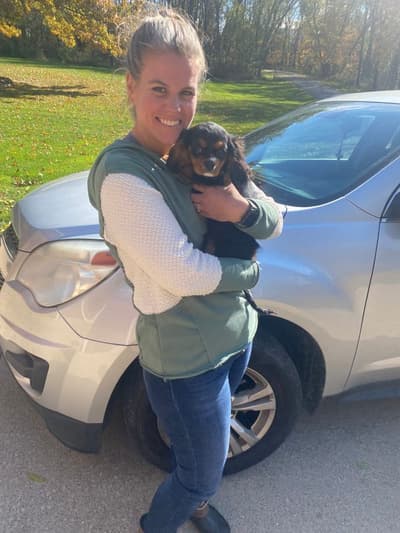
“Smooth & easy process. My little guy is perfect!”
Onyx · Cavalier King Charles Spaniel
Feb 17, 2026
“The puppy is sweeter than we could have imagined! The door to door delivery was definitely a great choice! So far, a great experience”
Keturah · Cavalier King Charles Spaniel
Jul 2, 2025
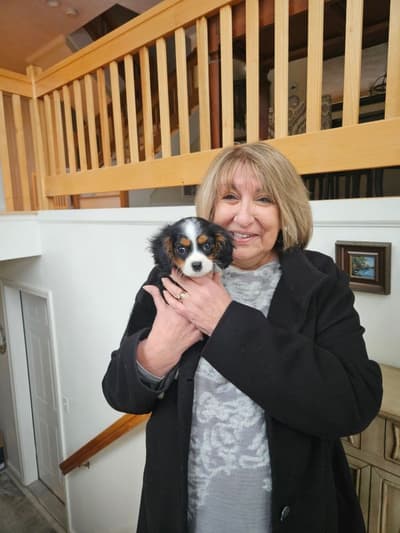
“My experience with Pawrade was flawless every step of the way. My new cavelier king charles Spaniel puppy arrived happy and healthy, and exactly as described on the site. We love our new puppy so much.”
Puppy scams cost U.S. families millions every year. Here's how you know Pawrade isn't one: we're a named, audited business with a public track record you can check anywhere.
Pawrade data: parents of puppies placed through Pawrade (breeder-reported)
Height
12–13 in
Lifespan
12–15 years
Energy
Moderate
Shedding
Low
Group
Toy
AKC
Cavalier King Charles Spaniel Characteristics
Full-Grown Size
2 of 7SmallLarge
Grooming Needs
3 of 7SeldomRegularly
Good with Dogs
1 of 7Not ReallyYes!
Watchdog Ability
3 of 7LowHigh
Exercise Needs
3 of 7Couch PotatoHigh Needs
Your new best friend.
Cavalier King Charles Spaniel temperament
Personality and daily life
A Cavalier wants to be close to its people. It was bred as a companion and comforter, and it is people-oriented through and through. At heart it is friendly, affectionate, sporting and fearless, and never aggressive, nervous or shy.
Kids and other pets
Well-socialized Cavaliers are very friendly with children, other dogs, cats and strangers. The spaniel chase instinct is still there, though, so a Cavalier may take off after a squirrel or an interesting scent.
At home
Cavaliers have moderate energy. Daily walks and play keep one content, and the breed is as happy with a homebody as with an active owner.
Training and play
Cavaliers are eager to please and food-motivated, which makes them quick learners. Short, game-like sessions with treats, toys and praise work better than correction. Cavaliers take part in AKC agility, rally, obedience, FastCAT, scent work and Barn Hunt, and many work as therapy dogs.
Have any cloudiness in a young puppy's eye checked promptly, because early cataracts can progress quickly.
Ear troubleKnow when to call
A Cavalier that keeps scratching its head or seems to hear less needs a vet visit, because thick mucus can fill the middle ear, a problem called glue ear.
Breathing and airwayKnow when to call
As your Cavalier gets older, faster breathing at rest or tiring early on walks needs a vet visit.
Back and spineKnow when to call
Scratching at the air near the neck, or signs of neck pain, needs a vet visit, because a spinal cord condition called syringomyelia can cause them.
Joints and movementRoutine vet checks
Your vet feels the knees at puppy checkups for a kneecap that slips out of place.
Heart checksRoutine vet checks
Have the heart listened to at every yearly checkup, because a new murmur is usually the first sign of valve disease.
Every milestone, together.
Cavalier King Charles Spaniel puppy milestones
Growing up: your Cavalier's first two years
Before 8 weeks
Before your puppy comes home
Your puppy is still with its breeder, so this is the time to get your home and routine ready.
Put the crate in a room where the family spends time, or in your bedroom at night, because a Cavalier wants its people close.
Check the fence and gates, since a Cavalier can take off after a squirrel or an interesting scent.
Plan a daily schedule for meals, potty breaks, sleep and play that you can follow from the first day.
Book a first vet visit for the week your puppy arrives, and plan to have the heart listened to.
Why it matters
Training starts the day your puppy comes home, and a schedule you can keep makes that much easier.
Cavalier King Charles Spaniel note
Many breeders start bathing, brushing and nail trims in the first weeks, so ask what your puppy is already used to.
8–10 weeks
The first week home
Everything is new, so keep the first days calm and the routine simple.
Take your puppy out first thing in the morning, last thing at night and after every nap.
Give your puppy a week or two to settle in before you pick up the grooming routine the breeder started.
At the first vet visit, have the heart listened to and the knees felt for a kneecap that slips.
Start short reward-based lessons right away, with treats and praise for every success.
Why it matters
Cavaliers are eager to please and food-motivated, so small early wins build good habits quickly.
Cavalier King Charles Spaniel note
Keep feeding a food made for puppies, and ask your vet about amounts and when to switch to adult food.
10–12 weeks
Weeks 2 to 4
Your puppy is in the last weeks of the first 3 months, the most important time for learning that new people, places, animals and things are safe.
Introduce your puppy to calm children, friendly dogs, everyday sounds and new places, and keep each meeting short and happy.
Join a puppy class, which can start as early as 7–8 weeks as long as your puppy stays away from sick dogs.
Book an eye exam with a veterinary eye specialist while your Cavalier is still a young puppy.
Why it matters
Early, positive experiences help a puppy grow into a confident adult.
Cavalier King Charles Spaniel note
An early eye exam looks for cataracts that start young and for small folds in the retina, which often go away by 1 year of age.
3–4 months
3 to 4 months
The vaccine series usually finishes at about 16 weeks, as your vet advises. Bladder control is growing too, and a puppy can usually wait about as many hours as its age in months, so a 3-month-old can manage about 3 hours.
Keep each vaccine appointment, since your own vet finishes the series your puppy started before it came home.
Stretch the time between potty trips a little at a time, and always go out after naps.
Practice coming when called in the house and yard, with a treat every time your puppy gets it right.
Why it matters
Even a well-trained Cavalier may not come when called while it is chasing something, so recall practice and a leash work together.
Cavalier King Charles Spaniel note
Short lessons suit a Cavalier, and a few minutes of fun beats one long session.
4–6 months
4 to 6 months
Teething is in full swing, with baby teeth falling out from about 12 weeks and the adult teeth in by about 6 months. Chewing is strongest while the teeth change.
Keep just a few chew toys out at a time, and rotate them to keep them interesting.
Supervise chewing, and keep anything precious out of reach until the adult teeth are in.
Keep up daily tooth cleaning as the adult teeth come in, because toy breeds need extra dental care.
Why it matters
Toy breeds like the Cavalier need daily tooth cleaning and professional cleanings, so the habit you build now lasts a lifetime.
Cavalier King Charles Spaniel note
Brush the ear and leg feathering for a few minutes each day so tangles never get a start.
6–12 months
6 to 12 months
Adolescence usually starts at about 6–8 months, and your Cavalier may test boundaries or seem to forget its training. This is a normal phase.
Keep house rules the same and lessons short, with plenty of play and new things to explore.
Talk with your vet about if and when to spay or neuter, because the right timing depends on your own dog.
Agree an exercise plan with your vet while your puppy is still growing, and skip hard jumping until growth is done.
Why it matters
Growth plates in a puppy's legs stay soft while it grows, and too much strenuous exercise can hurt them.
Cavalier King Charles Spaniel note
Small dogs like the Cavalier usually finish growing sooner than large breeds.
1–2 years
1 to 2 years
Adolescence winds down, and most dogs are fully grown and settled by about 2 years.
Book a wellness exam at least once a year, and make sure the vet listens to the heart every time.
Keep up regular eye exams with a veterinary eye specialist as your Cavalier grows into adulthood.
Once the joints are grown, try a dog sport such as agility, rally, FastCAT or scent work.
Keep up the daily brushing and tooth cleaning that suit the breed for life.
Why it matters
Mitral valve disease tends to start younger in Cavaliers than in most dogs, and a yearly heart check finds the first murmur early.
Cavalier King Charles Spaniel note
Many Cavaliers with a murmur still live to a good age, and how fast it changes varies from dog to dog.
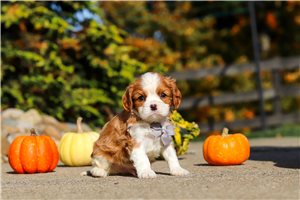
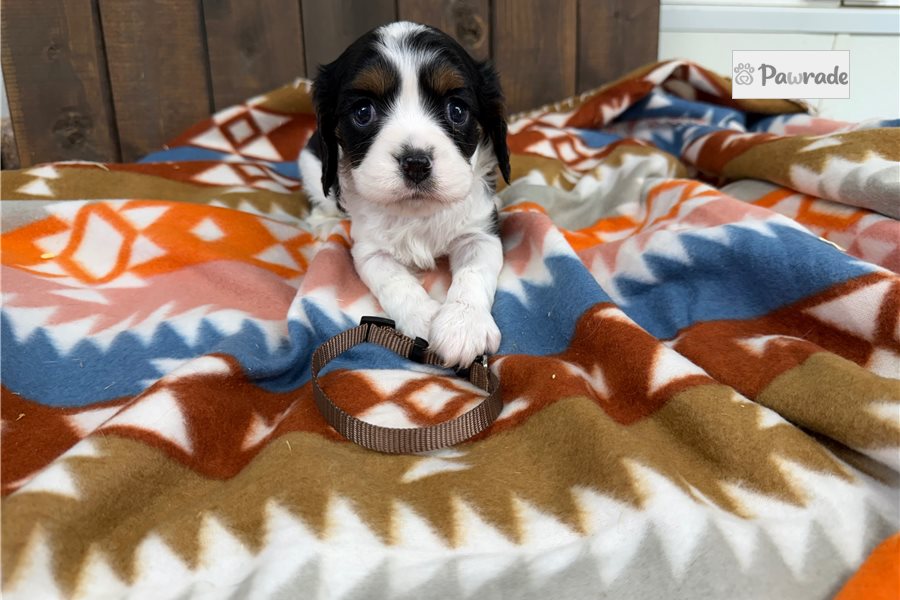
The Cavalier is an active, graceful toy spaniel with moderate bone and a body slightly longer than it is tall. Large, round, dark eyes, long feathered ears set high, a skull that looks flat and a short muzzle give the breed its sweet, gentle expression. The coat is moderately long and silky, free from curl (a slight wave is allowed), with long feathering on the ears, chest, legs, feet and tail.
Colors and coat
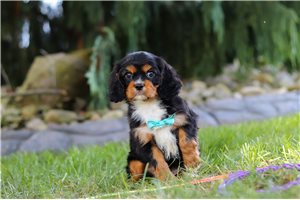
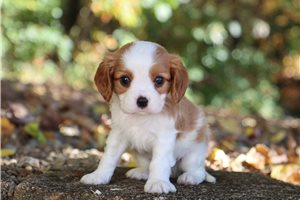
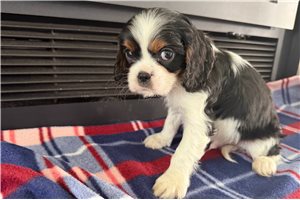
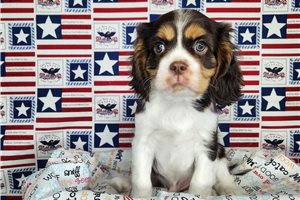
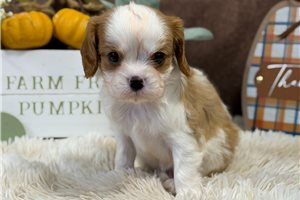
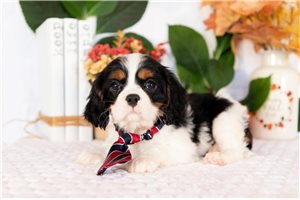
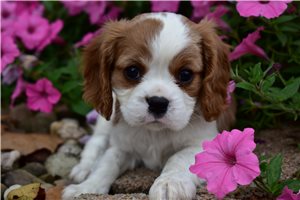
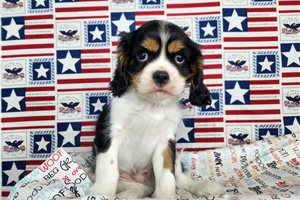
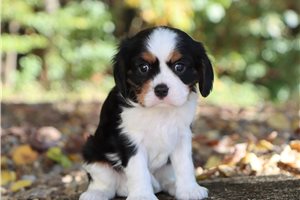
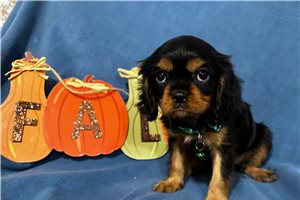
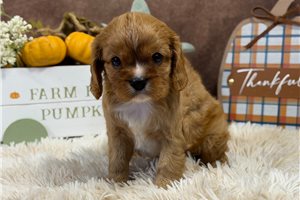
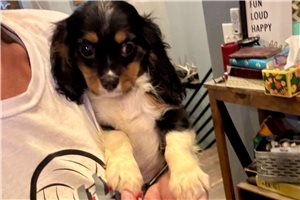
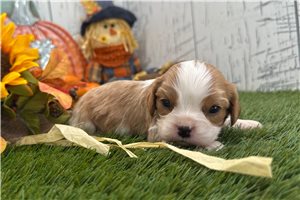
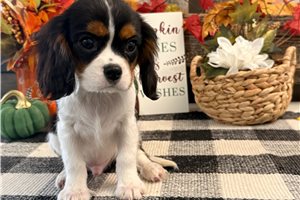
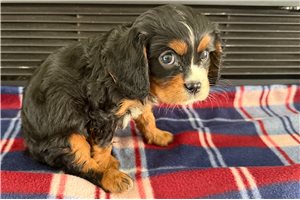
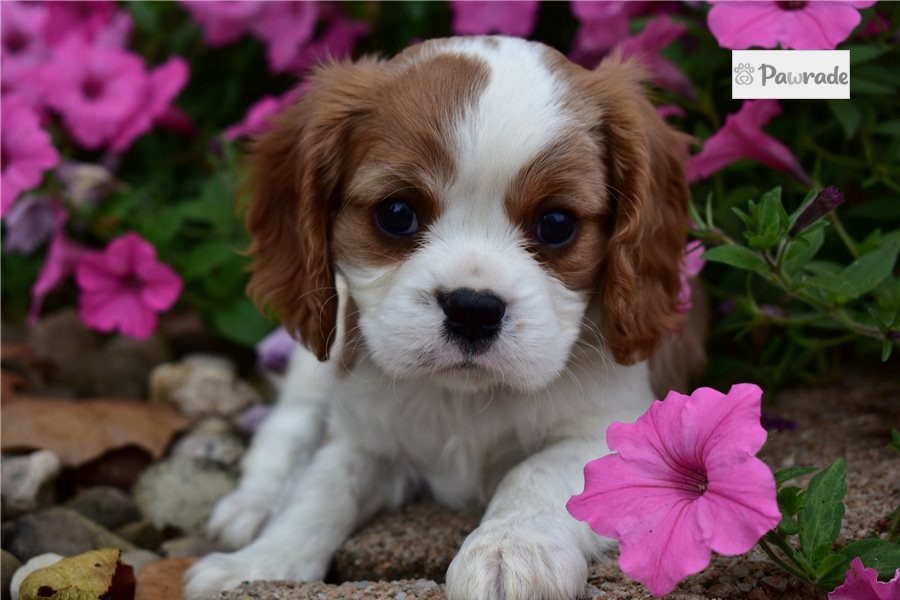
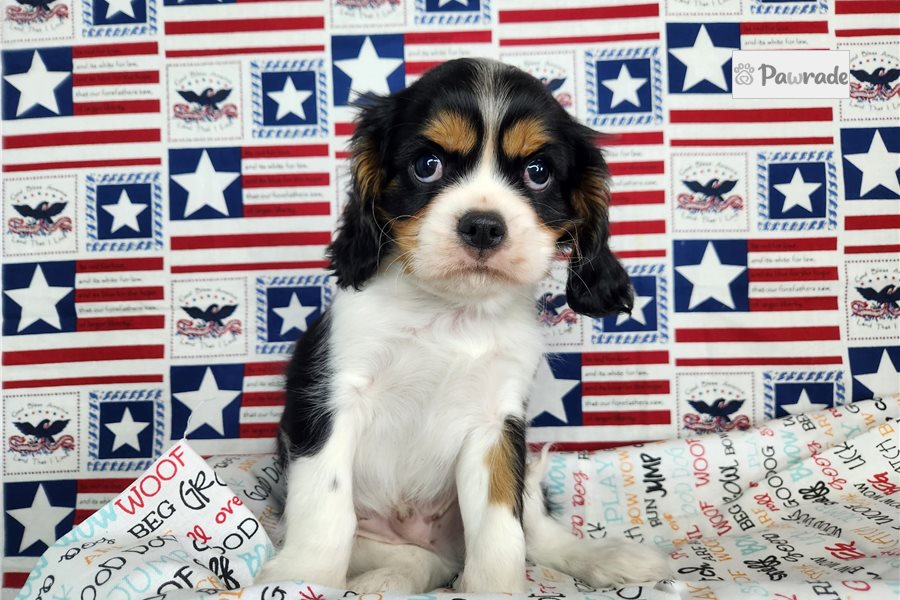
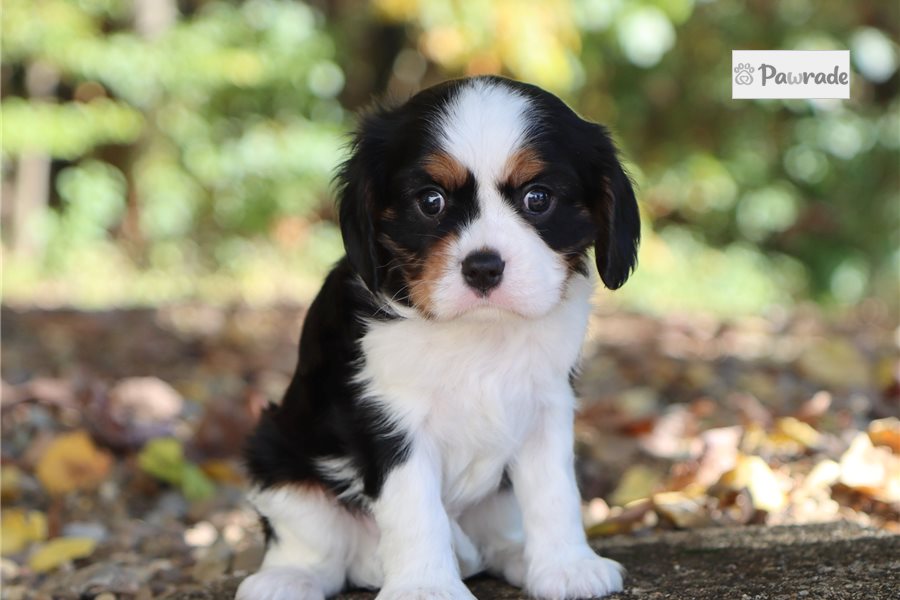
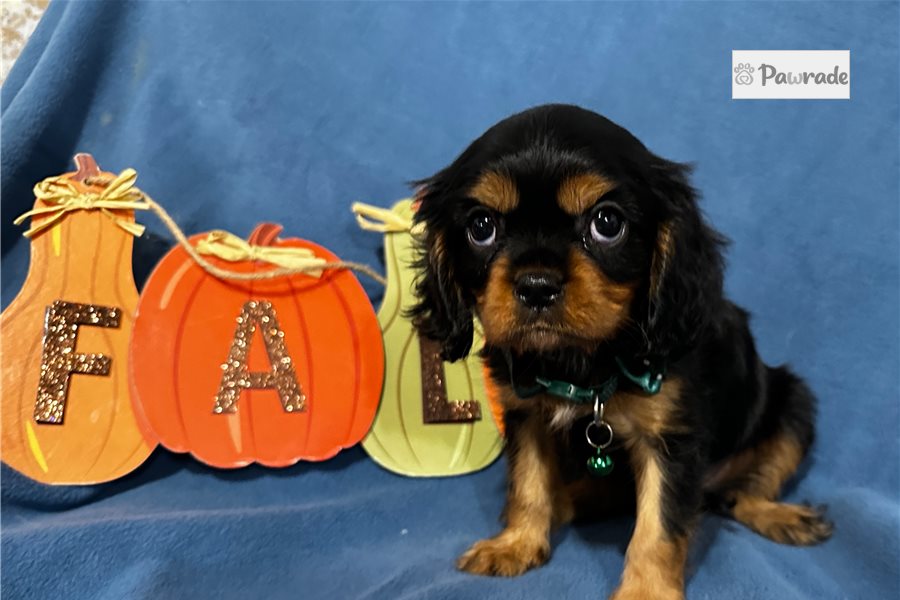
The AKC standard allows four colors: Blenheim (rich chestnut on pearly white), tricolor (black on pearly white with tan points), ruby (a solid rich red) and black and tan. Ruby and black and tan are solid colors, while Blenheim and tricolor have patches of color on a white base (parti-colors). The standard welcomes, but does not require, a chestnut mark known as the Blenheim spot. Any other color, such as chocolate and tan or chocolate tricolor, is outside the AKC breed standard. Two Blenheim parents produce only Blenheim puppies. Tail docking is optional, and where a tail is docked, no more than a third may be removed.
Colors listed by Pawrade breeders
Black & Tan
Blenheim
Ruby
Tricolor
Keeping your Cavalier healthy
The Cavalier is known to be prone to several conditions, and most are easier to manage when they are caught early.
A little history, a lot of heart.
Cavalier King Charles Spaniel history
History and fun facts
16th century
Small toy spaniels were known in Britain and Europe from the 16th century, and Titian, Van Dyck and Gainsborough painted them.
They took their name from two kings, Charles the First and Charles the Second.
They were kept as comforters: lap dogs and bed or foot warmers for noble households.
A popular legend says Charles the Second let his spaniels into the Houses of Parliament, but it is a story repeated by breed sources, not a documented decree.
Over time the flat-faced type became the King Charles Spaniel, known in the US as the English Toy Spaniel.
1926
In 1926 the American Roswell Eldridge offered a prize at Crufts, for 5 years, for spaniels of the old long-nosed type.
1928
A dog named Ann's Son won Best of Breed in 1928 and became the model for the first standard, written that year, and the revived type took the name Cavalier.
The UK breed club formed in 1928, and the UK Kennel Club recognized the breed in 1945.
1994
The American Cavalier King Charles Spaniel Club became the breed's AKC parent club in December 1994.
1995–1996
The Cavalier became the AKC's 140th recognized breed: the AKC dates recognition to 1995, and the parent club to January 1996.
Checked with care before travel.
Cavalier King Charles Spaniel Veterinary Health Report
Your puppy's Veterinary Health Report
Before your Cavalier puppy comes home, the breeder's licensed vet gives it a full hands-on exam to PetPay's exam standards, and the results go into its Veterinary Health Report.
The exam, a health certificate and a stool test for parasites all happen 3 to 5 days before your puppy leaves.
1It is a check of your own puppy, not paperwork about its family, so you start with a clear record of how your puppy is doing.
2If the vet finds something that could put your puppy at risk during travel, your puppy stays with the breeder until it's resolved.
3Problems that can be treated before travel are treated by the breeder's licensed vet first.
4Anything else the vet notes is shared with you.
5A hard copy of the report travels with your puppy for your records, and a digital copy is in your PetPay account.
PetPay Veterinary Health Report form
16 areas checked on the exam
Closer look for Cavalier King Charles SpanielsOn every puppy's report
Cavalier King Charles Spaniel puppy health guarantee
Going home and the health guarantee
Puppies must be at least 8 weeks old and weigh at least 2 lb before they travel. Every Pawrade puppy also comes with a health guarantee administered by PetPay, independent of the seller. The terms are on the health guarantee page.
A Cavalier King Charles Spaniel puppy's price reflects what goes into it: its pedigree and registration, its coat and color, and the breeder's program. Every Pawrade puppy's price also includes the pre-travel exam by the breeder's licensed vet, the Veterinary Health Report and a health guarantee administered by PetPay. See today's price range for Cavalier King Charles Spaniel puppies on Pawrade's Cavalier King Charles Spaniel listings.
Typical asking price
$2,725
Based on 1,127 Cavalier King Charles Spaniel listings in the last 12 months
Frequently asked questions about Cavalier King Charles Spaniel puppies
Frequently asked questions
Adult Cavaliers weigh 12–18 lb and stand 12–13 in tall. Parents of Pawrade Cavaliers typically weigh 13–22 lb (fathers) and 11–19 lb (mothers).
There is no miniature or teacup Cavalier, and the AKC, the UKC and the international kennel federation (FCI) each describe a single size. A grown Cavalier weighs 12–18 lb.
Parents of Pawrade Cavaliers typically weigh 13–22 lb (fathers) and 11–19 lb (mothers). The typical weight is 16 lb for fathers and 15 lb for mothers.
The AKC standard allows four colors: Blenheim, tricolor, ruby, and black and tan. Any other color is outside the AKC breed standard, and two Blenheim parents produce only Blenheim puppies.
A Blenheim Cavalier has rich chestnut markings on a pearly white coat. The standard welcomes, but does not require, a chestnut mark known as the Blenheim spot.
Docking is optional, and the AKC and UKC standards allow a docked or natural tail. Where a tail is docked, the AKC standard allows no more than a third to be removed.
They are separate breeds from the same royal toy spaniels. The flat-faced type became the King Charles Spaniel, called the English Toy Spaniel in the US, and the revived long-muzzled type became the Cavalier. The Cavalier is larger, with a flatter skull and a longer muzzle.
Cavaliers are affectionate and friendly, and the breed standard calls for a sporting, fearless dog that is never aggressive, nervous or shy. They are people-oriented, and well-socialized ones are friendly with strangers too.
A Cavalier is both a lap dog and a sporting spaniel, bred as a companion but with a spaniel's sporting instincts. It has moderate energy, so daily walks and play are enough, and it settles into active and quiet homes alike.
Cavaliers were bred as companions, not hunters. They keep a spaniel's instinct to chase small animals and follow scents.
The breed is well suited to therapy dog work. Programs include the AKC Therapy Dog program, Therapy Dogs International and the Alliance of Therapy Dogs.
Cavaliers are not aggressive with other dogs, and well-socialized ones are very friendly with them. Many Cavalier buyers on Pawrade already have another dog at home.
Well-socialized Cavaliers are very friendly with children. A gentle, non-aggressive temperament is part of the breed standard. Cavalier breeders on Pawrade report socializing 83% of their litters with younger children and 78% with older children.
Well-socialized Cavaliers are very friendly with other dogs and cats. Breeders on Pawrade report socializing 90% of Cavalier litters with small-breed dogs before the puppies go home. The spaniel chase instinct means a new cat may still be chased at first.
A Cavalier can suit a quieter home, because it adapts to homebodies as well as active owners and its exercise needs are moderate. Plan for regular brushing, daily tooth care and a yearly heart check.
A Cavalier needs a moderate amount of exercise, such as daily walks plus play. Keep your Cavalier on a leash or in a fenced area, because recall is unreliable when it is chasing something.
Not reliably, because recall tends to fail once a Cavalier is chasing a scent or a small animal. Train recall, but keep your dog on a leash or in a fenced yard.
Keep exercise gentle in hot weather and skip hard play in the heat. Daily walks still suit a Cavalier when the weather is mild.
Agree an exercise plan with your vet while your puppy grows, because growth plates in the legs stay soft and strenuous exercise can hurt them. Small dogs like the Cavalier usually finish growing sooner than large breeds.
Cavaliers are low-shedding but shed all year round, and no dog is truly hypoallergenic. Regular brushing keeps loose hair down.
Most Cavaliers do not, because the breed is kept untrimmed apart from the hair between the foot pads. A short brush-out most days and a bath about once a month keep the coat in good shape.
Clean the teeth daily and plan professional cleanings, as with other toy breeds. Check and clean the long ears regularly.
Cavaliers are eager to please and food-motivated, so they learn readily. Keep sessions short and game-like, with treats, toys and praise rather than correction.
Start on day one with a consistent schedule for meals, potty breaks, sleep and play. Take your puppy out first thing in the morning, last thing at night and after naps, and reward each success with treats and praise.
A Cavalier puppy can usually hold its bladder for about as many hours as its age in months, so a 3-month-old can manage about 3 hours. Young puppies need to go out first thing in the morning, last thing at night and after naps.
Adolescence usually starts at about 6–8 months, and many dogs test boundaries and seem to forget their training for a while. It is a normal phase, and consistent training, patience and plenty of exercise help. Cavaliers respond best to short, game-like lessons with treats and praise.
Beyond walks and play, Cavaliers enjoy dog sports and earn titles in agility, rally, scent work, Barn Hunt and AKC Trick Dog. The Canine Good Citizen test and conformation shows are open to them too.
Puppies travel only once they are at least 8 weeks old and weigh at least 2 lb. Most Cavalier puppies go home at about 12 weeks, usually between 9 and 20 weeks.
Cavalier breeders on Pawrade report a typical litter of 4 puppies, usually between 2 and 6.
Feed a food formulated for puppies, for the growth life stage. Ask your vet about amounts and when to switch to adult food.
Set up a crate in a room where the family spends time, check the fence and gates, and plan a daily schedule. Book a first vet visit that includes listening to the heart and checking the knees.
Start the day your puppy comes home, because the first 3 months are the most important time for learning that new people, places and animals are safe. Puppy classes can start as early as 7–8 weeks, as long as your puppy stays away from sick dogs.
Most Cavalier litters on Pawrade meet small dogs and children before the puppies go home. Breeders report socializing 90% of litters with small-breed dogs, 83% with younger children and 78% with older children. These figures come from what breeders reported for 827 litters.
The puppy vaccine series usually finishes at about 16 weeks, as your vet advises. Your puppy's vaccination and deworming records are separate documents that travel with your puppy. Bring them, with the Veterinary Health Report, to your first visit so your vet starts from the same record. Puppy classes can still start before then, as long as your puppy stays away from sick dogs.
Spaying or neutering is a decision to talk through with your vet, because the right timing depends on things like sex and expected adult size.
Baby teeth start to fall out from about 12 weeks, and by about 6 months the adult teeth are in. Offer safe chew toys and rotate them, with only a few out at a time.
The Veterinary Health Report is the record of your Cavalier puppy's exam before it goes home. The breeder's licensed vet gives the puppy itself a full hands-on exam to PetPay's exam standards and writes down what they find. It gives you and your own vet a clear starting point for your puppy's care.
The breeder's licensed veterinarian examines every puppy before it goes home, to PetPay's exam standards. The results are recorded in the puppy's Veterinary Health Report, and a copy travels with your puppy for your records.
The breeder's vet examines the whole puppy and pays close attention to a few things that matter in Cavaliers. The vet listens to the heart for a murmur and checks the eyes for extra lashes. The vet also looks over the skin and coat, feels for a hernia at the belly button and checks for a scissors bite.
Before travel, every puppy follows PetPay's vaccination and deworming schedule as far as its age allows: deworming at 2, 4, 6, 8, 10 and 12 weeks, and the distemper, parvo, adenovirus and parainfluenza combination shot at 6–8, 9–11 and 12–14 weeks. Bordetella and corona are given at the vet's discretion, and no vaccine is given within 3 days of travel. Rabies is given by a licensed vet on the schedule your state requires. Your own vet completes the series. Your puppy's vaccination and deworming records are separate documents that travel with your puppy. Bring them, with the Veterinary Health Report, to your first visit so your vet starts from the same record.
If the vet finds something that could put your puppy at risk during travel, your puppy stays with the breeder until it's resolved. Problems that can be treated before travel are treated by the breeder's licensed vet first. Anything else the vet notes is shared with you.
Puppies grow and change quickly, and their immune systems are still developing, so no single exam can find everything. In Cavaliers, murmurs from mitral valve disease usually appear later in life, not at the puppy exam. The report is a strong early look at your puppy, and your own vet builds on it at every checkup.
Cavalier buyers rate their Pawrade experience 4.7 out of 5 on average, from 591 reviews.
Right now, most Cavalier King Charles Spaniel puppies on Pawrade are listed within the typical range shown on Pawrade's Cavalier King Charles Spaniel listings. Each breeder on Pawrade sets their own price, and each puppy's listing shows it. A Cavalier King Charles Spaniel puppy's price reflects what goes into it: its pedigree and registration, its coat and color, and the breeder's program. Every Pawrade puppy's price also includes the pre-travel exam by the breeder's licensed vet, the Veterinary Health Report and a health guarantee administered by PetPay.







 Cavalier King Charles Spaniel note