Goldendoodle
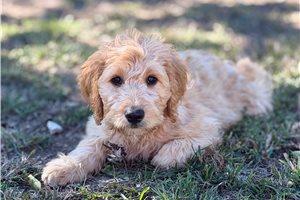
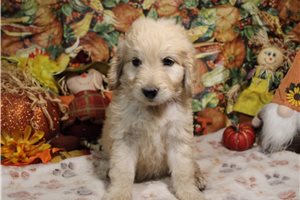
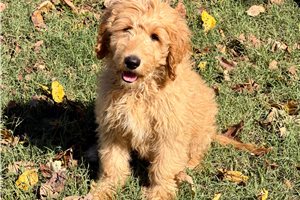
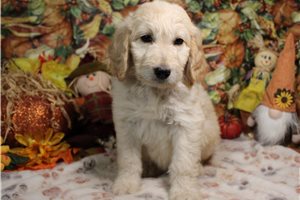
Goldendoodle Puppies for Sale
Also called Groodle
People come for the shaggy coat and the bearded face, and they stay for the dog underneath. A Goldendoodle greets visitors like old friends, brings the ball back again and again, and wants to be in the middle of whatever the family is doing.
People come for the shaggy coat and the bearded face, and they stay for the dog underneath. A Goldendoodle greets visitors like old friends, brings the ball...People come for the shaggy coat and the bearded face, and they stay for the dog underneath. A Goldendoodle greets visitors like old friends, brings the ball back again and again, and wants to be in the middle of whatever the family is doing.
Puppy first, every step of the way.
Available Goldendoodle Puppies
 From our Goldendoodle breeders
Health Guarantee
The health of your new puppy is our primary concern. Every puppy comes with a health guarantee for a happy, healthy start to life.
Learn About Our Health Guarantee
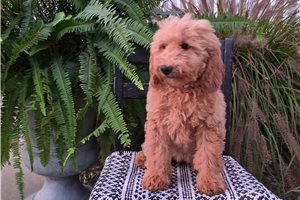
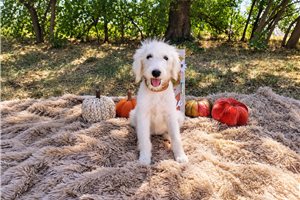

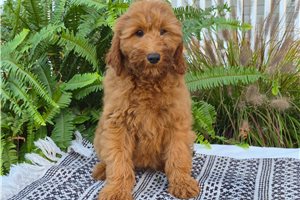
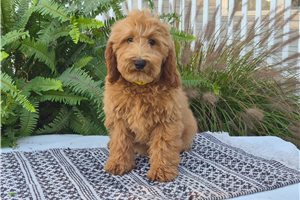
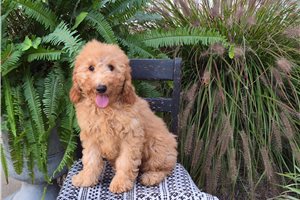
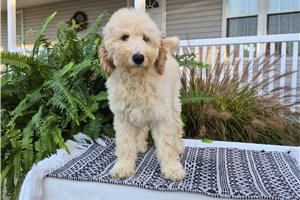
We absolutely love our new pup! The process was easy and she is an absolute angel with a clean bill of health. Thank you Pawrade!
Happier Puppies.
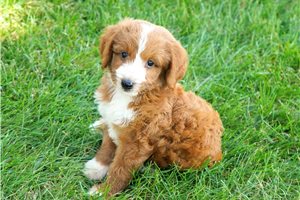 I Found a New Home!
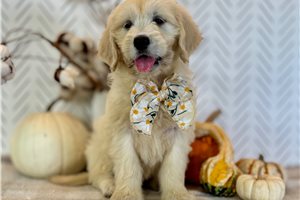 I Found a New Home!
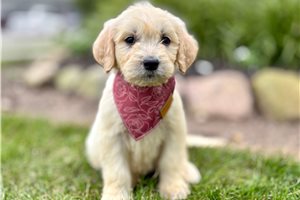 I Found a New Home!
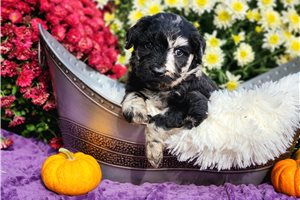 I Found a New Home!
 I Found a New Home!
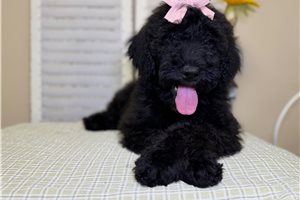 I Found a New Home!
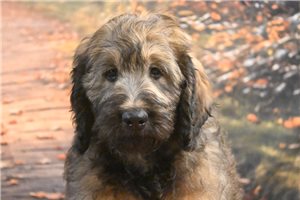 I Found a New Home!
Pawrade helps coordinate safe travel from breeders nationwide, after a licensed-vet exam and with a health certificate for every state line.
Browse by Lifestyle
Find the breed that fits the life you're living.


Discover what real customers have to say about Pawrade! Check out our glowing testimonials.
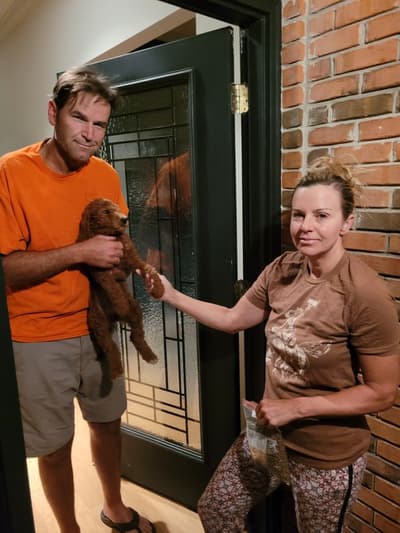 Amiyah · Goldendoodle
“We absolutely love our new pup! The process was easy and she is an absolute angel with a clean bill of health. Thank you Pawrade!”
 Foster · Goldendoodle
“Great experience with Pawrade. Picked out the puppy we wanted, Pawrade was very thorough and transparent and connected me with the breeder. Price was fair, service was exceptional and we have a great new little buddy. Five stars.”
 Benjamin · Goldendoodle
“Benjamin now renamed Maximus is an energetic, playful puppy who is fearless. When we first got him, he had to warm up to us. Today Maximus is fun and loving and we couldn’t be more blessed to have him!”
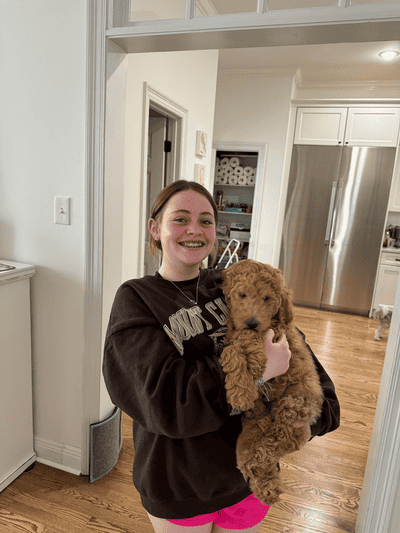 Ainsley · Goldendoodle
“Working with Pawrade was wonderful experience. They kept us up to date on how everything will transpire. Outstanding service from first call to last text. Most definitely recommend. Todd”
A real company, on the record, since 2003.
Puppy scams cost U.S. families millions every year. Here's how you know Pawrade isn't one: we're a named, audited business with a public track record you can check anywhere.
Pet Media, Inc. — Inc. audits three years of revenue to rank the list. Scam sites don't make it.
From verified buyers. We can reply, we can't delete.
*NH, NY, RI, SC and TN excluded
1 month of MetLife pet insurance included with every puppy.
A Safer, Happier Way to Find Your Puppy
We take the guesswork out of finding a reputable breeder so you can focus on what matters most — welcoming a healthy, happy puppy into your family.
No Puppy Mill
Pledge
We have zero tolerance toward puppy mills and partner only with honest, reputable breeders who raise puppies with love and compassion.
Learn More
Health
Guarantee
Every puppy is backed by our comprehensive health guarantee because a happy, healthy puppy leads to a lifetime of tail wags.
Learn More
Fight Puppy
Scams
Browse with confidence knowing every breeder is screened, every payment is secured through PetPay and every transaction is manually reviewed.
Learn MoreGoldendoodle at a glance
Parents' weight
35–70 lb fathers 35–65 lb mothers Pawrade data: parents of puppies placed through Pawrade (breeder-reported) 977 records, 2020-02 to 2026-09
Goldendoodle Characteristics
Is a Goldendoodle right for you?
- you want a dog that joins in family life, from the backyard to weekend hikes
- you would enjoy a partner for swimming, fetch or a dog sport
- you like the idea of training together, at home or in a class
- you are happy to brush several times a week and book regular grooming
Among Pawrade Goldendoodle buyers, most have a yard, a little under half have children at home and more than a quarter already have a dog.
- someone home for much of the day, or a walker or sitter to break up long days
- people who want a dog that sheds little and know that no dog is truly hypoallergenic
Goldendoodle breeders & placements
Goldendoodles on Pawrade
Pawrade data: parents of puppies placed through Pawrade (breeder-reported). Placements and reviews come from Pawrade's records.
“Got a very sweet puppy and pawrade made the process easy. When I had any questions the response was very quick. Overall pleased with the experience.”
Larissa J. · 2026-09-23 Verified“Excellent service. Always kind and professional throughout the process.”
Maria E. · Winchester, MA · 2026-04-24 Verified“My family couldn’t be more excited with Paco. He’s so beautiful and lovable. Thank you so much.”
Thomas c. · 2026-04-01 VerifiedGoldendoodle care & grooming
Care and grooming
The routine
| Coat and grooming careWeekly | Brush a few times a week to stop mats forming, and book professional grooming every 4–8 weeks. Curlier coats need brushing more often. |
|---|---|
| Bath timeas needed | Bathe only when needed, because many Goldendoodles have dry, itchy skin. |
| Teeth and gumsDaily | Brush the teeth, daily if you can. |
| Ear checksas needed | Dry the ears after every swim and bath. |
| Around the eyesas needed | Keep the hair around the eyes trimmed. |
Coat and shedding
The coat can be curly, wavy or straight, and the shaggy wavy coat is the classic doodle look. How much a Goldendoodle sheds comes down mostly to one gene (RSPO2). Dogs that inherit furnishings, the beard, mustache and eyebrows of the doodle face, typically shed little, and flat-coated dogs without them shed more.
Staying ahead of things
- Eye changes · Routine vet checks: Book a yearly checkup with an eye check every year or two, and have any new lump looked at promptly.
- Joints and movement · Keep them lean and cool: Keep your Goldendoodle lean for life, and don't overfeed a growing puppy: slow, steady growth is kinder to the hips and other joints.
- Stomach and digestion · Rest around mealtimes: Feed a large Goldendoodle several small meals from a slow feeder, and skip hard play around mealtimes, to help prevent bloat, when the stomach fills with gas and can twist.
Goldendoodle puppy milestones
Your Goldendoodle's first 2 years
Before your puppy comes home
Your puppy is still with its litter, and its most open weeks for new people, places and sounds have begun. Nobody can promise exactly how big it will grow, because a Goldendoodle's adult size depends on its parents and varies by generation.
- Find a groomer now, before your puppy arrives, so it can visit a few times before it ever needs a haircut.
- Buy a slicker brush and a metal comb, because daily brushing starts the week your puppy comes home.
- Set up a crate sized for the adult dog, with a divider, in a room where the family spends time or in your bedroom at night.
- Pick up shoes, socks and small things, because retriever puppies love to carry things off.
Why it matters: A Goldendoodle coat needs grooming for life, and a puppy that meets the brush and the groomer early learns that grooming is simply part of the week.
Show the later milestones Hide the later milestones
Week 1 at home
A young puppy needs a bathroom trip every 1–2 hours while awake. The key trips come right after it wakes, eats, drinks or plays.
- Go outside with your puppy each time, and praise it the moment it goes.
- Take your puppy out last thing before bed, and expect a night-time trip for a while.
- Play with the toes, lift the ears and brush the coat each day, so nail trims feel normal later.
- Leave your puppy in its crate for a few minutes with a chew toy while you are home.
- Book the first vet visit this week, and ask the vet to listen to the heart and check the eyes and knees.
Why it matters: Routines for meals, bathroom trips and crate time help a new puppy feel settled.
Goldendoodle note: Goldendoodles are people dogs and can be prone to separation anxiety, so alone-time practice starts on day one.
Weeks 2 to 4
Your puppy is in the middle of its most important weeks for socialization, which run through about the first 3 months. Mouthing your hands is normal puppy play.
- Plan a few short, calm introductions each day to new people, places and friendly dogs, with a treat each time.
- Until the vaccine series is done, skip dog parks and pet-store floors, and meet only healthy dogs you know are vaccinated, as your vet advises.
- Sign up for puppy classes once your vet is happy with the first vaccines, since classes can start from 7–8 weeks.
- When your puppy grabs your hand, offer a toy instead, so it learns what it may chew.
Why it matters: Puppies that meet many people, places and dogs early grow up less fearful.
Goldendoodle note: A Goldendoodle wants to please and takes a scolding to heart, so praise gets you further than correction.
3 to 4 months
Around 12 weeks, the baby teeth start falling out as the adult teeth push through, and chewing picks up. The puppy vaccine series usually ends at about 16 weeks, as your vet advises.
- Rotate a few safe chew toys at a time, and keep shoes and cords out of reach.
- Stretch the gaps between bathroom trips slowly, since a puppy can usually hold its bladder about as many hours as it is months old.
- Brush daily with the slicker brush, then the comb, which finds hidden tangles.
- Once the vaccines allow, book short groomer visits for a bath, a nail trim and a tidy of the face and feet.
Why it matters: A puppy that learns the grooming table is a calm, treat-filled place copes better with years of haircuts.
Goldendoodle note: Many owners find a Goldendoodle coat needs more grooming than they expected, so the habit you build now pays off.
4 to 6 months
Your puppy is growing fast, and most puppies keep up this rapid growth until about 6–9 months. By about 6 months, the adult teeth are all in and teething winds down.
- Plan the first full haircut for about 4–6 months, and ask the groomer to keep that first one gentle.
- Let your puppy run and play at its own pace, and save long jogs, hikes and jumping for later.
- Feed measured meals and keep your puppy lean rather than round, because fast growth and extra weight are hard on young hips.
Why it matters: A puppy's leg bones grow from soft, rubbery growth plates near the joints, and hard exercise can injure them before they close.
Goldendoodle note: A standard Goldendoodle is a big, fast-growing puppy, so gentle exercise and a lean body are the joint care that counts most in these months.
6 to 12 months
Around 8 months, many young dogs start responding less reliably to cues they already know. This is a normal teenage phase, and it passes.
- Go back to short, upbeat sessions, and use rewards your dog really wants for a while.
- Keep going to classes, because Goldendoodles do best with structured training well past their first birthday.
- Keep exercise controlled and your dog lean while it is still growing.
- Talk with your vet about spaying or neutering, and decide together what makes sense for your dog.
Why it matters: Goldendoodles have a long puppyhood, and the habits you keep up through these months shape the adult dog you live with.
Goldendoodle note: A people-loving Goldendoodle still needs its alone-time practice, so keep leaving it for short spells with a chew toy.
1 to 2 years
Your Goldendoodle looks grown up, but most dogs are not fully mature until about 3–4 years. Around 1 year, some still test the rules, which is part of growing up.
- Ask your vet whether growth is finished before you add jogging, long hikes or agility.
- Settle into the adult routine of two measured meals a day, daily exercise and brushing a few times a week.
- Give the retriever side a job with fetch, swimming or scent games.
- Book a yearly checkup with a weigh-in and body condition check, plus the eye checks your vet recommends.
Why it matters: Goldendoodles are active dogs with a retriever's love of games, and daily exercise and play keep them content at home.
Goldendoodle note: Goldendoodles love company, so line up a sitter or dog walker for long workdays.
Care for the adult and senior years is on the Goldendoodle health page.
Goldendoodle colors & size
Appearance, sizes and generations
Show Hide
Under the coat is an athletic, agile dog, a little longer than tall, with a deep chest like a retriever's. The ideal Goldendoodle has a straight muzzle wider than a Poodle's, oval eyes, drop ears and a feathered tail.
Size follows the Poodle parent: a Standard Poodle produces a standard Goldendoodle, and a Miniature or Toy Poodle produces the smaller sizes. Height at the shoulder sets the class: petite, mini, medium or standard. A medium Goldendoodle stands up to 21 in and weighs about 36–50 lb. A standard stands about 21–25 in and weighs about 50–90 lb. A Goldendoodle's adult size depends on its parents and varies by generation, so each puppy's listing shows its parents' weights.
A first-generation (F1) Goldendoodle has one Golden Retriever parent and one Poodle parent, and F1 puppies in the same litter can differ in looks and temperament. An F1B is an F1 bred back to a Golden Retriever or, more often, a Poodle, which makes it about three-quarters Poodle. An F2 is two F1s bred together, and multigen means later generations of Goldendoodles bred to Goldendoodles. F1B puppies bred back to a Poodle tend to have curlier coats that shed less. Still, a DNA test for the curl and furnishings genes predicts a puppy's coat better than its label.
Cream, golden or apricot, and red are the classic colors. Black and chocolate come from the Poodle side, and silver, gray, parti (at least half white, with solid patches), abstract, phantom and merle also occur. Neither parent breed's standard includes merle, and breeding two merles together (double merle) raises the risk of deafness and eye defects.
Colors listed by Pawrade breeders
Goldendoodle history
History
Show Hide
Goldendoodles took off in the 1990s, first in the United States and Australia, where they are often called Groodles.
Breeders wanted a Golden Retriever's temperament in a Poodle-type coat.
They took the idea from the Labradoodle, which had been bred for owners with dog allergies.
A few crosses came earlier: in the 1960s, Monica Dickens, great-granddaughter of Charles Dickens, bred them as guide dogs.
The Goldendoodle Association of North America (GANA), a non-profit founded in 2008, has kept a pedigree database since 2009 and published the first Goldendoodle breed standard in 2017.
By early 2024 it had registered more than 38,000 dogs.
The AKC and UKC do not recognize the Goldendoodle, and the Golden Retriever Club of America opposes deliberate crosses of Golden Retrievers with other breeds.
Goldendoodle Veterinary Health Report
Your puppy's Veterinary Health Report
Before your Goldendoodle puppy comes home, the breeder's licensed vet gives it a full hands-on exam to PetPay's exam standards, and the results go into its Veterinary Health Report.
The exam, a health certificate and a stool test for parasites all happen 3 to 5 days before your puppy leaves.
It is a check of your own puppy, not paperwork about its family, so you start with a clear record of how your puppy is doing.
If the vet finds something that could put your puppy at risk during travel, your puppy stays with the breeder until it's resolved.
Problems that can be treated before travel are treated by the breeder's licensed vet first.
Anything else the vet notes is shared with you.
A hard copy of the report travels with your puppy for your records, and a digital copy is in your PetPay account.
Puppies grow and change quickly, and their immune systems are still developing, so no exam can find everything. The Veterinary Health Report is a strong early look at your puppy and a written starting point that your own vet builds on.
- Heart
- Breathing
- Temperature, pulse and breathing rate
- Eyes
- Ears and hearing
- Mouth and bite
- Skin and coat
- Kneecaps
- Hips
- Hernias
- Soft spot on the skull
- Body condition and weight
- Reproductive organs
- History of vomiting or diarrhea
- Stool test for parasites
- Past surgery and notes
What the vet looks for in a Goldendoodle
The vet listens to the heart in a quiet room and grades any murmur it hears.
A murmur is often followed up with a heart scan (an ultrasound). A narrowing below a heart valve (subvalvular aortic stenosis, or SAS) runs on the Golden Retriever side and can develop as a puppy grows, so a good puppy exam is a start, not the final word.
The vet uses a penlight to check the eyelids and lashes and looks for discharge or signs of vision problems.
Eyelids that roll in (entropion) are something to watch for as your puppy grows. A slow loss of sight (progressive retinal atrophy), inherited cataracts and an inflammation inside the eye (pigmentary uveitis) develop later, so eye checks carry on as your dog grows.
The vet checks the bite and the teeth.
The vet looks over the skin and coat for fleas, ticks, hair loss and signs of infection.
Fine white flakes in the coat can be a sign of an inherited scaly-skin condition (ichthyosis). Only puppies with Golden Retriever ancestry on both sides can be affected, and a DNA test confirms it.
The vet feels both knees for a kneecap that slips out of place and records a grade if one does.
After your puppy comes home
- At the first puppy visits, your own vet listens to the heart and checks the eyelids, eyes and knees.
- Your puppy's vaccination and deworming records are separate documents that travel with your puppy.
- Bring them, with the Veterinary Health Report, to your first visit so your vet starts from the same record.
- Before travel, every puppy follows PetPay's vaccination and deworming schedule as far as its age allows.
- Bordetella and corona are given at the vet's discretion, and no vaccine is given within 3 days of travel.
- Rabies is given by a licensed vet on the schedule your state requires.
- Your own vet completes the series.
- Hip problems and several eye diseases show up later, so checks carry on into adulthood.
- As your Goldendoodle grows up, ask your vet about hip and elbow X-rays if you want to know how the joints are doing.
Goldendoodle puppy health guarantee
Going home and the health guarantee
Puppies must be at least 8 weeks old and 2 lb before they travel. Every puppy also comes with a health guarantee administered by PetPay, independent of the seller. The terms are on the health guarantee page.
Breeds like the Goldendoodle
Compare
The Labradoodle has a Labrador parent instead of a Golden; Goldendoodles tend to be calmer and longer-lived and always have a long coat, while early Labradoodles can be short-coated.
The Golden has a double coat that sheds and is more predictable in size, coat and temperament; a furnished Goldendoodle sheds less but needs regular clipping.
The Poodle's coat is uniformly curly and a solid color, while a Goldendoodle's can be curly, wavy or straight and may shed.
The Mini comes from a Miniature or Toy Poodle parent, and smaller Goldendoodles typically live longer.
Breeds related to the Goldendoodle
Related breeds
More puppies like the Goldendoodle
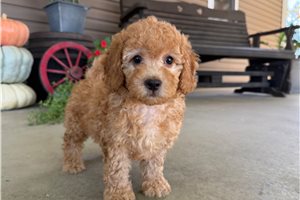
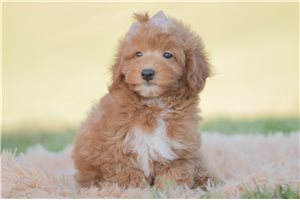
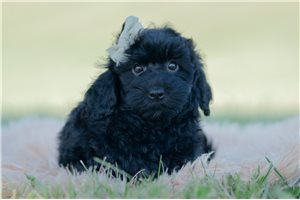
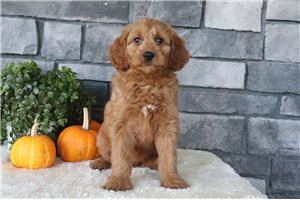
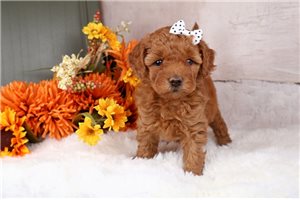
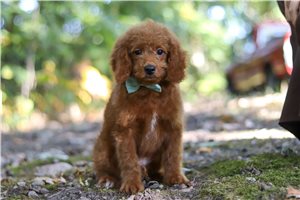
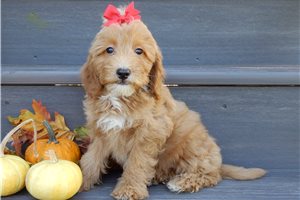
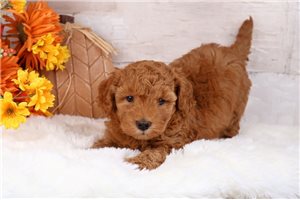
Frequently asked questions about Goldendoodle puppies
Frequently asked questions
A grown Goldendoodle weighs 25–75 lb and stands 17–25 in at the shoulder, depending on its size. Mediums weigh about 36–50 lb and standards about 50–90 lb, and each puppy's listing shows its parents' weights.
It comes down to the Poodle parent: a Standard Poodle gives a standard Goldendoodle, and a Miniature or Toy Poodle gives the smaller sizes. Height at the shoulder sets the class, and the Mini Goldendoodle has its own page.
Only roughly. Size is not fixed, so a breeder's estimate for a puppy is an educated guess.
They name the generation: an F1 is a Golden Retriever crossed with a Poodle, and an F1B is an F1 bred back to one of those breeds. An F2 is two F1s bred together, and multigen covers later generations. For coat and shedding, a DNA test for the furnishings and curl genes tells you more than the label.
It depends on one curl gene: two copies give a curly coat, one copy a wavy coat and none a straight coat. A coat DNA test can tell you which one a puppy will grow into.
The classic shades are cream, golden or apricot, and red. Black, chocolate, silver, gray, parti, abstract, phantom and merle also occur.
It varies from puppy to puppy, and F1 puppies in one litter can differ, with some more Poodle-like and others more Golden-like. Most have the beard, mustache and eyebrows of the doodle face, and flat-coated dogs without them look and shed more like a Golden.
A Goldendoodle's energy is moderate to high, especially when young. Give it daily exercise and play, and at home you get a gentle, affectionate companion.
Goldendoodles are not big barkers, although many bark to alert. They usually welcome strangers, so they make poor guard dogs.
Goldendoodles are widely used as therapy, service and guide dogs. Goldendoodles are bred first for a temperament suited to companion, service and therapy work. Some of the earliest crosses, in the 1960s, were guide dogs.
It can be, because Goldendoodles are eager to please and highly trainable. First-time owners should plan for daily exercise, company and a grooming routine.
Goldendoodles are generally good with other dogs, sometimes after an adjustment period. Goldendoodle breeders on Pawrade report socializing 83% of their litters with large dogs before the puppies go home.
Well-socialized Goldendoodles are gentle with children and love being part of family life. Goldendoodle breeders on Pawrade report socializing 92% of their litters with young children.
Generally yes, although some need an adjustment period. Some breeders on Pawrade socialize their litters with cats before the puppies go home.
Most Goldendoodles enjoy walks, runs and hikes, and they love swimming and water retrieves. Build up exercise gradually while a puppy is growing, and dry the ears after every swim.
The home matters less than exercise and company: a Goldendoodle needs exercise every day and does best when it is not left alone for long. Most Goldendoodle buyers on Pawrade live in a single-family home, and some live in apartments.
A good daily workout for the body and the mind: walks, runs, hikes and play, with training or scent games. Budget 30–60 minutes of exercise every day.
Wait until your Goldendoodle has finished growing before jogging or long runs, and ask your vet when that is. Until then, free play and short walks on grass protect the soft growth plates near the joints. Keeping a growing puppy lean is kinder to its hips too.
Long days alone are hard on a Goldendoodle, because the breed is prone to separation anxiety. Build alone time gradually with a crate and routines, and use a sitter or dog walker when you are out all day.
Feed a measured diet: puppies under 6 months need at least three meals a day, adults two, and treats should stay a small share of calories. Grain-free and legume-rich diets have been linked to a heart-muscle disease in Golden Retrievers, so choose the food with your vet.
Fetch, scent games and play-based obedience suit their retriever and Poodle drives. They can compete in AKC sports through AKC Canine Partners and do well in obedience, agility, barn hunt and dock diving.
Most Goldendoodles with furnishings shed little, but all dogs shed some, and no dog is truly hypoallergenic. Allergen levels do not differ by breed, reactions vary from person to person, and flat-coated Goldendoodles shed like Golden Retrievers.
A Goldendoodle needs a lot of grooming: brushing a few times a week at home and a professional groom every 4–8 weeks. Many owners find doodle grooming takes more time and money than they expected.
Most Goldendoodle puppies are ready for a first full haircut at about 4–6 months. Before that, short groomer visits for a bath, nail trim and a tidy of the face and feet, once the vaccines allow, get your puppy used to grooming. At home, brush daily with a slicker brush and then a metal comb to catch mats early.
Goldendoodles are quick learners who want to please. They are sensitive, so use rewards and short, consistent sessions, and avoid harsh methods.
Start on the first day, with a crate sized for the adult dog and a divider, and short practice at being alone. Keep the crate where the family spends time or in your bedroom at night, and take your puppy out last thing before bed. Breeders on Pawrade report whether they have started crate training, so ask how far your puppy has got.
A puppy can usually hold its bladder for about as many hours as it is months old, so a 3-month-old can wait about 3 hours. Very young puppies need to go out every 1–2 hours while awake, and after waking, eating, drinking and play.
Your Goldendoodle has probably hit its teenage phase, when many dogs respond less reliably to cues they know from around 8 months. It is a normal stage that passes, so keep training short and consistent, and use rewards your dog really wants. Goldendoodles have a long puppyhood, and most dogs are not fully mature until about 3–4 years.
Most Goldendoodles reach physical and social maturity at about 3–4 years, later than many owners expect. Structured training and early socialization help through those years.
Puppies travel only once they are at least 8 weeks old and weigh at least 2 lb. Most Goldendoodle puppies go home at about 11 weeks, usually between 9 and 18 weeks.
Most puppies finish teething by about 6 months, when all the adult teeth are in. The baby teeth start falling out at around 12 weeks, so expect extra chewing from then on. Offer chew toys your vet approves, rotate a few at a time, and swap your hand for a toy when your puppy mouths.
Most puppies finish their core vaccine series at about 16 weeks, as your vet advises. The shots start at about 6–8 weeks and are repeated every few weeks, and your vet sets the exact schedule. Until then, skip dog parks and meet only healthy dogs you know are vaccinated. Puppy classes can start before the series ends, from 7–8 weeks, once your vet is happy with the first vaccines.
Start right away, because the first 3 months are the main socialization window. Puppy classes can begin at 7–8 weeks, after the first vaccines.
Get a crate sized for the adult dog, a slow-feeder bowl and grooming tools, and put shoes and trash out of reach. Book a vet visit and ask about the heart, eyes and knees and about feeding a large-breed puppy.
Goldendoodle breeders on Pawrade report a typical litter of 8 puppies, usually between 4 and 11.
Most Goldendoodle litters on Pawrade meet children, other dogs and everyday household sounds before the puppies go home. Breeders report socializing 92% of litters with young children and 83% with large dogs. They also report getting litters used to the vacuum cleaner (76%), music or TV (70%), car rides (62%) and pots and pans (58%). These figures come from what breeders reported for 302 litters. Keep it going once your puppy is home, because the first 3 months are the main socialization window.
The Veterinary Health Report is the record of your Goldendoodle puppy's exam before it goes home. The breeder's licensed vet gives the puppy itself a full hands-on exam to PetPay's standards and writes down what they find. It gives you and your own vet a clear starting point for your puppy's care.
The breeder's licensed veterinarian examines every puppy before it goes home, to PetPay's exam standards. The results are recorded in the puppy's Veterinary Health Report, and a copy travels with your puppy for your records.
The breeder's vet examines the whole puppy and pays close attention to a few things that matter in Goldendoodles. The vet listens to the heart, checks the eyelids and eyes, and feels both knees. The vet also looks over the skin and coat and checks the bite and teeth.
Before travel, every puppy follows PetPay's vaccination and deworming schedule as far as its age allows: deworming at 2, 4, 6, 8, 10 and 12 weeks, and the distemper, parvo, adenovirus and parainfluenza combination shot at 6–8, 9–11 and 12–14 weeks. Bordetella and corona are given at the vet's discretion, and no vaccine is given within 3 days of travel. Rabies is given by a licensed vet on the schedule your state requires. Your own vet completes the series. Your puppy's vaccination and deworming records are separate documents that travel with your puppy. Bring them, with the Veterinary Health Report, to your first visit so your vet starts from the same record.
If the vet finds something that could put your puppy at risk during travel, your puppy stays with the breeder until it's resolved. Problems that can be treated before travel are treated by the breeder's licensed vet first. Anything else the vet notes is shared with you.
Puppies grow and change quickly, and their immune systems are still developing, so no single exam can find everything. Some conditions, such as hip dysplasia and a slow loss of sight called progressive retinal atrophy (PRA), show up later, so a puppy exam cannot rule them out. The report is a strong early look at your puppy, and your own vet builds on it at every checkup.
Every puppy comes with a health guarantee administered by PetPay, independent of the seller. The terms are on the health guarantee page.
Not from the AKC or UKC, which do not recognize the Goldendoodle. GANA keeps a pedigree database for Goldendoodles descended from Golden Retrievers, Poodles and other Goldendoodles.
Goldendoodle buyers rate their Pawrade experience 4.7 out of 5 on average, from 316 reviews, and about 81% of those reviews give 5 stars.
Right now, most Goldendoodle puppies on Pawrade are listed within the typical range shown on Pawrade's Goldendoodle listings. Each breeder on Pawrade sets their own price, and each puppy's listing shows it. A Goldendoodle puppy's price reflects what goes into it: its pedigree and registration, its coat and color, and the breeder's program. Every Pawrade puppy's price also includes the pre-travel exam by the breeder's licensed vet, the Veterinary Health Report and a health guarantee administered by PetPay.
More ways to search
Popular Goldendoodle searches
Other namesWhere families find Goldendoodle puppies
Most Popular Goldendoodle Cities
Goldendoodle puppies by state