Labradoodle
Labradoodle Puppies for Sale
A Labradoodle greets strangers like old friends and is happiest with a ball to fetch or water to swim in. It began as a guide dog for a blind woman whose husband was allergic to dogs, and it became the original doodle.
A Labradoodle greets strangers like old friends and is happiest with a ball to fetch or water to swim in. It began as a guide dog for a blind woman whose husband...A Labradoodle greets strangers like old friends and is happiest with a ball to fetch or water to swim in. It began as a guide dog for a blind woman whose husband was allergic to dogs, and it became the original doodle.
Puppy first, every step of the way.
Available Labradoodle Puppies
 From our Labradoodle breeders
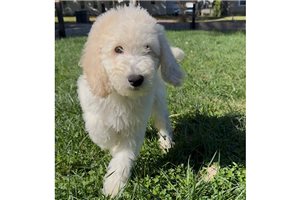
Health Guarantee
The health of your new puppy is our primary concern. Every puppy comes with a health guarantee for a happy, healthy start to life.
Learn About Our Health Guarantee
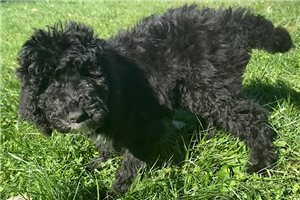
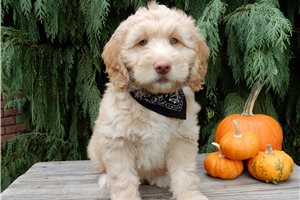

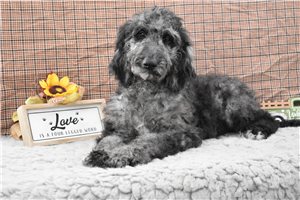
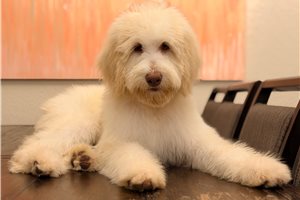
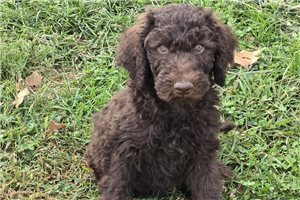 I Found a New Home!
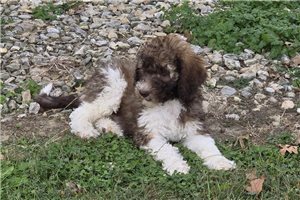 I Found a New Home!
Our puppies arrived as little bundles of joy. They are so well-behaved, far beyond any expectations we had. They are already using their separate crates and expressing when it is time to go potty. Life is good!
Happier Puppies.
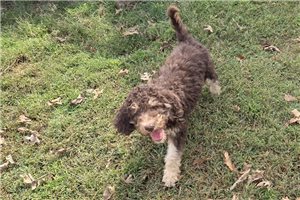 I Found a New Home!
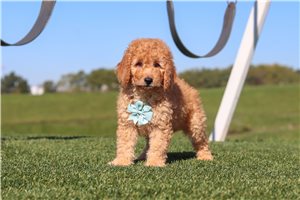 I Found a New Home!
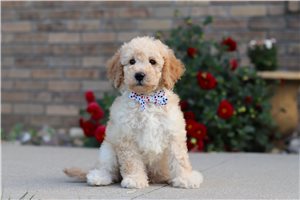 I Found a New Home!
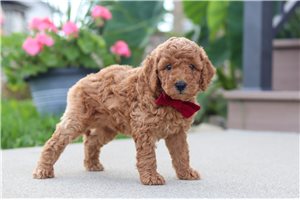 I Found a New Home!
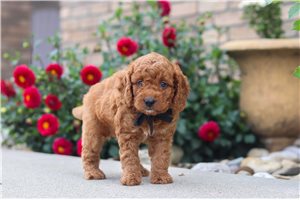 I Found a New Home!
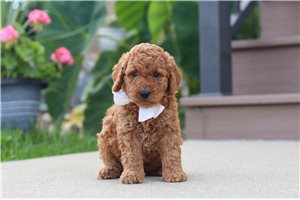 I Found a New Home!
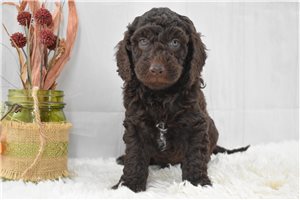 I Found a New Home!
Pawrade helps coordinate safe travel from breeders nationwide, after a licensed-vet exam and with a health certificate for every state line.
Browse by Lifestyle
Find the breed that fits the life you're living.


Discover what real customers have to say about Pawrade! Check out our glowing testimonials.
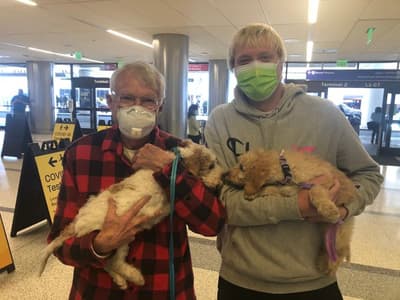 Caspian · Labradoodle
“Our puppies arrived as little bundles of joy. They are so well-behaved, far beyond any expectations we had. They are already using their separate crates and expressing when it is time to go potty. Life is good!”
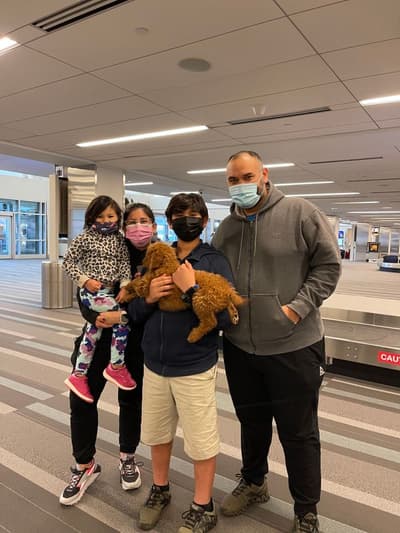 Baxter · Labradoodle
“Everything was good and smooth, the puppy arrives healthy, they were very responsive and guide me through the whole process.”
 Dodger · Labradoodle
“Transactions were easy. Breeder was incredible. Our dog is a pure delight and Pawrade made it seamless. Kudos for finding good people and good breeders. We would do it again in a heartbeat.”
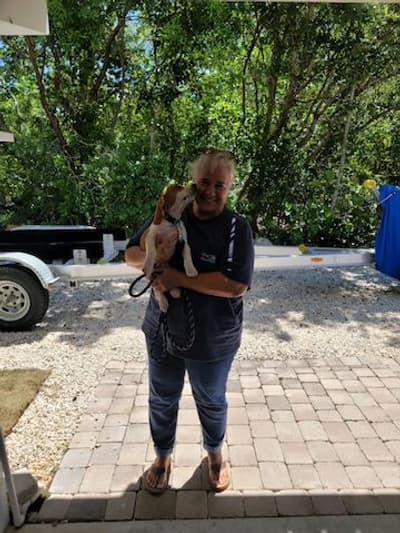 Mistletoe · Labradoodle
“We are so very happy with our pup. Healthy, full of energy, and a beautiful dog.”
A real company, on the record, since 2003.
Puppy scams cost U.S. families millions every year. Here's how you know Pawrade isn't one: we're a named, audited business with a public track record you can check anywhere.
Pet Media, Inc. — Inc. audits three years of revenue to rank the list. Scam sites don't make it.
From verified buyers. We can reply, we can't delete.
*NH, NY, RI, SC and TN excluded
1 month of MetLife pet insurance included with every puppy.
A Safer, Happier Way to Find Your Puppy
We take the guesswork out of finding a reputable breeder so you can focus on what matters most — welcoming a healthy, happy puppy into your family.
No Puppy Mill
Pledge
We have zero tolerance toward puppy mills and partner only with honest, reputable breeders who raise puppies with love and compassion.
Learn More
Health
Guarantee
Every puppy is backed by our comprehensive health guarantee because a happy, healthy puppy leads to a lifetime of tail wags.
Learn More
Fight Puppy
Scams
Browse with confidence knowing every breeder is screened, every payment is secured through PetPay and every transaction is manually reviewed.
Learn MoreLabradoodle at a glance
Parents' weight
25–75 lb fathers 25–60 lb mothers Pawrade data: parents of puppies placed through Pawrade (breeder-reported) 309 records, 2020-04 to 2026-09
Labradoodle Characteristics
Is a Labradoodle right for you?
- you want a friendly, affectionate dog that joins in family life
- you would enjoy a partner for walks, hikes, fetch or a swim
- you like training with rewards and giving a clever dog a daily job to think about
- you will keep up brushing at home and regular professional grooming
Among Pawrade Labradoodle buyers, nearly all have a yard, about two in five have children at home and about a third already have a dog.
- people around for much of the day, rather than long stretches alone
- daily exercise, which matters more than the size of the home, so even an apartment can work
- people who know its coat may shed and that no dog is truly hypoallergenic
Labradoodle breeders & placements
Labradoodles on Pawrade
Pawrade data: parents of puppies placed through Pawrade (breeder-reported). Placements and reviews come from Pawrade's records.
“Amazing!!!! From choosing our new family member (Labradoodle), to purchase, to delivery, you guys made it easy and wonderful!! Thank you for all you do!!!”
Cynthia F. · Middlebourne, WV · 2026-02-11 Verified“Great experience!! Beautiful, energetic, happy puppy!! Thanks for everything!”
Geri G. · Plaquemine, LA · 2025-11-18 Verified“Extremely pleased with the support we received. Pawrade provided very detailed information as to what we could expect from the beginning to delivery of our puppy.”
Debra H. · Huntsville, AL · 2024-08-12 VerifiedLabradoodle care & grooming
Care and grooming
The routine
| Coat and grooming careWeekly | Brush at least twice a week, right down to the skin, especially at the ears, armpits and rear. Book professional grooming every 2–3 months. |
|---|---|
| Ear checksas needed | Clean the ears regularly. Dry the ears after every swim, because hairy, floppy ears hold moisture. |
| Around the eyesas needed | Keep the fringe trimmed away from the eyes. |
Coat and shedding
The coat varies even within a litter, from a shedding Labrador-type double coat to a curly or wavy Poodle-type coat that sheds less. Puppies bred back to the Poodle side are more likely to have a coat that sheds less, but no generation label guarantees one.
Keeping them safe
- Cold weather: A full coat copes reasonably well with cold, but a wet or matted coat holds moisture, so dry your dog after swims and baths.
Staying ahead of things
- Eye changes · Routine vet checks: Book a yearly exam that includes an eye check.
- Skin changes · Mention skin changes: Mention any lasting change in the skin or coat at checkups.
- Joints and movement · Keep them lean and cool: Keep your Labradoodle lean with measured meals, especially while it grows, to protect the hips and elbows.
- Stomach and digestion · Know when to call: See your vet promptly about stomach upsets and tiredness that keep coming back, which can point to Addison's disease.
- Heart checks · Routine vet checks: Have your vet listen for a heart murmur at each visit in the first months.
Labradoodle puppy milestones
Your Labradoodle's first 2 years
Before your puppy comes home
Your puppy is still with its littermates, and the weeks when it learns most about people, places and animals have already begun. Nobody can promise its exact adult size, because a Labradoodle's size depends on its parents and varies by generation.
- Set up a crate sized for the adult dog, with a divider for now, in a room where the family spends time or in your bedroom at night.
- Pick up a slicker brush, a metal comb, an ear cleaner and a slow-feeder bowl.
- Puppy-proof your home by lifting shoes, cords and trash out of reach.
- Book a first visit with your own vet before your puppy arrives.
Why it matters: Sleeping near its people helps a new puppy settle, and you will hear it when it needs a trip outside.
Labradoodle note: Puppies from Labrador lines are often fast, keen eaters, so a slow feeder and measured meals help from the first day.
Show the later milestones Hide the later milestones
Week 1 at home
Everything is new, and a young puppy needs to go out often, especially first thing in the morning, last thing at night and after naps. Labradoodle puppies from retriever lines are often mouthy, so expect plenty of chewing.
- Take your puppy out at those times every day, starting on the very first morning.
- Start short, gentle brushing sessions and ear checks, so grooming becomes part of the daily routine.
- Offer chew toys, supervise chewing and keep anything you value out of reach.
- At the first vet visit, ask for a check of the eyes, heart, bite and hernias.
Why it matters: A puppy that learns to accept the brush now copes far better with a lifetime of grooming.
Labradoodle note: Labradoodles are people-oriented, so short spells in the crate while you are home help your puppy learn that time alone is safe.
Weeks 2 to 4
Your puppy is in its main socialization window, which covers roughly the first 3 months. Calm, positive meetings with people, places, animals and everyday things matter most during these weeks.
- Plan a few short, positive outings or visitors each day.
- Sign up for puppy classes, which can start as early as 7–8 weeks, as your vet advises.
- Until the vaccine series is done, keep your puppy away from sick dogs and practice basic hygiene.
- Keep training sessions short and varied, and reward the behavior you want.
Why it matters: There is no medical reason to wait for the end of the vaccine series before puppy class, as long as sick dogs are avoided.
Labradoodle note: A Labradoodle that meets children, other dogs and cats as a puppy is far more likely to be good with them as an adult.
3 to 4 months
From about 12 weeks, the baby teeth start to fall out as the adult teeth come in. The core puppy vaccine series usually finishes at about 16 weeks, as your vet advises.
- Rotate a few safe chew toys at a time, so the ones on offer stay interesting.
- Stretch the gaps between bathroom trips slowly, since a puppy can hold its bladder about one hour for each month of age.
- Keep brushing every day, working gently down to the skin.
Why it matters: Chewing is strongest while teething, so safe toys and supervision protect both your puppy and your belongings.
Labradoodle note: A standard Labradoodle puppy should eat a large-breed puppy food, in measured meals rather than food left out all day.
4 to 6 months
By about 6 months, the adult teeth are in and teething winds down. Your puppy's leg bones still have soft growth plates, and larger dogs finish growing later than small ones.
- Agree an exercise plan with your vet, and skip forced running and long jogs while your puppy grows.
- Keep your puppy lean on measured meals rather than leaving food out all day.
- Add short daily training and puzzle games, because Labradoodles get bored without mental work.
Why it matters: Too much hard exercise can injure soft growth plates before growth is done. Lean growth also helps protect the hips and elbows while they are still forming.
Labradoodle note: Smaller Labradoodles finish growing earlier than standards, so ask your vet what suits your puppy's size.
6 to 12 months
Somewhere from 6 to 8 months, many young dogs start testing boundaries and seem to forget their training. This teenage stage is normal, and in large retriever-type dogs puppyish behavior often lasts well past the first birthday. The adult coat is coming in, and it can mat as it changes.
- Keep training short and consistent, with plenty of exercise for body and mind.
- Brush out mats as the adult coat comes in, and keep up regular grooming.
- Ask your vet when to spay or neuter, a decision that depends on things like your dog's sex and expected adult size.
Why it matters: Patience and consistent, reward-based training carry a young dog through this stage.
Labradoodle note: A few dogs from Labrador lines inherit a gene change that can make them collapse after hard exercise. A DNA test before intense training shows whether yours is at risk.
1 to 2 years
Your Labradoodle may look grown, but most dogs are fully grown and settled only at around 2 years. A standard usually reaches its adult size at 12–18 months, and smaller Labradoodles get there earlier.
- Check with your vet that growth is finished before you add jogging, long hikes or dog sports.
- Settle into an adult routine of measured meals, daily exercise and brain games.
- Keep professional grooming on the calendar, and dry the ears after every bath and swim.
- Book a wellness exam with your vet at least once a year, including an eye check.
Why it matters: Under-exercise is one of the things that backfire with this cross, so a steady routine of walks, play and brain games makes life easier for you both.
Labradoodle note: Labradoodles work as guide, service and therapy dogs, so a grown dog with steady training may suit that kind of work.
Care for the adult and senior years is on the Labradoodle health page.
Labradoodle colors & size
Appearance, sizes and generations
Show Hide
There is no breed standard for the Labradoodle, so looks vary with the parents. The Australian Labradoodle is a different cross, with Cocker Spaniel ancestry and its own association standard.
Size follows the Poodle parent: a Standard Poodle produces a standard Labradoodle, and Miniature or Toy Poodle lines produce the medium, mini and petite sizes. A standard Labradoodle weighs about 50–75 lb. A Labradoodle's adult size depends on its parents and varies by generation, so each puppy's listing shows its parents' weights.
An F1 (first-generation) Labradoodle has one Labrador parent and one Poodle parent. An F1B is an F1 bred back to a Poodle, so it is about three-quarters Poodle. An F2 is two F1s bred together, and multigen means Labradoodles bred to Labradoodles over several generations. F1 coats vary the most, from sparse hair to fleece, and multigenerational lines more often have fleece or wool coats. Breeding back to the Poodle raises the chance of a coat that sheds less, but a shedding coat can still come back in later generations.
Black, yellow and chocolate come from the Labrador's standard colors, and cream, apricot, red, silver, blue, café and white from the Poodle's solid colors. Parti, phantom, merle, brindle and sable are outside both parent breeds' AKC standards. Breeding two merles (double merle) raises the risk of deafness and eye defects.
Colors listed by Pawrade breeders
Labradoodle history
History
Show Hide
In 1989, Wally Conron of the Royal Guide Dogs Association of Australia (now Guide Dogs Victoria) was asked for a guide dog for a woman in Hawaii.
Her husband had a dog allergy.
He trialled 33 Standard Poodles over about 3 years before crossing a Labrador with a Standard Poodle.
Of the puppies in that first litter, only Sultan had a coat and saliva the husband tolerated, and he went to Hawaii as her guide dog.
Guide Dogs Victoria coined the name Labradoodle to find homes for the crossbred puppies, and demand around the world followed, starting the wider '-oodle' trend.
Australian breeders later added Cocker Spaniels to create the Australian Labradoodle, a separate multigenerational line that is mostly Poodle in its genes.
No national kennel club recognizes the Labradoodle, including the AKC and the UKC.
The Australian Labradoodle Association of America, founded in 2004, registers Labradoodles as well as Australian Labradoodles.
Labradoodle Veterinary Health Report
Your puppy's Veterinary Health Report
Every Labradoodle puppy gets a full hands-on exam from the breeder's licensed veterinarian before it goes home, done to PetPay's exam standards and recorded in its own Veterinary Health Report.
The exam, a health certificate and a stool test for parasites all happen 3 to 5 days before your puppy leaves.
It is a close look at your puppy itself, not a breeder's paperwork on the parents.
If the vet finds something that could put your puppy at risk during travel, your puppy stays with the breeder until it's resolved.
Problems that can be treated before travel are treated by the breeder's licensed vet first.
Anything else the vet notes is shared with you.
A hard copy of the report travels with your puppy for your records, and a digital copy is in your PetPay account.
Puppies grow and change quickly, and their immune systems are still developing, so no exam can find everything. The exam is a strong early indicator and a documented starting point that your own vet builds on.
- Heart
- Breathing
- Temperature, pulse and breathing rate
- Eyes
- Ears and hearing
- Mouth and bite
- Skin and coat
- Kneecaps
- Hips
- Hernias
- Soft spot on the skull
- Body condition and weight
- Reproductive organs
- History of vomiting or diarrhea
- Stool test for parasites
- Past surgery and notes
What the vet looks for in a Labradoodle
The vet listens to the heart with a stethoscope for a murmur.
A heart defect present from birth (patent ductus arteriosus) has been reported in Standard Poodles and their crosses, and puppyhood is the best time to listen for it.
With a light and magnification, the vet checks the eyes for extra eyelashes and any discharge.
Changes at the back of the eye need a specialist's dilated exam or a DNA test, so they are checked later. Eyelids that roll in and leftover strands of tissue in the eye (persistent pupillary membranes) are things to ask your own vet about as your puppy grows.
The vet also looks at the ears, skin and coat.
Hairy, floppy ears hold moisture, so ear care is worth starting early.
The vet feels the belly and groin for a hernia, checks the bite and, in males, checks that the testicles have come down.
The vet feels the kneecaps to check that they stay in place.
Hip and elbow problems can't be ruled out this young, so X-rays come later.
After your puppy comes home
- Book a first visit with your own vet.
- Your puppy's vaccination and deworming records are separate documents that travel with your puppy.
- Bring them, with the Veterinary Health Report, to your first visit so your vet starts from the same record.
- Before travel, every puppy follows PetPay's vaccination and deworming schedule as far as its age allows.
- Bordetella and corona are given at the vet's discretion, and no vaccine is given within 3 days of travel.
- Rabies is given by a licensed vet on the schedule your state requires.
- Your own vet completes the series.
- Hip and elbow X-rays come later, as your dog grows, if you and your vet want them.
- Plan a yearly eye exam, which finds eye changes early.
Labradoodle puppy health guarantee
Going home and the health guarantee
Puppies must be at least 8 weeks old and 2 lb before they travel. Every puppy also comes with a health guarantee administered by PetPay, independent of the seller. The terms are on the health guarantee page.
Breeds like the Labradoodle
Compare
The Golden parent brings a longer, feathered coat, and Goldendoodles tend to be calmer and longer-lived.
The Lab's short double coat sheds all year but needs only weekly brushing, while most Labradoodles need professional grooming.
The Poodle's coat is consistently curly and low-shedding, while a Labradoodle's may shed like a Lab's.
The Australian line adds Cocker Spaniel ancestry and has its own association standard.
The Bernedoodle is larger and calmer and often tricolor, while Labradoodles are mostly solid colors.
Breeds related to the Labradoodle
Related breeds
More puppies like the Labradoodle

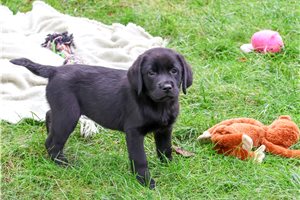
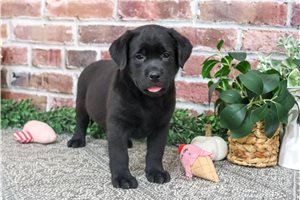


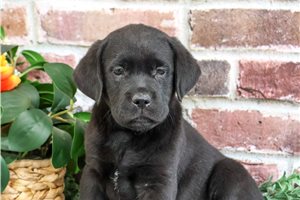
Frequently asked questions about Labradoodle puppies
Frequently asked questions
A grown Labradoodle weighs 25–90 lb and stands 13–22 in at the shoulder, depending on its size. A standard Labradoodle weighs about 50–75 lb, and each puppy's listing shows its parents' weights.
It comes down to the Poodle parent: a Standard Poodle gives a standard Labradoodle, and Miniature or Toy Poodle lines give the smaller sizes. Size is not fixed, so the parents' sizes are the best guide to a puppy's adult size.
Teacup and toy are not recognized sizes. No national kennel club recognizes the Labradoodle, so no breed standard sets its size. A Labradoodle with a Miniature Poodle parent may be smaller than the standard size.
A standard Labradoodle usually reaches adult size at 12–18 months. Smaller Labradoodles get there earlier, at around 6–12 months.
They describe the generation. An F1 has one Labrador and one Poodle parent, and an F1B is an F1 bred back to a Poodle, which makes it about three-quarters Poodle. An F2 is two F1s bred together, and multigen means several generations of Labradoodles bred to Labradoodles. Breeding back to the Poodle makes a coat that sheds less more likely, but no generation label guarantees one.
Labradoodle coats range from a Labrador-type coat that sheds to a curly or wavy Poodle-type coat, called fleece or wool in multigenerational lines. F1 puppies vary the most, and the coat can differ even between littermates.
Most are solid colors from the parent breeds: black, yellow and chocolate from the Labrador, and cream, apricot, red, silver, blue, café and white from the Poodle. Parti, phantom, merle, brindle and sable patterns are outside both parent breeds' AKC standards.
A Labradoodle has a Labrador Retriever parent and a Poodle parent, a Standard Poodle for a standard Labradoodle and a Miniature or Toy Poodle for the smaller sizes. Later generations come from Labradoodles bred together or back to a Poodle.
No, the Australian Labradoodle is a separate cross that adds Cocker Spaniel ancestry and is bred over many generations to its own association standard. It has its own page on Pawrade.
Labradoodles have a moderate energy level. They need at least an hour of exercise a day plus mental work, and at home they are friendly, affectionate companions.
Labradoodles work as guide, service and therapy dogs, and the cross began as a guide-dog project. Not every Labradoodle suits the work, and only one puppy from the first litter became a guide dog.
Not really, because Labradoodles are friendly with strangers and are not a guardian breed.
Well-socialized Labradoodles are generally good with children. Breeders on Pawrade report socializing 81% of Labradoodle litters with young children. At home, teach your puppy not to mouth during play.
Generally yes, when they are socialized. Breeders on Pawrade report socializing 89% of Labradoodle litters with large dogs before the puppies go home.
Usually, because fetch, swimming and on-leash hikes suit the retrieving and water heritage of both parent breeds. While a puppy is growing, build up exercise gradually and avoid forced running.
A Labradoodle needs at least an hour of exercise a day, plus mental work such as training, puzzle feeders or scent games. Too little exercise is one of the things that backfire with this cross.
It can, if its exercise needs are met every day. Most Labradoodle buyers on Pawrade live in a single-family home, and some live in apartments.
Not for long days, because Labradoodles are people-oriented and dislike long periods alone. Crate training and enrichment help prevent separation problems.
Breeders on Pawrade report taking 58% of Labradoodle litters on car or truck rides before the puppies go home. Crate training from the first days gives your puppy a familiar place of its own.
Feed two measured meals a day of a complete diet, with a large-breed puppy food for a standard Labradoodle. Use a slow feeder for a fast eater, skip table scraps, and ask your vet about bloat risk for a standard.
Fetch, swimming, hide-and-seek and puzzle toys suit their instincts. Through AKC Canine Partners, mixed breeds such as the Labradoodle can enter AKC events, including agility, obedience and dock diving.
Wait until your Labradoodle has finished growing before you start jogging or long runs, and ask your vet when that is. A standard usually finishes growing at 12–18 months, and until then forced running is hard on growing joints.
Not truly, because no dog is truly hypoallergenic, and that includes the Labradoodle. Labradoodle coats have been found to carry at least as much of the main dog allergen as other breeds' coats. Some people cope better with a coat that sheds less, so spend time with the dog before you commit.
Many do, and how much depends on the coat: Labrador-type coats shed more than Poodle-type coats. An F1B or multigen puppy is more likely to have a coat that sheds less, but no generation guarantees it.
Brush down to the skin at least twice a week, and book professional grooming every 2–3 months. Clean the ears, dry them after swims, and keep the fringe trimmed away from the eyes.
Labradoodles are intelligent and usually quick to learn with positive reinforcement. They bore easily, so keep sessions short and varied and add daily mental work.
Start on the first day, with a crate sized for the adult dog and a divider for now. Keep the crate in a room where the family spends time, or in your bedroom at night. Take your puppy out first thing in the morning, last thing at night and after naps. Breeders on Pawrade report whether they have started crate training, so ask how far your puppy has got.
A puppy can usually hold its bladder about one hour for each month of age, so a 3-month-old can wait about 3 hours. Very young puppies need to go out first thing in the morning, last thing at night and after naps.
Your Labradoodle has probably reached adolescence, which starts at about 6–8 months and can last until about 2 years. Testing the rules is a normal stage, and in large retriever-type dogs puppyish behavior often lasts well past the first birthday. Keep training short, calm and consistent, with plenty of exercise for body and mind.
Puppies travel only once they are at least 8 weeks old and weigh at least 2 lb. Most Labradoodle puppies go home at about 11 weeks, usually between 9 and 18 weeks.
Most puppies have their adult teeth by about 6 months, and teething winds down then. The baby teeth start falling out from about 12 weeks, so expect extra chewing from then on. Offer safe chew toys, rotate a few at a time, and keep shoes and cords out of reach.
Start right away, because the main socialization window is roughly the first 3 months. Puppy classes can start as early as 7–8 weeks, before the vaccine series ends, as long as your puppy stays away from sick dogs.
Most puppies finish their core vaccine series at about 16 weeks, as your vet advises. Your puppy's own vet sets the exact schedule. Puppy classes can start before the series ends, from 7–8 weeks, as long as your puppy avoids sick dogs.
Get a crate sized for the adult dog, a slicker brush and comb, an ear cleaner, a slow-feeder bowl and plenty of chew toys. Puppy-proof your home, and book a first vet visit to check the eyes, heart and bite.
Labradoodle breeders on Pawrade report a typical litter of 8 puppies, usually between 4 and 10.
Most Labradoodle litters on Pawrade meet children, other dogs and everyday household sounds before the puppies go home. Breeders report socializing 81% of litters with young children and 89% with large dogs. They also report getting litters used to music or TV (65%) and the vacuum cleaner (61%). These figures come from what breeders reported for 105 litters. Keep it going once your puppy is home, because the first 3 months are the main socialization window.
The Veterinary Health Report is the record of your Labradoodle puppy's exam before it goes home. The breeder's licensed vet gives the puppy itself a full hands-on exam, to PetPay's exam standards, and records the results there. It gives you and your own vet a clear starting point for your puppy's care.
The breeder's licensed veterinarian examines every puppy before it goes home, to PetPay's exam standards. The results are recorded in the puppy's Veterinary Health Report, and a copy travels with your puppy for your records.
The vet examines your Labradoodle puppy hands-on and records the results in its Veterinary Health Report. For this cross, the vet listens to the heart, checks the eyes for extra eyelashes and discharge, and feels the kneecaps. The vet also checks for a hernia, looks at the bite, ears, skin and coat and, in males, checks that the testicles have come down.
Before travel, every puppy follows PetPay's vaccination and deworming schedule as far as its age allows: deworming at 2, 4, 6, 8, 10 and 12 weeks, and the distemper, parvo, adenovirus and parainfluenza combination shot at 6–8, 9–11 and 12–14 weeks. Bordetella and corona are given at the vet's discretion, and no vaccine is given within 3 days of travel. Rabies is given by a licensed vet on the schedule your state requires. Your own vet completes the series. Your puppy's vaccination and deworming records are separate documents that travel with your puppy. Bring them, with the Veterinary Health Report, to your first visit so your vet starts from the same record.
If the vet finds something that could put your puppy at risk during travel, your puppy stays with the breeder until it's resolved. Problems that can be treated before travel are treated by the breeder's licensed vet first. Anything else the vet notes is shared with you.
Puppies grow and change quickly, and their immune systems are still developing, so no exam can find everything. The Veterinary Health Report is a strong early indicator and a documented starting point that your own vet builds on. Hip and elbow problems, for example, can't be ruled out this young, so X-rays come later.
Every puppy comes with a health guarantee administered by PetPay, independent of the seller. The terms are on the health guarantee page.
Not from the AKC or the UKC, which do not recognize the Labradoodle. The Australian Labradoodle Association of America registers Labradoodles as well as Australian Labradoodles.
Labradoodle buyers rate their Pawrade experience 4.6 out of 5 on average, from 132 reviews, and about 80% of those reviews give 5 stars.
Right now, most Labradoodle puppies on Pawrade are listed within the typical range shown on Pawrade's Labradoodle listings. Each breeder on Pawrade sets their own price, and each puppy's listing shows it. A Labradoodle puppy's price reflects what goes into it: its pedigree and registration, its coat and color, and the breeder's program. Every Pawrade puppy's price also includes the pre-travel exam by the breeder's licensed vet, the Veterinary Health Report and a health guarantee administered by PetPay.
More ways to search
Popular Labradoodle searches
Other namesWhere families find Labradoodle puppies
Most Popular Labradoodle Cities
Labradoodle puppies by state