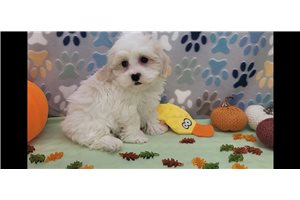
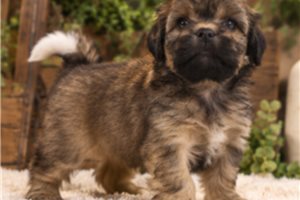
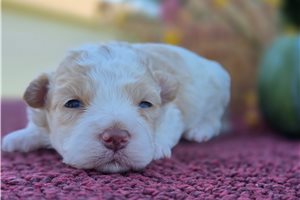
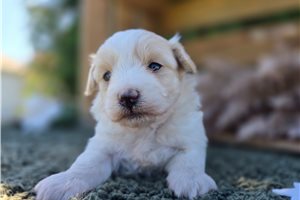
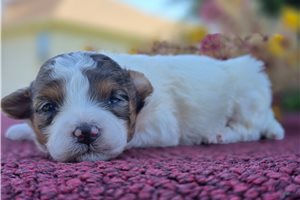
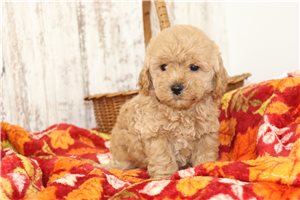
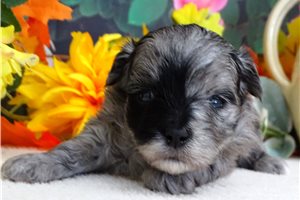
A Maltese is a little white lapdog with a big heart: gentle, playful and fearless for its size. People fall for the long, silky white coat, then for the dog inside it, a companion that wants to be wherever you are.
A Maltese is a little white lapdog with a big heart: gentle, playful and fearless for its size. People fall for the long, silky white coat, then for the dog...A Maltese is a little white lapdog with a big heart: gentle, playful and fearless for its size. People fall for the long, silky white coat, then for the dog inside it, a companion that wants to be wherever you are.
Only with Pawrade, you receive a pet insurance policy with no waiting period included for immediate accident or illness coverage. *NH, NY, RI, SC and TN residents excluded
“Great pup! Wonderful service. Couldn't be happier.”
Twinkie · Maltese
Jan 8, 2026
“Kasey is absolutely adorable! I received him at 2:30AM this morning. He has been given a thumbs up by my vet. He is slowly acclimating himself to me, the house, his surroundings. He is very loving. He was well taken care of on his journey to me. I am very grateful. Thank you so very much!!💕”
Ester · Maltese
Jan 29, 2026
“I am totally happy with my results. I received a beautiful puppy in the travel. Concierge were perfect. Took very good care of my baby and I had a good experience with Pawrade.”
Kyson · Maltese
Nov 14, 2022
“I am thrilled with my new addition to the family. My puppy arrived happy and alert, and the people who transported him were great. I was hesitant to get a pup online, but everything turned out great!”
Puppy scams cost U.S. families millions every year. Here's how you know Pawrade isn't one: we're a named, audited business with a public track record you can check anywhere.
Pawrade data: parents of puppies placed through Pawrade (breeder-reported)
Height
7–10 in
Lifespan
12–15 years
Energy
Low
Shedding
Low
Group
Toy
AKC
Maltese Characteristics
Full-Grown Size
1 of 7SmallLarge
Grooming Needs
3 of 7SeldomRegularly
Good with Dogs
3 of 7Not ReallyYes!
Watchdog Ability
5 of 7LowHigh
Exercise Needs
1 of 7Couch PotatoHigh Needs
Your new best friend.
Maltese temperament
Personality and daily life
The Maltese has been kept as a companion for most of its long history. Its ancestors chased mice and rats around Mediterranean harbors, but for centuries its real job has been keeping people company. Expect a gentle, affectionate little dog that is also lively, playful and fearless for its size.
Kids and other pets
Most Maltese are friendly and open with new people. They are alert too, and a Maltese will sound the alarm when something seems off. They do best with gentle children, because a dog this small is easily hurt by rough handling. With a proper introduction, most get along with other pets.
A Maltese wants its people close by, and long hours alone can leave it anxious or noisy. A bored or lonely Maltese may bark a lot, so teach a quiet cue early and don't reward alarm barking.
Have your vet rule out a medical cause of heavy tearing.
Eye changesRoutine vet checks
Ask for an eye check at every yearly exam, because cataracts in this breed mostly come with age.
Breathing and airwayKnow when to call
A honking cough is a reason to see your vet, because a weak windpipe (tracheal collapse) can narrow the airway in this breed.
Joints and movementKeep them lean and cool
Keep your Maltese lean to protect its knees, and have your vet check the kneecaps at routine visits.
Heart checksRoutine vet checks
At your puppy's first exams, ask your vet to listen carefully to the heart, because some Maltese are born with a heart defect that causes a murmur.
Heart checksRoutine vet checks
In the senior years, ask your vet to listen for a new heart murmur at each exam.
Every milestone, together.
Maltese puppy milestones
Growing up: your Maltese's first years
Before 8 weeks
Before your puppy comes home
Your puppy is still with its breeder, and most Maltese litters on Pawrade meet small dogs and children before they leave. Many also get used to everyday sounds such as the vacuum cleaner.
Buy a small harness for walks, so no collar presses on the windpipe.
Block off steps and high drops, because even a short fall can hurt a puppy this small.
Set up the crate in a room where the family spends time, or in your bedroom at night.
Keep a tube of glucose gel at home in case your puppy's blood sugar dips.
Why it matters
Tiny Maltese puppies can run low on blood sugar until they grow out of it, so small, frequent meals and rest matter from the start.
Maltese note
That long white coat needs combing for life, so plan short, gentle grooming sessions from the very first days.
8–10 weeks
Week 1 at home
Everything is new, and your puppy is learning where it eats, sleeps and goes potty. A puppy can usually wait about as many hours as it is months old, so a young Maltese needs to go out often.
Take your puppy outside first thing in the morning, after naps and last thing at night, and praise every success.
Offer small meals often, keep your puppy warm and let it rest between play sessions.
Book the first vet visit this week, and ask for a careful listen to the heart.
Why it matters
Regular meals, warmth and rest help a tiny puppy keep its blood sugar up while it settles in.
Maltese note
If your puppy ever seems weak, rub a little glucose gel on its gums and call your vet right away.
10–12 weeks
Weeks 2 to 4 at home
Puppies are most open to new experiences in their first 3 months, so calm, happy meetings now shape the adult your Maltese becomes.
Plan a few short, happy introductions each day, such as a friendly visitor, a calm dog or a car ride.
Join a puppy class, which can start as early as 7–8 weeks as long as your puppy stays away from sick dogs.
Practice short spells alone in a safe spot, so being apart starts to feel normal.
Why it matters
A Maltese bonds closely with its people, and gentle practice now makes time apart much easier later.
Maltese note
Supervise young children with your puppy, because a dog this small is easily hurt by rough handling or a fall.
3–4 months
3 to 4 months
Most puppies finish their vaccine series at about 16 weeks, as your vet advises. The risk of low blood sugar fades for most Maltese puppies around now.
Keep every vaccine appointment, since your own vet finishes the series your puppy started with its breeder.
From 4 months, ask your vet about a bile acids blood test, which screens for a liver shunt.
Stretch the time between potty trips a little each week, and still head outside after every nap.
Why it matters
Many Maltese have a mild liver blood-flow difference that also raises the result, so a high reading means more tests, not a diagnosis.
Maltese note
In a male puppy, your vet also checks that both testicles have come down, which can happen a little late in toy breeds.
4–6 months
4 to 6 months
Baby teeth start falling out from about 12 weeks, and the adult teeth are usually in by about 6 months. Toy dogs like the Maltese often keep a baby tooth, usually a canine, after the adult tooth comes through.
Keep only a few safe chew toys out at a time, and rotate them so they stay interesting.
Check your puppy's mouth as the adult teeth come in, and show your vet any baby tooth that stays put.
Start gentle tooth brushing now, so it becomes part of the daily routine.
Why it matters
Chewing eases sore gums, and a baby tooth left in place can crowd the adult teeth until a vet removes it.
Maltese note
Keep grooming sessions short and pleasant, because the coat needs brushing and combing every day.
6–12 months
6 to 12 months
Adolescence often starts between about 6 and 8 months, and your Maltese may test the rules or seem to forget its training. Small dogs finish growing sooner than big ones, but a puppy's growth plates stay soft until growing is done.
Keep training short and upbeat, with praise and treats, and keep the house rules the same as before.
Talk with your vet about whether and when to spay or neuter, because the right choice depends on your own dog.
Agree an exercise plan with your vet, and keep jumping off furniture to a minimum while your Maltese is still growing.
Why it matters
This teenage phase is normal, and patience plus plenty of play carries you both through it.
Maltese note
Baby teeth that stayed in are often removed during the spay or neuter surgery, and any back-leg limp at this age needs a vet visit.
1–2 years
1 to 2 years
Your Maltese is settling into the gentle, playful companion it will be for life. Most dogs are fully grown and settled into adulthood at around 2 years.
Book a wellness exam at least once a year, with a listen to the heart and a check of the knees and teeth.
Keep up daily brushing of the coat and the teeth, and plan professional cleanings when your vet advises.
Keep your Maltese lean and keep walking it on a harness, which helps protect the knees and the windpipe.
Why it matters
Small daily habits now protect the knees, the windpipe and the teeth for years to come.
Maltese note
Now that your Maltese is grown, try a dog sport such as obedience, rally or agility.
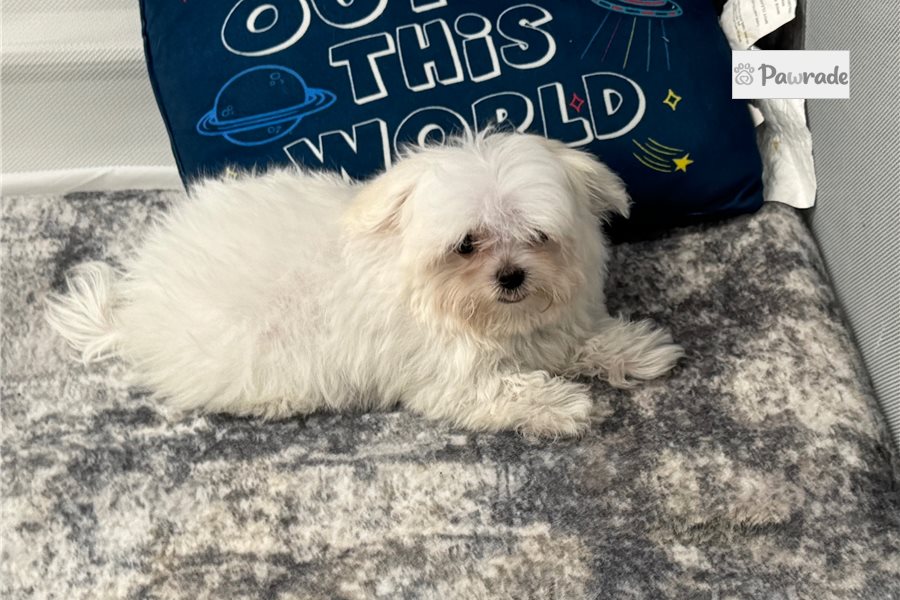
The Maltese is a compact, fine-boned toy dog, about as long as it is tall. It has very dark, round eyes and a plumed tail carried over the back, and it moves with a jaunty, smooth, flowing gait.
Colors and coat
The single coat has no undercoat and hangs long, flat and silky. The long hair on the head may be tied up in a topknot or left down. Every registry standard calls for a white coat, and the AKC standard allows light tan or lemon on the ears. Any other color, such as black, brown, blue, silver or parti-color, is outside the AKC breed standard.
Colors listed by Pawrade breeders
Albino
Black
Blue
Brown
Cream
Fawn
Gold
Gray
Lemon
Lilac
Liver
Pink
Red
Sable
Silver
White
Yellow
Keeping your Maltese healthy
Maltese are known to be prone to a handful of conditions, and everyday care and regular checkups handle many of them.
A little history, a lot of heart.
Maltese history
History and fun facts
classical Greece and Rome
Small white lapdogs of this type were already known in classical Greece and Rome, and the breed is thought to be as much as 2,000 years old.
It belongs to the bichon family of Mediterranean companion dogs, and it is strongly linked with Malta.
Italy is in charge of the breed's standard at the international federation of kennel clubs (FCI).
ancient Greece
Aristotle is credited with calling these dogs perfectly proportioned.
ancient Rome
In ancient Rome the Maltese was a favorite and a status symbol of noblewomen, who are said to have carried them in their sleeves.
Roman
Over the centuries it has also been called the Maltese Lion Dog, the Roman Ladies' Dog and the Comforter Dog.
1888
The AKC recognized the breed in 1888 and the UKC in 1948, and the current AKC standard was approved in 1964.
Actress Elizabeth Taylor kept several Maltese and took them along to events.
The American Maltese Association is the breed's AKC parent club.
Checked with care before travel.
Maltese Veterinary Health Report
Your puppy's Veterinary Health Report
Before your Maltese puppy comes home, the breeder's licensed vet gives it a full hands-on exam to PetPay's exam standards, and the results go into its Veterinary Health Report.
The exam, a health certificate and a stool test for parasites all happen 3 to 5 days before your puppy leaves.
1It is a check of your own puppy, not paperwork about its family, so you start with a clear record of how your puppy is doing.
2If the vet finds something that could put your puppy at risk during travel, your puppy stays with the breeder until it's resolved.
3Problems that can be treated before travel are treated by the breeder's licensed vet first.
4Anything else the vet notes is shared with you.
5A hard copy of the report travels with your puppy for your records, and a digital copy is in your PetPay account.
Puppies travel only once they are at least 8 weeks old and weigh at least 2 lb. Every Pawrade puppy also comes with a health guarantee administered by PetPay, independent of the seller. The terms are on the health guarantee page.
A Maltese puppy's price reflects what goes into it: its pedigree and registration, its coat and color, and the breeder's program. Every Pawrade puppy's price also includes the pre-travel exam by the breeder's licensed vet, the Veterinary Health Report and a health guarantee administered by PetPay. See today's price range for Maltese puppies on Pawrade's Maltese listings.
Typical asking price
$2,875
Based on 527 Maltese listings in the last 12 months
A grown Maltese weighs 4–7 lb and stands 7–10 in tall. Males usually stand 8–10 in and females 7–9 in. It is a toy breed, in the AKC Toy Group.
Parents of Pawrade Maltese typically weigh 4–10 lb (fathers) and 5–9 lb (mothers). A grown Maltese weighs 4–7 lb under the breed standard.
Teacup is a sales name, not a separate kind of Maltese, and no breed standard has a teacup size. Every Maltese is a toy dog, and the breed standard puts quality ahead of small size. Very small dogs can go on having bouts of low blood sugar throughout life.
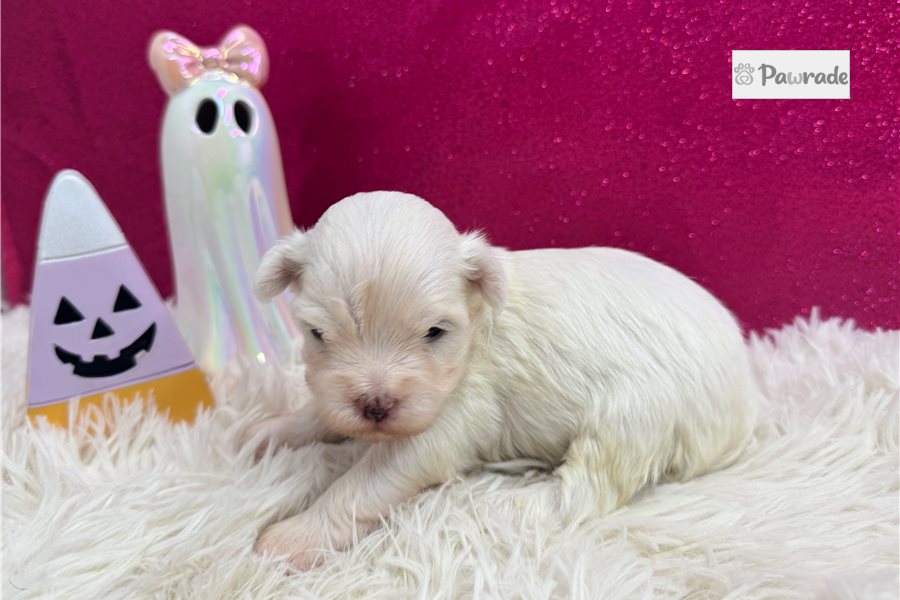
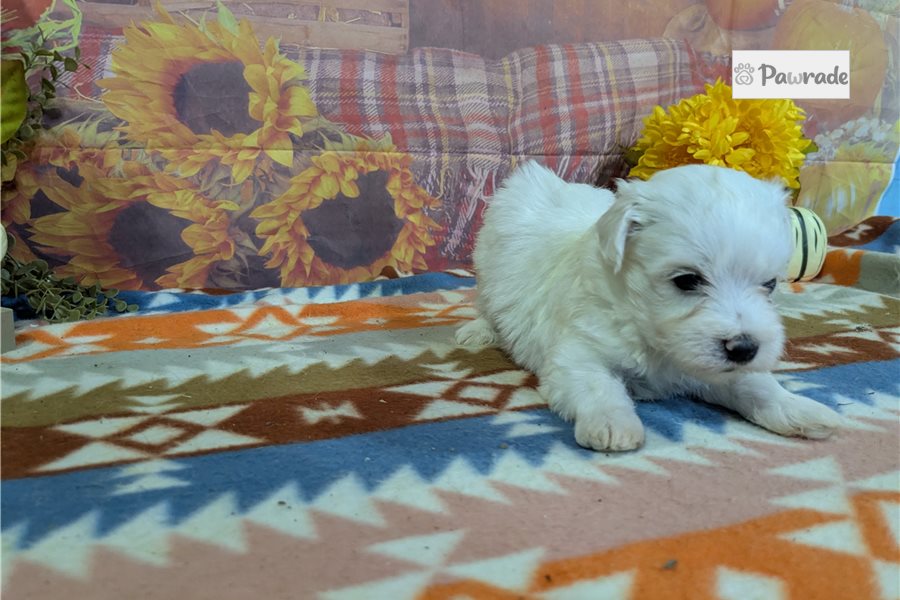
A Maltese puppy typically weighs about 1.5–2 lb at 8 weeks and 2.5–3 lb at 12 weeks. Pawrade puppies must weigh at least 2 lb before they travel.
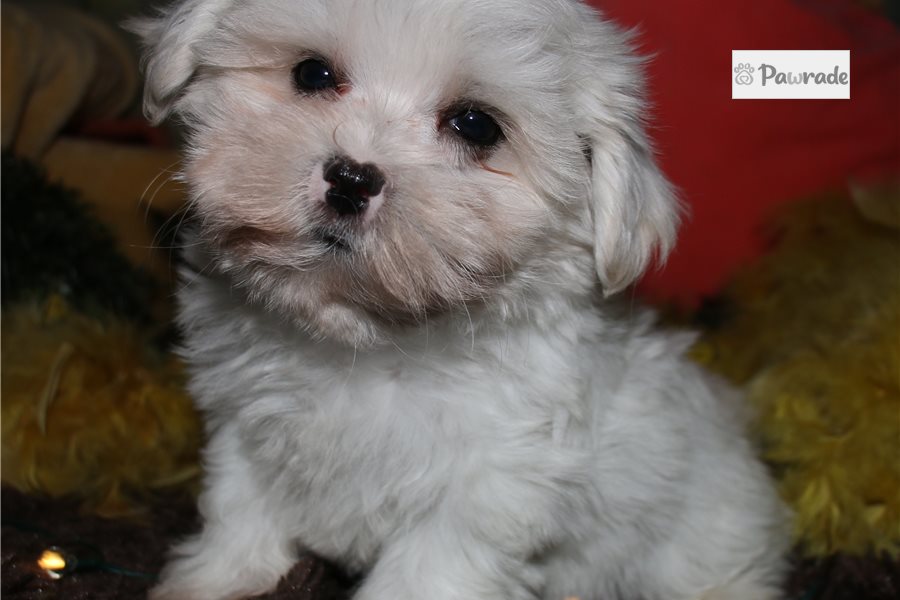
White is the standard color, and the AKC standard allows light tan or lemon on the ears, though it is not preferred. The nose, lip edges and eye rims are black. Any other color is outside the AKC breed standard.
Maltese keep a full, plumed tail carried over the back, as the breed standards call for.
A Havanese also has a long, low-shedding coat, but it is sturdier, with a double coat in many colors. A Shih Tzu is heavier, has a double coat in every color, needs more exercise and is flat-faced. A Yorkshire Terrier is similar in size, with a long, silky coat in blue and tan.
A Maltese is gentle and affectionate, with a low energy level. It is also lively, playful and fearless for its size, so short walks and indoor play suit it well.
A Maltese is alert and will sound the alarm, and a bored or lonely one may bark a lot. Teach a quiet cue early, and don't reward alarm barking.
The Maltese has been kept as a companion and lapdog since ancient times. It likes to stay close to its people and does not enjoy long spells alone.
Most Maltese are friendly and open with new people. Early socialization with people and other dogs helps that friendliness grow.
Most Maltese get along with other pets after a proper introduction. Pawrade breeders socialize most Maltese litters with small dogs before the puppies go home. More than a third of Pawrade Maltese buyers already have a dog at home.
A Maltese does well with gentle, respectful children. Supervise young children, because a dog this small is easily hurt by rough handling or a fall. Pawrade breeders socialize most Maltese litters with children before the puppies go home.
The Maltese is well suited to apartments and small homes. Its exercise needs are modest, and teaching a quiet cue early helps with close neighbors.
A Maltese needs up to about 30 minutes of exercise a day, made up of short walks and indoor play. Use a harness rather than a neck collar on walks.
A Maltese prefers company and may become vocal or anxious when left alone too long. Build up time alone gradually, and give a walk or a play session before you leave.
A Maltese is small enough to carry easily, and puppies are best carried, because even a fall off a step can mean a vet visit. A lean weight and fewer jumps off furniture help protect the knees for life.
Small dogs finish growing sooner than big ones, but a puppy's growth plates stay soft until growing is done. Until then, agree an exercise plan with your vet and keep jumps off furniture to a minimum.
Maltese shed little, but no dog is truly hypoallergenic. The single coat has no undercoat, so it may leave less hair around, and it is described as low-shedding, not allergy-free.
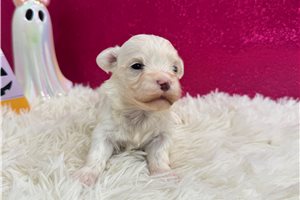
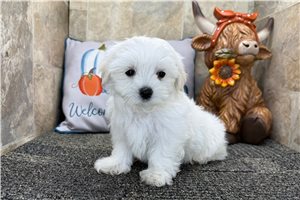
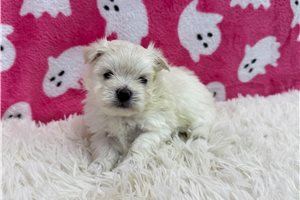
A Maltese has a single coat of long, straight, silky white hair with no undercoat. The hair on the head can be tied up in a topknot or left down.
A Maltese needs brushing and combing every day to prevent mats, and a blow-dry after each bath. Many owners keep a pet Maltese in a short clip to make this easier.
Tear staining is common in the breed and shows clearly on a white face. Have your vet rule out a medical cause of heavy tearing first, then keep the face clean and dry.
Maltese learn well with consistent, reward-based training using praise and treats. They can be stubborn, and harsh methods backfire. Trick training and short play sessions suit them well.
Take your puppy outside first thing in the morning, after naps and last thing at night, and reward every success with praise and a treat. Keep the routine the same every day, because consistency is what works with a Maltese. If you use a crate, put it in a room where the family spends time, or in your bedroom at night.
A puppy can usually hold its bladder for about as many hours as it is months old, so a 3-month-old Maltese can wait about 3 hours. The rule holds up to about 9 months to 1 year of age. Young puppies still need trips out first thing in the morning, last thing at night and after naps.
Your Maltese is most likely in adolescence, a normal phase that often starts between about 6 and 8 months. Dogs this age test boundaries and may seem to forget their training. Consistent, reward-based training, patience and plenty of play carry you both through it.
Short indoor games, trick training and short walks suit the breed. Maltese also take part in obedience, rally, agility and conformation shows.
Pawrade puppies travel only once they are at least 8 weeks old and weigh at least 2 lb, and the breeder's licensed vet examines each one first. Most Maltese puppies go home at about 12 weeks, usually between 9 and 18 weeks.
Across 324 Maltese litters on Pawrade, the typical litter has 4 puppies, and most have between 2 and 5.
Feed small meals often, keep your puppy warm and let it rest, because tiny puppies can run low on blood sugar. Keep a glucose gel on hand, and if your puppy seems weak, rub a little on its gums and call your vet. Walk it on a harness, guard against falls from steps and furniture, and start gentle daily brushing.
Get a small harness rather than a collar, a pin brush and steel comb, and a glucose gel to keep on hand. Block steps and drops your puppy could fall from, and put the crate where the family spends time or in your bedroom at night. Book a first vet visit that includes a careful listen to the heart and a plan for liver screening.
Most Pawrade Maltese litters meet small dogs and children and hear everyday household sounds before the puppies go home, as reported by their breeders. Breeders report that 95% of 324 litters met small dogs, 81% met older children and 79% met younger children. Most litters also got used to the vacuum cleaner (70%) and to loud music or TV (53%). Keep going once your puppy is home, with new people and other dogs a little at a time.
Start the day your puppy comes home, because the first 3 months are the most important time for socialization. Puppy classes can start as early as 7–8 weeks, as long as your puppy stays away from sick dogs. Keep each new meeting short and happy, with new people and other dogs a little at a time.
Baby teeth start falling out from about 12 weeks, and most puppies have their adult teeth by about 6 months. Toy dogs like the Maltese often keep a baby tooth, usually a canine, so check the mouth as the adult teeth come in. Rotate a few safe chew toys, and ask your vet about any baby tooth that stays put.
Most puppies finish their core vaccine series at about 16 weeks, as your vet advises. Puppy classes can start before then, as long as your puppy stays away from sick dogs. Your puppy's vaccination and deworming records are separate documents that travel with your puppy. Bring them, with the Veterinary Health Report, to your first visit so your vet starts from the same record.
The Veterinary Health Report is the written record of your Maltese puppy's health exam before it goes home. The breeder's licensed veterinarian examines the puppy to PetPay's exam standards and records the results in the report. It covers your puppy itself, not its parents, and a copy travels with your puppy for your records.
The breeder's licensed veterinarian examines every Maltese puppy before it goes home, to PetPay's exam standards. The results are recorded in the puppy's Veterinary Health Report, and the exam happens 3 to 5 days before your puppy leaves.
The breeder's licensed vet gives each Maltese puppy a full hands-on exam before it goes home, to PetPay's exam standards. The vet listens to the heart for a murmur and feels each knee to check that the kneecap stays in place. The vet also checks the eyes for extra lashes and watery discharge, looks at the bite and, in a male, feels for both testicles.
Before travel, every puppy follows PetPay's vaccination and deworming schedule as far as its age allows: deworming at 2, 4, 6, 8, 10 and 12 weeks, and the distemper, parvo, adenovirus and parainfluenza combination shot at 6–8, 9–11 and 12–14 weeks. Bordetella and corona are given at the vet's discretion, and no vaccine is given within 3 days of travel. Rabies is given by a licensed vet on the schedule your state requires. Your own vet completes the series. Your puppy's vaccination and deworming records are separate documents that travel with your puppy. Bring them, with the Veterinary Health Report, to your first visit so your vet starts from the same record.
If the vet finds something that could put your puppy at risk during travel, your puppy stays with the breeder until it's resolved. Problems that can be treated before travel are treated by the breeder's licensed vet first. Anything else the vet notes is shared with you.
Puppies grow and change quickly, and their immune systems are still developing, so no exam can find everything. The pre-travel exam by the breeder's licensed vet is a strong early indicator and a documented starting point. Your own vet builds on it at the first visit and at every checkup after that.
Maltese buyers rate their Pawrade experience 4.8 out of 5 on average, across 236 reviews. About 86% of their reviews give the full 5 stars.
Right now, most Maltese puppies on Pawrade are listed within the typical range shown on Pawrade's Maltese listings. Each breeder on Pawrade sets their own price, and each puppy's listing shows it. A Maltese puppy's price reflects what goes into it: its pedigree and registration, its coat and color, and the breeder's program. Every Pawrade puppy's price also includes the pre-travel exam by the breeder's licensed vet, the Veterinary Health Report and a health guarantee administered by PetPay.

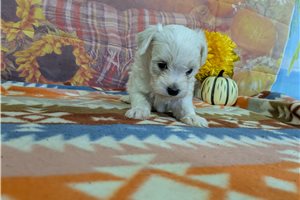














 Maltese note