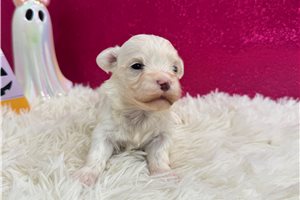
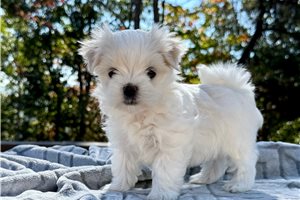
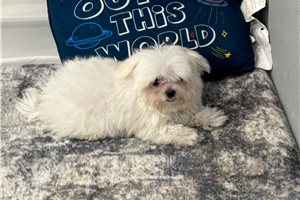
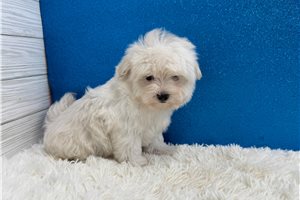
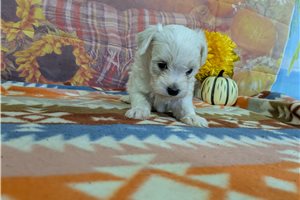
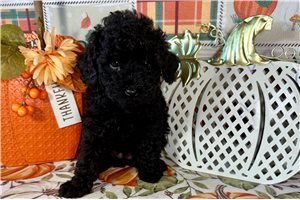
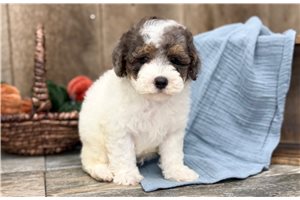
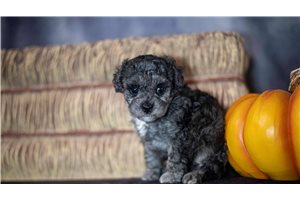
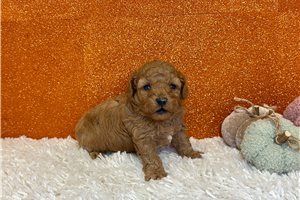
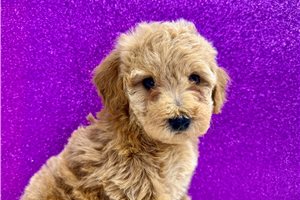
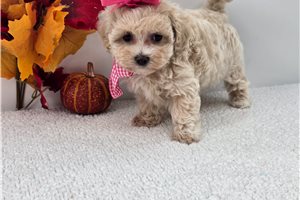
A Maltipoo is a little dog with a big attachment to its people, and many keep their puppy face and playful manner well into adulthood. Breeders paired the Maltese's gentle nature with the Poodle's quick mind and low-shedding coat to make a small companion.
A Maltipoo is a little dog with a big attachment to its people, and many keep their puppy face and playful manner well into adulthood. Breeders paired the Maltese's...A Maltipoo is a little dog with a big attachment to its people, and many keep their puppy face and playful manner well into adulthood. Breeders paired the Maltese's gentle nature with the Poodle's quick mind and low-shedding coat to make a small companion.
Only with Pawrade, you receive a pet insurance policy with no waiting period included for immediate accident or illness coverage. *NH, NY, RI, SC and TN residents excluded
Puppy scams cost U.S. families millions every year. Here's how you know Pawrade isn't one: we're a named, audited business with a public track record you can check anywhere.
Pawrade data: parents of puppies placed through Pawrade (breeder-reported)
Height
8–14 in
Lifespan
10–15 years
Shedding
Low
Maltipoo Characteristics
Full-Grown Size
1 of 7SmallLarge
Grooming Needs
4 of 7SeldomRegularly
Good with Dogs
7 of 7Not ReallyYes!
Watchdog Ability
1 of 7LowHigh
Exercise Needs
4 of 7Couch PotatoHigh Needs
Your new best friend.
Maltipoo temperament
Personality and daily life
Temperament
Maltipoos are affectionate, social and playful, and they bond closely with their people. Most are friendly with guests. A socialized Maltipoo is gentle with children, but its small size means young children need close supervision. Most get along with other pets, cats included, once socialized, although play with larger dogs needs watching.
Energy and play
A daily walk plus play sessions covers most of a Maltipoo's exercise needs, and it is not an always-on-the-go dog. Fetch, chase, tug, puzzle toys, snuffle mats and trick training all suit it. The small size suits apartments, but Maltipoos are alert barkers that announce visitors and noises, so teach a quiet cue early.
Company and time alone
Time alone is the part to plan for. Maltipoos are prone to separation anxiety and do best where someone is around most of the day. Crate training gives a puppy a safe place of its own and helps prevent distress when you have to go out.
Training
Maltipoos are intelligent and eager to please, and they learn quickly with praise, toys and small food rewards in short sessions. They are sensitive, so harsh handling backfires.
Pawrade data: parents of puppies placed through Pawrade (breeder-reported). Placements and reviews come from Pawrade's records.
A healthier start for a happier tomorrow.
Maltipoo care & grooming
Care and grooming
The routine
Coat and shedding
Low
The coat can be curly like the Poodle's or straight and silky like the Maltese's, usually medium to long, and it sheds little.
Daily
Coat and grooming care
It mats quickly, and mats pull tight against the skin, where they can lead to skin infections. Brush daily with a slicker brush, and book a professional groom every 4–6 weeks.
Teeth and gums
Brush the teeth every day, starting in puppyhood.
Monthly / as needed
Nail trims
Keep the nails trimmed.
Ear checks
Keep the ears clean. Clean the ears after baths, because hair growing in the ear canal makes infections more likely.
Around the eyes
Keep the hair on the face tidy. Tear staining is common, so wipe the eyes regularly.
Keeping them safe
Heat safety
If your Maltipoo ever develops a weak windpipe, keep it out of hot, humid weather and smoky air.
Leash and fencing
Use a harness rather than a collar, because pressure on the throat makes a weak windpipe worse.
Ask your vet to check the eyes at every yearly checkup, since eye problems run on both sides of the family.
Breathing and airwayKnow when to call
See your vet about a honking cough, a common sign of a weak airway (tracheal collapse).
Joints and movementKnow when to call
See your vet if your Maltipoo starts skipping or hopping on a back leg, which can mean a slipping kneecap.
Teeth and gumsRoutine vet checks
Book dental cleanings at the yearly checkup when your vet recommends them.
Body weightKeep them lean
Count training treats as part of the day's food, because Maltipoos gain weight easily.
Heart checksRoutine vet checks
Have your vet listen to the heart at each yearly exam.
Every milestone, together.
Maltipoo puppy milestones
Your Maltipoo's first 2 years
Before 8 weeks
Before your puppy comes home
Your puppy is still with its litter, and the weeks when it is most open to new people, sounds and places have already begun. Its adult size is still a best guess, because a Maltipoo's size depends on its parents and varies by generation.
Set up a crate in a room where the family spends its day, or in your bedroom at night.
Buy a small harness rather than a collar, so walks never put pressure on the windpipe.
Have a slicker brush, a comb, pet eye wipes and an ear cleaner ready before your puppy arrives.
Why it matters
A crate near people helps a new puppy settle, and you can hear it at night when it needs to go out.
Maltipoo note
Maltipoos bond closely with their people, so a crate within sight and sound of the family suits them from the first night.
8–10 weeks
The first week home
Everything is new, and your puppy needs a bathroom trip first thing in the morning, last thing at night and after every nap. Very young Maltipoos can get low blood sugar, so small, regular meals matter right now.
Feed small-breed puppy food in about four small meals a day, on a steady schedule.
Start gentle brushing, face wiping and tooth brushing this week, so grooming becomes part of the day.
Leave your puppy in its crate for very short spells while you are home, so time alone starts small.
Why it matters
Steady meals keep a tiny puppy's blood sugar even, and short, happy grooming sessions make the daily brushing ahead much easier.
Maltipoo note
Maltipoos are prone to separation anxiety, so alone-time practice belongs in the very first week.
10–12 weeks
Weeks 2 to 4
Your puppy is in the middle of its most important weeks for socialization, which run through about the first 3 months. Calm, happy meetings now shape how it feels about people, children and other pets later on.
Plan a few short, gentle meetings each day with new people, friendly healthy dogs and everyday sounds.
Sign up for a reward-based puppy class, which can start at 7–8 weeks once your vet is happy.
Until the vaccine series is done, keep your puppy away from sick or unknown dogs, as your vet advises.
Why it matters
Early, positive meetings matter for a Maltipoo, whose close attachment to its people makes it prone to separation anxiety.
Maltipoo note
A Maltipoo is small, so keep a close eye on play with bigger dogs and lively young children.
3–4 months
3 to 4 months
Around 12 weeks, the baby teeth start falling out as the adult teeth come in, and chewing picks up. The puppy vaccine series usually finishes at about 16 weeks, as your vet advises.
Keep only a few safe chew toys out at a time, and rotate them so they stay interesting.
Stretch the time between bathroom trips slowly, since a puppy can usually hold its bladder about as many hours as it is months old.
Keep brushing every day, and book a first gentle visit with a groomer so the grooming table feels normal.
Why it matters
Chewing is strongest while the teeth change, so safe toys protect both your home and your puppy.
Maltipoo note
Slipping kneecaps run on both sides of the family and can show early, so let your vet feel the knees at each puppy visit.
4–6 months
4 to 6 months
By about 6 months, the adult teeth are in and teething winds down. Your puppy is still growing, and the growth plates in its legs stay soft until growth is done.
Let your puppy play at its own pace, and save long, hard exercise and big jumps for later.
Agree on an exercise plan with your vet while your puppy is still growing.
Book professional grooming on a regular schedule, and keep brushing at home in between visits.
Why it matters
Too much strenuous exercise can hurt a puppy's soft growth plates and lead to injury.
Maltipoo note
Limping in a young toy dog can point to a hip problem that shows up early, and it calls for a vet check.
6–12 months
6 to 12 months
From about 8 months, many young dogs test limits and seem to forget cues they already knew. This teenage stretch is normal, and patience carries you through it.
Keep training sessions short and upbeat, with praise, toys and small food rewards.
Keep practicing a quiet cue, because barking habits can settle in during these months.
Talk with your vet about spaying or neutering, since the right time depends on things like sex and expected adult size.
Why it matters
Consistent training, patience and plenty of play for body and mind help a young dog through this stage.
Maltipoo note
Maltipoos are sensitive, so harsh corrections backfire, while praise and small food rewards keep them keen.
1–2 years
1 to 2 years
Your Maltipoo looks grown up, and most dogs are fully grown and settled into adulthood at around 2 years. Small dogs finish growing sooner than large ones.
Settle into an adult routine of two measured meals a day, a daily walk with play, and daily brushing.
Book a wellness exam with your vet at least once a year, and ask for the heart to be checked each time.
Keep up daily tooth brushing, with professional cleanings whenever your vet suggests them.
Why it matters
Yearly checkups let your vet listen for a new heart murmur and keep an eye on the teeth.
Maltipoo note
Many Maltipoos keep their playful, puppy-like manner into adulthood, so games and short training sessions stay part of the day.
There is no Maltipoo breed standard, so size, coat and looks vary with the parents. Size depends mainly on the Poodle parent, and a Miniature Poodle parent usually gives a larger adult than a Toy Poodle parent. A Maltipoo's adult size depends on its parents and varies by generation, so each puppy's listing shows its parents' weights. The parent standards set the limits: a Toy Poodle stands 10 in or under, and a Miniature Poodle over 10 in up to 15 in.
Colors and markings
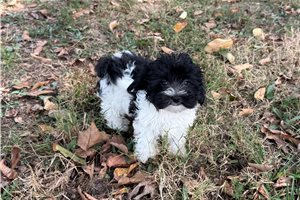
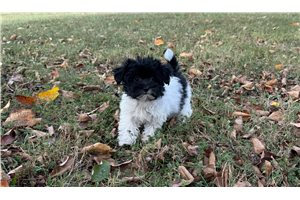
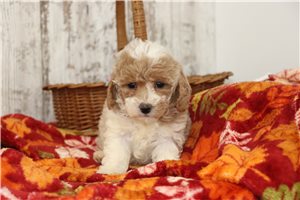
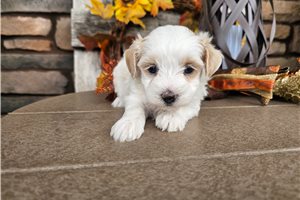
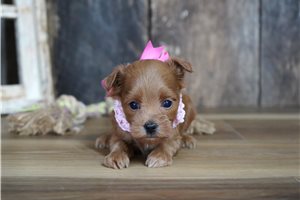
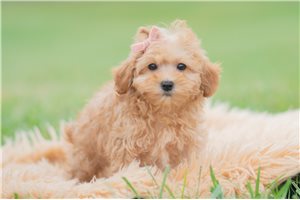
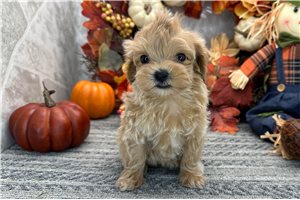
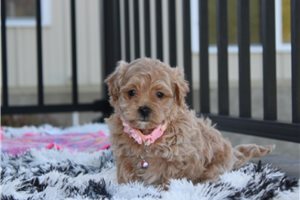
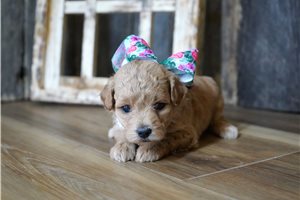
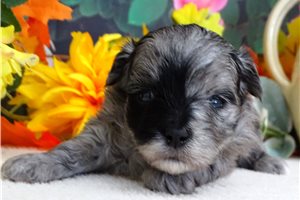
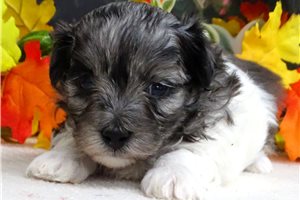
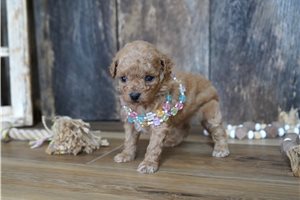
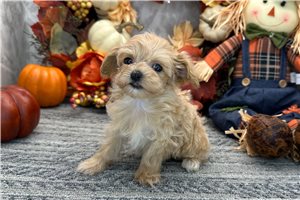
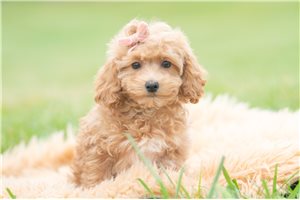
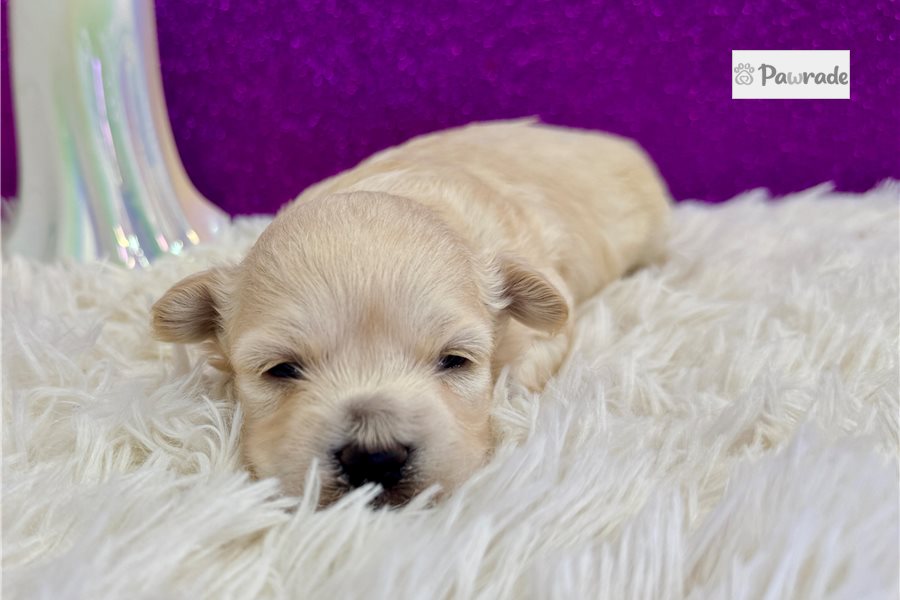
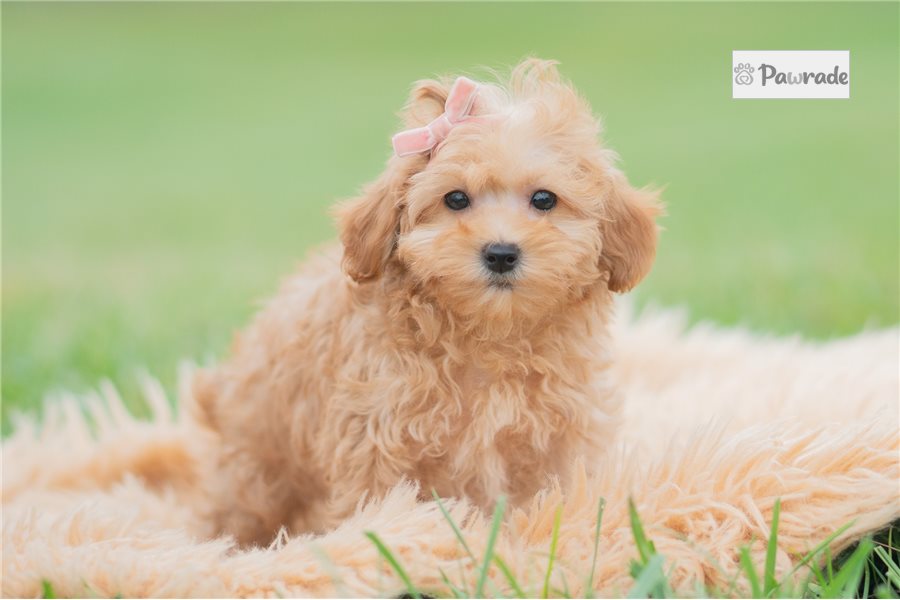
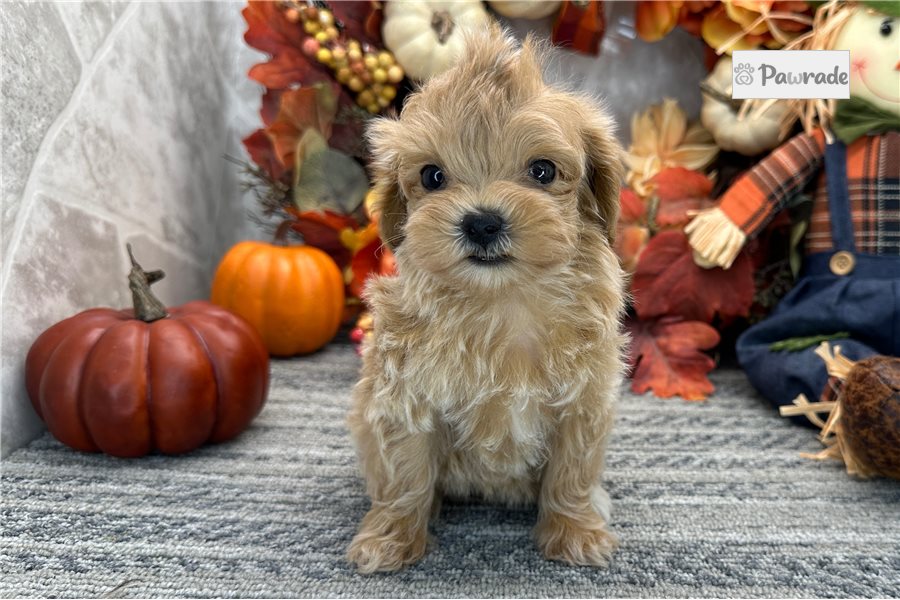
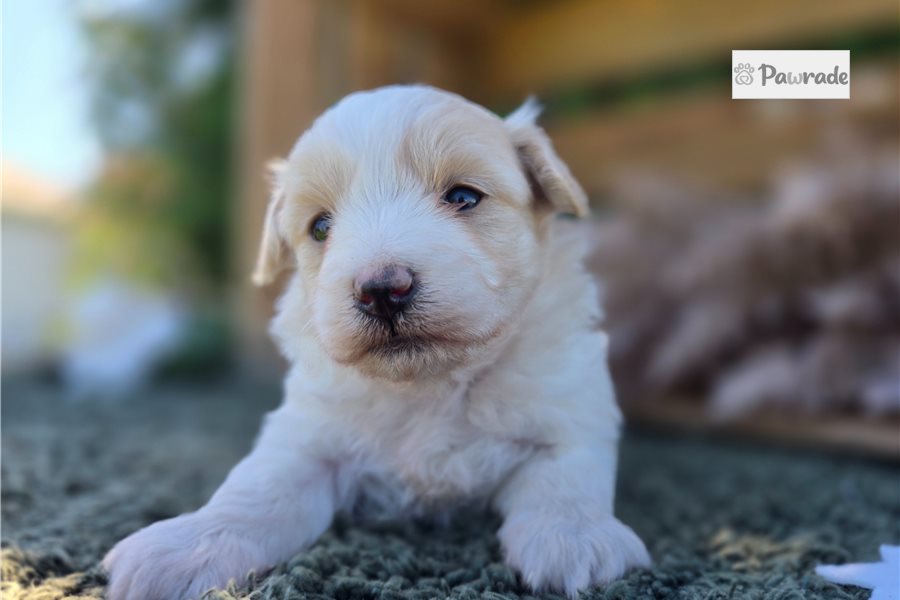
White is the most common color, and Maltipoos also come in cream, apricot, red, silver or gray, black, brown and gold, as well as parti-color. The AKC Maltese standard calls for white, and the AKC Poodle standard allows any solid color. Parti-color, merle and brindle are outside both parent breeds' AKC standards. Some colors fade as the adult coat comes in, so a puppy's color is not always its grown-up color.
The Designer Kennel Club registers Maltipoos of every generation, while the AKC registers none.
Colors listed by Pawrade breeders
Apricot
Beige
Black
Blue
Brindle
Brown
Champagne
Chocolate
Cream
Gray
Parti
Red
Sable
Silver
White
A little history, a lot of heart.
Maltipoo history
History
1990s
The Maltipoo was developed in the late 20th century, around the 1990s, and no founder, kennel or exact starting date is on record.
Demand for small, low-shedding companion dogs has carried its popularity in recent decades.
The AKC and UKC do not recognize the Maltipoo, and no established breed club exists for it.
Both parents have long pedigrees.
Ancient
The Maltese has been a pampered lapdog since biblical times, and it was once called "Ye Ancient Dogge of Malta."
1943–2002
Toy and Miniature Poodles have won Best in Show at Westminster five times, from Ch. Pitter Patter of Piperscroft in 1943 to Ch. Surrey Spice Girl in 2002.
The parent breeds' national clubs are the American Maltese Association and the Poodle Club of America.
Checked with care before travel.
Maltipoo Veterinary Health Report
Your puppy's Veterinary Health Report
Before your Maltipoo goes home, the breeder's licensed vet gives it a full hands-on exam to PetPay's exam standards, and the results go into its Veterinary Health Report.
The exam, a health certificate and a stool test for parasites all happen 3 to 5 days before your puppy leaves.
1The exam looks at your puppy itself, not its parents, so you get a written record of the little dog you are bringing home.
2If the vet finds something that could put your puppy at risk during travel, your puppy stays with the breeder until it's resolved.
3Problems that can be treated before travel are treated by the breeder's licensed vet first.
4Anything else the vet notes is shared with you.
5A hard copy of the report travels with your puppy for your records, and a digital copy is in your PetPay account.
Puppies must be at least 8 weeks old and 2 lb before they travel. Every puppy also comes with a health guarantee administered by PetPay, independent of the seller. The terms are on the health guarantee page.
The Cavapoo is typically bigger and has Cavalier heart and syringomyelia risks, while the Maltipoo's Maltese side brings liver-shunt and tracheal-collapse risks; both are low-shedding and people-oriented.
A grown Maltipoo weighs 5–20 lb and stands 8–14 in tall. Size depends mainly on the Poodle parent, so a puppy with a Toy Poodle parent usually ends up smaller than one with a Miniature Poodle parent. Parents of Pawrade Maltipoos typically weigh 4–13 lb (fathers) and 5–12 lb (mothers).
Not always, because a grown Maltipoo can weigh anywhere from 5 to 20 lb. A Toy Poodle parent makes a smaller adult more likely than a Miniature Poodle parent, but no breed standard sets a Maltipoo's size. Each puppy's listing shows its parents' weights, because a Maltipoo's adult size depends on its parents and varies by generation.
Each listing shows the puppy's own parents' weights, because a Maltipoo's adult size depends on its parents and varies by generation. Parents of Pawrade Maltipoos typically weigh 4–13 lb (fathers) and 5–12 lb (mothers).
Toy and mini usually describe the Poodle parent, and a Toy Poodle parent tends to give a smaller adult than a Miniature Poodle parent. No registry standard exists for the Maltipoo, so no size class, teacup included, is formally defined.
F1, F1B, F2 and multigen are labels for a puppy's generation, and the Designer Kennel Club registers Maltipoos of every generation. The Poodle parent's size matters most for the adult dog, since a Toy Poodle parent usually gives a smaller Maltipoo than a Miniature Poodle parent.
White is the most common color, and Maltipoos also come in cream, apricot, red, silver or gray, black, brown, gold and parti-color. A puppy's color can change, because some colors fade as the adult coat grows in.
Some Maltipoos have the Poodle's curls and others the Maltese's straight, silky hair, usually medium to long. The puppy coat also changes as the adult coat comes in, so regular brushing should start early.
Maltipoos are affectionate, social and playful, and they bond closely with their people. Most are friendly with guests, and because they are sensitive, gentle reward-based handling brings out the best in them.
A daily walk plus play sessions meets most Maltipoos' exercise needs, and they are not always-on-the-go dogs. Puzzle toys and snuffle mats help on days with less time outside.
It can be, because Maltipoos are eager to please and learn quickly with rewards. A first-time owner should plan for daily brushing, regular grooming and someone at home for most of the day.
A socialized Maltipoo is gentle with children, but its small size means young children need close supervision. Maltipoo breeders on Pawrade report socializing 80% of their litters with older children and 76% with younger children.
Usually, because Maltipoos generally get along with other pets once socialized. Supervise play with larger dogs, since a Maltipoo is small. Maltipoo breeders on Pawrade report socializing 95% of their litters with small-breed dogs.
Generally yes, because socialized Maltipoos tend to get along with cats. Some breeders on Pawrade socialize their litters with cats before the puppies go home.
Not for long, because Maltipoos bond tightly and are prone to separation anxiety, so they do best where someone is home most of the day. Crate training and very short practice absences from the first days help.
Its small size suits apartment life, although alert barking can bother neighbors. A daily walk and play indoors cover its exercise. Most Maltipoo buyers on Pawrade live in a single-family home, and some live in apartments or condos.
A Maltipoo enjoys walks and outdoor play, though it is not an always-on-the-go dog. Use a harness on every outing, because collar pressure can make a weak windpipe worse. If your dog ever develops a weak windpipe, skip hot, humid outings and smoky air.
A complete and balanced small-breed puppy food, fed in about four small meals a day at first to prevent low blood sugar. Move to three meals and later two, and measure portions, because Maltipoos gain weight easily.
Maltipoos are low-shedding, but no dog is truly hypoallergenic. The coat still carries allergens, so anyone with allergies should spend time with a Maltipoo before bringing one home.
A lot for a small dog, with daily brushing and a professional groom every 4–6 weeks. Low shedding does not mean low maintenance, because the coat mats quickly.
Start brushing, face wiping and tooth brushing in the first week, so grooming becomes part of the routine. An early, gentle visit with a groomer helps too, because the puppy coat changes as the adult coat grows in and mats can form quickly.
Tear staining is common in Maltipoos, and regular eye wiping keeps it in check. Ask your vet if the staining is heavy, because some causes are treatable.
Usually, because they are intelligent, eager to please and quick to learn with positive reinforcement. Keep sessions short, use praise, toys and small treats, and avoid harsh corrections.
Start on the first day by taking your puppy out first thing in the morning, last thing at night and after every nap. Keep the crate where the family spends time or in your bedroom at night, and build short spells of alone time from the first days. Breeders on Pawrade report whether they have started crate training, so ask how far your puppy has got.
A puppy can usually hold its bladder for about as many hours as it is months old, so a 3-month-old can wait about 3 hours. Very young puppies need to go out first thing in the morning, last thing at night and after naps.
Your Maltipoo has probably reached its teenage phase, which can start around 8 months and last until about 2 years. Young dogs test limits and seem to forget cues they knew, and the phase passes. Keep training short and kind, with praise and small rewards, because harsh handling backfires with a sensitive Maltipoo.
Puppies travel only once they are at least 8 weeks old and weigh at least 2 lb. Most Maltipoo puppies go home at about 11 weeks, usually between 9 and 17 weeks.
Most puppies finish teething by about 6 months, when all the adult teeth are in. The baby teeth start falling out at around 12 weeks, so expect extra chewing from then on. Offer safe chew toys, rotate a few at a time and keep shoes and cords out of reach.
Most puppies finish their core vaccine series at about 16 weeks, as your vet advises. The shots are given as a series over several weeks, and your vet sets the exact schedule. Until then, keep your puppy away from sick or unknown dogs. Puppy classes can start before the series ends, from 7–8 weeks, once your vet is happy.
Start right away, because the first 3 months are the main socialization window. Puppy classes can begin at 7–8 weeks, and gentle, positive meetings with people, children and other pets also help guard against separation anxiety.
Get a crate, a small harness, small-breed puppy food and a grooming kit with a slicker brush, comb, eye wipes and ear cleaner. Plan small, frequent meals at first to prevent low blood sugar.
Most Maltipoo litters on Pawrade meet children, other small dogs and everyday household sounds before the puppies go home. Breeders report socializing 95% of litters with small-breed dogs and 80% with older children. They also report getting litters used to the vacuum cleaner (66%), music or TV (64%), pots and pans (58%) and car rides (57%). These figures come from what breeders reported for 634 litters. Keep it going once your puppy is home, because the first 3 months are the main socialization window.
The Veterinary Health Report is the written record of your Maltipoo puppy's exam before it goes home. The breeder's licensed vet gives the puppy itself a full hands-on exam to PetPay's exam standards and writes down what they find. It gives you and your own vet a clear starting point for your puppy's care.
The breeder's licensed veterinarian examines every puppy before it goes home, to PetPay's exam standards. The results are recorded in the puppy's Veterinary Health Report, and a copy travels with your puppy for your records.
The breeder's licensed vet gives your Maltipoo puppy a full hands-on exam and records it in the Veterinary Health Report. The vet feels both knees to check that each kneecap stays in place, since slipping kneecaps run in both parent breeds. The vet also checks the eyes and the lashes around them with a small light.
Before travel, every puppy follows PetPay's vaccination and deworming schedule as far as its age allows: deworming at 2, 4, 6, 8, 10 and 12 weeks, and the distemper, parvo, adenovirus and parainfluenza combination shot at 6–8, 9–11 and 12–14 weeks. Bordetella and corona are given at the vet's discretion, and no vaccine is given within 3 days of travel. Rabies is given by a licensed vet on the schedule your state requires. Your own vet completes the series. Your puppy's vaccination and deworming records are separate documents that travel with your puppy. Bring them, with the Veterinary Health Report, to your first visit so your vet starts from the same record.
If the vet finds something that could put your puppy at risk during travel, your puppy stays with the breeder until it's resolved. Problems that can be treated before travel are treated by the breeder's licensed vet first. Anything else the vet notes is shared with you.
Puppies grow and change quickly, and their immune systems are still developing, so no single exam can find everything. Inherited eye conditions such as cataract, for example, mostly appear later in life. The report is a strong early look at your puppy, and your own vet builds on it at every checkup.
Not AKC papers, because the AKC does not register Maltipoos of any generation. The Designer Kennel Club, a designer-breed registry, registers Maltipoos of every generation.
Right now, most Maltipoo puppies on Pawrade are listed within the typical range shown on Pawrade's Maltipoo listings. Each breeder on Pawrade sets their own price, and each puppy's listing shows it. A Maltipoo puppy's price reflects what goes into it: its pedigree and registration, its coat and color, and the breeder's program. Every Pawrade puppy's price also includes the pre-travel exam by the breeder's licensed vet, the Veterinary Health Report and a health guarantee administered by PetPay.
The Maltipoo is also commonly referred to as Maltepoo, Maltadoo, Maltdoodle, Maltepoos, Maltese Poodle Hybrid, Maltese Poodle Mix, Maltoodle, Mopic and Multapoo.









 Maltipoo note