Mini Bernedoodle
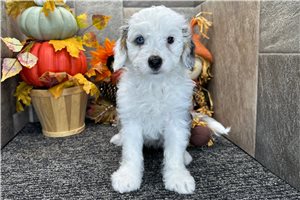
Mini Bernedoodle Puppies for Sale
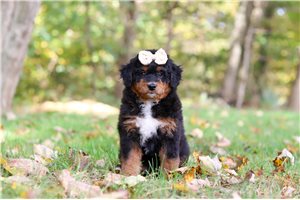
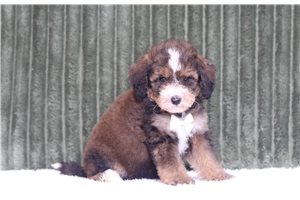
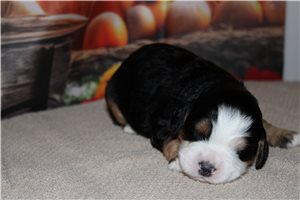
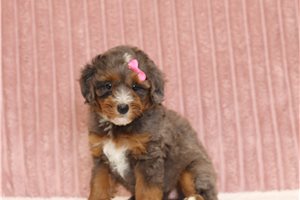
A Mini Bernedoodle carries the bold, black-based coat of a Bernese Mountain Dog, often as a tricolor, on a dog a fraction of the Bernese's size. It can also be expected to live far longer than its Bernese parent.
A Mini Bernedoodle carries the bold, black-based coat of a Bernese Mountain Dog, often as a tricolor, on a dog a fraction of the Bernese's size. It can also...A Mini Bernedoodle carries the bold, black-based coat of a Bernese Mountain Dog, often as a tricolor, on a dog a fraction of the Bernese's size. It can also be expected to live far longer than its Bernese parent.
Puppy first, every step of the way.
Available Mini Bernedoodle Puppies
 From our Mini Bernedoodle breeders
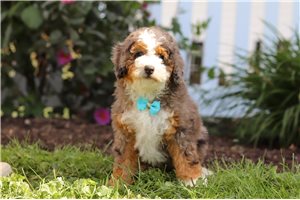

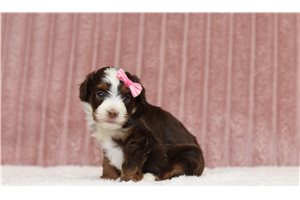
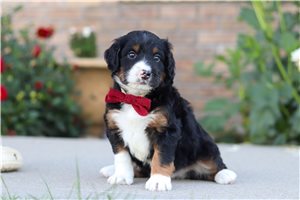
Health Guarantee
The health of your new puppy is our primary concern. Every puppy comes with a health guarantee for a happy, healthy start to life.
Learn About Our Health Guarantee
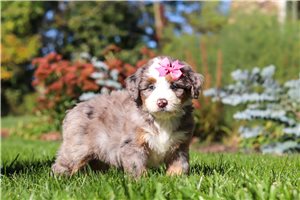


We just received our new puppy today! Pawrade staff always answered my questions. They were on top of everything. She arrived safe and sound and I was able to see her travel status through an app. Driver was very kind and kept me up to date on her exact delivery time.
Happier Puppies.
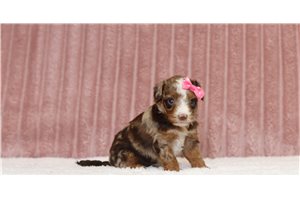
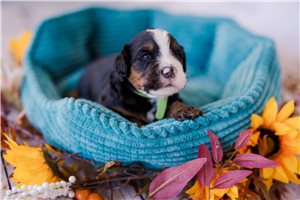
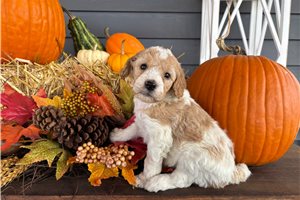
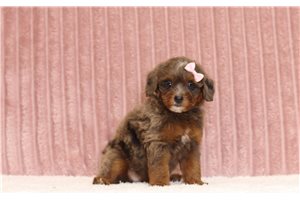
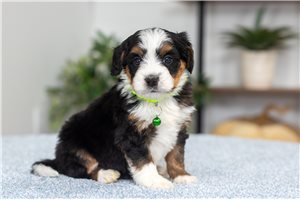
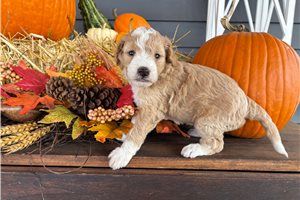
Pawrade helps coordinate safe travel from breeders nationwide, after a licensed-vet exam and with a health certificate for every state line.
Browse by Lifestyle
Find the breed that fits the life you're living.


Discover what real customers have to say about Pawrade! Check out our glowing testimonials.
 Lindy · Mixed/Other
“We just received our new puppy today! Pawrade staff always answered my questions. They were on top of everything. She arrived safe and sound and I was able to see her travel status through an app. Driver was very kind and kept me up to date on her exact delivery time. ”
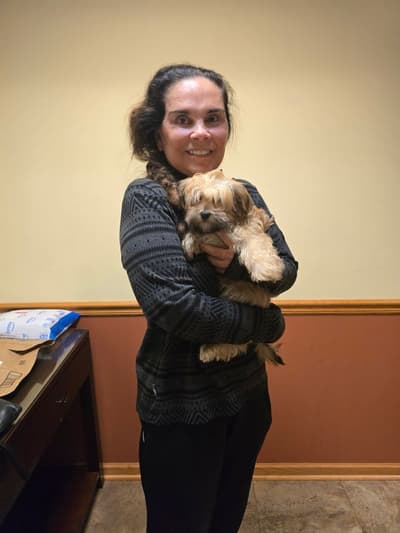 Griffin · Havanese
“Thank you”
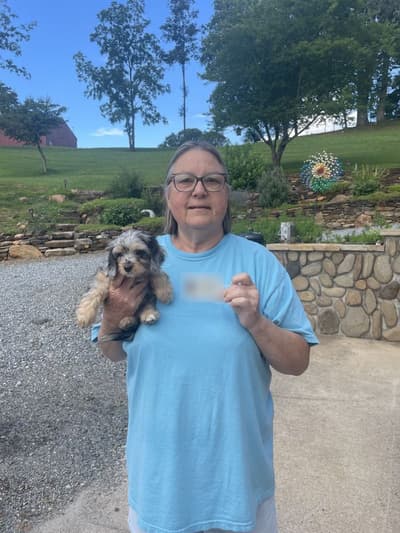 Cali · Cavapoo
“Working with Pawrade was a great experience. Each step was quick and easy. My puppy arrived happy and ready to play and eat. She looks and acts like a very Healthy pup! I am very pleased with the entire experience!”
 Sutton · Yorkshire Terrier - Yorkie
“The transaction has been really easy and she is a great puppy.”
A real company, on the record, since 2003.
Puppy scams cost U.S. families millions every year. Here's how you know Pawrade isn't one: we're a named, audited business with a public track record you can check anywhere.
Pet Media, Inc. — Inc. audits three years of revenue to rank the list. Scam sites don't make it.
From verified buyers. We can reply, we can't delete.
*NH, NY, RI, SC and TN excluded
1 month of MetLife pet insurance included with every puppy.
A Safer, Happier Way to Find Your Puppy
We take the guesswork out of finding a reputable breeder so you can focus on what matters most — welcoming a healthy, happy puppy into your family.
No Puppy Mill
Pledge
We have zero tolerance toward puppy mills and partner only with honest, reputable breeders who raise puppies with love and compassion.
Learn More
Health
Guarantee
Every puppy is backed by our comprehensive health guarantee because a happy, healthy puppy leads to a lifetime of tail wags.
Learn More
Fight Puppy
Scams
Browse with confidence knowing every breeder is screened, every payment is secured through PetPay and every transaction is manually reviewed.
Learn MoreMini Bernedoodle at a glance
Parents' weight
18–40 lb fathers 16–40 lb mothers Pawrade data: parents of puppies placed through Pawrade (breeder-reported) 399 records, 2021-01 to 2026-09
Mini Bernedoodle Characteristics
Is a Mini Bernedoodle right for you?
- you love the Bernese look but want a smaller dog with a longer life
- you will brush and handle your puppy every day so grooming becomes routine
- you have time for wide socialization in the first months and short daily practice at being alone
- you would enjoy trying a dog sport such as Scent Work
Among Pawrade Mini Bernedoodle buyers, 93% have a yard, about a third have children at home and a third already have a dog.
- an owner who is relaxed about the details, since adult size depends on the parents and coat type varies with the generation
- people who want a dog that sheds less than a Bernese and know that no dog is truly hypoallergenic
Mini Bernedoodle breeders & placements
Mini Bernedoodles on Pawrade
Pawrade data: parents of puppies placed through Pawrade (breeder-reported). Placements and reviews come from Pawrade's records.
“Thank you so much for the process. Our puppy Nellie, aka “mauve” is absolutely perfect.”
Jennifer F. · Dartmouth, MA · 2026-09-07 Verified“This was such a smooth process. I highly recommend! They were there every step of the way and kept us informed of each detail.”
Ashley C. · Washington, MO · 2026-08-11 Verified“Picked my puppy up 2 days ago and all went completely smooth. She is doing great. Happy with how smooth the process was.”
Andrea S. · Lemont, IL · 2026-07-03 VerifiedMini Bernedoodle care & grooming
Care and grooming
The routine
| Coat and grooming careDaily | Start daily brushing and handling right away. |
|---|
Coat and shedding
The Bernese parent has a heavier-shedding double coat and the Miniature Poodle a curly, very low-shedding one. That is why a Mini Bernedoodle's coat type varies with its generation, and most shed a moderate amount. Poodle-type coats may leave less dander around the home. Still, no dog is truly hypoallergenic, because allergens are also carried in saliva and urine, so don't count on the coat alone if someone at home has allergies.
Staying ahead of things
- Eye changes · Check the eyes: Keep up eye checks for life, because eye conditions run on both sides of the family.
- Back and spine · Know when to call: See your vet promptly about weakness in the back legs or scuffing toes in an older dog.
- Joints and movement · Keep them lean and cool: Keep your dog lean, and support the joints with weight control as it ages.
- Joints and movement · Routine vet checks: Have your vet feel the knees at checkups, since slipping kneecaps run on the Miniature Poodle side.
- Heart checks · Routine vet checks: Ask your vet to listen to the heart at puppy visits and at every yearly checkup.
Mini Bernedoodle puppy milestones
Your Mini Bernedoodle's first 2 years
Before your puppy comes home
Your puppy is still with its litter, and its most important weeks for meeting people, places and other animals have already begun. Nobody can promise its exact adult size, because a Mini Bernedoodle's size depends on its parents and varies by generation.
- Set up a crate in a room where the family spends time, or in your bedroom at night.
- Stock up on small-breed puppy food, enough for 3–4 small meals a day.
- Buy a slow-feeder bowl as well, in case your puppy gulps its food.
- Book a first visit with your own vet for an exam, vaccines, deworming and parasite prevention.
Why it matters: A crate near people helps a new puppy settle, and you will hear it if it needs to go out at night.
Mini Bernedoodle note: If your puppy is merle, ask your vet about a hearing test called BAER (brainstem auditory evoked response), because merle is linked to deafness.
Show the later milestones Hide the later milestones
The first week home
A young puppy can't hold its bladder for long yet. It may also need to go out during the night for a while.
- Take your puppy out first thing in the morning, last thing at night and after every nap.
- Brush and handle your puppy a little each day, so grooming feels normal from the start.
- Leave your puppy in its crate for a few minutes while you are home, to begin short alone-time practice.
- At the first vet visit, ask your vet to listen to the heart and check the eyelids, eyes and knees.
Why it matters: Taking your puppy out on a steady schedule is how house-training starts.
Mini Bernedoodle note: Both parent lines can have heart problems present from birth, which is why that first listen to the heart is worth asking for.
Weeks 2 to 4
Your puppy is in the middle of its most important weeks for socialization, which run through about the first 3 months. Its vaccines are still under way, and your vet sets the schedule.
- Plan a few short, positive introductions each day to new people, places, animals and everyday things.
- Sign up for puppy classes, which can start from 7–8 weeks after a first round of vaccines, as your vet advises.
- Until the vaccine series is done, keep your puppy away from sick animals, and follow your vet's advice on where it can go.
Why it matters: Positive, structured experiences in these weeks give a puppy skills it will use for the rest of its life.
Mini Bernedoodle note: Most Mini Bernedoodle litters on Pawrade have already met young children and big dogs, so keep those meetings going at home.
3 to 4 months
Around 12 weeks, the baby teeth start to fall out as the adult teeth come in, and chewing picks up. The puppy vaccine series usually ends at about 16 weeks, as your vet advises.
- Rotate a few safe chew toys at a time, and keep shoes and other valued things out of reach.
- Supervise chewing, and offer a safe chew toy whenever your puppy starts on something it shouldn't.
- Stretch the gaps between bathroom trips slowly, since a puppy can usually hold its bladder about as many hours as it is months old.
Why it matters: Chewing is strongest while the teeth change, so safe toys protect both your puppy and your belongings.
Mini Bernedoodle note: A Mini Bernedoodle's coat varies with its generation, so keep up the daily brushing whatever coat your puppy grows.
4 to 6 months
Your puppy is still growing, and the growth plates in its legs stay soft until growth is done. By about 6 months, the adult teeth are in and teething winds down.
- Let your puppy play at its own pace, and save long runs and hard exercise until it has finished growing.
- Agree an exercise plan with your vet, who can tell you when growth is done.
- Keep up the puppy visits with your vet for vaccines, deworming and parasite prevention.
Why it matters: Too much hard exercise can hurt a puppy's soft growth plates and even lead to injury.
Mini Bernedoodle note: Watch your growing puppy for limping or a bunny-hopping run, and tell your vet if you see either. Small dogs finish growing sooner than large ones, so ask your vet what to expect for your Mini.
6 to 12 months
Adolescence may begin around 8 months, and many young dogs test the rules and seem to forget their training. This teenage phase is a normal stage, and it passes.
- Keep training sessions short and consistent, and be patient while your dog works through this stage.
- Give plenty of physical and mental exercise each day, within the plan you agreed with your vet.
- Talk with your vet about spaying or neutering, and decide together what makes sense for your dog.
Why it matters: Consistent training, patience and plenty of exercise are what carry most dogs through adolescence.
Mini Bernedoodle note: This is a good age to try AKC Scent Work, which mixed breeds can enter through AKC Canine Partners. Spay and neuter timing depends on things like sex and expected adult size, which for a Mini Bernedoodle varies with its parents.
1 to 2 years
Most dogs are fully grown and settled into adulthood at around 2 years. Some still test the rules for a while, which is part of growing up.
- Ask your vet whether growth is finished before you add jogging or long hikes.
- Book a wellness exam with your vet at least once a year from now on.
- Keep up the daily brushing and handling that started when your puppy was small.
Why it matters: A yearly exam gives your vet a regular look at your dog, so changes are noticed early.
Mini Bernedoodle note: Hip and elbow problems can't be judged in a young puppy, so once your dog is grown, ask your vet whether hip and elbow checks make sense.
Care for the adult and senior years is on the Mini Bernedoodle health page.
Mini Bernedoodle colors & size
Appearance and colors
Show Hide
Size is set by the Poodle parent. The Mini comes from a Miniature Poodle, which stands over 10 and up to 15 in tall. A Standard Poodle gives the Standard Bernedoodle, and a Toy Poodle the Tiny, or Toy, Bernedoodle. The Tiny is smaller than the Mini. Adult size also depends on the parents themselves and varies from generation to generation, so check the parents' weights shown on each Pawrade listing.
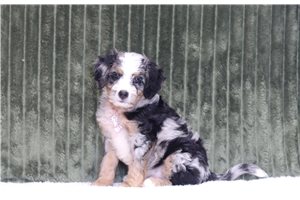
There is no Mini Bernedoodle color standard. The Bernese Mountain Dog standard allows only a tricolor of black with rust and white, and the Poodle standard calls for one solid color, so multicolored coats are outside the Poodle standard. Merle is outside both parent breeds' standards, and breeding two merles (double merle) raises the risk of deafness and eye defects.
Colors listed by Pawrade breeders
Mini Bernedoodle history
History
Show Hide
The Mini Bernedoodle, also called the Miniature Bernedoodle, is the smaller size of the Bernedoodle, a designer cross of the Bernese Mountain Dog and the Poodle.
It has no breed club or breed association, and neither the AKC nor the UKC recognizes it.
Multi-breed hybrid registries issue papers for crosses, but they are registries rather than breed clubs.
The Bernese parent comes from the farming region around Bern, Switzerland, where it worked as a farm and draft dog, and the AKC registered the breed in 1937.
Each parent breed has its own national club: the Bernese Mountain Dog Club of America (BMDCA) and the Poodle Club of America.
Both clubs support rescue groups for their breeds: BMDCA Rescue and the Poodle Club of America Rescue Foundation.
Mini Bernedoodle Veterinary Health Report
Your puppy's Veterinary Health Report
Before your Mini Bernedoodle goes home, the breeder's licensed veterinarian gives it a full hands-on exam to PetPay's exam standards, and the results are recorded in its Veterinary Health Report.
The exam, a health certificate and a stool test for parasites all happen 3 to 5 days before your puppy leaves.
This is an exam of your puppy itself, not a check of the parents' health, so it tells you about the dog you are actually bringing home.
If the vet finds something that could put your puppy at risk during travel, your puppy stays with the breeder until it's resolved.
Problems that can be treated before travel are treated by the breeder's licensed vet first.
Anything else the vet notes is shared with you.
A hard copy of the report travels with your puppy for your records, and a digital copy is in your PetPay account.
Puppies grow and change quickly, and their immune systems are still developing, so no exam can find everything. The Veterinary Health Report is a strong early look at your puppy and a written starting point that your own vet builds on.
- Heart
- Breathing
- Temperature, pulse and breathing rate
- Eyes
- Ears and hearing
- Mouth and bite
- Skin and coat
- Kneecaps
- Hips
- Hernias
- Soft spot on the skull
- Body condition and weight
- Reproductive organs
- History of vomiting or diarrhea
- Stool test for parasites
- Past surgery and notes
What the vet looks for in a Mini Bernedoodle
The vet listens to the heart with a stethoscope for a murmur.
Heart problems present from birth occur in both parent lines, so this check matters for a Mini Bernedoodle.
The vet checks the eyelids and looks at the eyes for discharge or any clouding that could affect vision.
Eyelids that roll in or out (entropion or ectropion) are something to watch for as your puppy grows.
The vet checks the puppy's hearing by how it responds to sound, which matters most in merle puppies.
For a merle puppy, a hearing test called BAER gives a definite answer.
The vet feels the knees for a kneecap that slips out of place (patellar luxation).
Slipping kneecaps come from the Miniature Poodle side of the family.
After your puppy comes home
- Book the first vet visit soon after your puppy comes home, for an exam and to plan parasite prevention.
- Your puppy's vaccination and deworming records are separate documents that travel with your puppy.
- Bring them, with the Veterinary Health Report, to your first visit so your vet starts from the same record.
- Before travel, every puppy follows PetPay's vaccination and deworming schedule as far as its age allows.
- Bordetella and corona are given at the vet's discretion, and no vaccine is given within 3 days of travel.
- Rabies is given by a licensed vet on the schedule your state requires.
- Your own vet completes the series.
- At that visit, ask your vet to listen to the heart again, check the eyelids and eyes, and feel the knees.
- Hip and elbow problems, a slow loss of sight (PRA), degenerative myelopathy and histiocytic sarcoma show up later, so a puppy exam cannot rule them out.
Mini Bernedoodle puppy health guarantee
Going home and the health guarantee
Puppies must be at least 8 weeks old and 2 lb before they travel. Every puppy also comes with a health guarantee administered by PetPay, independent of the seller. The terms are on the health guarantee page.
A Mini Bernedoodle can inherit conditions its parent breeds are known to be prone to. The Mini Bernedoodle health page explains each one in plain words, with signs to watch for and care by age.
Mini Bernedoodle puppy prices
Costs
A Mini Bernedoodle puppy's price reflects what goes into it: its pedigree and registration, its coat and color, and the breeder's program. Every Pawrade puppy's price also includes the pre-travel exam by the breeder's licensed vet, the Veterinary Health Report and a health guarantee administered by PetPay. See today's price range for Mini Bernedoodle puppies on Pawrade's Mini Bernedoodle listings.
Premium colors like red typically list higher.
- Pre-travel vet exam
- Veterinary Health Report
- PetPay-administered guarantee
- 1 month of MetLife pet insurance†
Breeds like the Mini Bernedoodle
Compare
The standard Bernedoodle, bred from a Standard Poodle, is much larger and tends to have a shorter life, and bloat is mainly a concern in the standard size.
The Bernese is far larger, always tricolor, sheds more from its double coat and has a much shorter life.
The Poodle is smaller, with a solid-color coat that is always curly.
Both have a Poodle parent, but the Goldendoodle's other parent is a Golden Retriever, and Goldendoodles are mostly cream, gold or red.
Breeds related to the Mini Bernedoodle
Related breeds
More puppies like the Mini Bernedoodle


Frequently asked questions about Mini Bernedoodle puppies
Frequently asked questions
An adult Mini Bernedoodle typically weighs 20–45 lb. There is no breed standard, so adult size depends on the parents and varies by generation, and each listing shows the parents' weights. Parents of Pawrade Mini Bernedoodles typically weigh 18–40 lb (fathers) and 16–40 lb (mothers).
An adult Mini typically weighs 20–45 lb and can end up anywhere in that range, so a small adult is never certain. The size of the Poodle parent sets the size class, with a Toy Poodle producing the Tiny, a Miniature Poodle the Mini and a Standard Poodle the Standard. The Tiny is the smaller size, and the Standard is much larger than the Mini.
Tiny and teacup are not recognized sizes: no kennel club recognizes the Bernedoodle, so no breed standard sets any of its sizes.
Only roughly, because size is set by the Poodle parent's size and there is no breed standard to narrow it down. The parents' own weights are the best clue, and each Pawrade listing shows them.
Most are black-based bicolors or tricolors. There is no Mini Bernedoodle color standard, and merle and other multicolored coats fall outside the Poodle standard.
Merle is outside both parent breeds' standards and is associated with deafness. Breeding two merles together (double merle) raises the risk of deafness and eye defects, so ask whether either parent is merle. For a merle puppy, a hearing test called BAER (brainstem auditory evoked response) gives a definite answer.
Neither the AKC nor the UKC recognizes it, and no breed club or association has written a standard for it. Miniature Bernedoodle is simply another name for the Mini.
No breed standard describes it, so the parent breeds are the best guide. The Bernese Mountain Dog was bred as a Swiss farm and cart-pulling dog, and the Miniature Poodle is the parent that keeps the Mini small. Both parent breeds are rated high in energy.
Mixed breeds, Bernedoodles included, can compete in AKC sports such as Scent Work with an AKC Canine Partners number, from 6 months of age. Canine Partners enrollment opens the events but is not breed recognition.
Most Mini Bernedoodle puppies on Pawrade meet children before they leave: breeders socialize 88% of litters with young children and 74% with older children. Many buyers have kids at home too, about a third of Pawrade Mini Bernedoodle buyers.
Most Mini Bernedoodle puppies on Pawrade meet other dogs before they go home: breeders socialize 73% of litters with large-breed dogs and 66% with small-breed dogs. About a third of Pawrade Mini Bernedoodle buyers already have another dog. Fewer litters meet cats, so if you have one, ask your breeder whether your puppy has met a cat.
Of Pawrade Mini Bernedoodle buyers, 80% live in a single-family home and a smaller group in an apartment. For time alone, build up slowly with short spells in a crate from the first weeks, and watch for signs of separation distress.
Feed a small-breed puppy food in 3–4 small meals a day. Use a slow-feeder bowl if your puppy gulps its food.
Wait until your Mini Bernedoodle has finished growing before you add long runs or hard exercise, and ask your vet when that is. Small dogs finish growing sooner than large ones, and until then, play at your puppy's own pace is kinder to its soft growth plates.
Most Mini Bernedoodles shed a moderate amount, and no dog is truly hypoallergenic. Poodle-type coats may leave less dander around the home, but allergens are also carried in saliva and urine.
That varies with the generation, unlike the Miniature Poodle's coat, which is always curly. The Bernese parent brings a double coat, so some puppies take after that side.
Plan on brushing and handling your puppy every day, so grooming becomes routine. How much care the coat needs depends on how curly it is, which varies with the generation.
Start right away, because the main socialization window is roughly the first 3 months. Puppy classes can start at 7–8 weeks, after a first round of vaccines, as long as your puppy stays away from sick animals. Crate training and short spells of alone time belong in the first weeks too.
Start on the first day, taking your puppy out first thing in the morning, last thing at night and after naps. Keep the crate in a room where the family spends time, or in your bedroom at night. Some breeders on Pawrade start crate training before the puppies go home, so ask how far your puppy has got.
A puppy can usually hold its bladder for about as many hours as it is months old, so a 3-month-old can wait about 3 hours. Very young puppies need to go out first thing in the morning, last thing at night and after naps.
Your Mini Bernedoodle has probably reached adolescence, which may begin around 8 months and last until about 2 years. Testing the rules is a normal stage, and it passes. Keep training short and consistent, and give plenty of patience and exercise.
Puppies travel only once they are at least 8 weeks old and weigh at least 2 lb. Most Mini Bernedoodle puppies go home at about 11 weeks, usually between 9 and 16 weeks.
Most puppies have all their adult teeth by about 6 months, and teething winds down then. The baby teeth start falling out at around 12 weeks, so expect extra chewing from then on. Offer safe chew toys, rotate a few at a time, and keep shoes and other valued things out of reach.
Most puppies finish their core vaccine series at about 16 weeks, as your vet advises. Your puppy's own vet sets the exact schedule. Puppy classes can start before the series ends, from 7–8 weeks, as long as your puppy avoids sick animals.
Get a crate, safe chew toys, small-breed puppy food and a slow-feeder bowl. Set the crate up in a room where the family spends time, or in your bedroom at night. Book a first vet visit for an exam, vaccines, deworming and parasite prevention.
A Mini Bernedoodle litter on Pawrade usually has about 7 puppies, and most litters have between 4 and 10. Litter sizes are reported by the breeders.
Most Mini Bernedoodle litters on Pawrade meet children and other dogs before the puppies go home. Breeders report socializing 88% of litters with young children and 73% with large-breed dogs. Many breeders also report getting puppies used to everyday household sounds, such as the vacuum cleaner. These figures come from what breeders reported for 470 litters. Keep it going once your puppy is home, because the first 3 months are the main socialization window.
Each listing shows the puppy's own parents' weights, because a Mini Bernedoodle's adult size depends on its parents and varies by generation. Parents of Pawrade Mini Bernedoodles typically weigh 18–40 lb (fathers) and 16–40 lb (mothers).
Not as a breed with the AKC or UKC, because neither recognizes the Mini Bernedoodle. Multi-breed hybrid registries issue papers for crosses, and the AKC's Canine Partners program enrolls mixed breeds for AKC sports.
The Veterinary Health Report is the written record of your Mini Bernedoodle puppy's health exam before it goes home. The breeder's licensed veterinarian examines the puppy to PetPay's exam standards and records the results in the report. It is a full hands-on exam of your puppy itself, not a record of the parents' health.
The breeder's licensed veterinarian examines every Mini Bernedoodle puppy before it goes home, to PetPay's exam standards. The results are recorded in the puppy's Veterinary Health Report, and a copy travels with your puppy for your records.
The breeder's licensed vet gives each Mini Bernedoodle puppy a full hands-on exam before it goes home, to PetPay's exam standards. The vet listens to the heart for a murmur, checks the eyelids and eyes, and feels the knees for a kneecap that slips out of place. In a merle puppy, the vet also checks hearing by watching how it responds to sound. Hip and elbow dysplasia, PRA, degenerative myelopathy and histiocytic sarcoma show up later, so a puppy exam cannot rule them out.
Before travel, every puppy follows PetPay's vaccination and deworming schedule as far as its age allows: deworming at 2, 4, 6, 8, 10 and 12 weeks, and the distemper, parvo, adenovirus and parainfluenza combination shot at 6–8, 9–11 and 12–14 weeks. Bordetella and corona are given at the vet's discretion, and no vaccine is given within 3 days of travel. Rabies is given by a licensed vet on the schedule your state requires. Your own vet completes the series. Your puppy's vaccination and deworming records are separate documents that travel with your puppy. Bring them, with the Veterinary Health Report, to your first visit so your vet starts from the same record.
If the vet finds something that could put your puppy at risk during travel, your puppy stays with the breeder until it's resolved. Problems that can be treated before travel are treated by the breeder's licensed vet first. Anything else the vet notes is shared with you.
Puppies grow and change quickly, and their immune systems are still developing, so no exam can find everything. The pre-travel exam by the breeder's licensed vet is a strong early indicator and a documented starting point. Your own vet builds on it at the first visit and at every checkup after that.
Every Pawrade puppy comes with a health guarantee administered by PetPay, independent of the seller. The terms are on the health guarantee page.
They rate their Pawrade experience highly, at 4.6 out of 5 on average from 390 reviews. Of those reviews, 79% give 5 stars.
Right now, most Mini Bernedoodle puppies on Pawrade are listed within the typical range shown on Pawrade's Mini Bernedoodle listings. Each breeder on Pawrade sets their own price, and each puppy's listing shows it. A Mini Bernedoodle puppy's price reflects what goes into it: its pedigree and registration, its coat and color, and the breeder's program. Every Pawrade puppy's price also includes the pre-travel exam by the breeder's licensed vet, the Veterinary Health Report and a health guarantee administered by PetPay.
More ways to search
Popular Mini Bernedoodle searches
Other namesWhere families find Mini Bernedoodle puppies
Most Popular Mini Bernedoodle Cities
Mini Bernedoodle puppies by state