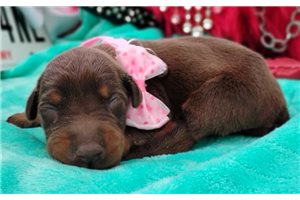
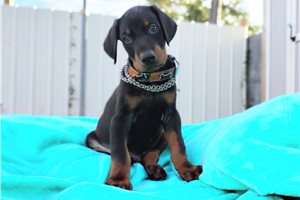
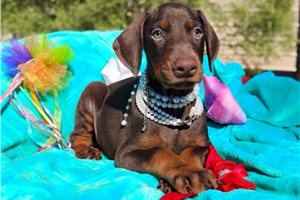
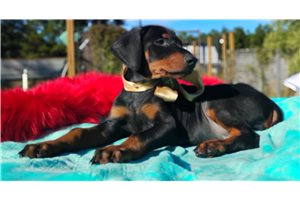
A Rottweiler gives its family a calm, steady devotion and keeps a quiet, watchful eye on everyone who comes to the door. People fall for the glossy black-and-rust coat and the working heart of a dog that once drove cattle and guarded the money purses of German butchers.
A Rottweiler gives its family a calm, steady devotion and keeps a quiet, watchful eye on everyone who comes to the door. People fall for the glossy black-and-rust...A Rottweiler gives its family a calm, steady devotion and keeps a quiet, watchful eye on everyone who comes to the door. People fall for the glossy black-and-rust coat and the working heart of a dog that once drove cattle and guarded the money purses of German butchers.
Only with Pawrade, you receive a pet insurance policy with no waiting period included for immediate accident or illness coverage. *NH, NY, RI, SC and TN residents excluded
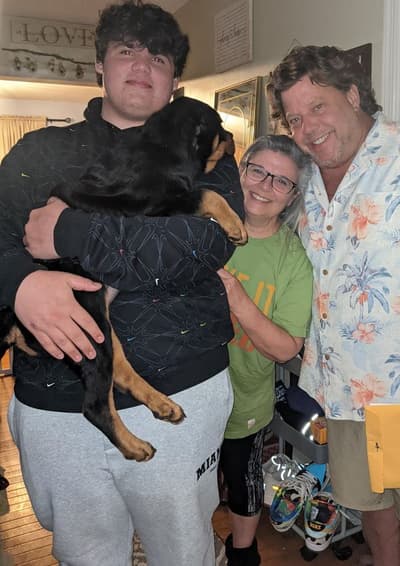
“Zach and his team was great in transporting our new pup! A big shout out to them for driving the distance and delivering our puppy home to us!”
Rockey · Rottweiler
Mar 28, 2022
“5 stars”
Marlena · Rottweiler
Dec 9, 2024
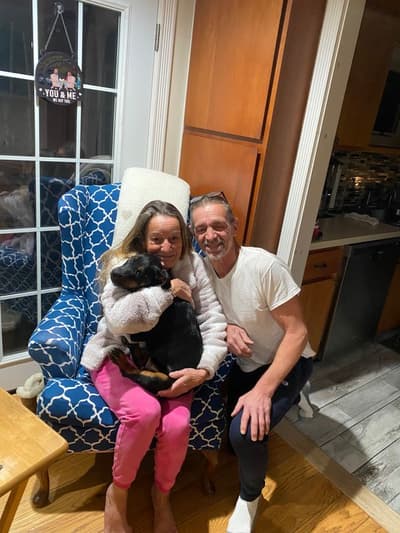
“We are thrilled with our new puppy. Pawrade was fantastic to work with. Everything was spelled out prior to our purchase. Once the purchase was made,Pawrade followed thru with everything they said they would. Excellent service”
Katherine · Rottweiler
Sep 25, 2024
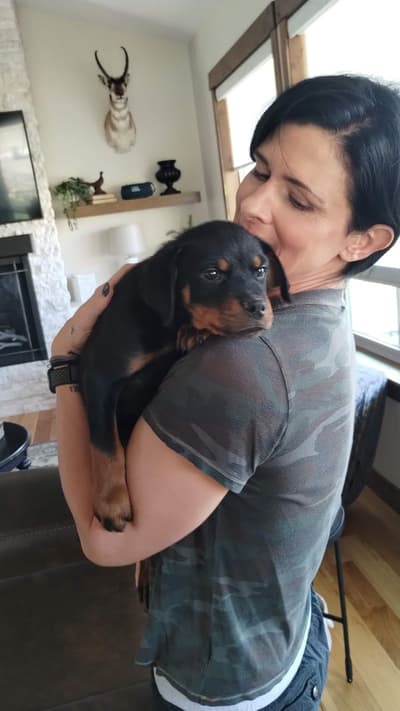
“Amazing process and everyone at Pawrade should be congratulated!”
Puppy scams cost U.S. families millions every year. Here's how you know Pawrade isn't one: we're a named, audited business with a public track record you can check anywhere.
Pawrade data: parents of puppies placed through Pawrade (breeder-reported)
Height
22–27 in
Lifespan
9–10 years
Energy
Moderate
Shedding
Moderate
Group
Working
AKC
Rottweiler Characteristics
Full-Grown Size
5 of 7SmallLarge
Grooming Needs
1 of 7SeldomRegularly
Good with Dogs
1 of 7Not ReallyYes!
Watchdog Ability
5 of 7LowHigh
Exercise Needs
3 of 7Couch PotatoHigh Needs
Your new best friend.
Rottweiler temperament
Personality and daily life
At home
At heart the Rottweiler is calm, confident and courageous. It is good-natured at home, very affectionate with its own family and has a strong instinct to protect its home and people. With strangers it is reserved rather than openly friendly, and it tends to wait and see before warming up.
Kids and other pets
Rottweilers can be fond of children, but their size and strength mean play with young children should always be supervised. Socialization, which means getting used to new people, places and dogs, has to continue well past puppyhood, because the breed is territorial.
This is a thinking dog that likes a job, and without one, a bored Rottweiler can turn destructive. Rottweilers are not big barkers.
Pawrade data: parents of puppies placed through Pawrade (breeder-reported). Placements and reviews come from Pawrade's records.
A healthier start for a happier tomorrow.
Rottweiler care & grooming
Care and training
The routine
Exercise needs
Moderate
The Rottweiler has moderate energy, but it needs plenty of mental work. Plan daily exercise plus training or games that make it think.
Coat and shedding
Moderate
The coat is straight, coarse and short to medium in length, with an undercoat on the neck and thighs, and it never needs trimming. It sheds moderately all year and more heavily in spring and fall.
Weekly
Coat and grooming care
Brush the coat once a week.
Nail trims
Trim the nails weekly.
Teeth and gums
Brush the teeth weekly.
Monthly / as needed
Bath time
Bathe about once a month or when needed.
Keeping them safe
Leash and fencing
It is happiest with space and a large, securely fenced yard, and a small apartment suits it poorly.
Keep eye exams in your adult dog's yearly checkups, so a cataract is found early.
Joints and movementKeep them lean and cool
Keep your Rottweiler lean for life, because extra weight makes joint disease worse.
Joints and movementGo easy while growing
While the joints are still growing, skip jumping, jogging and forced running, and tell your vet about any limp.
Joints and movementKnow when to call
In an adult Rottweiler, have a limp that lasts or a swelling on a leg bone X-rayed promptly.
Heart checksRoutine vet checks
Ask your vet to listen to the heart at each visit while your puppy is young, because a mild murmur can be missed early.
Every milestone, together.
Rottweiler puppy milestones
Growing up: your Rottweiler's first years
Before 8 weeks
Before your puppy comes home
Your puppy is still with its mother and littermates, and most Rottweiler breeders on Pawrade are getting their litters used to large-breed dogs and young children.
Stock up on a large-breed puppy food, and plan to keep your puppy lean from the very start.
Have a bristle brush or rubber mitt, nail clippers and a dog toothbrush ready for pickup day.
Set up the crate in a room where the family spends time, or in your bedroom at night.
Choose one outdoor potty spot now, so your puppy learns where to go from the first day.
Why it matters
Puppies form early habits about where they go, so one spot from day one makes house-training easier.
Rottweiler note
Rottweiler puppies can start learning simple cues as soon as they come home, so training starts on the first day.
8–10 weeks
The first week home
Everything is new, and your puppy is meeting the sounds, people and routines of its new home. A puppy can usually hold its bladder for about as many hours as its age in months, so trips outside come often.
Take your puppy out first thing in the morning, after every nap and last thing at night.
Begin gentle introductions to new people, sounds and places in the first few days.
Teach a first cue or two in short sessions of about five minutes.
Book the first vet visit, and ask the vet to confirm the vaccine schedule and listen to the heart.
Why it matters
Short, happy lessons and a steady routine help your puppy settle in and learn what you expect.
Rottweiler note
Rottweiler puppies are more likely than most to catch parvovirus, a serious gut infection, so keep away from unknown dogs and busy dog areas for now.
10–12 weeks
Weeks 2 to 4
Puppies are most open to new experiences in their first 3 months, so these weeks shape the adult your Rottweiler becomes.
Introduce friendly people of all ages, calm dogs, everyday noises and short car rides, a little at a time.
Join a puppy class, which can start as early as 7–8 weeks with healthy classmates, as your vet advises.
Keep the house rules the same for everyone in the family, so your puppy always knows what to expect.
Choose calm games over wrestling, because rough play can encourage aggressive habits.
Why it matters
Rottweilers are territorial by nature, and good early experiences help yours grow into a calm, confident adult.
Rottweiler note
Rottweilers tend to be reserved with strangers, so meeting lots of friendly people now pays off later.
3–4 months
3 to 4 months
Most puppies finish their vaccine series at about 16 weeks, as your vet advises. Baby teeth start to fall out from about 12 weeks, so expect a busy, mouthy puppy.
Once your vet says the vaccines are complete, widen your puppy's world with new places, surfaces and sounds.
Feed measured meals of large-breed puppy food, and keep your puppy lean as it grows.
Handle the paws, nails and mouth every day, so grooming becomes a normal part of life.
Why it matters
Lean, steady growth on a large-breed food helps the hips and elbows while they are still forming.
Rottweiler note
Rottweilers are highly trainable and eager to work, so short daily lessons suit them well.
4–6 months
4 to 6 months
Teething is in full swing, and by about 6 months the adult teeth are in. Elbow trouble, when it happens, often first shows as a front-leg limp between 4 and 12 months.
Keep only a few safe chew toys out at a time, rotate them, and supervise chewing.
Tell your vet about any limp in a growing puppy, because an early check helps.
Keep up short training sessions, and keep meeting new people and friendly dogs.
Why it matters
Chewing eases sore gums, and a safe outlet protects the things you value.
Rottweiler note
Skip jumping and forced running for now, because a big puppy's growth plates, the soft areas where the bones are still growing, are still open.
6–12 months
6 to 12 months
Adolescence often starts at about 6 to 8 months, and teenage dogs test boundaries and may seem to forget their training. Growth is fast, and most Rottweilers reach adult height at around 12 to 18 months.
Keep training consistent and patient, with plenty of exercise for body and mind.
Agree an exercise plan with your vet, and skip jogging while the growth plates are still soft.
Talk with your vet about when to spay or neuter, since in Rottweilers neutering is linked to more knee ligament injuries.
Why it matters
The teenage phase is normal and it passes, and steady training now shapes the calm adult you want.
Rottweiler note
A teenage Rottweiler is strong, so keep socializing and keep the house rules firm and fair.
1–2 years
1 to 2 years
Most dogs are fully grown and settled into adulthood at around 2 years, and Rottweilers keep filling out until then.
Once your vet agrees the growth plates have closed, build up slowly to jogging and longer outings.
Book a wellness exam with your vet at least once a year, the normal routine for an adult dog.
Try a dog sport such as obedience, rally, tracking or carting once your Rottweiler is full grown.
Keep your Rottweiler lean by measuring every meal and keeping treats small.
Why it matters
A lean weight protects the joints, and a job to do keeps a working breed content.
Rottweiler note
A sudden hind-leg limp in a young adult needs a vet visit, because knee ligament tears happen in the breed.
The Rottweiler is robust and muscular, a little longer than it is tall, and its chest is about half as deep as the dog is tall. The tail may be docked or natural, and the AKC standard accepts both.
Colors and coat
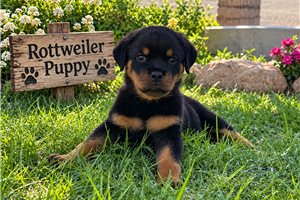
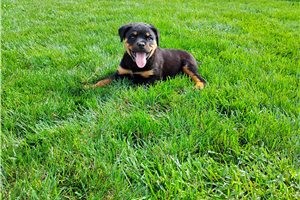
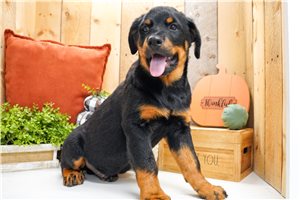
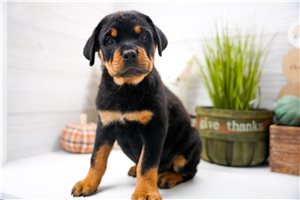
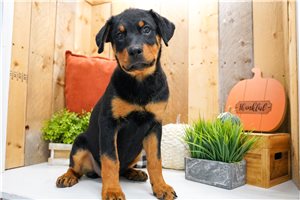
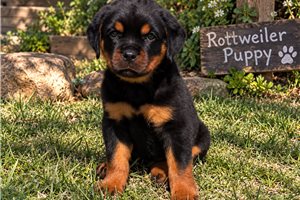
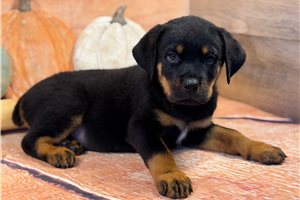
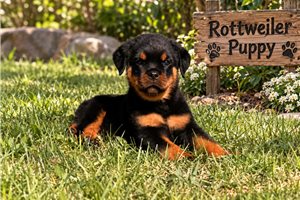
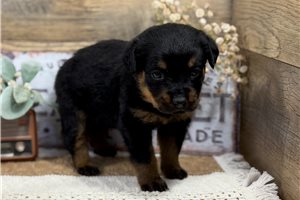
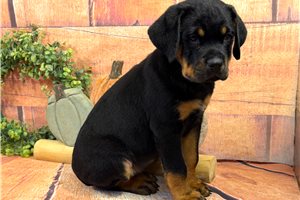
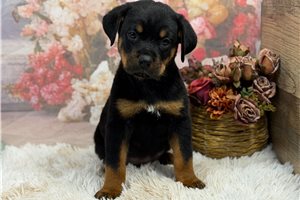
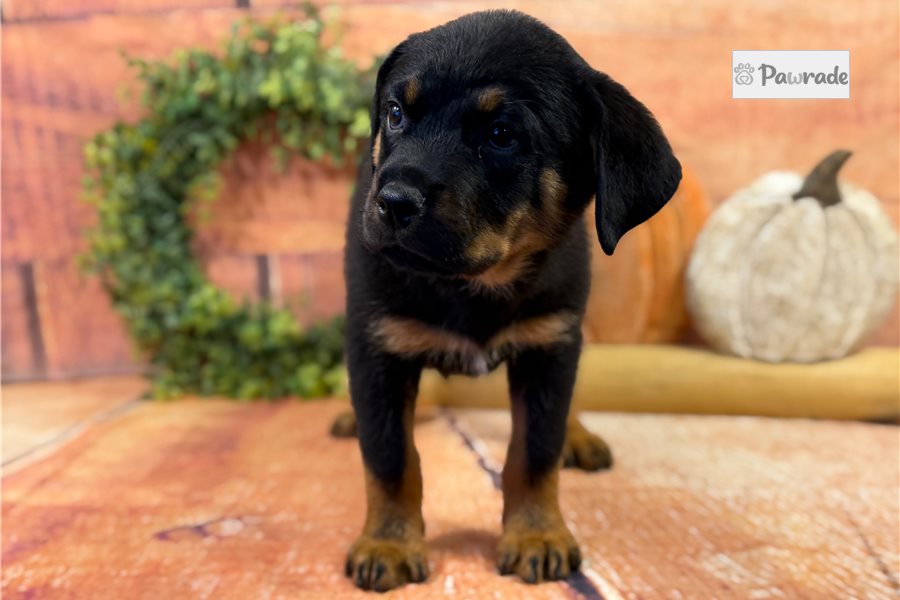
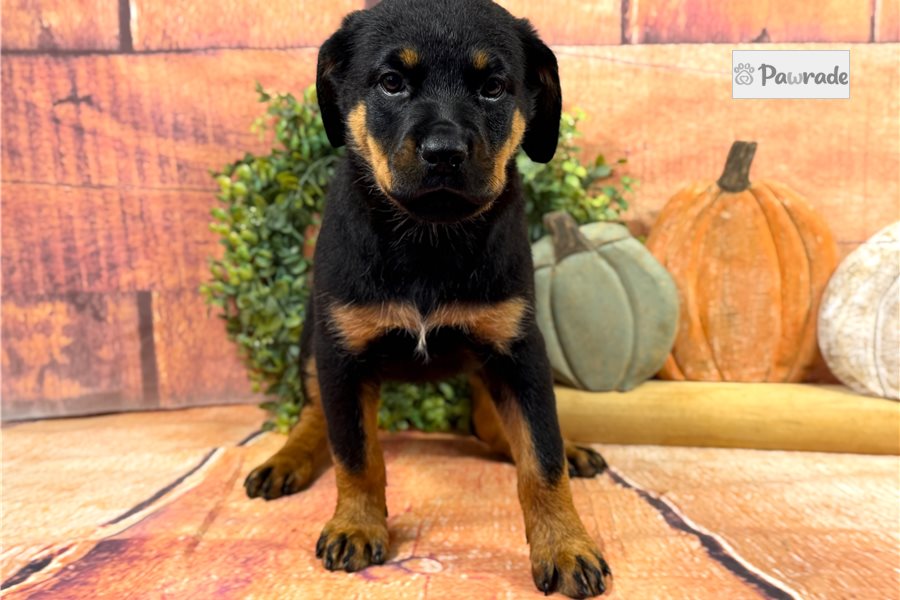
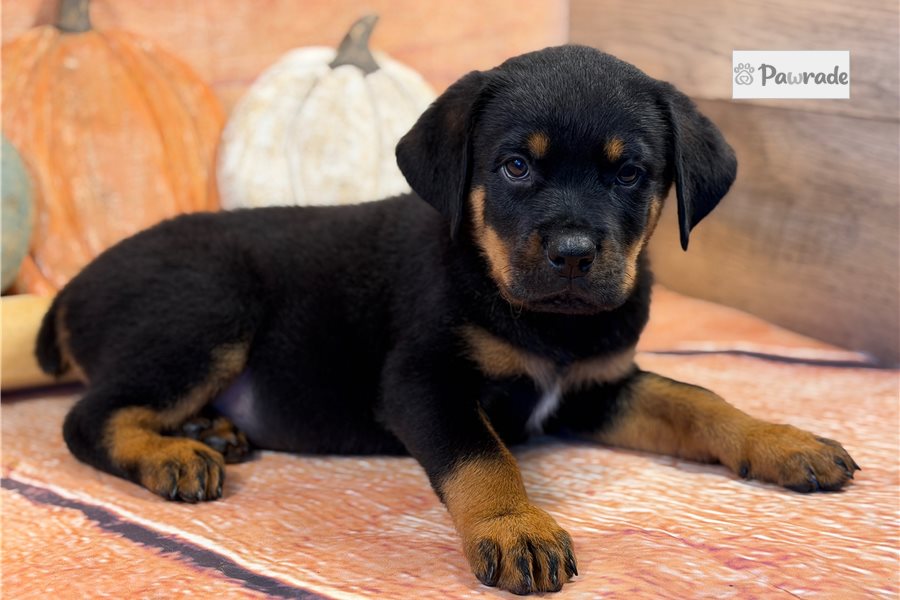
The only color in the AKC breed standard is black with rust to mahogany markings. The markings sit over each eye and on the cheeks, the sides of the muzzle, the throat, the chest, the legs and under the tail. Together they cover no more than about a tenth of the body. Red, blue or liver coats, missing markings and white markings are outside the AKC breed standard. A long coat is outside the AKC breed standard too.
Colors listed by Pawrade breeders
Albino
Black
Blue
Brown
Fawn
Gray
Mahogany
Rare
Red
Sable
Silver
White
Keeping your Rottweiler healthy
The Rottweiler is known to be prone to a handful of conditions of the joints, bones, heart, eyes and nerves. Several of them can be screened for or caught early. Feed measured meals from a floor-level bowl, because fast eating, raised bowls and large meals add to the risk of bloat, where the stomach swells and can twist. Plan spay or neuter timing with your vet, because in Rottweilers neutering is linked to more knee ligament injuries.
A little history, a lot of heart.
Rottweiler history
History and fun facts
Roman
The Rottweiler descends from mastiff-type drover dogs that, by tradition, crossed the Alps with Roman legions and their cattle.
It also pulled carts, and it was known as the Rottweil butcher's dog.
Cattle dealers heading home from market tied their money purses to the dog's collar for safekeeping.
19th century
When railways replaced cattle droving in the 19th century, the breed almost disappeared, and it was revived in the early 20th century as a police and service dog.
1931
The AKC recognized the breed in 1931 and the UKC in 1950.
Rottweilers have worked as guide, therapy and service dogs, and a therapy Rottweiler named Wynd won the AKC Award for Canine Excellence in Therapy in 2015.
The American Rottweiler Club is the breed's national club (its AKC parent club), and the Rottweiler Health Foundation funds research into the breed's health.
Checked with care before travel.
Rottweiler Veterinary Health Report
Your puppy's Veterinary Health Report
Before your Rottweiler puppy comes home, the breeder's licensed vet gives it a full hands-on exam to PetPay's exam standards, and the results go into its Veterinary Health Report.
The exam, a health certificate and a stool test for parasites all happen 3 to 5 days before your puppy leaves.
1It is a check of your own puppy, not paperwork about its family, so you start with a clear record of how your puppy is doing.
2If the vet finds something that could put your puppy at risk during travel, your puppy stays with the breeder until it's resolved.
3Problems that can be treated before travel are treated by the breeder's licensed vet first.
4Anything else the vet notes is shared with you.
5A hard copy of the report travels with your puppy for your records, and a digital copy is in your PetPay account.
PetPay Veterinary Health Report form
16 areas checked on the exam
Closer look for RottweilersOn every puppy's report
Puppies travel only once they are at least 8 weeks old and weigh at least 2 lb. Every puppy also comes with a health guarantee administered by PetPay, independent of the seller. The terms are on the health guarantee page.
A Rottweiler puppy's price reflects what goes into it: its pedigree and registration, its coat and color, and the breeder's program. Every Pawrade puppy's price also includes the pre-travel exam by the breeder's licensed vet, the Veterinary Health Report and a health guarantee administered by PetPay. See today's price range for Rottweiler puppies on Pawrade's Rottweiler listings.
Typical asking price
$3,950
Based on 193 Rottweiler listings in the last 12 months
Frequently asked questions about Rottweiler puppies
Frequently asked questions
Adult Rottweilers weigh 80–135 lb and stand 22–27 in at the shoulder. Males weigh 95–135 lb and stand 24–27 in, and females weigh 80–100 lb and stand 22–25 in. Most reach adult height at around 12–18 months and keep filling out until 18–24 months.
Parents of Pawrade Rottweilers typically weigh 98–150 lb (fathers) and 80–124 lb (mothers).
The breed comes in one size, and its standards set upper height limits and prefer dogs in the middle of the range. A grown Rottweiler weighs 80–135 lb and stands 22–27 in at the shoulder.
They are the same breed, and the major kennel clubs each recognize one Rottweiler. The national breed standards differ only in small details, such as whether a docked tail is accepted.
Some Rottweilers have docked tails and some have natural tails. The AKC standard accepts either, so docking is not required.
The only color in the AKC breed standard is black with rust to mahogany markings. The markings sit over the eyes, on the cheeks, muzzle, chest and legs and under the tail. White markings, missing markings and red, blue or liver coats are outside the AKC breed standard.
A long coat is outside the AKC breed standard. The usual coat is straight, coarse and dense, with an undercoat on the neck and thighs.
For the right home, a Rottweiler is a devoted family dog with a strong natural instinct to guard its home and people. That instinct needs early, ongoing socialization and consistent training, so the dog stays calm and confident rather than wary of everything new.
Rottweilers are meant to be calm, confident and good-natured, and aggressive or overly shy dogs are outside the breed standards. Training and socialization shape how an adult Rottweiler behaves.
Rottweilers are calm at home, good-natured and devoted, with moderate energy and a big need for mental work. A Rottweiler with too little to do can become bored and destructive.
Rottweilers tend to be reserved with strangers and take a wait-and-see approach rather than greeting everyone. Meeting lots of friendly people as a puppy helps a Rottweiler grow into a calm, confident adult.
Rottweilers are not big barkers, and Doberman Pinschers and Cane Corsos tend to bark more.
Rottweilers can be fond of children and are very devoted to their own family. A Rottweiler is big and strong, so always supervise it with young children. Most Rottweiler breeders on Pawrade socialize their litters with young children before the puppies go home.
Many do when they are socialized early and often, and because the breed is territorial, regular, positive time with other dogs matters throughout its life. Most Rottweiler breeders on Pawrade socialize their litters with large-breed dogs before the puppies go home.
It depends on the dog and how it was raised, and early socialization with other animals makes the difference for a territorial breed.
A Rottweiler needs exercise every day, plus training or other mental work, because its need for mental stimulation is high even though its energy is moderate. Plan for more than 2 hours of activity a day, mixing walks with training and games. A growing puppy needs gentler exercise until its growth plates close.
A small apartment suits a Rottweiler poorly, and the breed does best with space and a large, securely fenced yard. Most Rottweiler buyers on Pawrade have a yard.
A Rottweiler needs daily exercise and a job to do, and a bored one left alone for long stretches can become destructive.
Wait until the growth plates have closed, which in large breeds means no road work before 14–18 months. Until then, avoid jumping and heavy exercise, and keep your puppy lean. Agree an exercise plan with your vet as your puppy grows.
It depends on the owner's time and commitment, because a Rottweiler needs someone who will provide socialization, exercise and mental challenge. Its size and strength also call for an owner who can handle it confidently.
Rottweilers shed moderately all year, and more in spring and fall. A short coat does not mean little shedding, but weekly brushing keeps loose hair under control.
A Rottweiler needs very little grooming beyond a weekly brush, plus weekly nail trims and tooth brushing. Bathe about once a month or when the dog gets dirty, and the coat never needs trimming.
Rottweilers are highly trainable and eager to work, and consistency is what makes it go well. Use short, reward-based sessions and consistent rules, and keep training going after puppy class ends. Skip harsh force and rough wrestling games, which can encourage aggressive habits.
A common rule of thumb is that a puppy can hold its bladder for about as many hours as its age in months. A 3-month-old, for example, can usually wait about 3 hours. The rule works up to about 9 months to 1 year, and every puppy is different. Take your puppy out first thing in the morning, after naps and last thing at night. Choosing one outdoor potty spot early makes house-training easier.
Set up the crate in a room where the family spends time, or in your bedroom at night, so your puppy settles near you. Breeders on Pawrade report whether they have started crate training, so ask how far your puppy has got.
Your Rottweiler is most likely in adolescence, a normal phase when dogs test boundaries and may seem to forget their training. Adolescence runs from about 6–8 months to about 2 years. Keep training consistent and patient, with plenty of exercise for body and mind, and keep the house rules firm and fair.
Rottweilers work as therapy and service dogs, and some have worked as guide dogs. A therapy Rottweiler named Wynd won the AKC Award for Canine Excellence in Therapy in 2015.
Rottweilers take part in obedience, rally, agility, tracking, herding, scent work, barn hunt and conformation events. Carting, where the dog pulls a small cart, is open to dogs that are full grown and sound.
Puppies travel only once they are at least 8 weeks old and weigh at least 2 lb. Most Rottweiler puppies go home at about 13 weeks, usually between 9 and 19 weeks.
Rottweiler breeders on Pawrade report a typical litter of 6 puppies, usually between 3 and 9.
Most Rottweiler litters on Pawrade meet large-breed dogs and young children before the puppies go home. Breeders report socializing 92% of litters with large-breed dogs and 87% with younger children. They also report getting litters used to pots and pans (69%), the vacuum cleaner (68%) and car rides (68%). These figures come from what breeders reported for 115 litters.
Have large-breed puppy food, a bristle brush or rubber mitt, nail clippers and a dog toothbrush ready. Set up a crate in a room where the family spends time, and choose one outdoor potty spot. Plan to keep your puppy away from unknown dogs until its vaccines are done, and confirm the schedule at the first vet visit.
Start right away, because the first 3 months are the most important time for socialization. Puppy classes can begin as early as 7–8 weeks, with healthy classmates, as your vet advises. Basic cues can start as soon as your puppy arrives, in sessions of about five minutes.
Most puppies finish teething by about 6 months, when the adult teeth are in. Baby teeth start to fall out from about 12 weeks, and chewing is strongest in between. Offer a few safe chew toys at a time and rotate them, supervise chewing, and keep valued things out of reach.
Most puppies finish their core vaccine series at about 16 weeks, as your vet advises. Rottweiler puppies are more likely than most to catch parvovirus, so finishing the full series matters. Until your vet says the series is complete, keep away from unknown dogs and busy dog areas. A puppy class with healthy classmates is fine before then, as your vet advises.
Most Rottweilers reach adult height at around 12–18 months and keep filling out until 18–24 months.
Feed a large-breed puppy food in measured meals, and keep your puppy lean. Use a floor-level bowl and avoid large meals, because fast eating, raised bowls and large meals add to the risk of bloat. You can ask what your puppy is eating now before it comes home.
The Veterinary Health Report is the record of your Rottweiler puppy's exam before it goes home. The breeder's licensed vet gives the puppy itself a full hands-on exam to PetPay's standards and writes down what they find. It gives you and your own vet a clear starting point for your puppy's care.
The breeder's licensed veterinarian examines every puppy before it goes home, to PetPay's exam standards. The results are recorded in the puppy's Veterinary Health Report, and a copy travels with your puppy for your records.
The breeder's vet examines the whole puppy and pays close attention to a few things that matter in Rottweilers. The vet listens to the heart for a murmur, which in Rottweilers can point to a narrowing just under a heart valve (subvalvular aortic stenosis). The vet also checks the eyes, the bite and teeth and, in males, the testicles.
Before travel, every puppy follows PetPay's vaccination and deworming schedule as far as its age allows: deworming at 2, 4, 6, 8, 10 and 12 weeks, and the distemper, parvo, adenovirus and parainfluenza combination shot at 6–8, 9–11 and 12–14 weeks. Bordetella and corona are given at the vet's discretion, and no vaccine is given within 3 days of travel. Rabies is given by a licensed vet on the schedule your state requires. Your own vet completes the series. Your puppy's vaccination and deworming records are separate documents that travel with your puppy. Bring them, with the Veterinary Health Report, to your first visit so your vet starts from the same record.
If the vet finds something that could put your puppy at risk during travel, your puppy stays with the breeder until it's resolved. Problems that can be treated before travel are treated by the breeder's licensed vet first. Anything else the vet notes is shared with you.
Puppies grow and change quickly, and their immune systems are still developing, so no single exam can find everything. Hips, for example, cannot be judged in a very young puppy. The report is a strong early look at your puppy, and your own vet builds on it at every checkup.
Every puppy comes with a health guarantee administered by PetPay, independent of the seller. The terms are on the health guarantee page.
Rottweiler buyers rate their Pawrade experience 4.8 out of 5 on average, from 66 reviews, and about 89% of those reviews give 5 stars.
Right now, most Rottweiler puppies on Pawrade are listed within the typical range shown on Pawrade's Rottweiler listings. Each breeder on Pawrade sets their own price, and each puppy's listing shows it. A Rottweiler puppy's price reflects what goes into it: its pedigree and registration, its coat and color, and the breeder's program. Every Pawrade puppy's price also includes the pre-travel exam by the breeder's licensed vet, the Veterinary Health Report and a health guarantee administered by PetPay.







 Rottweiler note