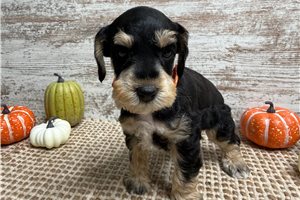
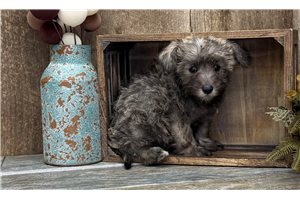
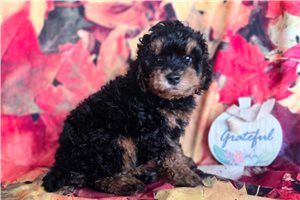
A Miniature Schnauzer is all eyebrows, beard and personality: a small, spirited terrier that wants to be in the middle of whatever its family is doing. It was bred to keep rats out of German houses and barns, and it still watches over its home as if that were its job.
A Miniature Schnauzer is all eyebrows, beard and personality: a small, spirited terrier that wants to be in the middle of whatever its family is doing. It was...A Miniature Schnauzer is all eyebrows, beard and personality: a small, spirited terrier that wants to be in the middle of whatever its family is doing. It was bred to keep rats out of German houses and barns, and it still watches over its home as if that were its job.
Only with Pawrade, you receive a pet insurance policy with no waiting period included for immediate accident or illness coverage. *NH, NY, RI, SC and TN residents excluded
Great service, great communication, great puppy. The van delivery was absolutely fantastic. On time for the greatest Christmas present for my grandchildren. Can't say enough about the breeder and the job they did with this puppy.
“Great service, great communication, great puppy. The van delivery was absolutely fantastic. On time for the greatest Christmas present for my grandchildren. Can't say enough about the breeder and the job they did with this puppy.”
Bessie · Corgi, Pembroke Welsh
Oct 12, 2022
“Pawrade was a wonderful company to work with. The team was pleasant, responsive and a great help. They were able to seemingly re-direct delivery of my puppy during Hurricane Ian! My corgi puppy is adorable, and a great addition to my new house...making it feel like a home!”
Ember · Malti Poo - Maltipoo
Sep 15, 2026
“She arrived alert and happy. She immediately ate and used her puppy pad.”
Betty · Dachshund, Mini
Oct 26, 2024
“Breeder Pam was such a delight to meet and my new baby is simply amazing. I can’t tell you how much I’ve loved this puppy. Pawrade is amazing and so are their breeders. Thank you!!♥️”
Puppy scams cost U.S. families millions every year. Here's how you know Pawrade isn't one: we're a named, audited business with a public track record you can check anywhere.
Pawrade data: parents of puppies placed through Pawrade (breeder-reported)
Height
12–14 in
Energy
Moderate
Shedding
Low
Group
Terrier
AKC
Miniature Schnauzer Characteristics
Full-Grown Size
2 of 7SmallLarge
Grooming Needs
3 of 7SeldomRegularly
Good with Dogs
3 of 7Not ReallyYes!
Watchdog Ability
5 of 7LowHigh
Exercise Needs
3 of 7Couch PotatoHigh Needs
Your new best friend.
Miniature Schnauzer temperament
Personality and daily life
A Miniature Schnauzer is friendly and full of spirit, and never overaggressive or timid. They are clever and generally obedient, and they want to be with their people rather than off on their own. If the family is doing something, a Schnauzer wants in.
Kids and other pets
Most are good with children, especially when they grow up together, though play with young kids still needs an adult nearby. The ratter is still in there. The urge to chase small animals, rodents above all, is strong, so use a leash or a fenced yard outdoors.
A Miniature Schnauzer is a natural watchdog that notices everything and can be vocal about it. Early socialization keeps that alertness from turning into reactivity or too much barking.
Training and play
About an hour a day of walks, play and training keeps a Miniature Schnauzer content. With that, it adapts well to an apartment or city life. Games that echo its ratting past, such as scent and search games, a flirt pole or a dig box, put those instincts to good use.
Pawrade data: parents of puppies placed through Pawrade (breeder-reported). Placements and reviews come from Pawrade's records.
A healthier start for a happier tomorrow.
Miniature Schnauzer care & grooming
Care and training
The routine
Coat and shedding
Low
The coat has two layers: a hard, wiry outer coat over a soft, close undercoat, with longer hair (furnishings) on the beard, eyebrows and legs. It sheds very little, so the work goes into grooming instead. Most pet owners have the coat clipped, which softens the wiry feel, while show dogs are hand-stripped to keep it.
Weekly
Coat and grooming care
Brush and comb at least once a week, and book a professional groom every 5–8 weeks. Between grooms, wipe the beard daily.
Monthly / as needed
Nail trims
Trim the nails between grooms.
Teeth and gums
Brush the teeth regularly as well, since gum problems top the list of the breed's recorded health problems.
Book a yearly eye exam with a veterinary eye specialist, since inherited eye problems run in the breed.
Body weightKeep them lean
Measured meals and daily exercise keep a Miniature Schnauzer lean.
Stomach and digestionKnow when to call
Vomiting or belly pain after a fatty meal needs a vet visit.
Every milestone, together.
Miniature Schnauzer puppy milestones
Growing up: your Miniature Schnauzer's first years
Before 8 weeks
Before your puppy comes home
Your puppy is still with its mother and littermates, early in the most important stretch for socialization. Most Miniature Schnauzer breeders on Pawrade also get litters used to other dogs, children and household sounds.
Set up the crate in a room where the family spends time, or in your bedroom at night.
Ask the breeder about the crate and potty routine your puppy knows, so you can keep it going from day one.
Plan two measured meals a day, and decide now that greasy and spicy table scraps stay off the menu.
Have a brush and comb ready, because time on the grooming table starts within a day or two of arrival.
Why it matters
Carrying on with the breeder's routine means your puppy doesn't have to start house-training over.
Miniature Schnauzer note
A Miniature Schnauzer wants to be wherever its people are, so a crate near the family suits it from the start.
8–10 weeks
Week 1 at home
Everything is new, and your puppy is learning where it sleeps, eats and goes potty. A young puppy can hold its bladder for about as many hours as its age in months, so trips outside come often.
Keep meals at set times and use the same crate and potty spot every day.
Take your puppy out first thing in the morning, after every nap and last thing at night.
Book a vet check for the first day or two, and bring the Veterinary Health Report with you.
Start short, gentle brushing sessions on the grooming table so grooming feels normal early on.
Why it matters
A crate routine and set meal times make house-training fairly easy for this breed.
Miniature Schnauzer note
Miniature Schnauzers are quick to learn, and basic commands come easily once your puppy has settled in.
10–12 weeks
Weeks 2 to 4 at home
These weeks fall inside the most important time for socialization, the first 3 months of life. Calm, positive experiences now help your puppy learn the skills it needs later.
Give your puppy a few calm new experiences each day, with friendly people, new places and everyday sounds.
Puppy classes can start before the vaccine series ends, as your vet advises, in a clean class that keeps sick dogs away.
Visit friends and dog-friendly public places after the first vaccines, but skip dog parks for now.
Why it matters
Early socialization keeps a Miniature Schnauzer's natural alertness from turning into reactivity or too much barking.
Miniature Schnauzer note
A Miniature Schnauzer wants to join in whatever its family is doing, so take your puppy along to safe places when you can.
3–4 months
3 to 4 months
By now your puppy can usually wait about 3 hours between trips outside. Most puppies finish their core vaccine series at about 16 weeks, as your vet advises.
Once your vet says the vaccines are complete, widen your puppy's world with new places, surfaces and sounds.
Sign up for a basic obedience class, such as AKC S.T.A.R. Puppy, and keep socializing as your dog grows.
Keep the leash on outside a fenced yard, because the urge to chase small animals is strong.
Why it matters
Miniature Schnauzers learn quickly, and short, regular lessons build good habits while your puppy is young.
Miniature Schnauzer note
Scent and search games, a flirt pole or a dig box give the old ratting instinct a safe outlet.
4–6 months
4 to 6 months
Teething is in full swing. Baby teeth start falling out from about 12 weeks, and by about 6 months the adult teeth are in. Chewing is at its strongest while the new teeth come through.
Keep only a few safe chew toys out at a time and rotate them, so they stay interesting.
Supervise chewing, and keep shoes, cords and anything else you value out of reach.
Keep up the daily brushing and time on the grooming table that you started in the first week.
Why it matters
Safe chews and a watchful eye protect both your puppy and your things while chewing peaks.
Miniature Schnauzer note
Measured meals with no greasy scraps matter for life in this breed, because high blood fats and pancreatitis run in it.
6–12 months
6 to 12 months
Meet your teenager. Adolescence often begins around 8 months, and a young dog may test limits or ignore commands it knew last month.
Keep training consistent and patient, with plenty of exercise for both body and mind.
Keep walks short while your dog is still growing, and wait until about 18 months before jogging together.
If you have a male, ask your vet to check that both testicles have come down.
Talk with your vet about spaying or neutering, and decide together what makes sense for your dog.
Why it matters
Consistent training and patience carry a young dog through this stage.
Miniature Schnauzer note
A Miniature Schnauzer that has met plenty of people and dogs is less likely to turn over-protective as it matures.
1–2 years
1 to 2 years
Your Miniature Schnauzer is settling into the dog it will be: friendly, alert and keen to join in. Most dogs are fully grown and settled into adulthood at around 2 years.
Plan on about an hour a day of walks, play and training to keep your dog content.
Keep up weekly brushing and combing between your dog's professional grooms.
Book a wellness exam with your vet at least once a year, and keep up the yearly eye exam.
Why it matters
Regular checkups and a lean weight help you stay ahead of the conditions that run in the breed.
Miniature Schnauzer note
Coat colors often lighten with age and clipping, and a black or black-and-silver coat may fade toward dark gray.
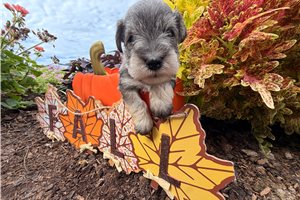
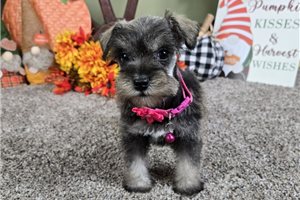
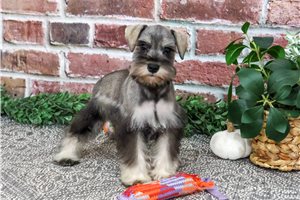
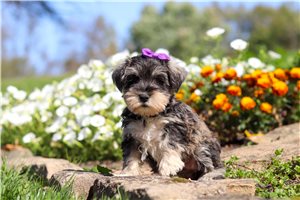
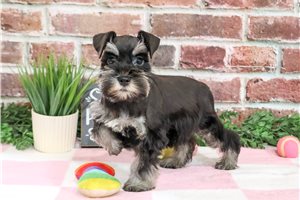
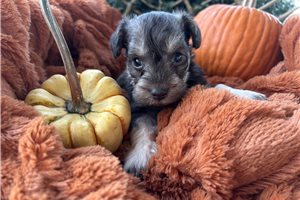
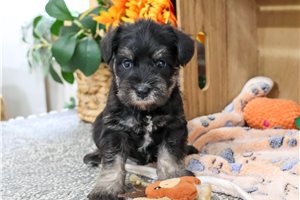
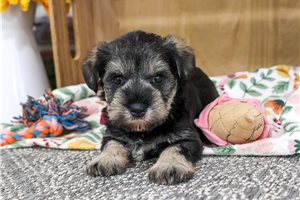
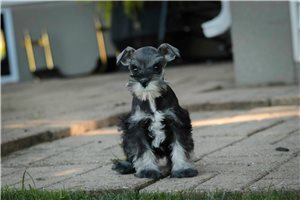
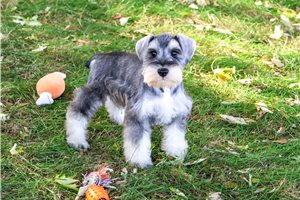
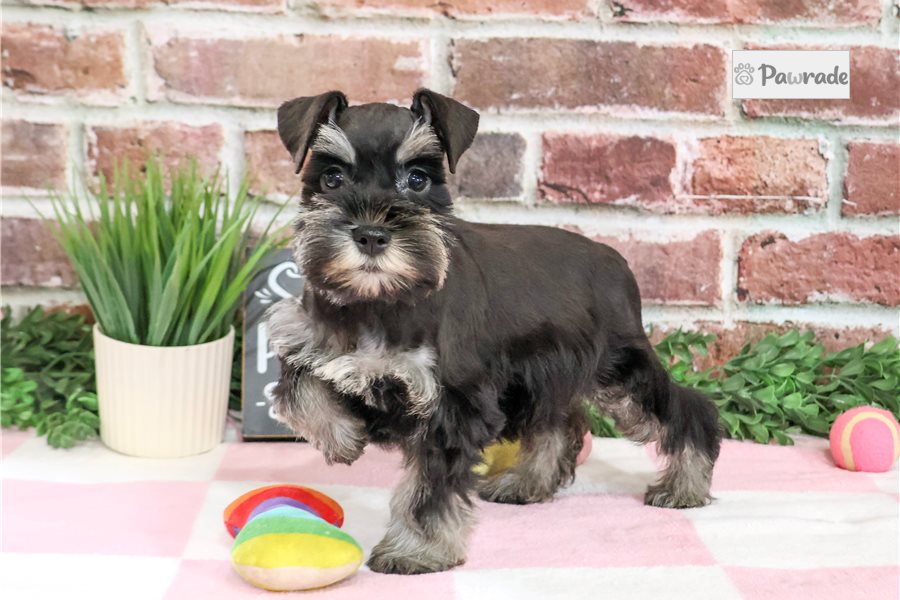
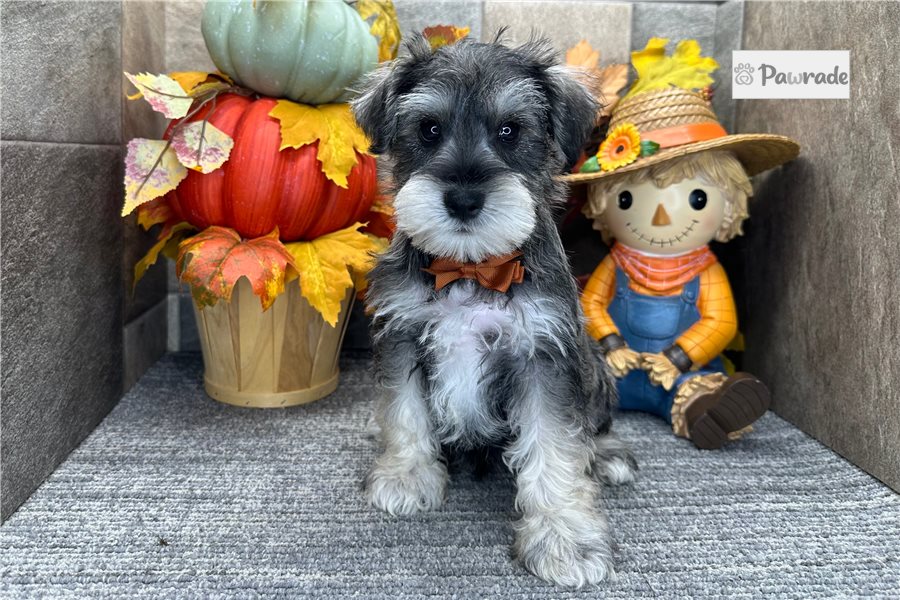
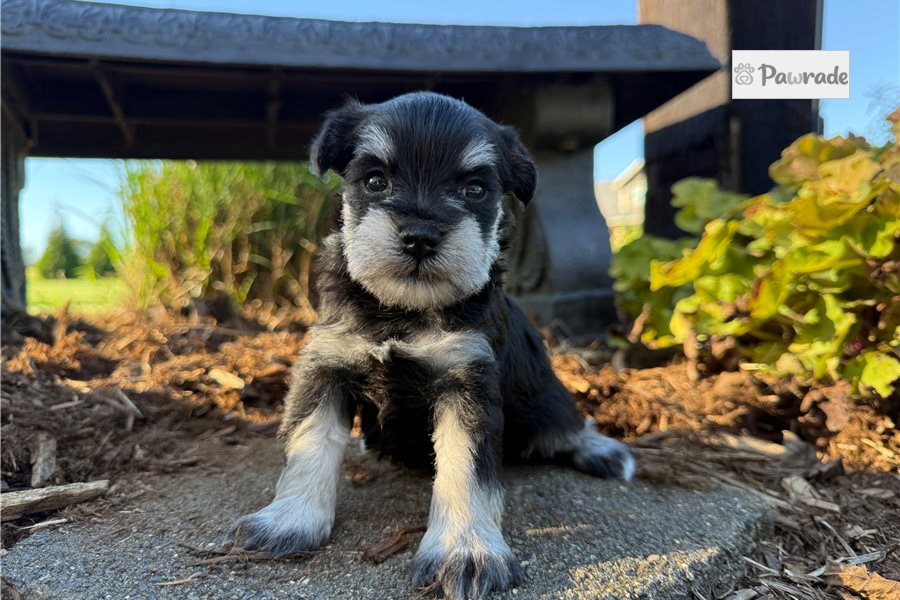
Nothing about a Miniature Schnauzer is toyish. It is robust and nearly square, with plenty of bone, and built like a smaller Standard Schnauzer. Dark, deep-set eyes look out from under the eyebrows, the nose is solid black, and the beard and leg furnishings finish the look. Males and females share the same height range, and females are a little more refined in the head and neck. The AKC standard allows cropped or natural ears, and the UKC also accepts natural ears and undocked tails.
Colors and coat
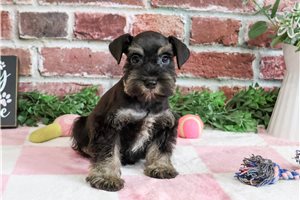
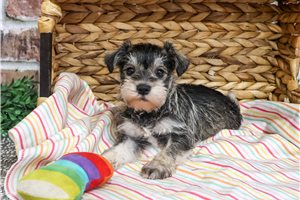
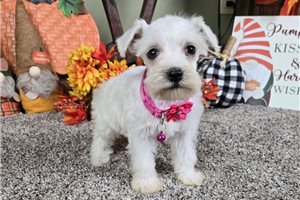
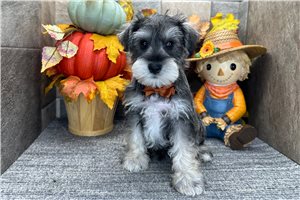
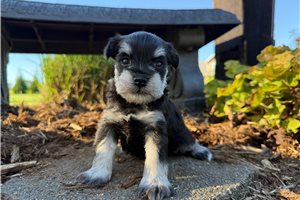
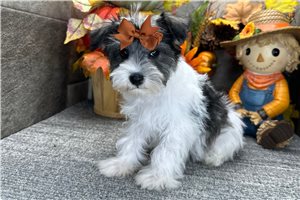
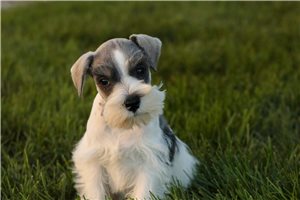
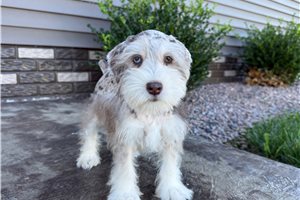
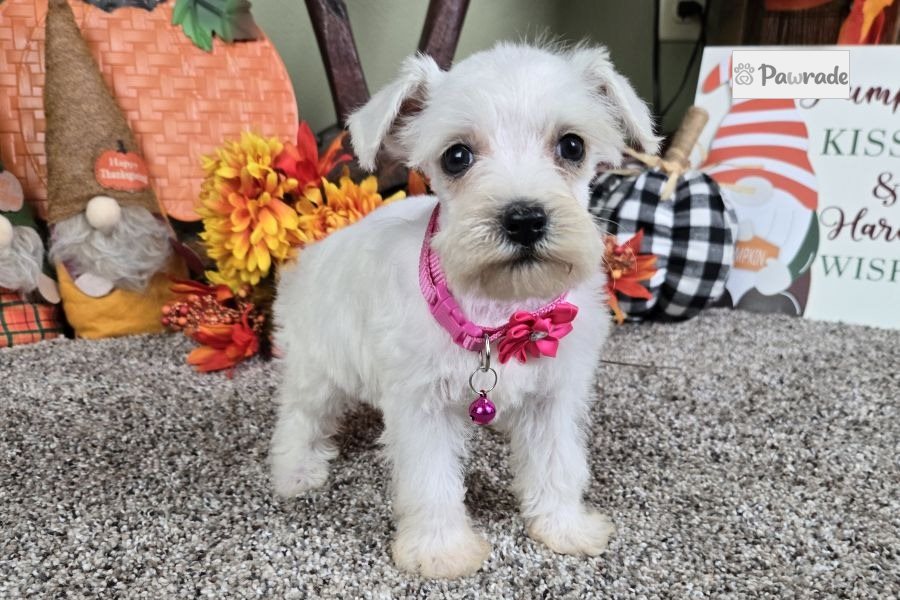
The AKC standard colors are salt and pepper, black and silver, and solid black. Salt and pepper is banded black-and-white hair in any shade of gray, lighter on the brows, whiskers, cheeks, chest and legs; black and silver has the same pattern on a black body. A solid black may have a small white spot on the chest. White is a standard color under the World Canine Organisation (FCI), the UKC and The Kennel Club (UK), but it is outside the AKC breed standard. Parti-color, liver or chocolate, and merle are outside the AKC breed standard and the other registries' standards too.
Colors listed by Pawrade breeders
Black
Black & Silver
Black & Tan
Liver
Liver & Tan
Parti
Pepper & Salt
Rare Silver
Rare White
Salt & Pepper
Keeping your Miniature Schnauzer healthy
Miniature Schnauzers are known to be prone to a short list of conditions, and most of them are managed day to day. High blood fats (hypertriglyceridemia) and inflammation of the pancreas (pancreatitis) run in the breed, so a moderate-fat diet with no greasy scraps matters for life. Once your dog is grown, ask your vet about a fasting blood-fat test. Bladder stones are a known problem too, and a urine test at routine checkups helps find them, especially from middle age.
A little history, a lot of heart.
Miniature Schnauzer history
History and fun facts
19th century
The Miniature Schnauzer was developed in Germany in the late 19th century by breeding small Standard Schnauzers with Affenpinschers.
Its job was to keep rats and other vermin down in the house and barn while serving as a companion.
1888
The first recorded Miniature Schnauzer was a black female named Findel, born in 1888, and the breed was being shown as a distinct breed by 1899.
The name comes from the German word Schnauze, meaning muzzle or snout, and in Germany the breed is the Zwergschnauzer, the dwarf schnauzer.
1923
The first imports reached the United States in 1923–1924, the first US litters followed in 1925, and the AKC recognized the breed in 1926.
1933
The American Miniature Schnauzer Club formed in August 1933, when the Schnauzer club split into Miniature and Standard clubs, and it is still the breed's AKC parent club.
Schnauzer-type farm dogs are much older: they drove carts and livestock, stood guard and caught rats on German farms, and Albrecht Dürer drew one in his Madonna with the Many Animals.
Checked with care before travel.
Miniature Schnauzer Veterinary Health Report
Your puppy's Veterinary Health Report
Before your Miniature Schnauzer goes home, the breeder's licensed veterinarian gives it a full hands-on exam to PetPay's exam standards, and the results are recorded in its Veterinary Health Report.
The exam, a health certificate and a stool test for parasites all happen 3 to 5 days before your puppy leaves.
1This is an exam of your puppy itself, not a check of the parents' health, so it tells you about the dog you are actually bringing home.
2If the vet finds something that could put your puppy at risk during travel, your puppy stays with the breeder until it's resolved.
3Problems that can be treated before travel are treated by the breeder's licensed vet first.
4Anything else the vet notes is shared with you.
5A hard copy of the report travels with your puppy for your records, and a digital copy is in your PetPay account.
PetPay Veterinary Health Report form
16 areas checked on the exam
Closer look for Miniature SchnauzersOn every puppy's report
Puppies travel only once they are at least 8 weeks old and weigh at least 2 lb. Every puppy also comes with a health guarantee administered by PetPay, independent of the seller. The terms are on the health guarantee page.
A Miniature Schnauzer puppy's price reflects what goes into it: its pedigree and registration, its coat and color, and the breeder's program. Every Pawrade puppy's price also includes the pre-travel exam by the breeder's licensed vet, the Veterinary Health Report and a health guarantee administered by PetPay. See today's price range for Miniature Schnauzer puppies on Pawrade's Miniature Schnauzer listings.
Typical asking price
$2,895
Based on 751 Miniature Schnauzer listings in the last 12 months
Similar in height and both usually clipped, but the Poodle's coat is curly where the Schnauzer's is wiry; Miniature Poodles are named among the Schnauzer's ancestors.
Frequently asked questions about Miniature Schnauzer puppies
Frequently asked questions
Adult Miniature Schnauzers stand 12–14 in at the shoulder and usually weigh 11–20 lb. The breed standard sets a height range but no weight.
No one can promise a particular adult size, because weight varies within the breed and the standard sets only a height. Parents of Pawrade Miniature Schnauzers typically weigh 10–18 lb for fathers and 9–17 lb for mothers, based on the adult weights breeders report.
Toy, teacup and micro are not separate breeds or varieties. A dog under 12 in is an undersized Miniature Schnauzer and cannot compete in AKC conformation shows. The Miniature, Standard and Giant Schnauzers are three separate breeds, and the Miniature is the smallest.
The Miniature Schnauzer is a terrier and has always been in the AKC Terrier Group, while the Standard and Giant Schnauzers are in the Working Group. In countries that follow the World Canine Organisation (FCI), it is grouped with the pinschers and schnauzers instead.
The AKC standard allows three colors: salt and pepper, black and silver, and solid black. Salt and pepper comes in any shade of gray, from light to dark.
White is a standard color under the FCI, the UKC and The Kennel Club (UK), but it is outside the AKC breed standard. Parti-color, liver or chocolate, and merle are outside the AKC breed standard and the other registries' standards.
The AKC standard calls for small, dark, deep-set eyes, so blue eyes are outside the AKC breed standard.
Colors often lighten with age and clipping. Blacks and black-and-silvers can fade toward dark gray, and salt-and-peppers get lighter.
Ear cropping is a choice, because the AKC standard allows cropped or uncropped ears. The AKC standard calls for a docked tail, while the UKC accepts natural ears and undocked tails without penalty. Where it is done, tail docking happens at about 3 days old and ear cropping at 7–12 weeks, before the puppy goes home.
A Miniature Schnauzer is friendly, full of spirit and quick to notice things, but never overaggressive or timid. It is intelligent and obedient, and it wants to be with its family and join in whatever they are doing.
Miniature Schnauzers sit in the middle, with moderate energy. A daily mix of walks, play and training keeps that energy in check, and scent and search games that use the old ratting instinct are a good outlet.
Most are very people-oriented and want to be with their family, joining in whatever it is doing. The breed is friendly by nature and never meant to be timid.
The breed is alert and a natural watchdog. It should never be overaggressive, so early socialization matters.
Miniature Schnauzers are alert and can be vocal. Early socialization reduces reactivity and excess barking.
Most do, because the breed is friendly by nature, and early socialization keeps reactivity and barking down. Breeders report that 96% of Miniature Schnauzer litters placed through Pawrade were socialized with small-breed dogs, and more than a third of buyers already have another dog at home.
Miniature Schnauzers are generally good with children, especially when they grow up together. Supervise play with young kids.
It depends on the dog, because the breed has a strong urge to chase small animals. Keep any pet rodents safely out of reach.
Plan on about an hour a day of walks, play and training. Keep it on a leash or in a fenced yard, because the urge to chase small animals is strong.
Keep walks short while your puppy is growing, and wait until about 18 months, when growth is complete, before jogging together. A puppy's growth plates stay soft while it grows, so agree an exercise plan with your vet and avoid strenuous exercise until growth is done.
The breed adapts well to apartment and city life, as long as it gets daily exercise. Early socialization helps keep alert barking in check, which matters with close neighbors.
A Miniature Schnauzer does best with company, because it wants to be with its family and take part in what they do.
It can be a good choice, because the breed is quick to learn and adapts to apartment or city life. Plan for regular professional grooming, a moderate-fat diet and early socialization.
They shed very little, but no dog is truly hypoallergenic. A low-shedding dog may bother some allergic people less, but reactions vary, so spend time with the breed before you commit.
Plan on brushing and combing at least weekly, plus a professional groom every 5–8 weeks. Most pets are clipped, which softens the wiry coat, while hand-stripping keeps the texture for the show ring.
Miniature Schnauzers are intelligent and quick to learn, and many go on to obedience and agility competition. A basic obedience class, such as AKC S.T.A.R. Puppy, plus ongoing socialization is a good foundation.
The breed is fairly easy to house-train with a crate routine and a regular feeding schedule. Keep the breeder's crate and outdoor potty routine going from the first day, so the puppy doesn't have to start over.
Start with the crate and potty routine the breeder already uses, and keep it going from the day your puppy comes home. Put the crate in a room where the family spends time, or in your bedroom at night. A crate routine with meals at set times makes house-training fairly easy for this breed.
A common rule of thumb is about as many hours as its age in months, so a 3-month-old can usually wait about 3 hours. The rule works up to about 9 months to 1 year of age. Take a young puppy out first thing in the morning, after naps and last thing at night.
Your dog is most likely in adolescence, which often begins around 8 months and can last until about 2 years. Young dogs in this stage test limits and may ignore commands they already know. Consistent training, patience and plenty of exercise for body and mind carry your dog through it.
Games that echo ratting suit them best, such as scent and search games, flirt-pole chasing and dig games. Miniature Schnauzers also compete in AKC obedience, agility, rally, earthdog, scent work, Fast CAT and trick dog events, and in barn hunt.
Puppies travel only once they are at least 8 weeks old and weigh at least 2 lb. Most Miniature Schnauzer puppies go home at about 12 weeks, usually between 9 and 22 weeks.
Set up a crate in a room where the family spends time, and ask the breeder about the crate and potty routine your puppy already knows. Plan two measured meals a day with no greasy scraps, and book a vet visit for the first day or two. Have a brush and comb ready, since time on the grooming table starts early.
Socializing matters most in the first 3 months of life, so start with calm new people, places and sounds as soon as your puppy is home. Puppy classes can start as early as 7 to 8 weeks, as your vet advises, in a clean class that keeps sick dogs away. After the first vaccines, visit friends and dog-friendly public places, but skip dog parks until adulthood.
Most puppies finish teething by about 6 months, when the adult teeth are in. Baby teeth start to fall out from about 12 weeks, and chewing is strongest in between. Keep a few safe chew toys out at a time and rotate them, and supervise chewing.
Most puppies finish their core vaccine series at about 16 weeks, as your vet advises. Until then, visit friends and dog-friendly public places after the first vaccines, but skip dog parks.
Feed two measured meals a day of a moderate-fat food, with no free feeding and no greasy or spicy table scraps. High blood fats and pancreatitis run in the breed, so ask your vet which food suits your dog. Before your puppy comes home, ask what it is eating now.
Breeders on Pawrade report a typical Miniature Schnauzer litter of 5 puppies, usually between 3 and 7.
Breeders report that 96% of Miniature Schnauzer litters placed through Pawrade were socialized with small-breed dogs, 83% with younger children and 82% with older children. Most litters also get used to everyday household noise before going home. Breeders report that 59% of litters heard a vacuum cleaner and 57% heard loud music or TV. These figures come from the breeders' own litter forms.
The Veterinary Health Report is the written record of your Miniature Schnauzer puppy's health exam before it goes home. The breeder's licensed veterinarian examines the puppy to PetPay's exam standards and records the results in the report. It is a full hands-on exam of your puppy itself, not a record of the parents' health.
The breeder's own licensed veterinarian examines every Miniature Schnauzer puppy before it goes home. The vet follows PetPay's exam standards and records the findings in your puppy's Veterinary Health Report. A hard copy of the report travels with your puppy for your records, and a digital copy is in your PetPay account.
The breeder's licensed vet gives each Miniature Schnauzer puppy a full hands-on exam before it goes home, to PetPay's exam standards. The vet checks the eyes for discharge and signs of vision problems and listens to the heart for a murmur. The vet also weighs the puppy, compares its growth with its littermates and, in a male, feels for both testicles. Those checks match the breed, which is at increased risk of a liver shunt.
Before travel, every puppy follows PetPay's vaccination and deworming schedule as far as its age allows: deworming at 2, 4, 6, 8, 10 and 12 weeks, and the distemper, parvo, adenovirus and parainfluenza combination shot at 6–8, 9–11 and 12–14 weeks. Bordetella and corona are given at the vet's discretion, and no vaccine is given within 3 days of travel. Rabies is given by a licensed vet on the schedule your state requires. Your own vet completes the series. Your puppy's vaccination and deworming records are separate documents that travel with your puppy. Bring them, with the Veterinary Health Report, to your first visit so your vet starts from the same record.
If the vet finds something that could put your puppy at risk during travel, your puppy stays with the breeder until it's resolved. Problems that can be treated before travel are treated by the breeder's licensed vet first. Anything else the vet notes is shared with you.
Puppies grow and change quickly, and their immune systems are still developing, so no exam can find everything. The pre-travel exam by the breeder's licensed vet is a strong early indicator and a documented starting point. Your own vet builds on it at the first visit and at every checkup after that.
Miniature Schnauzer buyers rate their Pawrade experience 4.8 out of 5 on average across 333 reviews, and 84% of those reviews give the full 5 stars.
Right now, most Miniature Schnauzer puppies on Pawrade are listed within the typical range shown on Pawrade's Miniature Schnauzer listings. Each breeder on Pawrade sets their own price, and each puppy's listing shows it. A Miniature Schnauzer puppy's price reflects what goes into it: its pedigree and registration, its coat and color, and the breeder's program. Every Pawrade puppy's price also includes the pre-travel exam by the breeder's licensed vet, the Veterinary Health Report and a health guarantee administered by PetPay.










 Miniature Schnauzer note