A Pembroke Welsh Corgi packs a lot of dog into a small space: low and sturdy, with a foxy face, upright ears and a bold, friendly outlook. Bred to drive cattle on Welsh farms, it brings that working spirit home as a busy, alert companion that likes to be part of everything.
A Pembroke Welsh Corgi packs a lot of dog into a small space: low and sturdy, with a foxy face, upright ears and a bold, friendly outlook. Bred to drive cattle...A Pembroke Welsh Corgi packs a lot of dog into a small space: low and sturdy, with a foxy face, upright ears and a bold, friendly outlook. Bred to drive cattle on Welsh farms, it brings that working spirit home as a busy, alert companion that likes to be part of everything.
Only with Pawrade, you receive a pet insurance policy with no waiting period included for immediate accident or illness coverage. *NH, NY, RI, SC and TN residents excluded
“We just love Giana. She is so loving and very active. The process was very professional from start to finish. She was delivered by the most caring people. Thank you, we are very happy.”
Emma · Shichon
Aug 19, 2026
“The Entire process was ABSOLUTELY AMAZING ! I was constantly kept informed along the way .”
Dante · Chihuahua
May 12, 2025
“Everything went very smooth. The purchase, transportation and the customer service. They answered all my questions! We received a healthy, active puppy. Very satisfied with the van transport. A+”
Puppy scams cost U.S. families millions every year. Here's how you know Pawrade isn't one: we're a named, audited business with a public track record you can check anywhere.
Pawrade data: parents of puppies placed through Pawrade (breeder-reported)
Height
10–12 in
Lifespan
12–15 years
Energy
Moderate
Shedding
Moderate to high
Group
Herding
AKC
Pembroke Welsh Corgi Characteristics
Full-Grown Size
2 of 7SmallLarge
Grooming Needs
1 of 7SeldomRegularly
Good with Dogs
3 of 7Not ReallyYes!
Watchdog Ability
5 of 7LowHigh
Exercise Needs
3 of 7Couch PotatoHigh Needs
Your new best friend.
Pembroke Welsh Corgi temperament
Personality and daily life
At home
Pembrokes were bred to drive cattle in Wales, nipping at their heels from behind and staying low enough to duck a kick. They also moved geese and poultry to market, guarded the farmyard and kept down the vermin. That working past shaped the dog you bring home: bold but kindly, outgoing and friendly, and never shy.
Kids and other pets
Pembrokes are good with children. Many will try to herd running kids by nipping at their heels, so redirect it the same way every time, from the very first day. With early socialization, a Pembroke can share the house with cats and other pets, although small caged pets need supervision. Expect it to boss and herd much bigger dogs, too. Its compact size is a disadvantage around larger dogs.
Training and play
Energy is moderate, but stamina is not. Plan a long daily walk or a short run plus some vigorous games, up to about an hour of exercise a day. Herding is the favorite outlet, and plenty of Pembrokes also enjoy agility, obedience, rally and tracking.
Pembrokes are very alert and will announce anything unusual. Teach a quiet cue to use once you've been alerted. A Pembroke makes a fine watchdog, but it is not a guard dog.
Pawrade data: parents of puppies placed through Pawrade (breeder-reported). Placements and reviews come from Pawrade's records.
A healthier start for a happier tomorrow.
Pembroke Welsh Corgi care & grooming
Care and training
The routine
Exercise needs
Moderate
An adult Pembroke does best with daily walks plus some mental work, such as herding, agility or obedience.
Coat and shedding
Moderate to high
The coat is a medium-length double coat: a short, thick, weather-resistant undercoat under a coarser outer coat. Shedding is moderate to high, with some hair every day and a big loss of undercoat each spring or summer.
Weekly
Coat and grooming care
Brush weekly, more often during a shed; the coat is left natural, with only the feet tidied.
Monthly / as needed
Nail trims
Keep the nails short.
Keeping them safe
Heat safety
Pembrokes handle exercise well but should not be pushed in extreme heat, and they need water afterward.
Cold weather
Don't push a Pembroke hard in extreme cold either.
Stairs and jumping
Teach stairs gradually and limit jumping on and off furniture, starting while your Pembroke is a puppy.
Leash and fencing
A Pembroke should never run loose, so use a well-fenced yard or leashed walks.
Pembrokes gain weight easily, and extra pounds load a long back and short legs, so measure meals and keep treats small.
Back and spineKnow when to call
In an older dog, call your vet promptly about scuffing or crossing of the back feet, since degenerative myelopathy and disc disease can look alike.
Joints and movementGo easy while growing
While your Pembroke is growing, skip lots of jumping to protect the hips and elbows.
Every milestone, together.
Pembroke Welsh Corgi puppy milestones
Growing up: your Pembroke's first years
Before 8 weeks
Before your puppy comes home
Your puppy is still with its mother and littermates, and Pembroke litters on Pawrade typically have 5 puppies. Most Pembroke breeders on Pawrade also get their litters used to small dogs, children and everyday sounds such as music, the TV and car rides.
Check your fence before your puppy arrives, or plan on leashed walks, because a Pembroke should never run loose.
Put the crate in a room where the family spends time during the day, or in your bedroom at night.
Plan on measured meals from the very start, since Pembrokes put on weight easily.
Why it matters
A safe yard, a crate near people and a set routine help a bold, busy puppy settle in from the first day.
Pembroke Welsh Corgi note
Many Pembroke breeders keep puppies until 10–12 weeks, so they learn from their mother and littermates first.
8–10 weeks
The first week home
Everything is new, and your puppy is learning where it sleeps, eats and goes potty. A young puppy can hold its bladder for roughly as many hours as it is months old, so trips outside come often.
Take your puppy out first thing in the morning, after every nap and last thing at night.
Start redirecting heel nipping on day one, and make sure everyone in the family handles it the same way.
Book a first visit with your own vet, and bring your puppy's Veterinary Health Report along.
Why it matters
Heel nipping is herding instinct, not aggression, which is why it needs a calm, consistent redirect from the very start.
Pembroke Welsh Corgi note
Pembrokes respond to patient, gentle training, so reward the moment your puppy gets it right with praise and a small treat.
10–12 weeks
Weeks 2 to 4
Your puppy is in the most important stretch for socialization, which covers the first 3 months of life. Calm, positive meetings with people, places, animals and new things now build the life skills it will use as an adult.
Sign up for a puppy class once your vet agrees, since classes can start as early as 7–8 weeks.
Introduce friendly people of all ages, calm dogs and everyday sounds a few at a time, each paired with a treat.
If you have a cat, let your puppy meet it calmly while you supervise.
Why it matters
There is no medical reason to wait for the last vaccines before a class, as long as sick animals are kept away and the class is clean.
Pembroke Welsh Corgi note
Pembrokes often try to boss and herd bigger dogs, so choose calm, gentle playmates while your puppy is small.
3–4 months
3 to 4 months
By the same rule of thumb, a 3-month-old can usually wait about 3 hours between trips outside. Most puppies finish their core vaccine series at about 16 weeks, as your vet advises.
Once your vet says the vaccines are complete, take your puppy to new places and let it try new surfaces.
Teach stairs gradually, and keep jumping on and off furniture to a minimum while your puppy is small.
Brush your puppy daily and handle its nails and teeth each week, so grooming becomes a normal part of life.
Why it matters
A Pembroke is long and low, so careful habits on stairs and furniture are worth building while your puppy is young.
Pembroke Welsh Corgi note
Keep your puppy lean from the start, because extra weight loads a long back and short legs.
4–6 months
4 to 6 months
Teething is in full swing. From about 12 weeks the baby teeth loosen and fall out as the adult teeth come in. The full adult set is usually in by about 6 months. Chewing is at its strongest now.
Keep a few safe chew toys out at a time and rotate them, so each one feels new again.
Supervise chewing, and keep shoes and other things you value out of reach.
When play turns into nipping at ankles, stop, offer a toy instead and praise your puppy for taking it.
Why it matters
Chewing is strongest while teething, so safe chews and a watchful eye protect your things and your puppy.
Pembroke Welsh Corgi note
Keep training varied and fun with food or play rewards, because Pembrokes bore easily.
6–12 months
6 to 12 months
Adolescence can begin around 8 months. Many young dogs test the rules and seem to forget what they learned, so a cue your Pembroke knew well may suddenly be ignored.
Keep training consistent and patient, with plenty of physical and mental exercise every day.
Ask your vet how much exercise suits your growing puppy, and skip strenuous activity until growth is done.
Talk with your own vet about spaying or neutering, and decide together what suits your dog.
Why it matters
Growth plates in a puppy's legs stay soft while it grows, which is why hard exercise waits until growth is done.
Pembroke Welsh Corgi note
As growth slows, watch your Pembroke's waistline, since the breed gains weight easily. Steady training through the first year pays off in a well-behaved, bonded adult.
1–2 years
1 to 2 years
Your Pembroke is settling into the adult it will be: bold, friendly and alert. Dogs usually reach adulthood at around 2 years.
Plan a long daily walk or a short run with games, and give your Pembroke a job such as herding, agility or obedience.
Book a wellness exam with your vet at least once a year.
Keep your Pembroke lean enough that you can easily feel the ribs.
Why it matters
A lean, fit adult carries less load on its long back and hips for years to come.
Pembroke Welsh Corgi note
If your Pembroke ever seems weak in the back legs, have your vet check it, because disc disease and degenerative myelopathy can look alike.
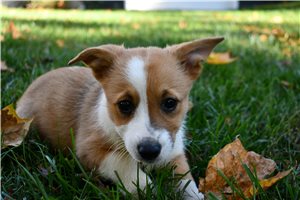
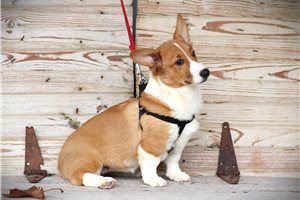
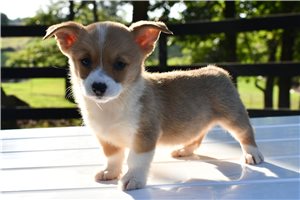
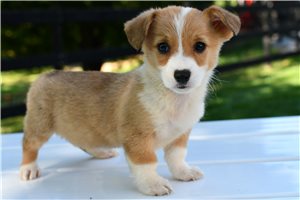
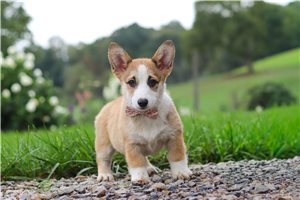
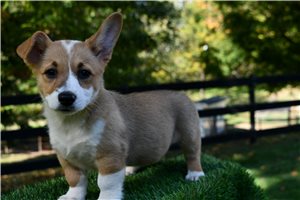
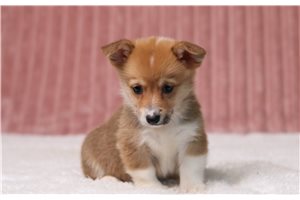
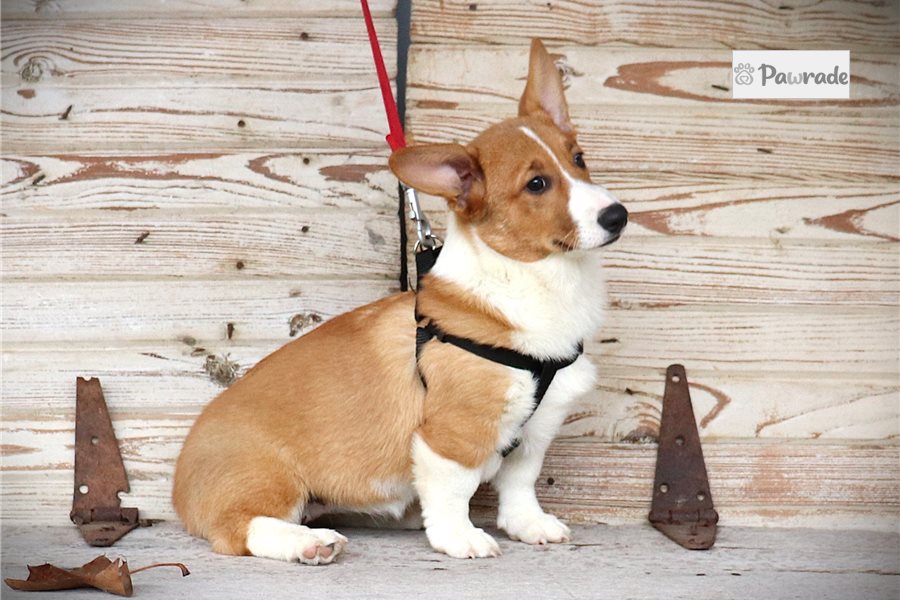
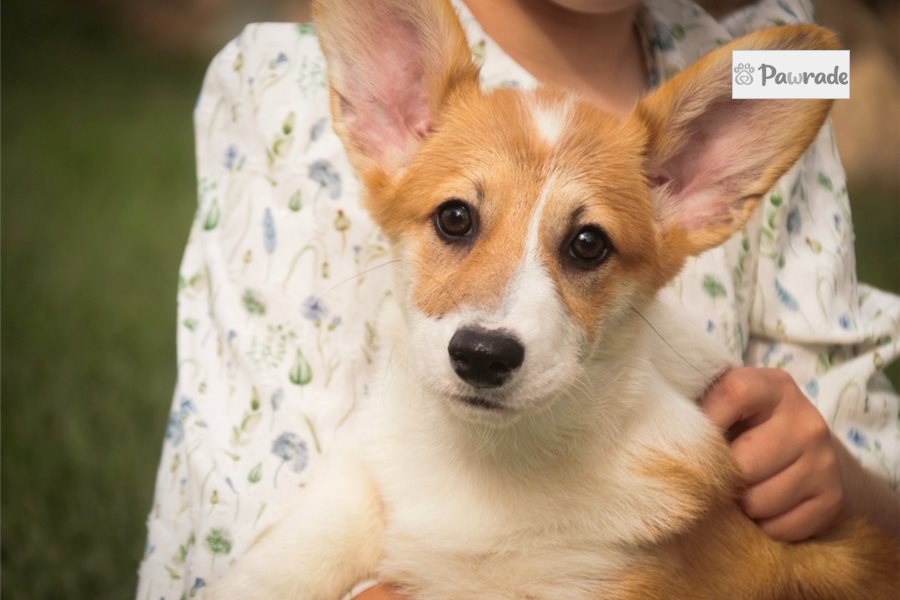
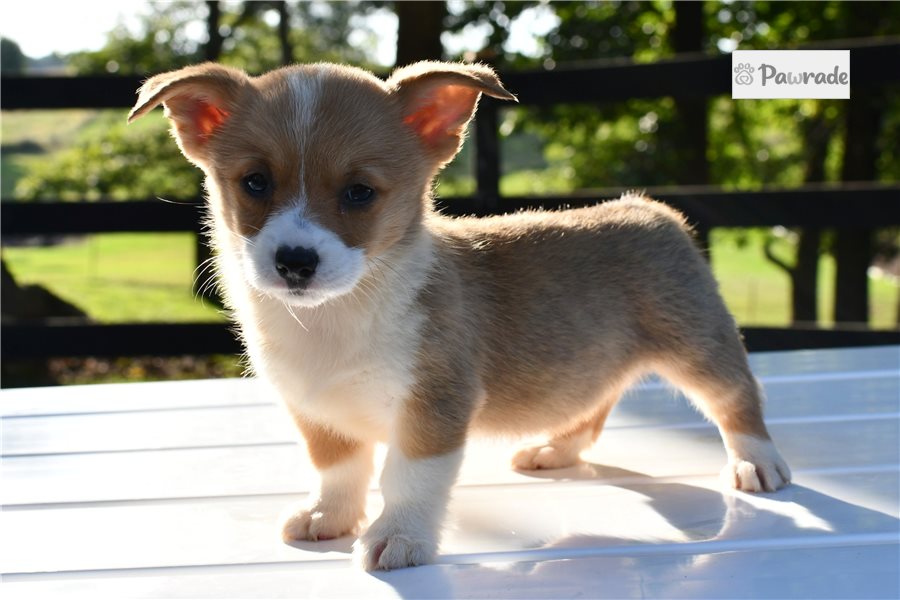
The Pembroke is low-set, strong and sturdily built, and noticeably longer than it is tall, with a foxy head and erect, medium-size ears. Tails vary: many puppies are born with a full tail and some with a natural bobtail, and the AKC standard calls for a docked or naturally short tail.
Colors and coat
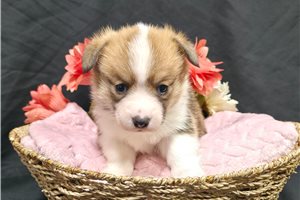
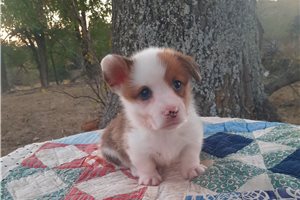
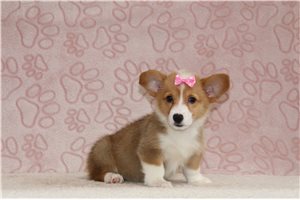
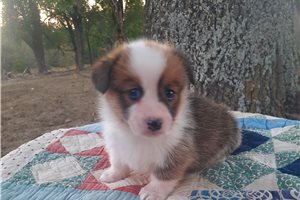
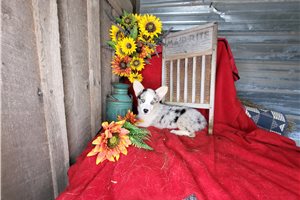
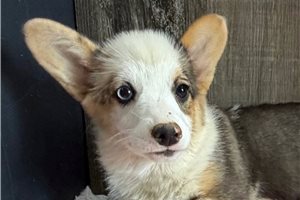
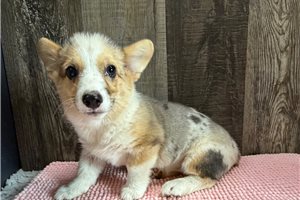
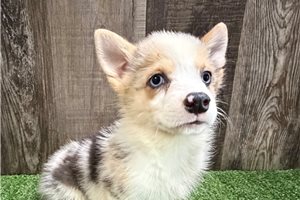
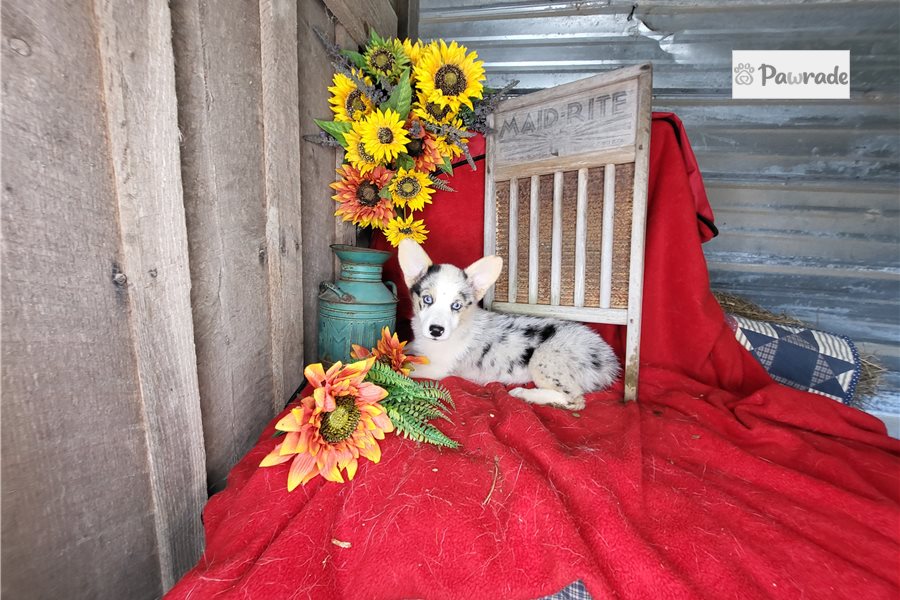
The AKC standard colors are red, sable, fawn, and black and tan, with or without white markings on the legs, chest, neck, muzzle and underparts and a narrow blaze. Black-and-tan dogs with white are called tricolors, either red-headed or black-headed depending on how much black is on the head. Bluies (a smoky, dilute color), whitelies (a white body with colored markings), mismarks with white on the back, sides or ears, merle and brindle are outside the AKC breed standard. A long coat, known as a fluffy, is outside the AKC breed standard.
Colors listed by Pawrade breeders
Red, sable, fawn, black and tan, all with or without white flashings
Keeping your Pembroke healthy
Pembrokes are known to be prone to a short list of conditions, and everyday care covers much of it. Start with the back. A lean weight and limited jumping protect it from disc problems (intervertebral disc disease). They also help the hips and elbows, where an inherited problem in how the joint forms (dysplasia) can occur.
In older dogs, degenerative myelopathy slowly weakens the back legs without pain, so have your vet check any back-leg weakness. An inherited bleeding tendency (von Willebrand disease) matters mainly before surgery, so share your dog's DNA result with your vet or ask about a bleeding test.
A little history, a lot of heart.
Pembroke Welsh Corgi history
History and fun facts
The Pembroke is an old Welsh cattle-droving dog of spitz type from Pembrokeshire, and its exact origin is unknown.
Theories include descent from Celtic dogs and crossing with dogs like the Swedish Vallhund brought by the Vikings.
1100s
Welsh cattle dogs are recorded from the 1100s.
Farmers used it to drive cattle from behind, low enough to duck a kick, and to move geese and poultry, guard the farmyard and kill vermin.
The name corgi most likely comes from the Welsh cor (dwarf) and ci (dog).
1934
Pembrokes and Cardigans were shown as one breed until The Kennel Club separated them in 1934, the same year the AKC recognized the Pembroke.
1934
The first Pembrokes reached America in 1934 with Mrs. Lewis Roesler of Massachusetts, and her Little Madam became the first American champion in 1935.
1936
The Pembroke Welsh Corgi Club of America was founded at the Westminster show in 1936 and is still the breed's AKC parent club.
1933
Princess Elizabeth's first Pembroke, Rozavel Golden Eagle, known as Dookie, arrived in 1933, and as Queen she owned more than 30 Pembrokes.
1944
Her corgi Susan, an 18th-birthday present in 1944, went along on the 1947 royal honeymoon and founded a line of about 14 generations that ended with Willow in 2018.
Welsh folklore says fairies rode corgis, and the fairy saddle markings over the shoulders are said to show where.
Checked with care before travel.
Pembroke Welsh Corgi Veterinary Health Report
Your puppy's Veterinary Health Report
Before your Pembroke puppy comes home, the breeder's licensed vet gives it a full hands-on exam to PetPay's exam standards, and the results go into its Veterinary Health Report.
The exam, a health certificate and a stool test for parasites all happen 3 to 5 days before your puppy leaves.
1It is a check of your own puppy, not paperwork about its family, so you start with a clear record of how your puppy is doing.
2If the vet finds something that could put your puppy at risk during travel, your puppy stays with the breeder until it's resolved.
3Problems that can be treated before travel are treated by the breeder's licensed vet first.
4Anything else the vet notes is shared with you.
5A hard copy of the report travels with your puppy for your records, and a digital copy is in your PetPay account.
PetPay Veterinary Health Report form
16 areas checked on the exam
Closer look for Pembroke Welsh CorgisOn every puppy's report
Puppies travel only once they are at least 8 weeks old and weigh at least 2 lb. Every puppy also comes with a health guarantee administered by PetPay, independent of the seller. The terms are on the health guarantee page.
A Pembroke Welsh Corgi puppy's price reflects what goes into it: its pedigree and registration, its coat and color, and the breeder's program. Every Pawrade puppy's price also includes the pre-travel exam by the breeder's licensed vet, the Veterinary Health Report and a health guarantee administered by PetPay. See today's price range for Pembroke Welsh Corgi puppies on Pawrade's Pembroke Welsh Corgi listings.
Typical asking price
$2,420
Based on 425 Pembroke Welsh Corgi listings in the last 12 months
Frequently asked questions about Pembroke Welsh Corgi puppies
Frequently asked questions
Adult Pembrokes weigh 22–30 lb and stand 10–12 in at the shoulder. The breed standards set a maximum of 30 lb for males and 28 lb for females. Parents of Pawrade Pembrokes typically weigh 20–35 lb (fathers) and 16–28 lb (mothers).
The breed comes in one size, and the AKC, UKC and FCI (Fédération Cynologique Internationale) standards all describe that one Pembroke. The AKC standard treats an undersized or oversized dog as a serious departure from it.
The AKC standard colors are red, sable, fawn, and black and tan (tricolor), with or without white markings. The parent club groups them for buyers as three basic colors: red, sable and tricolor. A tricolor can be red-headed or black-headed, depending on how much black is on the head.
Merle, red or blue, is outside the AKC breed standard for the Pembroke, and so is brindle. The Cardigan Welsh Corgi, a separate breed, allows more colors, including merle.
Light or blue eyes come with the smoky, dilute bluie color, which is outside the AKC breed standard.
A fluffy has a long coat with exaggerated feathering, which is outside the AKC breed standard. The standard coat is a medium-length double coat.
Plenty of Pembrokes are born with a full tail, and some with a natural bobtail, which runs in the breed as a dominant gene. In the US, tails are traditionally docked, and the AKC standard allows a tail of up to 2 in. In the UK and many European countries, docking is banned and full tails are accepted.
They are separate breeds, shown as one until 1934. The Cardigan has a long tail, a longer and heavier-boned body, larger ears and more colors.
A Pembroke is bold, outgoing and friendly, and the breed standards call for a kindly dog that is never shy or aggressive. It is also very alert and will let you know about anything unusual. Bred as a farm dog, it likes having a job, from herding to agility.
Pembrokes are outgoing and friendly with their people, but they were bred as working herding dogs. They are happiest when daily exercise and things to do come along with the cuddles.
They bark to announce anything unusual, because the breed is very alert. Teach a quiet cue, so your Corgi settles once you have been alerted.
Some Pembrokes work as therapy dogs, and therapy visits are among the activities the breed enjoys. The breed learns well with patient, reward-based training, which is where any working role starts.
The instinct is still there, since the breed was developed to drive cattle by nipping at their heels. Herding instinct tests, tests and trials on sheep, ducks and cattle are open to Pembrokes through the AKC and other herding clubs.
Pembrokes are good with children, but many try to herd running kids by nipping at their heels. Redirect the nipping the same way every time, starting in puppyhood, and teach children to do the same. Pembroke breeders on Pawrade report socializing 77% of their litters with older children before the puppies go home.
Usually they do, and many try to boss and herd larger dogs. Their compact size is a disadvantage around bigger dogs, so watch play at first. Pembroke breeders on Pawrade report socializing 92% of their litters with small dogs.
Many are, since Pembrokes can live with cats and other pets when they are socialized. Small caged pets need supervision, because the breed was also a farmyard ratter.
They sit in between, with moderate energy and plenty of stamina. Plan a long daily walk or a short run plus vigorous games, up to about an hour a day. The breed is not a good match for an inactive owner.
Apartment life works with several leashed walks a day, because a Pembroke needs a fenced yard or regular walks and should never run loose. Adults weigh 22–30 lb, which is worth checking against any building weight limit. Pembrokes are alert barkers, so a quiet cue helps with close neighbors.
A Pembroke should never run loose, so it needs a fenced yard or several leashed walks a day.
Reasonably well, since the weather-resistant double coat gives them moderate tolerance of both heat and cold. Avoid pushing exercise in extreme heat or cold, and offer water afterward.
Teach stairs gradually and limit jumping on and off furniture while your puppy is small. A Pembroke is long and low, and a lean weight plus careful habits help protect its back for life.
Pembrokes shed every day, and their shedding level is moderate to high. Each spring or summer they also lose the undercoat in large amounts.
A weekly brush, more during a shed, plus regular nail trims keeps a Pembroke tidy. The coat is kept natural and untrimmed apart from tidy feet.
Pembrokes train well with gentle, reward-based methods, and they respond to food and play rewards. They bore easily and can be independent, so keep sessions varied and avoid harsh corrections. House-training starts the day your puppy comes home, with trips outside first thing in the morning, after naps and last thing at night.
Heel nipping is herding instinct, not aggression, so redirect it every time from the start. Everyone in the family, children included, needs to handle it the same way.
A common rule of thumb is that a puppy can wait about as many hours as it is months old, so a 3-month-old can usually wait about 3 hours. The rule holds up to about 9 months to 1 year, and every puppy is different. Take your puppy out first thing in the morning, after naps and last thing at night.
Your Pembroke is most likely in adolescence, a normal phase that may begin around 8 months. Young dogs often test the rules and seem to forget their training. Consistent training, patience and plenty of physical and mental exercise carry you through it.
Herding, agility, obedience, rally, tracking and conformation are all open to Pembrokes through the AKC. The Pembroke Welsh Corgi Club of America also awards herding instinct certificates.
Expect to keep going at home with a steady routine, starting on the first day. Breeders on Pawrade report whether they have started crate training, so ask how far your puppy has got. Put the crate in a room where the family spends time, or in your bedroom at night.
Puppies travel only once they are at least 8 weeks old and weigh at least 2 lb. Most Pembroke puppies go home at about 13 weeks, usually between 9 and 21 weeks. Many Pembroke breeders like puppies to stay with their mother and littermates until 10–12 weeks.
Pembroke breeders on Pawrade report a typical litter of 5 puppies, usually between 3 and 8.
Most Pembroke litters on Pawrade meet small dogs and children and hear everyday household sounds before the puppies go home. Breeders report socializing 92% of litters with small dogs, 77% with older children and 69% with younger children. They also report getting litters used to music or TV (71%), car rides (66%), the vacuum cleaner (56%) and pots and pans (56%). These figures come from what breeders reported for 371 litters.
Start with a secure fence or a leash routine, because a Pembroke should never run loose. Put the crate in a room where the family spends time, or in your bedroom at night. Plan measured meals, a puppy class to join and a way to keep jumping to a minimum on furniture and stairs.
Start right away, because the first 3 months of life are the most important time for socialization. Puppy classes can start as early as 7–8 weeks, as long as sick dogs are kept away, and your vet can advise you. A class such as AKC S.T.A.R. Puppy is a good fit for a Pembroke.
Most puppies have their adult teeth by about 6 months. Baby teeth start to fall out from about 12 weeks, and chewing is strongest in between. Keep a few safe chew toys out at a time and rotate them, and supervise chewing.
Most puppies finish their core vaccine series at about 16 weeks, as your vet advises. Puppy classes don't have to wait for the end of the series, as long as sick animals are kept away and the class is clean.
Feed measured meals rather than the amounts on the bag, and skip table scraps and extra treats. Pembrokes gain weight easily, so a lean puppy is the goal from the start. You can ask what your puppy is eating now before it comes home. The breeder's vet weighs your puppy and scores its body condition before it travels, and both go into its Veterinary Health Report.
The Veterinary Health Report is the record of your Pembroke Welsh Corgi puppy's exam before it goes home. The breeder's licensed vet gives the puppy itself a full hands-on exam to PetPay's exam standards and writes down what they find. It gives you and your own vet a clear starting point for your puppy's care.
The breeder's licensed veterinarian examines every puppy before it goes home, to PetPay's exam standards. The results are recorded in the puppy's Veterinary Health Report, and a copy travels with your puppy for your records. Every puppy also comes with a health guarantee administered by PetPay, independent of the seller.
The breeder's vet examines the whole puppy and pays close attention to a few things that matter in Pembrokes. The vet listens to the heart, checks the eyes and the bite, and looks at the belly button for a hernia. The vet also weighs the puppy and scores its body condition.
Before travel, every puppy follows PetPay's vaccination and deworming schedule as far as its age allows: deworming at 2, 4, 6, 8, 10 and 12 weeks, and the distemper, parvo, adenovirus and parainfluenza combination shot at 6–8, 9–11 and 12–14 weeks. Bordetella and corona are given at the vet's discretion, and no vaccine is given within 3 days of travel. Rabies is given by a licensed vet on the schedule your state requires. Your own vet completes the series. Your puppy's vaccination and deworming records are separate documents that travel with your puppy. Bring them, with the Veterinary Health Report, to your first visit so your vet starts from the same record.
If the vet finds something that could put your puppy at risk during travel, your puppy stays with the breeder until it's resolved. Problems that can be treated before travel are treated by the breeder's licensed vet first. Anything else the vet notes is shared with you.
Puppies grow and change quickly, and their immune systems are still developing, so no single exam can find everything. Some Pembroke conditions, such as hip dysplasia and degenerative myelopathy, can only be checked or show up later in life. The report is a strong early look at your puppy, and your own vet builds on it at every checkup.
Every puppy comes with a health guarantee administered by PetPay, independent of the seller. The terms are on the health guarantee page.
Pembroke buyers rate their Pawrade experience 4.8 out of 5 on average, from 340 reviews, and about 85% of those reviews give 5 stars.
Right now, most Pembroke Welsh Corgi puppies on Pawrade are listed within the typical range shown on Pawrade's Pembroke Welsh Corgi listings. Each breeder on Pawrade sets their own price, and each puppy's listing shows it. A Pembroke Welsh Corgi puppy's price reflects what goes into it: its pedigree and registration, its coat and color, and the breeder's program. Every Pawrade puppy's price also includes the pre-travel exam by the breeder's licensed vet, the Veterinary Health Report and a health guarantee administered by PetPay.














 Pembroke Welsh Corgi note
