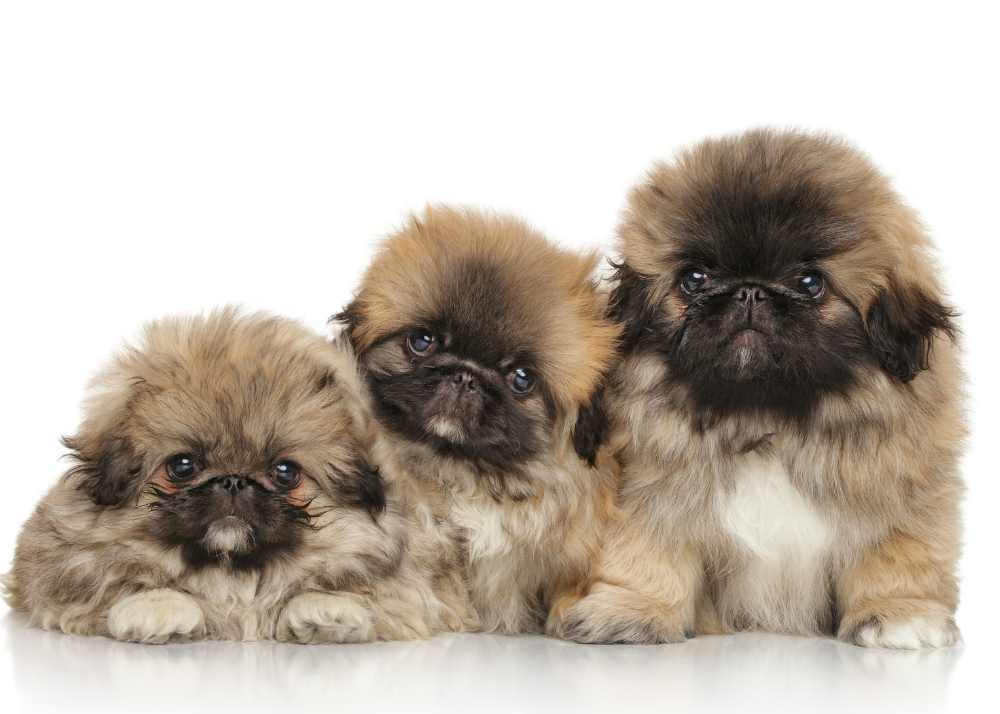
You’re at a friend’s house to meet her new puppy. When you walk through the door, a tiny bundle of nothing but bushy hair darts across the room. “Wait, did you get one of those long-haired bunnies?” you ask, confused. “Or did I just see a dust bunny move?”
“No!” she says, laughing. “That’s my Pekingese pooch!”
You’ve never seen a Pekingese before, and you’re intrigued. Their long, luxurious double coats, cute flat faces, and expressive eyes certainly make them showstoppers. In fact, they’ve won several championships at prestigious dog shows recently.
Despite their small size, Pekingese dogs walk around with their rolling gate with an air of dignity, confidence, pride, and regality. If they could don a bejeweled crown, carry around a little scepter, and wear an elaborate robe, they certainly would! This ancient breed is no stranger to the imperial court, starting with a rich history originating in China.
Pekingese dogs, also affectionately called “Pekes,” are spirited, charming fluffballs that form strong bonds with their families. However, they aren’t for every household. Learn about the Pekingese dog breed in our ultimate Pekingese puppy ownership guide to see if these regal, confident little dogs are right for you.
The History and Origin of Pekingese Puppies
Unlike some doodle dogs that had their beginnings in the 1990s, the Pekingese dog breed has existed since ancient times, at least as early as 700 A.D. No one knows exactly when they originated, but they do have a very interesting origin story.
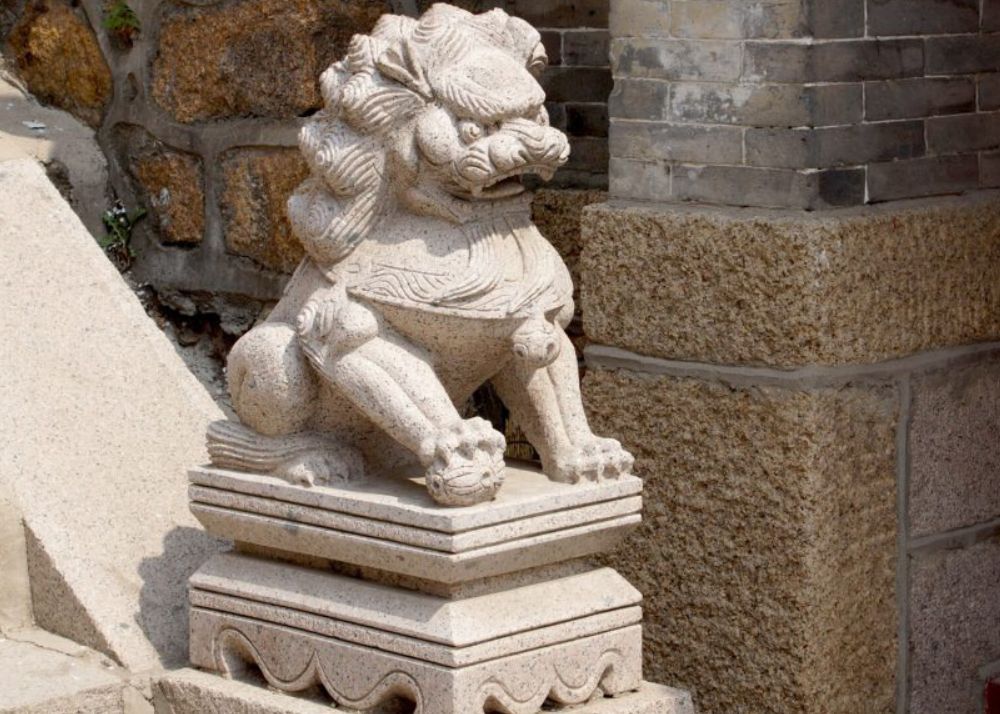
Pekingese were said to have been created by Buddha himself due to shrinking a lion down to a tiny dog. A Pekingese’s flowing mane resembles a lion’s, and these “lion dogs” became symbols of Buddhism. Pekingese were depicted as sacred “Fu dogs” used to guard imperial buildings, palaces, temples, and homes due to their protective nature and to ward off negative energy and forces. Today, you can still see examples of Fu dog statues remaining.
While the Buddha origin story is a myth we’d love to believe, Pekingese were actually developed by Chinese nobility to perfect the small, flat-nosed, lion-like look. It’s thought that monks and courtiers bred Lhasa Apsos and Shih Tzus to create the Pekingese, but there is no conclusive evidence. While some breeds are bred to be working dogs, Pekingese were bred specifically to be companions to the Chinese emperors and court, and stealing one was punishable by death. They were sometimes called “sleeve dogs” because they were small enough to fit into ladies’ large sleeves.
The height of popularity for Pekingese came about in the 1800s, all the rage as the “darling of the Imperial Chinese court.” However, the life of luxury for Pekingese dogs took a turn with the British invasion of Peking in 1860 during the Opium Wars. Only about 5 Pekingese survived and found themselves in Queen Victoria’s court, solidifying their name of “Pekingese” from the city of origin. Once again, the Pekingese found favor with royalty and flourished again, as they delighted Queen Victoria’s court with their alert, confident nature and loyal companionship.
Pekingese dogs made their way to America in the 1890s, and their popularity increased as Americans learned about them. The AKC accepted them in 1906. One interesting fact is of the three dogs on the Titanic, only one survived – a Pekingese.
The 145th #WKCDogShow Presented by @ProPlan Best in Show winner is Wasabi the Pekingese! 🏆 pic.twitter.com/dfYP55gUmU
— Westminster Kennel Club (@WKCDOGS) June 14, 2021
Today, Pekingese are not quite as popular as French Bulldogs or Labrador Retrievers, but they still enjoy a solid, enthusiastic following. They rank #91 between the Coton de Tulear and Brussels Griffon on the AKC’s Most Popular Dog Breeds of 2023 list. They also enjoy popularity in the dog show circuit. Wasabi the Pekingese won Best in Show in the 2021 Westminster Dog Show, the grandson of the 2021 Pekingese Winner named Malachy. Danny the Pekingese also won Best in Show at the Crufts in 2003, and the breed has won the Toy group in several dog shows throughout the year. These dogs also have a wide following on various social media platforms with people sharing hilarious moments of life with a Pekingese.
What Does a Pekingese Puppy Look Like?
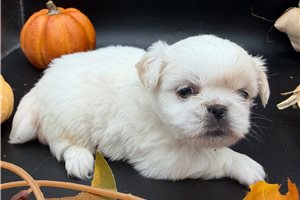
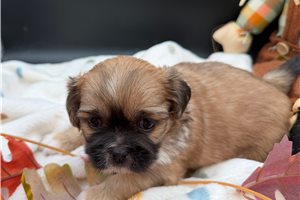
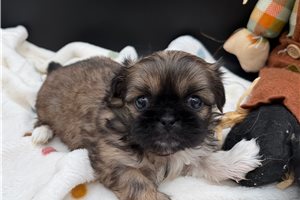
You may notice a Pekingese looks similar to other small toy dogs like Shih Tzus or Japanese Chins due to their flat faces or Pomeranians because of all the hair. However, they’re a distinct breed characterized by their wrinkled brows, short snouts, and long, flowing thick coats.
Pekingese puppies will stay small throughout their lifetime, as adults grow to be no taller than 9 inches and weigh up to 14 pounds. While they may be small, they are not dainty nor delicate. Their bodies are compact and stocky. Their expressive eyes give them a dignified appearance, and they appear to roll when they walk due to their legs being different lengths.
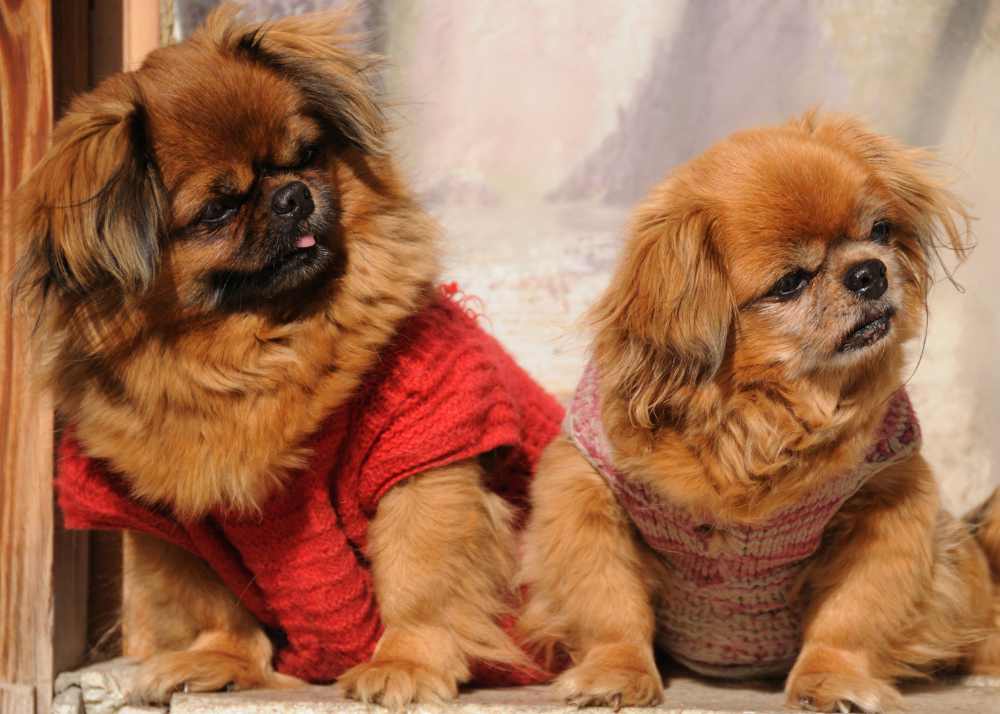
Pekingese come in at least 14 colors and combinations, including red, sable, black, white, fawn, brindle, biscuit, and more. They can also have 7 different markings and facial coloring as well, such as a black mask, white markings, and parti coloring. There truly is a Pekingese for every color taste!
However, before you pick out a puppy solely based on color, know that over time a Pekingese’s coloring can change due to several factors, including hormones, puppy fur being replaced by adult fur, and more. This process is completely normal and will not affect the vast love you have for your Pekingese!
Pekingese Puppy Personality Traits
Before adopting a puppy, it’s important to understand the personality traits of Pekingese puppies. Never adopt a dog solely on their looks – you need to research whether or not this dog breed fits your current lifestyle. Let’s learn about the Pekingese personality to see if they’re a great choice for you and your household.
All bark and no bite
While a Pekingese may be a Toy breed, they have a big personality that is definitely larger than their little bodies. Pekingese dogs pride themselves on watching everything in and around your home and will “tell” you all about it by sounding the alarm, even if it’s just a car driving by or a neighbor jogging down the street.
Although they may make excellent watchdogs, they are not suited as guard dogs – but don’t tell them that! Their small bodies cannot actually defend a family, but their protective nature is to be commended.
Courageous and bold
A Pekingese’s courage is admirable given their size. These little dogs have no hesitation to confront anything amiss, including dogs multiple times their size. They’ll prance around with confidence and won’t back down. They certainly aren’t a shy breed!
Silly and hilarious
While they aren’t necessarily the class clowns, Pekingese can be so self-assured and bold that they inadvertently find themselves in hilarious situations, often delighting their owners with how seriously Pekingese take themselves. Owners will be amused by their indignant attitudes when things don’t go their way. Pekingese also have some funny vocalizations that would make any owner laugh.
Independent
A Pekingese may be standoffish and aloof, even to people they know. They do tend to bond with one person over the whole family, but that doesn’t mean they don’t love other household members. It may take a bit of time to warm up to new people.
Training a Pekingese Puppy
A Pekingese’s independence streak is definitely seen during training. Pekingese can quickly rule the house with a regal nature if not given boundaries and proper training. They can be stubborn and go about life with their own agendas. Using positive reinforcement, short but consistent training sessions, tasty treats, and plenty of patience is a winning strategy for training a Pekingese puppy.
Catching some Zzzzzs & other sounds
A Pekingese napping in the sunshine may be a cute sight, but you’ll wonder how something so tiny makes so much noise! Pekingese rank 5/5 on loud snoring thanks to their shortened muzzles. They also communicate through vocalizations and may grunt, yip, sigh, and bark to get your attention or express their feelings about no more treats!
A friend to well-behaved, older children
Pekingese enjoy closely-knit bonds with their families. However, they are suited for a household with older children who understand how to interact with a dog. They may be overwhelmed by boisterous younger children and could snap at them due to their space not being respected. Because they’re small dogs, younger children may want to treat them as toys, stressing out a Pekingese. For these reasons, older children and child-free households are a good choice for Pekingese.
Grooming Needs of Pekingese Puppies
Grooming a Pekingese requires a hands-on approach, as they need a minimum of weekly maintenance. Pekingese puppies will need regular trips to the groomer to stay fresh, well-kept, and healthy
A Pekingese’s thick, double coat features a rough, coarse outer coat and a soft, downy undercoat. They need to be brushed weekly for about an hour with a slicker brush or comb. It’s crucial to keep up with brushing because they are very prone to matting, which can be painful and weigh on their skeletal frame. They do shed seasonally, so be prepared for blow-outs at certain times of the year as their new coats grow in, pushing out dead hairs.
Weekly baths are also a crucial part of keeping a Pekingese healthy. A dirty coat causes fur to become rough and form cobweb-like mats that form quickly. These mats and tangles can tug on their skin and trap dirt and oils close to the skin, causing potential irritation and infection. Avoid getting water in their nasal cavity, as it can make breathing problems worse due to their anatomy. You can learn to groom your puppy at home or take your puppy to a groomer.
Some Pekingese puppy owners will opt to keep their thick fur long and flowing. However, owners have a variety of styles to choose from if they desire shorter hair. Due to their double coats, Pekingese puppies should never be fully shaved, but trimming the haircoat is fine.
In addition to coat maintenance, owners should trim their Pekingese’s nails regularly to prevent painful paw issues. Checking their eyes and ears for goop, wax, and infection will keep them healthy.
How Active Are Pekingese Puppies?
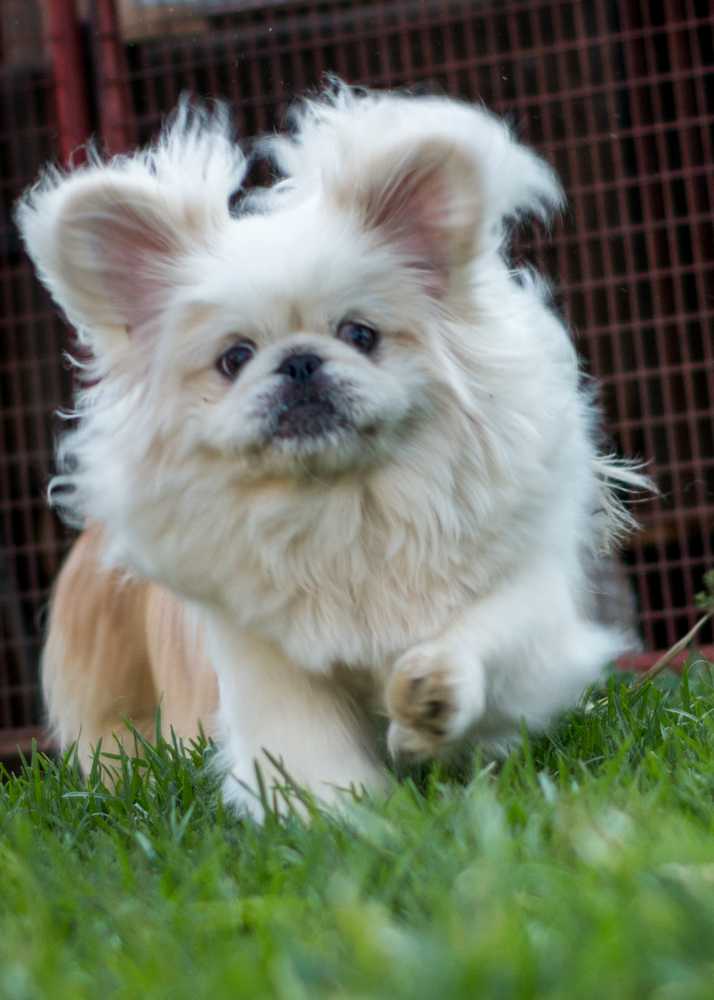
Puppies are usually lively for all dog breeds, but you’ll soon learn they are not high-energy dogs requiring hours of exercise like other breeds. In fact, they can be downright prissy about exercise sometimes. Pekingese need 20-30 minutes of daily exercise, so they’re a great fit for households with a more sedentary lifestyle. Stick to short walks on a smooth surface, as they’re not the best dog breed to be a hiking or running buddy. Keep them out of the heat and do not overexercise them due to their possible breathing problems. Pekingese also love light playtime, a great way to bond with your puppy while giving them appropriate exercise.
Health Concerns of the Pekingese Dog Breed
Part of being a responsible puppy owner is understanding the health needs and potential conditions of the breed you choose. Pekingese have a unique set of possible issues potential owners should be aware of to plan accordingly with their veterinarian for proper care and longevity so they can enjoy a long life of 12-14 years.
Brachycephalic breed
You may have noticed the cute, smooshed-in snouts of a Pekingese puppy. Pekingese are brachycephalic dogs, meaning they have shorter noses and skulls. Pekingese dogs also have elongated soft palates, underdeveloped windpipes, and narrow nostrils. They may be prone to symptoms of Brachycephalic Airway Obstruction Syndrome (BAOS), a progressive condition caused by upper airway obstruction due to their physiology. BAOS symptoms can include:
- Snoring
- Gagging
- Coughing
- Rapid breathing
- Difficulty swallowing
- Heart, skin, and eye issues
Overheating
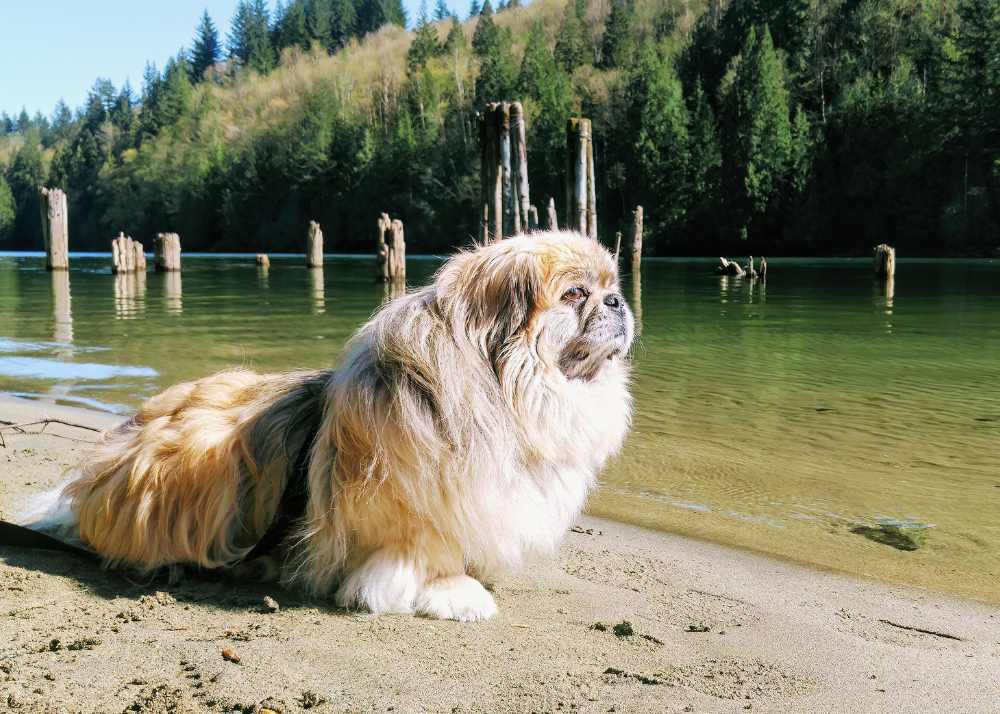
Due to their thick, long, double coats and flat faces, Pekingese dogs are prone to overheating, including heat exhaustion and heat stroke in dogs. Limit the time your Pekingese is in the heat, direct sunlight, or hot and humid places, even indoors. Know signs of heat exhaustion, such as excessive panting, trouble breathing, lethargy, warm ears, and muscle tremors so you can easily monitor your Pekingese. Even the Pekingese champion of Crufts needed to rest on an ice pack at the awards podium despite being in a climate-controlled building.
Obesity
Because they are not very active dogs and love treats, it’s easy to overfeed your Pekingese puppy. Obesity causes unnecessary breathing, mobility, and heart problems, issues with musculoskeletal health, and other detrimental effects. Refrain from giving too many treats, and stick to small treat bits during training. Feed your Pekingese a nutritious food formula according to their size and weight. You can work with your veterinarian to choose the best nutritional choices for your Pekingese.
Mobility issues
The Pekingese has a unique bone structure, unlike other dog breeds. You may notice their rolling gait as they strut around. Their back legs are higher than their front legs, creating a downward-sloping spine from tail to head. If you notice issues with their back legs, including weak back legs, a reluctance to move, or other problems, take your Pekingese to the veterinarian right away for proper treatment.
Find a Pawrade Pekingese Puppy
If a Pekingese puppy piques your preference, turn to Pawrade. Because a Pekingese is not as popular as other dog breeds, you may have quite the time finding a trustworthy breeder.
You may search social media platforms and local marketplaces for Pekingese puppies, but these options usually deliver unhealthy puppies at best and heartbreak at worst. Puppy scams are on the rise, and scammers have grown more sophisticated with slick websites with stolen photos and vague information. These puppies usually have not had proper healthcare or weren’t bred with temperament and conformation in mind to produce a litter with the best traits of a Pekingese breed. Scammers will take your hard-earned money and your dreams of a life with a Pekingese. They may even advertise puppies as Pekingese only to learn they’re a totally different breed of puppy you’re getting!
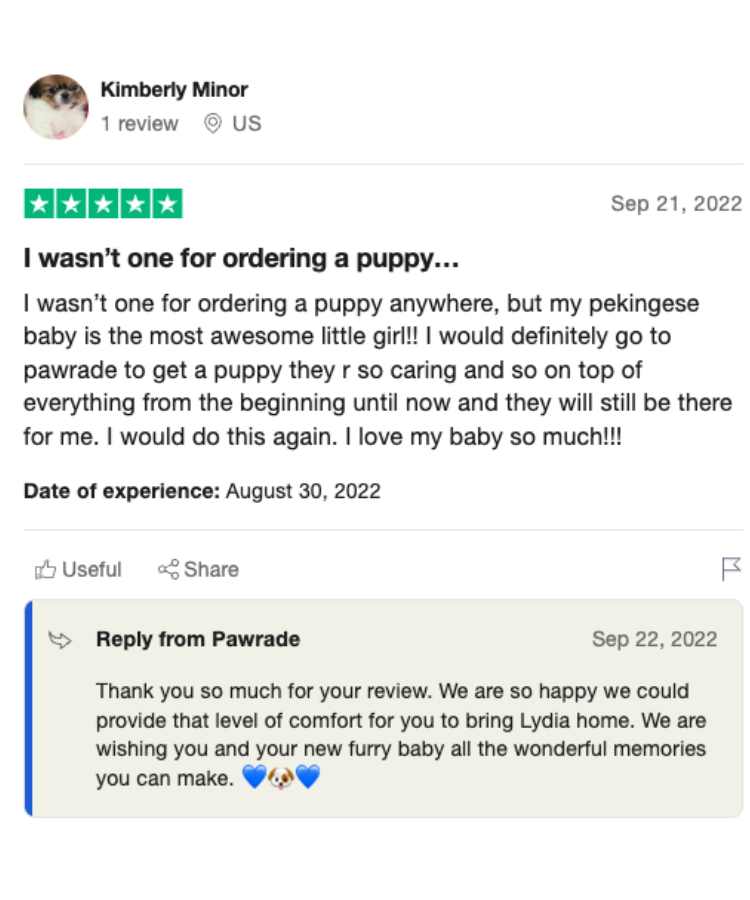
Let Pawrade research Pekingese breeders for you. Pawrade offers the best Pekingese puppies for sale. How do we know? All Pekingese dog breeders must pass a rigorous selection process, meeting or exceeding our criteria to become a breeder partner. Our breeders have extensive experience breeding happy, healthy Pekingese puppies and have intimate knowledge of the breed.
Pawrade also offers a seamless, scam-free process. We utilize PetPay’s services, providing secure payment methods. We will never ask for payment via money transfer, check, money orders, or through unsecure apps. All transactions and communication go through PetPay for security and transparency.
Our Puppy Concierge Team is here to help you find the perfect Pekingese puppy for you. We can’t wait to hear from you to begin your life with your new four-legged best friend!