We all dream of having a well-behaved pet we can take to Sunday brunch on a dog-friendly patio, meander through craft booths at street fairs, grab a pint at the local pub, or bring on road trips. Everyone appreciates a well-mannered dog out in public, and you don’t have to worry about your dog’s behavior going off the rails.
But how do you achieve having a canine buddy you can take anywhere? Belva Davis once said, “Don't be afraid of the space between your dreams and reality. If you can dream it, you can make it so.” Start with your dream. Do you want your puppy to walk loosely on a leash without pulling out your arm socket? Set the world record for the farthest flying disc throw caught by a dog? Or do you dream bigger and need your dog to provide specialized services for you?
All puppies need some sort of training, and having a well-trained dog is part of being a responsible dog owner. Find out why you need puppy training classes and types of dog training to see what’s best for you and your puppy.
What Are Puppy Training Classes, and Why Should We Take One?
Puppy training classes are a series of gatherings where you and your puppy are trained together on certain commands by a qualified dog trainer. They can be one session or meet multiple times in weekly sessions. Puppy owners can start with the basics and work their way up to more advanced training opportunities.
Where can I find puppy training classes near me?
-
Big-box pet stores
-
Veterinarians
-
Doggy daycares
-
Dedicated dog training facilities
-
Individual dog trainers
-
Kennel clubs
-
Dog sitters
-
Breeders
-
Animal shelters
-
Internet searches and social media
-
Word-of-mouth recommendations
Why you should send your puppy to a dog training class
When you bring home a puppy, you dream about him being your best friend, your Ride or Die, how well-behaved he will be when you take him on adventures, and so on. However, these things don’t often happen naturally – they need to be taught and cultivated. Puppy training classes offer several advantages to your dog’s quality of life.
-
Developing a strong bond: Forming a bond with your puppy creates a deep connection that brings love and joy into your life. The more time you spend socializing, training, and interacting with your puppy, the stronger your bond will grow.
-
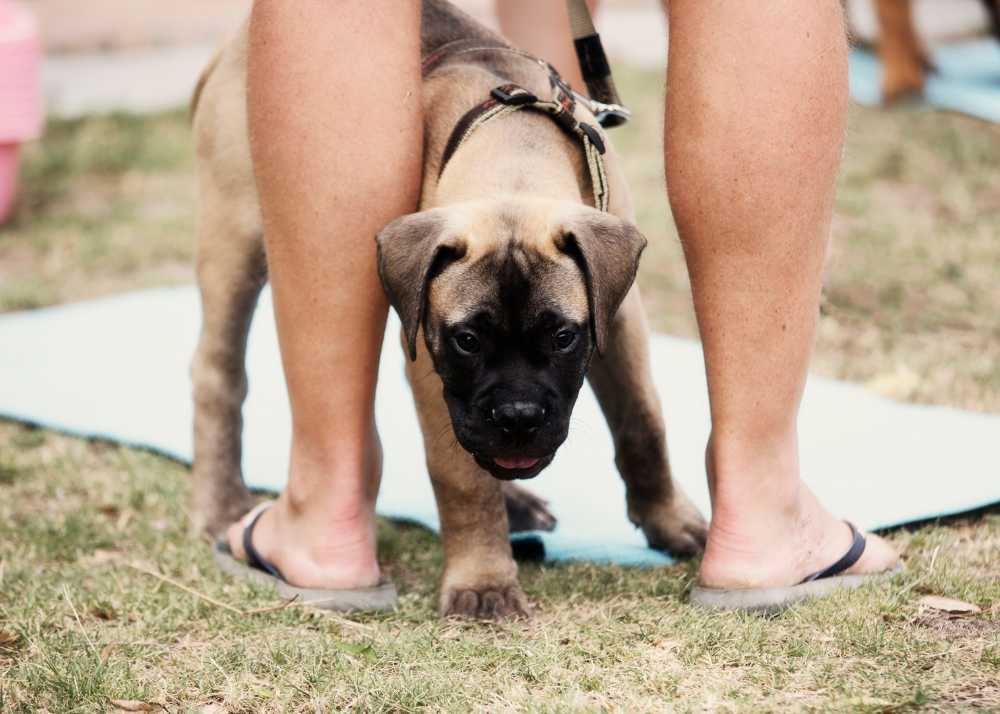
Socialization: Young puppies need structured opportunities for puppy socialization to be exposed to new sights, sounds, smells, people, and other dogs. Puppies will learn to be calm and neutral in new situations, creating a more well-rounded adult dog.
-
Good manners: We’ve all seen a cute little puppy jumping up for a treat, but it’s not so cute when that puppy grows to be 80 pounds and knocks over children. Puppy training helps your dog learn what behaviors are and are not acceptable in various settings. Your goal is for your dog to be a joy around, not one to apologize for.
Are puppy classes enough?
Some people think that once their puppy has completed a training course, that training ends there as a one-and-done event. However, puppy training must be a continuous, ongoing effort from not only you but also the entire household. Puppies need consistency and positive reinforcement. That doesn’t mean you have to spend hours a day on training, but daily short sessions of even just 5 minutes can make a huge difference in retaining those commands they proudly learned.
In addition to classes, you can work on training your puppy at home starting the first day you bring home your fluffball. Having them ask nicely for their food, waiting at the door to go out, walking on a loose leash, or going to their safe spot when you tell them to can make living with your puppy a more pleasant experience. You can always keep it fun by introducing training games to play with your puppy to increase their willingness to learn. And don’t forget the high-value treats to entice your puppy to perform the correct behavior!
The Benefits of Group Puppy Classes & Private Training
When searching for puppy training classes nearby, you’ll find group classes and individual, private sessions available. While each selection has its downfalls, here are some positive reasons for you and your puppy to take group and individual puppy training classes.
Group puppy training classes:
-
Guidance: Your dog trainer has lots of advice (and patience) to offer. You can watch her repeat commands with each dog and listen to answers to questions others have. Chances are you’ll have some of the same questions, too. She is also happy to help you and your puppy grasp concepts using proper techniques.
-
A New Environment: Our puppies will oftentimes learn well at home, but that training seems to go right out the window in a new environment outside their comfort zone. Group classes allow enough distraction and a chance to be successful as a step up from your house or yard.
-
Group classes can be more affordable than private classes, making it easier on your wallet.
Private puppy training classes:
-
One-on-one focus: You don’t have to compete for attention or wait your turn as other dogs go through the skills. Your trainer will focus solely on you and your puppy for the maximum bang for your buck.
-
Customized syllabus: Your trainer can customize a program to your puppy, tweaking things here and there to deliver a program exactly what your puppy needs.
-
Fewer distractions: Some puppies need more time or a calmer environment to understand puppy training commands at their own pace. Individual sessions cut down on your puppy losing focus.
-
More flexibility: While there will be a learning plan in place, private training sessions allow for more flexibility in the agenda. You can spend more time on a difficult command or breeze through a concept they caught onto quickly.
What Types of Dog Training Classes Can My Puppy Take?
The types of puppy training classes available to you will be based on your local offerings. Some classes require a foundational class before enrolling as a pre-requisite. However, they should all use forms of positive reinforcement instead of harsh techniques that will cause your puppy to fear you.
Puppy Kindergarten
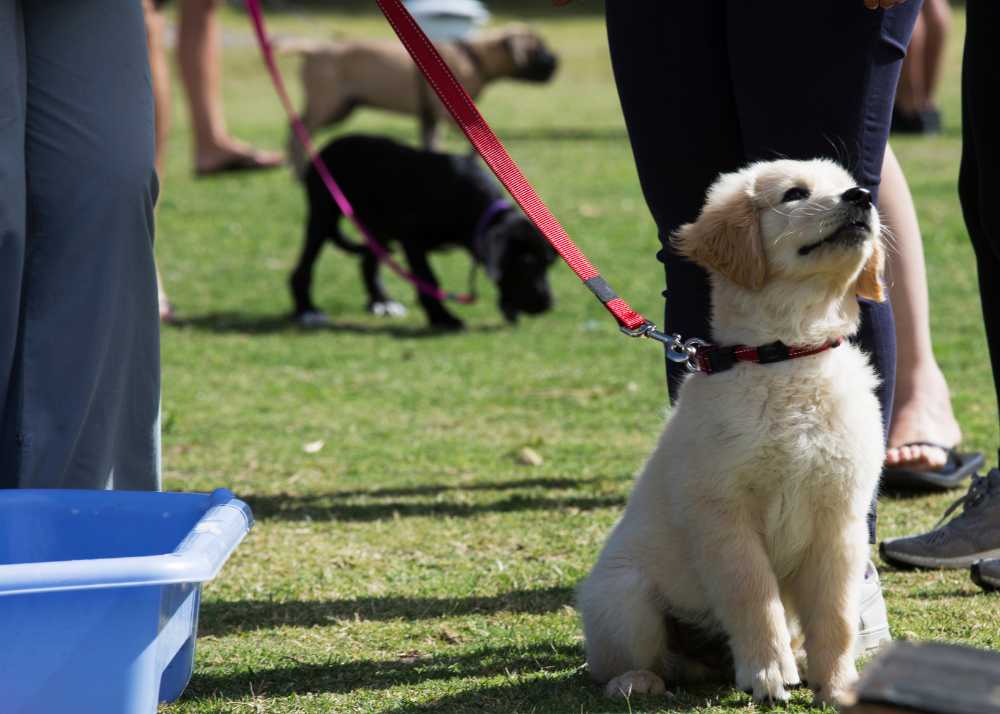
A puppy kindergarten class is a general name for the lowest level of basic puppy training commands. These are appropriate for young puppies who have never had formal training before and are just starting to learn what a command means. Your puppy may work on learning her name, commands like “Sit, “Down,” “Leave it,” and “Place,” walking on a loose leash, tips for reducing barking and jumping, and recall (coming when called). Puppies will have a chance for short, supervised play sessions with other puppies. Puppy kindergarten classes give an excellent foundation for future classes.
Intermediate Puppy Training Classes
Consider an intermediate puppy training class once your puppy has a solid foundation to understand commands. These build on the basics learned in puppy kindergarten or your at-home training efforts and introduce more commands, scenarios, and stimuli in training. For example, the AKC’s Canine Good Citizen program can be taken after the AKC S.T.A.R. Puppy introductory class or with older puppies. It focuses on training dogs to be calm and reliable at home and in social situations. Dogs pass a 10-point test asking them to demonstrate mastery in walking on a loose leash, reacting confidently to distractions, and greeting strangers and other dogs. These more comprehensive courses are often a requirement for more advanced or specialized training.
Specialized dog training
Specialized dog training programs offer your young adult dog opportunities to gain specialized skills in various areas for jobs, tasks, dog sports, and competitions. You’ll want to choose a purpose that resonates with your values and lifestyle. Some people enjoy being active with their puppy through dog sports, while others prefer a slower pace with calm, comforting scenarios. Specialized dog training programs and certifications raise the bar for the number of tasks dogs need to perform and may take months or even years to achieve. The dog and owner need high dedication levels to complete a specialized dog training program successfully.
Service dog certification
A service dog certification program is one of the most specialized programs your dog can complete. A service dog is trained to assist a person with disabilities and enhance their well-being and activities of daily living. Physical disabilities, like mobility impairment, diabetes, or seizures, or mental and emotional disabilities, such as PTSD or autism. All service dog courses are rigorous programs that teach skills such as alerting a diabetic to low blood sugar levels, detecting an impending seizure, turning on light switches, guiding people across busy streets safely, providing comfort during an episode, or picking up fallen objects. Some programs such as guide dogs take over a year to complete, and the graduation rate can be low due to the thoroughness and complexity of the certification program.
Therapy dog certification
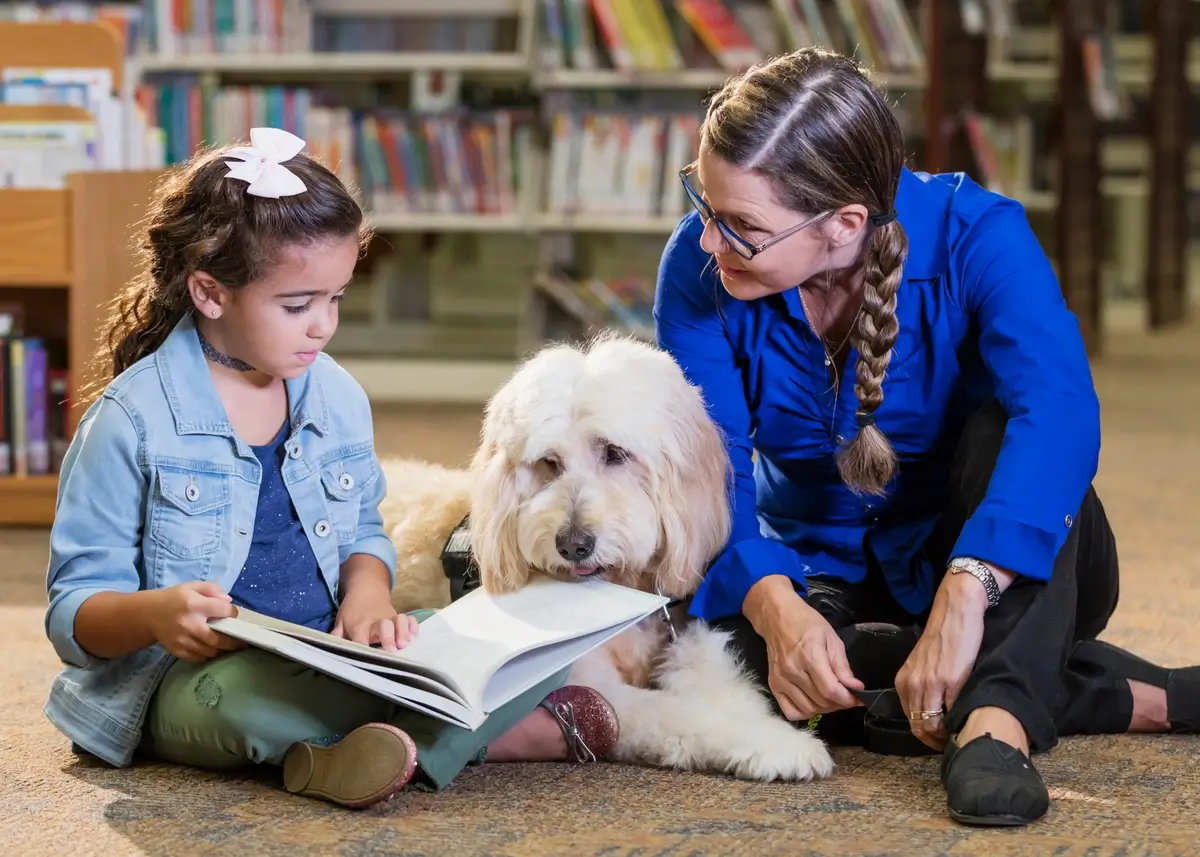
Therapy dogs serve various roles and complete tasks that all help humans but in very different settings. For example, therapy dogs can participate in literacy programs “reading” with children, visit hospice and pediatric patients, or comfort people who have experienced trauma during disasters or even court hearings. Interested dog owners can find several therapy dog certifications to choose the one that piques their interest. Many programs will also require “internship” hours as they work toward full certification. For example, dogs will need 50 hours of hospital visits to complete a particular program.

Dog sports
Participating in dog sports is a fun, active way to bond with your dog while sharing in the camaraderie of fellow dog enthusiasts. Whether you choose more traditional or unusual dog sports, owners are sure to find their niche.
Here are a list of specific dog sports you should check out:
-
Obedience
-
Agility
-
Dock Diving
-
Flyball
-
Harness sports like Sled Dog Racing, Bikejoring and Canicross
-
Protection
-
Scent work
-
Dog Dancing
-
Disc/Frisbee Dog
-
Lure Coursing
Enroll a Pawrade Puppy in Puppy Training Classes
You may be getting excited about all these training opportunities for you and your puppy. There’s only one small problem – you don’t have a puppy yet to enroll! Pawrade has you covered.
We’ve partnered with reputable puppy breeders to offer all sorts of puppies for sale, from tiny lap dogs to gentle giants. All Pawrade puppies would thrive with a basic puppy training class to get started on the right paw in life. Contact us today to bring home a training buddy!