“It’s official – I love this dog!”
Every puppy owner has experienced this moment of unconditional love for your pet. How about an entire state officially declaring its love for a particular dog breed?
Dogs have played an integral part in the history of geographical areas’ developments. Official state dogs embody the qualities the state identifies with, traits like loyalty, steadfastness, dignity, and bravery. These characteristics of various state dogs have resulted in serving as popular canine mascots of local colleges and universities as well. Several of the official state dogs are dog breeds native to the United States, while others hail from areas around the world that have gained regional significance. Regardless of origin, these significant dogs were selected to represent their state for excellent reasons.
Meet 13 of the nation’s official state dogs and learn about the qualities that make them perfect representatives of their unique geographical regions.
13 Official State Dogs To Know About
While legislation is constantly being updated, these dog breeds have served current or past tenures as official state dogs. Let’s see what’s so impressive about each dog breed inspiring an entire state to represent their outstanding qualities.
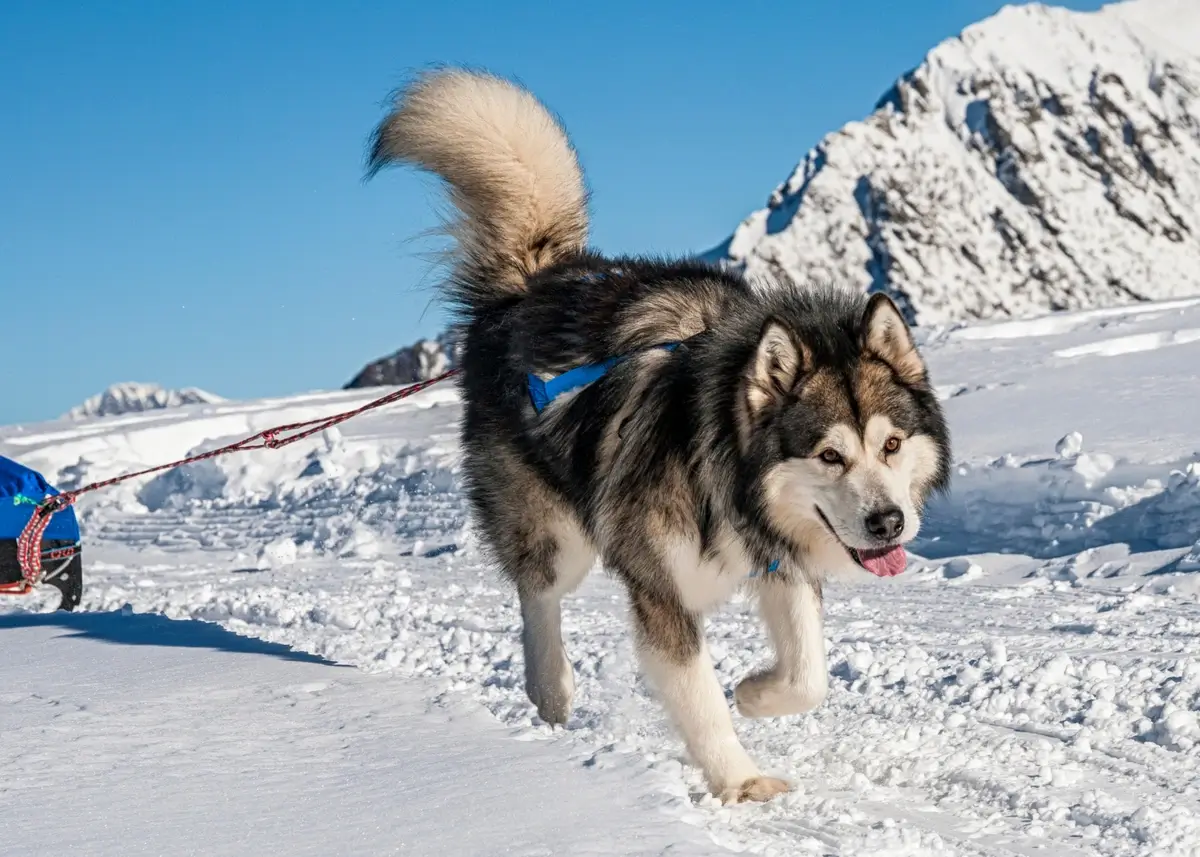
Alaska: Alaskan Malamute
When someone thinks about Alaska’s unforgiving, harsh frozen terrain, sled dogs come to mind. Alaskans recognized how Arctic dogs’ incredible stamina, work ethic, physique, and speed could help move vital goods across the treacherous tundras. The Alaskan Malamute has its origins rooted in the Inuit people who relied on them for survival. Alaskan Malamutes were part of life-saving antidote runs to remote villages, saving hundreds of lives.
It was not adults who began advocating for the Alaskan Malamute to become the state dog, but a child. Kindergartener Paige Hill led the campaign to convince Representative Berta Gardner to adopt a bill in 2009 in support of the breed. Paige’s efforts paid off when the Alaskan Malamute became the official state dog of Alaska in 2010.
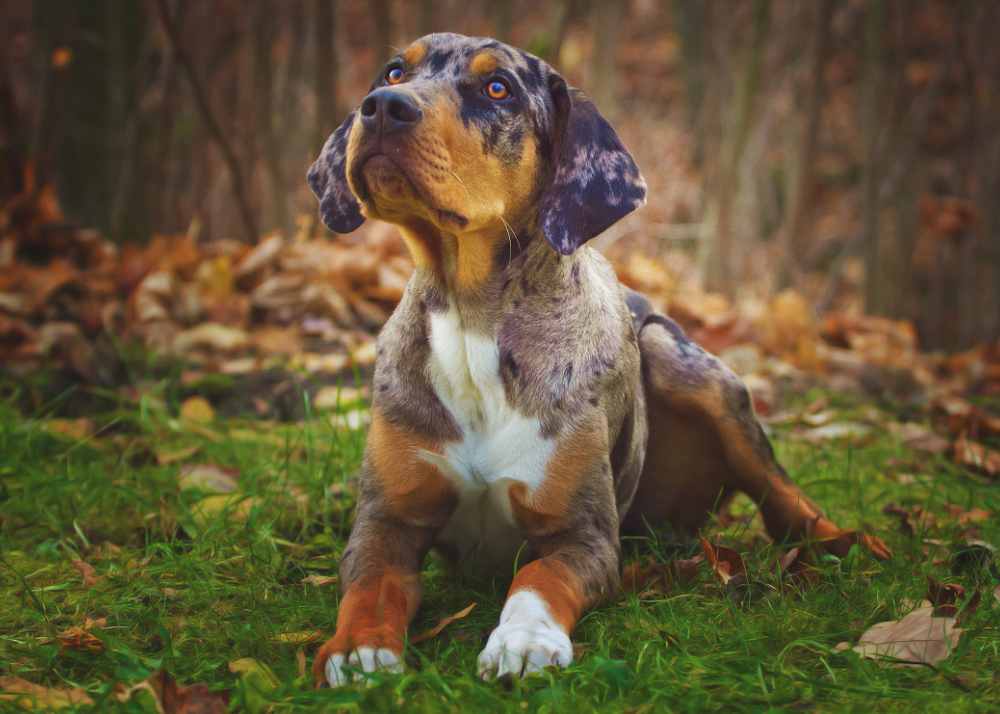
Louisiana: Catahoula Leopard Dog
Piercing eyes and beautiful coats make Catahoula Leopard Dogs a striking breed. This dog was named after the Catahoula Parish in Louisiana. “Catahoula” is a combined name with the Choctaw words for “sacred lake.” Boar hunters bred wolfdogs, Greyhounds, Mastiffs, and Bloodhounds to create a gorgeous dog with eye-catching colors and patterns prized for its active, hardworking, protective nature that’s also an all-around wonderful family dog.
Governor Edwin Edwards signed House Bill #75 which recognized the significance of Catahoula Cur to Louisiana, naming the Catahoula Leopard Dog the State Dog of Louisiana on July 9, 1979. Today, they are rare outside Louisiana and The South, so you most likely won’t encounter one without exploring the region.
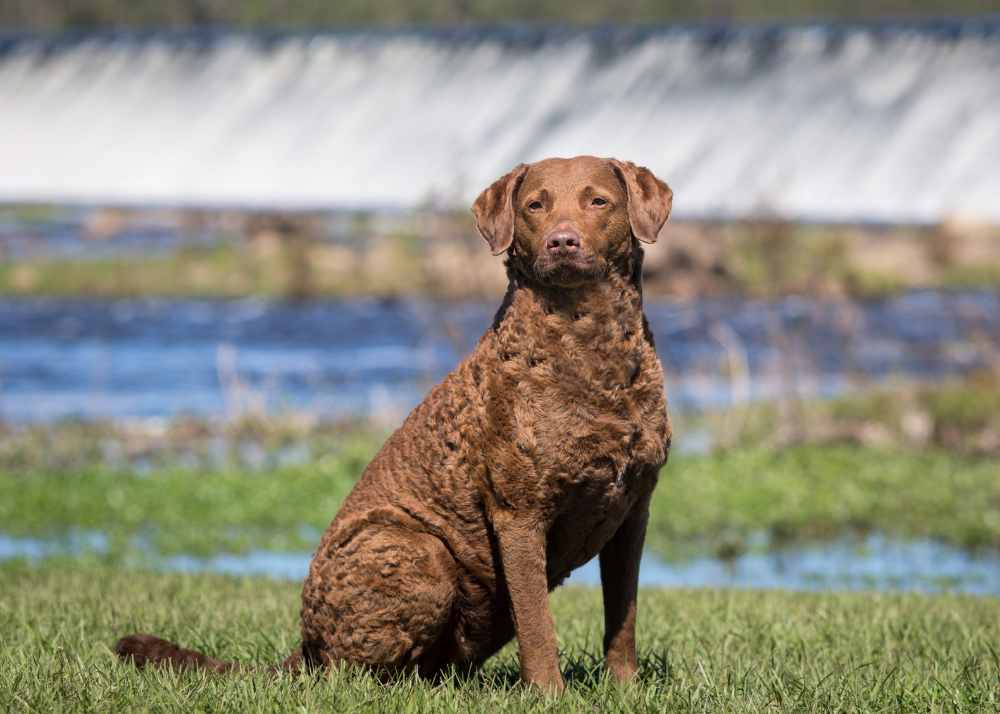
Maryland: Chesapeake Bay Retriever
A sporting dog sprints through the lapping waters of the Chesapeake Bay shoreline, retrieving a duck that’s just gone down. You think it might be a Golden Retriever, but the color is too dark. You can tell by its curly coat that it isn’t a Labrador Retriever, either. What is it?
You’ve just seen a Chesapeake Bay Retriever, a lesser-known retriever out of the 6 recognized retriever breeds. These dogs hold a unique set of skills perfect for the region where it originated, said to be a mix of shipwrecked Newfoundlands and Coonhounds. Chesapeake Bay Retrievers are able to retrieve waterfowl equally well on both land and water, making them exceptional hunting and retrieving dogs well-suited for the marshy waters of the Chesapeake Bay.
Maryland holds the honor of recognizing the first official state dog in the US in 1964 by choosing the Chesapeake Bay Retriever. The choice was so popular that the University of Maryland, Baltimore County adopted a Chesapeake Bay Retriever as its mascot in 1966. Nicknamed the “Chessie,” this dog breed excels in both the field and with family with its tireless, affectionate, and intelligent nature.
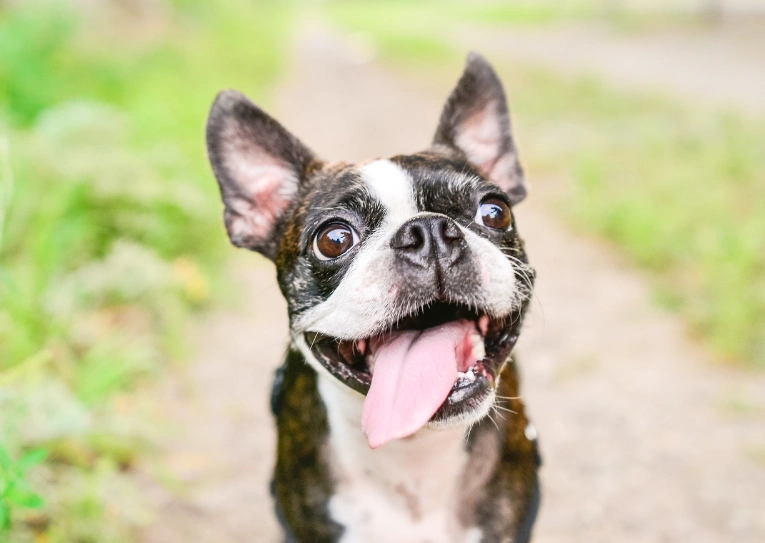
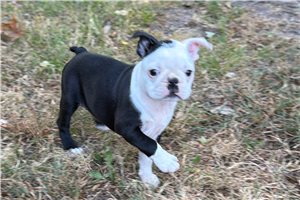
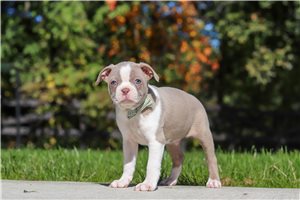
Massachusetts: Boston Terrier
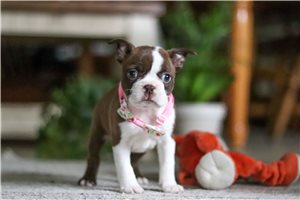
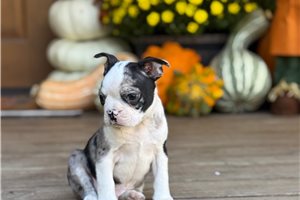
One would be correct to assume the Boston Terrier is the state dog of Massachusetts. The Boston Terrier is nicknamed the “American Gentleman” with its dapper tuxedo coloring and friendly, lively personality. The first litter of Boston Terriers was a mix between the English White Terrier and English Bulldogs in 1875 and later bred with Pit Bulls, English Bull Terriers, and Boxers. The breed standard we know today was established in 1883, and the breed’s popularity skyrocketed nationwide.
Boston Terriers were chosen as the official state dog of Massachusetts on May 14, 1979, after a persistent campaign thanks to a “feisty Irish lady named Irene Ryan” according to publication descriptions. After 5th graders petitioned to have the Boston Terrier be the state dog and were rejected, Irene continued to advocate for the breed, writing hundreds of letters. She finally succeeded in her massive efforts, and Massachusetts residents can now look to the Boston Terrier as their beloved state dog.
Boston Terriers are among the best dog breeds for apartment living and are versatile, happy-go-lucky companions. Their stocky, sturdy little bodies, large, round eyes, bat-like ears, and smooshed-in noses create an adorable look that has captivated Boston Terrier lovers for over a century.
New Hampshire: Chinook
You may think a Chinook sounds like a sled dog from the Arctic, like Siberian Huskies or Alaskan Malamutes. However, the Chinook is the only sled dog originating in the “Lower 48” in Wonalancet, New Hampshire. Like their Northern cousins, Chinooks thrive in inclement weather conditions and are right at home in a snowstorm while still working hard despite dismal frigid conditions.
New Hampshire native Arthur Walden developed his own sled dogs after spending 24 years in Alaska, mixing Siberian Huskies and Greenland Huskies with mastiff-type dogs, and growing his foundation stock with new generations. However, with the death of Walden in 1947, the Chinook’s popularity dipped so low that in 1965, the Guinness Book of World Records reported the Chinook was the rarest dog breed with 125 dogs remaining. Today, they’re still rare with only around 800 in the world.
Schoolchildren from Lurgio Middle School wanted to recognize the Chinook as the official state dog of New Hampshire, and the 7th graders were successful in 2009. The Chinook is a patient, devoted, hardworking dog with lots of energy that loves pleasing its family. They grow to be 50-90 pounds and stand 22-26 inches tall as adults and come in 11 beautiful colors like tawny, buff, and red gold.
North Carolina: Plott Hound
North Carolina’s state dog, the Plott Hound, is an example of a dog holding special significance in a particular geographic area. Henry Plott resided in the NC mountains, perfecting a combination of hounds brought by his father from Germany mixed with leopard dogs and various other breeds. People traveled from all over to procure a hound from the Plotts due to their superior hunting skills.
As popular game dogs, Plott Hounds were primarily used to hunt wild boar and other animals. Their fearless drive, scent abilities, unique bark, and eagerness to catch prey make them excellent hunting dogs. The NC state legislature made the Plott Hound the official dog of North Carolina in 1989, honoring its courageous nature, and the Plott Hound joined the American Kennel Club in 1998.
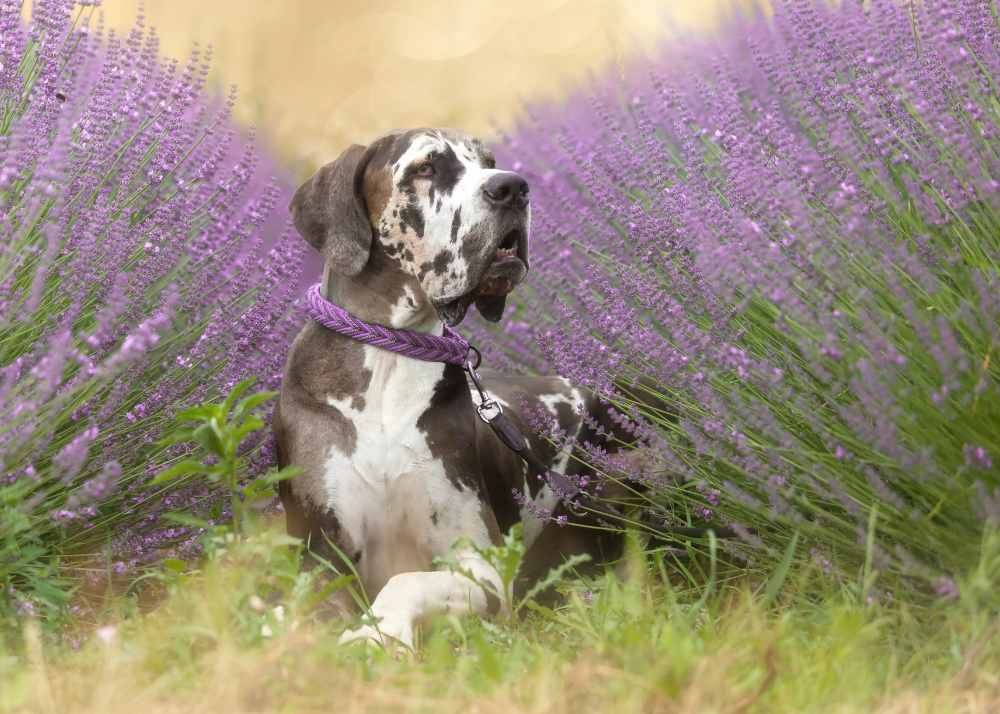
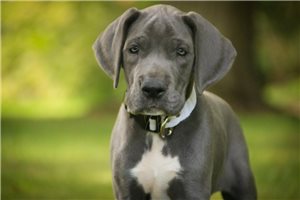
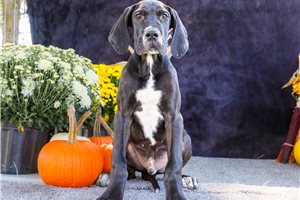
Pennsylvania: Great Dane
Contrary to popular belief due to their name, Great Danes aren’t actually native to Denmark. Descended from large dogs of the ancient Roman era, Great Danes were prized in Europe for their guarding and hunting abilities, protecting estates, and carriages, serving as companions. These qualities proved extremely useful when migrating to the New World as settlers made Pennsylvania their new home. A portrait of founder William Penn shows a fawn Great Dane by his side said to have been his best friend. For these reasons, the Great Dane was selected over the Beagle in 1965 to become the state’s official dog breed.
While they may be massive with their impressive height and build, Great Danes are gentle giants with not an aggressive bone in their bodies. Their goofy love of life and sensitive nature makes them quite the characters, making owners laugh at the silly shenanigans they get into due to their size and personality. Great Danes love playing with and protecting children and are eager to please their owners. It’s no wonder these magnificent dogs were chosen to represent the state of Pennsylvania.
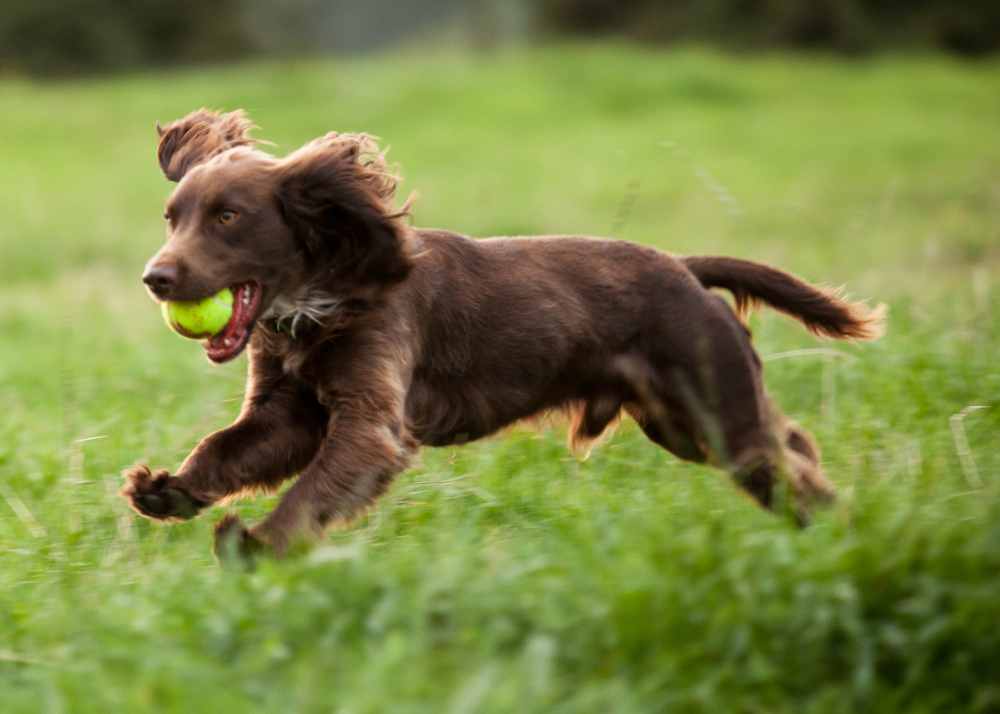
South Carolina: Boykin Spaniel
South Carolina is home to lakes, rivers, and swamps that have been popular hunting grounds for centuries, particularly for waterfowl. As you can imagine, slogging through the swampy wetlands is cumbersome for humans, but not with the help of a trusty canine companion trained to assist hunters. Hunters wanted to create a dog breed with a great sense of hunting that would fit into a boat while exploring the Wateree River Swamp area. Around 1900, Alexander White sent a brown Spaniel mix named Dumpy to Whit Boykin for training. Boykin used a variety of breeds, including American Water Spaniels, Chesapeake Bay Retrievers, Cocker Spaniels, and Springer Spaniels, to form a new breed called the Boykin Spaniel, resulting in a lively, medium-sized dog superb at hunting specifically for the area, most notably around Camden.
While not as popular as other Spaniels, the Boykin Spaniel gained a devoted following in the region. In April 1984, the South Carolina Wildlife and Marine Resources Commission endorsed Boykin Spaniels to be the first official state dog. Today, South Carolinians celebrate Boykin Spaniel Day on Sept. 1 each year.
Boykin Spaniels have curly coats that come in chocolate, liver, or chestnut, weighing 25-40 pounds and standing 14-18 inches tall. They are fantastic with children and can keep up with their spirited energy as playmates. Enthusiasts love them because they work hard in the field and are also great family dogs after a good hunting session.
Only fitting to have Tennessee's favorite bluetick coonhound join us as we celebrate this beloved breed becoming the official state dog of Tennessee. Thanks, Smokey! pic.twitter.com/AMm9N3BPWp
— Gov. Bill Lee (@GovBillLee) August 22, 2019
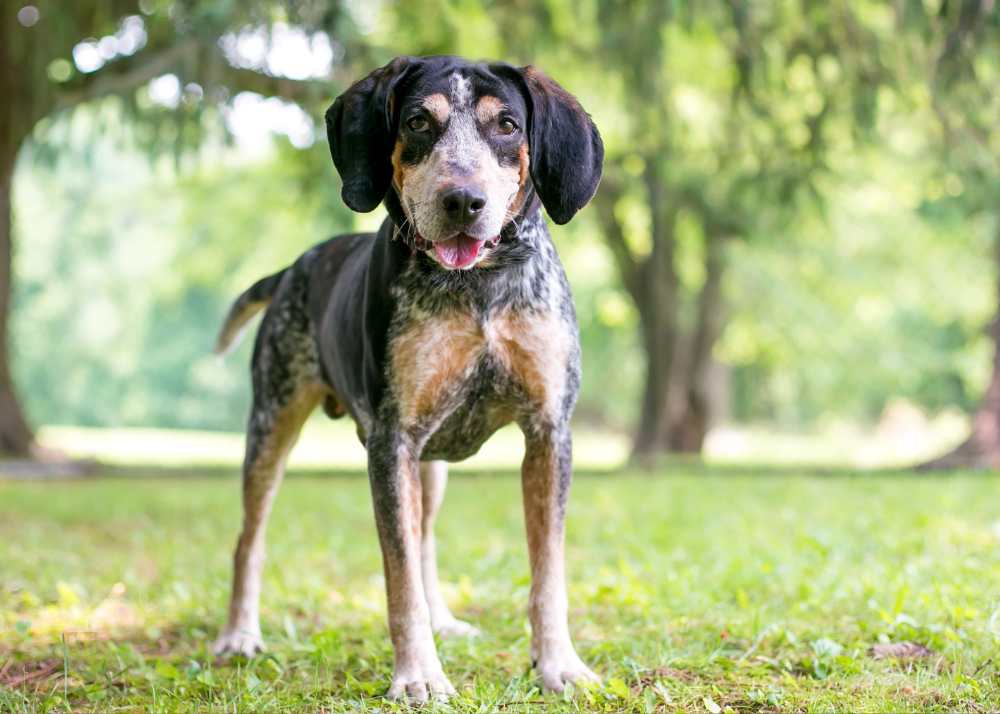
Tennessee: Bluetick Coonhound
You’re hiking in the dense Appalachian forests of Tennessee, and you hear the unmistakable baying of Bluetick Coonhounds. They’ve been after a scent for hours, never ceasing to stay on the trail. Their fearless, determined nature has brought them to one tree, where you see a raccoon huddled up on a branch.
Historically used to hunt critters that climb trees like racoons, these eager dogs bay, bark, and howl when they catch the scent thanks to their sensitive noses and long, floppy ears that trap smells. People who reside in western Tennessee especially are fans of Bluetick Coonhounds, as the University of Tennessee adopted one as its mascot in 1953. Smokey the Bluetick Coonhound is in his 10th generation encouraging fans to cheer for their school.
Texas: Blue Lacy
Blue Lacy dogs are right at home on the vast ranches and farms of Texas, built to withstand scorching heat under long working hours rounding up and taking care of livestock. The Blue Lacy is the only dog native to Texas and has played a large part in Texas’s ranching history. Brothers Frank, George, Ewin, and Harry Lacy developed the breed standard by crossing grey wolves, Greyhounds, Scenthounds, English Shepherds, and possibly coyotes. The Texas House Resolution 108 spearheaded by the Texas Lacy Game Dog Association stated regarding their reasoning behind the selection, “Blue Lacys were a common fixture on ranches in the Southwest, where it was said that one such dog could do the work of five cowboys; intelligent, energetic, fast, eager to work, and easy to train and handle, Lacys herded cattle, hogs, and chickens, and also served as droving and hunting dogs.” Governor Rick Perry officially declared the Blue Lacy as the Texas official state dog on June 18, 2005.
However, Blue Lacy dogs almost went extinct in the 1970s, but a small group of enthusiasts brought them back. Although rare, one can find Blue Lacy dogs as far away as Canada, prized for their agile, diligent help herding livestock and other activities like trailing, tracking, and treeing wild game.
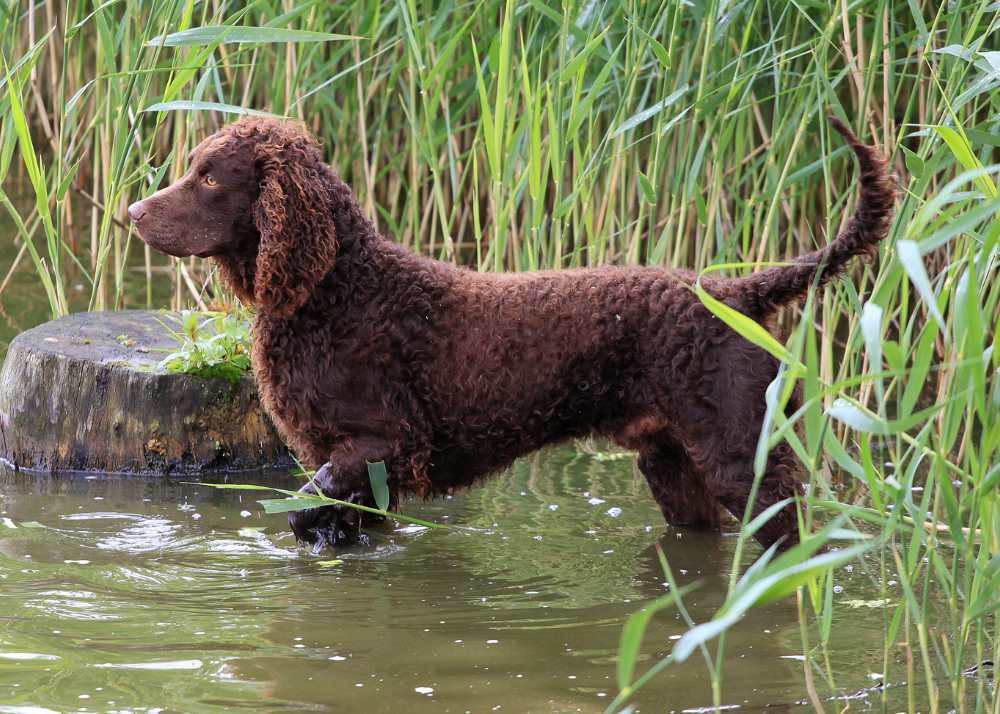
Wisconsin: American Water Spaniel
True to its name, the American Water Spaniel is an American dog rooted in the Great Lakes region that excels in water-based hunting and sports. Their webbed feet, excellent swimming and hunting abilities, and agile, muscular build make them a favorite for sporting activities. American Water Spaniels are small enough to ride in a boat and strong enough to retrieve fallen prey, an important combination to the success of Wisconsin pioneers of the time and today.
The Wisconsin State Legislature passed a bill in 1986 making the American Water Spaniel the first state dog of Wisconsin thanks to the efforts of 8th graders at Washington Junior High School in New London. American Water Spaniels remained a rare breed seldom seen outside the Great Lakes region since hunters did not want to share this amazing dog with the rest of the world and almost went extinct, saved by dedicated breeders. Lucky owners of this rare breed find the American Water Spaniel is an obedient, smart, and charming dog eager to please their owners, making them great energetic family pets.
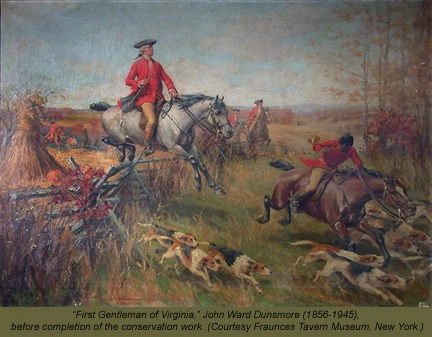
Virginia: American Foxhound
It’s fitting that the first exclusively American dog breed was developed by one of the first Founding Fathers of our nation, George Washington. As an avid fox hunter and dog lover, Washington aimed to breed a new type of dog with “speed, sense, and brains” as he wrote in one of his journal entries, mixing British hounds and local dogs. He called these energetic, sleek dogs American Foxhounds. Several paintings commemorating his love for these dogs can be seen in galleries across the nation.
The Virginia Commonwealth adopted the American Foxhound as the official state dog of Virginia during the 1966 Session of the Virginia General Assembly signed by Governor Mills E. Godwin, Jr. This kind, sweet, loyal, and hardworking dog embodies the spirit of the early American colonists and national spirit.
American Foxhounds, a mix of British hounds and local dogs, were once found in just about every colonial town but are now very rare. Their excellent sense of smell and boundless energy prove extremely valuable during hunting sessons. Back at home, the American Foxhound is gentle, affectionate and smart.
Make a Pawrade Puppy The Official Dog of Your Home
Want to find a special puppy to serve as your representative for the whole nation to admire? Check out our puppies for sale to find quality puppies to join your household. We guarantee a fraud-free, secure experience, and partner with the best breeders in the industry to provide happy, healthy puppies to potential pawrents like you. We look forward to working with you!