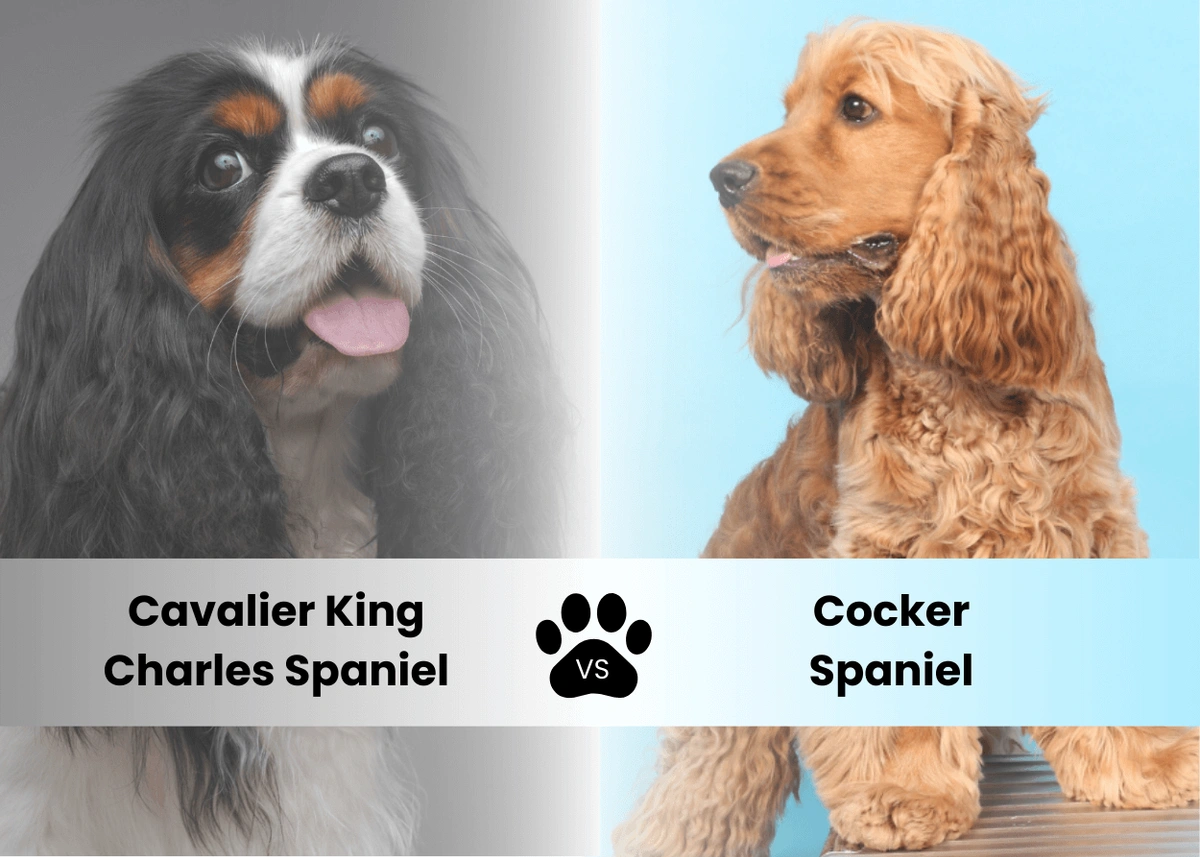
Cocker Spaniels and Cavalier King Charles Spaniels are loyal, expressive dogs, and for centuries have been adored by royalty, presidents, huntsmen and outdoor enthusiasts, as well as the average family down the block. If you're reading this, you are probably aware of some similarities between Cocker Spaniels and Cavalier Spaniels, like their floppy ears and wavy fur. Perhaps your old neighbor owned one, or maybe you remember seeing one in cartoons or the Westminster Dog Show. No matter what brought you here, choosing to adopt a Cocker Spaniel puppy for sale or a Cavalier King Charles Spaniel puppy for sale is a common question that the Pawrade team is trained to help with, so it's time to know the answers!
The Spaniel origin
Spaniel dog breeds, as a whole, trace back their origins to Spain. Makes sense, right? However, Cocker Spaniels and Cavalier King Charles Spaniels are widely agreed to have been introduced as unique breeds in the United Kingdom around the 1600s. Cocker Spaniels were bred as skilled bird-hunting dogs, specifically to track and flush out woodcocks. During the 20th century, Cocker Spaniels in America were selectively bred to be smaller and less for hunting purposes, and thus two separate Cocker Spaniel breeds emerged: the English Cocker Spaniel and the American Cocker Spaniel.
Cavalier King Charles Spaniels were bred primarily as companion dogs for royalty, and were named after King Charles II. The "modern" Cavalier King Charles Spaniel was given recognition by the British Kennel Club in 1945 and the American Kennel Club in 1996 as an effort to restore the breed’s original appearance, as depicted in paintings of King Charles II’s court.
Tracing back any breed's lineage is a tricky task, naturally, due to dog breeding being a generational practice. For example, this ancestral tree shows the stages of breed development that ultimately led to the distinct recognition of the English Cocker Spaniel.
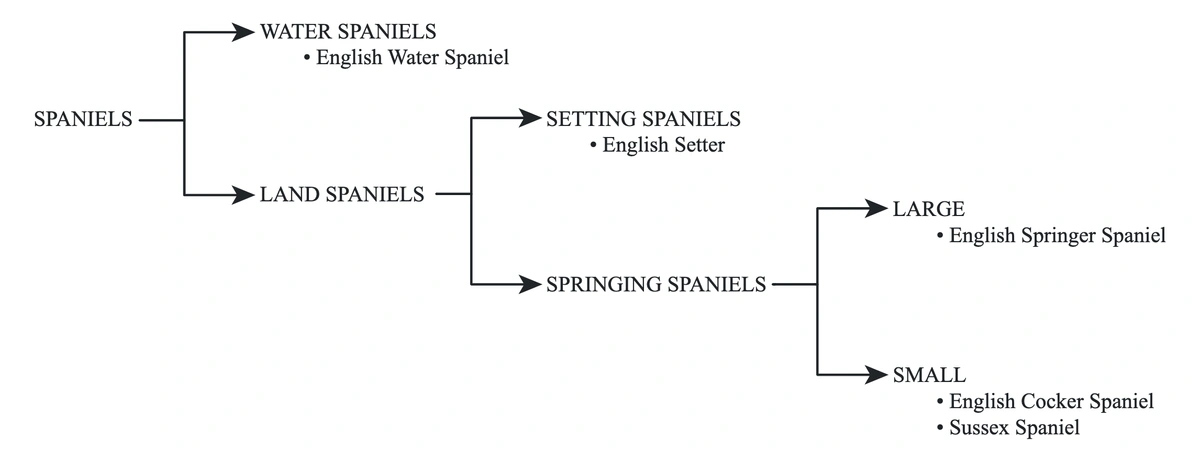
Ancestry chart of English Cocker Spaniels (mycockerspaniel.com)
Size and appearance
At a glance, Cocker Spaniels and Cavalier King Charles are similar in size, but Cocker Spaniels are slightly larger than Cavalier King Charles Spaniels. Since Cocker Spaniels were bred to help with hunting and Cavaliers were bred primarily as household pets, Cocker Spaniels are more athletic and muscular while Cavaliers are petite in comparison.
English Cocker Spaniels typically weigh between 26-34 pounds full grown and stand 15-17 inches tall; American Cocker Spaniels usually weigh between 20-30 pounds full grown and stand 13.5-15.5 inches tall. Cavalier King Charles Spaniels usually weigh 13-18 pounds and stand 12-13 inches tall.
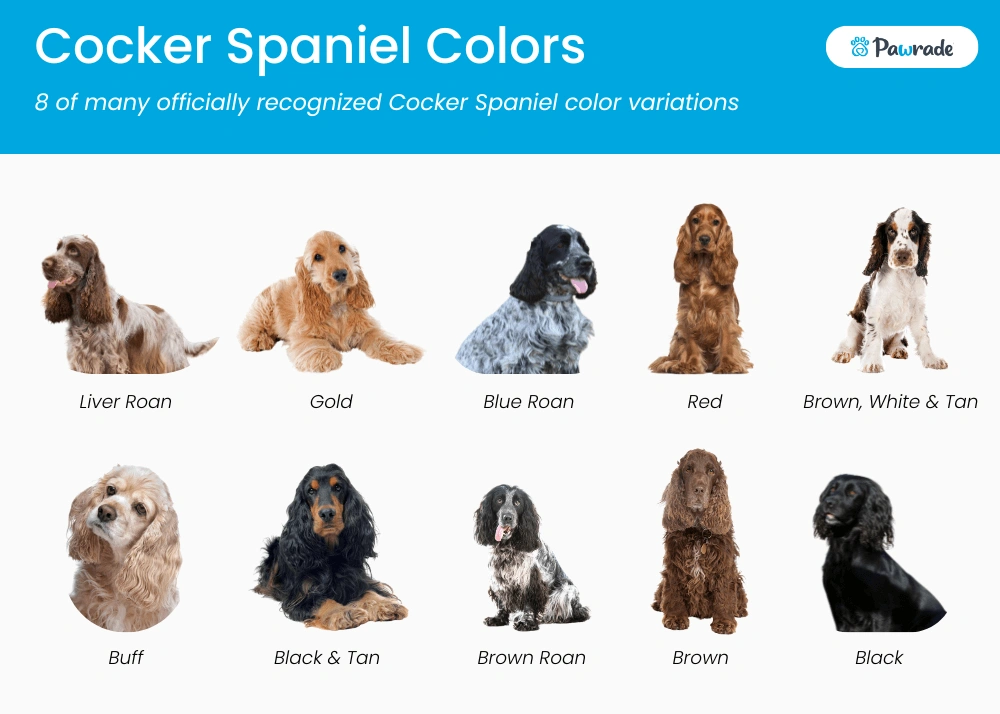
Cocker Spaniels have a slightly longer muzzle and a more dome-shaped head compared to Cavalier King Charles Spaniels. Between English Cocker Spaniels and American Cocker Spaniels, the former have a longer, narrow head, and an arched skull (see picture examples in next section: Liver Roan, Black & Tan). American Cocker Spaniels have a rounder skull and a more distinct "stop," which refers to the point where the forehead and muzzle meet (see picture examples in next section: Buff, Black).
Coats and colors
Both Cocker Spaniels and Cavalier King Charles Spaniels have silky coats with wavy fur, and both breeds are moderate shedders year-round, needing regular brushing to keep their fur tangle-free. Cocker Spaniels have a longer, thicker coat that is prone to matting and requires frequent brushing. Owners are recommended to use professional groomers and have multiple haircuts for Cocker Spaniels to choose from, ranging from low to high maintenance.
Cavalier King Charles Spaniels have softer, feathery coats. Their fur grows a bit more evenly throughout their body, but professional grooming is still the best option when choosing haircuts for Cavalier King Charles Spaniels.
Cocker Spaniel Colors
The AKC recognizes a wide variety of solid colors and mixed colors for Cocker Spaniels, including black, buff, chocolate, red, golden, as well as parti and roan combinations. Parti refers to the presence of solid white and roan refers to a pattern of heavily mottled white areas.
Cavalier King Charles Spaniel Colors
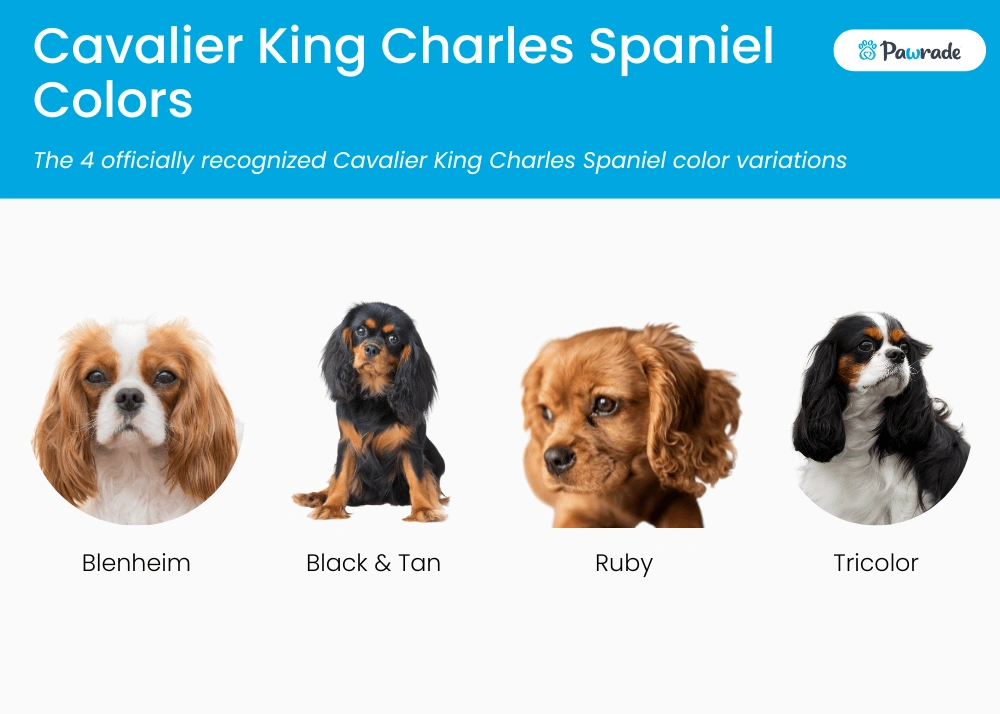
Cavalier King Charles Spaniels have four distinct color patterns recognized by the AKC: blenheim, ruby, black and tan, and tricolor.
- Blenheim is the classic, well-known appearance, with an orange-ish, chestnut color over the ears, eyes, and markings around a white body.
- Ruby is defined as a solid red tone throughout the entire body.
- Black and tan Cavalier Spaniels are primarily black, with brown eyebrows, muzzles, chests, and lower legs.
- Tricolor Cavaliers have a similar look as the black and tans, but with white markings.
Temperament and energy
If you’re looking for a dog with higher energy levels and a love for outdoor adventures, the Cocker Spaniel may be the better choice. If you prefer a more relaxed and cuddly companion, the Cavalier King Charles Spaniel is ideal.
Cocker Spaniels are energetic, playful, and may be able to exercise for longer periods of time. They may have a stronger prey drive compared to Cavalier Spaniels, so they may like to expend their energy by digging, fetching, or taking longer walks.
Cavalier King Charles Spaniels are more laid-back compared to Cocker Spaniels and prefer lounging on the couch instead of chasing a ball. They still enjoy exercise, but they thrive on companionship and lap time. Due to having a shorter snout and possible heart problems, Cavalier Spaniels shouldn't exert too much energy all at once.
Eating Habits & Dietary Needs
Due to their relatively similar size, Cocker Spaniels and Cavalier King Charles Spaniels have similar dietary needs. They are also considered food-driven or food-motivated, which is a good thing when it comes to training! Both breeds thrive on high-quality dog food with balanced protein, healthy fats, and essential nutrients. Treats should be given in moderation, as both breeds can be prone to obesity if overfed.
Lifespan and health concerns
A healthy Cavalier King Charles Spaniel may live 12-15 years. Per PetMD's Cavalier King Charles Spaniels breed page, they are known to be prone to luxating patellas, eye conditions like cherry eye, heart conditions like murmurs and mitral valve disease, and neurological problems like syringomyelia. Cavalier Spaniels are thought to be one of the more unhealthy pure breeds and are no longer permitted for breeding in Norway. It is highly recommended to buy a Cavalier King Charles spaniel puppy from genetically tested bloodlines.
A healthy Cocker Spaniel is expected to live 10-14 years. Per PetMD's Cocker Spaniel breed page, they are prone to ear infections, hip dysplasia, Von Willebrand Disease, and skin allergies. They are considered a healthier spaniel breed despite having a lower average life expectancy.
Which Breed Is Right for You?
If you’re looking for a devoted companion, you can’t go wrong with either a Cocker Spaniel or a Cavalier King Charles Spaniel. They form strong bonds with their owners and are open to bonding with more than one person. Cocker Spaniels are goofy, colorful, and curious, and they can keep up with plenty of running around kids and activities. Cavaliers are adorable, snuggly, and attentive, and may do better with an easier-going lifestyle, like the royal family's.
Cocker Spaniels can be more independent at times but still crave attention. They can develop separation anxiety if left alone for long periods and do best in homes where they receive plenty of mental and physical stimulation.
Cavalier King Charles Spaniels are true “velcro dogs.” They love to be by their owner’s side at all times and can become anxious if left alone for too long. They are ideal for all family types, first-time dog owners, seniors, or apartment dwellers.
Both breeds make excellent pets, but choosing the right one depends on your lifestyle. If you’re ready to find your perfect furry companion, check out Pawrade.com to browse Cocker Spaniel and Cavalier King Charles Spaniel puppies from reputable breeders! For more information about each breed, refer to The Ultimate Cocker Spaniel Puppy Ownership Guide and The Ultimate Cavalier King Charles Spaniel Puppy Ownership Guide.