A hush settles over the morning as the newly fallen snow creates a sparkling winter wonderland. You are letting your puppy out to do her business and expect her to come back quickly since it’s so cold. “It sure is pretty, but I’d rather be curled up by the fire watching my favorite movies,” you think to yourself. Just as you’re about to turn in to find your coziest robe and slippers, your puppy refuses to come in. She keeps hopping in and out of snowbanks like a little kangaroo, sending a spray of snow when she lands. She’s such a stinker because she refuses to come inside, but you have to admit that bit of snow on her nose makes her even more adorable than before.
One way to keep puppies active during winter is to introduce your puppy to winter dog sports. Not only are dog sports an amazing way to exercise your puppy mentally and physically, but it’s also a great way for you to meet fellow dog lovers, enjoy nature, and get active yourself. Learn about the best winter dog sports to try with your puppy this season for maximum fun in the snow.
Safety in Cold-Weather Dog Sports
Before you step one paw outside to participate in winter dog sports, you have to familiarize yourself with cold weather safety for puppies to keep everyone healthy in frigid temperatures. Freezing conditions can set the stage for serious health complications that can be prevented with preparation to protect you and your puppy from the elements.
-
Check the weather before you go. Snow in the forecast is probably fine (and preferred in some sports), but a winter squall can come on quickly and catch you unprepared by surprise.
-
Paw care for puppies is vital in the winter. Protect your puppy’s paw pads and feet from chemical burns, cuts and scrapes from rough, icy terrain, and other irritants using booties, salve, balm, keeping nails trimmed, and regular paw inspection to protect your puppy’s gait and comfort.
-
Understand what type of coat your puppy has and how to care for it in cold weather. Some dogs are double-coated with a weatherproof coarse outer layer and a downy, lofty undercoat that acts as a thermostat to keep your puppy warm. Never shave a double-coated dog because you will strip them of their ability to stay warm. If your puppy has a sleek, short coat, dress them in coats and sweaters to keep their body temperature warm to prevent hypothermia in dogs.
-
Be prepared! Always carry a first aid kit for dogs that includes special equipment for cold weather. Don’t forget plenty of water, as dogs can easily get dehydrated when participating in winter dog sports.
Know your dog’s limitations
The idea of winter dog sports may be more romanticized than it ends up being once you try it out, and that’s okay! The key is to pay attention to your puppy. Does she seem too cold? Is she skittish or afraid? Does she have the stamina it takes to participate? Keep an eye out for any canine body language or physical effects that indicate it’s time to stop.
It’s usually a safe bet the best cold-weather dog breeds that have lots of stamina, strength, and endurance are the most well-suited for outdoor dog sports in the winter. For example, a Siberian Husky puppy is bred to excel at long-distance treks in frigid temperatures and grueling conditions, while your Pug puppy may only like to trek to the food bowl and wouldn’t last 2 seconds hauling a sled!
Winter Dog Sports to Try With Your Puppy
Some winter dog sports are familiar to us, such as mushing and snowshoeing. However, you’ll be introduced to some unusual dog sports you’ve never heard of before, so see which one stands out for you and your puppy to try this winter!
Snowshoeing
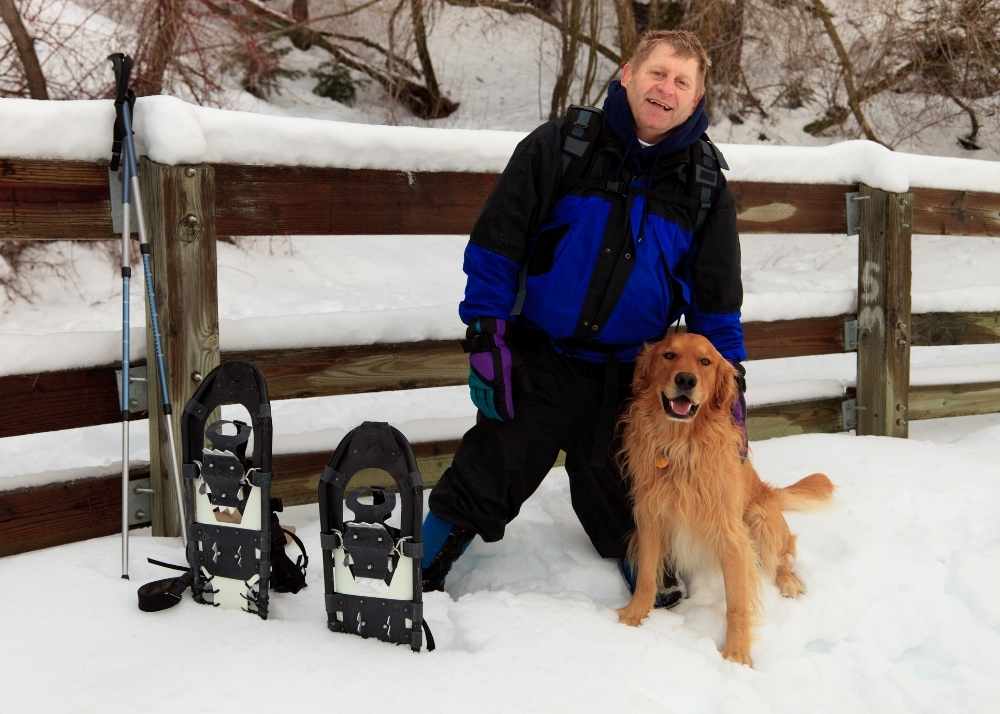
Snowshoeing is an activity where humans attach tennis racket-like “shoes” to their feet to help steady them when walking through snow, making it much easier to traipse through a snow-covered trail. It’s essentially hiking through the snow with your puppy by your side. Always follow local trail leash laws, and choose a terrain that’s the right fit for you and your dog’s physical capabilities.
Mushing
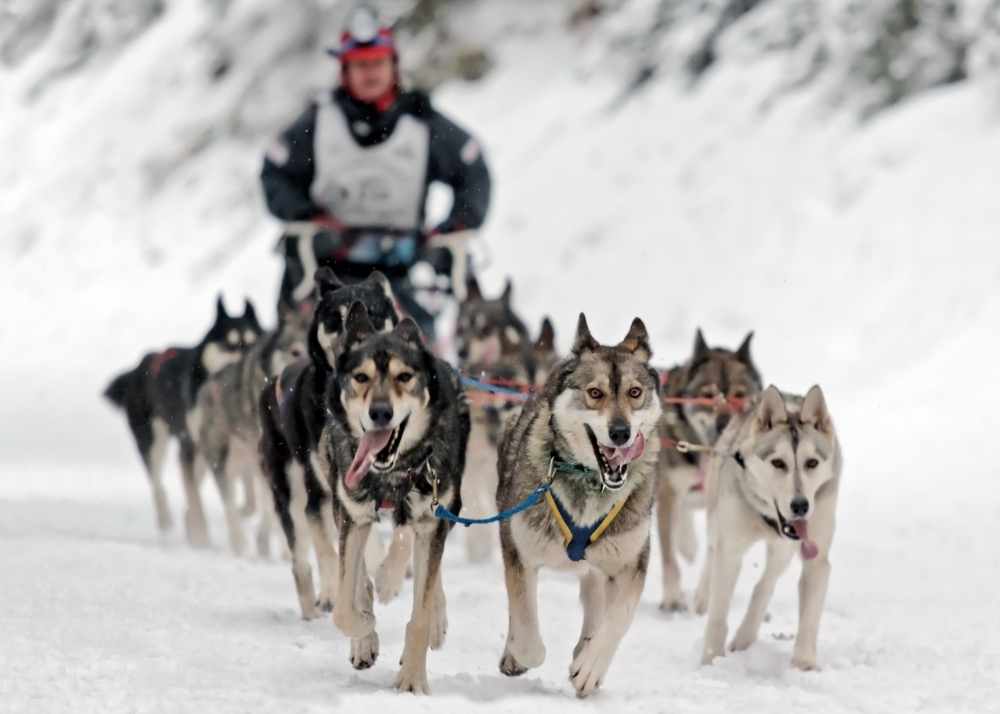
We’re all familiar with the iconic Iditarod dog sled race where teams of dogs and humans compete to see who can travel the fastest distance between two points in Alaska. These teams battle terrible whiteout blizzard conditions and harsh terrain for the prestigious win. Nordic dog breeds with Arctic roots such as Siberian Huskies, Alaskan Malamutes, Samoyeds, and others have innate abilities to cross impressive expanses of land without tiring. To go dog sledding, you’ll need a sophisticated sled that includes storage spots and even brakes for more control, sturdy tow lines, and a team of around 8 dogs wearing special harnesses that are attached to the sled. These dogs love being in a pack and respond well to directions, making the entire experience an exhilarating way to get from Point A to Point B while taking in the gorgeous winter landscape.
Kicksledding
Kicksledding for dogs is a type of harness sport that is very similar to mushing but with fewer dogs on the team. The sleds are smaller and more lightweight, making them easy to navigate. Kicksledding was developed in Scandinavia as a way to get around on snowy streets without hitching up a huge team of dogs. You’ll need a kicksled, a harness, and a towline to get started. You’ll also need to teach your dog some basic commands to tell her where you want her to go.
Skijoring
“What are you doing this weekend?” “Oh, we’re going skijoring!” “Ski-what-ing?”
Skijoring for dogs is an exciting harness sport where your dog and up to two others are attached to you, pulling you forward as you wear skis. The word “skijoring” comes from the Nordic word for “ski driving,” and the feeling of flying down the trail or street being pulled by a team of dogs is thrilling. Like in kicksledding, your dog will need to learn a few directional commands so you don’t go left while they go right! This dog sport is great for dogs over 35 pounds who love to run, exhibit stamina and endurance, have high energy levels, listen reliably, and get along well with other dogs.
Winter scent work
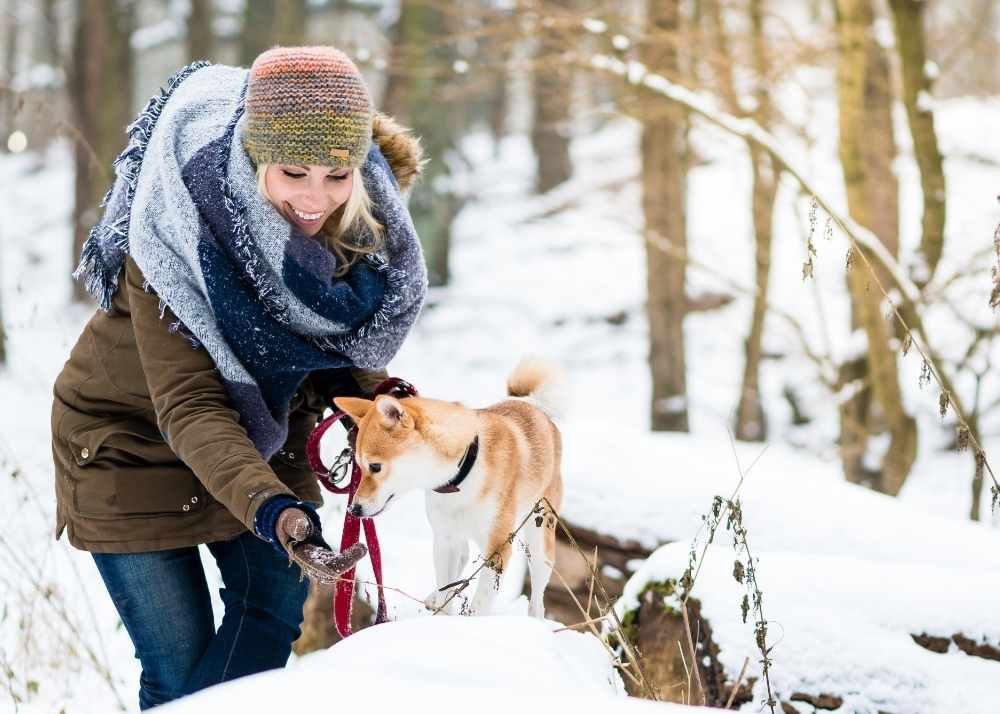
Dogs have a superior sense of smell to a human’s sniffing abilities. The part of their brains that analyze scents is 40 times bigger than a human’s, and dogs have 100-300 million olfactory receptor cells compared to just 6 million in a human. Also called nose work, scent work for dogs is a way to harness their natural ability and desire to use their nose to interact with the world around them. It’s natural for a dog to want to sniff everything in sight, and it’s no different in winter. Some scent work activities include taking your puppy on a scent walk in the woods and letting her sniff to her heart’s content or laying out a trail of treats for her to find ahead of time under snowdrifts, logs, or underbrush. The smells are different each season, so your puppy will never get bored doing winter scent work in the cold.
Play Winter Dog Sports With a Pawrade Puppy
We’ve given you an introduction to various winter sports for dogs, but what if you need a puppy to raise first? Find your winter buddy among our puppies for sale to see which fluffy baby catches your attention inspiring visions of romping around in the snow with your new companion!