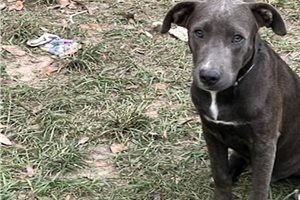
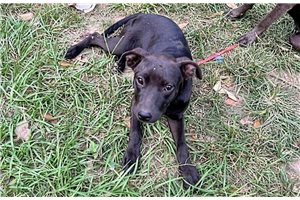
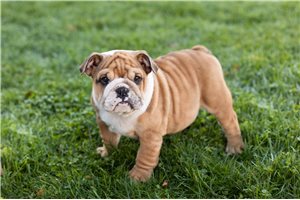
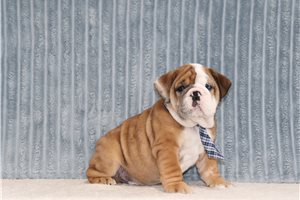
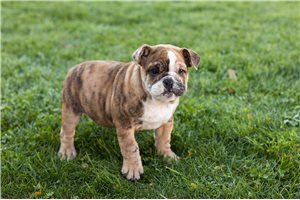
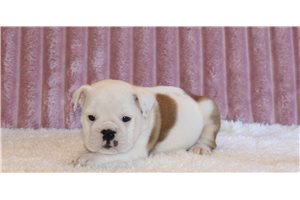
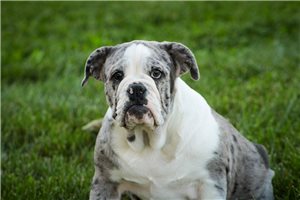
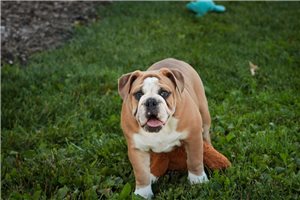
People notice the muscle first: a broad, blocky head on a compact, heavily built body. Then they meet the dog inside, a gentle, friendly companion bred above all to be part of the family.
People notice the muscle first: a broad, blocky head on a compact, heavily built body. Then they meet the dog inside, a gentle, friendly companion bred above...People notice the muscle first: a broad, blocky head on a compact, heavily built body. Then they meet the dog inside, a gentle, friendly companion bred above all to be part of the family.
Only with Pawrade, you receive a pet insurance policy with no waiting period included for immediate accident or illness coverage. *NH, NY, RI, SC and TN residents excluded
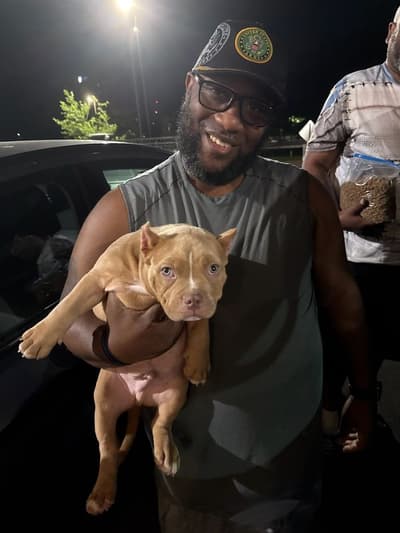
The process was seamless and Mason is so adorable and cared for. He makes me smile. It was love at first sight. You guys do an excellent job with communication.
“The process was seamless and Mason is so adorable and cared for. He makes me smile. It was love at first sight. You guys do an excellent job with communication.”
Elijah · American Bully
Nov 22, 2024
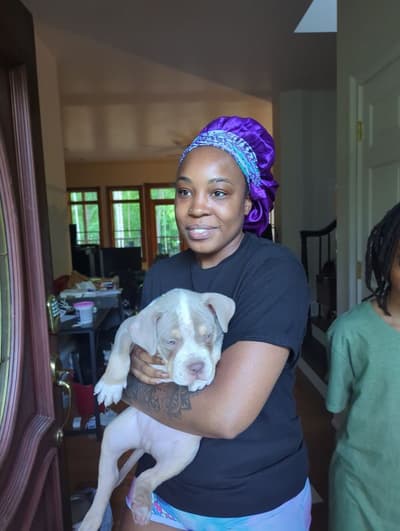
“Awesome company, I highly recommend this service to family and friends!! Very incentive. They really care about the puppies. The puppies come first! The also offer 30 days of free puppy insurance!”
Brodie · American Bully
Mar 2, 2021
“everything went very smooth great place its the way to go good job pawrade. thanks for everything”
Alford · American Bully
May 15, 2026
“Excellent service start to finish im very excited my puppy came home clean and happy!!”
Puppy scams cost U.S. families millions every year. Here's how you know Pawrade isn't one: we're a named, audited business with a public track record you can check anywhere.
Pawrade data: parents of puppies placed through Pawrade (breeder-reported)
Height
16–23 in
Group
Companion Dog
UKC
American Bully Characteristics
Full-Grown Size
4 of 7SmallLarge
Grooming Needs
2 of 7SeldomRegularly
Good with Dogs
3 of 7Not ReallyYes!
Watchdog Ability
6 of 7LowHigh
Exercise Needs
5 of 7Couch PotatoHigh Needs
Your new best friend.
American Bully temperament
Personality and daily life
An American Bully is a companion first. The breed standards of the United Kennel Club (UKC) and the American Bully Kennel Club (ABKC) call for a confident, gentle and friendly dog. Most Bullies greet strangers warmly, and aggression toward people is out of character for the breed.
Kids and other pets
Most are very good with children and get along with other dogs. Many share a home happily with a cat too, especially when they grow up with one. This is not a guard dog by design, because the breed was developed to be friendly toward people.
Temperament
Outdoors a Bully is active, and in the house it is calmer. That athletic build likes a job, and Bullies earn club awards in agility, dock diving, lure coursing, scent work and weight pull.
Training
Training starts with socialization. The standards ask for a dog that is confident around people, and they rule out both aggression toward people and extreme shyness. Introduce your puppy early to many people, places and animals.
Pawrade data: parents of puppies placed through Pawrade (breeder-reported). Placements and reviews come from Pawrade's records.
A healthier start for a happier tomorrow.
American Bully care & grooming
Caring for an American Bully
The routine
Coat and shedding
The coat is short, glossy and close, from smooth to slightly stiff, and the ABKC standard allows no more than half an inch. Routine grooming is minimal.
Keeping them safe
Heat safety
Both standards call for a muzzle long enough for normal breathing, and how well a Bully copes with heat depends on the individual dog's muzzle and body condition.
Cloudiness in an eye is worth a vet visit, because cataract is listed as presumed inherited in the breed.
Skin changesMention skin changes
Mention any rough, flaky skin on a young dog to your vet, because a genetic skin condition called ichthyosis can cause it.
Teeth and gumsRoutine vet checks
Ask your vet to check the bite and look for missing teeth at checkups, since both turn up in the breed.
Body weightKeep them lean
Keep your Bully lean: the standards rule out obese or overly massive dogs.
Every milestone, together.
American Bully puppy milestones
Your American Bully's first two years
Before 8 weeks
Before your puppy comes home
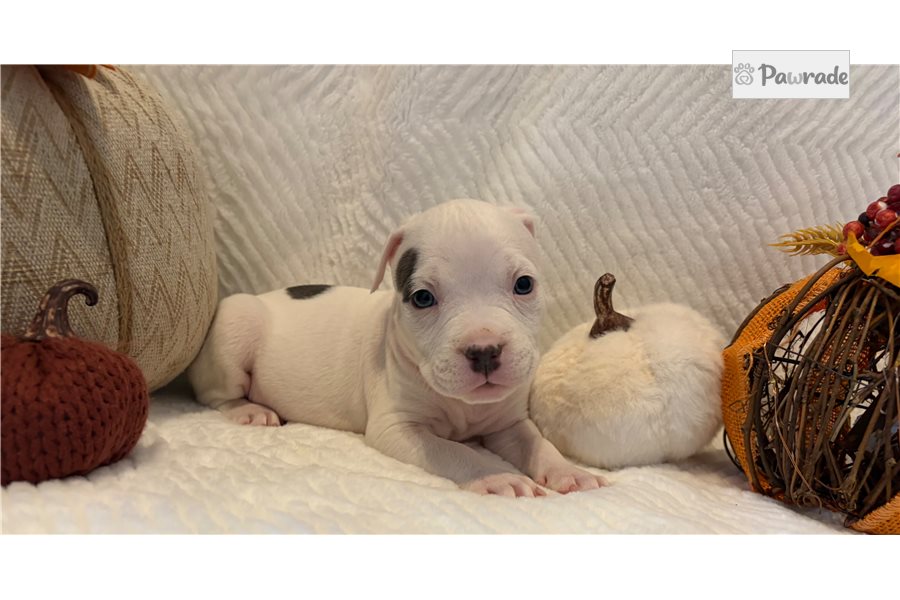
Your puppy is still with its breeder, and most American Bully litters on Pawrade are already meeting young children, other dogs and everyday sounds like car rides and the doorbell.
Put the crate in a room where the family spends time, or in your bedroom at night, so your puppy stays close to people.
Find a vet now and book a first visit for the week your puppy arrives.
Ask the breeder what your puppy is eating, so you can have the same food ready at home.
Why it matters
The breed standards call for a confident dog that is friendly toward people, so the socialization your breeder has started is worth carrying on from day one.
American Bully note
Your puppy's size variety is not settled yet, because Pocket, Standard and XL are set by adult height and the Classic by adult frame.
8–10 weeks
The first week home
Most American Bully puppies on Pawrade go home at about 13 weeks, usually between 9 and 19 weeks, so this stage starts whenever yours arrives. A copy of your puppy's Veterinary Health Report travels with it, with the results of its exam by the breeder's licensed vet.
Take your puppy outside first thing in the morning, last thing at night and after every nap.
Bring the Veterinary Health Report to the first vet visit, so your own vet starts from the same record.
Ask your vet to listen to the heart and check the bite, the eyes and, in males, both testicles.
Why it matters
No single exam can find everything in a growing puppy, so this visit gives your vet a starting point to build on.
American Bully note
A cheek-swab DNA panel is optional, and if you get one, keep the results with your puppy's records.
10–12 weeks
Weeks 2 to 4
The first 3 months are a puppy's most important time for learning about people, places, animals and things. For an American Bully, that socialization is also the heart of training.
Introduce your puppy to people of all ages, friendly dogs and new places, and keep each meeting positive.
Ask your vet about a puppy class, which can start before the vaccine series ends as long as sick dogs are avoided.
If you have a cat, start introductions now, because Bullies raised with cats usually live well with them.
Why it matters
The standards rule out both aggression toward people and extreme shyness, so good early experiences shape the confident dog the breed is meant to be.
3–4 months
3 to 4 months
Your puppy is finishing its puppy shots, and the series usually ends at about 16 weeks, as your vet advises. Bladder control is growing too: a puppy can usually hold it about as many hours as it is months old, so a 3-month-old can wait about 3 hours.
Keep every vaccine appointment your vet sets, and keep your puppy away from sick dogs.
Ask your vet whether early hip X-rays by the PennHIP method make sense for your puppy.
Why it matters
Hip dysplasia runs in the breed, and weight control is key to managing it.
American Bully note
Keeping your puppy lean also reduces stress on its growing hips.
4–6 months
4 to 6 months
Teething is in full swing: baby teeth start falling out from about 12 weeks, and by about 6 months the adult teeth are in. Chewing is strongest while teeth are changing, so expect your puppy to mouth whatever it can reach.
Offer safe chew toys, keep only a few out at a time and rotate them, and put shoes and other valued things out of reach.
Ask your vet to check the bite and count the teeth as the adult teeth come in.
Choose daily walks and controlled play over hard running and jumping while the joints grow.
Why it matters
Missing teeth and an uneven bite turn up in some American Bullies, so this is a good stage for a mouth check.
American Bully note
As the weather warms, watch your puppy closely, because heat tolerance depends on its muzzle and body condition.
6–12 months
6 to 12 months
Adolescence usually starts around 6–8 months, and your good listener may start testing the rules or seem to forget its training.
Keep training consistent, stay patient and give plenty of physical and mental exercise.
Talk with your vet about spaying or neutering, since the right timing depends on things like sex and expected adult size.
Keep the body condition lean and play controlled while your dog finishes growing.
Why it matters
Growth plates in the legs stay soft while a puppy grows, and larger dogs keep growing longer, so agree an exercise plan with your vet.
American Bully note
Early hip X-rays can be taken at this age, so ask your vet whether they make sense for your dog.
1–2 years
1 to 2 years
Your American Bully is close to grown, and most dogs settle into adulthood at around 2 years. Its variety becomes clear now, because the standards judge mature dogs on adult height and frame.
With the joints grown, try a dog sport together, such as agility, dock diving, lure coursing, scent work or weight pull.
Book a wellness exam with your vet at least once a year, and ask about a final hip rating if you choose to screen.
Why it matters
The UKC standard expects the ideal Bully to be athletic enough to do well in performance events.
American Bully note
Keep your Bully lean for life and keep watching it in hot weather.
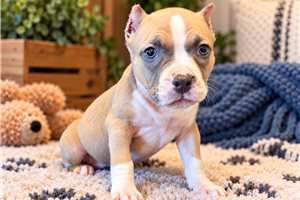
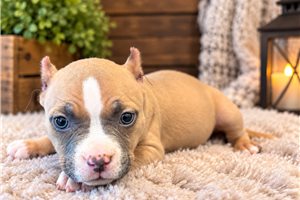
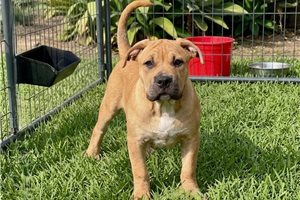
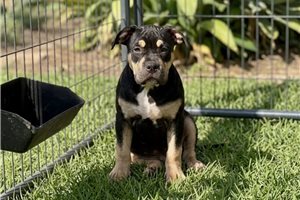
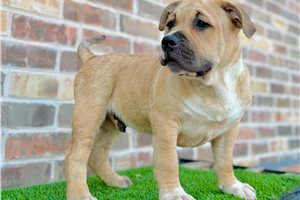
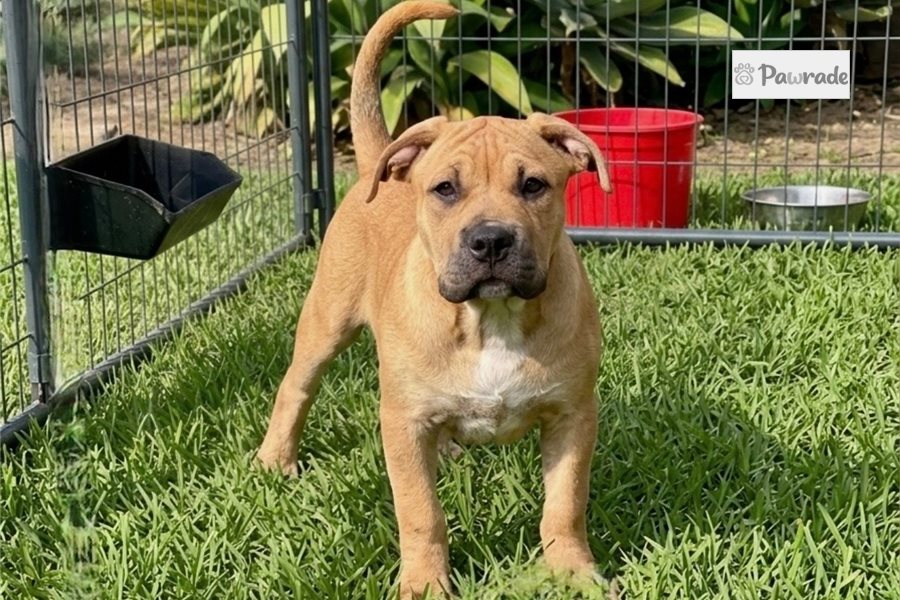
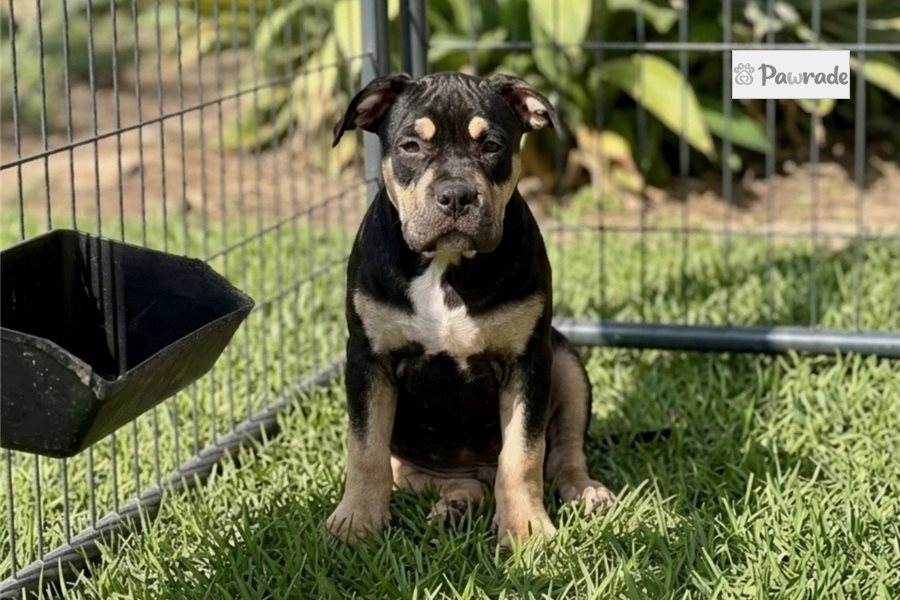
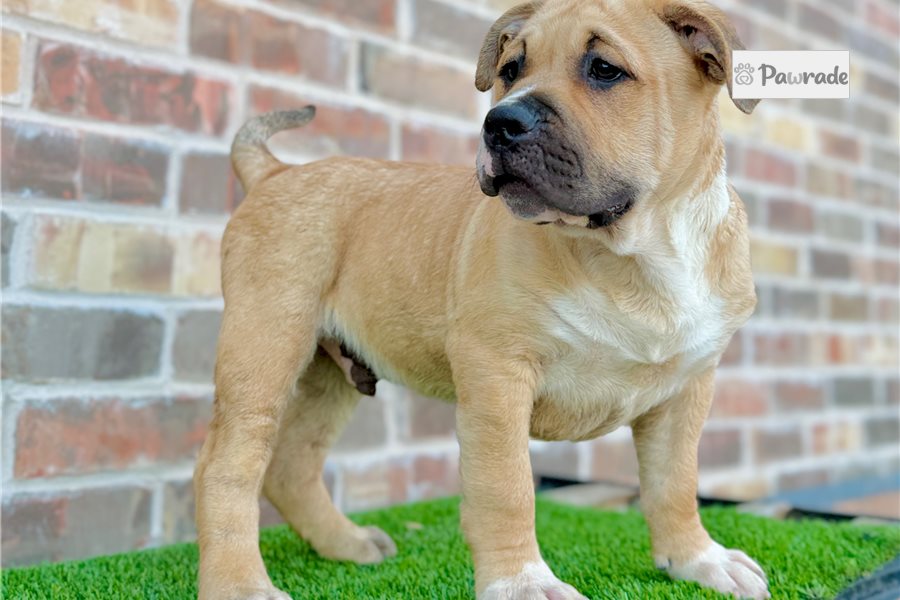
The American Bully is compact and thick-set, with heavy muscle, a square outline and a broad, deep chest. The head is large, broad and blocky. The muzzle is shorter than the skull, about a quarter to a third of the head's length, but never so short that it hampers breathing.
Size
The UKC and ABKC standards divide the breed into four varieties by height at the withers. Pocket is the shortest variety, below the Standard. Standard males stand 17–20 in and females 16–19 in, and the Classic shares that height with lighter bone and less body mass. XL males stand over 20 in, up to about 23 in, and females over 19 in, up to about 22 in. Neither standard sets a weight: a Bully should carry weight in proportion to its height and frame.
Colors and markings
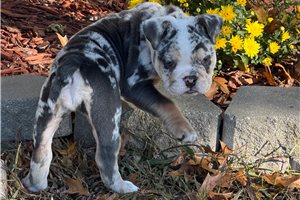
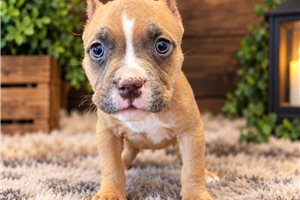
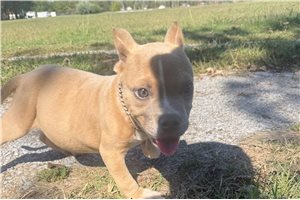
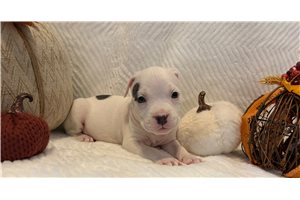
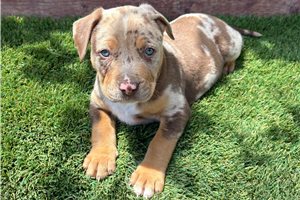
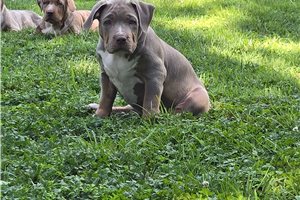
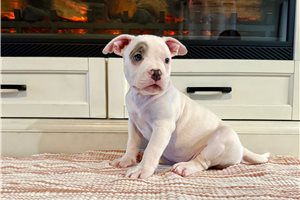
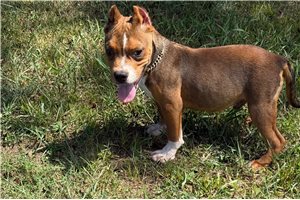
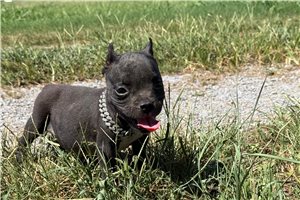
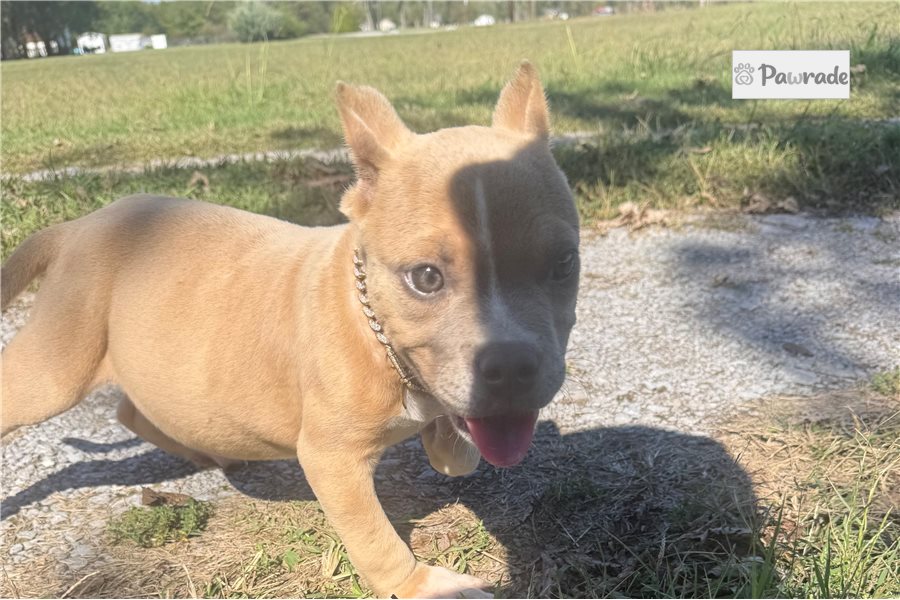
The UKC standard accepts any color, pattern or combination except merle, and blue eyes are outside the UKC standard. The ABKC standard accepts all colors and patterns, merle included, and accepts blue or odd-colored eyes only in merle dogs. The coat should be short; a long coat is outside both standards. Ears may be natural or cropped, with no preference either way, and the natural tail tapers to the hock; docked, bobbed and screw tails are outside both standards.
Colors listed by Pawrade breeders
Black
Blue
Champagne
Chocolate
Lilac
Merle
Pied
Red
Reverse Brindle
Sable
Seal
Tri-Color
White
Keeping your American Bully healthy
The American Bully is known to be prone to hip dysplasia, and it is easier to manage when you plan for it from puppyhood. Here is what it means for you day to day.
A little history, a lot of heart.
American Bully history
History
1980s–1990s
The American Bully was developed in the United States in the 1980s and 1990s.
Breeders blended the American Pit Bull Terrier with other bull and bulldog breeds, and which breeds were added varied from one line to the next.
From the start the goal was a companion and family dog.
2004–2013
The American Bully Kennel Club (ABKC) has been the breed's registry since 2004, and the United Kennel Club recognized the breed on 15 July 2013, placing it in its Companion Dog Group.
The American Kennel Club does not recognize the breed.
2023
The United American Bully Association, the breed's UKC national club, was founded in 2023.
Since then the association has held its first national specialty show.
Checked with care before travel.
American Bully Veterinary Health Report
Your puppy's Veterinary Health Report
Every American Bully puppy gets a full hands-on exam from the breeder's licensed veterinarian before it goes home, done to PetPay's exam standards and recorded in its own Veterinary Health Report.
The exam, a health certificate and a stool test for parasites all happen 3 to 5 days before your puppy leaves.
1It is a close look at your puppy itself, not a breeder's paperwork on the parents.
2If the vet finds something that could put your puppy at risk during travel, your puppy stays with the breeder until it's resolved.
3Problems that can be treated before travel are treated by the breeder's licensed vet first.
4Anything else the vet notes is shared with you.
5A hard copy of the report travels with your puppy for your records, and a digital copy is in your PetPay account.
PetPay Veterinary Health Report form
16 areas checked on the exam
Closer look for American BullysOn every puppy's report
Puppies must be at least 8 weeks old and weigh at least 2 lb before they travel. Every Pawrade puppy also comes with a health guarantee administered by PetPay, independent of the seller. The terms are on the health guarantee page.
An American Bully puppy's price reflects what goes into it: its pedigree and registration, its coat and color, and the breeder's program. Every Pawrade puppy's price also includes the pre-travel exam by the breeder's licensed vet, the Veterinary Health Report and a health guarantee administered by PetPay. See today's price range for American Bully puppies on Pawrade's American Bully listings.
Typical asking price
$5,048
Based on 154 American Bully listings in the last 12 months
Frequently asked questions about American Bully puppies
Frequently asked questions
The four varieties are set by height at the withers, from the Pocket, the shortest, to the XL, the tallest. Standard males stand 17–20 in and females 16–19 in, and XL males stand over 20 in, up to about 23 in. The Pocket is shorter than the Standard, and the Classic is as tall as the Standard but lighter in bone and body.
It depends on the variety: Standard to XL adults stand 16–23 in, and Pocket Bullies are shorter. Parents of Pawrade American Bullies typically weigh 45–132 lb (fathers) and 45–105 lb (mothers), which gives a useful early guide.
Neither breed standard sets a weight, so a Bully should carry weight in proportion to its height and frame. Adult weights run 45–132 lb, based on the breeder-reported weights of parents of puppies placed through Pawrade. The UKC standard rules out overly massive dogs.
The XL is not a separate breed; it is the tallest of the four height varieties in the one American Bully standard. In the UK, "XL Bully" is also a legal type definition used in England and Wales.
The American Bully is its own breed, recognized by the UKC and the ABKC with its own standard and size varieties. It was developed from the American Pit Bull Terrier, with other bulldog breeds added along the way. The American Bulldog is a separate, taller breed that was bred to guard property, while the Bully was bred as a friendly companion.
The American Kennel Club does not recognize the American Bully. The United Kennel Club recognized the breed in 2013, and the American Bully Kennel Club has registered it since 2004.
Males are a little taller, and in each variety the female height range is about an inch lower than the male range. Fathers of Pawrade American Bullies also typically weigh more than mothers, at a median of 80 lb against 65 lb.
An American Bully is usually friendly, confident and gentle, a companion that is at ease with people despite its powerful build. Most are energetic outside and calmer indoors.
Aggression toward people is not typical of the American Bully, and both standards call for a confident, friendly dog. The UKC standard also rules out extreme shyness, so early socialization with people is central to raising a well-adjusted Bully.
American Bullies are usually very good with children, and the standards describe an excellent family dog. Among Pawrade American Bully buyers, about half have children at home.
Most American Bullies get along with other dogs. Many breeders on Pawrade socialize their litters with both large and small dogs before the puppies go home.
Many American Bullies live well with cats, especially when they are socialized with them young. Some breeders on Pawrade introduce their litters to cats before the puppies go home.
An American Bully needs daily walks and play, though not the long workouts some related bull breeds need. Athletic Bullies also enjoy sports such as agility, dock diving and scent work.
Heat tolerance varies from one American Bully to the next, depending on its muzzle and body condition. Both standards call for a muzzle long enough for normal breathing, so keep your Bully lean and watch it closely in hot weather.
The standard American Bully coat is short, glossy and close, and a long coat is outside both standards. A long coat is a recessive trait, and a coat-length DNA test can identify dogs that carry it.
Training an American Bully centers on early socialization, because its standards call for a confident dog that is friendly toward people. Dog sports give a Bully a job to learn, and the UKC standard expects enough athleticism to do well in performance events.
Introduce your puppy to many people, other dogs and new places from its first weeks at home, because the standards call for a confident, friendly dog. If you have a cat, start introductions while your puppy is young.
American Bullies compete in agility, dock diving, lure coursing, scent work and weight pull. The UKC standard expects the ideal Bully to be athletic enough to do well in performance events.
Puppies travel only once they are at least 8 weeks old and weigh at least 2 lb. Most American Bully puppies go home at about 13 weeks, usually between 9 and 19 weeks.
Not for certain, because the varieties are defined by adult height, and the Classic by adult frame. A young puppy's final variety cannot be confirmed yet, so expect it to become clear as your puppy grows.
Most American Bully litters on Pawrade meet children, other dogs and everyday household sounds before the puppies go home. Breeders report socializing 83% of litters with young children and 73% with large dogs. They also report getting litters used to car rides (89%), the doorbell (65%), music or TV (63%) and the vacuum cleaner (62%). These figures come from what breeders reported for 78 litters. Breeders on Pawrade also report whether they have started crate training, so ask how far your puppy has got.
Find a vet and book a first visit for the week your puppy arrives, and bring its Veterinary Health Report. Plan short, controlled play sessions rather than long runs or jumping while the joints grow. Ask the breeder what your puppy is eating, so you can have the same food ready.
An American Bully puppy usually finishes teething by about 6 months, once its adult teeth are in. Baby teeth start to fall out from about 12 weeks, and chewing is strongest while the teeth are changing. Safe chew toys help, and keeping only a few out at a time, rotated, keeps them interesting.
A puppy can usually hold its bladder about as many hours as it is months old, so a 3-month-old can wait about 3 hours. That rule of thumb holds until about 9 months to 1 year of age. Take a young puppy out first thing in the morning, last thing at night and after naps.
Adolescence often starts around 6–8 months, and many dogs test the rules or seem to forget their training for a while. Consistent training, patience and plenty of physical and mental exercise help you through it. This stage can last until about 2 years.
The Veterinary Health Report is the record of your American Bully puppy's exam before it goes home. The breeder's licensed vet gives the puppy itself a full hands-on exam, to PetPay's exam standards, and records the results there. It gives you and your own vet a clear starting point for your puppy's care.
The breeder's licensed veterinarian examines every American Bully puppy before it goes home, to PetPay's exam standards. The results are recorded in the puppy's Veterinary Health Report, and a copy travels with your puppy for your records.
The vet examines your American Bully puppy hands-on and records the results in its Veterinary Health Report. For this breed, the vet checks the bite, teeth and palate, the breathing and nostrils, and the response to sound. In males, the vet also feels for both testicles.
Before travel, every puppy follows PetPay's vaccination and deworming schedule as far as its age allows: deworming at 2, 4, 6, 8, 10 and 12 weeks, and the distemper, parvo, adenovirus and parainfluenza combination shot at 6–8, 9–11 and 12–14 weeks. Bordetella and corona are given at the vet's discretion, and no vaccine is given within 3 days of travel. Rabies is given by a licensed vet on the schedule your state requires. Your own vet completes the series. Your puppy's vaccination and deworming records are separate documents that travel with your puppy. Bring them, with the Veterinary Health Report, to your first visit so your vet starts from the same record.
If the vet finds something that could put your puppy at risk during travel, your puppy stays with the breeder until it's resolved. Problems that can be treated before travel are treated by the breeder's licensed vet first. Anything else the vet notes is shared with you.
Puppies grow and change quickly, and their immune systems are still developing, so no exam can find everything. The Veterinary Health Report is a strong early indicator and a documented starting point that your own vet builds on. Hips and elbows, for example, are checked later with X-rays as your Bully grows.
Right now, most American Bully puppies on Pawrade are listed within the typical range shown on Pawrade's American Bully listings. Each breeder on Pawrade sets their own price, and each puppy's listing shows it. An American Bully puppy's price reflects what goes into it: its pedigree and registration, its coat and color, and the breeder's program. Every Pawrade puppy's price also includes the pre-travel exam by the breeder's licensed vet, the Veterinary Health Report and a health guarantee administered by PetPay.









 American Bully note