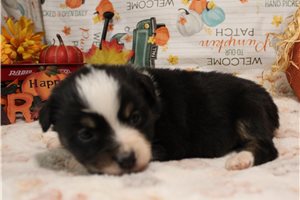
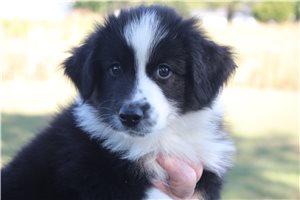
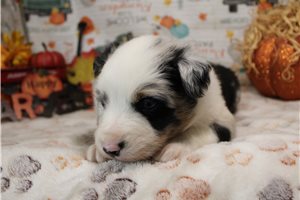
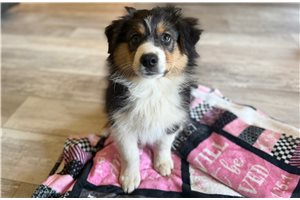
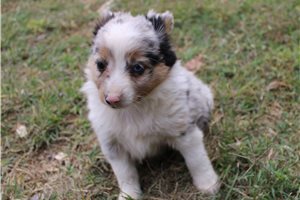
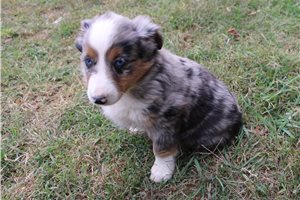
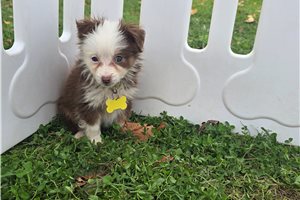
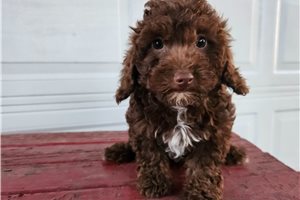
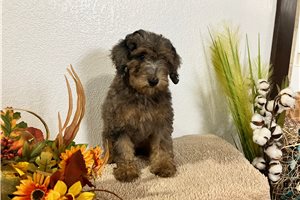
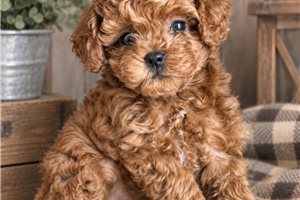
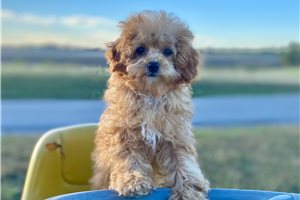
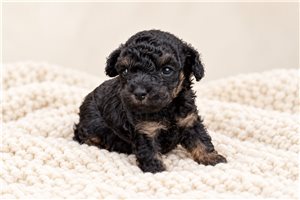
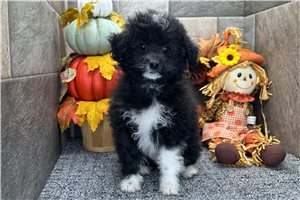
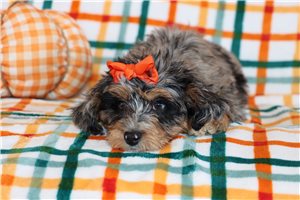
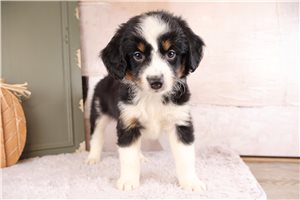
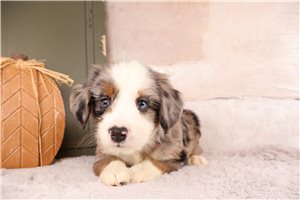
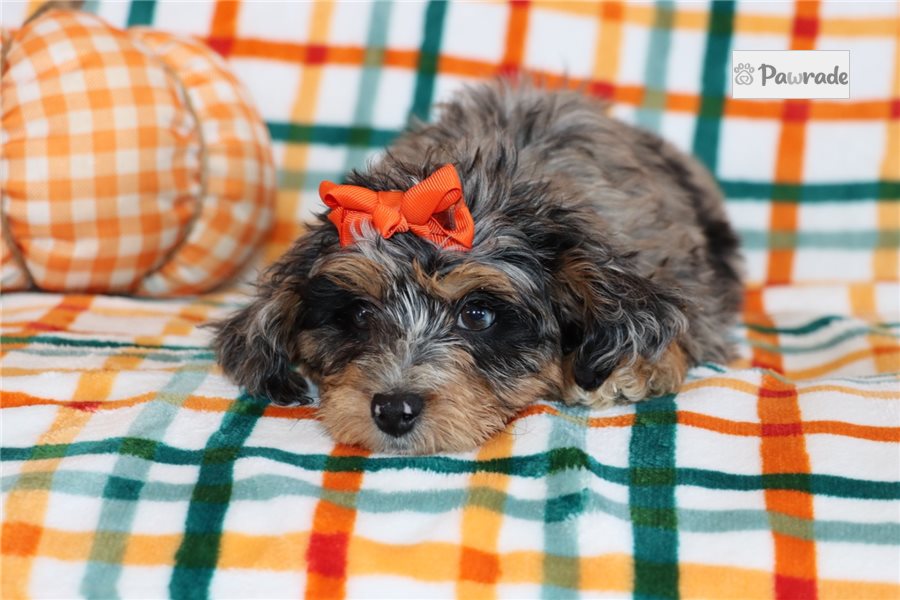
People notice the coat first, often swirled in blue or red merle. They stay for the quick, eager mind underneath, the kind of dog that turns fetch, a swim or a new trick into a game.
People notice the coat first, often swirled in blue or red merle. They stay for the quick, eager mind underneath, the kind of dog that turns fetch, a swim or...People notice the coat first, often swirled in blue or red merle. They stay for the quick, eager mind underneath, the kind of dog that turns fetch, a swim or a new trick into a game.
Only with Pawrade, you receive a pet insurance policy with no waiting period included for immediate accident or illness coverage. *NH, NY, RI, SC and TN residents excluded
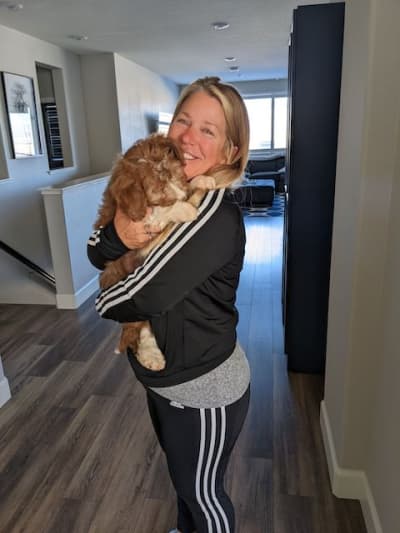
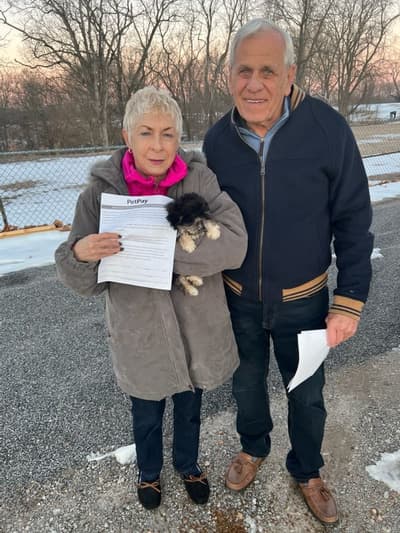
“We are in love with our new puppy Giovanni (Samuel). Everything was so easy and everyone was very helpful. Thank you for our new boy.”
Roxy · Aussiedoodle
Feb 15, 2022
“I found the greatest pup thanks to Pawrade. They walked me through every step and the assistance they gave was phenomenal. There are so many scams out there when it comes to puppy purchases. Pawrade took that worry out of the scenario. From deposit to delivery, A+++”
Ellie · Aussiedoodle
Feb 7, 2022
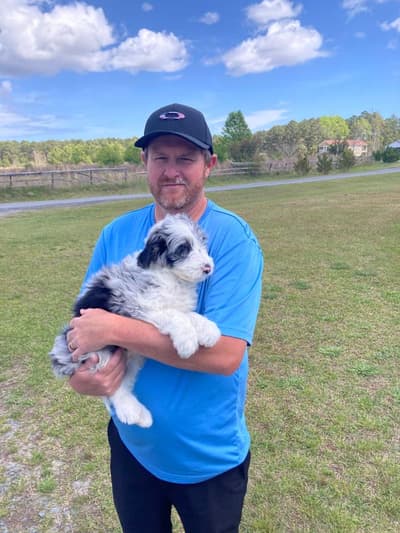
“Very caring and helpful group”
Jonny · Aussiedoodle
Mar 31, 2026
“We had a great experience and very good communication!”
Puppy scams cost U.S. families millions every year. Here's how you know Pawrade isn't one: we're a named, audited business with a public track record you can check anywhere.
Pawrade data: parents of puppies placed through Pawrade (breeder-reported)
Height
14–23 in
Lifespan
10–12 years
Energy
Varies
Shedding
Low to moderate
Aussiedoodle Characteristics
Full-Grown Size
4 of 7SmallLarge
Grooming Needs
4 of 7SeldomRegularly
Good with Dogs
7 of 7Not ReallyYes!
Watchdog Ability
1 of 7LowHigh
Exercise Needs
7 of 7Couch PotatoHigh Needs
Your new best friend.
Aussiedoodle temperament
Personality and daily life
Aussiedoodles are very smart and easy to train. Both parent breeds were bred to work. Well-socialized Aussiedoodles are usually friendly with strangers, although the Australian Shepherd parent tends to be reserved.
Kids and other pets
They are generally good with children and other pets when socialized, but some try to herd small children or other animals. Supervise play with young kids and small pets, and gently redirect any herding.
Energy and play
Puzzle toys and training games help prevent boredom, which can lead to chewing and digging. Many Aussiedoodles also take to agility, obedience or flyball, and some do therapy work.
Training
Reward-based training, such as clicker work and tricks, suits them best. Harsh methods backfire, and varied sessions keep a quick mind interested.
Company and time alone
Time alone is the part to plan for. Australian Shepherds, one of the parent breeds, often follow their people everywhere, and in some that attachment turns into separation anxiety. An Aussiedoodle can take after them, so a home where someone is around for much of the day may suit it best. Introduce your puppy to its crate as soon as it comes home.
Pawrade data: parents of puppies placed through Pawrade (breeder-reported). Placements and reviews come from Pawrade's records.
A healthier start for a happier tomorrow.
Aussiedoodle care & grooming
Care and grooming
The routine
Exercise needs
An Aussiedoodle needs at least an hour of exercise a day, plus brain work such as trick training or a treat puzzle. Energy varies: dogs that take after the Aussie parent are the most energetic. Many love fetch and swimming, which suits the Poodle's roots as a water retriever.
Coat and shedding
Low to moderate
The coat can be curly like the Poodle's, wavy, or straighter like the Aussie's. Curlier coats shed less and Aussie-type coats shed more, and no puppy is sure to be a light shedder.
Weekly
Coat and grooming care
Brush several times a week with a slicker brush; curlier coats need more frequent trims, and smoother coats may need only a seasonal haircut.
Monthly / as needed
Bath time
Bathe only as needed.
Nail trims
Keep up with nail trims.
Teeth and gums
Keep up with tooth care.
Ear checks
Keep up with ear care. After swimming and baths, dry and clean the ears, especially if hair grows in the ear canals.
Keeping them safe
Leash and fencing
The urge to chase is strong, so keep your Aussiedoodle on a leash or behind a secure fence.
Book a yearly eye exam, and have a cloudy eye or trouble seeing in dim light checked promptly.
Skin changesMention skin changes
Mention scaly skin or patchy hair loss at checkups.
Back and spineKnow when to call
See your vet promptly about weakness in the back legs of an older dog.
Joints and movementKeep them lean and cool
Keep your Aussiedoodle lean, especially while it is growing, to protect the hips and elbows.
Joints and movementRoutine vet checks
Have your vet check the knees of a toy or miniature puppy at routine visits.
Stomach and digestionKnow when to call
In a standard Aussiedoodle, treat retching, a swollen belly or restlessness as an emergency, since these are signs of bloat.
Every milestone, together.
Aussiedoodle puppy milestones
Your Aussiedoodle's first 2 years
Before 8 weeks
Before your puppy comes home
Your puppy is still with its litter, and its most open weeks for meeting new people, places and sounds have already begun. Nobody can promise its exact adult size, because an Aussiedoodle's size depends on its parents and varies by generation.
Set up a crate in a room where the family spends time, or in your bedroom at night.
Check that your fence is secure and tall, because many Aussiedoodles have a strong urge to chase.
Book a first visit with your own vet, and plan a DNA test for drug sensitivity (MDR1) if your puppy has no result yet.
Why it matters
A crate near people helps a new puppy settle, and you will hear it if it needs to go out at night.
Aussiedoodle note
MDR1 is a gene change from the Australian Shepherd side that makes some drugs risky, so every vet should know your dog's result.
8–10 weeks
Week 1 at home
Everything is new, and a young puppy needs to go out often, especially first thing in the morning, last thing at night and after naps. Aussiedoodles learn fast, so house and crate training can start on day one.
Take your puppy out at those times every day, and keep meals and bedtime on the same schedule.
Leave your puppy in its crate for a few minutes with a chew while you are home.
Handle the paws, ears and coat every day, so grooming feels normal later.
At the first vet visit, ask about vaccines, parasite prevention and drug choices with MDR1 in mind.
Why it matters
Crate spells get your puppy used to time alone, which matters because some Australian Shepherds, a parent breed, develop separation anxiety.
Aussiedoodle note
For a merle or mostly white puppy, ask your vet about an eye check and a hearing test called BAER (brainstem auditory evoked response).
10–12 weeks
Weeks 2 to 4
Your puppy is in the middle of its main socialization window, which runs through about the first 3 months. What it meets now shapes how it feels about strangers, other dogs and new places later on.
Plan a few short, calm introductions each day to new people, places, sounds and friendly, healthy dogs.
Sign up for puppy classes, which can start at 7–8 weeks, once your vet is happy with the first vaccines.
Until the vaccines are finished, keep your puppy away from sick dogs, as your vet advises.
Keep training sessions short and varied, and reward the behavior you want.
Why it matters
The Australian Shepherd side tends to be reserved with strangers, and early, broad socialization helps an Aussiedoodle grow up friendly.
Aussiedoodle note
If your puppy starts herding children or pets, gently redirect it and keep play supervised.
3–4 months
3 to 4 months
Around 12 weeks, the baby teeth start falling out as the adult teeth push through, and chewing picks up. The puppy vaccine series usually ends at about 16 weeks, as your vet advises.
Rotate a few safe chew toys at a time, and put shoes and cords out of reach.
Stretch the gaps between bathroom trips slowly, since a puppy can usually hold its bladder about as many hours as it is months old.
Brush your puppy gently a few times a week with the slicker brush, so grooming becomes part of the routine.
Why it matters
Chewing is strongest while the adult teeth come in, so supervised chewing and safe toys protect both your puppy and your things.
Aussiedoodle note
Curlier coats need more frequent trims, and smoother coats may need only a seasonal haircut, so your puppy's coat sets the grooming plan.
4–6 months
4 to 6 months
By about 6 months, your puppy's adult teeth are in and teething winds down. Your puppy is still growing, and the soft growth plates in its legs are not finished yet.
Feed measured puppy meals so growth stays steady and your puppy stays lean.
Let your puppy run and play at its own pace, and skip forced running and long jogs for now.
Keep house and crate training going, since Australian Shepherd puppies are usually well on the way by this age.
Why it matters
Too much hard exercise can injure growth plates before growth is done, and a lean body helps protect young hips and elbows.
Aussiedoodle note
A toy or miniature Aussiedoodle finishes growing sooner than a standard, so agree an exercise plan with your vet.
6–12 months
6 to 12 months
Around 8 months, many young dogs start testing boundaries and seem to forget cues they already knew. This teenage stage is normal, and it passes.
Keep training sessions short, varied and consistent, and use rewards your dog really wants.
Give your dog daily exercise for body and mind, such as fetch, swimming and puzzle toys.
Talk with your vet about spaying or neutering, since the right time depends on things like sex and expected adult size.
Ask your vet whether hip and elbow X-rays make sense, if you want to know how the joints are doing.
Why it matters
Consistent training, patience and daily exercise for body and mind are what get a young dog through this stage.
Aussiedoodle note
This is a good age to try a dog sport, and AKC Scent Work is open to mixed breeds through AKC Canine Partners.
1–2 years
1 to 2 years
Your Aussiedoodle looks grown up, and most dogs are fully grown and settled into adulthood at around 2 years. Puppies usually switch to adult food at about a year old, and adults eat two meals a day.
Ask your vet whether growth is finished before you add jogging, long hikes or agility.
Settle into an adult routine of daily exercise, brushing several times a week and regular trims.
Book a yearly wellness exam with your vet, and keep the yearly eye exam in the plan.
Why it matters
Both parent breeds were bred to work, so daily exercise and training games stay part of life for an adult Aussiedoodle.
Aussiedoodle note
Agility, flyball and dock jumping suit many grown Aussiedoodles, so this is a good time to find a sport you both enjoy.
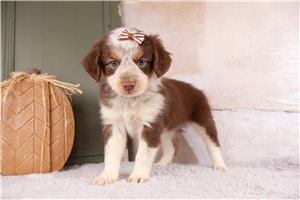
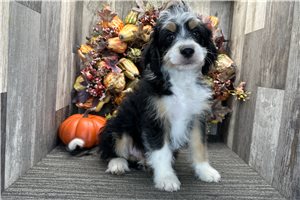
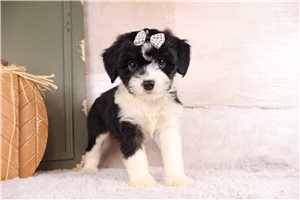
No official breed standard describes how an Aussiedoodle should look, so looks, size and coat vary, even within one litter. The Designer Kennel Club, a private registry for designer breeds, describes a dog slightly longer than tall, with a clean-cut head and a deep chest. Some Aussiedoodles have blue eyes, inherited from the Australian Shepherd parent.
Size
A Miniature Poodle parent gives a miniature Aussiedoodle of up to 30 lb. A Standard Poodle parent gives a standard Aussiedoodle of up to 70 lb. A Toy Poodle parent gives the smallest size, the toy. Adult size also depends on the parents themselves and varies from generation to generation, so check the parents' weights shown on each Pawrade listing.
Colors and markings
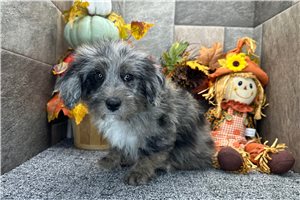
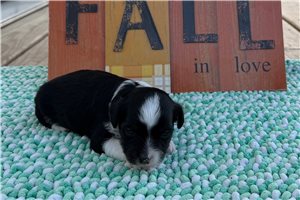
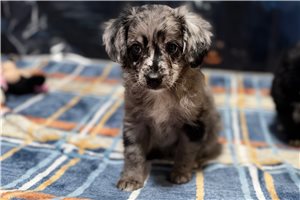
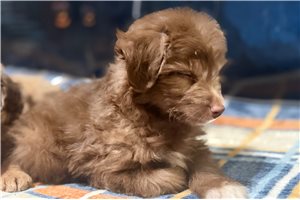
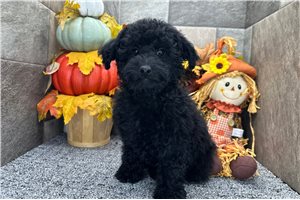
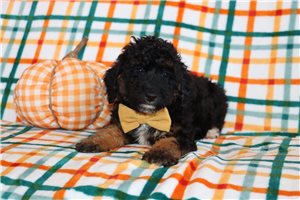
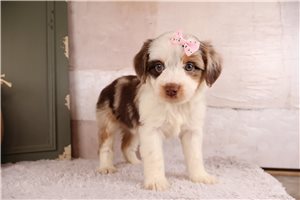
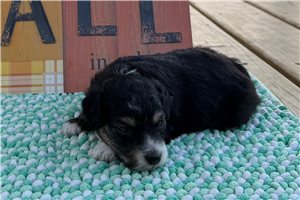
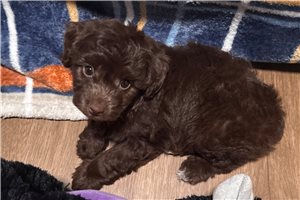
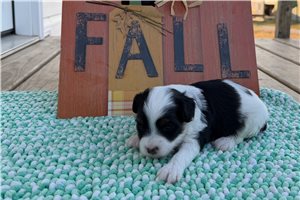
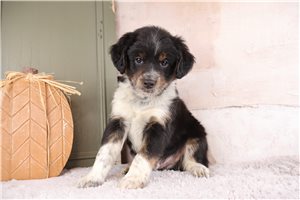
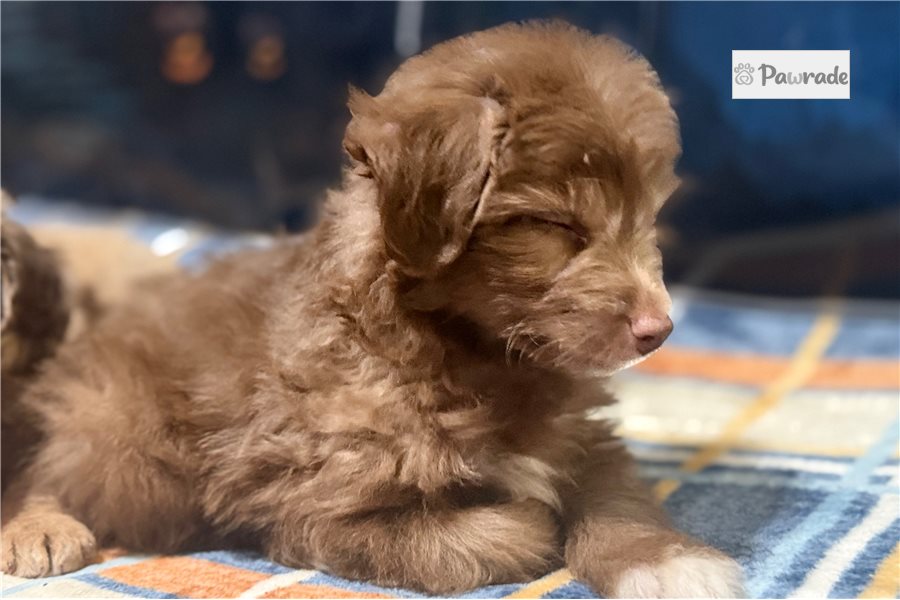
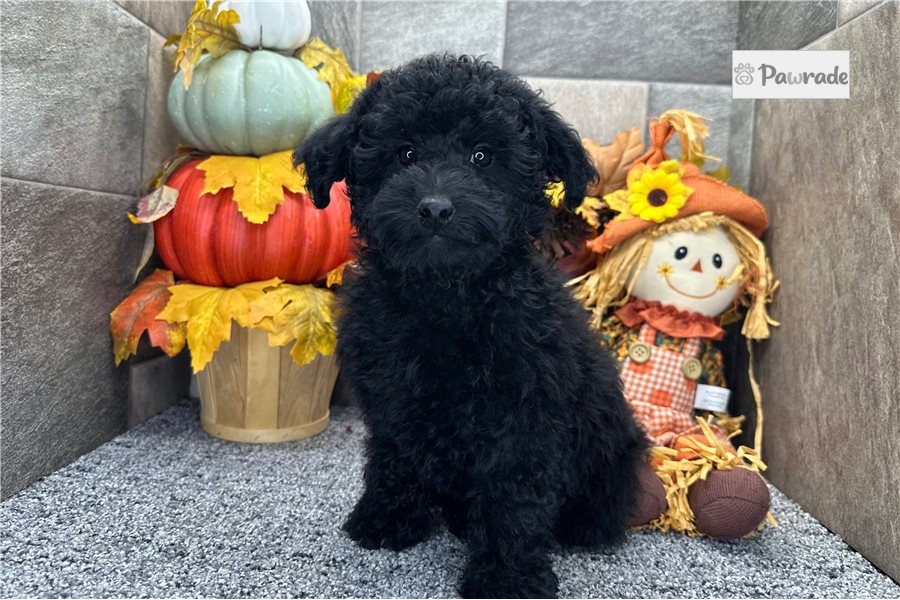
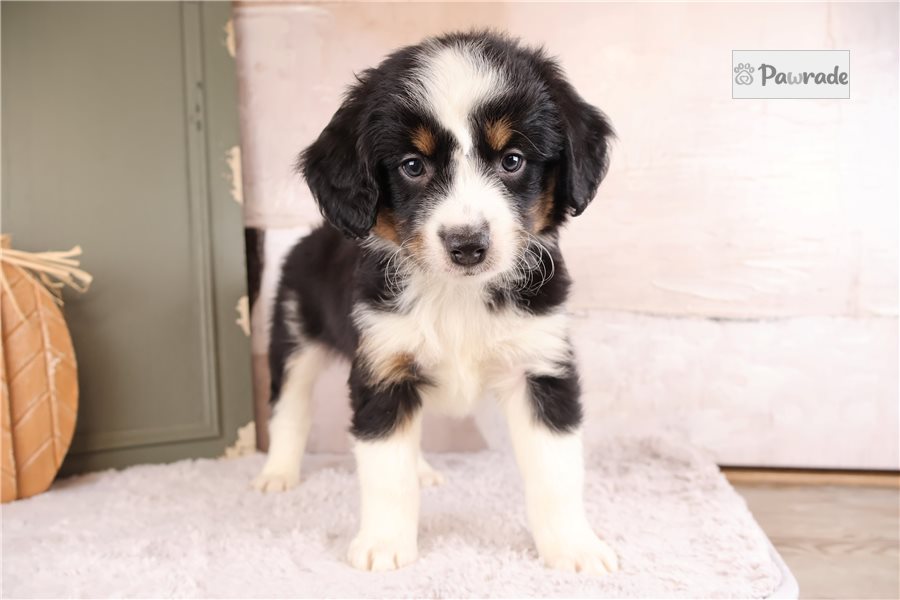
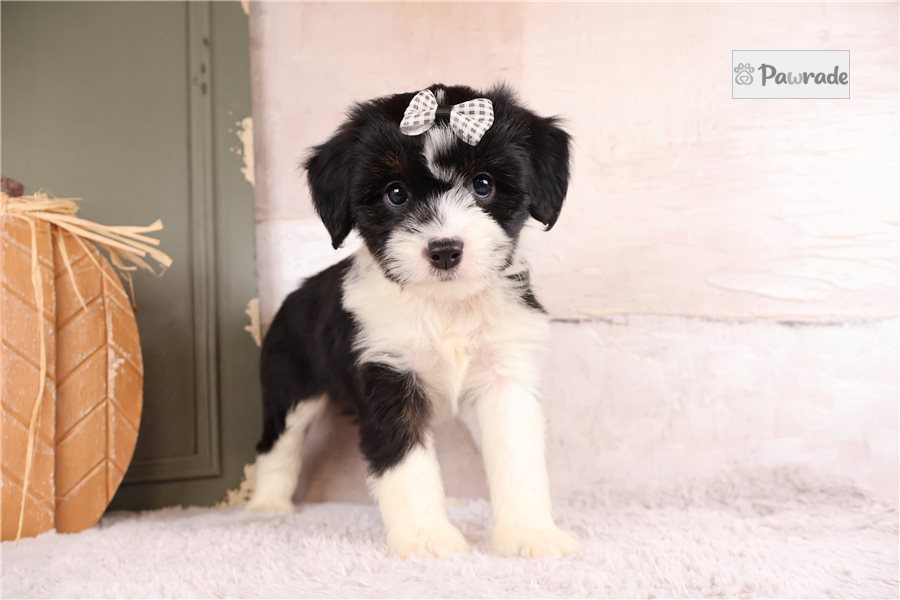
Common colors include blue merle, red merle, black, red, chocolate, cream, white and gray, and many dogs are bicolor, tricolor or parti, with or without tan points. With no breed standard, no Aussiedoodle color counts as standard or outside the standard. Merle is a patchy mix of dark and light areas in the coat. In an Aussiedoodle, merle comes only from a merle Australian Shepherd parent, because Poodles are solid-colored. Breeding two merles (double merle) raises the risk of deafness and eye defects.
Colors listed by Pawrade breeders
Black
Blue Merle
Brown
Chocolate Merle
Cream
Red
Sable
Silver
Tri-color
A little history, a lot of heart.
Aussiedoodle history
History
1990s
Aussiedoodle breeding began in the 1990s, and no single person is known to have started the cross.
Breeders hoped for a family dog with the Poodle's coat and brains and the Aussie's work ethic.
Despite its name, the Australian Shepherd was developed on western US ranches, perfected in California, and is closely tied to rodeo life.
The Poodle began as a water retriever in Germany and France.
The AKC and UKC do not recognize the Aussiedoodle, and no breed club exists for the cross.
The Designer Kennel Club, a private registry in Texas, registers Aussiedoodles.
The Australian Shepherd Club of America and the Poodle Club of America speak for the parent breeds only.
Checked with care before travel.
Aussiedoodle Veterinary Health Report
Your puppy's Veterinary Health Report
Every Aussiedoodle puppy gets a full hands-on exam from the breeder's licensed veterinarian before it goes home, done to PetPay's exam standards and recorded in its own Veterinary Health Report.
The exam, a health certificate and a stool test for parasites all happen 3 to 5 days before your puppy leaves.
1It is a close look at your puppy itself, not a breeder's paperwork on the parents.
2If the vet finds something that could put your puppy at risk during travel, your puppy stays with the breeder until it's resolved.
3Problems that can be treated before travel are treated by the breeder's licensed vet first.
4Anything else the vet notes is shared with you.
5A hard copy of the report travels with your puppy for your records, and a digital copy is in your PetPay account.
PetPay Veterinary Health Report form
16 areas checked on the exam
Closer look for AussiedoodlesOn every puppy's report
Puppies must be at least 8 weeks old and 2 lb before they travel. Every puppy also comes with a health guarantee administered by PetPay, independent of the seller. The terms are on the health guarantee page.
Frequently asked questions about Aussiedoodle puppies
Frequently asked questions
Most adult Aussiedoodles weigh 25–70 lb and stand 14–23 in tall, depending on their size. A miniature weighs up to 30 lb and a standard up to 70 lb, and toys are smaller. Each puppy's listing shows its parents' weights.
It comes down to the Poodle parent: a Toy Poodle gives a toy, a Miniature Poodle a mini, and a Standard Poodle a standard Aussiedoodle. A mini weighs up to 30 lb and a standard up to 70 lb.
Only roughly, because adult size depends mainly on the Poodle parent, and with no breed standard, size varies even within a litter. Each puppy's listing shows its parents' weights, which helps you judge.
Blue merle, red merle, black, red, chocolate, cream, white and gray are all seen, often in tricolor, bicolor or parti patterns. No breed standard sets an Aussiedoodle's colors, so none counts as standard or outside the standard.
Some Aussiedoodles have blue eyes, inherited from the Australian Shepherd parent. Australian Shepherds can have brown, blue or amber eyes, or a mix of them.
Merle is a patchy mix of dark and light areas in the coat, and in an Aussiedoodle it comes only from a merle Australian Shepherd parent. Breeding two merles is not safe, because their puppies can be double merles, which are often deaf, blind or both. Merle and mostly white puppies should have a hearing test called BAER and an eye exam.
Aussiedoodles are very smart and trainable, and well-socialized ones are usually friendly with everyone. Energy varies from dog to dog, and those that take after the Aussie parent are the most energetic.
Energy varies, but every Aussiedoodle needs daily exercise, because both parents are working breeds. Plan on at least an hour of activity a day, plus games that make your dog think.
Well-socialized Aussiedoodles are usually friendly with strangers, although the Australian Shepherd parent tends to be reserved. Early, broad socialization helps a puppy grow up confident with new people.
Therapy work is one of the jobs Aussiedoodles take on, alongside dog sports such as agility and obedience. Their intelligence and trainability help, and early socialization and reward-based training are the foundation.
Aussiedoodles are generally good with children when they are socialized. Some try to herd small children, so supervise play with young kids. Aussiedoodle breeders on Pawrade report socializing 82% of their litters with young children.
Aussiedoodles usually get along with other dogs when they are socialized early. Aussiedoodle breeders on Pawrade report socializing 83% of their litters with small-breed dogs before the puppies go home.
When socialized, Aussiedoodles generally get along with other pets, but the urge to chase is strong, so introduce a cat slowly and supervise. Some breeders on Pawrade socialize their litters with cats before the puppies go home.
Plan on at least an hour of activity a day, plus mental work such as training games and puzzle toys. A bored Aussiedoodle may turn to chewing or digging.
Long days alone may be hard on an Aussiedoodle, because Australian Shepherds, one of its parent breeds, often grow very attached to their people, and in some that attachment turns into separation anxiety. Crate training from the first day and plenty of exercise and mental work make short absences easier.
A securely fenced yard is ideal, and a tall fence helps, because many Aussiedoodles have a strong urge to chase. Without one, walk your dog on a leash. Most Aussiedoodle buyers on Pawrade live in a single-family home.
Feed a complete puppy food in 3–4 measured meals a day until about the first birthday, then two adult meals a day. Ask your vet whether a standard-size puppy needs a large-breed puppy food.
Agility, obedience, flyball, dock jumping, lure chasing and scent work all suit the cross, along with fetch, swimming, puzzle toys and trick training. Through AKC Canine Partners, a program for mixed breeds, an Aussiedoodle can enter AKC Scent Work from 6 months.
Wait until your Aussiedoodle has finished growing before you start jogging or long runs, and ask your vet when that is. A puppy's growth plates stay soft while it grows, and too much hard exercise can injure them.
Aussiedoodles shed a low to moderate amount, depending on the coat. Curlier, Poodle-type coats shed less, Aussie-type coats shed more, and no puppy is sure to be a light shedder.
An Aussiedoodle's coat and shedding are not guaranteed, and no dog is truly hypoallergenic. A curly coat may suit some people with allergies, so spend time with the dog before you decide.
It can be curly like the Poodle's, wavy, or straighter like the Aussie's, depending on which parent the dog takes after. Curlier coats need more frequent trims.
Brush several times a week with a slicker brush, and book regular trims for a curlier coat. Smoother coats may need only a seasonal haircut, and nails, teeth and ears need regular care too.
After swimming and baths, dry and clean the ears with a dog ear cleaner, especially if hair grows in the ear canals. Trapped moisture can lead to ear infections.
Aussiedoodles are highly intelligent and trainable, so most learn quickly. Reward-based methods such as clicker training work best, harsh methods backfire, and varied sessions hold their interest.
Start on the first day, with a crate in a room where the family spends time and a set potty plan. Take your puppy out first thing in the morning, last thing at night and after naps. Australian Shepherd guidance is that most puppies are well on the way to house-trained by about 6 months. Breeders on Pawrade report whether they have started crate training, so ask how far your puppy has got.
A puppy can usually hold its bladder for about as many hours as it is months old, so a 3-month-old can wait about 3 hours. Very young puppies need to go out first thing in the morning, last thing at night and after naps.
Your Aussiedoodle has probably reached adolescence, which may begin around 8 months and last until about 2 years. Testing the rules is a normal stage. Keep training short, varied and consistent, and give plenty of exercise for body and mind.
Puppies chew most while teething, and a bored Aussiedoodle may chew or dig at any age. Offer safe chew toys, rotate a few at a time, and give puzzle toys and training games for the mind.
Puppies travel only once they are at least 8 weeks old and weigh at least 2 lb. Most Aussiedoodle puppies go home at about 12 weeks, usually between 9 and 17 weeks.
Most puppies have all their adult teeth by about 6 months, and teething winds down then. The baby teeth start falling out at around 12 weeks, so expect extra chewing from then on. Offer safe chew toys, rotate a few at a time, and keep shoes and cords out of reach.
Start right away, because the main socialization window is roughly the first 3 months. Puppy classes can start at 7–8 weeks, after a first set of vaccines, as long as your puppy stays away from sick dogs.
Most puppies finish their core vaccine series at about 16 weeks, as your vet advises. Your puppy's own vet sets the exact schedule. Puppy classes can start before the series ends, from 7–8 weeks, as long as your puppy avoids sick dogs.
Get a crate, a potty plan, a slicker brush and comb, a dog ear cleaner, puzzle toys and chews, and check that your fence is secure. Book the first vet visit, and bring your puppy's MDR1 result or plan the test.
Most Aussiedoodle litters on Pawrade meet children, other dogs and everyday household sounds before the puppies go home. Breeders report socializing 82% of litters with young children and 83% with small-breed dogs. They also report getting litters used to music or TV (70%), the vacuum cleaner (68%) and car rides (65%). These figures come from what breeders reported for 186 litters. Keep it going once your puppy is home, because the first 3 months are the main socialization window.
The Veterinary Health Report is the record of your Aussiedoodle puppy's exam before it goes home. The breeder's licensed vet gives the puppy itself a full hands-on exam, to PetPay's exam standards, and records the results there. It gives you and your own vet a clear starting point for your puppy's care.
The breeder's licensed veterinarian examines every puppy before it goes home, to PetPay's exam standards. The results are recorded in the puppy's Veterinary Health Report, and a copy travels with your puppy for your records.
The breeder's vet examines the whole puppy and pays close attention to a few things that matter in Aussiedoodles. The vet checks the eyes, the response to sound and the bite, and in male puppies feels for both testicles. In toy and miniature puppies, the vet also checks that the kneecaps stay in place.
Before travel, every puppy follows PetPay's vaccination and deworming schedule as far as its age allows: deworming at 2, 4, 6, 8, 10 and 12 weeks, and the distemper, parvo, adenovirus and parainfluenza combination shot at 6–8, 9–11 and 12–14 weeks. Bordetella and corona are given at the vet's discretion, and no vaccine is given within 3 days of travel. Rabies is given by a licensed vet on the schedule your state requires. Your own vet completes the series. Your puppy's vaccination and deworming records are separate documents that travel with your puppy. Bring them, with the Veterinary Health Report, to your first visit so your vet starts from the same record.
If the vet finds something that could put your puppy at risk during travel, your puppy stays with the breeder until it's resolved. Problems that can be treated before travel are treated by the breeder's licensed vet first. Anything else the vet notes is shared with you.
Puppies grow and change quickly, and their immune systems are still developing, so no single exam can find everything. Hips and elbows, for example, are checked later with X-rays as your Aussiedoodle grows. The report is a strong early look at your puppy, and your own vet builds on it at every checkup.
The AKC and UKC do not recognize the Aussiedoodle as a breed, so there are no AKC papers. The Designer Kennel Club, a private designer-breed registry, registers Aussiedoodles, and AKC Canine Partners lets mixed breeds enter AKC events such as Scent Work.
Right now, most Aussiedoodle puppies on Pawrade are listed within the typical range shown on Pawrade's Aussiedoodle listings. Each breeder on Pawrade sets their own price, and each puppy's listing shows it. An Aussiedoodle puppy's price reflects what goes into it: its pedigree and registration, its coat and color, and the breeder's program. Every Pawrade puppy's price also includes the pre-travel exam by the breeder's licensed vet, the Veterinary Health Report and a health guarantee administered by PetPay.





 Aussiedoodle note