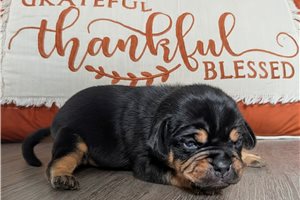
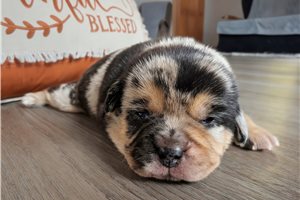
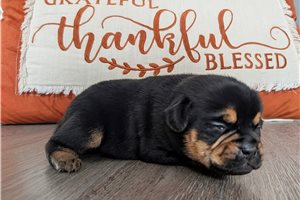
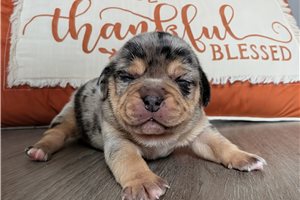
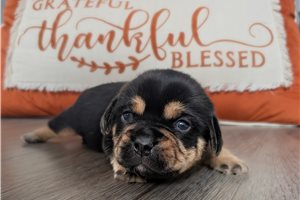
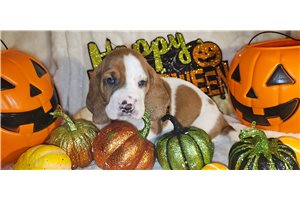
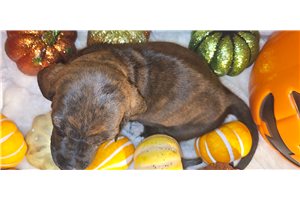
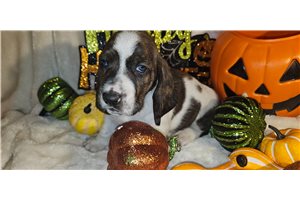
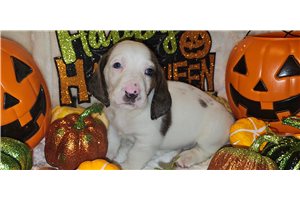
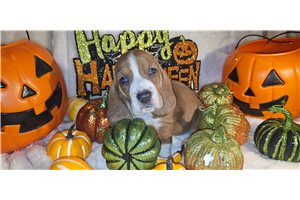
A Beagle meets the world nose first and tail up, glad to see everyone from the toddler next door to the dog down the street. People fall for that merry face, the big hound voice and a nose that turns every walk into a treasure hunt.
A Beagle meets the world nose first and tail up, glad to see everyone from the toddler next door to the dog down the street. People fall for that merry face,...A Beagle meets the world nose first and tail up, glad to see everyone from the toddler next door to the dog down the street. People fall for that merry face, the big hound voice and a nose that turns every walk into a treasure hunt.
Only with Pawrade, you receive a pet insurance policy with no waiting period included for immediate accident or illness coverage. *NH, NY, RI, SC and TN residents excluded
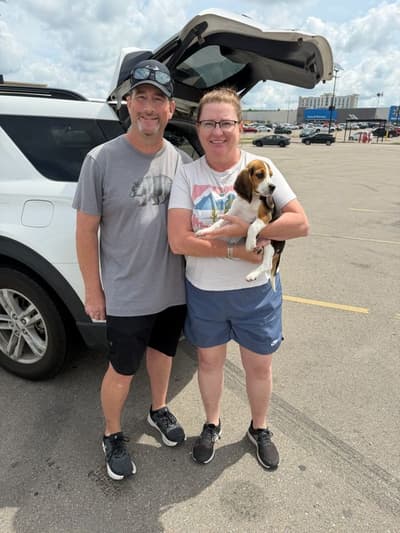
“Very informative and kept me informed all the way through the process thank you”
Roscoe · Beagle
Jan 25, 2022
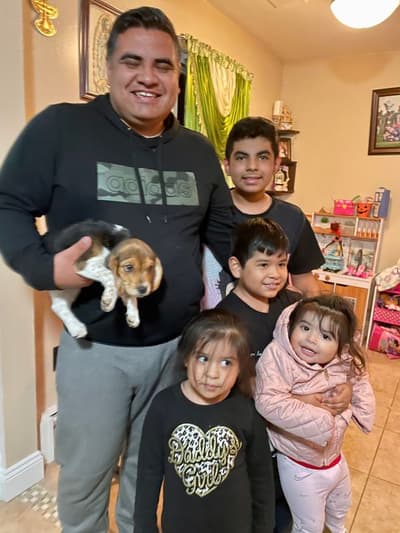
“Our puppy is here he is healthy and happy we love him, the moment we see him come in by the door all the family was very happy and kids are very excited to have I'm in our family. ”
Tammy · Beagle
May 22, 2026
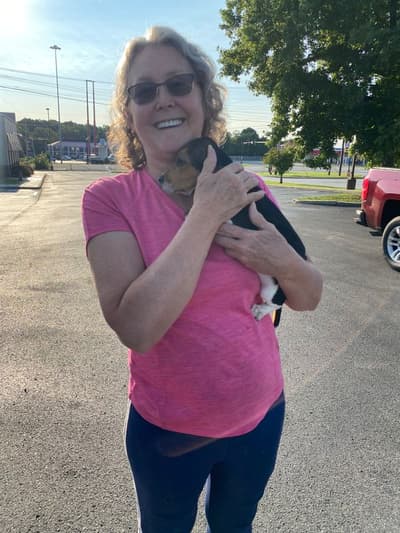
“Everyone was very friendly and kept me informed until my new baby was delivered. Thank you”
Grace · Beagle
May 29, 2026
“The staff was very professional, answered all questions promptly and informative. The pick up with the breeder was excellent!”
Puppy scams cost U.S. families millions every year. Here's how you know Pawrade isn't one: we're a named, audited business with a public track record you can check anywhere.
Pawrade data: parents of puppies placed through Pawrade (breeder-reported)
Height
13–15 in
Lifespan
10–15 years
Energy
Moderate to high
Shedding
Moderate
Group
Hound
AKC
Beagle Characteristics
Full-Grown Size
2 of 7SmallLarge
Grooming Needs
2 of 7SeldomRegularly
Good with Dogs
5 of 7Not ReallyYes!
Watchdog Ability
4 of 7LowHigh
Exercise Needs
3 of 7Couch PotatoHigh Needs
Your new best friend.
Beagle temperament
Personality and daily life
At home
Beagles were bred to hunt hare in packs, with the hunters following on foot. That job shaped the dog you bring home: one that loves company, follows its nose and has plenty to say. Expect a merry, even-tempered hound without a mean streak.
Kids and other pets
Most Beagles greet strangers like old friends, which makes them cheerful company and poor watchdogs. They are playful and gentle with children. If you have very young children, consider an adult Beagle rather than a puppy. Bred to work in a pack, most Beagles are happy to share the house with another dog.
Training and play
The nose runs the show. A Beagle on a good scent can be blocks away before it remembers you called, and no amount of training fully changes that. Plan on an hour or more of exercise every day, on a leash or in a securely fenced area, with sniffing games to give the nose a job. With that, a Beagle can live happily in an apartment or a small house.
Training and play
Beagles bark, bay and howl, and the hound voice carries. Long hours alone and too little exercise bring out more noise and more chewing. Company, daily exercise and scent games keep the noise down, although no training removes the voice entirely.
Measure meals, count treats and have your Beagle weighed at every vet visit.
Every milestone, together.
Beagle puppy milestones
Growing up: your Beagle's first years
Before 8 weeks
Before your puppy comes home
Your puppy is still with its mother and littermates, getting used to gentle handling and to new people, sounds and places. Most Beagle breeders on Pawrade also get litters used to children, other dogs and household noise.
Walk your fence line like a Beagle would, nose down and looking for gaps.
Fix every gap, block the base with buried wire or concrete, and skip invisible fences.
Inside, move anything chewable or edible out of reach, from shoes to the kitchen trash.
Set up the crate in a room where the family spends time, or in your bedroom at night.
Plan the first weeks so your puppy is rarely alone.
Why it matters
A Beagle puppy explores with its nose and mouth, so a safe home keeps it out of trouble.
Beagle note
Beagles were bred to live in a pack, and one left alone for long stretches tends to let you know, loudly.
8–10 weeks
Week 1 at home
Everything is new, and your puppy is learning where it sleeps, eats and goes potty. A puppy can hold its bladder about 1 hour for each month of age, so trips outside come often. Young puppies still need a potty break during the night.
Keep the same meal times, the same potty spot and the same crate every day.
Take your puppy out first thing in the morning, right after every nap, meal and play session, and one last time before bed.
At night, keep the crate close enough to hear a whimper.
Book the first vet visit this week, and bring the puppy's records and DNA results.
Why it matters
Frequent trips outside give your puppy plenty of chances to get it right, and each success builds the habit.
Beagle note
Beagle puppies love food, so praise and a small treat the moment it goes work from day one.
10–12 weeks
Weeks 2 to 4 at home
These are some of the most valuable weeks you'll spend with your Beagle. Puppies are most open to new experiences in their first 3 months, and good experiences now help shape a calm, confident adult.
Aim for a few calm new experiences every day, such as car rides, new places, everyday sounds and friendly people, each paired with a treat.
Join a puppy class about a week after the first vaccines, where the floors are cleaned and every classmate is vaccinated.
Until the vaccine series is complete, as your vet advises, skip dog parks, pet-store floors and other places unknown dogs visit.
Why it matters
A good puppy class does double duty: your puppy meets people and dogs safely, and you learn the basics of training a hound.
Beagle note
Most Beagles greet strangers and other dogs like old friends, so this part is usually a joy.
3–4 months
3 to 4 months
Your puppy is getting busier by the day. By the 1-hour-per-month rule, a 3-month-old can usually wait about 3 hours between trips outside. Most puppies finish their vaccine series at about 16 weeks, as your vet advises.
Start teaching 'leave it' and coming when called now, with really tasty treats, while you are still the most exciting thing in the yard.
Once your vet says the vaccines are complete, widen your puppy's world with new places, surfaces and sounds.
Why it matters
A solid 'leave it' keeps food and trash out of your puppy's mouth, and early recall practice builds a habit you will lean on for years.
Beagle note
Even with great recall, a Beagle on a scent may not come back, so keep the leash on anywhere that isn't fenced.
4–6 months
4 to 6 months
Teething is in full swing. Baby teeth start falling out from about 12 weeks, and by about 6 months the adult teeth are in. Everything goes in the mouth, and a Beagle's mouth comes with a very good nose, so trash cans, shoes and bags are all at risk.
Keep only a few safe chew toys out at a time and rotate them, and supervise chewing so you can step in early.
When your puppy grabs something off-limits, swap it for an allowed chew instead of just saying no.
Measure meals and count treats, because keeping a Beagle lean is one of the best things you can do for its health.
Why it matters
Chewing is how puppies ease sore gums, so a safe outlet protects your things and your puppy.
Beagle note
Beagles are food lovers for life, which makes treats your best training tool and the trash can a lifelong target.
6–12 months
6 to 12 months
Meet your teenager. The Beagle that came when called last month may now look right at you and keep sniffing. Around 8 months many young dogs respond less to their own family, and most are back on track by 12 months.
Keep training short, fun and generous with rewards, because patience works far better than harsh corrections.
Keep the leash on outside a fence, even if your Beagle seemed reliable a few weeks ago.
Let your Beagle run and play freely, but skip big jumps, hurdles and rough play while its bones are still growing.
Talk with your vet about spaying or neutering, and decide together what makes sense for your dog.
Why it matters
The dip in listening is a normal, passing phase, and calm, consistent training carries your dog through it.
Beagle note
A Beagle's growth plates don't close until nearly a year old, so keep jumping low until then.
1–2 years
1 to 2 years
Your Beagle is settling into the dog it will be: merry, friendly and led by its nose. Growing is done, and the routine you build now is the one your dog will live by.
Plan on an hour or more of exercise a day, with scent games or a nose sport such as AKC Scent Work to give that nose a real job.
Brush the coat weekly and check the ears at the same time, because long drop ears are more likely to get infected.
Brush the teeth every day, and have your Beagle weighed at every vet visit.
Why it matters
Weight and teeth are where Beagles need the most care, and these small daily habits protect both for years.
Beagle note
Even a well-trained adult Beagle follows its nose, so the leash and the fence stay part of life.
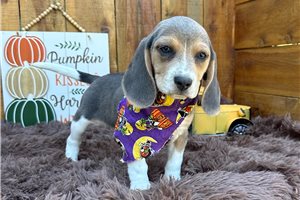
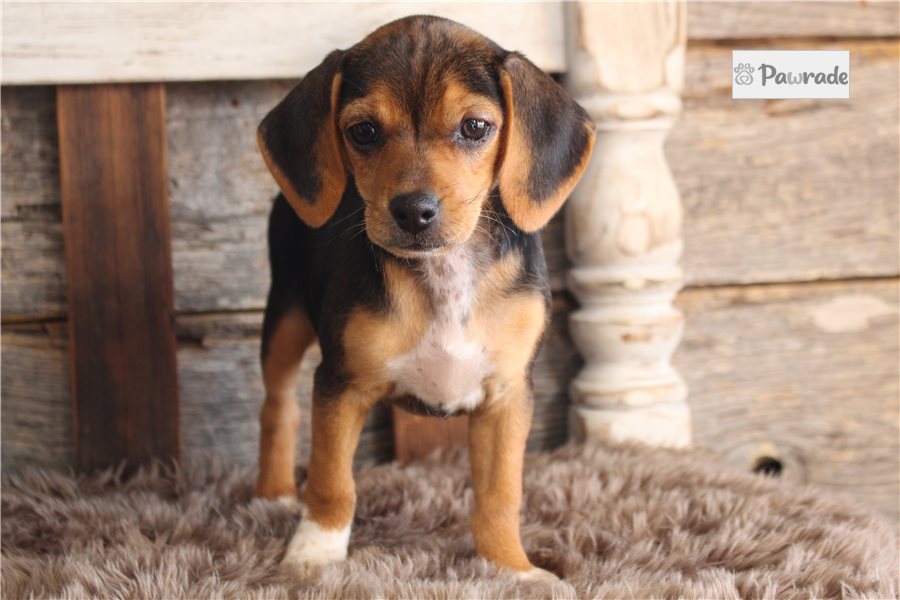
The Beagle looks like a miniature Foxhound: solid, "big for his inches" and built to last in the chase. It has a fairly long, slightly domed skull, long low-set ears that reach nearly to the nose, and large brown or hazel eyes with a gentle, pleading look. The AKC shows Beagles in two height varieties, the 13-inch and the 15-inch.
Colors and coat
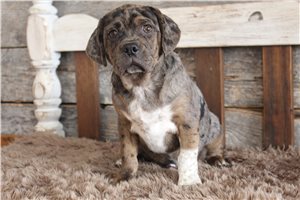
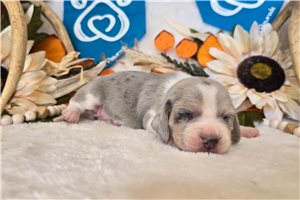
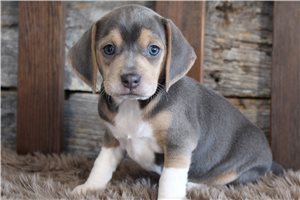
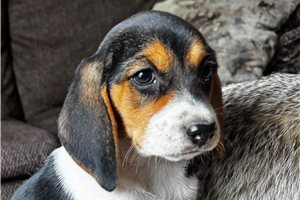
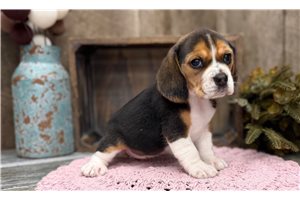
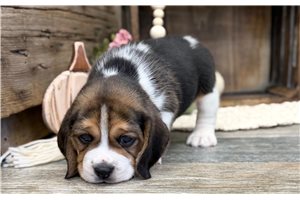
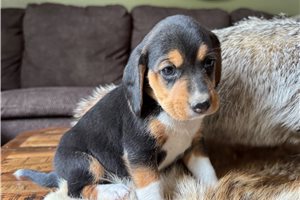
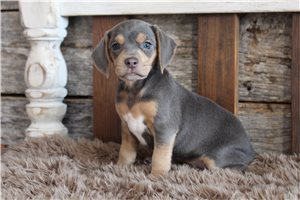
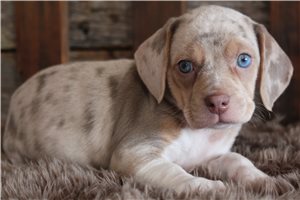
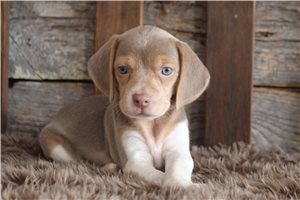
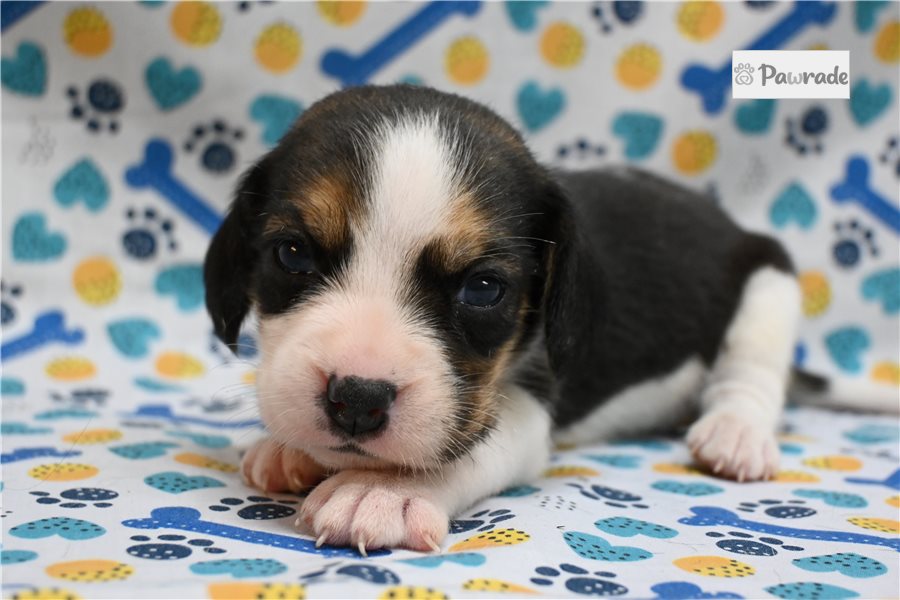
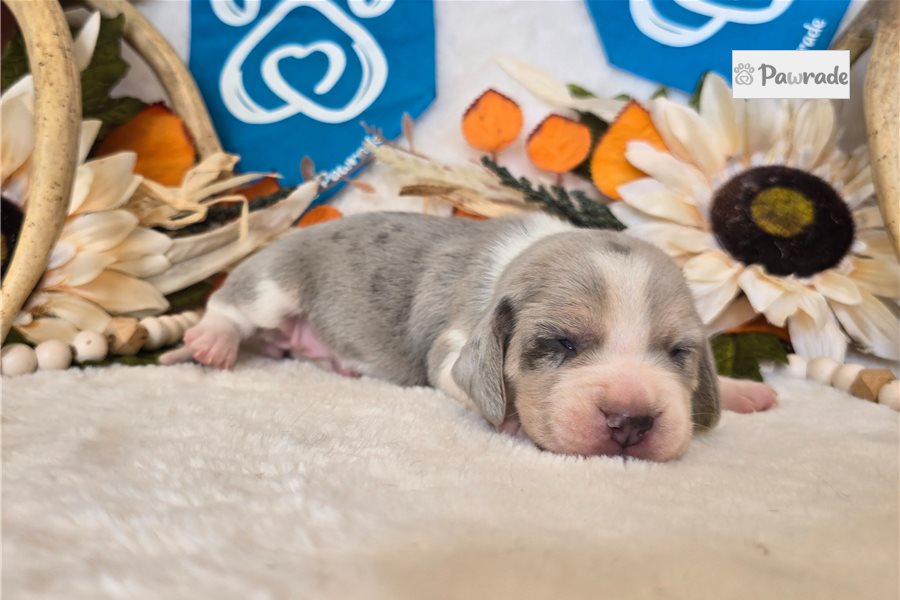
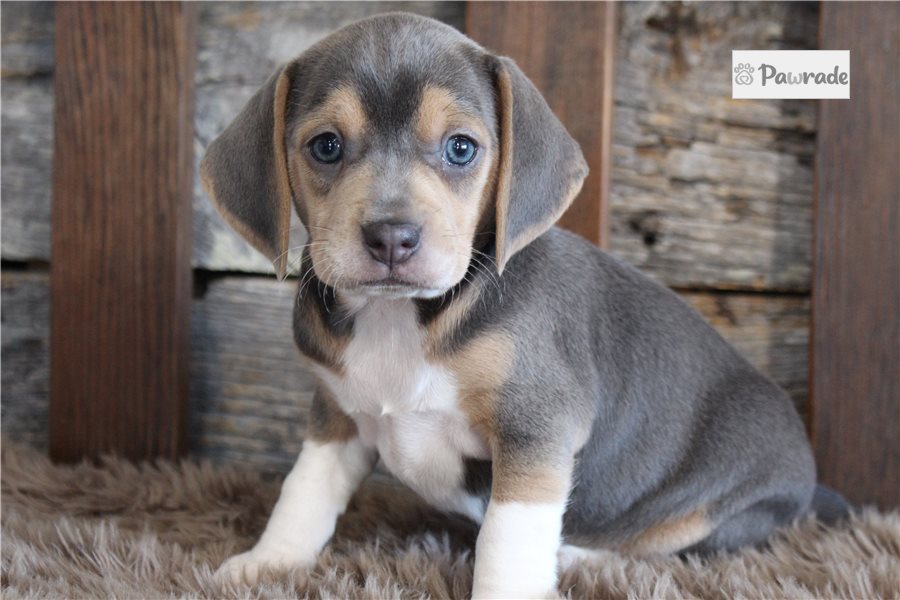
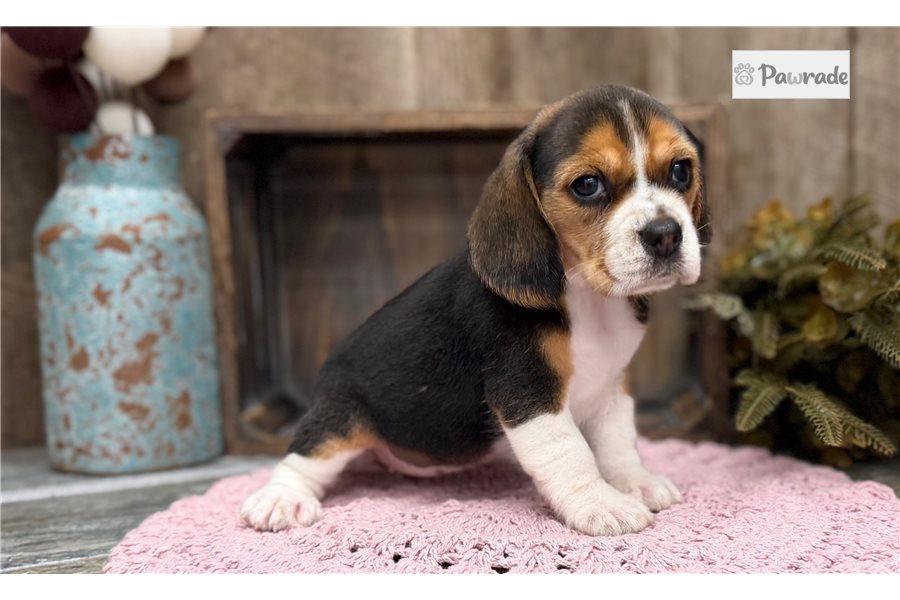
The AKC standard accepts any true hound color. Examples are black, tan and white tricolor, blue or chocolate tricolor, tan and white, lemon and white, and red and white, and ticked (flecked) coats are equally acceptable. Merle and brindle are outside the AKC breed standard, and the UKC standard does not accept solid colors. The standard calls for brown or hazel eyes, so yellow or blue eyes are outside the AKC breed standard too.
Colors listed by Pawrade breeders
Black
Black & Tan
Black Tricolor
Blue
Blue & Tan
Blue & White
Brown
Brown & White
Lemon
Lemon & White
Red
Red & White
Tan
Tan & White
Tricolor
White
Yellow
Keeping your Beagle healthy
Beagles are known to be prone to a short list of conditions, and everyday care covers much of it. Keep your Beagle lean and use ramps instead of jumps to protect the back from disc problems (intervertebral disc disease). Seizures with no known cause (idiopathic epilepsy) usually start in young adults, so call your vet about any seizure; epilepsy is managed with lifelong medication.
A little history, a lot of heart.
Beagle history
History and fun facts
15th century
The Beagle's origins are obscure: small hare-hunting hounds followed on foot were known in England before the Romans arrived, and they were well established by the 15th century.
The name may come from a Celtic word for small or from an Old French word for the baying voice.
Tudor times
In Tudor times, Elizabeth I kept a pack of tiny "glove" Beagles.
1870
General Richard Rowett of Illinois imported English hounds around 1870, and later imports shaped the American Beagle's look.
1885
The AKC recognized the breed in 1885, and the National Beagle Club of America, still the breed's AKC parent club, was founded in 1887.
1984
In 1984 the US Department of Agriculture (USDA) started its "Beagle Brigade" of detector dogs with a single Beagle at Los Angeles International Airport.
It chose the breed for its nose, friendly size and love of food.
2008
In 2008 Uno became the first Beagle to win Best in Show at Westminster, and his great-niece Miss P won in 2015.
1964
President Lyndon B. Johnson's Beagles, Him and Her, drew national attention in 1964.
Checked with care before travel.
Beagle Veterinary Health Report
Your puppy's Veterinary Health Report
Before your Beagle puppy comes home, the breeder's licensed vet gives it a full hands-on exam to PetPay's exam standards, and the results go into its Veterinary Health Report.
The exam, a health certificate and a stool test for parasites all happen 3 to 5 days before your puppy leaves.
1It is a check of your own puppy, not paperwork about its family, so you start with a clear record of how your puppy is doing.
2If the vet finds something that could put your puppy at risk during travel, your puppy stays with the breeder until it's resolved.
3Problems that can be treated before travel are treated by the breeder's licensed vet first.
4Anything else the vet notes is shared with you.
5A hard copy of the report travels with your puppy for your records, and a digital copy is in your PetPay account.
Puppies travel only once they are at least 8 weeks old and weigh at least 2 lb. Every puppy also comes with a health guarantee administered by PetPay, independent of the seller. The terms are on the health guarantee page.
A Beagle puppy's price reflects what goes into it: its pedigree and registration, its coat and color, and the breeder's program. Every Pawrade puppy's price also includes the pre-travel exam by the breeder's licensed vet, the Veterinary Health Report and a health guarantee administered by PetPay. See today's price range for Beagle puppies on Pawrade's Beagle listings.
Typical asking price
$2,390
Based on 406 Beagle listings in the last 12 months
Adult Beagles weigh 18–30 lb and stand up to 15 in at the shoulder. By variety, 15-inch Beagles weigh 20–30 lb and 13-inch Beagles weigh up to 20 lb. It is a small-to-medium hound, sturdy and compact for its size.
The difference is height: the 13-inch variety covers Beagles up to 13 inches at the shoulder, and the 15-inch variety those over 13 and up to 15 inches. Hounds taller than 15 inches are outside the AKC breed standard.
Pocket and miniature Beagles are not a recognized variety, since the AKC recognizes only the 13-inch and 15-inch varieties and the UK standard has no miniature. "Pocket" or "glove" Beagles about 9 in tall were a Tudor-era type that is no longer a recognized variety.
Parents of Pawrade Beagles typically weigh 17–30 lb (fathers) and 15–25 lb (mothers).
Any true hound color is acceptable under the AKC standard, including black, tan and white tricolor, blue or chocolate tricolor, tan and white, lemon and white, and red and white. Merle and brindle are outside the AKC breed standard.
Beagles have large brown or hazel eyes, and yellow or blue eyes are outside the AKC breed standard.
Both make good pets, and Pawrade places males and females in close to equal numbers. Among the parents of Pawrade Beagles, fathers typically weigh about 22 lb and mothers about 20 lb.
A Beagle is a cheerful, busy hound with great stamina and an even temper. Energy is moderate to high, and young Beagles are especially lively, so plan daily exercise and something to do.
Beagles are vocal hounds that bark, bay and howl readily. Company, daily exercise and scent games help, but the voice cannot be trained out entirely.
Beagles make poor watchdogs, because they are friendly and gregarious toward strangers.
Many Beagles can, and they work as therapy dogs in hospitals and retirement homes. Their gentle manner with crowds is one reason the USDA uses them at airports, and the AKC Canine Good Citizen program is a good first step.
The instinct is still there: the breed was developed to hunt hare and rabbit in packs, and its scent drive remains strong. AKC field trials and UKC Hunting Beagle events test that ability today.
Beagles are playful and gentle with children. With toddlers in the house, an adult Beagle is an easier choice than a puppy. Beagle breeders on Pawrade report socializing 87% of their litters with young children before the puppies go home.
Most Beagles enjoy other dogs, because they were bred to live and work in packs. About a third of Beagle buyers on Pawrade already have another dog at home.
A full workday alone is too long for most Beagles, since they are pack hounds and eight to nine hours alone may make the breed a poor fit. Left alone too long, they tend to bark and chew, so plan for company during the day.
Yes, if it gets daily exercise and is not left alone for long. The loud hound voice is worth thinking about if neighbors are close.
About an hour or more a day, on a leash or in a securely fenced area. A bored, under-exercised young Beagle goes looking for trouble.
Short walks and free play are best while a Beagle puppy grows. Its growth plates stay soft until close to a year old, so skip long runs, big jumps, hurdles and rough play until then. Once grown, most Beagles need an hour or more of exercise a day, on a leash or in a securely fenced area.
They can, because a Beagle's nose overrides its recall, so keep it on a leash or behind a secure fence for life. A tall, solid fence with wire or concrete along the base keeps a digger in; invisible fencing alone does not.
Beagles handle cold reasonably well, since the dense double coat grows heavier in winter, and their tolerance of cold and heat is rated average. Moderate climates suit Beagles best.
Beagles shed moderately all year, with a heavier seasonal shed, and no dog is truly hypoallergenic.
A Beagle needs little grooming: a weekly brush with a hound glove or rubber mitt, an occasional bath and regular nail trims. Check the ears weekly, because the long drop ears are prone to infection.
Beagles train well with patience, because they are clever but easily distracted by scent, and they learn best with food rewards and positive reinforcement. Harsh corrections and inconsistent rules make a hound more stubborn.
It takes a steady routine: start a crate and house-training schedule on the first day. Breeders on Pawrade report whether they have started crate training, so ask how far your puppy has got.
A common rule of thumb is about 1 hour per month of age, so a 3-month-old Beagle can usually wait about 3 hours and a 6-month-old about 6 hours. The rule works up to about 9 months to 1 year, and every puppy is different. Take your puppy out first thing in the morning, right after naps, meals and play, and one last time before bed. Young puppies still need a potty break during the night, so keep the crate close enough to hear them.
Your Beagle is most likely in adolescence, a normal phase when many young dogs respond less to their own family around 8 months. A good sniff can suddenly seem more rewarding than coming when called. It passes, and most dogs are back on track by 12 months. Keep training short, positive and generous with rewards, and keep the leash on, because a Beagle's nose still wins over a recall.
Beagles love anything that uses the nose, so scent work and tracking suit them, and they also compete in obedience, agility and field trials.
Puppies travel only once they are at least 8 weeks old and weigh at least 2 lb. Most Beagle puppies go home at about 11 weeks, usually between 9 and 17 weeks.
Beagle breeders on Pawrade report a typical litter of 5 puppies, usually between 3 and 8.
Most Beagle litters on Pawrade meet other dogs, children and everyday household sounds before the puppies go home. Breeders report socializing 91% of litters with small dogs and 87% with young children. They also report getting litters used to music or TV (96%), car rides (85%), the vacuum cleaner (85%) and pots and pans (74%). These figures come from what breeders reported for 380 litters.
Start with the fence: walk the whole line, fix any gaps and block the base with buried wire or concrete, because an invisible fence alone won't hold a Beagle. Inside, move shoes and anything chewable out of reach, and store trash and food where a Beagle's nose can't get to them. Have a crate, a leash and a few allowed chew toys ready, and plan the first weeks so the puppy is not alone for long. Put the crate in a room where the family spends time, or in your bedroom at night.
Start right away, because the main socialization window is the first 3 months of life. Puppy classes can begin at 7–8 weeks, about a week after the first vaccines, and the AKC S.T.A.R. Puppy program is a good fit.
Most Beagle puppies finish teething by about 6 months, when the adult teeth are in. Baby teeth start to fall out from about 12 weeks, and chewing is strongest in between. Offer a few safe chew toys at a time and rotate them, supervise chewing and swap anything off-limits for an allowed chew.
Most puppies finish their core vaccine series at about 16 weeks, as your vet advises. Until your vet says the series is complete, skip dog parks, pet-store floors and other places used by dogs of unknown vaccination status. A puppy class with clean floors and vaccinated classmates is fine from about a week after the first vaccines.
A high-quality diet suited to the dog's age, fed in measured portions with treats counted. Beagles are strongly food-motivated, so keep food and trash out of reach. You can ask what your puppy is eating now before it comes home. The breeder's vet weighs your puppy and scores its body condition before it travels, and both go into its Veterinary Health Report.
The Veterinary Health Report is the record of your Beagle puppy's exam before it goes home. The breeder's licensed vet gives the puppy itself a full hands-on exam to PetPay's standards and writes down what they find. It gives you and your own vet a clear starting point for your puppy's care.
The breeder's licensed veterinarian examines every puppy before it goes home, to PetPay's exam standards. The results are recorded in the puppy's Veterinary Health Report, and a copy travels with your puppy for your records.
The breeder's vet examines the whole puppy and pays close attention to a few things that matter in Beagles. The vet listens to the heart for a murmur, checks the eyelids and eyelashes, and looks over the skin and coat. The vet also weighs the puppy and scores its body condition.
Before travel, every puppy follows PetPay's vaccination and deworming schedule as far as its age allows: deworming at 2, 4, 6, 8, 10 and 12 weeks, and the distemper, parvo, adenovirus and parainfluenza combination shot at 6–8, 9–11 and 12–14 weeks. Bordetella and corona are given at the vet's discretion, and no vaccine is given within 3 days of travel. Rabies is given by a licensed vet on the schedule your state requires. Your own vet completes the series. Your puppy's vaccination and deworming records are separate documents that travel with your puppy. Bring them, with the Veterinary Health Report, to your first visit so your vet starts from the same record.
If the vet finds something that could put your puppy at risk during travel, your puppy stays with the breeder until it's resolved. Problems that can be treated before travel are treated by the breeder's licensed vet first. Anything else the vet notes is shared with you.
Puppies grow and change quickly, and their immune systems are still developing, so no single exam can find everything. Some Beagle conditions, such as disc disease, epilepsy and an underactive thyroid, only show up later in life. The report is a strong early look at your puppy, and your own vet builds on it at every checkup.
Every puppy comes with a health guarantee administered by PetPay, independent of the seller. The terms are on the health guarantee page.
Beagle buyers rate their Pawrade experience 4.7 out of 5 on average, from 479 reviews, and about 85% of those reviews give 5 stars.
Right now, most Beagle puppies on Pawrade are listed within the typical range shown on Pawrade's Beagle listings. Each breeder on Pawrade sets their own price, and each puppy's listing shows it. A Beagle puppy's price reflects what goes into it: its pedigree and registration, its coat and color, and the breeder's program. Every Pawrade puppy's price also includes the pre-travel exam by the breeder's licensed vet, the Veterinary Health Report and a health guarantee administered by PetPay.




 Beagle note