People fall for the Great Dane's size first, then for the gentle, easygoing dog inside it. Nicknamed the Apollo of dogs, a Dane at home mostly wants to lounge as close to its family as it can get.
People fall for the Great Dane's size first, then for the gentle, easygoing dog inside it. Nicknamed the Apollo of dogs, a Dane at home mostly wants to lounge...People fall for the Great Dane's size first, then for the gentle, easygoing dog inside it. Nicknamed the Apollo of dogs, a Dane at home mostly wants to lounge as close to its family as it can get.
Only with Pawrade, you receive a pet insurance policy with no waiting period included for immediate accident or illness coverage. *NH, NY, RI, SC and TN residents excluded
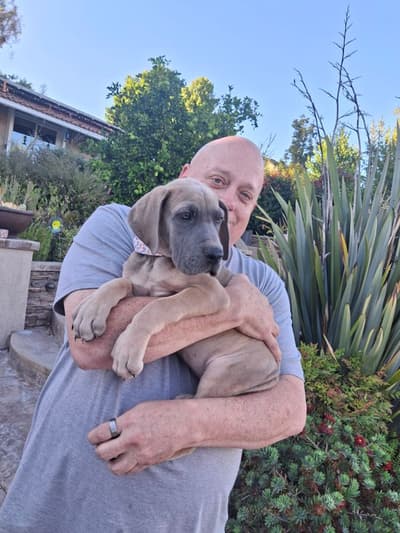
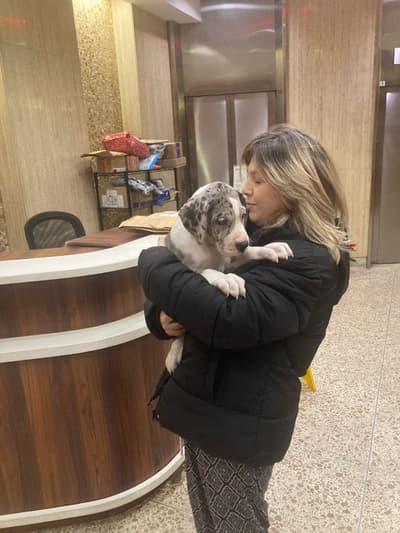
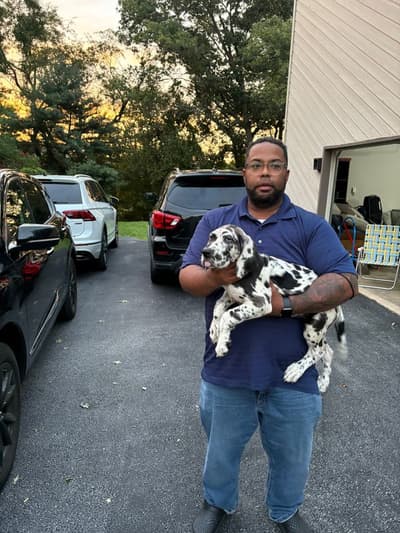
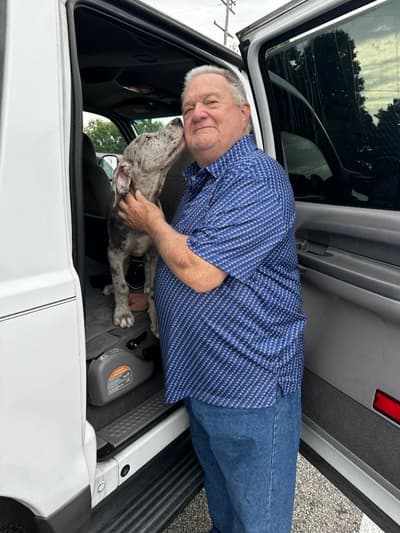
Couldn't have been better! Tracking via the app was amazing, great communications throughout the drive. The team nailed the arrival time, and the puppy was super excited and full of energy to get out of the van! Thanks so much!
“Couldn't have been better! Tracking via the app was amazing, great communications throughout the drive. The team nailed the arrival time, and the puppy was super excited and full of energy to get out of the van! Thanks so much!”
Tucker · Great Dane
Dec 13, 2024
“Love it! After longest time of searching found legal and best puppy website. everything went smoothly they'll ask all your questions and concerns. Love our new furry family member”
Lois · Great Dane
Aug 24, 2026
“Very pleased with the service and delivery”
Sheba · Great Dane
Jul 12, 2025
“All of your associates were amazing from start to pick up. I would highly recommend Pawrade to anyone considering a new puppy. The complete process was thoroughly explained. Thanks to everyone.”
Puppy scams cost U.S. families millions every year. Here's how you know Pawrade isn't one: we're a named, audited business with a public track record you can check anywhere.
Pawrade data: parents of puppies placed through Pawrade (breeder-reported)
Height
28–32 in
Lifespan
7–10 years
Energy
High
Shedding
Low
Group
Working
AKC
Great Dane Characteristics
Full-Grown Size
6 of 7SmallLarge
Grooming Needs
1 of 7SeldomRegularly
Good with Dogs
3 of 7Not ReallyYes!
Watchdog Ability
4 of 7LowHigh
Exercise Needs
3 of 7Couch PotatoHigh Needs
Your new best friend.
Great Dane temperament
Personality and daily life
At home
A good Dane is spirited and courageous, but also friendly and dependable, and never timid or aggressive. At home most Danes are easygoing, like to lounge near their people and bond strongly with their family. They still make watchful companions.
Kids and other pets
Danes make good family dogs, but their size means young children need supervision. Many suit homes with older children best. They are sensitive dogs, so wide early socialization helps them take new people, places and situations in stride.
At home
Calm indoors, a Dane is still a high-energy dog, and an adult needs exercise every day, such as two brisk walks. Many enjoy scent games and tracking, which suit a nose bred for hunting boar.
Training and play
Danes are eager to please and learn well with consistent, reward-based training, although some have a stubborn streak. Teach a puppy not to jump up and to play gently while it is still small, because those habits matter in a dog of adult Dane size. Danes compete in agility, obedience, rally and tracking.
Pawrade data: parents of puppies placed through Pawrade (breeder-reported). Placements and reviews come from Pawrade's records.
A healthier start for a happier tomorrow.
Great Dane care & grooming
Caring for a Great Dane
The routine
Exercise needs
High
An adult Dane needs at least 2 hours of exercise a day, spread across the day. Puppies need gentle, limited exercise, and a growing Dane should not run regularly until it is fully grown.
Coat and shedding
Low
The coat is short, thick, smooth and glossy, with no undercoat.
Weekly
Coat and grooming care
It sheds lightly, a little more in spring and autumn, and a weekly brush keeps it in order.
Keeping them safe
Leash and fencing
A scent-following streak from the breed's boar-hunting past can make a Dane wander, so fence the yard and use a leash on walks.
Squinting, a watery eye or a cloudy lens is a reason for an eye check.
Back and spineKnow when to call
A wobbly, unsteady walk in a young Dane needs a vet visit, because malformed neck bones can press on the spinal cord.
Joints and movementGo easy while growing
Keep a growing puppy lean on large-breed puppy food, and limit stairs, jumping and rough play while its joints grow.
Stomach and digestionRest around mealtimes
Keep vigorous exercise away from mealtimes, which helps prevent bloat.
Stomach and digestionKnow when to call
Bloat is an emergency, so call your vet right away if you think your Dane has it.
Heart checksRoutine vet checks
Book regular heart exams once your Dane is grown, because heart muscle disease usually starts in adulthood.
Every milestone, together.
Great Dane puppy milestones
Growing up: your Dane's first years
Before 8 weeks
Before your puppy comes home
Your puppy is still with its breeder, and most Great Dane breeders on Pawrade are getting their litters used to large dogs and children. A Dane puppy grows as much in its first year as a child does in 14 years, so plan your home for the big dog to come.
Set up a crate in your living area as your puppy's den, where it can rest by day and sleep at night.
Walk the fence line and fix any gaps, because a young Dane may follow a scent right out of the yard.
Ask the breeder which large-breed puppy food your puppy eats, and stock up before pickup day.
Why it matters
A den near the family helps a new puppy settle, and a secure yard keeps a curious young Dane safe.
Great Dane note
Skip calcium and vitamin supplements, because a growing Dane needs a balanced large-breed food, not extras.
8–10 weeks
The first week home
Everything is new, and the crate in your living area gives your puppy a quiet den to rest in. A puppy can usually hold its bladder for about as many hours as its age in months, so trips outside come often.
Take your puppy out first thing in the morning, after every nap and last thing at night.
Feed three or four small meals at set times, and give your puppy quiet time before and after each one.
Book the first vet visit, and ask your vet to listen to the heart and look at the eyelids.
Why it matters
Calm, regular meals are a habit worth starting early in a breed that is prone to bloat. Frequent trips outside give your puppy plenty of chances to get house-training right.
Great Dane note
For a merle or harlequin puppy, ask your vet about a hearing test (BAER), which gives a definite answer.
10–12 weeks
Weeks 2 to 4
Puppies are most open to new experiences in their first 3 months, so these weeks shape the adult your Dane becomes. Danes are sensitive dogs, and good early experiences help them take new people and places in stride.
Introduce new people, friendly dogs, everyday sounds and short car rides, a little at a time.
Join a puppy class, which can start as early as 7–8 weeks with healthy classmates and clean floors, as your vet advises.
Keep your puppy away from sick dogs, and let your vet guide where it can go before the vaccines are done.
Teach your puppy not to jump up, and keep play gentle while it is still small enough to manage.
Why it matters
A well-socialized Dane grows into a confident, gentle adult, and that matters in a dog this size.
Great Dane note
Dane puppies can look grown-up while they are still babies, so keep your expectations puppy-sized.
3–4 months
3 to 4 months
Most puppies finish their vaccine series at about 16 weeks, as your vet advises. Baby teeth start to fall out from about 12 weeks, so expect a busy, mouthy puppy.
Once your vet says the vaccines are complete, widen your puppy's world with new places, surfaces and sounds.
Sign up for puppy kindergarten if you have not yet, and plan a basic obedience class to follow.
Feed measured meals of large-breed puppy food, so your puppy stays lean and grows at a steady pace.
Limit stairs, jumping and rough play, because the bones and joints of a fast-growing puppy are still soft.
Why it matters
Lean, steady growth protects the joints, and overfeeding and too much calcium, not protein, are the real risks.
Great Dane note
Keep an eye on how your puppy walks, and mention a wobbly, unsteady gait to your vet.
4–6 months
4 to 6 months
Teething is in full swing, and by about 6 months the adult teeth are in. Growth is fast now, and some young Danes get growing pains (panosteitis) that make them limp for a while.
Keep only a few safe chew toys out at a time and rotate them, and supervise chewing.
Take any limping or a painful, swollen leg to your vet, who can tell growing pains from a more serious bone problem.
Keep the crate in a room where the family spends time, so your puppy rests near you between play sessions.
Why it matters
Chewing eases sore gums, and catching a limp early helps your vet keep a growing Dane comfortable.
Great Dane note
Growing pains usually settle on their own as growth slows.
6–12 months
6 to 12 months
Adolescence has begun, and teenage dogs test boundaries and may seem to forget their training. Your Dane may already look full-sized, but its bones are still growing.
Keep training consistent and patient, and move on from puppy kindergarten to a basic obedience class.
Cut back from three or four meals a day to two by 6 to 9 months, and keep your Dane lean.
Agree an exercise plan with your vet while the growth plates are still soft, and skip jogging and hard hikes for now.
Talk with your vet about spaying or neutering, and ask whether a preventive stomach surgery called a gastropexy can be done at the same time.
Why it matters
The teenage phase is normal and it passes, and patient training now shapes the gentle adult you want.
Great Dane note
Rewards work far better than harsh words with a sensitive young Dane, so keep training short and upbeat.
1–2 years
1 to 2 years
Most Danes are full grown at about 12 to 18 months, and they settle into adulthood at around 2 years.
Once your Dane is fully grown, you can build up to regular runs and sports such as agility, rally and tracking.
Keep two meals a day for life, never one big meal, and keep hard exercise away from mealtimes.
Book a wellness exam with your vet at least once a year, the normal routine for an adult dog.
Ask your vet about a heart ultrasound (echocardiogram), because heart muscle disease in Danes usually starts in adulthood.
Why it matters
These habits guard against bloat and help catch heart problems early.
Great Dane note
A grown Dane is still a gentle giant that would rather lounge near you than anywhere else.
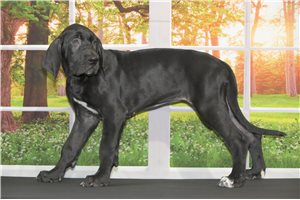
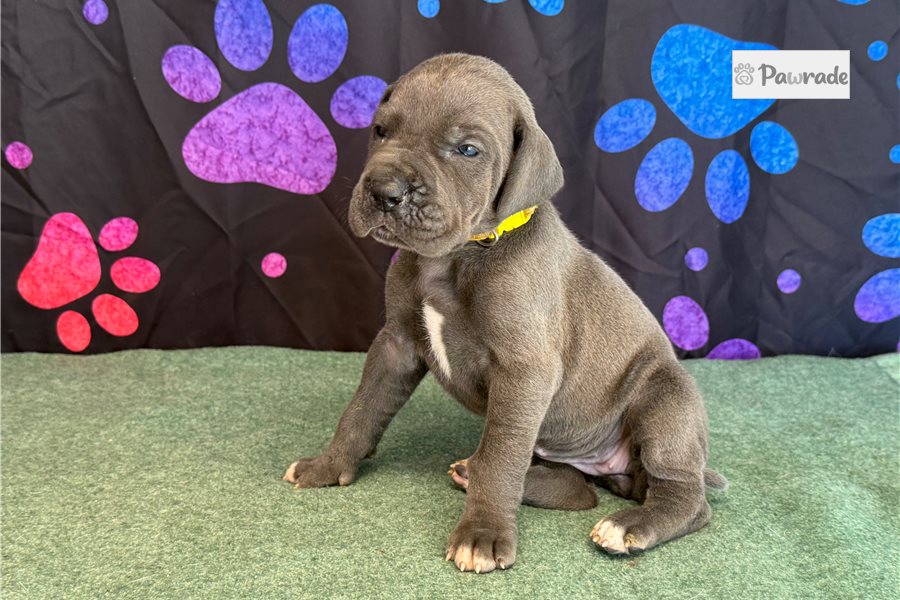
The Great Dane is a giant, square-built dog whose height equals its body length, and males are visibly larger and more massive than females. Under the AKC standard the ears may be left natural, folded forward, or cropped, and a docked tail is outside the AKC breed standard.
Colors and coat
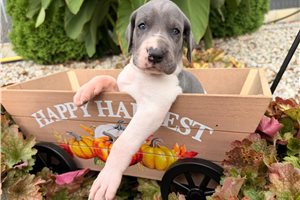
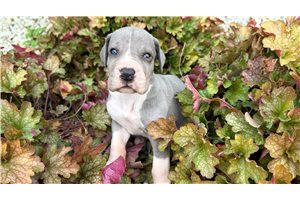
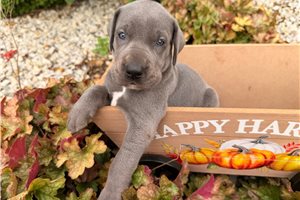
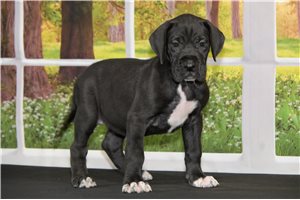
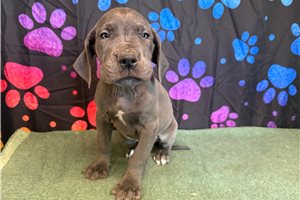
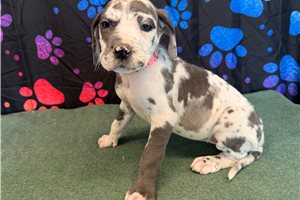
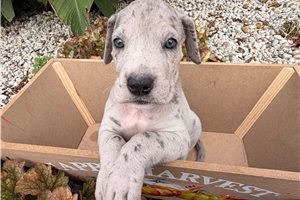
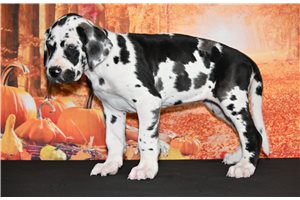
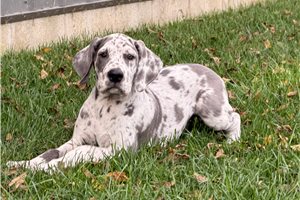
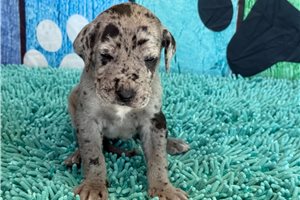
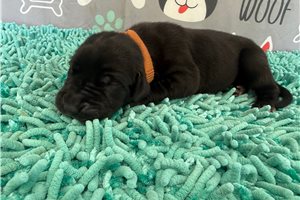
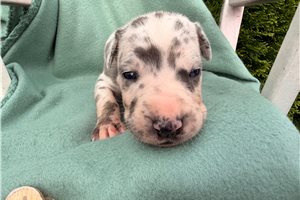
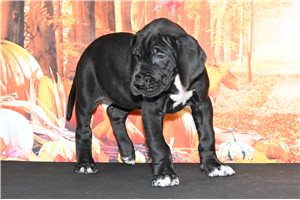
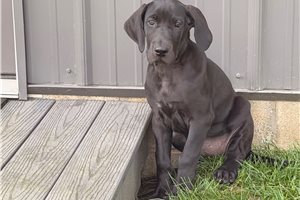
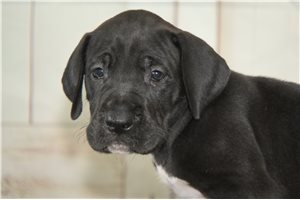
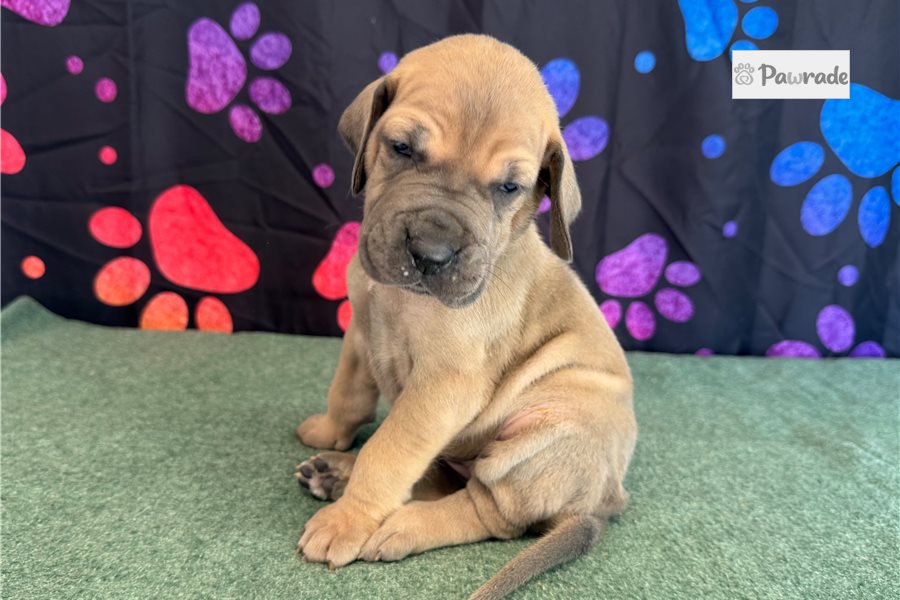
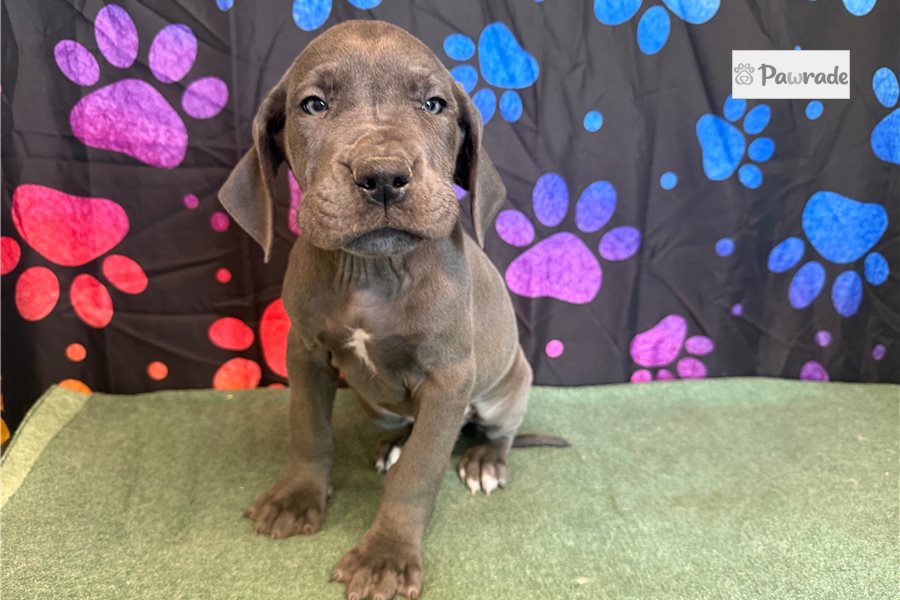
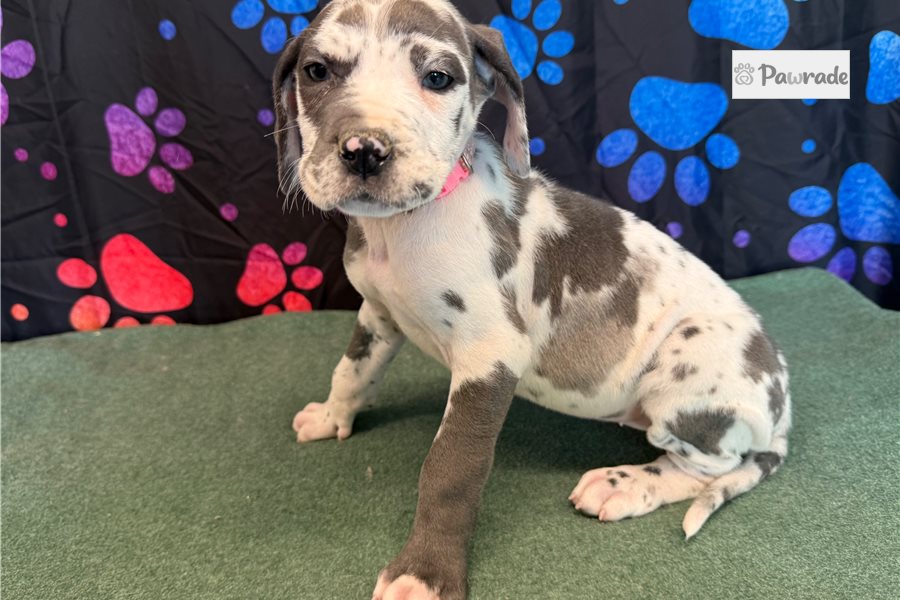
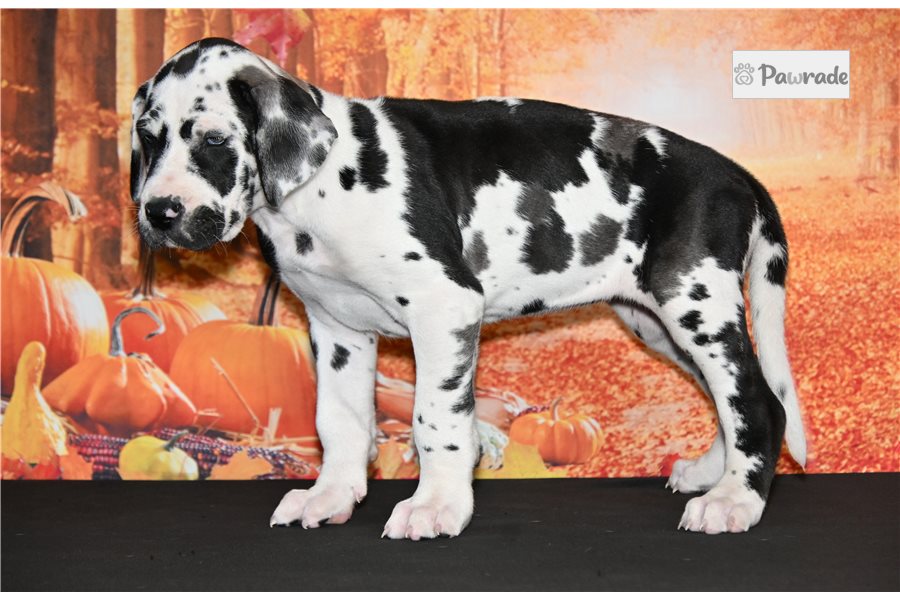
The AKC standard allows seven colors: brindle, fawn, blue, black, harlequin, mantle and merle. Fawns and brindles have a black mask. Harlequins are white with torn black patches, and merles are gray with torn black patches. Mantles are black with a white muzzle, collar, chest, legs and tail tip. Any other color, including merlequin (a white dog with only merle patches), is outside the AKC breed standard. Blue or odd-colored eyes are part of the standard only in harlequins and merles. Breeding two merles (double merle) raises the risk of deafness and eye defects.
Colors listed by Pawrade breeders
Black
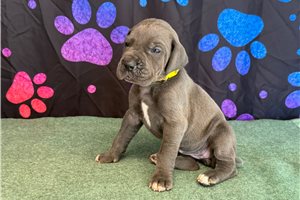
Blue
Brindle
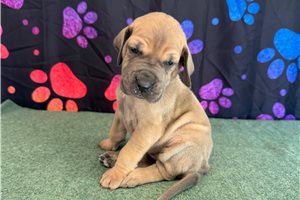
Fawn
Harlequin
Mantle
Merle
Piebald
Keeping your Great Dane healthy
The Great Dane is known to be prone to a few conditions, and knowing the early signs helps you act quickly. Smaller meals with rest around them help guard against bloat, and regular heart checks in adulthood help catch heart muscle disease early.
A little history, a lot of heart.
Great Dane history
History and fun facts
Mastiff-type dogs that look like the Great Dane appear in Egyptian carvings from about 3000 B.C.
The modern breed took shape in Germany as a boarhound, built on old mastiff types and refined with Greyhound blood.
Once boar hunting faded, Danes became companions and estate guards, and breeders steered the temperament toward the gentle dog known today.
1876
Germany named the Deutsche Dogge its national breed in 1876.
1878
A Berlin committee brought the Dogge types together as one breed in 1878, and the first standard followed in the early 1880s.
Despite the name, the breed is German.
The English name comes from the French "grand Danois", but why English speakers call it a Dane is unexplained.
1887
The AKC recognized the Great Dane in 1887, and the UKC followed in 1923.
The Great Dane is described as the tallest dog breed.
2011
The Guinness record for the tallest dog ever belongs to a Dane: Zeus of Otsego, Michigan, who measured 44 in at the shoulder in 2011.
Before Zeus, the title was held by another Great Dane, Giant George.
The Great Dane Club of America is the breed's AKC parent club.
Checked with care before travel.
Great Dane Veterinary Health Report
Your puppy's Veterinary Health Report
Before your Great Dane puppy comes home, the breeder's licensed vet gives it a full hands-on exam to PetPay's exam standards, and the results go into its Veterinary Health Report.
The exam, a health certificate and a stool test for parasites all happen 3 to 5 days before your puppy leaves.
1It is a check of your own puppy, not paperwork about its family, so you start with a clear record of how your puppy is doing.
2If the vet finds something that could put your puppy at risk during travel, your puppy stays with the breeder until it's resolved.
3Problems that can be treated before travel are treated by the breeder's licensed vet first.
4Anything else the vet notes is shared with you.
5A hard copy of the report travels with your puppy for your records, and a digital copy is in your PetPay account.
PetPay Veterinary Health Report form
16 areas checked on the exam
Closer look for Great DanesOn every puppy's report
Puppies travel only once they are at least 8 weeks old and weigh at least 2 lb. Every puppy also comes with a health guarantee administered by PetPay, independent of the seller. The terms are on the health guarantee page.
A Great Dane puppy's price reflects what goes into it: its pedigree and registration, its coat and color, and the breeder's program. Every Pawrade puppy's price also includes the pre-travel exam by the breeder's licensed vet, the Veterinary Health Report and a health guarantee administered by PetPay. See today's price range for Great Dane puppies on Pawrade's Great Dane listings.
Typical asking price
$3,340
Based on 375 Great Dane listings in the last 12 months
Frequently asked questions about Great Dane puppies
Frequently asked questions
Adult Great Danes weigh 110–175 lb and stand 28–32 in at the shoulder. Males are larger, at 140–175 lb, while females weigh 110–140 lb. The AKC standard sets a minimum height of 30 in for males and 28 in for females. Most Danes are full grown at about 12 to 18 months.
Parents of Pawrade Great Danes typically weigh 130–181 lb (fathers) and 110–155 lb (mothers).
The Great Dane comes in one giant size, and the AKC standard sets minimum heights rather than describing a smaller variety.
The AKC standard allows seven colors: brindle, fawn, blue, black, harlequin, mantle and merle. Fawns and brindles have a black mask. Other colors, including merlequin, are outside the AKC breed standard.
A harlequin is white with torn black patches, while a merle is pale to dark gray with torn black patches. A mantle, by contrast, is black with white on the muzzle, collar, chest, legs and tail tip.
Blue or odd-colored eyes are part of the breed standards only in harlequins and merles. In the other colors, the standards call for dark eyes.
Both are accepted in the US, because the AKC and UKC standards allow natural ears folded forward or cropped ears. The international (FCI) and UK standards describe natural ears only.
A good Great Dane is spirited, courageous, friendly and dependable, and never timid or aggressive. At home, most are easygoing, like to lounge near their people and bond strongly with their family.
Great Danes are high-energy dogs that need exercise every day, even though most are easygoing at home. Puppies need gentle, limited exercise while they grow.
Great Danes are watchful companions and guardians, but the breed is meant to be friendly and dependable, never aggressive. Wide early socialization helps a sensitive young Dane grow up confident with people and other animals.
Great Danes make good family dogs, but their size means young children need supervision. Many suit homes with older children best. Great Dane breeders on Pawrade report socializing 87% of their litters with young children before the puppies go home.
Great Danes are friendly and dependable, and early socialization helps them get along with other dogs. More than half of Great Dane buyers on Pawrade already have a dog at home, and breeders report socializing 94% of litters with large-breed dogs.
It depends on the dog and on early socialization. Danes are sensitive dogs, and a puppy that meets new people, animals and experiences from a young age has the best start.
An adult Dane needs exercise every day, such as two brisk walks, and many do best with 2 hours or more spread across the day. Puppies need gentle, limited exercise, and vigorous exercise should never come right before or after a meal.
Wait until your Dane is at least 2 years old before running together regularly, because earlier hard exercise can damage growing bones. Until then, keep walks easy and skip jogging, agility and hard hikes.
A Dane can be raised in an apartment if it gets exercise every day, although a large house and yard suit a dog this size best. Most Great Dane buyers on Pawrade live in a single-family home, and 96% have a yard.
Only for short stretches, because Danes bond strongly with their people and some become destructive when left alone. A crate in the living area gives a puppy a den of its own.
A fenced yard is a big help, because a scent-following streak from the breed's boar-hunting past can make a Dane wander. Keep your Dane on a leash on walks.
Great Danes shed and drool, and no dog is truly hypoallergenic. The short coat sheds lightly, a little more in spring and autumn.
Very little, since the short coat has no undercoat and needs a brush about once a week.
Danes are eager to please and respond well to consistent, reward-based training. Some have a stubborn streak, so keep the rules the same every day. Teach good manners, such as not jumping up, while the puppy is still small.
Start right away, because the first 3 months are the most important time for socialization. Puppy classes can begin as early as 7–8 weeks, with healthy classmates and clean floors, as your vet advises. Follow puppy kindergarten with a basic obedience class.
A common rule of thumb is that a puppy can hold its bladder for about as many hours as its age in months. A 3-month-old, for example, can usually wait about 3 hours. The rule works up to about 9 months to 1 year, and every puppy is different. Take your puppy out first thing in the morning, after naps and last thing at night.
A crate in the living area works well as a Dane puppy's den, and many puppies sleep in it at first. Breeders on Pawrade report whether they have started crate training, so ask how far your puppy has got.
Your Dane is most likely in adolescence, a normal phase when dogs test boundaries and may seem to forget their training. Adolescence runs from about 6 to 8 months to about 2 years. Keep training consistent and patient, with plenty of exercise for body and mind that suits a growing Dane. Danes are sensitive dogs, so calm, reward-based training works better than harsh corrections.
Many enjoy scent games and tracking, which suit the breed's boar-hunting nose. Danes can also compete in AKC agility, obedience and rally once they are fully grown.
Puppies travel only once they are at least 8 weeks old and weigh at least 2 lb. Most Great Dane puppies go home at about 11 weeks, usually between 9 and 17 weeks.
Great Dane breeders on Pawrade report a typical litter of 7 puppies, usually between 3 and 12.
Most Great Dane litters on Pawrade meet large-breed dogs and children before the puppies go home. Breeders report socializing 94% of litters with large-breed dogs and 92% with older children. They also report getting 56% of litters used to loud music or TV. These figures come from what breeders reported for 191 litters.
Set up a crate in your living area, stock the breeder's large-breed puppy food, and check that your fence is secure. Plan a feeding routine of several small meals at set times, and limit stairs and rough play from the first day.
Feed a large-breed puppy food in amounts that keep your puppy lean, with no calcium or vitamin supplements. Split the food into three or four meals a day, cut back to two by 6 to 9 months, and keep two meals a day for life. Overfeeding, fast growth and too much calcium are the real risks for a growing Dane, not protein.
Most puppies finish teething by about 6 months, when the adult teeth are in. Baby teeth start to fall out from about 12 weeks, and chewing is strongest in between. Offer a few safe chew toys at a time and rotate them, and supervise chewing.
Most puppies finish their core vaccine series at about 16 weeks, as your vet advises. A puppy class with healthy classmates and clean floors is fine before then, as long as your puppy stays away from sick dogs.
Most Danes are full grown at about 12 to 18 months, although they can look grown-up much sooner. A Dane puppy grows as much in its first year as a child does in 14 years.
The Veterinary Health Report is the record of your Great Dane puppy's exam before it goes home. The breeder's licensed vet gives the puppy itself a full hands-on exam to PetPay's exam standards and writes down what they find. It gives you and your own vet a clear starting point for your puppy's care.
The breeder's licensed veterinarian examines every puppy before it goes home, to PetPay's exam standards. The results are recorded in the puppy's Veterinary Health Report, and a copy travels with your puppy for your records.
The breeder's vet examines the whole puppy and pays close attention to a few things that matter in Danes. The vet listens to the heart for a murmur or an irregular rhythm, and checks both eyes, including for cherry eye. The vet also weighs the puppy and scores its body condition, and in harlequin and merle puppies checks how the puppy responds to sound.
Before travel, every puppy follows PetPay's vaccination and deworming schedule as far as its age allows: deworming at 2, 4, 6, 8, 10 and 12 weeks, and the distemper, parvo, adenovirus and parainfluenza combination shot at 6–8, 9–11 and 12–14 weeks. Bordetella and corona are given at the vet's discretion, and no vaccine is given within 3 days of travel. Rabies is given by a licensed vet on the schedule your state requires. Your own vet completes the series. Your puppy's vaccination and deworming records are separate documents that travel with your puppy. Bring them, with the Veterinary Health Report, to your first visit so your vet starts from the same record.
If the vet finds something that could put your puppy at risk during travel, your puppy stays with the breeder until it's resolved. Problems that can be treated before travel are treated by the breeder's licensed vet first. Anything else the vet notes is shared with you.
Puppies grow and change quickly, and their immune systems are still developing, so no single exam can find everything. Heart muscle disease in Danes, for example, usually starts in adulthood. The report is a strong early look at your puppy, and your own vet builds on it at every checkup.
Every puppy comes with a health guarantee administered by PetPay, independent of the seller. The terms are on the health guarantee page.
Great Dane buyers rate their Pawrade experience 4.7 out of 5 on average, from 131 reviews, and about 81% of those reviews give 5 stars.
Right now, most Great Dane puppies on Pawrade are listed within the typical range shown on Pawrade's Great Dane listings. Each breeder on Pawrade sets their own price, and each puppy's listing shows it. A Great Dane puppy's price reflects what goes into it: its pedigree and registration, its coat and color, and the breeder's program. Every Pawrade puppy's price also includes the pre-travel exam by the breeder's licensed vet, the Veterinary Health Report and a health guarantee administered by PetPay.




 Great Dane note