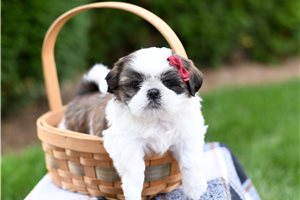
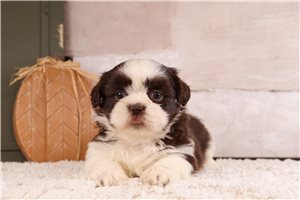
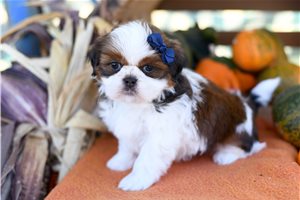
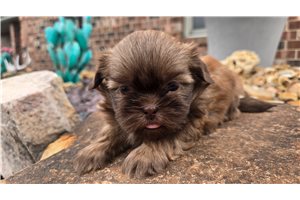
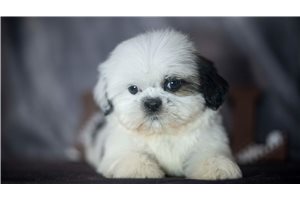
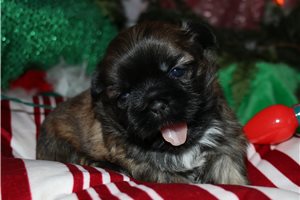
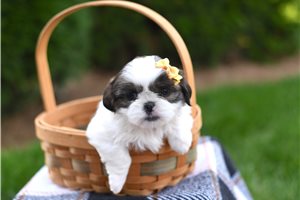
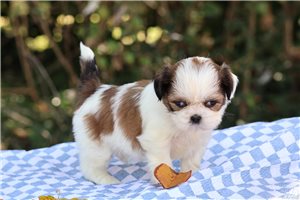
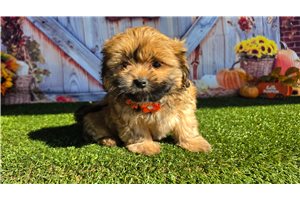
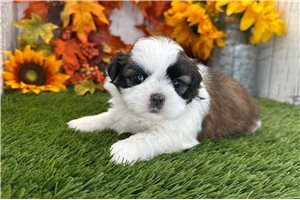
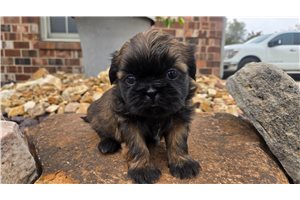
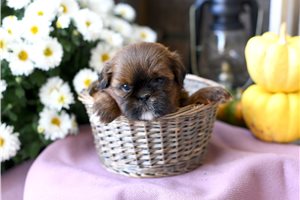
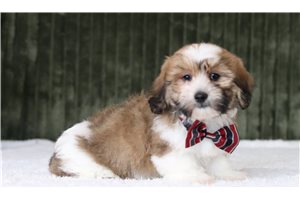
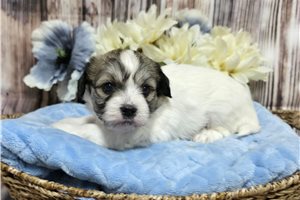
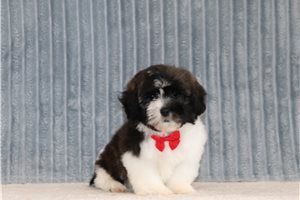
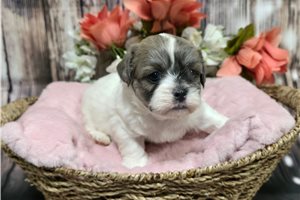
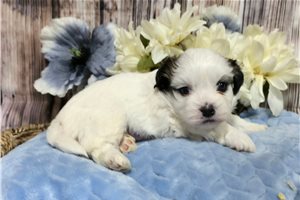
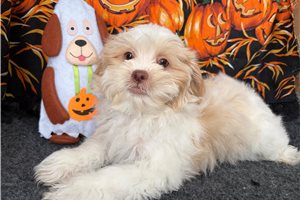
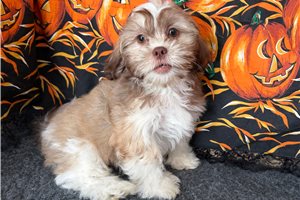
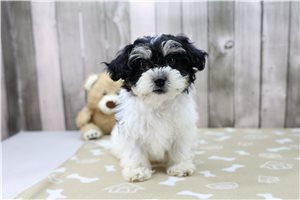
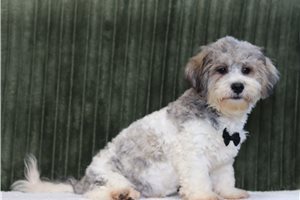
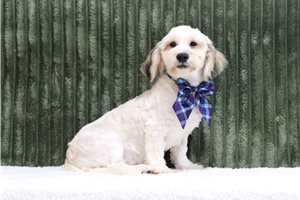
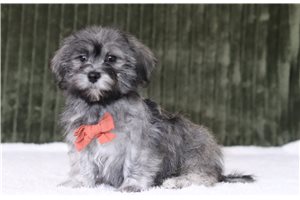
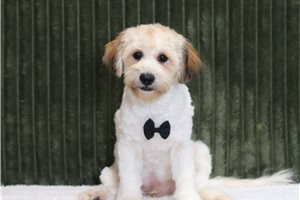
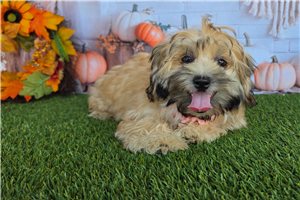
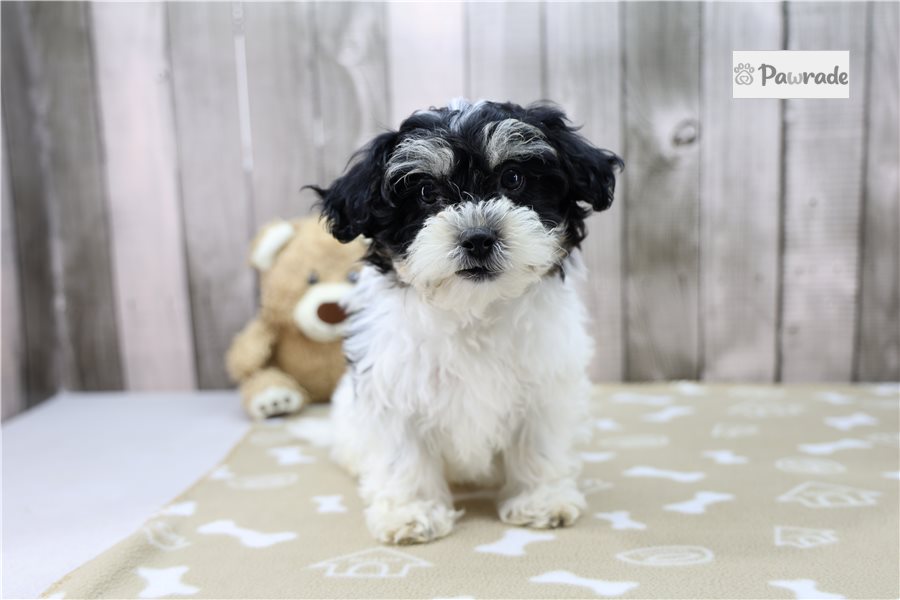
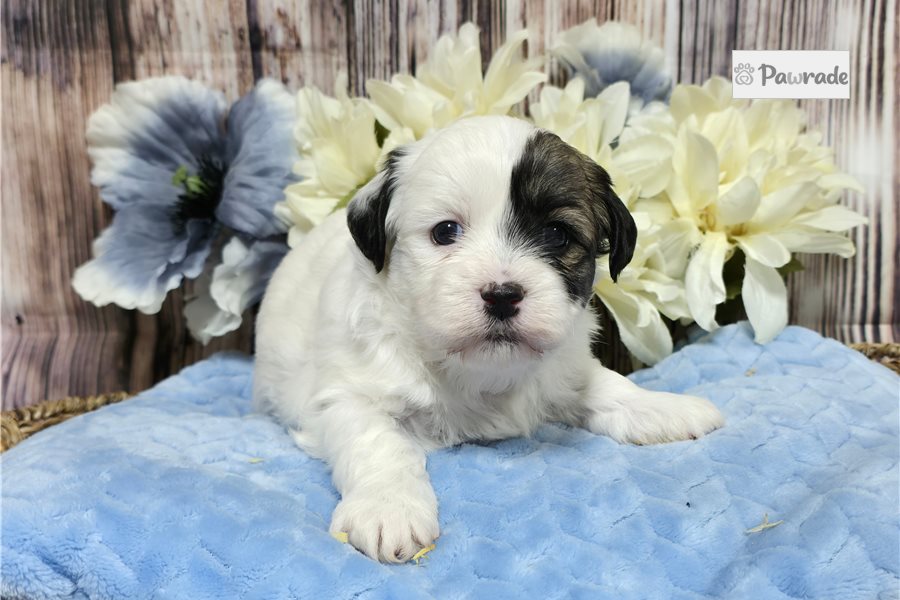
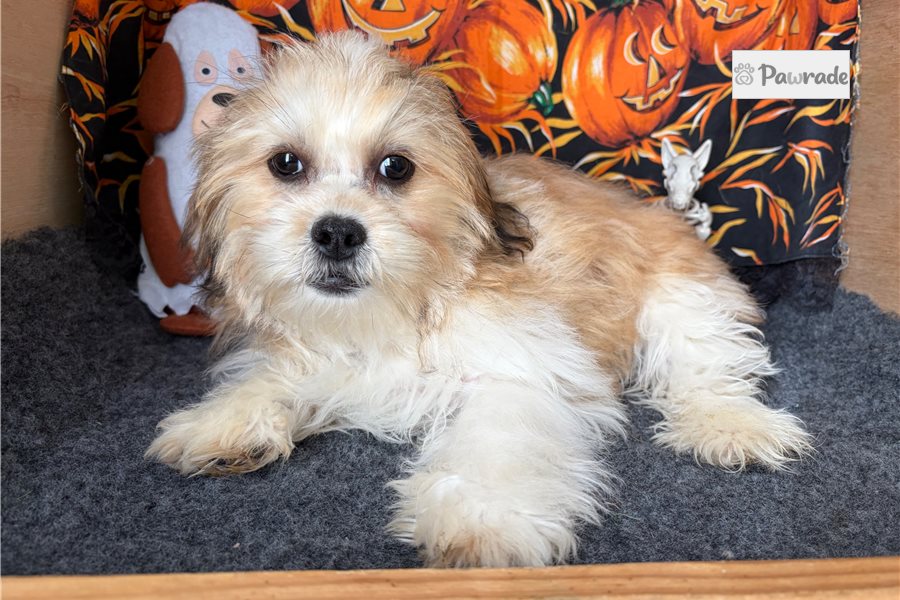
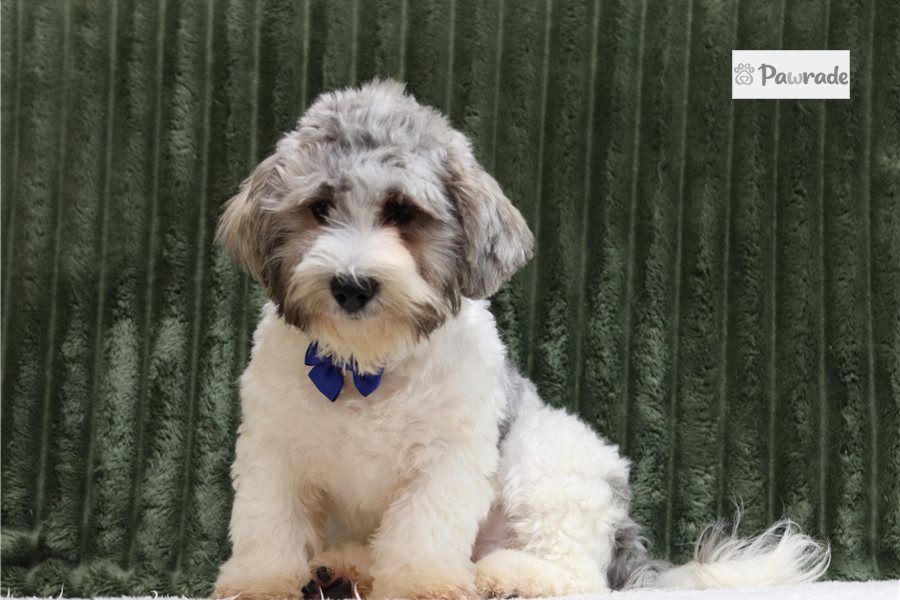
A Shichon looks like a teddy bear come to life, with its round face and button eyes, and it wants to be wherever its people are. Bred as a companion, it is happiest close to you.
A Shichon looks like a teddy bear come to life, with its round face and button eyes, and it wants to be wherever its people are. Bred as a companion, it is...A Shichon looks like a teddy bear come to life, with its round face and button eyes, and it wants to be wherever its people are. Bred as a companion, it is happiest close to you.
Only with Pawrade, you receive a pet insurance policy with no waiting period included for immediate accident or illness coverage. *NH, NY, RI, SC and TN residents excluded
“We have a wonderful puppy that we adore!! Thank you Pawrade! The process is easy and the assistance along the way is excellent!”
Isaac · Shichon
Apr 8, 2026
“Absolutely a wonderful. Great communication and our little guy was well taken care of and clean, happy and fed when he arrived home. Only downside was he arrived at our house at 2:30 in the morning! I do recommend Pawrade!”
Holden · Shichon
Oct 29, 2022
“Easy process, puppy is healthy and cute as can be. Got everything I needed on site and talking to reps. Met the breeder to pick him up and he was very nice as well”
Elmo · Shichon
Jul 29, 2024
“We are so happy and in love with our new puppy and the service provided by Pawrade, the breeder and 3rd party delivery service. Over all the communication and system was very good and helpful.”
Puppy scams cost U.S. families millions every year. Here's how you know Pawrade isn't one: we're a named, audited business with a public track record you can check anywhere.
Shichons are affectionate, people-focused dogs that are eager to please, and they want plenty of attention and company. Both parents were bred as companions, so a Shichon that is often left alone can become unhappy and pick up attention-seeking habits.
Kids and other pets
The puppy's small, delicate build is the main thing to manage with children: have them sit on the floor to hold it, and supervise play. Socialize a Shichon early with people, other dogs and other pets, and enroll it in a positive-reinforcement puppy class.
At home
Shichons are indoor dogs and are well suited to apartments. Their energy level is moderate.
Training
Shichons are trainable and eager to please, and they learn best with consistent, positive methods. As mixed breeds, they can enroll in AKC Canine Partners and compete in AKC events such as obedience, rally and agility.
Ask your vet for a yearly eye exam that includes a tear test.
Eye changesKnow when to call
See your vet if an eye looks irritated or cloudy.
Skin changesMention skin changes
Mention any itchy skin to your vet at checkups.
Joints and movementRoutine vet checks
Have your vet check the kneecaps at each visit while your puppy is growing.
Teeth and gumsRoutine vet checks
Ask your vet about professional dental cleanings at the yearly checkup.
Body weightKeep them lean and cool
Keep your Shichon lean and drinking plenty of water, which helps guard against bladder stones.
Every milestone, together.
Shichon puppy milestones
Your Shichon's first 2 years
Before 8 weeks
Before your puppy comes home
Your puppy is still with its litter, and the weeks when it is most open to new people, places and sounds have already started. Its adult size is still a best guess, because a Shichon's size depends on its parents and varies by generation.
Set up a crate in a room where the family spends the day, or in your bedroom at night.
Have a soft brush, a comb, nail clippers and a small toothbrush ready before your puppy arrives.
Why it matters
A crate close to people helps a new puppy settle in, by day and at night.
Shichon note
Shichons want company, so a crate within sight and sound of the family suits them from the very first night.
8–10 weeks
The first week home
Everything is new, and your puppy needs a trip outside first thing in the morning, last thing at night and after every nap. Very small puppies can develop low blood sugar (hypoglycemia), which is why meals come little and often at this age.
Feed your puppy three small meals a day, spread out through the day.
Start brushing, combing, nail trims and tooth brushing this week, so the lifelong grooming routine feels normal.
Show children how to sit on the floor to hold the puppy, and stay close while they play.
Why it matters
Short, happy grooming sessions now make the years of coat care ahead much easier for you both.
Shichon note
A Shichon's coat grows medium to long and mats easily, so early brushing pays off for life.
10–12 weeks
Weeks 2 to 4
Your puppy is in the middle of its first 3 months, the most important time for socialization. It needs positive, structured meetings with people, places, animals and new things.
Introduce your puppy to a few new people, friendly healthy dogs and household sounds each day, keeping every meeting short and calm.
Sign up for a reward-based puppy class, which can start as early as 7–8 weeks once your vet agrees.
Until the vaccine series is done, keep your puppy away from sick or unknown dogs, as your vet advises.
Why it matters
There is no medical reason to wait for the last vaccine before class, as long as sick dogs are avoided and basic hygiene is kept.
Shichon note
A Shichon puppy is small and delicate, so keep a close eye on play with young children.
3–4 months
3 to 4 months
Around 12 weeks, the baby teeth start to fall out as the adult teeth come in, and chewing picks up. The puppy vaccine series usually finishes at about 16 weeks, as your vet advises.
Keep a few safe chew toys out at a time and rotate them, so they stay interesting.
Stretch the time between trips outside slowly, since a puppy can hold its bladder about one hour for each month of age.
Keep brushing at home on most days, so mats never get a chance to form.
Why it matters
Chewing is strongest while the teeth change, so safe toys protect both your home and your puppy.
Shichon note
Ask your vet to check the eyelids, knees and growth at these puppy visits, because eye and knee problems run in the parent breeds.
4–6 months
4 to 6 months
By about 6 months, the adult teeth are in and teething winds down. Your puppy is still growing, and the growth plates in its legs stay soft until growth is done.
Let your puppy play at its own pace, and save long, hard exercise for when it is grown.
Agree on an exercise plan with your vet while your puppy is still growing.
Check the mouth for baby teeth that stay in after the adult teeth come through.
Why it matters
Strenuous exercise is best saved for later, because soft growth plates are easy to hurt.
Shichon note
Small dogs finish growing sooner than large ones, and most Shichons reach adult size within about their first year.
6–12 months
6 to 12 months
From about 6 to 8 months, many young dogs enter adolescence, testing limits and seeming to forget their training. This teenage stage is normal, and patience and steady training carry you through it.
Keep training consistent and reward-based, with plenty of play for body and mind.
Keep up regular professional trims, because mats form fast while the adult coat grows in.
Talk with your vet about spaying or neutering, since the right time depends on things like sex and expected adult size.
Why it matters
Consistent training, patience and plenty of physical and mental exercise help a young dog through this stage.
Shichon note
Have your vet recheck the knees in these months, since slipping kneecaps run on the Bichon Frise side.
1–2 years
1 to 2 years
Your Shichon looks grown up, and most dogs are fully grown and settled into adulthood at around 2 years. Its coat may be straight like the Shih Tzu's, wavy or curly like the Bichon's, or a mix of both.
Book a wellness exam with your vet at least once a year, and ask for an eye exam with a tear test.
Keep up daily tooth brushing, with professional cleanings whenever your vet suggests them.
Keep your Shichon lean and drinking plenty of water as part of its adult routine.
Why it matters
Routine urine tests at checkups help catch crystals before bladder stones form.
Shichon note
Bladder stones run on the Bichon Frise side, so water and a lean weight matter for a Shichon.
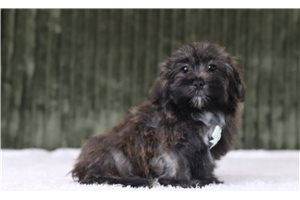
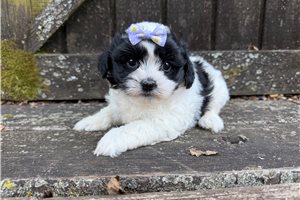
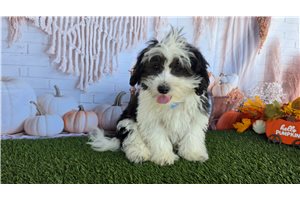
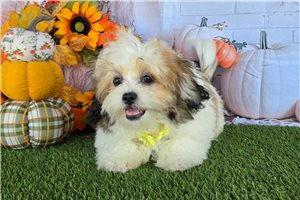
The Shichon is a small, sturdy, compact dog. Most have a rounded head, a medium-length muzzle, dark round eyes, drop ears and a feathered tail carried over the back. No AKC, UKC or international (FCI) standard exists for the cross. A Shichon's adult size depends on its parents and varies from one generation to the next, so each Pawrade listing shows the parents' weights.
Colors and markings
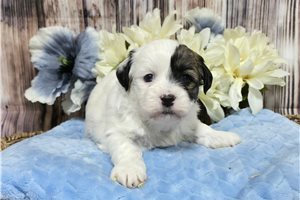
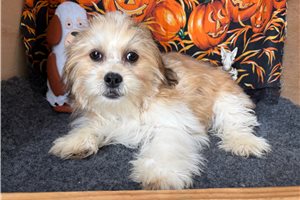
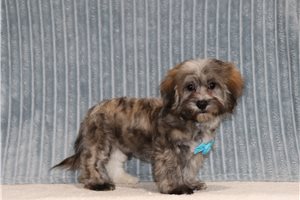
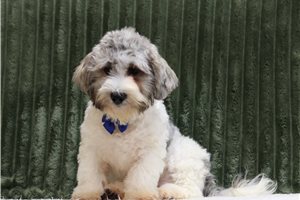
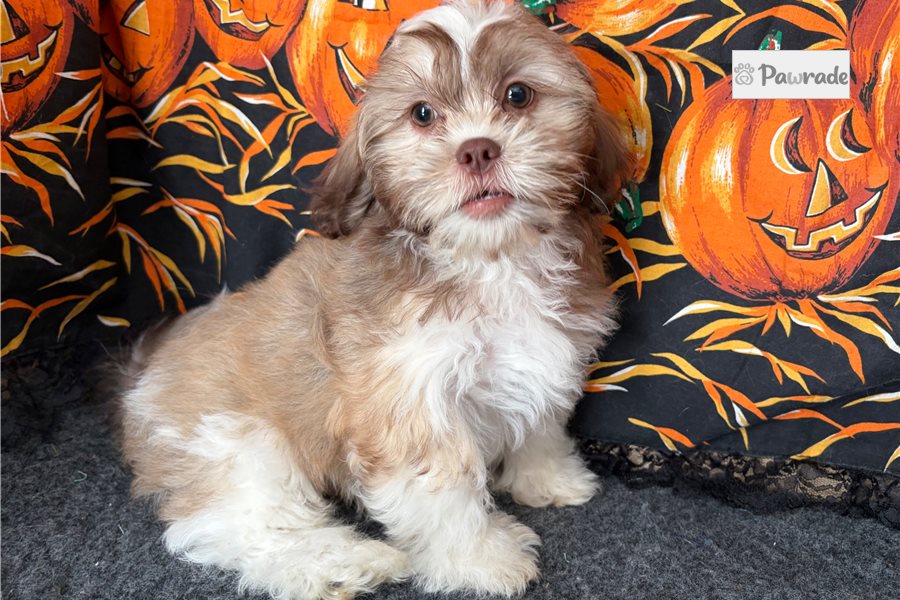
Colors include white, cream, apricot, gray, silver, black and shades of brown, alone or combined in bicolor and tricolor patterns. The range comes from the parents: the Bichon Frise is white, with cream, buff or apricot shadings allowed, while the Shih Tzu standard accepts every color and marking. The coat is medium to long and fluffy unless it is kept trimmed.
Colors listed by Pawrade breeders
Black
Black & White
Blue
Blue & White
Brown
Brown & White
Champagne
Champagne & White
Chocolate
Chocolate & White
Cream
Cream & White
Gold
Gold & White
Gray
Gray & White
Merle
Particolor
Red
Red & White
Sable
Sable & White
Silver
Silver & White
Tri-color
White
White & Black
White & Brindle
White & Brown
White & Chocolate
White & Cream
White & Red
White & Sable
White & Silver
A little history, a lot of heart.
Shichon history
History
1990s
The Shichon is a designer crossbreed, not a purebred, first bred in the United States in the 1990s as a companion dog.
It also goes by Zuchon, Tzu Frise and Teddy Bear.
The AKC and UKC do not recognize the Shichon, and the cross has no breed club of its own.
Designer-dog registries list it instead.
The Designer Kennel Club registers it as the Zuchon, and the International Designer Canine Registry lists the Bichon Frise × Shih Tzu cross as the Shichon.
2001–2018
On the Bichon side, two Bichon Frises have won Best in Show at Westminster: J.R. in 2001 and Flynn in 2018.
Checked with care before travel.
Shichon Veterinary Health Report
Your puppy's Veterinary Health Report
Before your Shichon puppy goes home, the breeder's licensed veterinarian gives it a full hands-on exam to PetPay's exam standards, and the results go into its own Veterinary Health Report.
The exam, a health certificate and a stool test for parasites all happen 3 to 5 days before your puppy leaves.
1The exam looks at your puppy itself, not its parents, so the record you get is about your own dog.
2If the vet finds something that could put your puppy at risk during travel, your puppy stays with the breeder until it's resolved.
3Problems that can be treated before travel are treated by the breeder's licensed vet first.
4Anything else the vet notes is shared with you.
5A hard copy of the report travels with your puppy for your records, and a digital copy is in your PetPay account.
Puppies must be at least 8 weeks old and 2 lb before they travel. Every puppy also comes with a health guarantee administered by PetPay, independent of the seller. The terms are on the health guarantee page.
The Maltese is smaller and always white, with a straight, silky coat, and the Maltese × Shih Tzu cross, the Mal-Shi, is a common alternative to the Shichon.
A grown Shichon weighs 8–16 lb and stands 9–12 in at the shoulder. Most reach adult size within about their first year. Each puppy's listing shows its parents' weights, because a Shichon's adult size depends on its parents and varies by generation.
Not always, because a grown Shichon can weigh anywhere from 8 to 16 lb. No registry standard sets a Shichon's size, and its adult size depends on its parents and varies by generation. The parents' weights on each puppy's listing are the best guide.
A Shichon is a cross between a Shih Tzu and a Bichon Frise. It is a designer crossbreed, not a purebred, and it also goes by Zuchon, Tzu Frise and Teddy Bear.
It varies from dog to dog, and the coat shows it most. The coat can be straight and silky like the Shih Tzu's, wavy or curly like the Bichon's, or a mix. Color can range from Bichon white to any of the Shih Tzu's colors and markings.
Shichons come in white, cream, apricot, gray, silver, black and shades of brown, alone or in bicolor and tricolor patterns. Lighter coats often come from the Bichon side.
Shichons are affectionate and people-focused, and they are eager to please. The cross was developed as a companion dog, so it wants plenty of attention and company.
It can be, because Shichons are trainable and eager to please, and short daily walks and indoor play cover their exercise. The bigger commitments are company, since they dislike being alone, and regular coat care.
Shichons do not cope well with long hours alone, because they were bred as companions and want company. A Shichon that is often left alone can develop attention-seeking habits, so it suits a home where someone is around for much of the day.
They can, and early socialization makes the difference. Introduce your puppy to other dogs and pets early, and enroll it in a positive-reinforcement puppy class. Shichon breeders on Pawrade report socializing 76% of their litters with small-breed dogs.
They can be, with supervision, because the puppy is small and delicate. Have children sit on the floor to hold it, and stay close during play. Shichon breeders on Pawrade report socializing 85% of their litters with older children and 84% with younger children.
Shichons are indoor dogs and are well suited to apartments. Short daily walks and indoor play cover their exercise needs. Most Shichon buyers on Pawrade live in a single-family home, and some live in apartments.
A Shichon has moderate energy, and short daily walks and indoor play are enough for most. Agility, obedience and rally give an active Shichon more to do.
Feed a young puppy three small meals a day, because very small puppies can develop low blood sugar. As an adult, keep your Shichon lean and encourage it to drink plenty of water.
Shichons are low-shedding, but no dog is truly hypoallergenic. Both parent breeds shed little, which means less loose hair in the house, not a home free of dog allergens.
Start brushing, combing, nail trims and tooth brushing in the first week, so the lifelong routine feels normal. Mats form fast while the adult coat grows in, so regular trims matter in the teenage months.
Usually, because they are eager to please and learn well with consistent, positive methods. Keep reward-based training steady through adolescence, when habits can slip.
Start on the first day by taking your puppy out first thing in the morning, last thing at night and after every nap. Keep the crate where the family spends the day, or in your bedroom at night. Breeders on Pawrade report whether they have started crate training, so ask how far your puppy has got.
A puppy can usually hold its bladder about one hour for each month of age, so a 3-month-old can wait about 3 hours. Very young puppies need to go out first thing in the morning, last thing at night and after naps.
Your Shichon has probably reached adolescence, which starts at about 6 to 8 months and lasts until about 2 years. Young dogs test limits and may seem to forget their training, and the phase passes. Keep training consistent and positive, with plenty of play for body and mind.
A Shichon can train for therapy work, which is open to both parent breeds. Shichons are affectionate, people-focused and eager to please, and consistent, positive training from puppyhood is the foundation.
As mixed breeds, Shichons can enroll in AKC Canine Partners, which opens AKC companion and performance events to them. Obedience, rally and agility are all open to them.
Puppies travel only once they are at least 8 weeks old and weigh at least 2 lb. Most Shichon puppies go home at about 11 weeks, usually between 9 and 19 weeks.
Most puppies finish teething by about 6 months, when the adult teeth are in. The baby teeth start falling out at around 12 weeks, so expect extra chewing from then on. Offer safe chew toys, rotate a few at a time and keep valued things out of reach.
Most puppies finish their core vaccine series at about 16 weeks, as your vet advises. Your vet sets the exact schedule. Puppy classes can start before the series ends, from 7–8 weeks, if sick dogs are avoided and your vet agrees.
Start right away, because the first 3 months are the most important time for socialization. A positive-reinforcement puppy class can start as early as 7–8 weeks.
Get a crate and set it up where the family spends the day, or in your bedroom at night. Have a brush, a comb, nail clippers and a toothbrush ready, so grooming can start in the first week. Plan three small meals a day at first, because very small puppies can develop low blood sugar.
Most Shichon litters on Pawrade meet children, other small dogs and everyday household sounds before the puppies go home. Breeders report socializing 85% of litters with older children and 76% with small-breed dogs. They also report getting litters used to the vacuum cleaner (60%), car rides (54%) and music or TV (54%). These figures come from what breeders reported for 67 litters. Keep it going once your puppy is home, because the first 3 months are the most important time for socialization.
The Veterinary Health Report is the written record of your Shichon puppy's exam before it goes home. The breeder's licensed vet gives the puppy itself a full hands-on exam to PetPay's exam standards and writes down what they find. It gives you and your own vet a clear starting point for your puppy's care.
The breeder's licensed veterinarian examines every puppy before it goes home, to PetPay's exam standards. The results are recorded in the puppy's Veterinary Health Report, and a copy travels with your puppy for your records.
The breeder's licensed vet gives your Shichon puppy a full hands-on exam and records it in the Veterinary Health Report. The vet checks the eyes for extra eyelashes and any cloudiness, weighs the puppy and scores its body condition, and feels both knees.
Before travel, every puppy follows PetPay's vaccination and deworming schedule as far as its age allows: deworming at 2, 4, 6, 8, 10 and 12 weeks, and the distemper, parvo, adenovirus and parainfluenza combination shot at 6–8, 9–11 and 12–14 weeks. Bordetella and corona are given at the vet's discretion, and no vaccine is given within 3 days of travel. Rabies is given by a licensed vet on the schedule your state requires. Your own vet completes the series. Your puppy's vaccination and deworming records are separate documents that travel with your puppy. Bring them, with the Veterinary Health Report, to your first visit so your vet starts from the same record.
If the vet finds something that could put your puppy at risk during travel, your puppy stays with the breeder until it's resolved. Problems that can be treated before travel are treated by the breeder's licensed vet first. Anything else the vet notes is shared with you.
Puppies grow and change quickly, and their immune systems are still developing, so no exam can find everything. The Veterinary Health Report is a strong early indicator and a documented starting point that your own vet builds on.
The AKC does not register any Shih Tzu × Bichon Frise cross, at any generation. Papers for Shichons come from designer or mixed-breed registries, which do not certify health or lineage the way breed clubs do.
Right now, most Shichon puppies on Pawrade are listed within the typical range shown on Pawrade's Shichon listings. Each breeder on Pawrade sets their own price, and each puppy's listing shows it. A Shichon puppy's price reflects what goes into it: its pedigree and registration, its coat and color, and the breeder's program. Every Pawrade puppy's price also includes the pre-travel exam by the breeder's licensed vet, the Veterinary Health Report and a health guarantee administered by PetPay.




 Shichon note