The main concern for many while looking for puppies for sale is health. With the average cost of a puppy reaching $2,000 or more, people looking for a puppy want to know they are investing in a well-bred, healthy puppy. Rest assured, Pawrade's network of breeders operates within strict framework as a condition of maintaining high standards of ethical breeding standards. For families still trying to figure out how to spot a puppy scam, one of the clearest signals of a legitimate organization is how puppies are raised and pre-screened for a clean bill of health.
Every puppy listed on Pawrade passes three mandatory checkpoints before it is cleared for pickup or delivery: a full veterinary health report completed by a state-licensed veterinarian, an age-appropriate vaccination and deworming protocol, and an individual readiness assessment covering age, weight, and health status. This post covers all three in detail, because a puppy vet check before pickup means something very specific on Pawrade's platform, and you deserve to know exactly what that is.
The Veterinary Health Report (VHR) Ensures A Puppy Is Healthy For Its Forever Home
When your reserve your Pawrade puppy, the next step is your puppy's Veterinary Health Report (VHR): a head-to-tail exam performed by a state-licensed veterinarian. This means that your puppy will have had a comprehensive health check within days of its arrival. The veterinarian assesses ten distinct body systems and documents all findings for Pawrade's review. In addition to the VHR, Pawrade confirms that the breeder has followed the age-appropriate vaccination and deworming schedule, and also determines your puppy's readiness based on age, weight, and overall health status.
What's Covered In Your Puppy's Health Report
Your puppy's vitals, and external and internal body systems will be thoroughly examined. This includes:
- skin and coat
- eyes
- mouth and teeth
- musculoskeletal structure
- cardiovascular health
- respiratory health
- ears
- urogenital health
- gastrointestinal health, including a required fecal flotation test
Vitals: Weight, Temperature, Pulse, and Respiratory Rate
The vet begins by establishing the puppy's baseline health score through four core measurements. Weight is documented in pounds and ounces, and combined with the puppy's age and breed, tells the vet whether growth is on track. Body temperature should fall between 101°F and 102.5°F for a puppy at rest. Resting pulse ranges from 60 to 140 beats per minute depending on size and breed, and resting respiratory rate provides the first data point for the cardiovascular and respiratory assessments that follow. Together, these measurements establish whether your puppy has a healthy start.
Skin and Coat: Fleas, Ticks, Alopecia, and Signs of Infection
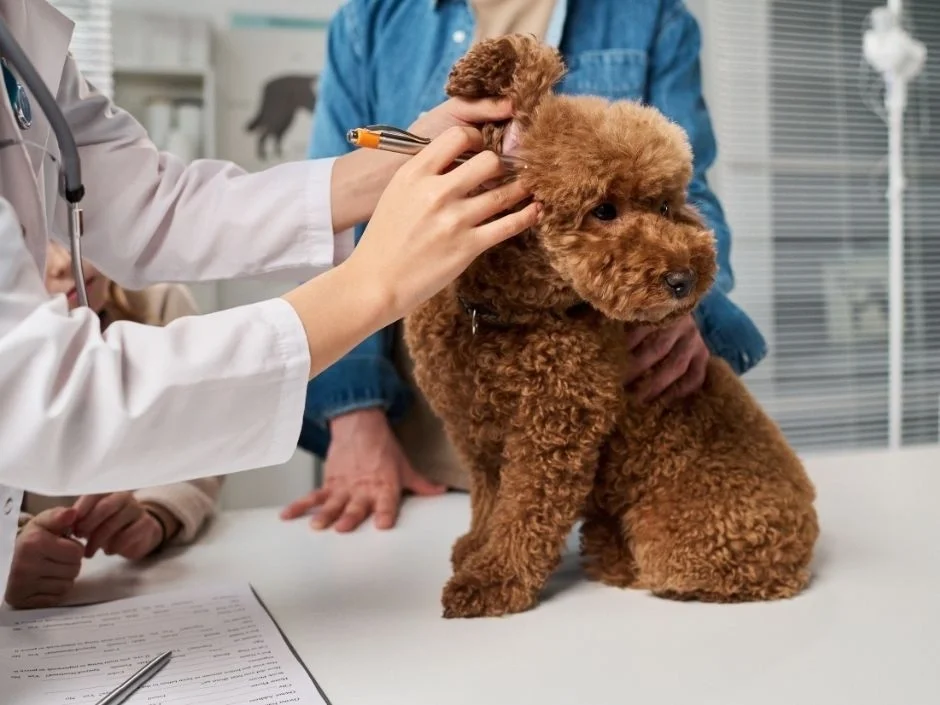
The vet examines the coat and skin surface for three categories of concern. Fleas and ticks are external parasites identifiable at visual and physical inspection; their presence signals potential exposure in the puppy's environment. Alopecia, or patchy and absent hair growth, may point to congenital skin conditions, fungal infection, or parasitic causes. Signs of infection in the coat or on the skin include inflammation, discharge, and lesions that suggest bacterial or yeast involvement. Findings in any of these three categories are documented on the VHR before clearance proceeds.
Eyes: Abnormal Discharge, Vision Problems, Eyelash Disorders, and Cherry Eye
Your puppy's eye exam assesses both eyes independently and covers four conditions. Abnormal discharge may indicate infection, blocked tear ducts, or early inflammation. Vision problems and eyelash disorders are evaluated for anything affecting the puppy's comfort or long-term eye health.
Cherry eye calls for extra attention for specific breeds. The condition is a prolapse (weakened muscles and ligaments that support an organ) of the third eyelid gland. It looks like how it sounds; a dog with cherry eye has a red bump in its eye, usually towards the bottom of the eyelid and centered towards the tear duct.
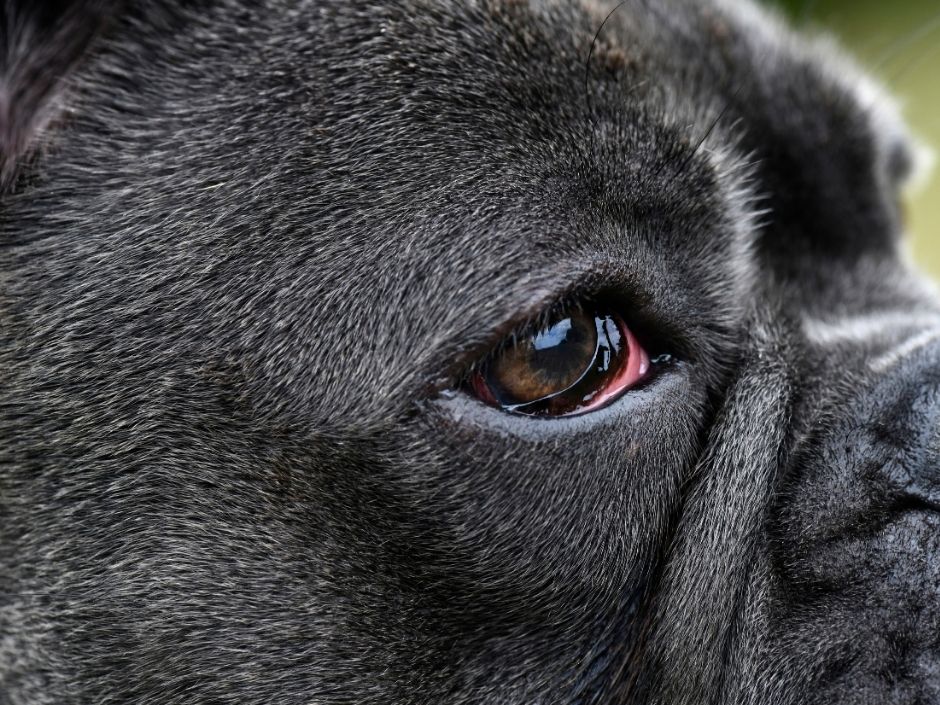
It increases the risk of chronic dry eye and recurring infections. Research from the Royal Veterinary College's VetCompass Program found that brachycephalic breeds are 6.9 times more likely to develop cherry eye. These snub-nosed breeds include:
- English Bulldogs and French Bulldogs
- Pugs and Puggles
- Boston Terriers and Frenchtons
- Shih Tzus, Brussels Griffons, and Lhasa Apsos
- Boxers and Mastiffs
The VHR documents whether cherry eye is present, and the steps for early treatment are taken care of between the vet and the breeder to give you peace of mind.
Mouth, Teeth, and Gums: Bite Assessment and Malocclusion
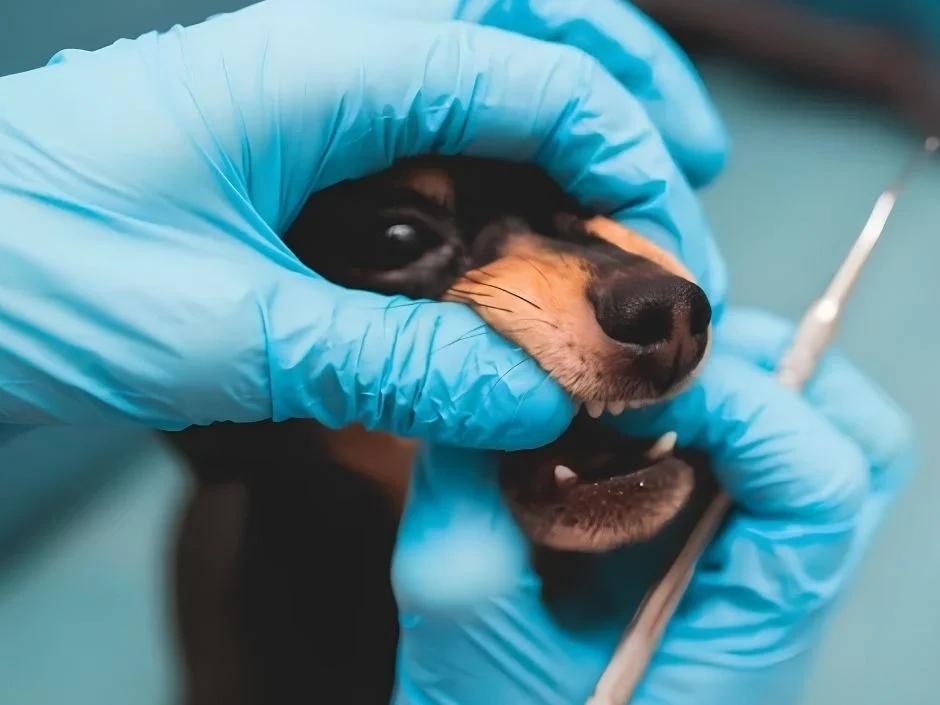
The oral assessment reviews your puppy's jaw, teeth, gums, and tongue. Malocclusion typically refers to what we call an underbite or overbite. It literally means "bad bite" and is the dental term for a misaligned jaw or incorrect spacing between the upper and lower teeth. If present, the vet documents records one of three outcomes: Overbite, Underbite, or NFB.
NFB stands for Normal For Breed. Certain breeds have a naturally occurring underbite as a recognized part of their anatomy, including Bulldogs, Boston Terriers, Boxers, Shih Tzus, and Pugs. For these dog types, it is a characteristic rather than a structural concern. The VHR distinguishes between functional and non-functional bite alignment, not between breed-standard conformation or textbook symmetry.
Musculoskeletal Health: Umbilical Hernia, Inguinal Hernia, Hip Pain, Patellar Luxation, and Open Fontanelle
This section of the VHR is the most comprehensive, covering five assessments within a single category. The vet feels for umbilical and inguinal hernias, evaluates hip joints for pain response during range-of-motion tests, checks each rear leg for patellar luxation, and examines the skull for an open fontanelle.
Hernias in Dogs
Small umbilical hernias are among the more common findings in young puppies and frequently heal naturally without intervention. Those that do not close on their own by 3 to 4 months of age are repaired at the time of spay or neuter with an excellent prognosis. Inguinal hernias (near the groin) are assessed for both sides independently and treated with the same approach.
Luxating Patella in Dogs
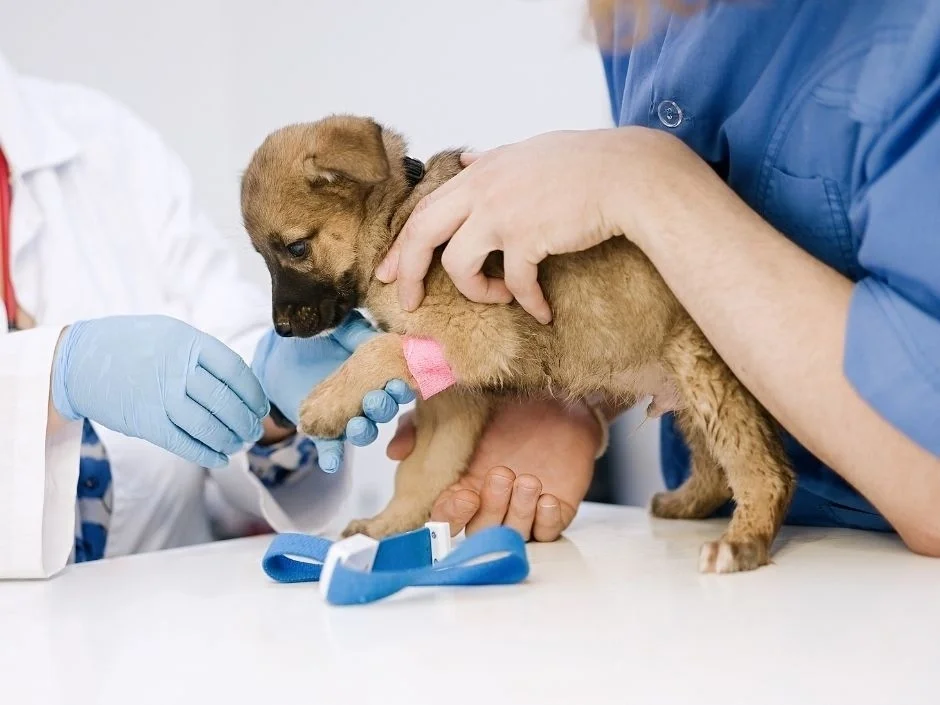
Patellar luxation describes a kneecap that displaces from the groove of the femur. If present, the vet "grades" the severity using the classification established by the OFA patellar luxation grading standards. Most veterinary guidance relies on surgical repair for Grade 3 and Grade 4. Grade 1 and mild Grade 2 cases typically require no treatment.
- Grade 1 (least severe): the kneecap might shift position returns to position on its own; typically harmless but sometimes uncomfortable
- Grade 2: occasional, spontaneous slipping and possible mild intermittent lameness
- Grade 3: near-permanent displacement with consistent lameness and some bone deformity
- Grade 4: the kneecap is permanently displaced and cannot be manually repositioned
Open Fontanelles in Dogs
The open fontanelle is a soft spot at the top of the skull where the bone plates have not yet fully joined together. In most puppies, this closes naturally by 9 to 12 weeks of age. In certain toy breeds, including Chihuahuas, Pomeranians, and Miniature Dachshunds, the fontanelle may remain open longer or remain open without clinical consequence. In Chihuahuas, the open fontanelle is called a molera and is recognized as part of the breed standard.
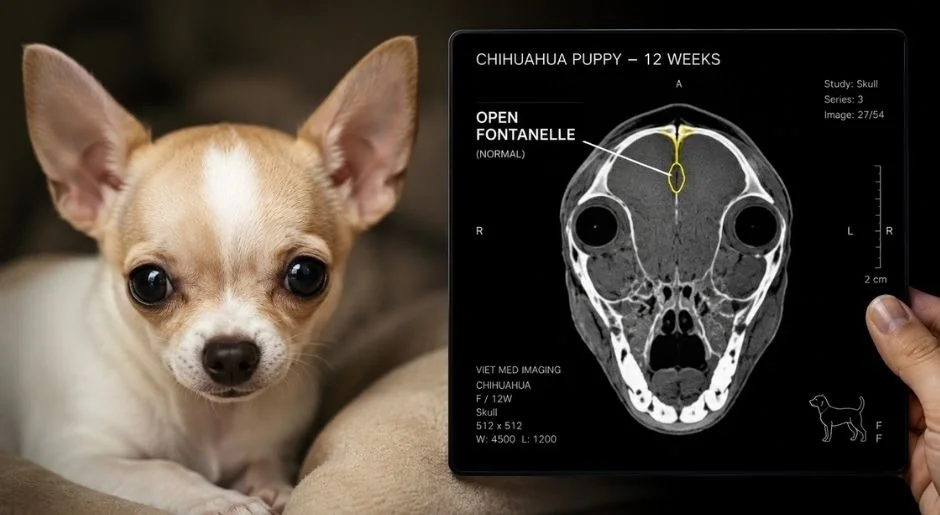
You will be notified if your puppy's VHR notes an open fontanelle, and you should consult with your veterinarian about monitoring symptoms of deeper issues in your dog such as seizures or nausea. The VHR records the size of any fontanelle in centimeters and might notate your puppy's open fontanelle is normal for the breed (listed as NFB on the health report).
In most cases, an open fontanelle is not clinically significant enough to cancel your puppy reservation. In series situations, you will have options to choose a different puppy or cancel for a refund. Pawrade recognizes the risks of major open fontanelles in dogs include hydrocephalus, seizures, and discomfort causing nausea, vomiting, and excessive scratching.
Cardiovascular: Heart Murmur Assessment
Heart murmurs are abnormal sounds in the heartbeat caused by a disruption in blood flow. A structural heart problem that is present at birth is known as a congenital heart condition. When a structural heart problem develops later in a dog's life, it is referred to as an acquired heart condition. Both congenital and acquired heart murmurs are rated by a grading scale 1-6 based on audibility and intensity. Grade 1 and 2 heart murmurs are very likely to resolve on their own and are not a debilitating condition. Heart murmurs graded at 3 or higher require a serious review of the puppy's health. In these more serious cases, Pawrade offers you the choice to switch or cancel your adoption.
| Grade | Severity | Description |
|---|---|---|
| Grade 1 | Least Severe | barely detectable, even in a completely quiet room |
| Grade 2 | Less Severe | soft sound, detectable by stethoscope |
| Grade 3 | Clinically Significant | heard without difficulty; similar loudness to the heartbeat |
| Grade 4 | Clinically Significant | louder than the heartbeat; can be softly felt by touch |
| Grade 5 | Severe | audible before the stethoscope fully contacts the chest wall |
| Grade 6 | Most Severe | loud and can be heard without a stethoscope; also felt as a vibration through the chest wall |
Likely to resolve Clinically significant Severe
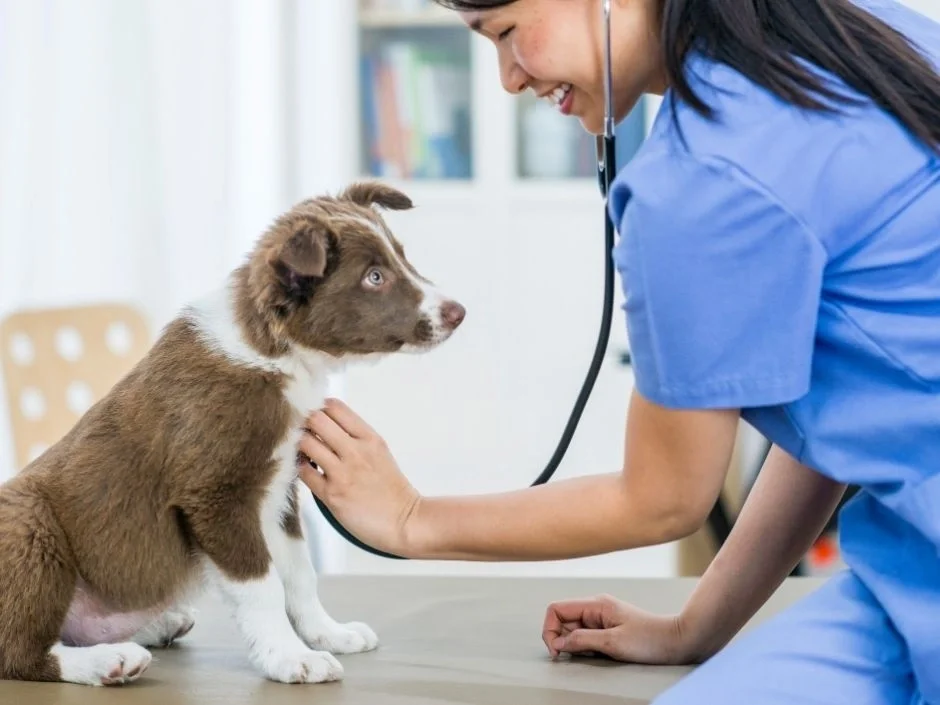
If a heart murmur is present, it usually appears at 6 to 8 weeks of age during periods of rapid growth. The majority of cases heal on their own by 4 to 5 months. And since congenital cardiac defects affect up to 1.6% of all dogs, the VHR becomes particularly important for catching heart murmurs at their early stage of development. .
Breeds with documented risk for congenital cardiac conditions include Boxers, Cavalier King Charles Spaniels, Bichon Frises, Bulldogs, and Boston Terriers. Toy breeds like Chihuahuas, Pomeranians, and Maltese are also more prone.
Respiratory: Coughing, Congestion, and Stenotic Nares
The respiratory assessment covers two auscultatory checks and one structural evaluation. The vet listens for clear lung sounds and a normal breathing rhythm when your puppy is at rest, noting any coughing, congestion, or labored breathing. Crackles or wheezing prompt a diagnosis before your puppy is cleared to come home.
Stenotic nares are nostrils that are abnormally narrow. This is a congenital structural condition that is hard to prevent, though mindful breeders in Pawrade's program will not breed sires or dams who have this issue. Breeds most commonly affected include brachycephalic breeds like English Bulldogs, French Bulldogs, Pugs, Boston Terriers, Boxers, Shih Tzus, Pekingese, and Lhasa Apsos.
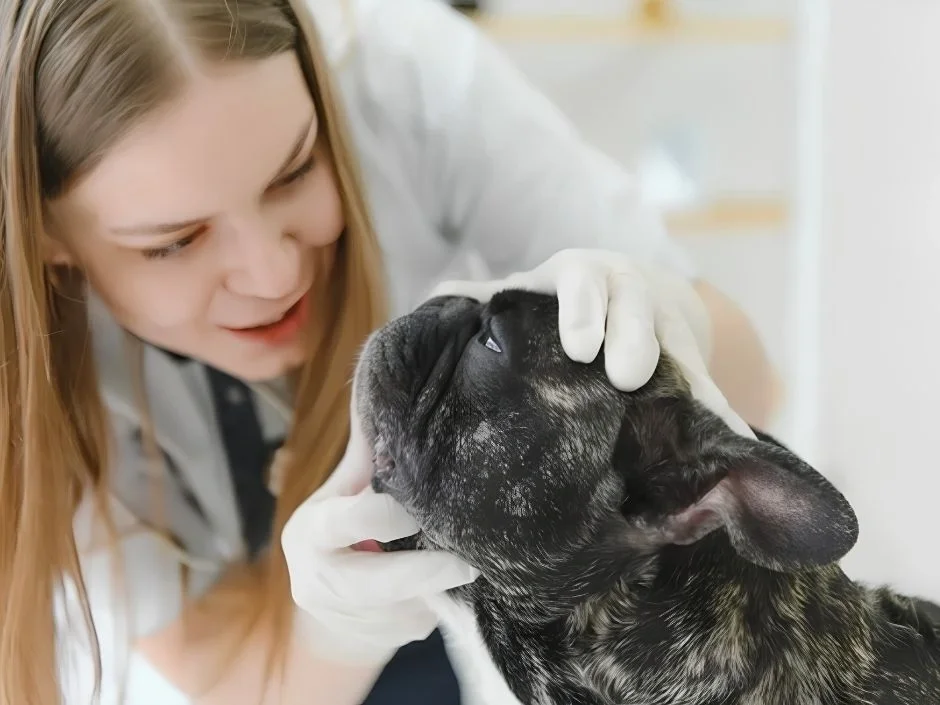
The degree of how restricted the nostrils are varies by individual puppy, and the vet evaluates whether the degree present in this specific puppy is likely to impair breathing under normal conditions.The vet may designate minor stenotic snares as NFB (Normal For Breed) in these types of breeds.
Ears: Abnormal Debris, Ear Mites, Signs of Infection, and Hearing Response
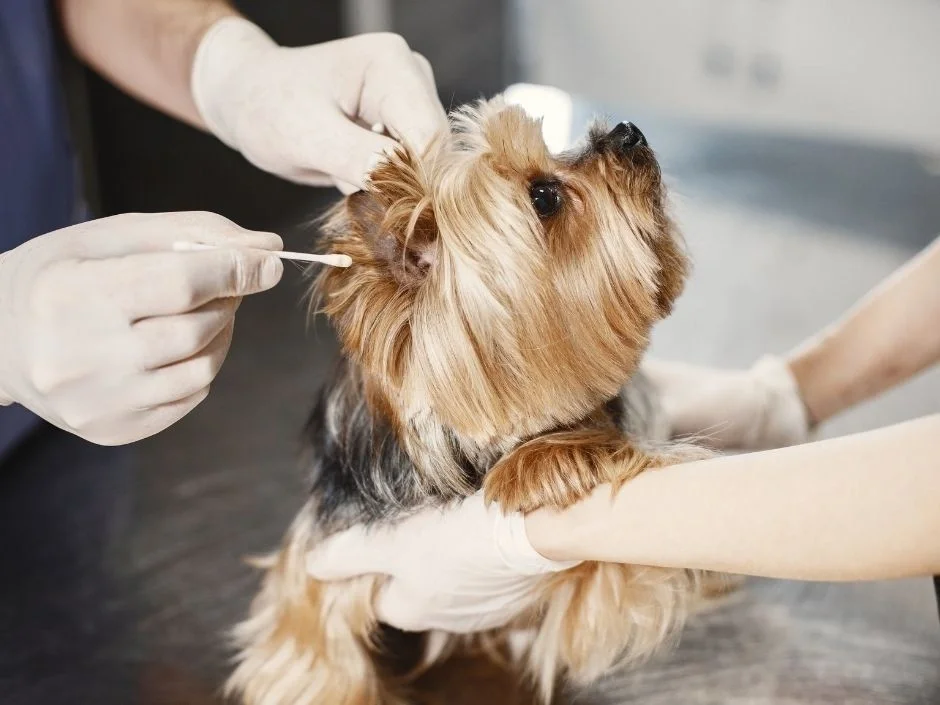
The ear exam is bilateral, meaning each ear is assessed independently. The vet checks for abnormal debris or discharge, ear mites, and signs of infection in the ear canal. Findings in one ear only are documented as "unilateral" rather than generalized across both, which gives you more details about your puppy's well-being.
The VHR form also includes a hearing response check; a puppy that shows no response to auditory stimuli may need follow-up testing, while the majority of puppies pass this screen without issue.
Urogenital: Redundant Vulva and Undescended Testicles
The urogenital section covers gender-specific evaluations of your puppy's genital region. For female puppies, the vet checks for a redundant vulva, a condition where skin folds at the vulva are pronounced enough to cause hygiene concerns or recurrent infections. A redundant vulva is generally not a major issue throughout a dog's life, but the concern would be that it traps urine and moisture where bacteria can grow, causing a higher risk for problems down the road. Mild cases often resolve as the puppy matures physically; more pronounced cases are addressed at the time of spay.
In male puppies, the vet checks whether both testicles have descended into the scrotum. Undescended testicles, also called cryptorchidism, carry higher lifetime risk for testicular cancer compared to a normally descended one. Veterinarians will remove both testicles at the time of neutering and strongly recommend scheduling the surgery after the dog reaches maturity.
Gastrointestinal: History of Vomiting and Diarrhea
The gastrointestinal section of the VHR is a symptom history check rather than a physical measurement. The breeder and licensed vet record whether the puppy has had notable vomiting or diarrhea in the period leading up to the exam. Both conditions in young puppies can signal parasite load, dietary sensitivity, stress, or underlying illness. Their absence is documented as part of the overall clinical picture, and this history, combined with what the fecal flotation test reveals, gives a complete gastrointestinal picture before clearance is granted.
Fecal Flotation Test
A fecal flotation test examines a stool sample under a microscope to detect parasite eggs, including roundworms, hookworms, and whipworms. The reason this test is mandatory rather than optional comes down to how parasites travel. Roundworms and hookworms can be passed from a mother dog to her puppies before birth or through nursing milk, which means a puppy raised in a well-managed, sanitary environment can carry intestinal parasites without any observable sign (Source: American Veterinary Medical Association). Puppies as young as 2 to 3 weeks of age can carry roundworms acquired through this maternal route (Source: Centers for Disease Control). Research published in the National Library of Medicine found that puppies between 2 and 6 months of age show the highest proportion of positive parasite test results of any canine age group, regardless of geographic region or veterinary visit type (Source: National Library of Medicine). The fecal flotation test catches what observation alone cannot.
The centrifugal flotation method maximizes diagnostic sensitivity for detecting parasite eggs in fecal samples, making it more reliable for identifying low-level infections than simple flotation (Source: Merck Veterinary Manual). When parasites are detected, treatment with medications such as pyrantel or fenbendazole is standard and well-established; repeating treatment two weeks after the initial dose ensures complete resolution as larvae mature into detectable adults (Source: Cornell University College of Veterinary Medicine). Pawrade's deworming protocol follows the Companion Animal Parasite Council's recommendation that puppies receive deworming medication beginning at 2 weeks of age and repeated every 2 weeks until regular broad-spectrum monthly prevention begins (Source: Companion Animal Parasite Council). The fecal result and the puppy's accumulated deworming history together form the parasite picture that travels home with your puppy, alongside the vaccination records covered in the section below.
What Vaccinations Has Your Pawrade Puppy Already Received?
Your Pawrade puppy has already received age-appropriate DHPP vaccinations and deworming treatments before it is cleared to come home to you.
The DHPP vaccine covers four diseases in a single series: distemper, hepatitis, parvovirus, and parainfluenza. The American Veterinary Medical Association recommends the series begin between 6 and 8 weeks of age, with the final dose in the initial series administered at 16 weeks or older to allow the immune system to fully respond. The gap between doses matters because maternal antibodies passed from the mother can interfere with the puppy's immune response in the early weeks of life. Spacing the series correctly ensures each dose is effective rather than neutralized by antibodies that are still present.
What this means for a Pawrade buyer: by the time your puppy ships, it has received the initial DHPP doses appropriate for its age. You receive the complete vaccination record with your puppy so your own veterinarian knows exactly where in the series your puppy stands and when the next dose is due.
| Age | Vaccines & Treatments |
|---|---|
| 6 – 8 weeks |
|
| 9 – 11 weeks (3 weeks later) |
|
| 12 – 14 weeks (3 weeks later) |
|
| Annually |
|
■ Deworming ■ Recommended ■ At Veterinarian's Discretion ■ Per State Requirements ■ Required by Law
Deworming follows a similarly structured protocol. The Companion Animal Parasite Council's puppy deworming protocol recommends deworming begin at 2 weeks of age and repeat every 2 weeks until the puppy is placed on monthly broad-spectrum prevention. This is not a precautionary measure applied only when parasites are suspected. It is a standard protocol applied to every puppy, because the maternal transmission route means even well-cared-for puppies from clean environments can carry parasites that observation alone does not detect.
Every vaccination and deworming decision is made by the attending licensed veterinarian for each individual puppy. The schedule above represents the standard Pawrade protocol. The vet may adjust timing based on the puppy's specific health status, breed, regional disease risk, and any findings from the VHR exam. That flexibility is what veterinary supervision of a protocol looks like, as opposed to a fixed schedule that ignores individual variation.
Every puppy listed on Pawrade has cleared this process. Browse available puppies and find the right fit for your family.
When Is a Puppy Ready for Pickup or Delivery? Age, Weight, and the Law
The federal minimum age for commercial transport of puppies is 8 weeks, established under the Animal Welfare Act and enforced by the USDA's Animal and Plant Health Inspection Service as the legal floor for any regulated business moving puppies in commerce federal minimum age requirements for puppy transport.
Pawrade's readiness standard begins at that legal floor and extends beyond it. A puppy that turns 8 weeks on the calendar but has not completed the VHR examination, has not received clearance from the attending veterinarian, or presents with any unresolved health concern on the day of the exam does not ship. The VHR is the final gate, not a parallel administrative step.
Weight is part of that readiness picture. The VHR documents each puppy's weight in pounds and ounces at exam time, and the attending vet evaluates whether that measurement is consistent with healthy development for the breed and age. A weight that falls below the expected range for a given breed at 8 weeks or smaller toy breeds who are under 2 pounds and under 12 pounds are held with the breeder until they reach a healthy weight.
Does Turning 8 Weeks Mean a Puppy Is Ready to Ship?
Age is a legal regulatory minimum but not a clinical standard, and Pawrade treats it as the starting point rather than the finish line. Readiness is a combination of age, weight, health status, and veterinary clearance. Even if your puppy is 8 weeks or older and has passed the final vet exam, the last criterion is that it weighs at least 2 pounds. This condition is almost completely restricted to toy and "teacup" breeds if your puppy's mature weight is expected to stay under 5-10 pounds.
The 8 to 12 week window also carries developmental significance beyond its legal standing. This is the period when a puppy's brain is most receptive to new environments, people, sounds, and experiences. A puppy that is developmentally, physically, and medically ready at 8 weeks is positioned to handle the transition to a new home far better than one sent before those systems are prepared. Understanding this combination is also what helps buyers interpret what happens when the exam finds something worth discussing, which is what the next section covers directly.
What Happens If Something Is Found During the Exam?
Findings from the VHR are documented and shared with the buyer, not withheld. This is one of the most common concerns buyers carry and one of the most important things to understand about the Pawrade process. The VHR exists to surface information, not to produce a clean bill of health regardless of what the vet finds. When the attending veterinarian documents a finding, that finding becomes part of the buyer's record.
Some findings are common in healthy puppies and carry no clinical concern at the time of the exam. A Grade 1 patellar luxation with no visible lameness, a small umbilical hernia, or a soft innocent murmur in a 7-week-old puppy are findings the attending vet may note on the VHR without those notations affecting travel clearance. The VHR records what is present so that the buyer and their veterinarian begin the relationship with complete information rather than a blank slate that conceals the puppy's early health history.
Other findings may affect the attending vet's clearance decision or prompt a direct conversation between Pawrade, the breeder, and the buyer about next steps. The process is designed to identify those situations before the puppy goes home, not after it arrives. At Pawrade, puppy contracts and health guarantee extend coverage to buyers for qualifying health conditions up to the puppy's 3rd birthday. The health guarantee is the long-term protection layer that complements the pre-departure VHR, and understanding what makes a breeder reputable is the foundation the entire process is built on.
Frequently Asked Questions About Pawrade's Puppy Health Screening
Does every Pawrade puppy see a state-licensed veterinarian?
Yes, every puppy listed on Pawrade is required to receive a Veterinary Health Report completed by a state-licensed veterinarian before it is cleared for pickup or delivery. The exam is performed after the puppy is reserved, which means the specific puppy the buyer has chosen is the one being evaluated. The VHR documentation is provided to the buyer and becomes part of the puppy's permanent health record from day one.
What does the Veterinary Health Report check?
The VHR covers ten distinct body systems: skin and coat, eyes, mouth and teeth, musculoskeletal structure, cardiovascular health, respiratory health, ears, urogenital health, gastrointestinal history, and a required fecal flotation test. Findings are noted as a binary Yes or No, but where applicable, the vet addes additional notes and uses standardized grading notation, including the 1 through 4 scale for patellar luxation and the 1 through 6 scale for heart murmurs, so findings are documented with clinical precision rather than general descriptors.
What vaccines has my Pawrade puppy already received before pickup?
Your puppy has received age-appropriate doses of the DHPP series and has been dewormed on a schedule beginning at 2 weeks of age. You receive the complete vaccination and deworming records with your puppy, which your own veterinarian uses to determine when the next dose in the series is due. If the attending vet made any adjustments to the standard schedule based on the puppy's individual health picture, those adjustments are reflected in the records you receive.
What happens if the vet finds a health concern during the exam?
Findings from the VHR are documented and shared with the buyer. Common findings such as an innocent soft heart murmur or a small underbite may be noted without affecting health clearance, and the buyer has full visibility into what was found and what the attending vet's assessment was. Findings that affect the clearance decision prompt a direct conversation between Pawrade, the breeder, and the buyer before any resolution is reached to release the puppy.
How is Pawrade's health screening different from what a typical breeder does on their own?
The primary difference is that Pawrade mandates a third-party, state-licensed veterinarian complete a standardized, documented examination on every listed puppy. This is not a breeder self-assessment or a voluntary step any individual breeder chooses to take. The VHR form, the vaccination protocol, and the clearance requirements are all conditions of listing on Pawrade, which means the buyer's confidence rests on a professional standard that sits independently of any individual breeder's own practices or judgment.
The process described here exists because purchasing a puppy you haven't met in person requires a different kind of trust than walking into a breeder's home and choosing from a litter yourself. The VHR, the vaccination records, and the readiness standards are what that trust is built on at Pawrade. Every puppy in the listings has cleared this process before it ever leaves the breeder.
You now know exactly what happens before your puppy leaves the breeder. The rest is finding the one that fits your life.