People fall for the German Shepherd's devotion: a smart, steady dog that wants a job and a family to do it for. It learns fast, stays alert and keeps a protective eye on the people it loves.
People fall for the German Shepherd's devotion: a smart, steady dog that wants a job and a family to do it for. It learns fast, stays alert and keeps a protective...People fall for the German Shepherd's devotion: a smart, steady dog that wants a job and a family to do it for. It learns fast, stays alert and keeps a protective eye on the people it loves.
Only with Pawrade, you receive a pet insurance policy with no waiting period included for immediate accident or illness coverage. *NH, NY, RI, SC and TN residents excluded
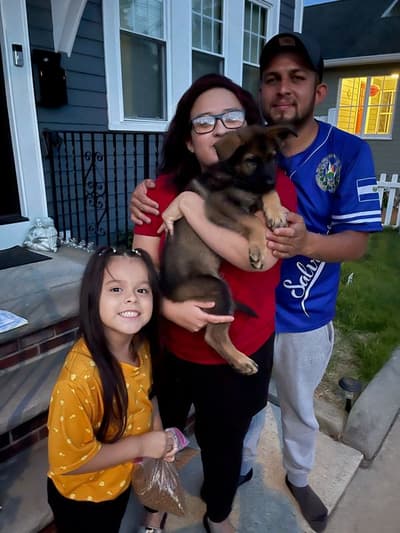
I could not be happier with the entire process! Shine is a great addition to my family! Pawrade has a great staff, and they will take the time to explain how everything will work.
“I could not be happier with the entire process! Shine is a great addition to my family! Pawrade has a great staff, and they will take the time to explain how everything will work. ”
Rose · German Shepherd
Jul 25, 2021
“Shes doing great she seemed really well cared during transport. Thank you so much”
Aleah · German Shepherd
Aug 8, 2023
“Everything that pawrade did was perfect, I got all the help I needed, I was updated all the time and the shipping of the pet was great!”
Anthony · German Shepherd
Dec 19, 2022
“The communication and co ordination from getting the puppy to our hands were very helpful and totally stress free. Thanks for the awesome experience.”
Puppy scams cost U.S. families millions every year. Here's how you know Pawrade isn't one: we're a named, audited business with a public track record you can check anywhere.
Pawrade data: parents of puppies placed through Pawrade (breeder-reported)
Height
22–26 in
Lifespan
10–12 years
Energy
High
Shedding
High
Group
Herding
AKC
German Shepherd Characteristics
Full-Grown Size
5 of 7SmallLarge
Grooming Needs
2 of 7SeldomRegularly
Good with Dogs
3 of 7Not ReallyYes!
Watchdog Ability
7 of 7LowHigh
Exercise Needs
7 of 7Couch PotatoHigh Needs
Your new best friend.
German Shepherd temperament
Personality and daily life
The breed standards describe a confident, fearless and steady dog. It is alert and keen to please, and neither shy nor aggressive. It is naturally reserved with strangers and does not make friends with everyone. Still, a German Shepherd should stay calm enough for a stranger to approach. Because the breed is protective, early socialization matters even more: let your puppy meet plenty of friendly strangers while it is young.
German Shepherds are people-oriented working dogs that need a job. A bored German Shepherd barks, digs, chews and chases cats or cars. Give it daily work, and teach self-control early, such as sitting for food and toys. Short, calm spells in a crate teach a young dog to settle and help prevent stress at being left alone (separation anxiety).
Training and play
German Shepherds are smart, eager to please and quick to learn. Police, military, search-and-rescue and guide-dog programs all use them. They learn best with rewards such as food, games and praise, given calmly and consistently. Harsh methods backfire. Teach a reliable recall (coming when called) from the start. The breed competes in obedience, rally, agility, tracking, herding, scent work and dock diving.
Pawrade data: parents of puppies placed through Pawrade (breeder-reported). Placements and reviews come from Pawrade's records.
A healthier start for a happier tomorrow.
German Shepherd care & grooming
Caring for a German Shepherd
The routine
Exercise needs
High
This is a high-energy breed. Plan on more than 2 hours of exercise and play every day. Mix walks, jogs, hikes or play with mental work, such as obedience or agility.
Coat and shedding
High
The double coat has a thick, coarse outer layer over a soft undercoat. It sheds heavily.
Weekly
Coat and grooming care
Brush weekly with a de-shedding brush, and daily during the big sheds each spring and autumn.
Monthly / as needed
Bath time
Bathe only when needed, and never shave the coat, which insulates the dog.
Keeping them safe
Heat safety
The thick double coat copes only moderately well with heat, so exercise in the cooler hours on hot days.
Book a yearly eye exam and limit strong sun, because sunlight makes pannus, an immune condition of the eye, worse.
Skin changesKnow when to call
Licking or sore skin under the tail needs a prompt vet visit.
Back and spineKnow when to call
Scuffing or wobbling hind legs in an older dog are worth a vet visit, because degenerative myelopathy affects the spinal cord.
Joints and movementGo easy while growing
While your puppy is growing, feed measured meals of a large-breed puppy food and keep it lean to protect the hips and elbows.
Body weightKnow when to call
Weight loss with large, pale stools is a reason to see your vet promptly.
Stomach and digestionKnow when to call
Learn the signs of bloat, because restless pacing, retching that brings nothing up or a swollen belly is an emergency.
Every milestone, together.
German Shepherd puppy milestones
Growing up: your German Shepherd's first two years
Before 8 weeks
Before your puppy comes home
Your puppy is still with its breeder, so use the time to get your home ready for a smart, busy young German Shepherd.
Put the crate in a room where the family spends time, or in your bedroom at night.
Buy a large-breed puppy food, and plan to feed it in measured meals rather than leaving food down all day.
Book a first vet visit for the week your puppy arrives, and plan to ask for heart, bite and weight checks.
Why it matters
A crate near people suits a dog that is happiest with its family, and measured meals help keep a growing puppy lean.
German Shepherd note
Most German Shepherd puppies on Pawrade go home at about 11 weeks, so start this stage whenever yours arrives.
8–10 weeks
The first week home
Everything is new, and a crate near your family gives your puppy a calm place to rest. Short, calm spells in the crate also teach it to settle when you step away.
Take your puppy out first thing in the morning, last thing at night and after every nap.
Start crate, handling and grooming habits in the first days, with short and gentle sessions.
Ask the vet to listen to the heart at that first visit, and plan a DNA panel that includes a drug-sensitivity test (MDR1).
Why it matters
A steady routine teaches your puppy where to go, and early handling makes vet visits and grooming easier for life.
German Shepherd note
That test matters because some German Shepherds carry a gene change that makes certain drugs riskier.
10–12 weeks
Weeks 2 to 4
The first 3 months are the most important time for a puppy to learn that new people, places, animals and things are safe. For a protective breed like the German Shepherd, meeting friendly strangers now matters even more.
Introduce your puppy to plenty of friendly strangers, calm dogs and new places, and keep each meeting short and happy.
Sign up for a puppy class, which can start as early as 7–8 weeks, and keep away from sick dogs.
Play short confidence games with new sounds and uneven surfaces, just a few minutes at a time.
Why it matters
Broad early socialization keeps the breed's natural protectiveness from turning into fear or aggression later.
German Shepherd note
A well-raised German Shepherd stays reserved with strangers but calm enough to be approached.
3–4 months
3 to 4 months
The vaccine series usually finishes at about 16 weeks, as your vet advises. Bladder control is growing too: a puppy can usually hold it about an hour for each month of age, so a 3-month-old can wait about 3 hours.
Keep every vaccine appointment your vet sets, because your own vet completes the series that began before your puppy came home.
Stretch the time between potty trips slowly, and keep the first-thing, last-thing and after-nap trips.
Practice a reliable recall in the house and yard every day, with a reward each time your puppy comes.
Ask for a sit before meals and toys, so your puppy learns self-control early.
Why it matters
A bored German Shepherd may chase cats or cars, so a reliable recall and self-control are worth building now.
German Shepherd note
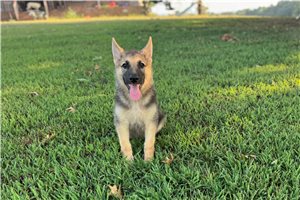
German Shepherd ears usually stand by about 4 months, and they may go up and down while the teeth change.
4–6 months
4 to 6 months
Teething is in full swing: baby teeth start to fall out from about 12 weeks, and by about 6 months the adult teeth are in. Chewing is strongest while the teeth change.
Keep only a few chew toys out at a time and rotate them, and hand one over whenever your puppy starts on a hand or chair leg.
Give short daily jobs, such as chase-then-stop toy games, scent games and puzzle toys.
Keep your puppy lean on measured meals, and have any limping checked by your vet.
Why it matters
Daily jobs use up the energy that a bored German Shepherd would put into barking, digging and chewing.
German Shepherd note
A large-breed puppy food slows the rate of growth, not the final size, and helps protect the joints.
6–12 months
6 to 12 months
Adolescence usually starts at about 6–8 months. Your German Shepherd may test boundaries and seem to forget its training, which is a normal phase.
Keep the house rules the same, and keep up obedience training with rewards, calmly and consistently.
Talk with your vet about if and when to spay or neuter, since the timing can affect joint health in large breeds.
Save forced, repetitive running for later, because the growth plates stay soft while your puppy grows.
Have any front-leg or shifting-leg limping checked, since growing pains (panosteitis) and elbow problems often show at this age.
Why it matters
Harsh methods backfire with this breed, so patience and rewards get far better results than force.
German Shepherd note
Large breeds like the German Shepherd keep growing until about 18 months, so joint care still matters.
1–2 years
1 to 2 years
Adolescence winds down, and most dogs are fully grown by about 2 years. German Shepherds may not reach full maturity until 2–3 years, and males often take longer.
Once growth is done, try a sport such as obedience, tracking, herding, scent work or dock diving.
Keep up daily exercise with mental work, and brush weekly, more often during the spring and autumn sheds.
Book a vet exam at least once a year, and ask about hip and elbow X-rays and an eye check.
Avoid big meals and hard exercise around mealtimes, because both can trigger bloat.
Why it matters
Pannus usually appears in adulthood, so a yearly eye exam catches it early.
German Shepherd note
Bloat risk rises with age, so learn the emergency signs now: restless pacing, retching that brings nothing up or a swollen belly.
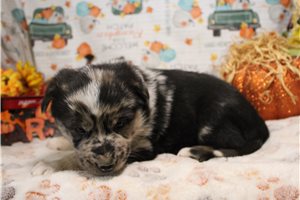
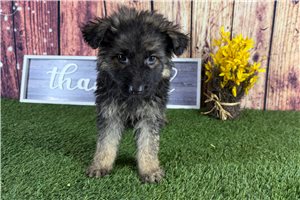
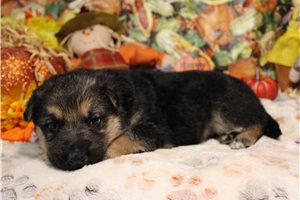
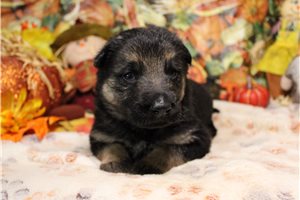
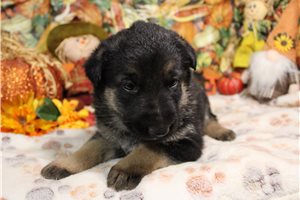
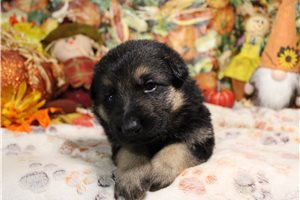
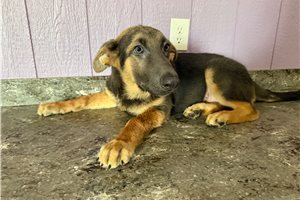
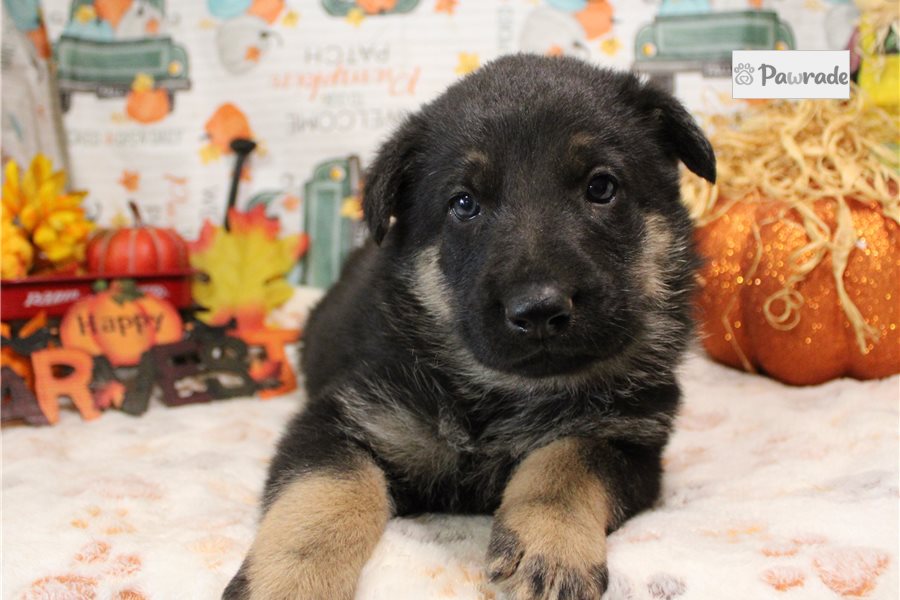
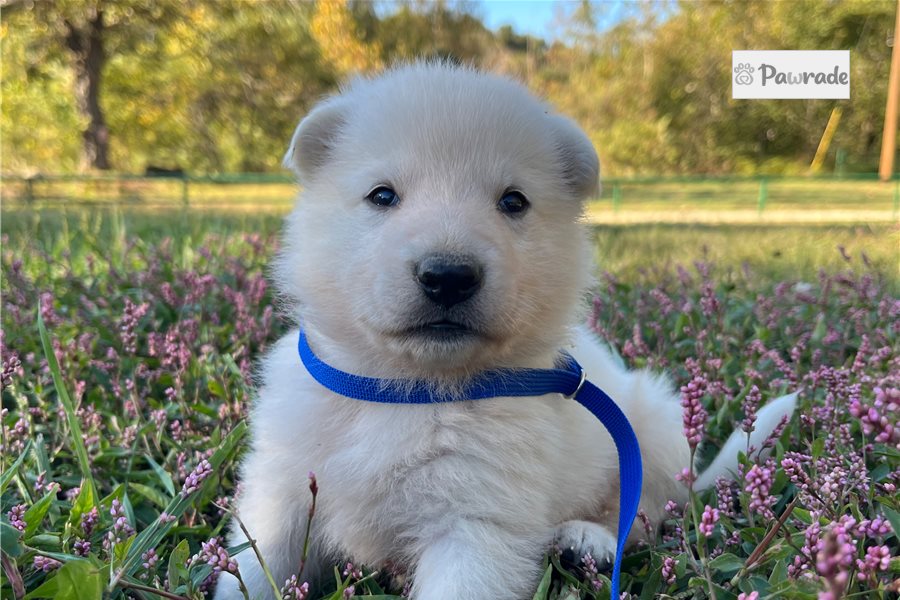
The German Shepherd is longer than it is tall, with upright, pointed ears and a long, ground-covering trot. The nose is black in every color.
Colors and coat
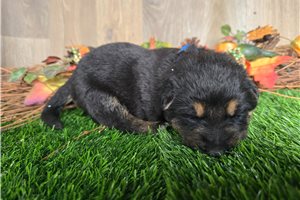
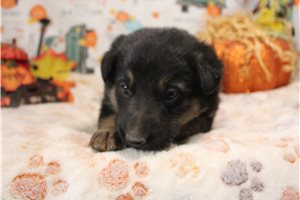
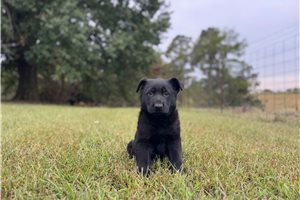
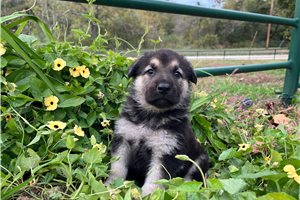
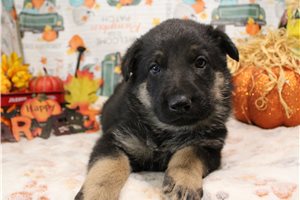
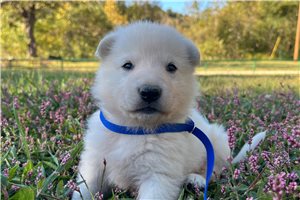
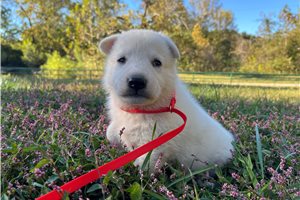
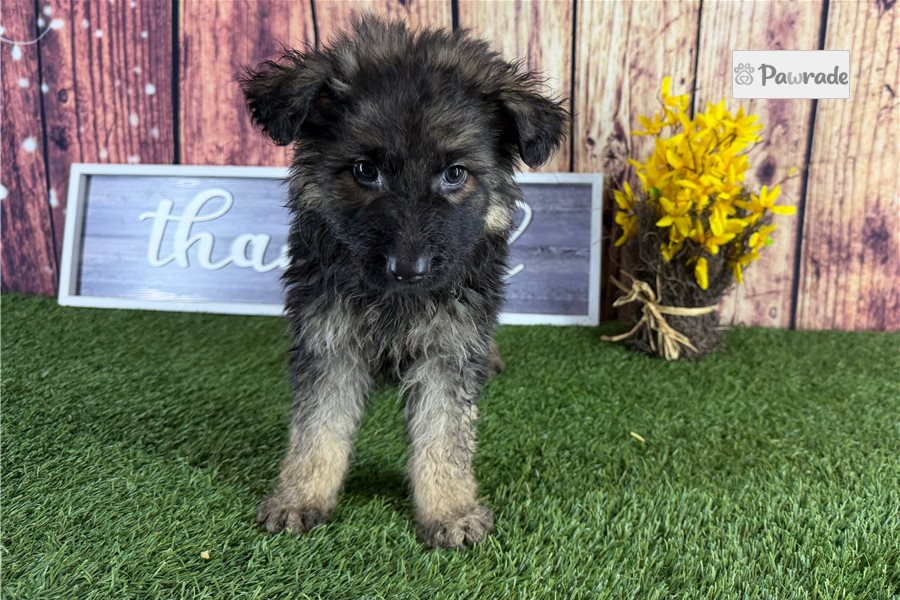
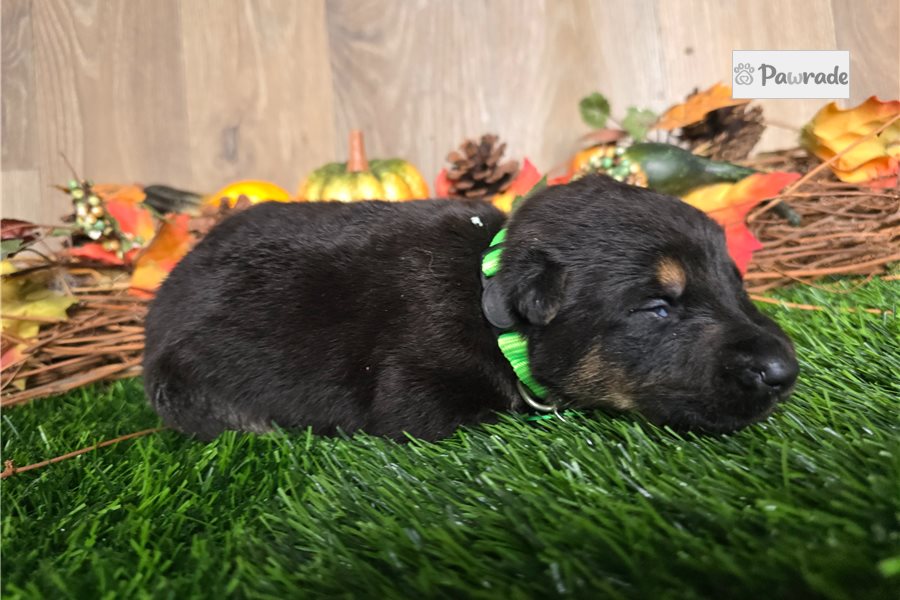
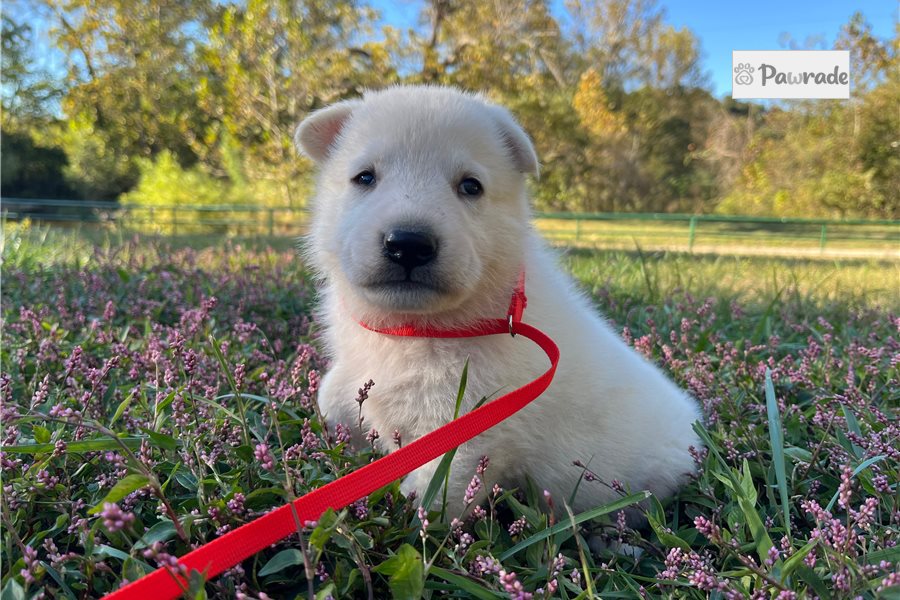
The AKC standard permits most colors and prefers strong, rich ones. The familiar colors are black and tan, black and red, and black and cream, often in a saddle pattern. Bi-color, solid black and sable (gray, tan, red or silver hairs with black tips) are also familiar. White, blue, liver and pale, washed-out colors are outside the AKC breed standard. The UKC standard accepts white. The standard coat is a medium-length double coat. A long coat is outside the AKC breed standard, though the UKC and the World Canine Organization (FCI) accept a long coat with an undercoat.
Colors listed by Pawrade breeders
Agouti
Bicolor
Black
Black & Cream
Black & Red
Black & Silver
Black & Tan
Black & White
Blue
Blue & Tan
Blue Merle
Brindle
Brown
Cream
Gray
Liver
Red
Red & Black
Sable
Sable & White
Solid Black
Solid White
Tan
White
White & Black
White & Brown
Keeping your German Shepherd healthy
German Shepherds are known to be prone to a handful of conditions, such as hip and elbow dysplasia and an eye condition called pannus. Everyday care and regular checkups catch most of them early.
A little history, a lot of heart.
German Shepherd history
History and fun facts
1899
The breed began in Germany in 1899.
That year, cavalry captain Max von Stephanitz and Artur Meyer founded the German Shepherd Dog club (SV).
They bred the new breed from herding dogs of central and southern Germany.
Von Stephanitz bought a dog named Hektor Linksrhein, renamed him Horand von Grafrath, and registered him as the breed's first dog.
As large flocks declined, he promoted the breed for police, military, messenger and rescue work.
1908
The AKC registered its first German Shepherd in 1908.
During World War I, the AKC renamed the breed the Shepherd Dog, and Britain called it the Alsatian.
1930
The American club took back the German name in 1930.
After World War I, returning soldiers and the film dogs Rin Tin Tin and Strongheart made the breed a favorite.
1928
In 1928 Buddy became Morris Frank's guide dog and helped launch The Seeing Eye, founded in 1929 to train German Shepherds as guides.
After the Second World War, American and German breeders followed different lines, and the two types still look somewhat different.
1987
German Shepherds won Best in Show at Westminster in 1987 and 2017.
The German Shepherd Dog Club of America is the breed's AKC parent club.
Checked with care before travel.
German Shepherd Veterinary Health Report
Your puppy's Veterinary Health Report
Before your German Shepherd puppy comes home, the breeder's licensed vet gives it a full hands-on exam to PetPay's exam standards, and the results go into its Veterinary Health Report.
The exam, a health certificate and a stool test for parasites all happen 3 to 5 days before your puppy leaves.
1It is a check of your own puppy, not paperwork about its family, so you start with a clear record of how your puppy is doing.
2If the vet finds something that could put your puppy at risk during travel, your puppy stays with the breeder until it's resolved.
3Problems that can be treated before travel are treated by the breeder's licensed vet first.
4Anything else the vet notes is shared with you.
5A hard copy of the report travels with your puppy for your records, and a digital copy is in your PetPay account.
PetPay Veterinary Health Report form
16 areas checked on the exam
Closer look for German ShepherdsOn every puppy's report
Puppies must be at least 8 weeks old and weigh at least 2 lb before they travel. Every Pawrade puppy also comes with a health guarantee administered by PetPay, independent of the seller. The terms are on the health guarantee page.
A German Shepherd puppy's price reflects what goes into it: its pedigree and registration, its coat and color, and the breeder's program. Every Pawrade puppy's price also includes the pre-travel exam by the breeder's licensed vet, the Veterinary Health Report and a health guarantee administered by PetPay. See today's price range for German Shepherd puppies on Pawrade's German Shepherd listings.
Typical asking price
$3,040
Based on 468 German Shepherd listings in the last 12 months
Both have double coats and are screened for hips and elbows, but the Golden is typically outgoing where the German Shepherd is reserved and protective.
Frequently asked questions about German Shepherd puppies
Frequently asked questions
Adult German Shepherds weigh 50–90 lb and stand 22–26 in tall. Parents of Pawrade German Shepherds typically weigh 70–110 lb (fathers) and 60–90 lb (mothers).
Males are bigger, at about 65–90 lb and 24–26 in tall, against about 50–70 lb and 22–24 in for females. Males also tend to reach full maturity later.
The familiar colors are black and tan, black and red, black and cream, bi-color, solid black and sable. The AKC standard permits most colors, while white, blue, liver and pale, washed-out colors are outside the AKC breed standard.
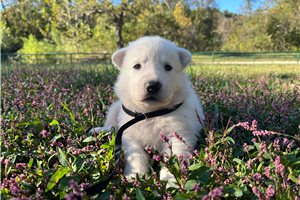
White is a German Shepherd color, though it is outside the AKC breed standard; the UKC accepts it. The white line is also recognized as its own breed: the White Shepherd (UKC) or Berger Blanc Suisse (FCI).
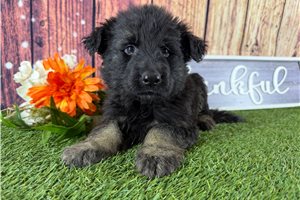
The stock coat is the medium-length double coat of the AKC standard, and the long coat has a longer outer coat over an undercoat. A long coat is outside the AKC breed standard, while the UKC and FCI recognize it as long as it has an undercoat.
They are informal lines within one breed, and the registries recognize one German Shepherd with one standard. American and German breeding went separate ways after the Second World War, which is why dogs from different lines can look different.
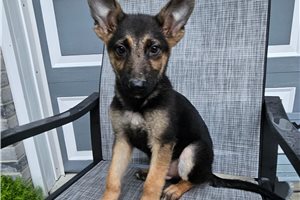
A German Shepherd puppy's ears usually stand by about 4 months. They may go up and down while the puppy is teething, and the standard calls for upright adult ears.
German Shepherds are confident, steady and eager to please, and the standards describe a fearless, attentive dog that is neither timid nor hostile. They are reserved with strangers and bond closely with their people.
German Shepherds are naturally protective and aloof with strangers, which is why police and military programs use them. Broad socialization with friendly strangers keeps that instinct from turning into fear or aggression.
Most German Shepherds are reserved with strangers at first, and the breed is not given to making friends with everyone. A well-socialized German Shepherd should still be approachable, and the standard calls for a self-confident dog, not a shy one.
German Shepherds are high-energy working dogs that need a daily job. Give yours daily exercise plus mental work, such as obedience, scent games or puzzle toys.
German Shepherds work as guide dogs, therapy dogs, search-and-rescue dogs and detection dogs. The Seeing Eye, the American guide-dog school, was founded to train German Shepherds.
German Shepherd puppies on Pawrade usually meet children and other dogs early: breeders report socializing 93% of litters with large dogs and 81% with young children. Keep it going at home, because broad socialization with friendly people helps a protective breed stay steady. Among Pawrade German Shepherd buyers, many already have another dog or children at home.
It depends on training, because a bored German Shepherd may chase cats and other animals. Teach self-control, such as sitting for food and toys, and a reliable recall early.
A German Shepherd needs more than 2 hours of exercise and play a day. Mix walks, jogs, hikes or play with mental work such as obedience or agility, because a bored German Shepherd turns destructive.
Not for long stretches, because German Shepherds are people-oriented dogs that need a job, and boredom leads to destructive behavior. Short crate breaks from puppyhood help prevent separation anxiety.
It can work with a lot of daily exercise and training, but it is not the easiest fit for a high-energy dog that needs a job. Almost all German Shepherd buyers on Pawrade have a yard.
Forced, repetitive running should wait until your puppy has finished growing, which in large breeds takes until about 18 months. Growth plates in a puppy's legs stay soft while it grows, and strenuous exercise can hurt them. Until then, keep play free and varied, and keep your puppy lean.
German Shepherds shed heavily, and they blow their coat about twice a year, in spring and autumn. They are not a low-shedding breed.
Brush a German Shepherd more than once a week with a de-shedding brush, and daily during the heavy sheds. Bathe only when needed.
Never shave a German Shepherd, because the double coat insulates it. In hot weather, move exercise to the cooler hours instead.
German Shepherds are intelligent, eager to please and quick to learn. Use food, games and praise, given calmly and consistently, because harsh methods backfire.
German Shepherds do well in obedience, rally, agility, tracking, herding, scent work, flyball, dock diving, IGP (Schutzhund) and therapy work. As a tending herder, a German Shepherd can take an AKC herding instinct test with no prior training.
Boredom is the usual reason, because an under-exercised German Shepherd barks, digs and chews destructively. Daily jobs, such as scent games, puzzle toys and chase-then-stop toy games, give that energy an outlet.
A German Shepherd puppy can usually hold its bladder for about an hour for each month of age, so a 3-month-old can wait about 3 hours. Take young puppies out first thing in the morning, last thing at night and after naps.
Put the crate in a room where the family spends time, or in your bedroom at night. Short, calm spells in the crate teach a young German Shepherd to settle and help prevent separation anxiety. Breeders on Pawrade report whether they have started crate training, so ask how far your puppy has got.
Adolescence usually starts at about 6–8 months, and many dogs test boundaries and seem to forget their training for a while. It is a normal phase, and consistent training, patience and plenty of exercise help. Keep training calm and reward-based, because harsh methods backfire with this breed.
Puppies travel only once they are at least 8 weeks old and weigh at least 2 lb. Most German Shepherd puppies go home at about 11 weeks, usually between 9 and 18 weeks.
German Shepherd breeders on Pawrade report a typical litter of 7 puppies, usually between 4 and 10.
Set up a crate in a room where the family spends time, and buy a large-breed puppy food to feed in measured meals. Book a first vet visit that checks the heart, bite and weight, and ask about a DNA panel that includes MDR1.
Start the day your puppy comes home, because the first 3 months are the most important time for learning that new people, places and animals are safe. Puppy classes can start as early as 7–8 weeks, as long as your puppy stays away from sick dogs. For a protective breed, plenty of friendly strangers matter most.
Most German Shepherd litters on Pawrade meet other dogs and children before the puppies go home. Breeders report socializing 93% of litters with large dogs, 81% with young children and 71% with older children. Most also get their puppies used to car rides and household sounds such as pots and pans. These figures come from what breeders reported for 320 litters.
Feed a large-breed puppy food in measured meals rather than leaving food down all day. Growth food slows the rate of growth, not the final size, and helps protect the joints.
Large breeds reach most of their adult size by their first birthday and full height by 12–18 months, then keep filling out. Full maturity comes at 2–3 years, and young dogs often look lean until then.
Spaying or neutering is a decision to talk through with your vet, because the right timing depends on things like sex and expected adult size. In large breeds the timing can affect joint health, so ask your vet about it early.
The puppy vaccine series usually finishes at about 16 weeks, as your vet advises. Your puppy's vaccination and deworming records are separate documents that travel with your puppy. Bring them, with the Veterinary Health Report, to your first visit so your vet starts from the same record. Puppy classes can still start before then, as long as your puppy stays away from sick dogs.
The Veterinary Health Report is the record of your German Shepherd puppy's exam before it goes home. The breeder's licensed vet gives the puppy itself a full hands-on exam to PetPay's exam standards and writes down what they find. It gives you and your own vet a clear starting point for your puppy's care.
The breeder's licensed veterinarian examines every puppy before it goes home, to PetPay's exam standards. The results are recorded in the puppy's Veterinary Health Report, and a copy travels with your puppy for your records.
The breeder's vet examines the whole puppy and pays close attention to a few things that matter in German Shepherds. The vet listens to the heart for a murmur, looks at the bite and the teeth coming through, and compares the puppy's growth with its littermates.
Before travel, every puppy follows PetPay's vaccination and deworming schedule as far as its age allows: deworming at 2, 4, 6, 8, 10 and 12 weeks, and the distemper, parvo, adenovirus and parainfluenza combination shot at 6–8, 9–11 and 12–14 weeks. Bordetella and corona are given at the vet's discretion, and no vaccine is given within 3 days of travel. Rabies is given by a licensed vet on the schedule your state requires. Your own vet completes the series. Your puppy's vaccination and deworming records are separate documents that travel with your puppy. Bring them, with the Veterinary Health Report, to your first visit so your vet starts from the same record.
If the vet finds something that could put your puppy at risk during travel, your puppy stays with the breeder until it's resolved. Problems that can be treated before travel are treated by the breeder's licensed vet first. Anything else the vet notes is shared with you.
Puppies grow and change quickly, and their immune systems are still developing, so no single exam can find everything. In German Shepherds, conditions such as hip dysplasia and degenerative myelopathy show up as a dog grows or ages. The report is a strong early look at your puppy, and your own vet builds on it at every checkup.
German Shepherd buyers rate their Pawrade experience 4.7 out of 5 on average, from 341 reviews, and about 82% of those reviews give 5 stars.
Right now, most German Shepherd puppies on Pawrade are listed within the typical range shown on Pawrade's German Shepherd listings. Each breeder on Pawrade sets their own price, and each puppy's listing shows it. A German Shepherd puppy's price reflects what goes into it: its pedigree and registration, its coat and color, and the breeder's program. Every Pawrade puppy's price also includes the pre-travel exam by the breeder's licensed vet, the Veterinary Health Report and a health guarantee administered by PetPay.






 German Shepherd note