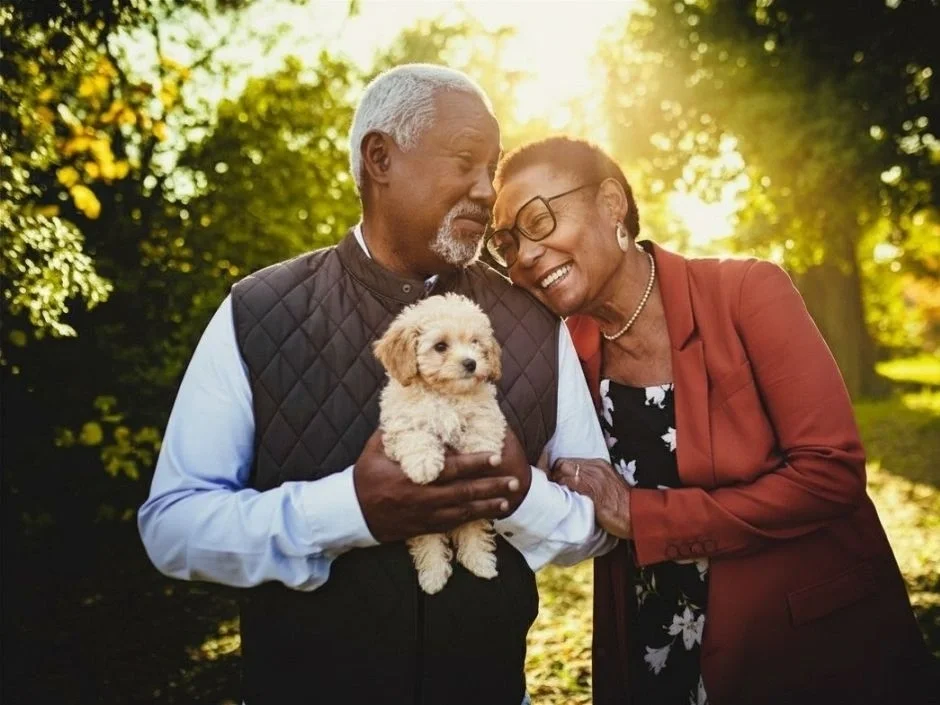
The golden years cover a wide variety of lifestyles, interests, and daily needs. Some enjoy traveling afar in their free time. Others enjoy a calm retirement, while others stay on-the-go with grandkids and volunteering. More than half of adults (55%) age 50 and older currently have a pet, and among those pet owners, 70% have dogs, making dogs the most common companion animal in this age group.
For older adults, a puppy can reduce loneliness, promote physical and mental health benefits, create a daily rhythm and purpose, and genuinely change quality of life. At Pawrade, we understand the therapy and joy a puppy has to offer, and we treat senior citizens with sincerity, empathy, and understanding about matching a puppy with the right household.
The Physical Benefits of Dog Ownership After 60
A meta-analysis of data from 3.8 million patients across 10 studies found that dog owners had a 24% reduced risk of dying from any cause and a 65% reduced risk of dying following a heart attack, compared to non-dog-owning counterparts. For seniors living alone specifically, dog owners hospitalized for a heart attack showed a 33% lower risk of death than those without a dog. From the study, The American Heart Association concluded that dog ownership is "probably associated with decreased cardiovascular disease risk," making it one of the few lifestyle factors to receive that level of institutional endorsement.
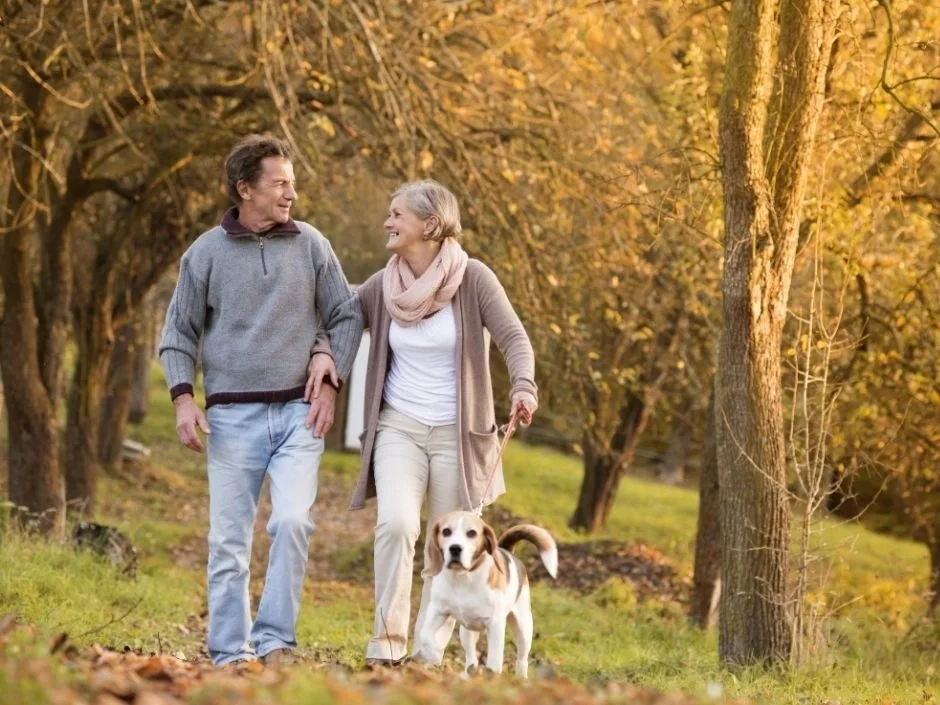
The physical case extends beyond heart health. Dog owners are 54% more likely to meet recommended physical activity levels than non-owners, per a cross-sectional study of more than 5,000 adults reviewed by the Human Animal Bond Research Institute.
Recently, a 2026 review in Frontiers in Veterinary Science found that older adults who own pets walk up to 18.9 minutes more per week than adults without pets. Animal-assisted interventions and physical activity benefits of dog ownership in older adults make sense. Those minutes compound across weeks and months into a meaningful difference in joint mobility, cardiovascular function, and overall activity levels for adults in their 60s, 70s, and beyond.
Emotional and Mental Benefits of Dog Ownership for Older Adults
Owning a dog or raising a puppy has strong emotional benefits, as well. The University of Michigan's National Poll on Healthy Aging sampled adults age 50 and older and found that 83% of pet owners between ages 50 and 80 reported that having a pet gives them a sense of purpose. Interestingly, this data rose 10 percent compared to the poll's results in 2018. The fulfilling addition to life a dog brings has been connected to reduced loneliness, reduced anxiety, and stronger memory in the later years as well.
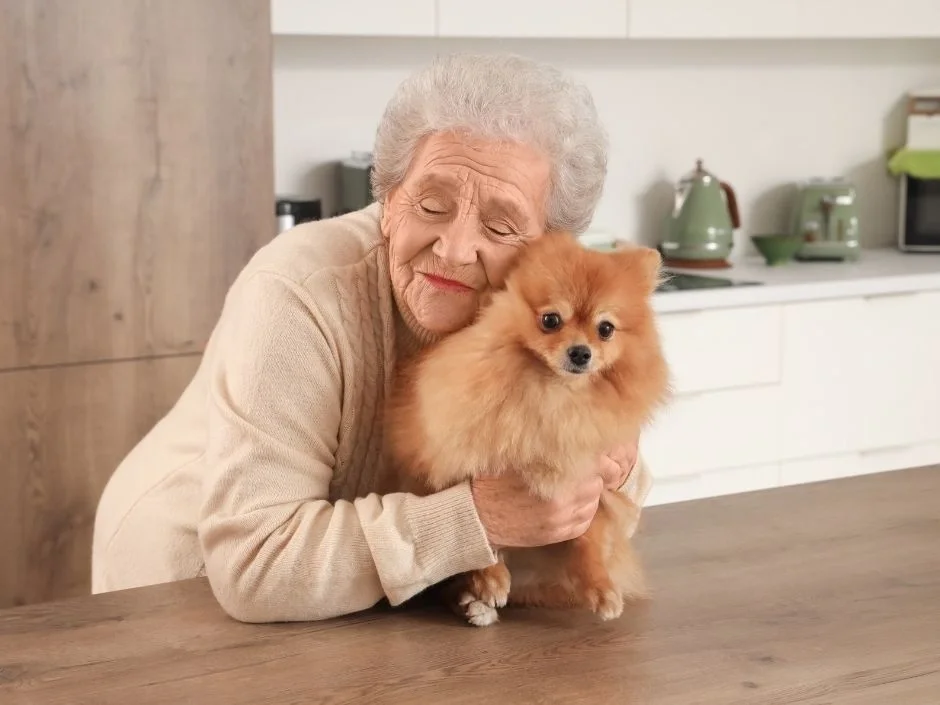
Loneliness affects approximately 29% of noninstitutionalized older adults, and researchers have linked solitude as potentially more dangerous to long-term health than obesity. The relationship owning a dog well-matched it creates outlets for social contact, physical movement, and a daily structure that addresses the conditions driving that statistic. Dog walking has been linked to lower body mass index, fewer limitations to of daily living activites, fewer physician visits, and more frequent moderate and vigorous exercise in older adults. The breed you choose determines whether those benefits are accessible or inaccessible given your specific situation.
Social Benefits of Dog Ownership for Older Adults
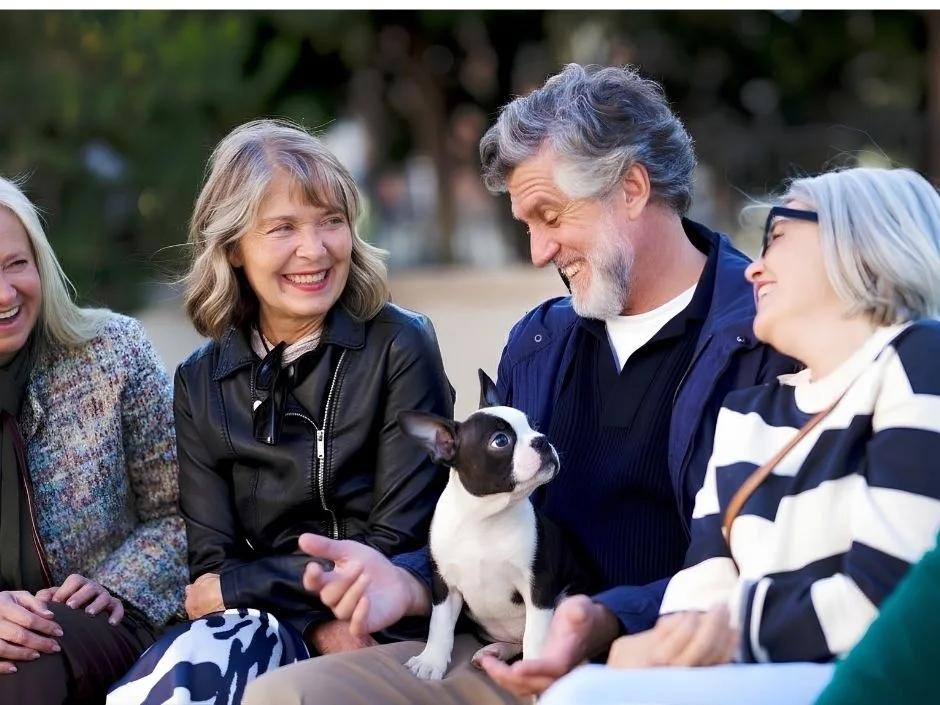
A 2024 study published in BMC Psychology found that dog owners engaged in higher levels of both dog-related and non-dog-related physical activity compared to owners of other companion animals, Dogs help create structure, provide a reason to move around and stay active each day, and open up opportunities for social interaction with family, other dog owners, and passing strangers. The effects compound into companionship, health advantages, and "a reason to get up in the morning." The combination of physical routine and social contact through owning and raising a puppy is the basis behind most of the health research.
Pet ownership and social connection in older adults
Recommended Dog Breeds for Senior Citizens
This list is comprised of smaller dog breeds for three specific reasons: they are easier to manage on a leash regardless of the owner's physical strength, they qualify for most apartment and senior living community pet policies, and they can be safely handled in any situation requiring lifting or close physical care. The four breeds below are some of Pawrade's favorites to recommend to seniors seeking help.
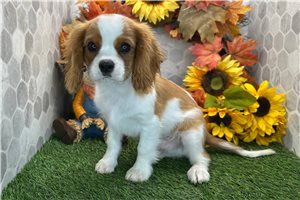
Cavalier King Charles Spaniel
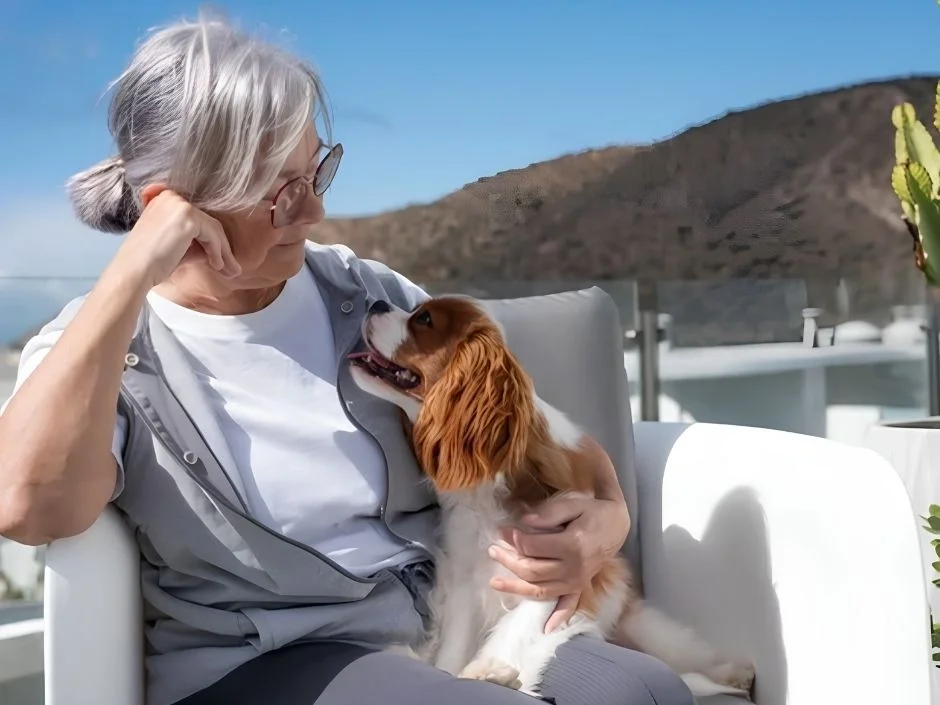
The AKC King Charles Spaniel breed standard describes the Cavalier temperament as "friendly, non-aggressive with no tendency towards nervousness or shyness." Bad tempers are unusual and would disqualify one in competition. They were bred to be loyal companions to royal families, so they prefer staying close to their humans and treated with preferential treatment.
The breed weighs 13 to 18 pounds on average and stands 12 to 13 inches tall, making them a feasible size to deal with. Two 20-minute daily walks satisfy their basic exercise needs, though Cavies are natural sniffers and natural hunters, so prepare to know how to leash train a Cavalier King Charles Spaniel.
Their medium-length silky coat needs moderate maintenance and stays the healthiest when brushed several times a week and professionally groomed every couple of months. This breed is adaptable and matches the energy of its owner. They are content to walk when you walk and rest when you rest, which makes it uniquely able to handle the different routines that come with later life. Cavaliers are also known to be patient with visiting grandchildren, which matters for seniors whose households see regular family activity.
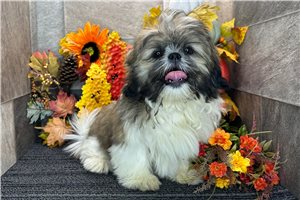
Shih Tzu
The Shih Tzu was specifically bred to be a companion, which the AKC states plainly. Shih Tzus are characterized by an "outgoing, happy, affectionate, friendly, trusting" temperament. The breed weighs 9 to 16 pounds, (although Imperial Shih Tzus, popularly called Teacup Shih Tzus, can be smaller) and are satisfied with short daily walks and indoor play, making it one of the most popular breeds for seniors with limited outdoor accessibility or mobility.
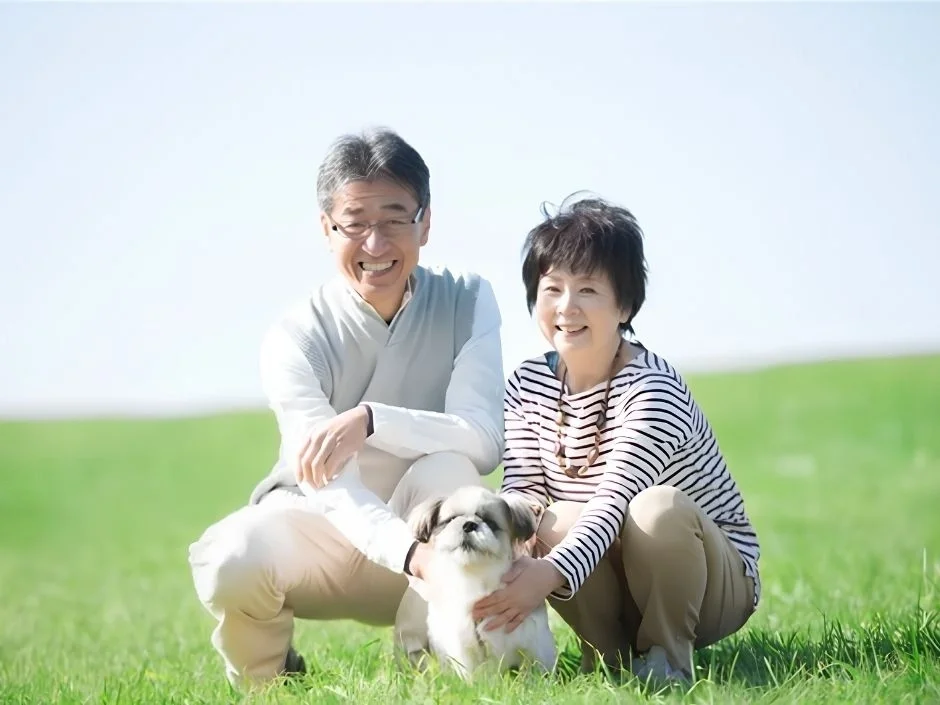
Their long flowing coat requires daily brushing in its full length, but many owners choose a short cut that reduces grooming to occasional brushing and monthly professional visits. Shih Tzus are patient with strangers and friendly toward grandchildren, alert without being anxious, and stable enough to handle the quieter periods of a retired adult's week without developing behavioral problems from boredom.
Maltese
The Maltese weighs under 7 pounds and carries a silky white coat that does not shed, making it one of the better choices for seniors with mild pet allergies or a preference for tinier lap dogs. The AKC characterizes the breed's temperament as "sweet, lively, and fearless," combining a gentle disposition with enough personality to be entertaining daily company. Their exercise needs are minimal; short daily walks and indoor activity will suffice.

The coat requires daily combing to prevent tangles, but its non-shedding quality means no accumulated hair on furniture and floors. For seniors who want a dog they can carry around or hold in their lap for an afternoon, the Maltese fits both needs without asking much in return.
Bichon Frise
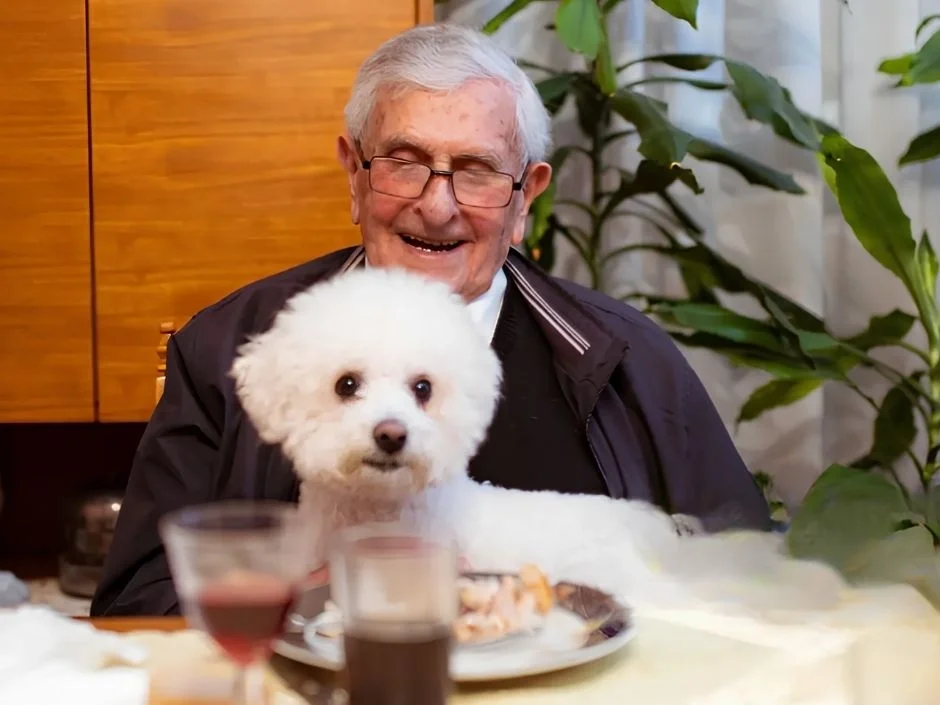
The Bichon Frise is like a slightly bigger, fluffier Maltese. Just like the Maltese, Bichons have an all-white, hypoallergenic coat, producing minimal shedding and reduced dander. The breed weighs 12 to 18 pounds and is characterized by "cheerful, gentle manners, sensitivity, and playfulness." Bichons thrive on human companionship and adapt well to both apartments and smaller homes. Their moderate exercise needs are satisfied by a daily walk and some indoor play. Beyond vet care and other basic needs, professional grooming every 4 to 6 weeks is the primary ongoing commitment and the main cost consideration for seniors evaluating this breed.
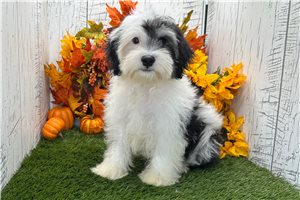
Coton de Tulear
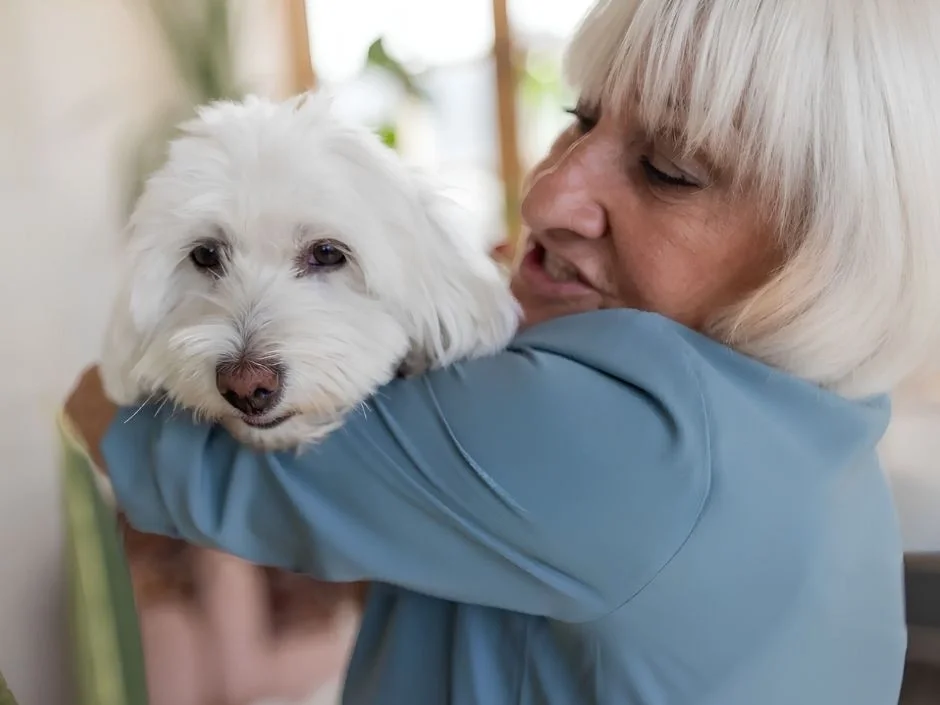
Most breed guides for seniors cycle through the same dog breeds, but few remember to recommend Coton de Tulears. This breed can lives 15 or more years, which may be why other guides don't include them, but for a 65-year-old choosing a puppy today, that lifespan means the dog they bring home this year is likely to still be with them at 82. No other breed on this list offers that span of companionship in a package this manageable. The AKC breed standard characterizes the Coton's temperament as "of a happy temperament, stable, very sociable with humans and other dogs, adapting perfectly to all ways of life."
Cotons weigh 8 to 15 pounds and have a soft, low-shedding coat that produces minimal dander, and is content with moderate daily walks and indoor activity. The coat requires brushing several times a week to prevent tangles, and professional grooming every 4 to 6 weeks is recommended. For any senior who has not yet encountered this breed, it deserves serious consideration.
Great Dog Breeds for Seniors in Apartments or Senior Living Communities
Apartments and senior housing sometimes involved specific constraints that these next breeds are suited for. Noise policies, limited outdoor access, elevators, and sharing walls with neighbors create a unique environment that some breeds are better for. Most apartment complexes and community homes limit the pet weight between 20 and 35 pounds. All three of the following breeds fall well within this range. They are not only compact enough to qualify under most building pet policies; They are temperamentally suited to smaller spaces and are calm indoors, minimally vocal outside of genuine alerts, and content with shorter outdoor outings.
Pawrade's collection of apartment-friendly dog breeds
Yorkshire Terrier
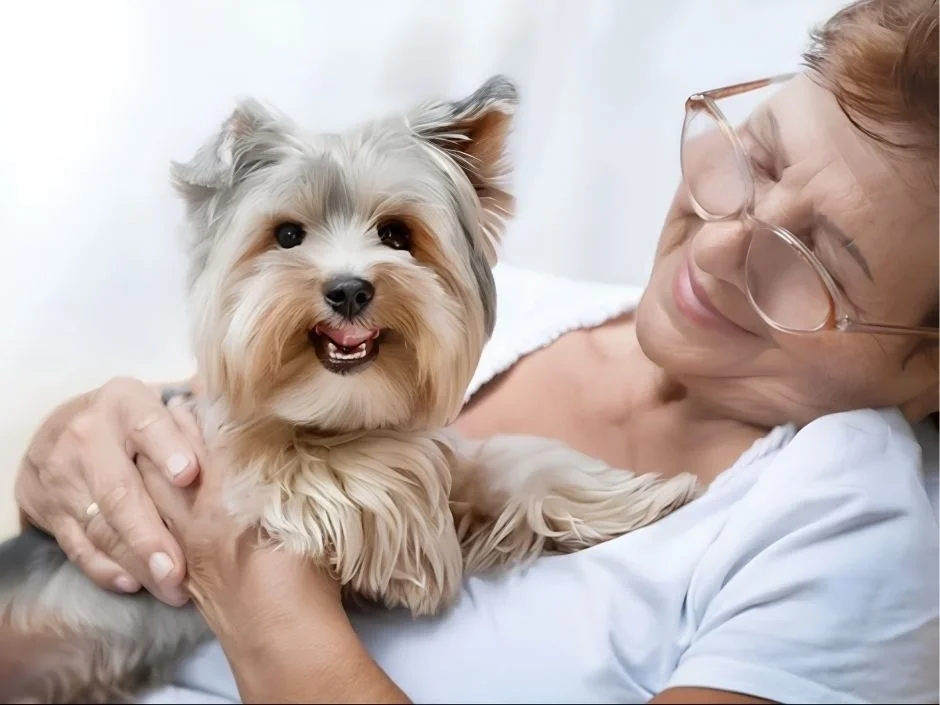
The Yorkshire Terrier weighs approximately 7 pounds and carries a fine, silky coat whose texture is more similar to human hair than to typical dog fur, making it one of the more hypoallergenic options available at this size. The AKC characterizes the Yorkie as "affectionate, sprightly, tomboyish," a compact dog with genuine personality that forms a deep, consistent bond with its primary owner. Daily walks satisfy their exercise needs without requiring extended outdoor time.
Yorkies are alert and will bark at unfamiliar sounds, which serves as a modest watchdog function in an apartment setting. That alertness is manageable with basic early training and consistent socialization. For seniors who want a small, low-shedding companion with a strong attachment to its person, the Yorkie delivers both qualities in a very manageable package.
Toy Poodle or Miniature Poodle
On average, the Toy Poodle stands no more than 10 inches at the shoulder, weights 4-6 pounds, and carries a coat that is virtually non-shedding. These traits make it one of the strongest allergy-friendly choices available in any size category. The AKC describes the breed as "exceptionally smart, active," and Toy Poodles are among the most trainable dogs available. They pick up commands with a speed that makes early training a pleasure rather than a project. Daily walks and some indoor play satisfy their exercise needs.
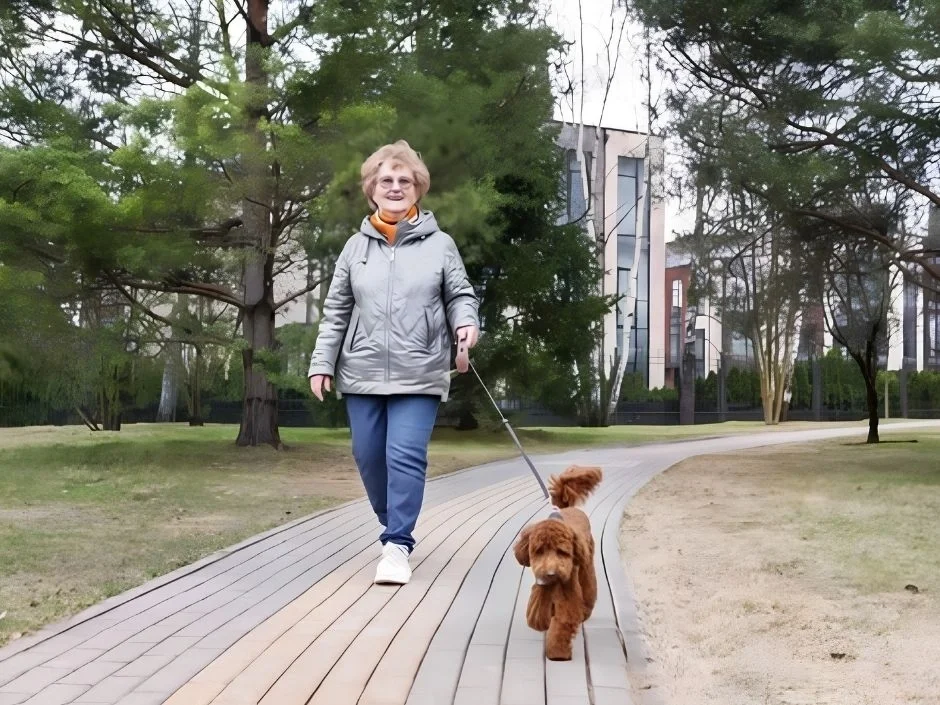
The coat requires professional grooming every 4 to 6 weeks, which is the most significant ongoing care commitment of this breed. For seniors who want a sharp, non-shedding companion that is easy to live with and even easier to train, the Toy Poodle is among the most consistent performers on this list.
The main difference in Mini Poodles is their slightly larger size. They grow to be up to 15 inches tall at the shoulders and 10-15 pounds, generally speaking. Otherwise, their coat, temperament, and health are essentially the same as Toy Poodles.
Havanese
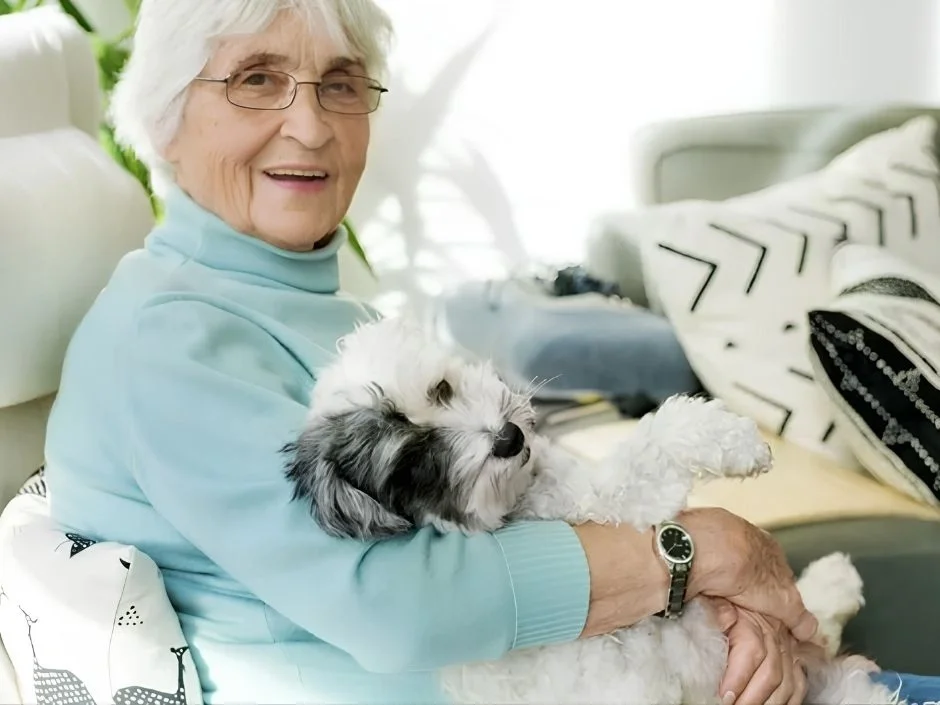
The Havanese is Cuba's national dog and the AKC describes its temperament as "intelligent, outgoing, funny." The breed weighs 7 to 13 pounds, carries a non-shedding silky coat, and is widely known for forming a deep, consistent attachment to its primary person. What makes the Havanese particularly well-suited for retirees is that same devoted quality: this breed thrives in homes where its person is present most of the day, which describes most retired adults.
The Havanese is best suited to seniors who are primarily home-based. It is not an ideal choice for someone who travels frequently or spends extended hours away from home, as the breed's strong attachment orientation can evolve into separation anxiety without adequate companionship. For senior citizens or couples who are home consistently and want a devoted, low-shedding companion, the Havanese is among the strongest fits available.
Before the breeds in this section, a quick note on building policies: most apartment buildings cap pet weight between 20 and 35 pounds. All three breeds above fall well within that range. Confirm your building's specific policy before committing to any breed.
Popular Low Maintenance Dog Breeds for Elderly Persons
The easiest dogs for senior households combine a calm temperament, modest daily exercise needs, and a coat that requires limited professional attention. Low maintenance means different things to different people. A compact, non-shedding breed that thrives on two short daily walks is low maintenance for a senior with limited mobility. A sturdy breed that needs a longer daily outing but demands almost no grooming or special care is equally low maintenance for an active senior already walking 30 minutes a day. The two breeds below serve these two distinct profiles.
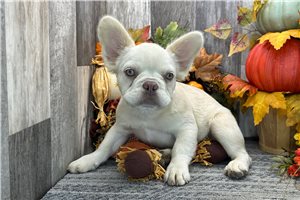
French Bulldog
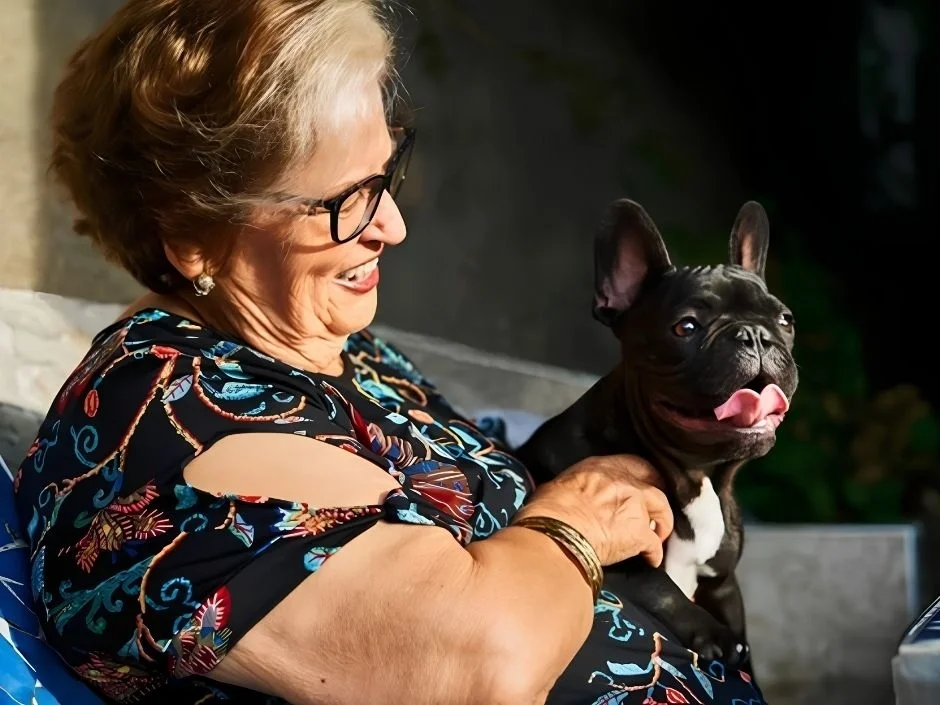
The French Bulldog is a practical, low-maintenance dog breed at any life stage. The AKC describes the breed as "adaptable, playful, smart," noting that their exercise requirements are lower than other breeds, as a daily walk and some indoor activity is sufficient. The breed weighs under 28 pounds and has a short coat that requires almost no grooming. French Bulldogs are quiet by nature and rarely bark without reason, which makes them considerate neighbors in close-quarters living situations.
One consideration worth naming directly: French Bulldogs are a brachycephalic breed, meaning their flat facial structure can make breathing more labored in heat or high humidity. This requires monitoring on warm days and during any extended outdoor activity in summer months. In climate-controlled apartment environments, this concern is manageable for most owners.
Pembroke Welsh Corgi
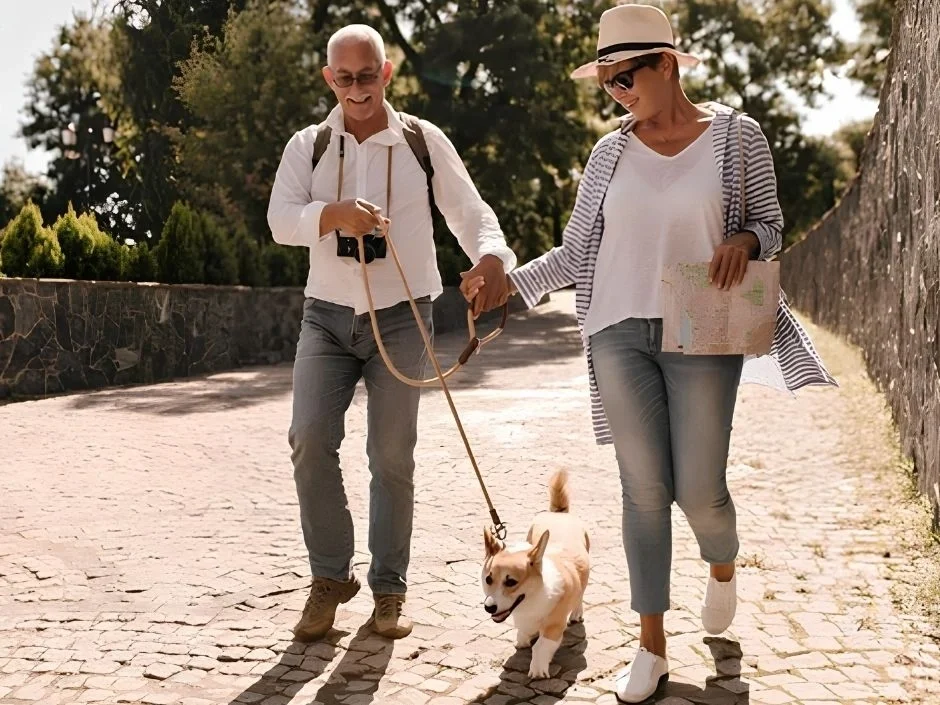
The Pembroke Welsh Corgi is the best choice on this list for the senior who wants to stay active. The AKC characterizes the Corgi as "affectionate, smart, alert," noting that despite their low-to-ground build, they are "athletic and surprisingly quick and agile." At 22 to 30 pounds, the Corgi has the exercise appetite of a significantly larger breed without the weight and management challenges of one. They thrive on daily walks and genuinely enjoy learning new commands and skills throughout their lives.
For a senior who currently walks 30 to 45 minutes daily and wants a companion that keeps pace and adds energy and purpose to the routine, the Corgi delivers without the training complexity or physical demands of a larger working breed. Their double coat does shed, particularly in seasonal transitions, which is the one grooming commitment worth factoring into the decision.
How Can a Senior Citizen Get a Puppy?
Seniors begin to face a narrowing entryway into dog ownership the older they get. A type of inquiry that frequently reaches Pawrade's inbox is from someone whose older dog just crossed the rainbow, and they are seeking a puppy companion to enjoy their golden years with. Mary, for example, came to Pawrade with a common problem. Enjoying retirement with her spouse of 32 years and about to celebrate her 72nd birthday, her heart was ready for a furbaby after a year of mourning and remembrance of her older dog! She had already been denied an adoption by her local shelter, which she was "pretty positive" was due to her age, and the next two closest shelters only had large breeds and pitbulls, which were neither approved by her property management nor on her list of breeds she could care for. Navigating social media and Google searches quickly became overwhelming as every other listing was a scam or a questionable website.
On paper, Mary and her husband had everything it took to offer a wonderful, loving home for a dog. She spent much of her day around her home, using her free time to tend to her garden, walk around the neighborhood twice a day, and participate in social activities like her weekly book club and grandkids, who only lived 10 minutes away. She and her husband took the occasional vacation, always taking their dog with them for years and years. They were active, loving life and family, but missing the spark in life only a dog can give.
The assumption that senior citizens are not equipped to raise puppies is wrong and conflates age with lifestyle. A retired adult who is home a lot, has the patience for a consistent early training routine, and selects a small breed with an easygoing temperament could be considered a better fit for a puppy compared to a busy family with two parents working full time and children with schedules full of extracurriculars. Puppies require presence and consistency, not youth.
Human-animal interactions and healthy aging
At Pawrade, all seniors are welcome to search, ask, and receive. Pawrade takes every placement seriously and may ask you about your activity level, living space, and daily schedule before confirming with the breeder that the puppy will be a good fit, but the process exists to find reasons to say yes, not no.
Why Seniors Are Turned Away by Shelters and What to Do Instead
Many older adults find it increasingly difficult to adopt a dog after age 65. Some rescues decline applications from seniors entirely. Others will only offer certain categories of animals to senior applicants, while still others simply do not respond to applications from elderly individuals, as documented in a Next Avenue investigation into shelter adoption practices.
Read the discussion on age barriers for older adult pet adopters
The structural irony of this practice is significant. In 2023, 6.5 million animals entered shelters across the United States, but at the same time, retired adults who are home full time, have decades of pet ownership experience, and have the time and financial stability to provide consistent care are being turned away. The concern most frequently cited by rescues is that the dog might outlive its owner and return to the shelter. While the concern is legitimate, it is also addressable. Many responsible buyers across all age groups now document care plans for their pets as part of general estate and household planning.
For seniors who want a specific breed, a documented health guarantee, or a clear and age-neutral path to ownership, working with a reputable breeder through a structured marketplace offers an alternative that does not involve age-based gatekeeping. Every puppy on Pawrade comes from a vetted breeder and is backed by a health guarantee. The matching process considers lifestyle compatibility, not date of birth.
Things a Senior Citizen Should Consider When Choosing the Right Dog Breed
Older adults have relatively the same questions to ask themselves as others do before getting a new puppy. The decision is based on things like time, energy, living situation, budget, and allergies, which affect all pet-seekers. It's important to break down these categories through the lens of a senior who might need to consider specific challenges that younger individuals or middle-aged parents aren't as concerned about.
Size and Leash Manageability
A dog that can pull a 30-year-old off balance during a wall can surely pull a 70-year-old down. Breeds under 30 pounds are more manageable on a leash regardless of the owner's strength and mobility. They are also easier to take to and from the veterinary office, and they do not pose the fall risk that larger breeds like Great Danes or German Shepherds carry for adults with any degree of balance or physical limitation.
Energy Level and Exercise Needs
A dog's activity level and exercise demands should closely match that of their owners, particularly if the dog owner is a senior. Owning a puppy or a dog often requires some amount of outdoor exercise. An older adult who walks 45 minutes a day can be a wonderful home for a more active small breed. A senior who walks slower or walks less is better suited for a breed with shorter, gentler outings. If you currently walk 30 or more minutes a day and want a breed that keeps pace with that routine, the Pembroke Welsh Corgi and the Cavalier King Charles Spaniel are built for it. If your mobility is limited or your daily outings are short, the Maltese, Shih Tzu, Toy Poodle, or Havanese require no more than you can comfortably provide.
Grooming Requirements and Maintenance
Professional grooming every 6 to 12 weeks adds both cost and logistics to dog ownership. Getting a small toy breed in a car to go to the groomer is more realistic than taking a Newfoundland or Olde English Sheepdog in the car. Some coats need daily brushing to prevent matting. Others need almost nothing. For seniors managing their own household independently, lower coat maintenance reduces the practical burden of ownership without any reduction in companionship quality.
Temperament and Trainability
A dog with a calm, people-oriented temperament adapts to a quieter household without developing anxiety, destructive habits, or excessive barking. Trainability matters especially for seniors who may be looking for a dog breed that catches on quickly, versus being stubborn and independent. A breed that responds well to positive reinforcement and picks up basic commands in the first weeks of ownership makes the transition significantly less stressful for everyone in the household.
Living situation and household composition
Apartment dwellers should prioritize dog breeds recommended for apartments, like the French Bulldog, Yorkshire Terrier, or Havanese. Seniors in homes with outdoor access have greater flexibility and can consider the Cavalier King Charles Spaniel, Pembroke Welsh Corgi, or Coton de Tulear as equally strong options.
If grandchildren visit regularly, the Cavalier King Charles Spaniel, Shih Tzu, and Bichon Frise are all well-documented for patience with younger visitors. A dog that is comfortable with children removes a layer of management from an otherwise enjoyable household dynamic.
Allergy considerations
For seniors with pet allergies or sensitivity to shedding, the Toy Poodle, Bichon Frise, Maltese, Yorkshire Terrier, Havanese, and Coton de Tulear all carry low-shedding or near-hypoallergenic coats. As allergies can affect immune systems and trigger inflammation, hypoallergenic dog breeds become increasingly better choices for seniors who are sensitive to pet dander.
Mobility Ability
The best dog breeds for seniors with limited mobility are those whose full exercise and behavioral needs can be met with daily outings of 15 to 20 minutes combined with indoor activity: the Maltese, Shih Tzu, French Bulldog, and Toy Poodle fit this profile.
None of these breeds require extended outdoor time to remain behaviorally stable. All weigh under 28 pounds and can be safely managed on a leash by someone with limited grip strength or balance concerns. Their temperaments are calm enough that a quieter daily routine does not produce anxiety or destructive behavior, which means the owner is not managing the dog's frustration on top of their own physical limitations. For seniors using a cane, walker, or other assistive equipment, these four breeds represent the lowest-risk ownership options on this list.
Frequently Asked Questions About Dog Breeds for Senior Citizens
What is the best dog breed for a senior citizen living alone?
The Cavalier King Charles Spaniel and the Havanese are both strong choices for seniors living alone, because both breeds form consistent, deep attachments to their primary person and thrive in households where that person is home most of the day. The Cavalier adapts to varying energy levels, comfortable on an active walk or a quiet afternoon. The Havanese provides near-constant companionship with a low-shedding coat and minimal exercise overhead. A study by the Mather Institute, drawing on data from 2,863 older adults in continuing care communities, found that pet-owning residents reported feeling more socially connected, with measurably higher happiness and life satisfaction scores than non-pet-owning residents in the same communities.
What is the easiest dog to take care of for an older adult?
The Maltese and the French Bulldog are the two lowest-maintenance options among the 10 breeds in this guide, for different reasons. The Maltese is under 7 pounds, non-shedding, and satisfied with short daily walks, though its long coat requires daily combing to prevent tangles. The French Bulldog has even simpler coat care and the most modest exercise requirements of any breed in this guide, making it the easier maintenance choice overall, although they are one of the heavier breeds in this list the one caveat that brachycephalic breeds require monitoring in warm or humid weather. Both deliver genuine companionship without demanding more daily care than a senior living independently can reasonably sustain.
Are small dogs or large dogs better for senior citizens?
Small dogs, generally under 30 pounds, are the better choice for most senior citizens because they are manageable on a leash without requiring upper body strength, compatible with apartment or smaller-home living, and easier to handle in any situation requiring close physical care. The Pembroke Welsh Corgi at 28 to 30 pounds is the one exception worth naming: for a senior who walks regularly and wants a more athletic companion, the Corgi delivers the energy and engagement of a larger working breed in a body that remains physically manageable for most adults.
Can a senior citizen get a puppy?
Yes, with the right breed choice and working with a vetted breeder who can confirm the puppy's health documentation and early socialization. The critical factors are that the buyer is home consistently during the training-intensive early weeks, and that the breed selected has a calm, trainable temperament at the puppy stage.
What dog breeds are best for seniors with limited mobility?
For seniors with limited mobility, the strongest choices are breeds whose full exercise and behavioral needs are met with short daily outings of 15 to 20 minutes combined with indoor play: the Maltese, Shih Tzu, French Bulldog, and Toy Poodle all fit this profile. These breeds are small enough to be safely managed without strong grip or balance, their temperaments are stable enough to handle a quieter daily routine, and none of them require the kind of sustained outdoor activity that would be physically demanding for an owner with mobility limitations. Older adults with dementia or cognitive changes can also benefit from dog companionship; older adults with dementia showed measurable decreases in agitated behavior and increases in social interaction when a therapy animal was present.
Choosing the right dog is a meaningful, long-lasting decisions that a majority of older adults make, not because the stakes are dramatic but because the right match changes daily life in ways that are difficult to quantify and easy to underestimate. The 10 breeds in this guide are not a ranking. They are a starting point for a conversation about what your life looks like and which companion fits inside it.